

Note: This article contains affiliate links. If you click on these links and make a purchase, I may earn a small commission at no extra cost to you. This helps support my research and content. Read my full affiliate disclosure here.
Choosing the right soil for sago palm matters because these cycads prefer a balance of quick drainage and steady moisture retention to keep their slow-growing crowns healthy. If the mix stays too wet the crown and roots are at risk, and if it dries out too quickly the plant will suffer stress. This guide covers seven shortlisted soils suited for sago palm growing situations and containers, and explains the practical tradeoffs gardeners should expect. We evaluated mixes for drainage, nutrient hold, and root environment so you can match a soil to your planting style. Below are the top contenders followed by clear buying guidance and common-care answers.
Top Picks at a Glance
| Best Overall The best all-around choice for most situations | E.B. Stone Organics Citrus & Palm Mix Potting Soil, 1.5 cu ft |  |
| Best Quality Built to a higher standard if you want something more solid | FoxFarm Ocean Forest Potting Soil, 12 qt |  |
| Best Value The sweet spot between price and what you get | Espoma Organic Cactus Potting Soil Mix, 4 qt |  |
| Best Budget The cheapest option that still gets the job done reliably | Miracle-Gro Organic Outdoor Potting Mix, 16 qt. |  |
| Highest Rated A top-rated pick with lots of positive feedback | Happy Trees Premium Cactus & Succulent Potting Soil Mix, 8 qt |  |
| Most Popular A crowd favorite that many people choose with confidence | Miracle-Gro Cactus, Palm & Citrus Potting Mix, 8 qt. |  |
| Best Seller A high-volume bestseller chosen again and again | Back to the Roots Organic Indoor Potting Mix, 6 Quart |  |
E.B. Stone Organics Citrus & Palm Mix Potting Soil, 1.5 cu ft

| Brand | E.B. Stone Organics |
|---|---|
| Volume | 1.5 cubic feet |
| Suitable for | Citrus, palms, avocado, tropical plants |
This E.B. Stone Organics Citrus & Palm Mix is a ready-to-use organic potting soil designed for deep-rooted tropical plants and palms. It combines aged fir bark and pumice to create a fast-draining, well-aerated medium while retaining enough moisture and nutrients for steady growth. The added mycorrhizae support root health and nutrient uptake, which is helpful when potting or replanting sago palms and other tropicals. Use it straight from the bag for container plants or blend into planting holes when installing palms in garden beds. The 1.5 cubic foot bag is convenient for a few pots or a single planting, but landscapers or anyone repotting many plants will need multiple bags. Because the mix is aimed at drainage and root oxygenation, it may dry faster than heavier potting soils so expect to adjust watering frequency accordingly. Overall it simplifies planting and gives sago palms a balanced, airy medium that reduces the risk of root rot while supporting healthy root development.
Best for: Buyers looking for an easy, plant-ready soil tailored to palms and tropicals who want improved drainage and root support without custom mixing.
Less Ideal for: Gardeners who need large volumes for landscape-scale planting or who prefer a moisture-retentive heavy potting mix should consider alternatives.
- Formulated with aged fir bark and pumice for strong drainage and aeration
- Contains beneficial mycorrhizae to improve root nutrient and water uptake
- Ready to use for containers or to amend planting holes with no mixing required
- Organic blend suited to the needs of palms, sago palms, and other tropical plants
- 1.5 cu ft bag is relatively small for large plantings or multiple repots
- Faster-draining mix may require more frequent watering than heavier soils
Verdict: A ready-made, airy organic mix that gives sago palms the drainage and root-supporting microbes they need for healthy growth.
FoxFarm Ocean Forest Potting Soil, 12 qt

| Item Form | Granules |
|---|---|
| Specific Uses For Product | Dry Fertilizer |
| Coverage | 4.8 sq ft |
| Mixing Ratio | 1:1 |
FoxFarm Ocean Forest is a pre-mixed potting soil intended for containers and seed starts that combines aged forest products, sandy loam, and sphagnum peat moss to deliver good drainage and aeration while retaining moisture. It arrives ready to use straight from the bag and is formulated with amendments such as fish meal, crab meal, and earthworm castings to provide immediate organic nutrients for young plants. Typical use is filling pots or top-dressing containers then watering thoroughly; the bag notes no additional fertilizer is needed for the first 30 days and gives a 1:1 mixing ratio if blending with other soils. Practical benefits include strong initial nutrition for establishing roots, a light texture that reduces compaction, and convenience for growers who want predictable results without mixing their own media. Limitations are that the bagged volume is modest for large specimens and the formula is a general-purpose mix rather than a species-specific substrate, so heavy-draining, ultra-sandy mixes preferred for some drought-tolerant palms may require amendment for best results.
Best for: Gardeners focused on strong early growth for container plants who want a convenient, nutrient-rich potting mix that establishes roots quickly.
Less Ideal for: Growers needing large volumes for landscape planting or those who require a very coarse, ultra-draining palm-specific mix without further amendment.
- Ready-to-use blend formulated for container planting and seed starts
- Contains organic amendments (fish meal, crab meal, earthworm castings) for early nutrient supply
- Light, aerated texture that promotes drainage and reduces compaction
- 12 quart bag provides limited coverage for larger container-grown plants
- General-purpose formula may need additional sand or grit to increase drainage for palms or succulents
Verdict: Choose this ready-made, nutrient-rich potting soil when you want predictable, fast root establishment in container-grown plants.
Espoma Organic Cactus Potting Soil Mix, 4 qt

| Brand | Espoma |
|---|---|
| Unit Count | 128 Ounce |
| Included Components | Espoma Organic Cactus Potting Soil Mix |
Espoma Organic Cactus Potting Soil Mix is a small-bag organic mix designed to improve aeration and drainage for container-grown succulents, cacti and other plants that prefer a fast-draining medium. In practice you use it as the primary potting mix when repotting or transplanting sago palms in containers, or as a component blended with heavier soils to lighten them. Key features are a peat- and humus-based base with perlite for drainage and a Myco-tone mycorrhizal inoculant to support root establishment. The mix helps reduce water retention around roots, which lowers the risk of rot for plants that need drier conditions between waterings. Because the bag is only 4 quarts it is convenient for topping up pots or refreshing a single container but you may need multiple bags for larger specimens or for mixing a custom blend. This product is best when used in containers where good drainage is critical and as part of routine repotting for sago palms grown in pots.
Best for: Gardeners who repot sago palms or other drought-tolerant container plants and prioritize a ready-made, well-draining organic mix to reduce root rot risk and speed establishment.
Less Ideal for: People needing bulk soil for in-ground planting or large landscape projects should choose a larger-volume soil or create a custom blend tailored for field planting.
- Formulated for fast drainage and aeration suitable for plants that dislike wet soil
- Contains perlite and organic components to reduce compaction in containers
- Includes Myco-tone mycorrhizae to support root establishment after repotting
- Organic ingredients with no synthetic fertilizers listed
- Small 4 quart volume means multiple bags are required for large pots
- Peat-based mix may compact over long-term use without periodic refreshing
Verdict: Choose this organic cactus mix when you need a small-quantity, fast-draining potting medium that helps establish container-grown sago palms and other drought-tolerant plants.
Miracle-Gro Organic Outdoor Potting Mix, 16 qt.

| Volume | 1 cubic feet |
|---|---|
| Item Highlight | Plant Soil For Outdoor Container Plants, Contains Quick-Release Natural Fertilizer, OMRI Listed |
| Brand Name | Miracle-Gro |
| Manufacturer | Scotts Miracle Gro |
Miracle-Gro Organic Outdoor Potting Mix is a ready-to-use container soil designed to support outdoor pots and planters. It is blended with responsibly sourced peat, upcycled green waste, and a quick-release natural fertilizer that the manufacturer says feeds plants for up to two months. Typical use is straightforward: partially fill a pot, set the plant's loosened root ball into the mix, add more soil, press lightly, and water. For a sago palm in a container this mix provides organic matter and short-term nutrients that help establish roots and retain moisture better than plain garden soil. Because it is OMRI listed it fits organic care plans. Practical limitations are that the bag is relatively small for repotting larger cycads and the fertilizer is short-term so you will still need periodic feeding and annual to bi-annual soil refresh to avoid compaction. It is best for routine potting, topping up containers, and transplanting young sagos rather than serving as a long-term lone substrate for mature, heavy-rooted specimens.
Best for: Gardeners who want an organic, easy-to-use potting mix for outdoor containers and are focused on cost-effective routine potting or topping up soil for young or small sago palms.
Less Ideal for: Growers with mature, large sago palms in need of a long-lasting, high-drainage cycad-specific mix or those who prefer a single substrate to last multiple years without amendment.
- OMRI listed for compatibility with organic gardening practices
- Contains quick-release natural fertilizer that feeds up to two months
- Blended to retain moisture and improve container root establishment
- Made with responsibly sourced peat and upcycled green waste
- 16 qt bag is small for repotting larger sago palms
- Fertilizer effect is short term so additional feeding is required
Verdict: A convenient OMRI-listed organic potting mix that gives outdoor container plants, including young sago palms, an immediate nutrient boost and improved moisture retention.
Happy Trees Premium Cactus & Succulent Potting Soil Mix, 8 qt

| Brand Name | Happy Trees Hemp |
|---|---|
| Item Highlight | Professional Mix for Agaves, Aloes, Echeverias, Euphorbias and cacti; Fast Draining; With Biochar |
| Volume | 8 quarts |
Happy Trees Premium Cactus & Succulent Potting Soil Mix is a coarse, mineral-based substrate designed to give desert plants strong drainage and root aeration. You use it straight from the bag for repotting or as a soil amendment when your sago palm needs better drainage; the mix of pumice, lava rock, fir bark fines, coarse sand, and biochar keeps water moving away from roots while still holding minimal moisture for hydration. That makes it useful for preventing root rot in potted sago palms and other palms that prefer well-drained media. The blend is peat-free and made in the USA, so quality and consistency are obvious benefits for repeatable results. On the downside, the coarse texture means it will dry faster than standard potting soil, so plants may need more frequent but lighter watering, and the bag size is modest for larger container projects. For growers who want a reliable, fast-draining base or amendment for drought-tolerant palms and succulents, this mix performs as advertised.
Best for: Buyers who prioritize consistent, reliable drainage for potted desert plants or drought-tolerant palms and want a ready-made professional blend that reduces root-saturation problems.
Less Ideal for: Gardeners who prefer moisture-retentive mixes for tropical, moisture-loving palms or who need bulk quantity for large landscape plantings.
- Fast-draining coarse mix reduces risk of root rot
- Contains pumice, lava rock, coarse sand and biochar for improved aeration
- Peat-free, consistent professional-grade blend made in the USA
- Ready-to-use straight from the bag for repotting or soil amendment
- Coarse texture means media dries faster and may require more frequent watering
- 8-quart bag is small for large containers or multiple repots
Verdict: Choose this mix when you need a dependable, fast-draining, ready-to-use substrate to protect potted sago palms from waterlogged roots.
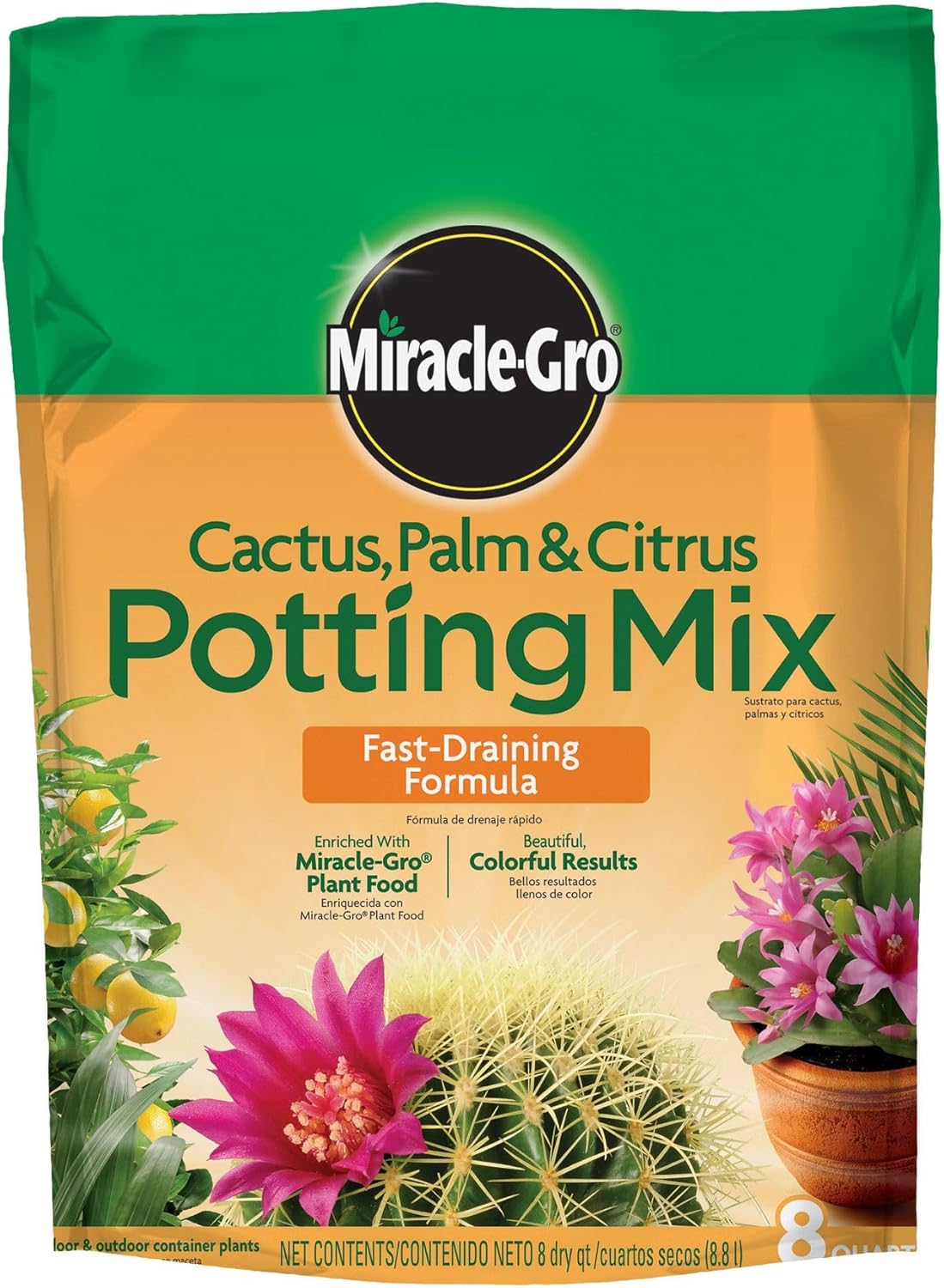
Miracle-Gro Cactus, Palm & Citrus Potting Mix, 8 qt.
| Volume | 8 quarts |
|---|---|
| Item Weight | 16 ounces |
| Suitable for | Cactus, palm and citrus container plants |
| Formula | Fast-draining, enriched with plant food |
This 8-quart Miracle-Gro potting mix is designed for container-grown cacti, palms and citrus and works well as a ready-to-use soil for sago palms in pots. The blend of peat moss, sand, perlite and forest products creates a loose, fast-draining medium that helps prevent waterlogging around the shallow roots of cycads. It also comes enriched with Miracle-Gro plant food so newly potted plants get an initial nutrient boost without immediate feeding. Typical use is to fill a drain-holed pot, set the root ball and top up, then water and allow to drain; the product notes that one bag fills two 8-inch containers. Practical benefits include improved drainage to reduce root rot risk and reduced soil compaction over time. Important limitations are the small 8-qt volume, which means multiple bags are needed for larger sago palms or bigger repots, and the included starter fertilizer may require different feeding schedules for mature specimens. Gardeners who prefer custom mixes or need large volumes may find this bag insufficient for bigger projects.
Best for: Buyers who want a convenient, off-the-shelf container mix that promotes drainage and gives newly potted sago palms an initial nutrient boost while minimizing early care complexity.
Less Ideal for: People repotting mature or large sago palms, or gardeners who prefer to blend their own custom cactus-cy cad soil for long-term nutrient control, should consider bulk or specialist mixes instead.
- Fast-draining formula tailored for succulents, palms and citrus
- Contains perlite, sand and peat to reduce compaction and improve aeration
- Pre-enriched with plant food for an immediate nutrient boost
- Formulated for use in containers with guidance on potting and watering
- Small 8-quart bag may not be economical for large repotting or multiple sago palms
- Includes starter fertilizer that may not match specialized long-term feeding plans
Verdict: If you need a small, ready-made, fast-draining potting mix to repot or start sago palms in containers, this bag delivers easy-to-use drainage and an initial nutrient boost.
Back to the Roots Organic Indoor Potting Mix, 6 Quart

| Unit Count | 192 Fluid Ounces |
|---|---|
| Item Type Name | Indoor Potting Mix 6qt |
| Ingredients | Coconut Coir, Yucca, Mycorrhizae, Perlite, Horticultural Sand |
| Item Highlight | Peat-free, 100% organic, made in the USA |
This 6-quart Back to the Roots indoor potting mix is designed for everyday houseplants and contains coconut coir, yucca extract, mycorrhizae and horticultural sand to improve moisture retention and drainage. It is typically used for repotting pothos, monstera and other common indoor species where a light, well-aerated mix is preferred. Notable features include peat-free organic ingredients, yucca to help the mix hold moisture without becoming waterlogged, and added mycorrhizae to support root development and nutrient uptake. Practical benefits are reduced indoor pest attraction compared with bark-heavy mixes and an easier-to-manage moisture balance for busy or cautious plant owners. The small 6-quart size is convenient for testing the mix or repotting a few plants, but buyers should plan to purchase multiple bags for larger collections or big pots. Also, the volume and coir base mean it may compress over time and require occasional fluffing or amendment for long-term container plantings.
Best for: Someone who prefers a responsibly made, low-risk indoor potting mix that supports healthy roots and predictable moisture control for common houseplants.
Less Ideal for: Gardeners needing large volumes for many or very large containers should choose bulk soil blends instead.
- Peat-free and 100% organic formulation suitable for environmentally conscious gardeners
- Yucca extract helps retain moisture without making the soil soggy
- Includes mycorrhizae to support stronger root growth and improved nutrient uptake
- Light, well-aerated blend with horticultural sand for better drainage and reduced compaction
- Small 6-quart bag requires multiple purchases to repot several larger plants
- Coir-based mixes can settle and may need occasional fluffing or amendment over time
Verdict: A small, peat-free organic potting mix that gives cautious indoor plant owners reliable moisture control and root support.
Choosing the Right Soil for Sago Palm: Key Factors to Consider
Drainage and Aeration
Sago palms need a soil that moves excess water away from the root zone quickly. That usually means a mix with a significant coarse mineral fraction such as pumice, perlite, or coarse sand. Good drainage prevents the crown from sitting in damp, low-oxygen conditions that invite root and crown rot.
Aeration matters independently from drainage because even well-draining mixes can compact over time. Look for components that retain a crumbly structure; this helps roots breathe and allows beneficial soil microbes to thrive.
Nutrient Retention and Release
Because sago palms are slow growers, they require steady, predictable nutrient availability rather than sudden flushes. Organic components like composted bark or slow-composted organic matter provide longer-lasting nutrient release compared with high-peat mixes that break down quickly.
A balance between organic matter and mineral components prevents nutrients from being leached out immediately after watering while avoiding an overly rich mix that causes excessive, weak growth.
pH and Mineral Content
Sago palms prefer a near-neutral to slightly acidic soil range. If the mix is too alkaline or overly acidic it can impair nutrient uptake. Mineral components such as washed sand or pumice are typically neutral and help stabilize pH, while some amendments may slightly shift the acidity and should be chosen with common water chemistry in mind.
Consider your local water source and whether you use softened or alkaline water. Those inputs will change how the soil pH behaves over time, so pick a mix that leaves room for small adjustments rather than one that pushes pH to extremes.
Particle Size and Texture Stability
Particle size affects both moisture behavior and root penetration. A mix with a range of particle sizes-from fine organics to coarse mineral grit-gives both water-holding pockets and macropores for drainage. However, very fine particles can compact and reduce aeration over seasons.
Choose a soil where the coarse fraction is durable and will not break down quickly. That preserves texture stability so you do not need to completely repot or rework the soil frequently.
Container Versus In-Ground Performance
Soil that works well in a container is not necessarily ideal for garden beds. Containers need a freer-draining, lighter mix to avoid waterlogging and to allow roots to access oxygen in a limited volume. In-ground plantings benefit from soils that integrate with native soil but still need improved drainage if your site has heavy clay.
When planting in the ground, focus on creating a well-draining planting pocket with coarse amendments and organic matter rather than relying solely on topsoil. For pots, prioritize lightness and aeration to reduce the frequency of repotting.
Long-Term Maintenance and Amendability
Sago palms are long-lived, so soil that allows simple maintenance is a practical choice. A stable mix reduces how often you need to refresh or repot. Look for soils that accept top-dress fertilizers and slow-release feeds without breaking down quickly.
Also consider how easy it is to amend the mix later. If you plan seasonal feeding or want to tweak pH, choose a base mix that responds predictably to common amendments like lime, sulfur, or slow-release fertilizers.
Best Mix Characteristics for Containers
For container-grown sago palms aim for a light, well-structured potting mix with a high proportion of coarse materials. A typical container recipe includes a quality potting base, coarse pumice or perlite for aeration, and composted bark for stable organics.
In pots the mix must dry and rewet predictably. Too much fine peat or heavy compost holds water and risks crown rot. Also choose a mix that drains freely from the pot's drain holes and that stays crumbly rather than compressing into a dense cake.
- Include coarse mineral grit for macropores
- Use stable organic matter rather than fresh compost
- Ensure the pot offers adequate drainage holes
Preparing a Planting Pocket for In-Ground Sago Palms
When planting in the landscape, dig a wide, shallow pocket and backfill with an amended mix that improves native drainage. Incorporate coarse sand or pumice and a modest amount of composted bark to create a root zone that drains faster than surrounding soil.
Avoid creating a bowl that traps water at the planting depth. The crown should sit slightly above the surrounding grade and the amended pocket should blend smoothly with native soil to encourage root expansion.
- Widen the hole rather than making it deeper
- Blend amendments with native soil at the edge to avoid sharp transitions
- Slope the backfill slightly away from the crown
Watering and Fertilizer Practices with the Right Soil
Soil choice changes how you water and feed. In a fast-draining mix you will water more frequently but in shorter cycles, allowing the soil to rewet without becoming saturated. Check moisture with your finger or a probe rather than relying on a schedule.
Fertilize with a slow-release, balanced fertilizer or small, frequent liquid feeds. Because sago palms are slow growers they do not require heavy feeding; a steady low-dose program suits well. Avoid overfertilizing into a light, fast-draining mix as nutrients can leach quickly.
- Water deeply then allow top mix to dry slightly
- Use slow-release feeds or diluted liquid fertilizer
- Monitor leaf condition as a sign of nutrient needs
Adjusting Soil pH and Addressing Common Deficiencies
If leaves show discoloration, check pH and common mineral deficiencies before changing the soil. A neutral to slightly acidic pH supports good uptake of iron and other micronutrients sago palms need.
Small pH adjustments are best made gradually. Use elemental sulfur to lower pH or agricultural lime to raise it, applied in small doses and retested over months rather than trying a large correction at once.
- Test pH before making amendments
- Make gradual adjustments and retest after a season
- Address specific nutrient deficiencies with targeted feeds
Repotting and Refreshing Soil Over Time
Because sago palms are slow-growing, they do not need frequent repotting. Still, after a few years the potting mix can break down and retain more water than intended. Repot into a fresh, structured mix when roots become dense or drainage slows noticeably.
When refreshing soil you can often remove the top 2 to 4 inches and replace it with fresh mix plus a light fertilizer top-dress rather than fully repotting. This preserves root stability while restoring physical and nutrient balance.
- Repot when drainage or root crowding is evident
- Top-dress annually with stable organic material
- Avoid disturbing the crown during repotting
How We Chose the Best Soil for Sago Palm
We shortlisted mixes that match known sago palm preferences: a free-draining structure with some capacity to hold nutrients and moisture without staying waterlogged. We prioritized physical structure, nutrient profile, and long-term stability of the amended soil. Evaluation criteria included drainage rate measured by perlite, pumice, or coarse sand content; organic matter type and persistence to provide steady nutrients; pH and mineral balance suitable for cycads; and texture stability so the mix does not compact over seasons. Root aeration and resistance to staying soggy were treated as separate filters because sago palms are vulnerable to crown and root rot in poorly aerated soil. We excluded mixes formulated for acid-loving or bog plants and those that rely solely on peat with no coarse mineral amendment. Also excluded were blends without any coarse drainage component or those lacking a basic nutrient baseline. The remaining candidates were judged on how they perform in common container and landscape situations for sago palm cultivation.
FAQ
What type of sand is best to improve drainage for sago palm soil?
Use coarse builder's sand or horticultural sand rather than fine play sand. Coarse sand provides macropores and resists compaction, improving drainage and aeration in the root zone.
Can I use straight potting soil for a sago palm in a container?
Straight potting soil is often too fine and may retain too much water. Amend it with coarse mineral grit and stable organics to create the free-draining yet nutrient-holding mix sago palms prefer.
How often should I repot a sago palm in a standard potting mix?
Sago palms are slow growers and typically need repotting every 3 to 5 years. Repot sooner if the mix compacts, drainage slows, or roots become tightly bound.
Does adding compost help or hurt sago palm soil?
Compost can help by providing long-term nutrients if it is well-aged and not overly fine. Fresh or heavy compost can hold excess moisture and should be used sparingly to avoid water retention issues.
Should I adjust soil based on my local climate?
Yes. In cooler, wetter climates increase coarse drainage components to prevent waterlogging. In hot, dry climates include more stable organic matter to maintain even moisture without creating a soggy root zone.
Final Verdict
Pick a soil that prioritizes drainage and root aeration while offering a steady supply of nutrients. For containers use a light, coarse-textured mix; for in-ground plantings create an amended pocket that improves drainage without isolating the plant from native soil. Balance is the key tradeoff: more coarse material improves aeration but reduces water retention, while more organics increase nutrient holding but risk compaction. Choose the mix that matches your watering habits and site conditions so your sago palm develops a healthy, well-aerated root system.
