

Note: This article contains affiliate links. If you click on these links and make a purchase, I may earn a small commission at no extra cost to you. This helps support my research and content. Read my full affiliate disclosure here.
Picking the right ground cover for Zone 9 affects soil moisture, weed suppression, and how a landscape looks through long, hot summers. In this guide you will find seven shortlisted ground covers that perform well in warm climates, chosen for their ability to establish quickly, tolerate heat and drought, and limit maintenance demands. We evaluated candidates for heat and drought tolerance, spread control, and landscape utility so you can pick plants that fit sunny beds, slopes, or low-water lawns. Below are the top options and the reasons they made the list, followed by practical guidance for planting and upkeep.
Top Picks at a Glance
| Best Overall The best all-around choice for most situations | PLANTMEW Lemon Thyme Seeds (10,000+) |  |
| Best Quality Built to a higher standard if you want something more solid | Eretz Tri-Clover Blend — Red, Crimson & White Clover Seed (5 lb) |  |
| Best Value The sweet spot between price and what you get | O.M. Scott & Sons Dichondra Seed, 1.5 lb |  |
| Best Budget The cheapest option that still gets the job done reliably | BuggyBeds Creeping Thyme Herb Seeds (17500 Count) |  |
| Highest Rated A top-rated pick with lots of positive feedback | AVERAR Variegated Delosperma (Ice Plant) Live Succulent |  |
| Most Popular A crowd favorite that many people choose with confidence | Outsidepride White Dutch Clover Seed, 2 lb |  |
| Best Seller A high-volume bestseller chosen again and again | Outsidepride Dichondra Repens Ground Cover Seeds (32 oz) |  |
PLANTMEW Lemon Thyme Seeds (10,000+)

| Unit Count | 1.05 Ounce |
|---|---|
| Sunlight Exposure | Full Sun |
| USDA Hardiness Zone | 4-11 |
| Expected Blooming Period | Summer to Fall |
| Moisture Needs | Moderate Watering |
These PLANTMEW lemon thyme seeds provide a large quantity of creeping thyme suitable for creating fragrant, pollinator-friendly ground cover in sunny, well-drained spots. Typically sown in summer into sandy or well-draining soil, the seedlings form low mats about 3 inches tall that tolerate drought once established and release a lemony aroma when crushed. The listing highlights high germination, perennial habit in USDA zones 4 to 11, and summer to fall bloom that attracts bees and butterflies, which makes it useful for pathways, rock gardens, borders, and containers. Practical benefits include low ongoing maintenance, resistance to hot dry conditions, and multiuse landscaping value as both an herb and a groundcover. Limitations to plan for are the slow, creeping spread compared with aggressive groundcovers and the need for full sun and good drainage to avoid rot in heavy soils. If you want quick instant cover you will need to combine seeding with plugs or mats, but for a budget-friendly, long-term full-sun groundcover this seed packet is a sensible choice.
Best for: Gardeners who want an economical, low-maintenance perennial ground cover for sunny, well-drained beds or paths and who are prepared to seed and wait for plants to establish.
Less Ideal for: People needing immediate, dense coverage or working with heavy, poorly drained soils should consider plugs, mats, or different species better suited to shade or wet conditions.
- Large seed quantity (over 10,000) suitable for seeding sizable areas
- Tolerates full sun and drought once established, reducing watering needs
- Attracts pollinators with summer to fall flowers, supporting garden ecology
- Heirloom seed variety with reportedly high germination rate
- Requires well-drained, sandy soil and full sun to perform well
- Spreads slowly compared with faster-establishing groundcovers
Verdict: A cost-effective seed option for establishing fragrant, drought-tolerant ground cover in full-sun, well-drained areas.
Eretz Tri-Clover Blend — Red, Crimson & White Clover Seed (5 lb)

| Plant or Animal Product Type | Flower, Clover |
|---|---|
| Indoor Outdoor Usage | Outdoor |
| Other Special Features of the Product | Attracts Pollinators |
| Expected Blooming Period | Spring, Summer, Fall |
| Material Features | GMO Free |
Eretz Tri-Clover Blend mixes red, crimson, and white clovers to create a dense, flowering ground cover that attracts pollinators and improves soil fertility. It is typically broadcast or seedbed-sown across garden rows, growth plots, or open areas where quick cover, weed suppression, and nitrogen fixation are desired. Notable features include a mix of three complementary clovers for extended bloom, Willamette Valley provenance, and a no-fillers, no-weed-seed promise that helps ensure purity. Practical benefits are multiple: the varied bloom times extend forage for bees and butterflies, the plants provide erosion control and organic matter when turned under, and the blend can serve as a protein-rich forage or food-plot component. Limitations to consider are that clover performs best in sites with some sun to partial shade and regular moisture while establishing, and it will not replace a turf lawn if a uniform mowed surface is needed. For performance-focused gardeners in warm climates, success depends on proper seedbed preparation and keeping soil moist until stands are established.
Best for: Gardeners seeking a high-performing ground cover that builds soil fertility, attracts pollinators, and establishes quickly in open beds or food plots in warm climates.
Less Ideal for: Homeowners wanting a manicured, turf-like lawn or people with very dry, sun-baked sites who cannot irrigate during establishment.
- Three-clover mix extends bloom period and increases pollinator attraction
- Non-GMO, weed-seed-free seed for higher purity and predictable stands
- Provides nitrogen fixation and organic matter to improve soil fertility
- Useful for erosion control and quick ground coverage in open areas
- Requires consistent moisture during establishment and may struggle in prolonged drought
- Not suitable if you need a close-mown turf or purely ornamental formal lawn
Verdict: Choose this three-way clover blend if you want a pollinator-attracting, soil-building ground cover that establishes quickly and improves fertility in Zone 9 plantings.
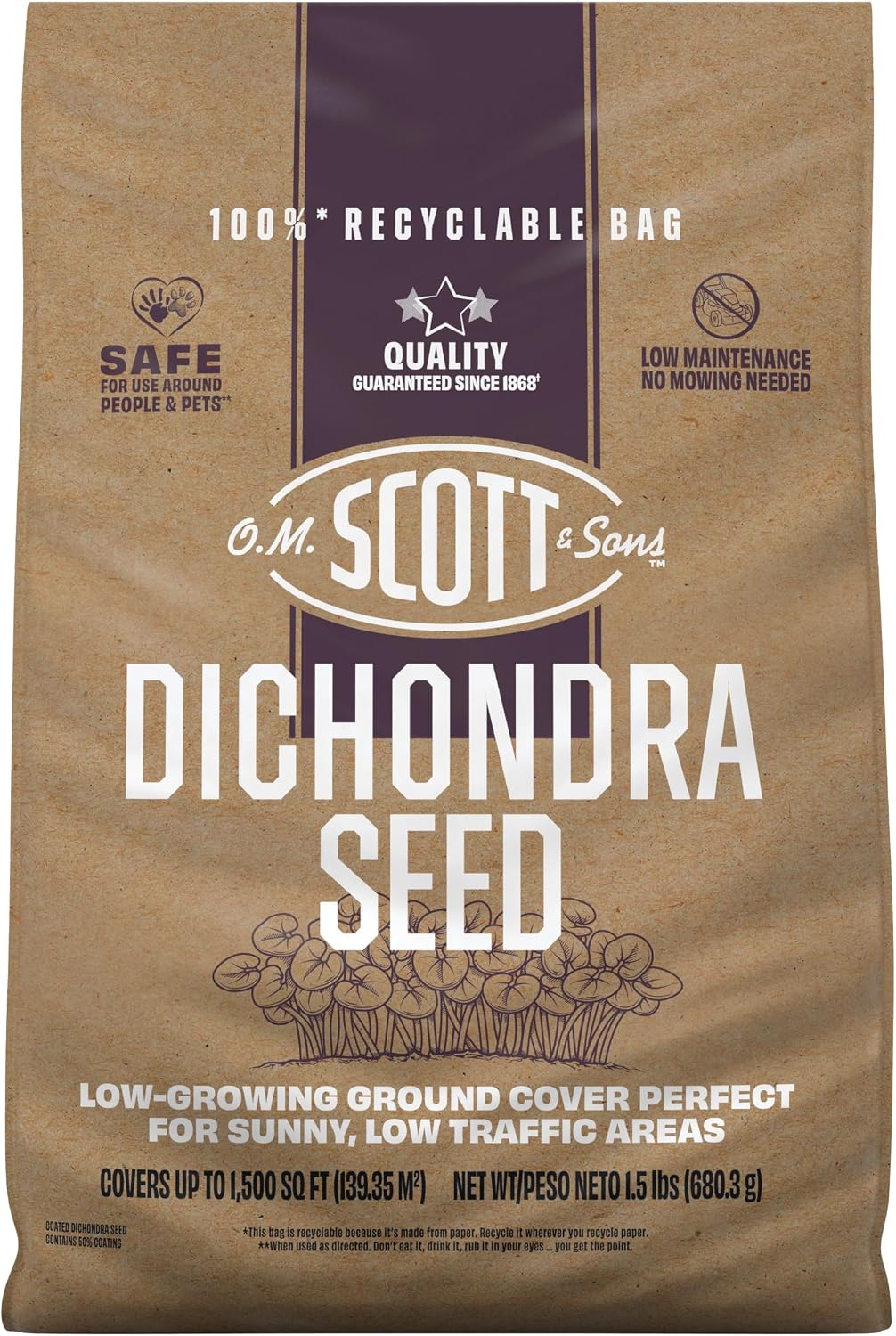
O.M. Scott & Sons Dichondra Seed, 1.5 lb
| Indoor Outdoor Usage | Outdoor |
|---|---|
| Other Special Features of the Product | Pet Friendly |
| Sunlight Exposure | Full Sun |
| Unit Count | 24 Ounce |
This 1.5 lb bag of O.M. Scott & Sons Dichondra seed is marketed as an alternative, low-maintenance ground cover for southern lawns. It is typically used in late spring or early summer when daytime temperatures consistently reach about 70°F; you spread seed with a walk-behind spreader and keep the area lightly watered until two weeks after sprouts appear. Notable features include pet-safe formulation, recyclable paper packaging, and coverage rates of about 750 sq ft for new lawns or 1,500 sq ft for overseeding. In practice dichondra produces a dense, low-growing mat that eliminates frequent mowing and works well in sunny, low-traffic spots. Limitations: it is intended for full-sun conditions in southern climates so it will not perform reliably in shaded areas or cooler northern lawns, and it is best for low-traffic zones rather than play areas. Success depends on proper timing, consistent moisture during establishment, and selecting a sunny site.
Best for: Homeowners who want a low-maintenance, no-mow lawn alternative for sunny, low-traffic southern yards and who prioritize ease of care and minimal upkeep.
Less Ideal for: Gardeners with shaded yards, cooler northern climates, or those needing a durable turf for heavy foot traffic should look for shade-tolerant or wear-resistant ground covers instead.
- Low-growing ground cover that removes the need for regular mowing in suitable sites
- Formulated to be safe for people and pets when used as directed
- Covers up to 750 sq ft for new lawns and 1,500 sq ft for overseeding from one 1.5 lb bag
- Comes in recyclable paper packaging
- Designed for full-sun southern lawns and not suitable for shaded areas
- Not ideal for high-traffic lawns where wear tolerance is required
Verdict: Choose this dichondra seed if you want a simple, no-mow ground cover for sunny southern lawns that is pet-friendly and low maintenance.
BuggyBeds Creeping Thyme Herb Seeds (17500 Count)

| Unit Count | 17500 Count |
|---|---|
| Indoor Outdoor Usage | Outdoor |
| USDA Hardiness Zone | 5-9 |
| Expected Blooming Period | Late Spring To Early Fall |
| Moisture Needs | Low |
These BuggyBeds creeping thyme seeds are sold in a very large 17,500-count packet and are aimed at establishing a fragrant, low-growing ground cover that suppresses weeds and attracts pollinators. Typical use is direct sowing in spring or fall where you want a carpet-like planting between stones, on slopes, or in areas that are hard to mow. The seeds produce a drought-tolerant perennial that blooms from late spring through early fall and performs best in partial shade to full sun in zones 5 to 9. Practical benefits include minimal ongoing care once established, strong weed suppression, and a pleasant aroma when walked on. Because the packet contains so many seeds, it is cost-effective for covering large areas or multiple projects. Important limitations are that success depends on proper soil contact and site preparation, and germination rates can vary so you may need time and patience to get a uniform stand; very heavy clay with poor drainage will still need amendment for best results. This is a straightforward option for gardeners who want an inexpensive, attractive ground cover for drier, well-drained spots.
Best for: Gardeners looking to cheaply establish a fragrant, low-care ground cover over large or difficult-to-mow areas and who prioritize value and low ongoing maintenance.
Less Ideal for: Gardeners seeking an instant lawn-like cover or planting in permanently waterlogged clay sites where drainage cannot be improved.
- Very large 17,500 seed count makes it economical for covering large areas
- Drought-tolerant perennial habit reduces watering once established
- Low-maintenance growth habit that helps suppress weeds
- Attractive, fragrant ground cover that attracts pollinators
- May require site prep and soil amendment for heavy clay to ensure good drainage
- Germination and uniform coverage can be variable, so establishment may take time
Verdict: If you need an inexpensive, drought-tolerant ground cover to seed large areas, this high-count creeping thyme pack offers strong value and low long-term care.
AVERAR Variegated Delosperma (Ice Plant) Live Succulent

| Moisture Needs | Moderate Watering |
|---|---|
| USDA Zones | 5-9 |
| Unit Count | 1 Count |
This AVERAR variegated Delosperma is a small live ice plant intended for groundcover in sunny, well-drained spots. It produces bright flowers from late spring through early fall and is rated for USDA zones 5 through 9, which makes it appropriate for Zone 9 gardens that need reliable, low-water cover. Typical use is planting in groups along slopes, between pavers, or in rock gardens where it can form a mat and suppress weeds. Notable practical features are drought tolerance, a preference for full sun, and moderate watering needs, which reduce maintenance once established. As a live plant sold as one unit, buyers should plan to purchase multiple plants for quick coverage and expect a season or two for spread. Limitations include the single-plant unit count and the need for well-drained soil; it will not do well in heavy clay or consistently wet areas. For gardeners who want dependable, low-maintenance groundcover in warm climates, this variety performs well, but expect to plan spacing and numbers to achieve full coverage.
Best for: Gardeners in Zone 9 seeking a low-maintenance, sun‑loving groundcover who prioritize reliable drought tolerance and seasonal blooms.
Less Ideal for: People with poorly drained or consistently wet soils or those wanting immediate, instant coverage without planting multiple units.
- Drought-tolerant and suited to hot, sunny sites common in Zone 9
- Blooms from late spring to early fall for extended seasonal color
- Prefers full sun and well-drained soil which lowers maintenance once established
- Sold as a single plant so achieving full groundcover requires multiple purchases or time to spread
Verdict: A dependable, low-water variegated ice plant that provides long-season blooms and establishes into a hardy groundcover for Zone 9 sunny sites.
Outsidepride White Dutch Clover Seed, 2 lb

| Indoor Outdoor Usage | Outdoor |
|---|---|
| Other Special Features of the Product | Attracts Pollinators |
| Sunlight Exposure | Full Sun |
| Moisture Needs | Little To No Watering |
| Material Features | Heirloom |
Outsidepride White Dutch Clover is a perennial clover seed sold in a 2 pound bag and treated (nitrocoated and inoculated) to support reliable germination and soil nitrogen fixation. It is typically broadcast or mixed with grass/cover-crop seed, lightly raked in, and kept moist until established; germination is expected within about two weeks under warm soil conditions. Notable features include drought tolerance from a deep root system, attractiveness to pollinators when it blooms in summer, and an ability to form dense ground cover that suppresses weeds and reduces erosion. Practical benefits for full-sun sites include low watering needs once established, weed suppression, improved soil fertility from nitrogen fixation, and a visually pleasing carpet of small white flowers. Important limitations are that it grows low to the ground (a few inches up to a foot) so it is not a turf substitute where heavy foot traffic or formal mowing height is required, and establishing a uniform stand requires correct seeding rate and initial moisture management. This seed is best used for informal lawns, slopes, pollinator strips, and pasture mixes rather than high-traffic ornamental lawns.
Best for: Gardeners and homeowners who want a low-maintenance, pollinator-friendly ground cover or lawn alternative for sunny areas and slopes and who prioritize ecological benefits and ease of establishment.
Less Ideal for: Property owners who need a formal, high-traffic turf or a grass lawn with traditional mowing and wear resistance should consider conventional grass seed blends instead.
- Treated (nitrocoated and inoculated) seed for improved germination and soil health
- Attracts pollinators with fragrant white summer blooms
- Forms dense ground cover that helps suppress weeds and control erosion
- Drought tolerant once established, suitable for low-water sites
- Not suited for heavy foot traffic or formal turf uses
- Requires initial moisture and correct seeding rate for an even stand
Verdict: A quick-establishing, pollinator-friendly ground cover seed that improves soil nitrogen and holds sunny slopes and informal lawns with minimal ongoing watering.
Outsidepride Dichondra Repens Ground Cover Seeds (32 oz)

| Sunlight Exposure | Partial Sun |
|---|---|
| Expected Planting Period | Spring |
| USDA Hardiness Zone | 7 |
| Soil Type | Loam Soil |
| Moisture Needs | Moderate Watering |
Outsidepride Dichondra Repens is a bulk packet of ground cover seed intended to establish a dense, low-growing carpet in warm, low-traffic areas. It is typically sown in spring on prepared loam soil and prefers partial sun, making it a common choice for USDA zones around 8 to 11, including zone 9. Notable features include heirloom seed stock, moderate water needs, and a creeping habit that fills bare spots and helps control erosion on slopes and planters. In practice the plants form broad circular leaves that stay low to the ground and are soft underfoot, so they work well as a lawn alternative for garden beds, patios, and containers. Expect faster establishment in warm seasons and reasonable drought tolerance once established, but it is best suited to areas without heavy foot traffic. Because this is seed, success depends on site preparation, correct planting timing, and consistent early watering, and results vary with local conditions.
Best for: Buyers in warm climates who want a low-maintenance, soft-feeling lawn alternative for shady to partly sunny, low-traffic areas and who prefer a conservative, dependable choice that establishes from seed.
Less Ideal for: People who need a durable, high-traffic turf replacement or who want an instant groundcover solution without the patience required for seeding and establishment.
- Forms a dense, low-growing carpet that hides bare soil and reduces weed pressure
- Heirloom seed with moderate water needs that develops good drought tolerance once established
- Effective for erosion control on slopes and in containers due to its creeping root habit
- Large 32 ounce unit suitable for covering substantial areas without repeated purchases
- Not suitable for high-traffic lawns or heavy wear areas
- Performance depends on proper site prep and consistent watering during establishment
Verdict: A dependable seed option for zone 9 gardeners who want a low-maintenance, drought-tolerant ground cover for shady to partly sunny, low-traffic areas.
Choosing the Right Ground Cover for Zone 9: Key Factors to Consider
Heat and Drought Tolerance
Zone 9 summers are often long and hot, so a ground cover must survive sustained high temperatures and intermittent dry periods. Plants with deep or efficient root systems, succulent leaves, or drought-deciduous habits will maintain coverage with less irrigation. Consider how a species behaves during peak heat: some will brown back but resprout in fall, while others retain evergreen vigor.
Reliable heat and drought tolerance reduces supplemental watering, lowers establishment failure risk, and protects soil structure. Match species to your actual sun exposure and microclimate; a sheltered north-facing bed may tolerate less heat-resistant options than a fully exposed slope.
Spread Rate and Control
How quickly a ground cover spreads affects how many plants you need, how fast it suppresses weeds, and whether it will crowd nearby plants. Aggressive spreaders provide fast coverage but can encroach on flower beds or pathways if not managed. Clumping or slower-spreading species are easier to contain but require more initial planting to close gaps.
Think about boundary treatments, regular trimming, or planting densities that match the desired pace of coverage. If you want a low-maintenance field, choose a steady but controllable spreader; for tight beds or container edges, prefer species with defined clumps or short runners.
Establishment Speed
Faster-establishing ground covers reduce erosion risk and cut back on weeding during the critical first season. Establishment speed depends on planting method, root structure, and local conditions. Plug or mat plantings often establish more quickly than seed, and species adapted to warm-season growth will put on faster growth in Zone 9.
Factor in watering and mulching during establishment to help plants set roots. If rapid soil protection is a priority for slopes or newly cleared beds, prioritize options known to fill in within a single growing season.
Maintenance and Upkeep
Maintenance needs include mowing or trimming, pruning to control spread, seasonal cleanup, and fertilization. Some ground covers are essentially no-maintenance once established, while others require periodic shearing to keep a tidy appearance. Consider how much time you want to spend managing edges, removing spent blooms, or thinning plants to prevent matting.
Also include pest and disease susceptibility in maintenance expectations. Plants that are low-maintenance in one climate can become high-maintenance in another if diseases or pests are more active, so pick species with a track record of minimal intervention in warm, dry environments.
Soil Preference and Erosion Control
Soil texture, fertility, and drainage determine which ground covers will thrive. Sandy, fast-draining soils suit drought-tolerant species, while loamy or clay soils favor deeper-rooted covers that can stabilize heavier substrates. For slopes, root architecture that binds soil and forms a dense mat is essential to reduce runoff and soil loss.
Also assess tolerance for seasonal waterlogging in low spots. Even in dry zones, storm events can saturate soil; choose covers that recover from occasional wet feet if your site experiences heavy seasonal rains.
Light Conditions and Placement
Zone 9 gardens can include a mix of full sun, partial shade, and deep shade microclimates. Many warm-climate ground covers prefer full sun and will be less vigorous in shaded areas. Conversely, some shade-tolerant species will thrive under trees or on north-facing walls but may struggle in hot, exposed sites.
Map your garden's light conditions before planting and pick species suited to each exposure. Proper placement reduces stress, cutting down on supplemental watering and replacement planting.
Best Uses by Site
Different ground covers work better in specific landscape roles. For erosion-prone slopes look for low-growing plants with fibrous root systems that form dense mats. For sunny, decorative beds choose covers with attractive foliage or seasonal flowers that also tolerate full sun and minimal irrigation. In shaded areas under mature trees use species that tolerate root competition and lower light levels.
Placement decisions should balance functional needs and aesthetics. Consider mixing two compatible covers-one for fast coverage and one for long-season interest-to get both quick protection and pleasing texture through the year.
- Slopes and erosion control: dense, fibrous-rooted species
- Sunny beds and pathways: heat-tolerant, wear-resistant covers
- Shade and tree understory: low-light tolerant, less competitive plants
- Low-water lawns: compact, wear-tolerant covers that handle occasional foot traffic
Planting and Establishment Tips
Prepare the planting area by removing weeds and loosening soil to a shallow depth. Incorporate organic matter if the soil is very poor, but avoid heavy fertilization that encourages weak, leggy growth during establishment. Plant plugs or mats at recommended spacing for faster coverage; seeding works for some species but often takes longer.
Mulch lightly to conserve moisture during the initial rooting phase, keeping mulch away from crowns to avoid rot. Water consistently but moderately until plants show new growth, then taper irrigation to train roots deeper. Monitor for weeds and remove them while small so ground covers can fill in without competition.
- Plant during spring or early fall for best root development
- Use light mulch for moisture retention but avoid smothering crowns
- Water regularly only through establishment to encourage deep roots
Managing Spread and Containment
Containment strategies depend on the species' growth habit. Install physical barriers along borders for aggressive runners or use regular pruning to keep mats from encroaching. For large areas, allow fast spreaders but keep a buffer zone near planting beds where you want to limit intrusion.
If a cover starts crowding adjacent plantings, thin by cutting and removing sections or lift and divide clumps in spring or fall. Annual oversight prevents small problems from becoming large infestations and keeps the landscape tidy.
- Use edging or root barriers along beds bordering walkways
- Prune runners back after peak growth seasons
- Divide dense mats when central dieback or thinning occurs
Watering and Seasonal Care in Zone 9
Many Zone 9 ground covers benefit from reduced watering once established, but summer heat spikes may call for supplemental irrigation in prolonged dry periods. Use deep, infrequent watering to promote root depth. Monitor for drought stress signs like leaf wilting or browning and adjust irrigation accordingly.
Seasonal cleanup is often minimal: remove dead growth in late winter or early spring, and perform light shearing after heavy flowering to refresh the canopy. Avoid heavy feeding, which can increase disease susceptibility and demand more water.
- Prefer deep, infrequent watering over shallow daily watering
- Light annual pruning refreshes appearance and controls spread
- Observe plants after storms for erosion and replant bare spots promptly
Combining Ground Covers with Other Plants
Ground covers can complement perennials and shrubs when chosen for compatible water and light needs. Use lower-growing covers as living mulch under taller plants to suppress weeds and conserve moisture. Leave space at shrub bases to prevent moisture buildup around trunks.
For pollinator interest, blend flowering ground covers with seasonal perennials so there is nectar across the year. Just ensure the combined planting does not create excessive competition for limited water in dry summers.
- Match water and light requirements between covers and neighboring plants
- Keep covers away from trunks to reduce rot risk
- Stagger flowering times for continual pollinator resources
How We Chose the Best Ground Cover for Zone 9
We focused on garden performance in USDA Zone 9 microclimates. Primary evaluation criteria emphasized heat tolerance, drought response, and seasonal resilience so recommendations suit extended warm periods and occasional dry spells common in this zone. We also judged spread control and invasiveness to favor options that cover soil without overtaking adjacent beds or hardscape. Establishment speed and ease of planting mattered because quick soil coverage reduces erosion and weed pressure. Visual and functional traits were considered, including foliage density, flowering that supports pollinators, and how the cover handles foot traffic. Products were excluded if they are known to be highly invasive in warm climates, require temperate cold periods to thrive, or depend on constant high irrigation. We prioritized ground covers that perform reliably with moderate dry-season care and that fit a range of uses: erosion control on slopes, sunny bed fill, or low-water lawn alternatives. The scoring labels below align with these selection filters and represent the concrete dimensions we used to compare options.
FAQ
Can ground covers survive Zone 9 summer heat without extra watering?
Many ground covers adapted to Zone 9 can tolerate summer heat with minimal supplemental watering once established. However, newly planted areas need regular moisture until roots develop. During prolonged heat waves, occasional deep watering helps prevent dieback.
How long does it take for ground cover to fully establish?
Establishment time varies by species and planting method. Fast-spreading runners or mats can fill gaps within a single growing season when planted as plugs or mats. Seeded areas usually take longer and may need a second season to reach full coverage.
Will ground covers damage tree roots or compete with shrubs?
Competition is possible under trees or near shrubs, especially for moisture. Choose shallow-rooted, low-competition species for understory planting and leave a small mulch-free area around trunks to minimize crown moisture and rot risk.
Are any ground covers invasive in warm climates?
Some vigorous ground covers can become aggressive in warm zones if not contained. It often depends on local conditions and management. Select species known for controlled spread or plan for edging and periodic trimming if you use aggressive spreaders.
Can ground covers replace a lawn in Zone 9?
Yes, some low-growing, wear-tolerant ground covers make effective low-water lawn alternatives in Zone 9. Consider intended use, foot traffic levels, and maintenance needs, and select a cover that tolerates occasional wear and recovers quickly.
Final Verdict
Choose ground covers that match your microclimate, sun exposure, and maintenance preferences. Prioritize heat and drought tolerance for sunny, exposed sites and pick controllable spreaders where beds meet lawns or paths. For slopes, favor species with fibrous roots that hold soil; for shaded spots, select low-light tolerant covers. Balancing establishment speed against long-term maintenance needs will help you decide how many plugs to plant and whether to use physical edging. With the right match to site conditions and a simple planting plan, you can achieve durable soil coverage and a low-water landscape suited to Zone 9.
