

Note: This article contains affiliate links. If you click on these links and make a purchase, I may earn a small commission at no extra cost to you. This helps support my research and content. Read my full affiliate disclosure here.
If you split your own firewood, a purpose-built gas chainsaw makes batch cutting faster and more reliable than small electric models. You need an engine that delivers steady torque for large rounds, a robust bar and chain that stays sharp through heavy use, and a machine you can service in the field. This guide highlights six top options shortlisted for firewood tasks and explains the practical tradeoffs you should weigh. We evaluate cutting power, durability, ease of maintenance, vibration and handling, and fuel-and-oil efficiency to help you pick the right saw for season-long wood preparation.
Top Picks at a Glance
| Best Quality Built to a higher standard if you want something more solid | Husqvarna 450 Rancher 20" Gas Chainsaw (50.2 cc, 3.2 HP) |  |
| Best Value The sweet spot between price and what you get | WOIZAO 58cc Gas Chainsaw with 20" and 18" Dual Guide Bars |  |
| Best Budget The cheapest option that still gets the job done reliably | RYIRSHOH 58cc 20" Gas Chainsaw with 2‑Cycle Engine |  |
| Highest Rated A top-rated pick with lots of positive feedback | NEO-TEC NS872 72cc Gas Chainsaw with 24-inch Bar |  |
| Most Popular A crowd favorite that many people choose with confidence | VEVOR 62cc Gas-Powered Chainsaw, 20-inch Guide Bar |  |
| Best Seller A high-volume bestseller chosen again and again | Husqvarna 455 Rancher Gas Chainsaw, 20-inch, 3.5 HP |  |
Husqvarna 450 Rancher 20" Gas Chainsaw (50.2 cc, 3.2 HP)

| Power Source | Gas Powered |
|---|---|
| Horsepower | 3.2 hp |
| Chain Length | 20 inches |
The Husqvarna 450 Rancher is a workhorse gas chainsaw aimed at users who need reliable power for pruning, yard cleanup, and firewood cutting. It pairs a 50.2-cc X-Torq two-stroke engine with a 20-inch bar to deliver strong cutting performance and steady torque under load. Practical features include Smart Start and an air purge for easier, quicker startups and an Air Injection centrifugal pre-cleaning system that reduces debris reaching the air filter to help engine longevity. LowVib technology, an ergonomic rear handle and soft inlay improve comfort during extended use, and an inertia-activated chain brake adds a safety layer against kickback. Expect robust power and professional handling, but also the usual maintenance needs of a gas saw such as fuel mixing, routine filter and spark plug service, and higher noise and emissions compared with battery models. For buyers wanting consistent heavy-duty cutting and proven engine performance, this model is a solid choice; for very light occasional jobs, it may be more saw than necessary.
Best for: Experienced homeowners and semi-pro users who prioritize sustained cutting power and durability for frequent tree work, firewood cutting, and heavy yard cleanup.
Less Ideal for: Casual users with only occasional light trimming needs or those who prefer low-noise, low-maintenance battery tools.
- Powerful 50.2-cc X-Torq engine delivers strong cutting performance for heavy tasks
- Smart Start and air purge make starting quicker and less finicky
- Air Injection centrifugal system reduces debris in the air filter for longer service intervals
- Ergonomic design with LowVib and soft inlay improves comfort during extended use
- Requires regular gas and two-stroke oil mixing and routine maintenance inherent to gas engines
- Heavier and louder than cordless electric alternatives
Verdict: Choose the Husqvarna 450 Rancher when you need a durable, high‑power gas chainsaw for frequent heavy cutting tasks.
WOIZAO 58cc Gas Chainsaw with 20" and 18" Dual Guide Bars

| Power Source | Gas Powered |
|---|---|
| Horsepower | 3.7 hp |
This WOIZAO 58cc gas chainsaw is built for heavy backyard cutting and firewood preparation, pairing a high-revving 3.7 hp engine with both 20-inch and 18-inch guide bars so you can switch between felling and detailed cuts. Typical use is cutting logs, bucking firewood, and clearing medium trees and large limbs; the dual-bar setup adds practical versatility without needing separate tools. Notable features include an automatic oiler to keep the bar and chain lubricated, an instant-response chain brake and anti-vibration design to reduce user fatigue, and a park-style ignition system intended to make starting more reliable. In real-world use you get strong cutting power and the convenience of two bar lengths, but expect the usual gas-saw maintenance such as fueling with mixed oil, chain tensioning, and periodic tuning. The saw is relatively heavy and aimed at users comfortable with gas engines rather than casual users seeking ultra-light or electric models.
Best for: Buyers who need a powerful, gas-driven saw for regular firewood cutting and occasional felling and who are comfortable maintaining a two-stroke engine and chain system.
Less Ideal for: Casual users who prefer low-maintenance electric or battery saws or anyone who needs the lightest possible tool for occasional pruning tasks.
- High 58cc engine output suitable for cutting firewood and felling medium trees
- Includes both 20" and 18" guide bars for heavy-duty cutting and finer work
- Automatic oiler provides continuous bar and chain lubrication during use
- Chain brake and anti-vibration features improve on-the-job safety and comfort
- Relatively heavy and requires regular gas-engine maintenance and tuning
- Documentation and support clarity may vary since advanced setup is needed
Verdict: A robust gas chainsaw that gives practical power and the flexibility of two bar lengths for efficient firewood cutting.
RYIRSHOH 58cc 20" Gas Chainsaw with 2‑Cycle Engine
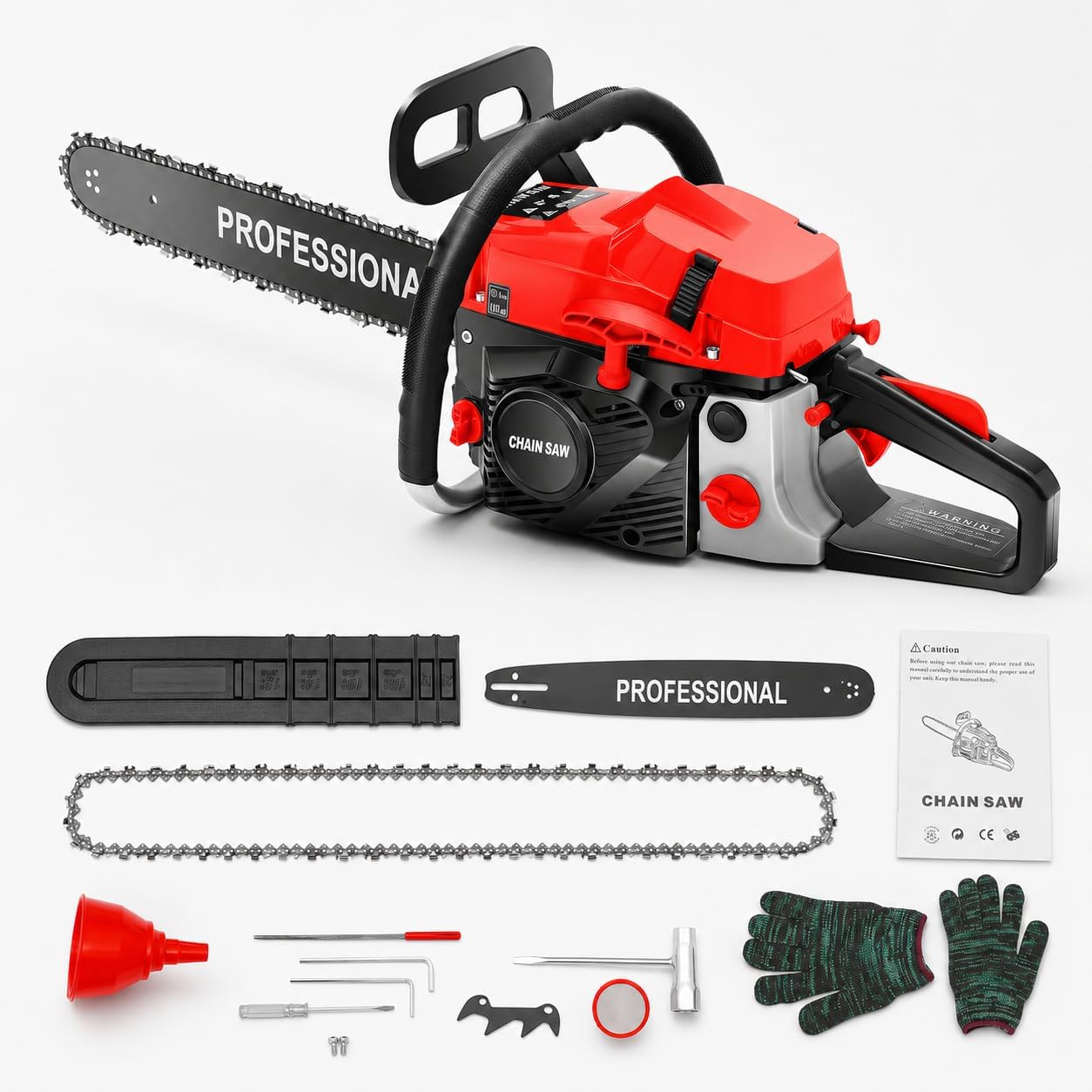
| Power Source | Gas Powered |
|---|---|
| Horsepower | 4 hp |
This RYIRSHOH 20-inch gas chainsaw is a value-oriented machine aimed at homeowners who need a capable saw for cutting firewood, felling small trees, and pruning. It uses a two-stroke, high-RPM engine that the listing says delivers around 2.6 kW and claims efficient fuel use. The saw includes an auto-lubrication system and a manganese steel guide bar with a hardened chain, which helps reduce maintenance and keeps cutting performance consistent during typical yard work. Built-in safety features such as a dual-hand switch, throttle lock, and an emergency brake baffle reduce accidental throttle engagement and help control kickback risk. The tool also advertises vibration-damping handles and an air-cooling system to improve comfort during extended jobs. Expect practical benefits like decent cutting power for a household saw and fewer manual maintenance steps, but be aware that lower-cost gas saws can have more variability in long-term durability and may require basic mechanical tuning. Suitable for occasional to moderate use rather than professional daily heavy cutting.
Best for: Cost-minded homeowners who want a full-size 20-inch gas saw for occasional to moderate yard work and woodcutting without paying for pro-grade equipment.
Less Ideal for: Professional arborists or users who need a commercial-duty saw for daily heavy cutting should choose a higher-end, serviceable model with documented durability.
- 20-inch guide bar suitable for splitting firewood and felling small to medium trees
- Automatic chain lubrication reduces hands-on maintenance during use
- Multiple safety features including dual-hand switch, throttle lock, and emergency brake
- Manganese steel guide bar and hardened chain designed to resist wear
- Lower-cost construction may require more frequent tuning and parts replacement over time
- Listed specs and performance claims are limited and lack detailed manufacturer testing data
Verdict: A budget-friendly 20-inch gas chainsaw that delivers practical cutting power and handy safety and maintenance features for homeowners doing occasional to moderate woodcutting.
NEO-TEC NS872 72cc Gas Chainsaw with 24-inch Bar

| Power Source | Gas Powered |
|---|---|
| Horsepower | 4.9 hp |
| Chain Length | 24 inches |
| Included Components | Chainsaw head with 24'' bar and chain |
The NEO-TEC NS872 is a purpose-built 72cc gas chainsaw aimed at heavy cutting tasks like felling large trees and clearing dense hardwood. It pairs a 2-cycle, air-cooled engine rated at 3.6 kW (4.9 hp) with a 24-inch bar and 3/8 pitch chain to deliver the bite and reach needed for sizable logs. Practical features include an inertia-activated chain brake for safety, an easy-start system and a carburetor/spark plug combination intended to improve cold starts, plus LowVib damping to reduce operator fatigue during prolonged use. The magnesium alloy body helps with heat dissipation and durability during sustained work. Expect strong cutting performance and a build focused on dependable operation, but also the usual gas-saw considerations: regular fuel and oil maintenance, noise, vibration despite mitigation, and a heavier unit to manage during long sessions. For owners prioritizing reliability, the NS872 emphasizes robust components and serviceable systems that keep it running through demanding jobs.
Best for: Buyers who need a dependable, heavy-duty saw for regular felling, land clearing, or professional property work and who prioritize durable, serviceable components over light weight.
Less Ideal for: Casual gardeners, occasional users, or those who need a lightweight, low-noise option for small-yard tasks should consider smaller electric or lighter gas models instead.
- High-displacement 72cc engine for strong continuous cutting power
- 24-inch bar suited to felling and large-diameter logs
- Inertia-activated chain brake for immediate safety shutdown
- LowVib damping and extended grip for reduced fatigue during long jobs
- Magnesium alloy body for improved heat dissipation and durability
- Heavier typical weight requiring more effort for prolonged handheld use
- Requires routine gas and 2-cycle maintenance and tuning
Verdict: Choose the NS872 when you want a robust, serviceable 24-inch gas chainsaw built to deliver reliable power and durability for heavy-duty cutting jobs.
VEVOR 62cc Gas-Powered Chainsaw, 20-inch Guide Bar

| Engine displacement | 62CC |
|---|---|
| Horsepower | 3.8 hp |
| Chain pitch | 0.325 in |
| Chain links | 76 links |
| Fuel tank capacity | 550 ml |
The VEVOR 62cc gas-powered chainsaw is built to tackle medium to large jobs like felling small trees, cutting firewood, and heavy pruning. Its 3.8 hp two-stroke engine and 20-inch guide bar can cut logs up to about 18 inches in diameter, and a high-revving 12,000 rpm top speed helps it chew through dense wood. The saw includes practical touches such as a longer pull rope and cold/hot start settings to help with starting in varied temperatures, an emergency stop lever, and a corrosion-resistant 45# steel guide bar with a 0.325-inch pitch chain (76 links). The PA6 composite body and separate fuel and chain-oil tanks aim to reduce leaks and withstand outdoor conditions. Expect a substantial tool weight and the usual maintenance demands of a gas saw: you will need proper fuel mixing, routine chain tensioning, sharpening, and periodic engine tuneups. Also plan for noise, vibration, and protective gear when operating. For buyers who prioritize power and cut capacity, this VEVOR delivers straightforward performance, but it requires the typical hands-on upkeep of a 2-stroke gas machine.
Best for: Buyers who need brute cutting power for frequent medium-to-large tree work and accept hands-on maintenance and safety protocols to keep a gas saw performing reliably.
Less Ideal for: Casual gardeners, those who prefer low-maintenance tools, or users who need a quiet, vibration-minimized option should consider electric or battery alternatives instead.
- High cutting capacity with a 20-inch guide bar suitable for logs up to about 18 inches in diameter
- Strong 62cc two-stroke engine rated at 3.8 hp for demanding yard and light-logging tasks
- Cold and hot start options plus an extended pull rope to improve starting reliability in different conditions
- Separate chain oil tank and chain adjuster for on-the-job lubrication and easy tensioning
- Emergency stop and guard design to help limit flying debris and improve operator safety
- Requires regular gas/oil mixing, carburetor adjustments, chain sharpening, and general 2-stroke maintenance
- Relatively heavy and produces typical gas-saw noise and vibration which mandate PPE during use
Verdict: If you want a powerful 20-inch gas chainsaw that handles large-diameter cuts and you are prepared for routine 2-stroke upkeep, this VEVOR is a work-oriented choice.
Husqvarna 455 Rancher Gas Chainsaw, 20-inch, 3.5 HP

| Power Source | Gas Powered |
|---|---|
| Horsepower | 3.5 hp |
| Chain Length | 20 inches |
The Husqvarna 455 Rancher is a robust gas chainsaw aimed at homeowners and landowners who need a dependable workhorse for tasks like storm cleanup, cutting firewood, and routine tree trimming. It uses a 3.5-HP X-Torq two-stroke engine and a 20-inch bar to deliver strong cutting power while Smart Start and an inertia-activated chain brake simplify starting and improve safety. Practical features such as Air Injection to reduce debris reaching the filter, side-mounted chain tensioning for on-the-fly adjustments, LowVib vibration dampening, and an ergonomic offset front handle make longer jobs less tiring. Maintenance is straightforward thanks to the automatic oiler and accessible tensioning, but being a gas model it requires fuel mixing and periodic engine upkeep that electric alternatives avoid. Its weight and fuel noise are typical for this class, so expect more vibration and emissions than battery or corded saws. For someone who needs reliable, professional-level cutting performance in an all-around package, this model balances power and user-friendly features well.
Best for: Buyers who want a capable, versatile saw for frequent property maintenance and heavier cutting tasks and who prioritize cutting performance and durability over quieter electric operation.
Less Ideal for: Casual users with small yards or those who prefer low-noise, low-maintenance electric or battery saws should consider lighter alternatives.
- Powerful 3.5-HP X-Torq engine suitable for heavy cutting and firewood
- Smart Start and inertia chain brake for easier starting and improved safety
- Air Injection centrifugal system reduces debris reaching the air filter to extend engine life
- Side-mounted chain tensioning and automatic oiler simplify adjustments and routine maintenance
- Requires gas and oil mixing and regular engine maintenance unlike battery models
- Heavier and louder than electric chainsaws, which can increase fatigue and noise on long jobs
Verdict: Choose the 455 Rancher when you need a durable, pro-capable gas chainsaw that balances strong cutting power with user-focused features for regular property work.
Choosing the Right Gas Chainsaw for Firewood: Key Factors to Consider
Engine Displacement and Torque
Engine size determines how readily the saw maintains speed under load when cutting large-diameter rounds. A saw with higher displacement usually sustains chain speed through thick sections, reducing the chance of pinching and the need for aggressive feed pressure.
Torque matters more than peak horsepower for firewood cutting because wood density and knotting demand steady pulling force. Look for engines with a reputation for delivering usable torque in the mid-range RPMs rather than only high-rev peak power.
Bar Length and Chain Compatibility
Bar length controls the maximum single-pass cut size and affects maneuverability. For typical firewood rounds, mid-length bars are a practical compromise: long enough to cut through 18 to 24-inch rounds while still manageable for handling and starting cuts.
Chain type and pitch influence cutting speed, maintenance frequency, and replacement part availability. Choose a common pitch and gauge that you can easily source replacement chains and sprockets for, and confirm the saw supports the bar length you expect to use.
Durability of Drive Components
Firewood work is punishing on clutches, sprockets, and drive links. Durable clutch assemblies and heavy-duty sprocket noses reduce wear when you frequently start, stop, or pull through knotted wood. Metal-reinforced hubs and quality sprockets extend service intervals and reduce the risk of sudden failure during heavy batches.
Also consider bar nose construction and whether the saw uses replaceable nose sprockets, since these parts take most of the wear during repeated cutting sessions.
Ease of Field Service and Maintenance
A saw you can tune, sharpen, and replace common parts on quickly will spend more time cutting and less time in the workshop. Clear access to spark plugs, carburetor adjustments, and chain tensioning mechanisms matters in cold or remote settings.
Simple carburetor adjustments, an accessible air filter that can be cleaned without tools, and a tool-free chain-tensioning system are all features that reduce downtime when preparing large firewood batches.
Vibration Control and Handling Ergonomics
Long shifts cutting firewood amplify fatigue from poor vibration isolation. Effective anti-vibration mounts and comfortable handle shapes make it easier to control the saw during repetitive cuts and reduce fatigue-related errors.
Balance matters as much as raw weight. A well-balanced saw that places the bar close to your center of gravity is easier to feed through wood and safer when making awkward cuts on round logs.
Fuel Consumption and Bar-Oil Use
Fuel and bar-oil consumption affect operating cost and how often you need to stop to refuel. High-consumption saws may offer power but increase the logistics of long cutting sessions in the field. Look for machines with efficient carburetion and adjustable oil pumps to reduce waste.
Consider also the practicality of transporting fuel safely and the availability of the correct mixing ratios or separate oil systems if you will be cutting in remote areas without easy resupply.
Recommended Bar Lengths for Common Firewood Tasks
Choosing the right bar length depends on the size of the rounds you typically cut. For small-diameter hardwoods and splitting into kindling, a shorter bar improves control and reduces kickback risk. For full rounds and midsized logs, a mid-length bar is more efficient.
If you regularly process 18-inch rounds or larger, select a bar that lets you make a through cut without repeatedly repositioning the log. For occasional larger rounds, pairing a mid-length saw with a longer spare bar can be a practical solution.
- Short bars (12 to 14 inches) for maneuverability and small logs
- Mid bars (16 to 20 inches) for most firewood cutting needs
- Long bars (20+ inches) for large rounds or one-pass cuts
Sharpening and Chain Care Tips for Heavy Use
Keeping the chain sharp is essential to maintain cutting efficiency and reduce stress on the engine. Use a filing guide sized to your chain pitch and sharpen after every few cubic feet of wood or whenever the saw requires more push pressure to cut.
Regularly check chain tension and inspect links and drive teeth for wear. Replace or rotate chains to distribute wear, and clean pitch buildup from the bar groove to maintain proper oil flow.
- Carry a round file and depth gauge guide in the field
- Check tension after the chain warms up and stretches
- Use appropriate bar oil and keep the oiling passage clear
Safe Practices When Cutting and Bucking Firewood
Safety is paramount when processing firewood. Always wear appropriate personal protective equipment including eye protection, hearing protection, gloves, long pants, and chainsaw chaps. Clear the work area of trip hazards and bystanders before cutting.
Plan your cuts to avoid pinching the bar, and use wedges or a saw horse to keep rounds stable. If a log binds the chain, stop the engine and release tension before attempting to free the bar.
Maintain a firm stance and never cut above shoulder height. When refueling or performing adjustments, allow the engine to cool and follow the saw manufacturer's safety recommendations for spark arrestors and muffler condition.
- Use wedges to prevent bar pinching in green or knotty wood
- Work with a partner when handling large rounds
- Inspect for embedded metal such as nails or wire before cutting
Transporting and Storing a Firewood Chainsaw
Transport saws with a fitted scabbard to protect the bar and chain and secure the saw in a stable position in your vehicle. Keep fuel and bar oil in proper containers and label them clearly to avoid contamination.
For storage between seasons, run the engine until the carburetor is dry or follow the recommended stabilization process, and store the saw in a dry, ventilated place. Remove the chain or cover the bar to prevent accidental contact and reduce corrosion risk.
- Secure fuel in approved containers and store upright
- Drain or stabilize fuel for long-term storage
- Loosen chain tension slightly if storing for months
When to Consider Professional Servicing
Routine maintenance you can do at home includes spark plug checks, cleaning or replacing air filters, chain sharpening, and tensioning. However, if you notice excessive smoke, loss of compression, or persistent starting problems, professional servicing will diagnose carburetor or ignition issues.
Clutch slippage, damaged crankcases from impact, or worn crankshaft bearings are all examples of conditions that are best handled by a trained technician to ensure proper repair and safety compliance.
- Schedule professional inspection annually for high-use saws
- Seek service for clutch or crank issues rather than continuing to operate
- Keep a log of hours and maintenance to help technicians diagnose problems
How We Chose the Best Gas Chainsaw for Firewood
We selected entries based on the needs of gardeners and homeowners who regularly cut firewood rather than occasional limb trimming. Primary filters focused on engine displacement and torque characteristics suitable for cutting round logs and large sections, bar length compatibility for common firewood sizes, and construction features that affect durability under heavy use. We also prioritized saws with accessible service points, common replacement part availability, and clear maintenance procedures to keep machines running across seasons. Excluded from consideration were lightweight consumer saws with very small displacement intended only for pruning, and specialty carving or pole saws that are not practical for repeated firewood cutting. Important evaluation dimensions included startability and choke design, clutch and sprocket robustness, vibration isolation and handle ergonomics, cooling and air filtration for dusty woodcutting conditions, and fuel and bar-oil consumption rates. Each saw was checked for documented user-serviceability and parts availability to ensure practical ownership for people who put saws into regular firewood duty.
FAQ
What bar length is best for cutting my firewood for a typical home woodstove?
For most home woodstoves, a mid-length bar in the 16 to 20-inch range is a good balance between reach and control. It lets you cut common 16- to 20-inch rounds without excessive repositioning while remaining manageable for handling and sharpening.
How often should I sharpen the chain when cutting a lot of logs?
When processing large volumes of firewood, check and sharpen the chain every few hours of cutting or whenever you notice it requires extra feed pressure. Frequent sharpening keeps cuts efficient and reduces stress on the engine.
Can I use any fuel mix in a gas chainsaw for firewood?
Fuel requirements depend on the engine design. Many two-stroke saws require a specific gasoline-to-oil mix, while four-stroke designs use straight gasoline with a separate oil reservoir. Always follow the engine's recommended ratio and use fresh fuel to avoid starting and running problems.
How do I reduce vibration during long cutting sessions?
Choose a saw with good anti-vibration mounts and maintain proper handle grip and stance. Regularly service worn mounts and keep the chain sharp to reduce the force needed to cut, which in turn lowers felt vibration.
Is a longer bar always better for firewood?
Not always. A longer bar increases the ability to cut large rounds in a single pass, but it also adds weight, increases kickback risk, and can make the saw harder to control. Match bar length to the typical log size you process most often.
Final Verdict
Picking the right gas chainsaw for firewood comes down to matching engine torque and bar length to the size of rounds you process, while prioritizing durable drive components and easy field maintenance. Expect tradeoffs between raw power and manageability: heavier, higher-displacement saws cut faster but demand more skill and maintenance. Prioritize a saw you can service, a common chain pitch for easy replacement, and effective vibration control for long sessions. Those choices will keep you cutting safely and efficiently across an entire firewood season.
