

Note: This article contains affiliate links. If you click on these links and make a purchase, I may earn a small commission at no extra cost to you. This helps support my research and content. Read my full affiliate disclosure here.
Removing unwanted trees, stumps, suckers, or brush requires more than a generic herbicide. You need a product that reaches roots, reduces resprouting, and limits damage to nearby ornamentals or turf. This guide covers seven shortlisted weed killers for trees that are suited to uses around yards, fence lines, and small-scale land clearing. We evaluated application methods, root-penetration chemistry, and how each option performs for persistent regrowth. Below you will find how each pick was judged and what matters when treating trees and stumps, followed by practical guidance for common situations gardeners face.
Top Picks at a Glance
| Best Overall The best all-around choice for most situations | Corteva Tordon RTU Herbicide, Ready-to-Use Quart |  |
| Best Quality Built to a higher standard if you want something more solid | RM43 Concentrated 43% Glyphosate Plus Weed Preventer, 1 Gallon |  |
| Best Value The sweet spot between price and what you get | Hi-Yield Super Concentrate Killzall Weed & Grass Killer, 32 oz |  |
| Best Budget The cheapest option that still gets the job done reliably | Bonide Poison Ivy & Brush Killer BK-32 Concentrate, 16 oz |  |
| Highest Rated A top-rated pick with lots of positive feedback | Remedy Ultra Concentrated Herbicide for Pasture and Brush Control, 1 Gallon |  |
| Most Popular A crowd favorite that many people choose with confidence | Bonide Stump-Out Stump & Vine Killer, 8 oz with Applicator | 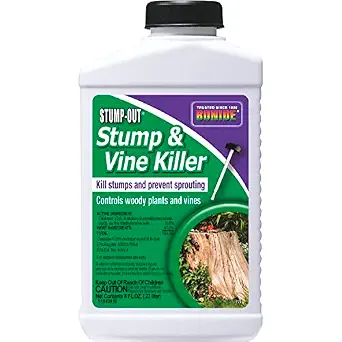 |
| Best Seller A high-volume bestseller chosen again and again | Roundup Weed & Grass Killer4 Refill, 1.25 gal |  |
Corteva Tordon RTU Herbicide, Ready-to-Use Quart

| Unit Count | 32 Ounce |
|---|---|
| Item Form | Liquid |
| Coverage | approximately 50-100 cut stumps, depending on size and application rate |
| Item Type Name | Tordon RTU Herbicide QT Size |
Tordon RTU is a pre-mixed, ready-to-use herbicide designed for treating cut stumps and controlling unwanted trees along fence rows, roadsides, and other non-crop areas. You apply it directly to freshly cut surfaces using the bottle applicator; the included blue dye helps you track treated stumps. Practical benefits include no measuring or mixing, straightforward single-person application, and coverage estimated for roughly 50 to 100 cut stumps per quart depending on stump size. Its liquid RTU form and clear directions make it useful for landowners, maintenance crews, and anyone managing woody regrowth without specialized equipment. Important limitations are that it is intended only for non-crop and forested areas and requires careful safety precautions to avoid skin or eye contact and to keep it away from children and pets. This product does not replace systemic treatments for standing trees that require injection or larger-volume commercial formulations, and it is not for general weed spraying across lawns or gardens.
Best for: Buyers who need a simple, no-mix solution to remove cut stumps and control regrowth on fence lines, roadsides, and similar non-crop areas and who prioritize ease of use and predictable application.
Less Ideal for: Homeowners seeking a general-purpose lawn weed killer or users needing systemic treatments for standing landscape trees should look for different formulations or professional services.
- Ready-to-use liquid so no mixing or measuring is required
- Bottle applicator with blue dye to mark treated stumps and simplify follow-up
- Formulated specifically for cut-stump and woody vegetation control in non-crop areas
- Coverage estimate provided to help plan how many stumps a quart will treat
- Intended only for cut-stump or surface treatments in non-crop/forest areas and not suitable for broadcast lawn or garden use
- Requires careful handling and personal protective measures to avoid exposure
Verdict: Buy this quart of ready-to-use Tordon when you want a simple, no-mix cut-stump treatment to reliably stop woody regrowth in non-crop areas.
RM43 Concentrated 43% Glyphosate Plus Weed Preventer, 1 Gallon

| Unit Count | 128 Fluid Ounces |
|---|---|
| Liquid Volume | 1 gallons |
| Active Ingredients | glyphosate |
| Coverage | 17297 square feet |
| Item Form | Spray |
RM43 is a high-concentration glyphosate plus weed preventer sold as a concentrate to mix with water and apply with a sprayer for spot or broad noncrop vegetation control. It is designed to kill established weeds and brush to the root and to prevent regrowth for up to a year when used as directed, making it suited to clearing fence lines, driveways, around barns, and other areas where no plants are wanted. The product is rainfast within two hours and claims coverage of roughly 17,297 square feet per gallon, so a single gallon can treat large areas after dilution. Key practical benefits are strong systemic control of woody and perennial weeds and long residual prevention of new growth. Important limitations are that this is a nonselective, long-lasting herbicide that will damage desirable trees or plants if misapplied and requires careful mixing, protective equipment, and strict adherence to safety directions. Use only on noncrop areas and avoid drift or runoff near desirable trees and plantings.
Best for: Buyers who prioritize aggressive, long-term control of unwanted vegetation on noncrop areas and need a concentrated product that treats large acreages efficiently.
Less Ideal for: Home gardeners who want selective weed control near ornamental trees or lawns or those unwilling to follow strict safety and application precautions should look for targeted or less persistent options.
- High concentration formulation delivers systemic kill of tough weeds and brush
- Claims up to one year prevention of new growth when applied correctly
- Rainfast in two hours, reducing loss from light rain after application
- Very large coverage per gallon when diluted, suitable for large properties
- Nonselective and long-lasting, so accidental contact will harm desirable plants
- Requires careful handling, mixing, and personal protective equipment
Verdict: Choose RM43 when you need powerful, long-lasting, large-area vegetation control for noncrop areas and are prepared to apply it with care.
Hi-Yield Super Concentrate Killzall Weed & Grass Killer, 32 oz

| Active ingredient strength | Glyphosate 41% |
|---|---|
| Form | Liquid concentrate |
| Coverage | 6400 square_feet |
| Unit count | 32 Fluid Ounces |
This Hi-Yield super-concentrate is a liquid glyphosate formulation meant for large-scale weed and brush control rather than spot lawn use. You mix the concentrate with water and apply with a sprayer to target weeds, tough brush, vines, and for labeled stump and brush treatments around trees and landscape edges. Its 41% glyphosate strength and double-surfactant formula help the spray dry on foliage and translocate to roots, so treated plants die back rather than regrow quickly. The 32 oz bottle covers a lot of ground when mixed to label rates, which reduces trips to the store and saves time on bigger renovation or cleanup projects. Important practical limits are safety and specificity: it is nonselective, so spray drift or contact with desirable trees and ornamentals will damage them, and protective gear plus careful application are required. Also a sprayer is needed because the product is a concentrate. For someone renovating around trees or controlling woody regrowth, it is an effective, economical option when used exactly as directed.
Best for: Buyers who need an economical, powerful concentrate for renovating beds, controlling woody regrowth, or clearing large areas around trees and landscape features and who are willing to use a sprayer and follow safety precautions.
Less Ideal for: Homeowners seeking a selective lawn spot treatment, people who want a ready-to-use sprayer product, or those who prefer nonchemical weed control methods.
- High concentration (41% glyphosate) provides systemic control of weeds and woody brush
- Double-surfactant formula promotes faster drying and better plant uptake
- 32 oz bottle mixes to cover up to 6,400 square feet for large-area treatments
- Labeled uses include brush, vine control, stump treatment, and lawn renovation
- Nonselective herbicide that will damage or kill desirable plants if contacted
- Requires a separate sprayer and proper protective gear for safe application
- Not labeled for use on lawns so unsuitable for selective turf spot treatment
Verdict: A concentrated, cost-effective glyphosate option for serious cleanup and brush control around trees when applied carefully and with proper protective equipment.
Bonide Poison Ivy & Brush Killer BK-32 Concentrate, 16 oz

| Item Form | Concentrate |
|---|---|
| Liquid Volume | 16 fluid ounces |
| Coverage | over 240 weed species |
Bonide Poison Ivy & Brush Killer BK-32 is a concentrated herbicide designed to tackle woody brush, vines, and a wide range of stubborn broadleaf weeds, and it can be used as a stump treatment when applied undiluted. You mix the concentrate with water for application through a tank or hose-end sprayer for spot or area treatment, and the label also describes brushing undiluted product onto fresh stumps to prevent regrowth. The formula targets over 240 weed species and is marketed as selective for common turfgrasses when used per directions, so it is suitable for treating brush and weeds in lawns without harming the grass itself. Practical benefits include a single-application effect on many species, flexible application methods, and a compact 16 oz bottle that treats a useful area for typical yard jobs. Important limitations are that it is a chemical herbicide requiring careful handling and PPE, it must be mixed correctly for safe lawn use, and it is not a nonchemical or organic option for sensitive sites.
Best for: Homeowners who need a cost-effective, targeted chemical solution to eliminate poison ivy, brush, and tough weeds around lawns and tree bases and who are comfortable following label safety and mixing instructions.
Less Ideal for: Gardeners seeking organic, nonchemical control methods or those treating areas with pets, wildlife, or desirable non-turf plants where any herbicide drift would be unacceptable.
- Effective on woody brush, poison ivy, and over 240 weed species
- Can be used undiluted as a stump treatment to prevent regrowth
- Formulated to be safe for common turfgrasses when applied according to the label
- Concentrated 16 oz size mixes with water for multiple treatments and flexible application
- Requires careful mixing and protective gear because it is a chemical herbicide
- Not suitable for organic gardening or areas where chemical use is restricted
Verdict: A compact, budget-friendly concentrate that reliably kills poison ivy, brush, and many tough weeds and can also be applied to stumps for long-term control.
Remedy Ultra Concentrated Herbicide for Pasture and Brush Control, 1 Gallon

| Unit Count | 128 Fluid Ounces |
|---|---|
| Item Form | Liquid |
| Coverage | Selective coverage for brush and mid-size trees |
| Liquid Volume | 1 gallons |
Remedy Ultra is a concentrated triclopyr-based herbicide intended to kill brush and mid-size trees while helping restore pasture and maintain fence rows. It is used as a broadcast or spot treatment following label directions, and can be applied alone or tank-mixed with other professional pasture herbicides. The formula targets both top growth and roots, which improves long-term control compared with contact-only products, and the product description emphasizes low odor and low residual impact. For practical use it covers larger areas economically thanks to the 1 gallon size and is designed for pasture regeneration rather than ornamental garden use. Important limitations are that it is a specialized agricultural herbicide requiring careful adherence to safety and label instructions and is not appropriate for broad-spectrum residential weed control or use on desirable trees and plants. Users should plan for proper protective equipment and follow timing and mixing guidelines to get reliable results.
Best for: Buyers who need a dependable pasture and rangeland herbicide for reclaiming brush and maintaining fence lines and who prioritize consistent, long-term control over quick-contact solutions.
Less Ideal for: Home gardeners seeking a general-purpose lawn weed killer or anyone who needs a nonselective orchard or ornamental tree treatment.
- Targets both foliage and roots for longer-lasting control of brush and mid-size trees
- Concentrated 1 gallon formulation gives economical coverage for pasture and fence-line work
- Designed for pasture regeneration and selective brush control rather than nonselective blanket kill
- Requires strict adherence to label directions and safety precautions for safe use
- Not suitable for general residential weed control or for use near desirable trees and ornamentals
Verdict: Choose Remedy Ultra when you need a reliable, concentrated herbicide that kills brush and mid-size trees for pasture restoration and fence-line maintenance.
Bonide Stump-Out Stump & Vine Killer, 8 oz with Applicator

| Unit Count | 8 Ounce |
|---|---|
| Item Form | Spray |
| Coverage | Stumps, woody plants, vines, broadleaf weeds |
| Liquid Volume | 8 fluid ounces |
| Active Ingredients | 3,5,6-Tricloro-2-Pyridinyloxyacetic Acid |
Bonide Stump-Out is a concentrated herbicide designed for targeted stump and vine control around homes and walkways. It is typically used undiluted on freshly cut stumps or as a foliar spray on woody vines and broadleaf weeds; the included brush applicator helps apply the product directly to the cut surface to prevent resprouting. The active ingredient listed is a pyridinyloxyacetic acid derivative, and the formula is intended to work within one to six weeks depending on the plant. Practical benefits include focused application that reduces drift onto turf, a small 8 ounce size that is easy to store, and compatibility with hose-end or tank sprayers for foliar work. Important limitations are that it must be applied according to label directions for safety and effectiveness, it is a specialized product for woody plants rather than a general lawn weed killer, and multiple applications or physical stump removal may still be necessary for large or well-established stumps.
Best for: Buyers who want a focused, proven solution to stop stump sprouting and eliminate woody vines around yards and structures and who prioritize products with established user feedback and clear instructions.
Less Ideal for: Homeowners seeking a general yard or turf weed control product or those who need large-volume treatments for extensive properties should consider broader-coverage herbicides or professional services.
- Targeted brush applicator for direct application to stumps and cut surfaces
- Effective on woody plants, vines and broadleaf weeds when used as directed
- Works relatively quickly with visible results in 1–6 weeks
- Can be applied undiluted for stump treatment or via hose/tank sprayer for foliar use
- Small 8 oz volume may require multiple purchases for many or large stumps
- Specialized formulation not intended as a broad-spectrum lawn herbicide
Verdict: Choose this product when you need a targeted, easy-to-apply stump and vine killer that prevents resprouting with minimal off-target spray.
Roundup Weed & Grass Killer4 Refill, 1.25 gal

| Unit Count | 160 Fluid Ounces |
|---|---|
| Item Form | Spray |
| Coverage | 375 square feet |
| Active Ingredients | Triclopyr; Fluazifop P-Butyl; Diquat Dibromide |
This Roundup Weed & Grass Killer4 Refill is a concentrated herbicide designed to refill spray applicators and control tough broadleaf weeds and many grasses. It is typically poured into an empty sprayer and applied to actively growing weeds around trees, flower beds, driveways, walkways, and foundation edges. The formula lists triclopyr, fluazifop-p-butyl, and diquat as active ingredients, which target woody and grassy weeds and produce visible die-back in hours while becoming rainproof in roughly 30 minutes. Practical benefits include broad use around hardscapes and the ability to replant within the stated waiting period. As a refill it reduces the need to buy multiple ready-to-spray containers. Important limitations are that it is a nonselective contact and systemic mix that can damage desirable plants if it drifts or is applied improperly, and treated areas must stay clear of people and pets until dry. Follow label directions closely for safe use near trees and ornamentals and for replanting intervals.
Best for: A cautious homeowner who needs a dependable, fast-acting refill to control persistent weeds around trees and hardscape edges and will follow label safety and application instructions.
Less Ideal for: Gardeners who want a selective product safe to spray directly over lawn turf or who prefer nonchemical weed control methods should consider alternatives.
- Concentrated 1.25 gal refill reduces packaging and refills sprayers quickly
- Active ingredient blend targets both broadleaf weeds and grasses for versatile control
- Produces visible results in hours and is rainproof in about 30 minutes
- Labeled for use in and around flower beds, driveways, walkways, and mulch beds
- Nonselective action and spray drift can harm desirable plants if not applied carefully
- Requires observing safety and replanting intervals and keeping people and pets away until treated area is dry
Verdict: Buy this refill if you want a fast, broad-spectrum herbicide you can use to refill a sprayer for reliable control of tough weeds around trees and hardscape edges.
Choosing the Right Weed Killer for Trees: Key Factors to Consider
Active Ingredient and How It Works
Understanding the active ingredient matters because different chemistries behave very differently on woody plants. Some ingredients move systemically through foliage into the root system, while others act primarily at the point of contact. Systemic actives are typically better for preventing resprouting because they translocate into roots and stored carbohydrate reserves. Contact-only chemistries can brown leaves quickly but often fail to stop future shoots unless applied repeatedly.
Also consider whether the product is labeled for stump treatment, basal bark application, or foliar spraying of woody species. Label guidance will determine which method achieves root kill most reliably for the tree species and size you are treating.
Application Method and Precision
The way you apply the product affects both efficacy and risk. Cut-stump treatments involve applying herbicide directly to freshly cut wood and are very precise, minimizing exposure to surrounding plants. Basal bark applications require spraying a narrow band of trunk bark and work well on smaller-diameter stems without cutting. Foliar sprays are useful for accessible regrowth but increase the chance of drift onto desirable plants.
Choose a delivery method that fits the size and accessibility of the target tree and that reduces overspray. Look for formulations that work with low-pressure, targeted applicators or those compatible with surfactants when label directions recommend them.
Residual Activity and Soil Persistence
Residual activity determines how long the chemical remains active in the plant or soil and influences the risk to subsequent plantings. Some formulations bind tightly in soil and have limited movement, reducing off-target damage, while others persist and can affect seedlings or transplants planted later in the same spot. For site restoration or replanting, choose options with low soil persistence or follow label timelines for safe replanting.
If you need long-term suppression to prevent sprouts over multiple seasons, products with root persistence may be desirable. Balance long-term control needs against future planting plans and the sensitivity of nearby vegetation.
Non-target Risk and Environmental Safety
Treating trees often takes place near gardens, turf, or ornamental beds. Minimizing harm to desirable plants is crucial. Formulations labeled for woody species and applied by cut-stump or basal bark methods reduce drift and contact exposure. Pay attention to volatility and recommended buffer distances on the label, and avoid spraying on windy days.
Also consider water protection measures: avoid applications where runoff could carry herbicide into streams, ponds, or drainage systems. Proper timing and adherence to label restrictions protect pollinators and beneficial plants.
Species and Size Suitability
Different tree and shrub species respond differently to herbicide treatments, and stem diameter affects which methods will be effective. Smaller saplings often respond well to foliar sprays when applied thoroughly, while large trees and stumps usually require cut-stump or girdling plus a chemical treatment for reliable control. Some species have aggressive resprouting tendencies and need stronger systemic action or repeated treatments.
Check whether a product is labeled for the species you are targeting and whether the label provides guidance for stem diameter ranges and repeat applications.
Application Convenience and Equipment Needs
Practical field use matters for homeowners and gardeners. Some products come ready-to-use in small spray bottles for spot treatments, while others are concentrated liquids that require measuring, mixing, and compatible sprayer equipment. Consider whether you have or want to use a hand-pump sprayer, brush-on bottle, or low-volume basal bark sprayer.
Also evaluate whether the product needs surfactants, dyes, or protective gear for safe handling. Ease of use influences how accurately you can follow label directions and therefore the success of the treatment.
Treatment Options by Situation
Different tasks call for different approaches. For live saplings and dense brush, foliar sprays applied when leaves are actively growing can be effective. For cut stumps and larger trunks, immediate application to exposed cambium after cutting gives much higher success at preventing regrowth. Basal bark treatments are a good compromise for small to medium stems where cutting is impractical.
Think about access, proximity to desirable plants, and how quickly you need control. In tight ornamental beds, a cut-stump or brush-on application reduces drift. On fence lines or remote property edges, foliar sprays may be faster for broad coverage.
- Cut-stump: precise, reduced non-target risk, effective on larger stems
- Basal bark: no cutting needed for small- to mid-size stems
- Foliar spray: best for accessible regrowth and saplings
Timing and Seasonal Considerations
Seasonality affects herbicide uptake. Late summer to early fall is often the best time to treat woody plants because sugars are transported down to roots for winter storage, improving systemic uptake. Spring treatments can work but may require thorough leaf coverage and possibly repeat applications.
Avoid treatments during drought stress or heavy rain forecasts. Windy conditions increase drift risk, so choose calm, cool parts of the day for spraying.
- Treat in late growing season for strong root translocation when possible
- Avoid application before rain or during drought stress
- Check local frost dates if planning fall treatments
Protecting Nearby Plants and Soil
Minimize non-target damage by using low-volume, targeted applications and physical barriers when needed. For example, apply herbicide directly to cut stumps with a brush or use shielded spray wands for basal bark work. If working near sensitive beds, temporarily cover plants with plastic or cloth to prevent accidental contact.
When removing large trees, manage soil disturbance separately. If replanting is planned, consult label recommendations on safe replanting intervals and consider soil remediation practices if persistence is a concern.
- Use shields and targeted tools to avoid drift
- Cover sensitive plants when spraying close by
- Follow label guidance on replanting timelines
Safety Gear and Handling Best Practices
Always follow label directions for personal protective equipment. Typical recommendations include chemical-resistant gloves, long sleeves, eye protection, and avoiding inhalation of sprays. Mix and measure products in a well-ventilated area away from children and pets.
Clean equipment thoroughly after use to prevent cross-contamination. Store concentrated products in secure, labeled containers out of reach. Dispose of rinsate according to local regulations or label instructions.
- Wear gloves, eye protection, and long clothing
- Rinse and store equipment safely
- Measure accurately and avoid spills
Managing Regrowth and Follow-up Treatments
Even effective treatments sometimes require monitoring and follow-up. Check treated stumps and root collars the next growing season for sprouts and re-treat small regrowth early with a foliar or targeted cut-stump application. Persistent species may need multiple treatments spaced according to label directions.
Combine mechanical removal with chemical treatment when feasible. Grinding or removing large roots reduces biomass, and a subsequent targeted herbicide application can help prevent remaining root fragments from resprouting.
- Inspect treated areas the following season
- Treat new sprouts when they are small
- Combine mechanical and chemical methods for stubborn infestations
How We Chose the Best Weed Killer for Trees
We focused on products and formulations that specialize in treating trees, stumps, and woody regrowth rather than broad-spectrum lawn herbicides. Selection prioritized chemistry and delivery method that achieve deep root uptake and systemic movement so treatments reduce resprouting. We assessed real-world application features such as cut-stump compatibility, basal bark use, and foliar spray options for regrowth control. Safety and non-target risk were important, including recommendations for minimizing drift and protecting nearby desirable plants. Residual activity and persistence in roots or soil were evaluated to understand how long regrowth suppression lasts. Exclusions included general-purpose lawn herbicides and treatments designed only for annual weeds. We also filtered out products without clear label directions for woody species or that lack precision application options needed around established landscaping.
FAQ
Can I use a weed killer for trees near my vegetable garden?
It depends on the product and its soil persistence. Use targeted cut-stump or basal bark applications to limit exposure, and consult label replanting timelines. Keep runoff and spray drift away from vegetable beds and avoid persistent soil-active chemistries if you plan to plant soon.
Is it necessary to cut a tree before applying herbicide?
Not always. Cut-stump treatments are highly effective and reduce drift, but basal bark or foliar methods can work for smaller stems or inaccessible sites. Choose a method based on stem size, access, and label recommendations for woody species.
How long after treatment will a stump stop resprouting?
Time to suppression varies by species and product. Some systemic treatments show visible decline within weeks but may require months to fully kill roots. Monitor the stump over the season and be prepared to re-treat any vigorous sprouts according to label intervals.
Are there restrictions on using these products near water?
Yes. Many herbicides have specific restrictions near bodies of water and require buffer zones or formulations suitable for aquatic proximity. Always read the label and avoid applications where runoff can reach streams, ponds, or drainage ditches.
Will treating one tree prevent seedlings from sprouting nearby?
Treating the parent tree can reduce seed production and resprouting, but nearby seedlings from existing seed banks may still sprout. Address seedlings with targeted foliar treatment or remove them mechanically when small for the best control.
Do I need a surfactant for woody-plant treatments?
Sometimes. Labels may recommend a surfactant to improve leaf or bark penetration for foliar and basal bark treatments. Use only products and rates specified on the label, as improper surfactant use can increase non-target uptake or damage.
Final Verdict
Choosing the right weed killer for trees means matching active ingredient and application method to the species, stem size, and site conditions. Prioritize systemic, root-penetrating options for persistent regrowth, and use cut-stump or basal bark techniques when working near desirable plants to reduce drift. Balance the need for long-term suppression against future planting plans and environmental safety. With a clear plan for application method, timing, and follow-up, you can control unwanted trees and prevent resprouting while minimizing risk to surrounding vegetation and soil.
