

Note: This article contains affiliate links. If you click on these links and make a purchase, I may earn a small commission at no extra cost to you. This helps support my research and content. Read my full affiliate disclosure here.
A good trellis transforms a raised bed from a flat planting area into a productive vertical garden. The right trellis keeps vines and heavy fruit off the soil, improves air circulation, and makes harvesting easier in a confined space. This guide looks at a short list of top trellises chosen for durability, fit in common raised-bed sizes, and ease of use. Below you will find our shortlisted trellises, each evaluated on installation, strength, plant clearance, and maintenance so you can pick the best option for your raised beds.
Top Picks at a Glance
| Best Overall The best all-around choice for most situations | PyraLine 50" x 17" Heavy-Duty Steel A-Frame Garden Trellis (1 Pack) |  |
| Best Quality Built to a higher standard if you want something more solid | Alxcellion Adjustable A‑Frame Steel Trellis (17–50") |  |
| Best Value The sweet spot between price and what you get | MQHUAYU U‑Shape Garden Trellis for Climbing Plants (Medium) |  |
| Best Budget The cheapest option that still gets the job done reliably | Alabzphsia A‑Frame Garden Trellis with Netting (47 x 16 inch) |  |
| Highest Rated A top-rated pick with lots of positive feedback | Generic A-Frame Metal Cucumber Trellis (Powder-Coated, Foldable) |  |
| Best Seller A high-volume bestseller chosen again and again | LifeisLuck Adjustable A‑Frame Cucumber Trellis with Net and Clips |  |
PyraLine 50" x 17" Heavy-Duty Steel A-Frame Garden Trellis (1 Pack)
| Material | Steel |
|---|---|
| Finish | Powder Coated |
| Shape | A-Shape |
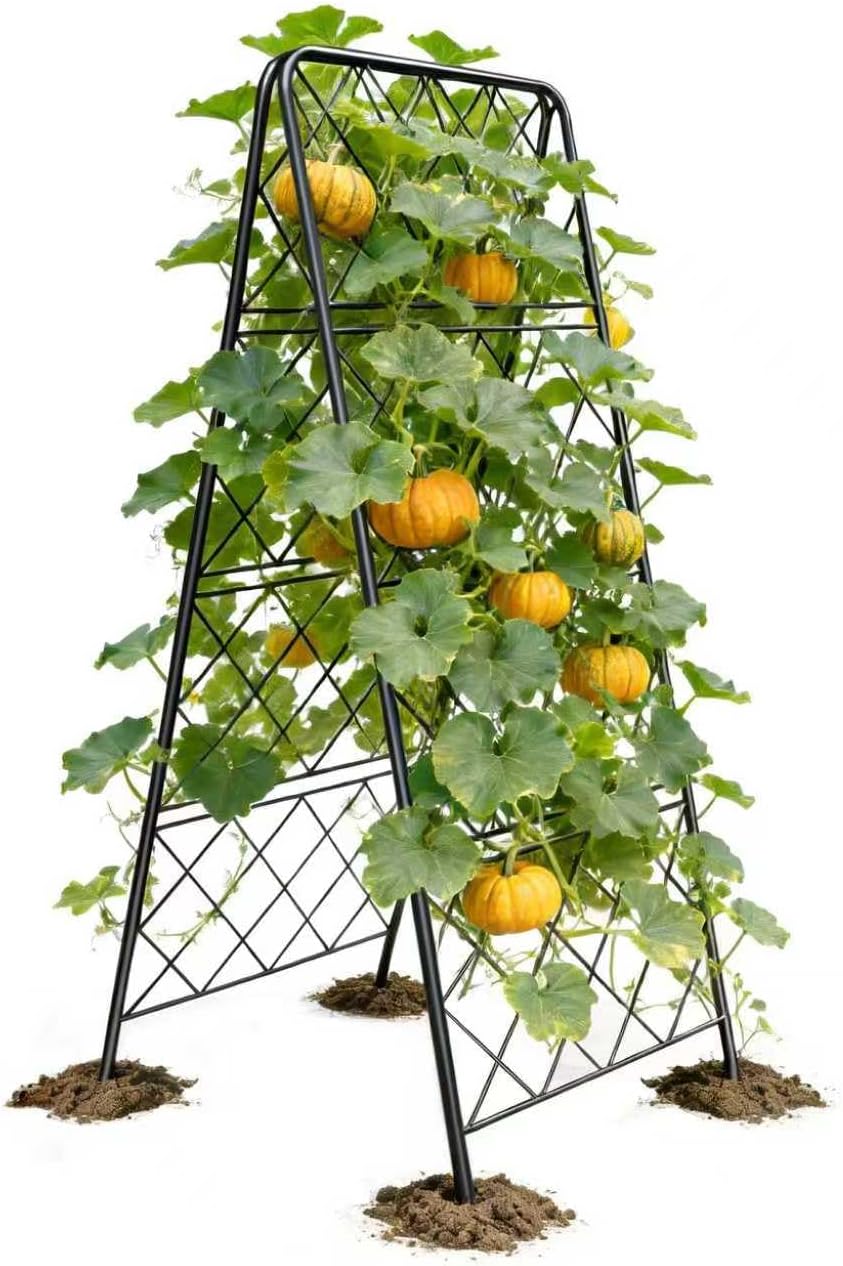
This PyraLine A-frame trellis is a one-piece, powder-coated steel support designed to hold heavy vines and fruiting crops. It sets up as a stable A-frame with high-density rhombus steel grids that distribute weight across the panel, so cucumbers, tomatoes, beans, and even small melons can climb without overly stressing individual bars. The hinge is factory-fused rather than bolted, which keeps the frame rigid under load and reduces the need for periodic tightening. The trellis adjusts from a low height to full 50 inches as plants grow and then folds flat for compact storage after the season. Practical benefits include strong wind resistance from the thick steel frame, rust protection from the powder coating, and quick deployment in raised beds or containers. Limitations are that it is a single-panel solution so larger climbs may require multiple units or additional anchoring, and its steel construction makes it heavier to move compared with lightweight bamboo or plastic supports.
Best for: Gardeners who prioritize long-lasting, load-bearing plant supports and want a sturdy, low-maintenance trellis for heavy fruiting vines in raised beds or containers.
Less Ideal for: People who need long continuous trellis runs, extremely lightweight temporary supports, or those who prefer completely tool-free, ultra-light structures for annual annuals.
- High-density rhombus steel grid evenly distributes plant weight and reduces sagging
- Factory-fused one-piece hinge increases rigidity and stays solid under heavy vines
- Powder-coated steel finish resists rust, UV, and outdoor weathering
- Collapses flat for compact off-season storage
- Single 1-pack panel may require multiple units for longer trellising runs
- Heavier steel construction is less portable than bamboo or plastic options
Verdict: Buy this trellis if you need a durable, rust-resistant steel support that holds heavy cucumbers and tomatoes upright season after season.
Alxcellion Adjustable A‑Frame Steel Trellis (17–50")

| Material Type | Steel |
|---|---|
| Finish Type | Powder Coated |
| Shape | A-Shape |
| Size | 1 Pcs |
This Alxcellion adjustable A‑frame trellis is built to give strong, long‑term support to cucumbers and other heavy vines. The kit ships as two pre‑assembled panels that lock together with a forged steel hinge and six bolts so you can set it up in minutes and expand the height from 17" to 50" as plants climb. The dense 3.15" × 3.94" steel grid and reinforced 1cm outer frame reduce sag and spread load across the whole panel, which helps with heavy fruit and dense foliage. Powder coating improves weather resistance for multi‑season use and the frame collapses flat for compact storage. Important limitations are that it is a fixed A‑frame shape, so it provides vertical support but is not a trellis you would easily reshape into arches or custom curves, and it is moderately heavy which affects portability and repositioning once planted. For gardeners prioritizing sturdy, low‑maintenance support for productive cucumber plants, it offers a performance‑focused solution.
Best for: Gardeners who want a performance‑oriented, durable support for productive cucumber vines and heavy fruit in raised beds or containers and value quick setup and season‑to‑season reliability.
Less Ideal for: People seeking lightweight, highly portable trellises or decorative, flexible shapes for training plants into arches or custom forms.
- Adjustable height from seedling to full vine for staged training
- Dense welded steel grid distributes weight and minimizes sag
- Pre‑assembled panels with forged hinge speed installation
- Powder‑coated steel resists rust and stores flat between seasons
- A‑frame is a fixed shape and not suitable for nonvertical or decorative trellis shapes
- Heavier steel construction makes it less convenient to move once installed
Verdict: Choose this trellis when you need a heavy‑duty, adjustable support that keeps cucumbers upright and handles heavy fruit without sagging.
MQHUAYU U‑Shape Garden Trellis for Climbing Plants (Medium)

| Material Type | Plastic, Stainless Steel |
|---|---|
| Finish Type | Plastic Coated |
| Shape | Semicircular |
| Indoor Outdoor Usage | Indoor&Outdoor |
This MQHUAYU U‑shape trellis is a straightforward support system for cucumbers, peas, beans, tomatoes and other vining plants in a raised bed or border. The powder‑coated metal frame with a stainless steel core gives a weather‑resistant structure that slips into the soil and creates an arch you can plant on both sides, which saves horizontal bed space and improves airflow around vines. Assembly is simple thanks to cross connectors and included netting, clips and ties, so you can adjust height and length to match plant growth. Practical details like packaged clips, many leaf ties and an installation manual make it usable for gardeners who want a no‑frills setup. The plastic coating reduces surface rust and protects stems from abrasion, but very heavy crops or high winds will benefit from extra anchoring. This is a good value option when you want a compact, reusable trellis that keeps harvests cleaner and makes vertical training easier, provided you secure it well in loose or windy soil.
Best for: Gardeners looking to optimize raised beds and small plots by training vegetables and flowering vines vertically with a compact, easy‑to‑assemble support.
Less Ideal for: People who need a heavy professional support for very large melons, mature grapevines, or permanent landscape arches should choose a heavier gauge or anchored structure.
- U‑shape arch lets you plant and train vines on both sides to maximize bed space
- Plastic‑coated stainless steel core resists rust and protects plant stems
- Comes with netting, clips and many ties so it is ready to install and use
- Cross‑connector design simplifies assembly and allows height/length adjustments
- May need additional anchoring or heavier supports for very large fruiting vines or high‑wind sites
- Plastic coating can hide underlying metal so inspect for damage over time to avoid corrosion
Verdict: Choose this trellis when you want an affordable, rust‑resistant arch that saves raised bed space and makes vertical training easy.
Alabzphsia A‑Frame Garden Trellis with Netting (47 x 16 inch)

| Material Type | Metal |
|---|---|
| Finish Type | Powder Coated |
| Shape | A-Frame Rectangular |
| Size | 47x16inch |
This Alabzphsia A-frame trellis is a budget-friendly support system for cucumbers, peas, beans and similar climbing vegetables. It arrives as a kit of metal stakes, tee and cross connectors, A-frame joints and a bird/netting panel so you can build a freestanding A-shaped support over a raised bed or row. The powder-coated hollow steel resists rust and the included net gives plants plenty of footholds to climb, while the equal-tee and cross pieces add structure that helps keep vines upright. Assembly is straightforward and configurable thanks to the connectors, so you can shorten or extend the run to fit different bed widths. Because the components are lightweight the trellis is easy to move and store, but that also means it is less rigid in strong winds and may need extra anchoring for heavy crops. For gardeners on a tight budget who want a simple, no-frills climbing support, this kit covers the essentials with clear practical benefits and a small footprint.
Best for: Gardeners looking for an affordable, easy-to-assemble trellis to support cucumbers and other climbing vegetables in raised beds or small rows who prioritize low cost and simple setup.
Less Ideal for: Growers who need a heavy-duty, permanent structure for large, weighty vines or who expect frequent high winds in their location.
- Includes netting and a full set of connectors for immediate assembly
- Powder-coated hollow steel resists rust and outdoor wear
- A-frame design improves air flow and sunlight exposure for climbing vegetables
- Lightweight components are easy to position and store
- Lightweight build can feel flimsy and may need extra anchoring in windy conditions
- Not as rigid as heavier welded trellises for very heavy fruiting vines
Verdict: A low-cost, easy-to-build A-frame trellis that supplies basic support and netting for cucumbers and other climbing vegetables in raised beds.
Generic A-Frame Metal Cucumber Trellis (Powder-Coated, Foldable)

| Material Type | Metal |
|---|---|
| Finish Type | Powder Coated |
| Shape | A-Shape |
| Number of Items | 1 |
This A-frame metal cucumber trellis is a simple, no-assembly support structure intended to keep vining vegetables off the ground and encourage vertical growth. Its triangular A-shape lets you plant on both sides, effectively doubling the usable support length for cucumbers, peas, beans and similar climbers. The powder-coated steel frame resists rust and corrosion for season-to-season durability and the foldable design makes it easy to place in raised beds or on the ground and then store away. Because it arrives ready to use, installation is quick and it provides stable support in typical garden winds. The trellis is not a heavy-duty industrial structure, so plants with very large fruit loads may still need supplemental tying or reinforcement, and its fixed height and width limit use to gardens that match those dimensions. For gardeners prioritizing straightforward, long-lasting plant support, this trellis performs reliably with low maintenance.
Best for: Gardeners who want a low-maintenance, dependable support for cucumbers and other common vining vegetables and prefer a ready-to-use solution they can set in raised beds or open ground.
Less Ideal for: Growers who need adjustable-height or extra-heavy-duty supports for large melons or permanent commercial trellising should consider stronger, customizable systems.
- Powder-coated steel resists rust and extends outdoor life
- A-frame shape supports plants on both sides to maximize space
- Arrives ready to use with no assembly required
- Foldable design for easy placement and compact storage
- Fixed dimensions limit use to beds that fit its height and width
- May require extra reinforcement for very heavy fruiting vines
Verdict: A straightforward, rust-resistant A-frame trellis that gives reliable, no-fuss vertical support for home cucumber growing.
LifeisLuck Adjustable A‑Frame Cucumber Trellis with Net and Clips

| Material Type | Metal |
|---|---|
| Finish Type | Powder Coated |
| Item Type Name | Cucumber Trellis |
| Number of Items | 1 |
| Size | 1pack 45 x 53 Inch |
This LifeisLuck A‑frame trellis is a metal, powder‑coated support system intended for cucumbers and other vining vegetables in raised beds. It ships as multiple straight stakes, connectors, a roll of vine netting and cable ties so you can build a triangular A‑frame and cut or attach the netting to fit your bed. Typical use is to stake the two halves into a raised bed or the soil, join them with the included tees and crosses, then train vines onto the netting for better light and airflow. The powder coat helps resist rust while the modular stake-and-connector design makes size adjustments straightforward for different bed widths. Practical benefits are easy assembly without specialized tools, a lightweight kit that is simple to reposition, and included clips and ties to secure plants. Important limitations are modest overall height and stake strength compared with heavy tubular trellises, so very large or extremely heavy crops may need a more robust support, and the netting may require periodic tightening as vines grow.
Best for: Gardeners who want a simple, low‑risk trellis for raised beds that is easy to assemble, adjust, and move as needed to protect and train cucumbers and other climbing vegetables.
Less Ideal for: Growers who need permanent, heavy‑duty support for very large or heavy fruiting vines or for trellises exposed to constant high winds should consider sturdier tubular or anchored systems instead.
- Adjustable A‑frame design adapts to different raised bed widths
- Powder coated metal resists corrosion for outdoor use
- Includes netting, cable ties and plant clips so no extra purchases are required
- Lightweight components are easy to assemble and reposition without tools
- Stakes are relatively thin so may bend under very heavy vines or high winds
- Overall height and rigidity are lower than heavy‑duty tubular trellises
Verdict: A lightweight, adjustable A‑frame kit that gives raised bed gardeners an easy, ready‑to‑assemble support for cucumbers and other climbing vegetables.
Choosing the Right Trellis for Raised Beds: Key Factors to Consider
Structural Strength
A trellis must support the mature weight of climbing plants and occasional wind load. In raised beds, the base support often has to attach to the bed frame or be anchored into limited soil depth, so the frame material and joint quality determine how well the structure resists sagging or collapse.
Heavier crops like squash, cucumbers, or large-flowering vines demand sturdier tubing, thicker mesh, or reinforced cross-bracing. Consider how the trellis transfers load to the bed: does it clamp to the side, stake into the soil, or rely on a freestanding base? Each approach affects how much weight the system can safely carry.
Raised-Bed Compatibility
Raised beds come in a range of heights and widths, and trellises need to match those proportions to avoid shading low plants or sticking out awkwardly from pathways. A good trellis for raised beds should allow mounting at the bed edge, fit within common bed widths, or offer modular height adjustments.
Also check how the trellis interfaces with typical bed materials such as cedar, composite, or metal. Fastening options that require minimal drilling or that use clamps and brackets help avoid damaging bed boards and make seasonal removal practical.
Ease of Installation
Gardeners often prefer trellises they can install quickly without specialized tools. Components that bolt together with hand-tightened hardware, clip-in mesh panels, or fold-flat assemblies save time and reduce the chance of mistakes.
Consider whether the installation needs a second person and whether the system can be installed with planted crops present. Simpler installations make it easier to change trellis layout year to year or to remove the structure for winter storage.
Plant Clearance and Access
How the trellis positions vines affects light, airflow, and harvest ergonomics. Systems that hold foliage away from the soil reduce rot and pest pressure and make it easier to spot ripening fruit. For narrow raised beds, a vertical plane is often best; for wider beds, angled or A-frame trellises can allow access from both sides.
Also think about pruning and picking reach. Trellises that keep the growing zone at a comfortable height help when working at waist level from bed edges rather than reaching over or kneeling.
Weather Durability and Maintenance
Outdoor trellises face sun, rain, and freeze-thaw cycles. Materials resistant to rust or rot lengthen service life and reduce seasonal upkeep. Powder-coated metals, rot-resistant woods, and UV-stable plastics are common choices with different maintenance needs.
Maintenance factors include the ease of replacing worn mesh, re-tensioning ties, and storing components off-season. A design that tolerates occasional repairs is better than one that needs frequent replacement.
Matching Trellis Height to Crop Type
Different crops have different vertical needs. Peas and pole beans thrive on tall, narrow support where they can climb upward, while indeterminate tomatoes and heavy-fruiting cucumbers often need stronger, wider planes or reinforced supports to hold fruit loads. Match the trellis height to the expected mature size of the plants rather than the seed packet suggestion so you do not outgrow the structure midseason.
If you grow both low and high crops in the same bed, consider removable or modular panels that let you change the exposed height as plants develop. Adjustable-height systems also help manage shading on companion plants.
- Tall trellises work well for vining peas and beans.
- A-frames can provide two-sided access for wider beds.
- Adjustable panels reduce shading issues for mixed plantings.
Attachment Methods for Different Bed Materials
How a trellis attaches matters more than people expect. Beds made from soft wood need gentle clamping hardware to avoid splitting, while metal or composite beds accept bolts or U-brackets. Systems that use stake-in anchors are simpler but may be limited by shallow soil in raised boxes.
If you prefer a noninvasive option, look for trellises that can clamp to the bed lip or sit inside the bed secured against the inner face. These keep the frame removable for seasonal changes and avoid drilling into the bed structure.
- Clamps and brackets are kinder to wooden bed boards.
- Stake-in anchors are quick but need enough soil depth.
- Internal supports avoid exterior clutter on walkways.
Modular and Seasonal Options
Gardens change with the seasons and trellises that adapt are more useful. Modular designs let you add panels for peak season and remove them for winter storage. Folding or collapsible frames reduce off-season storage space and protect components from prolonged exposure.
Seasonal flexibility also helps when rotating crops. A system you can move between beds allows different beds to host climbing crops without buying multiple permanent structures.
- Modular panels expand usable vertical area as needed.
- Collapsible frames simplify winter storage and cleaning.
- Mobile trellises allow crop rotation without extra hardware.
Material Choices and Longevity
Common trellis materials include metal tubing, treated or rot-resistant wood, and rigid plastics. Metal offers high strength and slim profiles but needs rust protection. Wood blends into garden aesthetics but should be rot-resistant or sealed. Plastic components resist rot and are lightweight but may sag under heavy loads unless reinforced.
Consider the tradeoff between maintenance and longevity. Low-maintenance finishes and replaceable mesh panels reduce long-term work, while durable frames may cost more up front but last multiple seasons.
- Metal frames are best for heavy vines if properly finished.
- Rot-resistant wood is attractive but needs occasional care.
- Plastic parts are lightweight but verify load capacity.
Managing Wind and Environmental Stress
Raised beds often sit in exposed spots, and wind can exert leverage on tall trellises. Choose bracing and anchoring solutions that counter lateral forces so the bed or trellis does not tip. In high-wind areas, lower-profile or angled supports reduce leverage and plant damage.
Also plan for snow and ice if you live in a cold climate. Removable panels or folding designs let you take down vulnerable structures before winter storms to avoid bent frames and split joints.
- Use cross-bracing or guy lines in exposed locations.
- Lower-profile options reduce wind leverage.
- Removable panels prevent winter damage in snowy areas.
How We Chose the Best Trellis for Raised Beds
We focused on criteria that matter for trellises used specifically with raised beds. Sturdiness under load was essential since many climbing vegetables and flowering vines add weight as they grow. Compatibility with standard raised-bed heights and attachment options was another filter because overly tall or short systems create shading, instability, or awkward harvest positions. Ease of installation and adjustability were used to narrow choices to products gardeners can set up without heavy tools or permanent modifications. Durability against weather and rot was evaluated by construction material and hardware type. Plant clearance and access were judged by how the trellis positions foliage and fruit relative to the bed edges and walking space. We excluded freestanding structures meant for open ground and any systems requiring permanent in-ground concrete footings. We also set aside low-capacity decorative screens unsuitable for heavy vegetable vines. The shortlist reflects tradeoffs between strength, modularity, and usable vertical growing area.
FAQ
How tall should a trellis be for a raised bed?
Height depends on the crop. For peas and beans, 5 to 7 feet of vertical support is often adequate. For heavy-fruiting crops consider shorter, reinforced panels or A-frames to reduce leverage on the bed. Also account for bed height so the final working height is comfortable for harvesting.
Can I attach a trellis to cedar or composite raised beds?
Yes, but use attachment methods suited to the bed material. Clamps and brackets are preferable for cedar to avoid splitting and to keep the bed boards intact. Composite beds may accept bolts or screws; predrilling and using compatible fasteners reduces the chance of damage.
Is it better to have a freestanding trellis or one attached to the bed?
It depends on soil depth and expected plant weight. Freestanding trellises can be moved and do not stress the bed, but they need their own secure footing. Attached trellises save space and are often easier to install in narrow garden rows but transfer load to the bed frame, so attachment strength matters.
How do I protect a trellis from rust or rot?
Choose materials with natural resistance like cedar or powder-coated metal for lower maintenance. For wood, use rot-resistant species or exterior sealers and inspect joints annually. Replace corroded fasteners and consider repainting or re-treating metal surfaces when protective coatings wear thin.
Will a trellis shade lower plants in the raised bed?
Any vertical structure creates some shade, but placement and orientation can minimize negative effects. Position trellises on the north side of beds in northern temperate climates or select narrow vertical profiles to reduce shadowing. Removable panels let you alter sun exposure during different crop stages.
Final Verdict
When choosing a trellis for raised beds, prioritize structural strength, compatibility with your bed dimensions, and installation style that fits your skill and tools. Expect tradeoffs between maximum vertical area and wind exposure, and pick materials that balance durability with maintenance needs. Focus on how the trellis will anchor to your bed and how it positions crop foliage for harvest and airflow. A well-chosen system will extend the productive area of your raised beds and make climbing crops easier to manage season after season.
