

Note: This article contains affiliate links. If you click on these links and make a purchase, I may earn a small commission at no extra cost to you. This helps support my research and content. Read my full affiliate disclosure here.
A well chosen vegetable trellis turns climbing crops into higher yields, easier harvesting, and a tidier plot. Whether you have a tiny urban plot, a sunny backyard, or a raised bed, the right trellis supports vines, improves air circulation, and reduces disease by keeping foliage off the soil. This guide shortlists seven top vegetable trellises suited to common garden situations and evaluates each on structural strength, ease of installation, and plant-friendliness. Read on for practical notes that make it easier to pick a trellis that fits your space, crop choices, and season-long needs.
Top Picks at a Glance
| Best Overall The best all-around choice for most situations | MQHUAYU Heavy-Duty Adjustable A-Frame Trellis for Climbing Plants |  |
| Best Quality Built to a higher standard if you want something more solid | Alxcellion Adjustable A‑Frame Steel Trellis (Collapsible) |  |
| Best Value The sweet spot between price and what you get | MQHUAYU U‑Shape Garden Trellis for Climbing Plants (Medium) |  |
| Best Budget The cheapest option that still gets the job done reliably | JK-GMTE A‑Frame Metal Garden Trellis Set for Climbing Plants |  |
| Highest Rated A top-rated pick with lots of positive feedback | Vego Garden 6.5 ft Pyramid Obelisk Metal Trellis |  |
| Most Popular A crowd favorite that many people choose with confidence | RUBFAC 7.9 ft Metal Garden Arch Trellis |  |
| Best Seller A high-volume bestseller chosen again and again | HENABLE 4-Pack Metal Trellis Set for Potted Climbing Plants (15 in) |  |
MQHUAYU Heavy-Duty Adjustable A-Frame Trellis for Climbing Plants
| Material Type | Galvanized Metal, Steel |
|---|---|
| Finish Type | Powder Coated |
| Adjustable Height | 17" to 50" |
| Product Style | Heavy Duty |
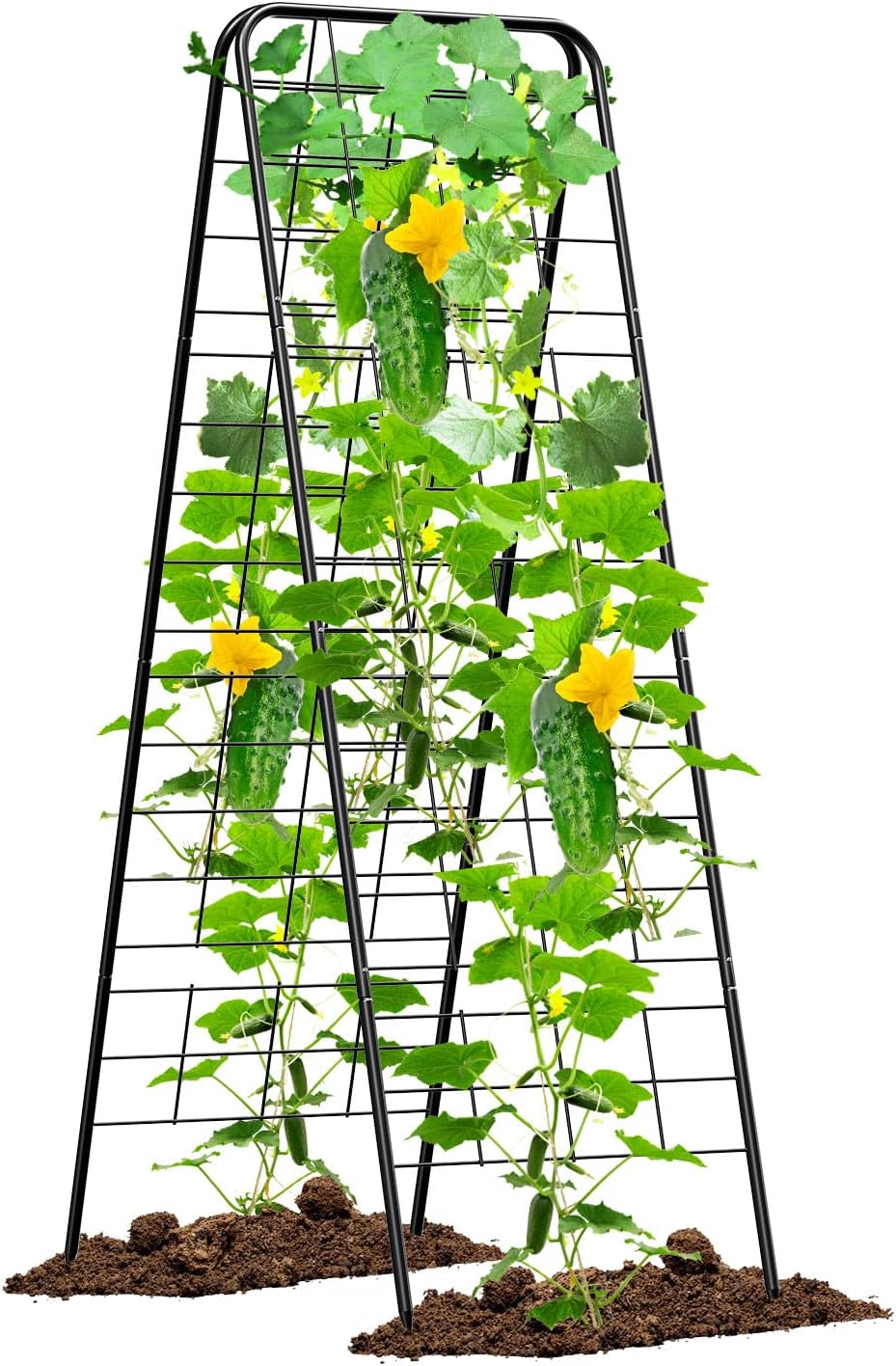
This adjustable A-frame trellis is a practical, heavy-duty support for raised beds and container gardens. It unfolds tool-free and sets up in minutes using hand-tightened bolts, then adjusts from a low 17 inches for seedlings up to 50 inches for mature vines. The dense welded metal mesh and 1cm-thick frame provide rigid, no-sag support for heavy fruiting crops, and the factory-fused hinge plus ground stakes increase stability in wind. A powder-coated, galvanized finish resists rust for season-to-season outdoor use, and the panels fold flat for compact winter storage. Limitations to note are its fixed panel width and shape, which make it best for linear rows or narrow raised beds rather than very wide beds or espalier setups, and the bright industrial look may not suit gardeners seeking a decorative wooden trellis. For gardeners who want a sturdy, low-maintenance support that handles heavy harvests and stores easily, this trellis delivers dependable performance.
Best for: Gardeners who want a durable, low-maintenance support for heavy-yielding vining crops in raised beds or containers and value quick setup and compact storage.
Less Ideal for: People seeking a decorative or wider-span trellis solution for large open beds or formal espalier designs should consider other styles.
- Adjustable height from 17 to 50 inches to support plants through multiple growth stages
- Dense galvanized steel mesh and 1cm-thick frame offer rigid, no-sag load-bearing support
- Tool-free setup with hand-tightened bolts folds flat for compact off-season storage
- Powder-coated, rust-resistant finish for multi-season outdoor durability
- Fixed 17-inch panel width is narrow and not ideal for very wide beds or broad espalier layouts
- Industrial metal appearance may not match decorative garden aesthetics for some users
Verdict: A tough, tool-free A-frame trellis that reliably supports heavy vining crops from seedling to harvest while folding flat for easy storage.
Alxcellion Adjustable A‑Frame Steel Trellis (Collapsible)

| Material Type | Steel |
|---|---|
| Finish Type | Powder Coated |
| Shape | A-Shape |
| Size | 1 Pcs |
This adjustable A‑frame trellis is built for heavy-duty garden use: preassembled powder‑coated steel panels form a dense grid that extends from a compact 17 inches up to 50 inches, giving vines and fruiting plants firm vertical support as they grow. Typical use is in raised beds, containers, or small garden plots where tomatoes, cucumbers, beans, gourds, or ornamental vines need a stable structure to climb. The reinforced outer frame, closely spaced steel grid, and a forged hinge reduce sag and wobble under heavier loads compared with lightweight wire trellises. It collapses flat for seasonal storage and assembles quickly with a few hand‑tightened bolts, so you can set it up without tools. Important limitations are its fixed panel footprint and metal construction, which makes the trellis heavier to move than bamboo or plastic alternatives and means it must be anchored in very windy sites. Also it is a single permanent grid style, so gardeners wanting lattices with wider spacing or built‑in shelves will need a different design.
Best for: Gardeners focused on strong, long‑lasting plant support who need a sturdy structure for heavy fruiting vines and prefer low‑maintenance metal hardware over fragile options.
Less Ideal for: People who need ultra‑lightweight, easily relocated supports or highly customizable lattice spacing should consider lighter or modular alternatives.
- Adjustable height from seedling to mature plants for season‑long use
- Dense, reinforced steel grid provides strong load distribution for heavy fruits and dense foliage
- Powder‑coated steel resists rust and stores flat to save space
- Preassembled panels and simple bolt connections enable fast, low‑effort setup
- Heavier and less portable than lightweight bamboo or plastic trellises
- Fixed panel shape and grid spacing limit customization for nonstandard plant types
Verdict: Buy this trellis if you want a durable, heavyweight steel support that adjusts with your plants and stands up to dense crops and seasonal use.
MQHUAYU U‑Shape Garden Trellis for Climbing Plants (Medium)

| Material Type | Plastic, Stainless Steel |
|---|---|
| Finish Type | Plastic Coated |
| Shape | Semicircular |
| Indoor Outdoor Usage | Indoor&Outdoor |
This MQHUAYU U‑shape trellis is a straightforward support system for cucumbers, peas, beans, tomatoes and other vining plants in a raised bed or border. The powder‑coated metal frame with a stainless steel core gives a weather‑resistant structure that slips into the soil and creates an arch you can plant on both sides, which saves horizontal bed space and improves airflow around vines. Assembly is simple thanks to cross connectors and included netting, clips and ties, so you can adjust height and length to match plant growth. Practical details like packaged clips, many leaf ties and an installation manual make it usable for gardeners who want a no‑frills setup. The plastic coating reduces surface rust and protects stems from abrasion, but very heavy crops or high winds will benefit from extra anchoring. This is a good value option when you want a compact, reusable trellis that keeps harvests cleaner and makes vertical training easier, provided you secure it well in loose or windy soil.
Best for: Gardeners looking to optimize raised beds and small plots by training vegetables and flowering vines vertically with a compact, easy‑to‑assemble support.
Less Ideal for: People who need a heavy professional support for very large melons, mature grapevines, or permanent landscape arches should choose a heavier gauge or anchored structure.
- U‑shape arch lets you plant and train vines on both sides to maximize bed space
- Plastic‑coated stainless steel core resists rust and protects plant stems
- Comes with netting, clips and many ties so it is ready to install and use
- Cross‑connector design simplifies assembly and allows height/length adjustments
- May need additional anchoring or heavier supports for very large fruiting vines or high‑wind sites
- Plastic coating can hide underlying metal so inspect for damage over time to avoid corrosion
Verdict: Choose this trellis when you want an affordable, rust‑resistant arch that saves raised bed space and makes vertical training easy.
JK-GMTE A‑Frame Metal Garden Trellis Set for Climbing Plants
| Material Type | Steel |
|---|---|
| Metal Finish | Plastic Coated |
| Shape | A-Shape |
| Size | 47 inches tall, 16 inches wide |
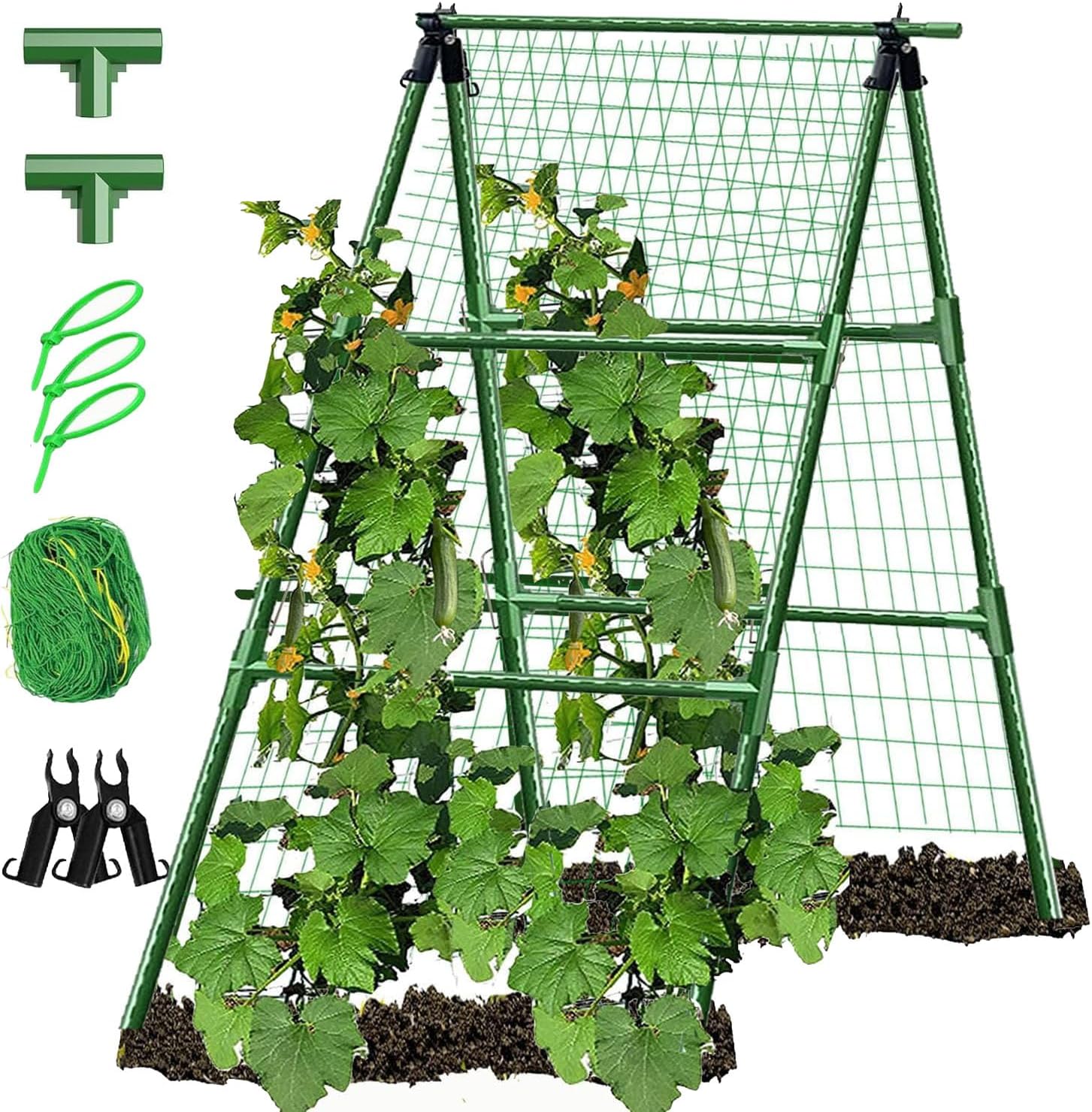
This A-frame trellis kit provides a simple, budget-minded solution for supporting climbing vegetables like cucumbers, beans, peas and tomatoes. It arrives as steel core stakes, connectors, clips, ties and netting that assemble into two A-shaped frames with spiked leg caps that push into soil for stability. The plastic-coated steel construction resists rust and gives the structure enough rigidity to keep vines off the ground and improve air circulation and harvest accessibility. Assembly is straightforward and the sections disassemble for compact storage, which is useful if you only need trellises part of the season. The kit is pared down compared with heavier commercial trellises, so plan to use it for light to moderate crops rather than very heavy fruiting vines or in exposed, windy sites. For gardeners who want an inexpensive, no-fuss way to train climbers in raised beds, this kit balances cost and function well.
Best for: Practical gardeners on a tight budget who need a straightforward support for summer-climbing vegetables in raised beds or small plots and value easy setup and storage.
Less Ideal for: Gardeners seeking a heavy-duty permanent structure for large, heavy-fruiting vines or for exposed, windy sites should consider sturdier welded or anchored trellises.
- Plastic-coated steel resists rust for season-to-season use.
- A-frame design keeps vines off the soil to improve airflow and ease harvesting.
- Includes netting, clips and ties so no extra materials are required to start using it.
- Spiked leg caps allow quick installation into garden beds without additional anchors.
- Disassembles into short rods for compact storage when not in use.
- Lightweight construction may not support very heavy, fully loaded vines or survive strong winds.
- Limited height and width restrict use to smaller raised beds or compact garden rows.
Verdict: An affordable, easy-to-assemble A-frame trellis that keeps climbing vegetables off the ground and is ideal for raised beds and small gardens.
Vego Garden 6.5 ft Pyramid Obelisk Metal Trellis

| Material Type | Metal |
|---|---|
| Finish Type | Rustproof |
| Item Type Name | Pyramid Obelisk Garden Trellis |
| Shape | Triangular |
The Vego Garden 6.5 ft pyramid obelisk is a tall, modular metal trellis built to support roses, vining vegetables and flowering climbers. It assembles by screwing together stacked sections with hand-tightened connections so you can shorten or extend the height as plants grow. The design offers two installation modes: drive-in stakes for anchoring in soil or a stake-free setup for hard surfaces when extra securing is applied. Dual protective coatings and a rustproof finish give it good all-season durability for outdoor use. The triangular pyramid shape provides 360 degree support, helping vines climb evenly and keeping fruit and flowers off the ground. Practical benefits include compact storage when disassembled and quick setup that takes minutes rather than hours. Limitations are that the trellis relies on proper anchoring in windy sites and the metal frame offers structure but not built-in netting, so very heavy or sprawling crops may need additional tying or support.
Best for: Gardeners who prioritize dependable, low-maintenance plant support and want a durable, adjustable trellis for container or in-ground climbers.
Less Ideal for: People needing instant soft support for delicate seedlings or growers of very heavy, sprawling crops who prefer built-in mesh or cage-style supports.
- Modular screw-together sections let you adjust height as plants grow
- Dual protective coatings and rustproof finish resist weathering
- Can be anchored with stakes in soil or used stake-free on hard surfaces
- Triangular pyramid shape gives 360 degree plant support and good visual presence
- No integrated netting or fabric support, heavier vines need tying
- Requires proper anchoring for windy conditions to remain stable
Verdict: A sturdy, rust-resistant modular obelisk that reliably supports climbing plants while letting you adjust height as they grow.
RUBFAC 7.9 ft Metal Garden Arch Trellis

| Material Type | Metal |
|---|---|
| Finish Type | Painted |
| Shape | Semicircular |
| Size | 7.85ft |
This RUBFAC metal garden arch is a lightweight semicircular arbor intended for garden entrances, wedding backdrops, and plant support. It arrives as several painted metal pieces that bolt together for a roughly 7.9 foot tall arch; assembly is straightforward and the product is commonly dressed with flowers, tulle, balloons, or string lights. The painted finish gives a classic black look that resists basic weathering and provides a clean backdrop for climbing vines or event decor. Because the frame is fairly light, it is easy to move and store between seasons, and setup or takedown does not require specialized tools. Expect the arch to be best for decorative uses and supporting lighter climbers rather than heavy perennial vines, and you may need to anchor it into the ground or add weight for windy locations. For buyers watching reviews and durability, the painted metal construction is practical but not heavy-duty garden steel, so handle assembly carefully and consider reinforcement if you plan long-term outdoor exposure.
Best for: Buyers who want an affordable, visually appealing arch for short-term event decoration or light garden use and who prioritize easy assembly and straightforward styling.
Less Ideal for: Gardeners seeking a heavy-duty, permanent arbor for large woody climbers or a structure that will remain unanchored in exposed, windy sites.
- Classic painted metal finish provides a clean, decorative look for events and gardens
- Relatively easy assembly and lightweight construction makes setup and storage simple
- Versatile use as a trellis, wedding or party backdrop, and balloon arch stand
- Lightweight frame is not intended for supporting very heavy vines or prolonged structural loads
- Requires anchoring or added weight to remain stable in windy conditions
Verdict: A lightweight, easy-to-assemble decorative metal arch that works well as an event backdrop or for supporting light climbing plants.
HENABLE 4-Pack Metal Trellis Set for Potted Climbing Plants (15 in)

| Material | Metal |
|---|---|
| Finish Type | Lacquered |
| Number of Items | 4 |
| Included Accessories | 100 pcs ties |
These HENABLE trellises are a straightforward, no-fuss support for small potted climbers and vines. Each set includes four different decorative grid patterns made from lacquered iron and hand-welded for strength, with stakes that simply push into potting soil so no tools are required. They are intended for 5 to 8 inch planters and keep plants growing upward to reduce sagging and improve light exposure; the modern black finish works well for indoor decor or a small patio display. The build feels solid for the size and the rust-resistant paint helps longevity in humid conditions, though taller or heavier vines will need larger supports. The package also includes ties to secure stems as they grow. If you want an easy, compact way to train peas, ivy, morning glories, or small climbing houseplants, these make setup and styling quick and tidy. Expect limited height and load capacity, so use them for lightweight plants and pots rather than heavy outdoor vines.
Best for: Buyers who want an easy, low-effort way to train and display small climbing plants in indoor pots or on a small patio and prefer durable, ready-to-use supports.
Less Ideal for: Gardeners who need tall, heavy-capacity trellises for outdoor vegetable vines or large climbing roses should choose a sturdier full-size support instead.
- Simple push-in installation requires no tools
- Lacquered iron construction with hand-welded joints for durability
- Compact 15 inch height suits small indoor pots and tight patio spaces
- Includes ties to secure stems while plants climb
- Not tall or heavy-duty enough for large or vigorous vines
- Limited to small pots recommended in the product notes
Verdict: A compact, tool-free trellis set that makes training and styling small potted climbers quick and reliable.
Choosing the Right Vegetable Trellis: Key Factors to Consider
Structural Strength and Wind Load
A trellis must hold the full weight of mature vines, fruit, and leaves without bending or collapsing. Heavy crops like large tomatoes or dense squash vines transfer significant load to anchor points, so gauge how the trellis attaches to the ground or a wall. Deep-set posts, reinforced joints, and cross bracing reduce sway in windy sites.
If you garden in a windy location or grow heavy-fruited varieties, prioritize rigid frames and secure anchors. Lighter mesh or flimsy frames may work for peas and thin vining plants but will fail under heavier crops, forcing midseason repairs or crop loss.
Ease of Installation and Seasonal Setup
You will set up and take down the trellis multiple times across the seasons, so simplicity matters. Systems that slot together without special tools, or panels that fasten to existing structures, save time and reduce mistakes. Installation also affects how you orient plants at transplanting or seeding time.
Consider whether the trellis requires permanent in-ground posts or temporary stakes that can be moved. For container gardening and rented plots, nonpermanent, portable options let you rearrange beds as crop rotations demand.
Plant Accessibility for Pruning and Harvest
A trellis that makes vines hard to reach slows harvest and complicates pruning. Look for designs that allow easy access to both sides of the plant or permit sections to fold away. Open-grid or spaced-rod systems let you see fruit and remove diseased foliage without disturbing the whole plant.
Accessibility also affects how you train plants early in the season. Wide spacing between supports gives room to weave stems. Consider whether the trellis height and spacing match the typical reach of your care routines to avoid ladders or awkward bending.
Materials and Weather Resistance
Materials determine how long a trellis lasts in sun, rain, and freezing winters. Galvanized steel, powder-coated metal, rot-resistant woods, and UV-stable plastics each have tradeoffs in durability and maintenance. Metal tends to hold up for many seasons but needs corrosion-resistant finishes; wood has a warm look but benefits from rot-resistant species or protective treatments.
Also consider how the material behaves in your climate. Some plastics become brittle in cold winters, while untreated wood can rot quickly in damp regions. Choose a material that balances looks, longevity, and required upkeep.
Adjustability and Compatibility with Crop Types
Different vegetables climb in different ways. Pole beans and indeterminate tomatoes need tall vertical supports, while cucumbers and melons benefit from trellis spacing that lets fruit hang. Adjustable or modular trellises let you change height, spacing, or mesh density to match plant habits and crop rotation plans.
A flexible system extends the trellis life across multiple seasons and crops. Look for modular panels, removable crosspieces, or adjustable tensioning that accommodate both light and heavy vines.
Storage, Portability, and Long-Term Maintenance
Trellises that are easy to disassemble and store will save space during the off-season and reduce weather exposure. Consider how much assembly and storage space the trellis requires and whether components are likely to warp or corrode while stored.
Maintenance needs include occasional tightening, replacing ties, and cleaning surfaces to prevent disease transfer. If you prefer low-effort gardening, choose materials and designs with minimal annual upkeep.
Best Trellis Shapes for Different Vegetables
Trellis geometry influences how plants climb and where fruit develops. Flat vertical panels suit pole beans and vining peas, making them easy to train and harvest. A-frame or inverted V trellises provide two growing faces in a compact footprint, useful for narrow beds.
Round or cylindrical supports, like tomato cages adapted vertically, give support around a single plant but are less efficient for mass plantings. Wide-mesh nets and espalier styles help cucumbers and melons by allowing fruit to hang with good air flow.
- Vertical panels: space-efficient for single-file rows.
- A-frame: double-sided growth in limited width.
- Cylindrical supports: good for individual large plants.
- Netting: flexible spacing and lightweight storage.
Anchoring Options and Ground Types
How you anchor a trellis depends on soil type and permanence. In firm clay or compacted soil, screw anchors and long post sockets give strong hold. In loose or sandy soils, use deeper posts or cross-braced footings to prevent tipping. For patios or containers, weighted bases or planter-integrated mounts provide stability without digging.
If you expect to move the trellis between beds, choose modular anchors or removable stakes rather than driven posts. Always match anchor depth and method to wind exposure and expected crop weight.
- Screw anchors: strong in firm soils.
- Deep posts: best for sandy or loose ground.
- Weighted bases: for containers and patios.
- Removable stakes: portable garden setups.
Training and Tying Techniques
Training plants early prevents tangled growth and reduces stress on supports. Use soft plant ties, clips, or garden twine to guide stems to the trellis as they grow. For fast climbers, check ties weekly and adjust to avoid girdling.
Different crops benefit from different tying patterns. Spiral or figure-eight tying allows stems to expand; simple loops are fine for peas and beans. Remove older ties that are constricting and replace with fresh material to prevent stem damage.
- Soft ties prevent stem damage.
- Check tension regularly for fast growers.
- Use wider loops to accommodate stem thickening.
- Train from bottom up to encourage vertical growth.
Trellis Placement to Improve Microclimate
Placement affects sun exposure, airflow, and disease pressure. Position trellises so leaves receive morning sun and do not shade shorter companion plants excessively. Orienting trellises north-south can provide more even light across a row in many climates.
Good airflow reduces humidity and fungal disease. Leave space between trellised rows for a walkway to allow inspection and to foster ventilation. In hot climates, consider partial shading strategies for sensitive crops during peak afternoon sun.
- North-south orientation evens sun exposure.
- Leave access paths for airflow and maintenance.
- Avoid placing trellises too close to heat-reflective walls.
- Consider companion planting to manage shade.
Seasonal Care and Off-Season Storage
At season end, remove plant debris from trellises to reduce overwintering pests and disease. Inspect joints and connections and replace any worn ties or corroded hardware before winter. Disassembling modular trellises for dry, sheltered storage prolongs component life.
If you keep trellises in place year-round, check for rust or rot early in spring and repair as needed. For wooden supports, a light preservative treatment in late autumn can extend usable life while keeping chemical use minimal.
- Clear plant debris to limit pests.
- Store modular parts indoors when possible.
- Inspect and repair anchors before the next season.
- Refresh ties and fasteners annually.
How We Chose the Best Vegetable Trellis
We focused on attributes that matter in everyday vegetable gardening and used those as filters to produce a shortlist of seven trellises. Primary evaluation criteria included structural strength for mature vines, ease of installation and adjustment, materials and weather resistance, and how the design affects plant health and harvest access. We looked for options that accommodate common climbing vegetables such as tomatoes on cord systems, pole beans, peas, and cucurbits. Durability measures favored corrosion-resistant finishes or rot-resistant materials and sturdy connection points that handle repeated tension from vines and weather. We excluded lightweight decorative panels that cannot support full-season vegetable loads, and any systems that require specialty tools or complex fabrication to install. The remaining candidates were judged by how they balance support, accessibility for pruning and picking, and how they integrate into typical garden layouts like beds, fences, and containers. Scoring reflects these concrete, gardener-relevant dimensions rather than brand reputation or price.
FAQ
What height should a vegetable trellis be for pole beans and tomatoes?
Pole beans and indeterminate tomatoes usually do well on trellises 6 to 8 feet tall so vines can climb and you can access fruit. Height depends on plant variety and your ability to reach for pruning and harvest.
Can I use garden netting instead of a rigid trellis?
Garden netting works well for light to medium climbers like peas and cucumbers because it is flexible and easy to store. For heavy-fruited crops, pair netting with sturdy posts or a frame to prevent sagging and collapse.
How close should trellised rows be for good airflow?
Aim for at least a 2 to 3 foot path between trellised rows to allow walking and airflow. Wider spacing improves ventilation and reduces disease pressure, especially in humid climates.
Are wooden trellises okay for wet climates?
Wood can be fine if you choose rot-resistant species or apply protective finishes and ensure good drainage around posts. Trellises that remain constantly wet without treatment will degrade faster than metal or composite options.
How do I train vines to a trellis without damaging stems?
Use soft ties, fabric strips, or plant clips and avoid tight knots that restrict growth. Gently loop ties to allow room for stem thickening and check them regularly during the growing season.
Can trellises be used in containers on patios and balconies?
Yes. Use lightweight, modular trellises with weighted or planter-integrated bases to avoid tipping. Make sure containers are large enough to support the root mass and stabilize the trellis.
Final Verdict
Prioritize a trellis that matches the weight and climbing habit of your vegetables, the permanence of your garden site, and the local weather conditions. Strong anchors and accessible designs reduce maintenance and make pruning and harvesting easier. Balance material durability, ease of installation, and adjustability so the trellis adapts to different crops over several seasons. Choose the simplest system that safely supports your heaviest plants while fitting your garden layout and storage needs. That focus will give you reliable support, healthier vines, and more productive harvests year after year.
