

Note: This article contains affiliate links. If you click on these links and make a purchase, I may earn a small commission at no extra cost to you. This helps support my research and content. Read my full affiliate disclosure here.
Mites can escalate quickly on houseplants, vegetables, and ornamentals, so choosing the right insecticide for mites matters for keeping infestations small and plants healthy. You want something that disables spider mites and similar pests without burning foliage or harming beneficial insects already in your garden space. This guide shortlists seven top options and explains how they perform on contact, how long they protect treated plants, and how safe they are for different planting situations. Read on for practical notes on application, timing, and which product traits fit your growing setup.
Top Picks at a Glance
| Best Overall The best all-around choice for most situations | BioAdvanced 3-in-1 Insect, Disease & Mite Control Concentrate, 32 oz |  |
| Best Quality Built to a higher standard if you want something more solid | Atticus Fervid Abamectin Miticide/Insecticide (32 oz) |  |
| Best Value The sweet spot between price and what you get | Bonide Captain Jack's Deadbug Brew Ready-to-Use Spray, 32 oz |  |
| Best Budget The cheapest option that still gets the job done reliably | Bonide Ready-to-Use Insecticidal Soap, 32 oz |  |
| Highest Rated A top-rated pick with lots of positive feedback | BioAdvanced 3-in-1 Insect, Disease & Mite Control Ready-to-Spray, 32 oz |  |
| Most Popular A crowd favorite that many people choose with confidence | Bonide Captain Jack's Ready-to-Use Neem Oil Spray, 32 oz |  |
| Best Seller A high-volume bestseller chosen again and again | Atticus Talak 7.9% Bifenthrin Indoor/Outdoor Insecticide Concentrate (32 oz) |  |
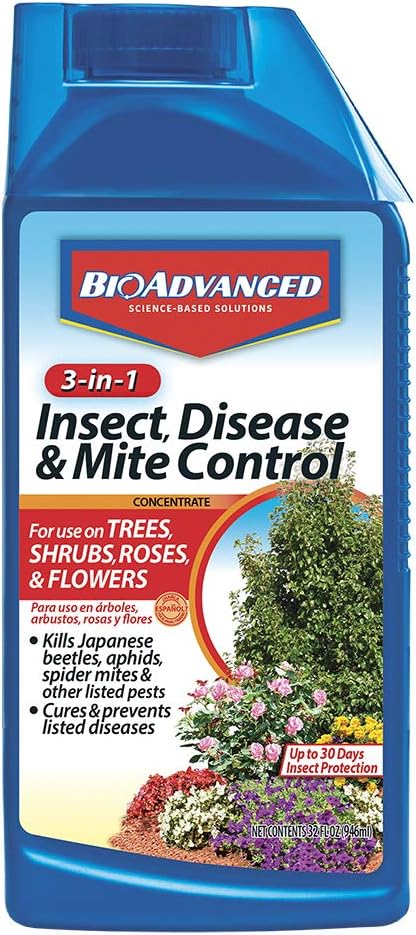
BioAdvanced 3-in-1 Insect, Disease & Mite Control Concentrate, 32 oz
| Unit Count | 32 Fluid Ounces |
|---|---|
| Item Type Name | Concentrate |
| Liquid Volume | 32 fluid ounces |
| Active Ingredients | Imidacloprid, Tau-fluvalinate, Tebuconazole |
| Specification Met | EPA |
This BioAdvanced concentrate is designed as an all-purpose plant treatment that kills listed insects on contact, controls common fungal diseases, and suppresses spider mites in one product. You mix the concentrate with water to make spray solution (it yields up to about 12 gallons), then apply to roses, flowers, shrubs, trees, and other ornamentals. Key active ingredients—imidacloprid, tau-fluvalinate, and tebuconazole—deliver systemic, rainproof protection that the label says can last up to 30 days. For mite control specifically, the miticide component gives both suppression and residual activity, so it is useful for follow-up sprays during an outbreak. Practical benefits include fewer separate products to buy and the convenience of treating multiple problems with one application. Important limitations are regulatory restrictions that make it unavailable in several states and the need to follow label safety precautions because it contains systemic insecticide active ingredients that can affect non-target insects if misused.
Best for: Gardeners who want a single, practical product to manage insect pests, fungal diseases, and spider mites on roses and ornamentals and who prefer a preventive residual treatment.
Less Ideal for: Organic gardeners or those managing pollinator-attractive plantings who avoid systemic insecticides should choose non-systemic or organic miticide and fungicide options instead.
- Combines insecticide, fungicide, and miticide in one concentrate for fewer products to store and apply
- Systemic formulation with rainproof protection that can last up to 30 days after application
- Makes up to 12 gallons of spray from a 32 fl oz bottle, suitable for treating multiple plants or repeat applications
- Active ingredients target a broad list of pests including aphids, spider mites, Japanese beetles and common foliar diseases
- Not available for sale in several U.S. states, limiting where it can be used
- Contains systemic insecticides that require careful adherence to label directions to avoid harming beneficial insects
Verdict: If you want one dependable product to both kill spider mites and prevent common foliar diseases across roses and ornamentals, this 3-in-1 concentrate simplifies treatment with a month-long systemic residual.
Atticus Fervid Abamectin Miticide/Insecticide (32 oz)

| Active Ingredients | abamectin |
|---|---|
| Unit Count | 32 Fluid Ounces |
| Formulation | Emulsifiable Concentrate |
| Specification Met | EPA |
Fervid is a concentrated emulsifiable miticide/insecticide designed for greenhouse, nursery, and landscape ornamentals where quick knockdown of feeding pests is needed. It is typically mixed and sprayed on foliage and relies on systemic movement from the leaf surface to the underside to reach mites, leafminers, aphids, thrips, and whiteflies. The 2% abamectin active provides fast-acting control so pests stop feeding within hours of ingestion, and the formulation dries with low odor and minimal visible residue. It is rainfast once dry, so short showers shortly after application are less likely to reduce effectiveness. Practical benefits include targeted control of hard-to-reach pests on woody and ornamental plants and a professional-strength active ingredient equivalent to established miticides. Important limitations are that it is not labeled for turf use and should be applied according to label directions because abamectin is a potent, regulated active ingredient; repeated applications must follow retreatment intervals and local regulations.
Best for: Gardeners and professional growers who prioritize fast, reliable control of mites and other feeding pests on ornamental plants and need a product that works quickly and systemically.
Less Ideal for: Homeowners seeking an all-purpose insect control for lawns or casual spot treatments should consider alternatives labeled for turf or lower-toxicity options.
- Contains 2% abamectin, a proven active for rapid mite and leafminer control
- Systemic activity moves from leaf surface to underside to reach hiding pests
- Formulated to dry with low odor and little visible residue
- Rainfast after drying, maintaining efficacy if light rain occurs soon after application
- Not labeled for turfgrass use
- Contains a regulated, potent active ingredient that requires careful adherence to label directions
Verdict: Choose Fervid when you need a professional-strength, fast-acting miticide that reaches hidden pests on ornamental plants.
Bonide Captain Jack's Deadbug Brew Ready-to-Use Spray, 32 oz

| Unit Count | 32 Ounce |
|---|---|
| Item Form | Spray |
| Target Species | Insects |
| Active Ingredients | Spinosad 0.5% |
Bonide Captain Jack's Deadbug Brew is a ready-to-use insect spray that uses spinosad to control caterpillars, thrips, leaf miners, beetles and many other listed pests while being approved for organic gardening. It is typically applied by shaking and thoroughly spraying the tops and undersides of leaves on vegetables, fruit trees and ornamentals; the included spray nozzle makes deployment straightforward for spot treatments and larger areas alike. The formula is notable for targeting problem insects without significantly impacting many predatory beneficial insects and mites, which helps preserve natural biological control in the garden. Because it is a ready-to-use product with a 32 ounce volume, it is convenient for repeat applications through the season and for treating multiple plants. Limitations are that it must be used according to label directions for safety and effectiveness, it only controls the insects listed on the label, and as a contact/ingestion product it requires thorough coverage to work well rather than systemic protection.
Best for: Gardeners who prioritize practical, effective spot and foliar control of a broad set of chewing and leaf-feeding pests while keeping products compatible with organic gardening practices.
Less Ideal for: People who need a systemic, long‑lasting soil or trunk treatment or who want a single product to control pests not listed on the label should look at alternatives.
- Contains spinosad, an organic-approved active ingredient effective against many chewing and leaf-feeding pests
- Ready-to-use spray with nozzle for easy application without mixing
- Labeled for use on vegetables, fruits, flowers and ornamentals, so it fits diverse garden needs
- Formulation has limited impact on many predatory beneficial insects and mites when used as directed
- Requires thorough coverage and repeat applications for best control since it is not systemic
- Effective only against the insects listed on the label and not a universal pest control
Verdict: Choose this ready-to-use spinosad spray when you want an organic-approved, easy-to-apply foliar treatment for common garden insect pests with minimal disruption to beneficials.
Bonide Ready-to-Use Insecticidal Soap, 32 oz

| Item Form | Spray |
|---|---|
| Target Species | Insects |
| Liquid Volume | 32 fluid ounces |
| Active Ingredients | Potassium salt of fatty acids |
Bonide Ready-to-Use Insecticidal Soap is a 32 ounce spray formulated with potassium salts of fatty acids to kill soft-bodied insects on contact. You use it by spraying affected foliage directly or allowing leaf-feeding pests to ingest treated leaf surfaces; the trigger-spray bottle is convenient for spot treatments on vegetables, ornamentals, and houseplants. It is labeled for organic gardening and can be used up to the day of harvest, which makes it suitable for edible beds and potted herbs. The product works best against aphids, mites, whiteflies, caterpillars, and other soft-bodied pests but requires thorough coverage because it acts on contact rather than systemically. Practical benefits include simple application straight from the bottle and a plant-safe active ingredient profile for many garden situations. Expect to reapply after heavy rain and to perform follow-up treatments for heavy infestations since it does not provide long residual control. The product is a straightforward, low‑complexity option for routine pest suppression rather than a one-and-done cure for severe outbreaks.
Best for: Gardeners looking for an inexpensive, easy-to-use spray to suppress mites and other soft-bodied pests on vegetables, ornamentals, and houseplants who prefer plant-derived, organic-compatible products.
Less Ideal for: People facing severe, widespread infestations who need long-lasting residual control or systemic action should consider alternative or supplemental treatments.
- Ready-to-use spray bottle for direct spot application without mixing
- Active ingredient is plant-derived potassium salts of fatty acids suitable for organic gardening
- Labeled for use on vegetables, ornamentals, and houseplants and may be used up to day of harvest
- Effective on contact against a broad range of soft-bodied pests including mites and aphids
- Kills on contact only and provides little to no residual protection
- May require multiple applications and thorough coverage for heavy infestations
Verdict: A budget-friendly, ready-to-use organic-compatible soap spray that is effective for contact control of mites and other soft-bodied garden pests.
BioAdvanced 3-in-1 Insect, Disease & Mite Control Ready-to-Spray, 32 oz

| Item Form | Liquid |
|---|---|
| Target Species | Insect, Disease & Mite |
| Liquid Volume | 32 fluid ounces |
| Active Ingredients | Bifenthrin 0.57% Myclobutanil 0.53% |
This ready-to-spray BioAdvanced product combines bifenthrin insecticide and myclobutanil fungicide to protect roses, flowers, shrubs, trees, and other ornamentals from insects, diseases, and plant mites. You attach the bottle to a garden hose and spray; the formula kills listed insects on contact, controls common fungal diseases such as black spot and powdery mildew, and treats spider mites with residual control that can last up to two weeks. The all-in-one approach makes it convenient for routine maintenance and quick response to infestations without mixing concentrates. Because it is a broad-spectrum, synthetic formulation, it offers reliable, repeatable performance across typical garden pests and diseases. Important limitations: it is a chemical control that requires following label safety and reentry intervals, and it is not selective so beneficial insects may be affected. Also it is intended for listed outdoor ornamentals and should be used according to the label for specific pests and timing.
Best for: Gardeners who prioritize dependable, science-based chemical control for recurring mite problems and want a simple ready-to-spray solution to protect roses and ornamentals with predictable results.
Less Ideal for: Those seeking organic or highly selective pest control, or gardeners who need insecticide options safe for use around pollinator-attractive edibles and vegetable gardens.
- Combines insecticide, fungicide, and miticide in one ready-to-spray product for easy application
- Delivers up to 14 days of residual control against spider mites and many listed insects
- Ready-to-use hose connection eliminates mixing and speeds treatment of large plantings
- Effective against common fungal diseases including black spot and powdery mildew
- Nonselective chemical formula can harm beneficial insects and pollinators if applied broadly
- Requires careful adherence to label safety instructions and reentry intervals
Verdict: A reliable ready-to-spray 3-in-1 treatment that efficiently controls spider mites, listed insects, and common fungal diseases on ornamentals for up to two weeks.
Bonide Captain Jack's Ready-to-Use Neem Oil Spray, 32 oz

| Item Form | Liquid |
|---|---|
| Target Species | Insects |
| Liquid Volume | 32 fluid ounces |
| Active Ingredients | Clarified Hydrophobic Extract of Neem Oil |
Bonide Captain Jack's Ready-to-Use Neem Oil is a 32-ounce spray formulated to control insects, mites, and common fungal diseases on a wide range of plants. It is applied by shaking the bottle and spraying all plant surfaces, including the undersides of leaves, at the first sign of pests or powdery mildew and reapplying every 7 to 14 days as needed. The clarified hydrophobic neem extract attacks eggs, larvae, and adults, which makes it useful against spider mites, aphids, whiteflies and similar pests, while also providing preventative fungicidal protection. As a ready-to-use trigger bottle it is convenient for spot treatments and for gardeners who prefer not to mix concentrates. Limitations include the need for thorough coverage to be effective, potential phytotoxicity if applied in peak sunlight, and slower knockdown compared with synthetic contact miticides. The label also emphasizes safety around children and pets and gives clear directions for timing and repetition, which helps reduce misuse.
Best for: Gardeners looking for an organic-approved, easy-to-use treatment that controls mites plus common insect pests and fungal issues on ornamentals and edibles.
Less Ideal for: Users who need a fast knockdown miticide for severe infestations or who prefer concentrated products for treating large areas quickly should consider alternatives.
- Multi-action formula acts as an insecticide, miticide, and fungicide in one product
- Kills insect eggs, larvae, and adults for broader lifecycle control
- Ready-to-use trigger bottle is convenient for spot treatments and quick application
- Approved for organic gardening and safe to use up to day of harvest when directions are followed
- Requires thorough coverage and repeat applications for reliable control
- Slower acting than many synthetic miticides and insecticides
Verdict: Choose this ready-to-use neem spray if you want an organic-friendly, all-in-one product that controls spider mites plus insects and fungal problems with simple, repeated spot treatments.
Atticus Talak 7.9% Bifenthrin Indoor/Outdoor Insecticide Concentrate (32 oz)

| Liquid Volume | 32 fluid ounces |
|---|---|
| Active Ingredients | Bifenthrin |
| Formulation | Suspension Concentrate |
| Item Form | Liquid |
| Specification Met | EPA |
Talak 7.9% is a water-based bifenthrin concentrate designed for perimeter, lawn, landscape, and targeted indoor surface treatments. You dilute the measured amount into water and apply it with a pump or hand sprayer to treat turf, shrubs, foundations, eaves, baseboards, or known infestation sites. The formula claims contact kill and up to three months of residual control against more than 75 pests, including mites. Practical benefits include a clear, low-odor finish that will not leave visible residue or harm plants when used as directed, and a bottle with a pour-friendly design for measured mixing. It can also be used as a mound drench for fire ant colonies and in food handling areas following label directions. Important limits are regulatory restrictions in a few states and label requirements for dilution and application methods; solutions should be mixed only for same-day use and it is not labeled for foggers. Like all concentrated insecticides containing bifenthrin, careful handling, proper personal protective equipment, and strict adherence to the label are required to protect people, pets, and non-target wildlife.
Best for: Buyers who prioritize reliable, long-lasting control of common garden and household pests and who prefer a familiar, label-driven insecticide workflow with measured dilution and targeted spraying.
Less Ideal for: People who need an insecticide approved for fogging applications or who require products registered for use in all U.S. states should consider alternatives.
- Broad-spectrum formula that lists effective control of mites among 75+ target pests
- Water-based concentrate that dilutes easily and dries clear with minimal odor
- Provides residual control for up to three months per labeled application
- Bottle design allows measured pouring to simplify mixing and reduce spills
- Not registered for sale in Connecticut, New York, or Vermont
- Mixes must be prepared for same-day use and cannot be stored for later applications
- Not approved for application by fogger, limiting some application methods
Verdict: A dependable bifenthrin concentrate for targeted indoor and outdoor applications that delivers multi-month control of mites and many other common pests when used according to the label.
Choosing the Right Insecticide for Mites: Key Factors to Consider
Mode of Action and Target Spectrum
Knowing how an insecticide works helps you set expectations and rotate chemistries to slow resistance. Contact insecticides kill mites on contact and provide rapid knockdown but often lack long residual activity. Systemic or translaminar materials move into leaf tissue or are taken up by roots and can suppress feeding for longer periods, which is useful for hard-to-reach mites on the undersides of leaves.
Check product labels for specific mentions of spider mites and related mite species because some insecticides target insects but do not control mites well. Matching mode of action to the pest spectrum also helps preserve beneficial predatory mites and insects when you are practicing integrated pest management.
Residual Activity and Reapplication Interval
Residual protection determines how often you need to reapply and how long plants stay defended against new mite eggs hatching and mobile stages migrating in. Short-residual contact sprays may require weekly treatments during heavy pressure, while products with longer residual or systemic properties can stretch intervals between applications.
Longer residuals reduce labor but can increase exposure risk to non-targets, so balance how often you want to spray with safety considerations. Always follow label reapplication intervals and consider more frequent monitoring during warm, dry weather when mite populations explode.
Plant Phytotoxicity and Sensitivity
Some formulations can scorch tender foliage, especially under high heat, strong sunlight, or when used on sensitive species like succulents and some ornamentals. Plant safety varies by concentration, application timing, and species tolerance.
Test any new product on a small area or a single plant before broad application and avoid spraying during the heat of the day. Choose products with explicit instructions for sensitive plants if you plan to treat a wide variety of ornamentals and edible crops.
Application Method and Ease
The practicality of applying an insecticide for mites matters when you maintain many plants or large beds. Ready-to-use sprays are convenient for small collections and spot treatments. Concentrates that require dilution are more economical for bigger patches but need careful measuring to avoid overdosing.
Consider whether the product sprays well into the underside of leaves, if it is safe for use with a hose-end sprayer, and whether it requires special PPE or equipment. Ease of mixing, storage, and cleanup also affects how likely you are to stick to a treatment schedule.
Compatibility With Beneficials and IPM
If you rely on predatory mites, lady beetles, or other biological controls, choose products that are least disruptive to beneficial populations. Some miticides are broad-spectrum and will kill predators on contact, while others are softer and can be integrated with biological control programs.
Timing sprays to minimize non-target impact, choosing selective products, and using targeted spot treatments helps maintain natural enemy populations. Check label guidance for compatibility with biological agents and follow integrated pest management principles when planning applications.
Residue and Edible Crop Considerations
When treating vegetables, herbs, and fruit, residue limits and preharvest intervals determine when produce is safe to harvest and eat. Some materials labeled for ornamentals are not appropriate for edibles, or they require specific withholding periods.
Always read the label for edible crop instructions, follow preharvest interval guidance, and consider mechanical controls like vigorous hose sprays or pruning as part of a residue-minimizing strategy.
When to Treat Versus When to Monitor
Routine scouting is the first line of defense against mite outbreaks. Look for stippled or discolored foliage, fine webbing, and tiny moving dots on the undersides of leaves. Early infestations are easier to suppress with targeted action.
Treat when you find active motile mites on multiple plants, visible webbing, or rapidly expanding damage. In low-pressure situations, non-chemical steps such as increasing humidity, pruning heavily infested leaves, and blasting mites off with water can reduce the need for insecticide applications.
- Check vulnerable plants weekly during warm, dry weather.
- Isolate new or infested plants to prevent spread.
- Use magnification to confirm mite presence before treating.
Safe Use and Timing to Reduce Plant Injury
Spray in the cool part of the day to reduce phytotoxicity and evaporation. Avoid treatments during midday heat or when plants are drought-stressed. Follow label directions on dilution and maximum seasonal use to prevent leaf burn.
When treating flowering plants, apply products that specify safety to pollinators or avoid spraying open blooms. If possible, treat in the evening when pollinators are not active and when predatory insects are less exposed.
- Perform a small-area test on sensitive species before whole-plant treatment.
- Rinse sprayers thoroughly between different chemistries to avoid harmful mixes.
- Wear recommended protective equipment when mixing and applying concentrates.
Combining Cultural Controls With Chemical Treatments
Cultural practices reduce the pressure on chemicals and improve long-term control. Increase humidity around vulnerable plants if appropriate, remove heavily infested leaves, and reduce plant stress through proper watering and nutrition. These steps make insecticides more effective by lowering mite reproduction and movement.
Rotate between different modes of action and use spot treatments whenever possible. Combine mechanical removal and biological controls before reaching for widespread sprays to keep natural enemies functional.
- Prune and dispose of heavily infested foliage away from the garden.
- Use physical barriers or reflective mulches in high-pressure outdoor beds.
- Introduce or conserve predatory mites where suitable.
Mixing, Storage, and Disposal Best Practices
Follow label instructions strictly when mixing concentrates. Measure accurately, use clean water, and avoid adding unnecessary adjuvants unless recommended. Incorrect mixing can reduce effectiveness or increase phytotoxic risk.
Store products in labeled, original containers in a cool, dry place away from children and pets. Dispose of leftover mixes and rinsate according to local regulations and label guidance to protect beneficial organisms and water sources.
- Label spray containers with product name and dilution date.
- Triple-rinse containers if instructed before disposal.
- Keep an application log noting date, product, rate, and weather conditions.
Monitoring Results and Adjusting Strategy
After treatment, monitor treated plants closely for reduction in mite activity and for any signs of plant stress. Assess whether the chosen product achieved contact control and whether additional treatments are needed according to label intervals.
If results are poor, review application technique, coverage of undersides of leaves, and whether environmental conditions favored mite survival. Switching to a product with a different mode of action or integrating additional cultural tactics can improve outcomes.
- Recheck treated plants within 3 to 7 days of application.
- Document population trends to plan rotations and future timing.
- If beneficials decline after treatment, prioritize selective products in the next cycle.
How We Chose the Best Insecticide for Mites
We evaluated insecticides for mites using criteria that reflect everyday gardener priorities: immediate contact efficacy against common spider mites and related mites; residual protection to reduce retreatment frequency; plant safety across common ornamentals, houseplants, vegetables, and container-grown plants; and ease and safety of application for home gardeners. We looked for formulations that are labeled for mite control and offer clear directions for dilution and timing. We excluded products whose labels do not specifically list mite control or are intended only for commercial, restricted-use applicators. Our selection favored products that balance effectiveness with low phytotoxicity risk when used as directed, and that provide clear guidance on compatible tank mixes and reentry intervals. Durability of results, compatibility with integrated pest management, and clarity of instructions were also used to rank choices.
FAQ
How quickly will an insecticide for mites stop visible damage?
Many contact insecticides provide visible knockdown within 24 to 48 hours, but feeding damage already done to leaves will not reverse. Expect to see fewer active mites soon after treatment, with continued improvement over a week as new hatchlings are suppressed.
Can I use the same product on houseplants and vegetables?
Not always. Some formulations are labeled for both ornamentals and edible crops, but others are restricted to non-edible plants. Always read the label for crop approvals and follow preharvest intervals when using products on vegetables and herbs.
Will increasing humidity alone control mite outbreaks?
Higher humidity can slow many mite species since they thrive in warm, dry conditions, but humidity changes alone rarely eliminate established populations. Combine humidity adjustments with physical removal and, when needed, targeted insecticide applications.
How should I rotate products to avoid resistance?
Rotate between products with different modes of action rather than repeating the same chemistry. Follow label guidance on maximum seasonal uses and alternate materials after the recommended number of applications to reduce selection pressure on mite populations.
Are softer, natural options effective against heavy infestations?
Soft options like horticultural oils, insecticidal soaps, and biologically based materials can be effective against light to moderate infestations and are kinder to beneficials. For heavy populations, they may need repeated applications and thorough coverage to match the knockdown of stronger contact miticides.
When is the best time of day to apply treatments?
Apply in the cool part of the day such as early morning or evening to reduce leaf burn and to minimize exposure to pollinators. Avoid applying during very hot or sunny periods and follow label timing recommendations.
Final Verdict
Choose an insecticide for mites based on how fast you need knockdown, how long you want protection, and the sensitivity of the plants you grow. Prioritize products that offer the mode of action suited to your infestation level and that fit into a broader IPM plan including cultural controls and monitoring. With proper timing, careful application, and rotation of active ingredients, you can control mite outbreaks effectively while minimizing harm to beneficial organisms.
