

Note: This article contains affiliate links. If you click on these links and make a purchase, I may earn a small commission at no extra cost to you. This helps support my research and content. Read my full affiliate disclosure here.
When pests attack blossoms, the wrong treatment can damage flowers or harm beneficial insects. Choosing the right insecticide for flowering plants matters because you need fast, reliable pest control while avoiding harm to pollinators and floral display. This guide covers seven top picks suited to flowering ornamentals, patio containers, and cottage-garden beds. We shortlisted products that balance bloom safety, effectiveness against common garden pests, and easy, targeted application. Read on to see the evaluation criteria and practical tips that will help you pick the best insecticide for your specific flowering plants.
Top Picks at a Glance
| Best Overall The best all-around choice for most situations | BioAdvanced All-in-One Rose & Flower Care Concentrate, 64 oz |  |
| Best Quality Built to a higher standard if you want something more solid | BioAdvanced All-in-One Rose & Flower Plant Care, 1 gal |  |
| Best Value The sweet spot between price and what you get | BioAdvanced All-in-One Rose & Flower Plant Care Spray, 24 fl oz | 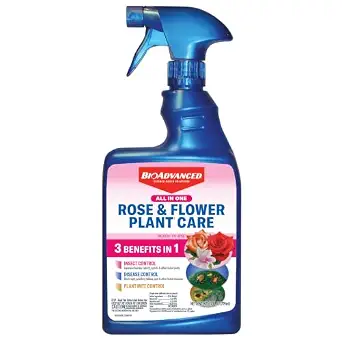 |
| Best Budget The cheapest option that still gets the job done reliably | BioAdvanced Rose & Flower Insect Killer Spray, 24 oz |  |
| Highest Rated A top-rated pick with lots of positive feedback | BioAdvanced All-in-One Rose & Flower Care Granules, 64 oz |  |
| Most Popular A crowd favorite that many people choose with confidence | Bonide Captain Jack's Ready-to-Use Neem Oil Spray, 32 oz |  |
| Best Seller A high-volume bestseller chosen again and again | Bonide Insecticidal Soap Ready-to-Use Spray, 32 oz |  |
BioAdvanced All-in-One Rose & Flower Care Concentrate, 64 oz

| Unit Count | 64 Fluid Ounces |
|---|---|
| Included Components | Concentrate |
| Item Type Name | Insect Killer, and Fungicide |
| Active Ingredients | Imidacloprid, Tebuconazole |
| Specification Met | EPA |
BioAdvanced All-in-One Rose & Flower Care is a concentrate that combines fertilizer, insect control, and fungicide in a single systemic treatment for roses and other flowering shrubs. You mix the measured concentrate with water and pour it at the plant base, so there is no spraying and the active ingredients are taken up into the plant where they resist being washed off by rain. The formula lists imidacloprid for insect control and tebuconazole for disease prevention and is labeled to protect against aphids, Japanese beetles, black spot, powdery mildew, rust, and other listed problems for up to six weeks. For gardeners who want a simple, low-effort maintenance product, it promotes stronger roots and better blooms while reducing the need for separate pest and fungicide applications. Important trade-offs are that it is a systemic insecticide so it affects sap-feeding pests broadly and is not labeled for use in some states, and it does not replace targeted spot treatments for severe infestations or specialized fungicide programs for chronic disease pressure.
Best for: Gardeners who want a low-effort, all-in-one maintenance treatment to feed roses and ornamental flowers while reducing routine pest and disease problems.
Less Ideal for: Organic gardeners or those who need pollinator-safe, non-systemic options and people managing severe infestations who require targeted or stronger specialist treatments.
- Three-in-one formula: fertilizer, insecticide, and fungicide in a single application
- Systemic action resists wash-off so protection can last up to six weeks
- Pour-in concentrate eliminates the need to spray, simplifying application
- Addresses common rose and flower pests and diseases listed on the label
- Contains systemic insecticide imidacloprid which may not be suitable for all pollinator-sensitive situations
- Not approved for sale or use in several states, limiting availability in those areas
Verdict: A convenient 3-in-1 concentrate that feeds roses and provides systemic, rainproof insect and disease protection for routine flower-care maintenance.
BioAdvanced All-in-One Rose & Flower Plant Care, 1 gal

| Item Form | Liquid |
|---|---|
| Target Species | Insect, Disease & Mite |
| Liquid Volume | 1 gallons |
This one-gallon concentrate combines an insecticide, miticide, and fungicide into a single application for roses, ornamentals, shrubs, and vines. You mix it to spray on affected plants to kill aphids, Japanese beetles, whiteflies and other listed pests on contact while also controlling diseases like black spot and powdery mildew and suppressing spider mites for up to two weeks. The active ingredients work both on contact and systemically, so treatments continue protecting even after light rain. For busy gardeners focused on effectiveness, the all-in-one approach reduces the need to switch products and simplifies a treatment schedule. Important limitations are that it contains synthetic actives so you must avoid spraying when pollinators are present and follow label directions for safe use; it is also a concentrated product so correct mixing is required. It is registered for ornamental use and intended as a performance-focused solution when fast, broad protection is the priority.
Best for: Gardeners who prioritize fast, broad-spectrum protection for roses and flowering ornamentals and want a single, performance-focused product to reduce treatment steps.
Less Ideal for: Organic gardeners, those who avoid synthetic pesticides, or anyone needing a pollinator-safe solution for blooming plants.
- Combines insect, mite, and disease control in one concentrate for fewer products to manage
- Kills many listed pests on contact including aphids and Japanese beetles
- Provides up to 14 days of residual protection after application
- Systemic plus contact action improves control through rain and between sprays
- Contains synthetic active ingredients and must not be applied when pollinators are present
- Requires correct dilution and application to avoid plant or environmental harm
Verdict: If you need a single, high-performance treatment to kill pests, control disease, and suppress mites on flowering ornamentals, this concentrate delivers broad protection with up to two weeks of residual activity.
BioAdvanced All-in-One Rose & Flower Plant Care Spray, 24 fl oz

| Unit Count | 24 Fluid Ounces |
|---|---|
| Item Form | Liquid |
| Target Species | Fungus |
| Included Components | CARE ROSE&FLOWER RTU 3IN1 24OZ |
This ready-to-use BioAdvanced spray delivers three actions in one bottle: it kills listed insects on contact, controls common fungal diseases, and tackles spider mites while leaving a protective residue that lasts up to 14 days. You use it like a normal garden spray—apply to rose bushes, ornamentals, vines, shrubs, and similar plants when pollinators are not present. The product lists active ingredients (bifenthrin and myclobutanil) and is formulated to be rainproof within about four hours, so it holds up in typical garden conditions. Practical benefits include saving time by combining insect, disease, and mite control in a single application and being convenient as a ready-to-spray bottle. Important limitations are that it targets only the listed pests and diseases, must be used with pollinator safety in mind, and contains synthetic active ingredients that some gardeners prefer to avoid. Follow label directions and safety guidance for effective and responsible use.
Best for: Gardeners who want a simple, time-saving solution to keep roses and ornamental flowers healthy without mixing concentrates and who prioritize broad, short-term protection.
Less Ideal for: Growers seeking strictly organic or pollinator-safe products or those who need treatment for pests or diseases not listed on the label should look elsewhere.
- Three-in-one formula combines insecticide, fungicide, and miticide for fewer separate treatments
- Ready-to-use spray is convenient for spot and whole-plant applications
- Rainproof within about four hours and provides protection up to 14 days
- Kills listed pests on contact for fast visible results
- Active ingredients are synthetic and may be undesirable for organic gardeners
- Protection only covers pests and diseases specifically listed on the label
Verdict: Choose this ready-to-use spray if you want a convenient, single-product solution to kill common rose pests, control fungal diseases, and suppress mites with up to two weeks of protection.
BioAdvanced Rose & Flower Insect Killer Spray, 24 oz

| Unit Count | 24 Fluid Ounces |
|---|---|
| Item Form | Spray |
| Target Species | Insects |
| Active Ingredients | Cyfluthrin |
| Specification Met | EPA |
This ready-to-use BioAdvanced spray is designed for quick spot treatment of roses, flowers, shrubs and vegetable gardens. The bottle delivers a fast-acting cyfluthrin formula that kills common pests such as aphids, whiteflies, Japanese beetles and caterpillars on contact, and the label claims protection for up to 14 days after application. Typical use is a direct spray to foliage until leaves are coated but not dripping, making it convenient for spot treatments or treating individual plants without mixing. The product is easy to apply and covers many common garden pests, which is helpful when you want an immediate reduction in visible damage. Important limitations are that it is a chemical insecticide with a synthetic active ingredient and is formulated for above-ground pests only, so it does not target soil-dwelling stages and should be used according to label precautions around beneficial insects and flowering pollinators. For gardeners needing occasional, effective knockdown of common pests, this is a practical ready-to-use option.
Best for: Gardeners who want an affordable, no-mix spray to quickly knock down visible pests on roses and ornamental plants and who prioritize convenience and immediate results.
Less Ideal for: People looking for organic or pollinator-safe options or those needing systemic or soil-targeted pest control should consider alternatives.
- Ready-to-use sprayer for easy spot application
- Kills a wide range of listed pests on contact
- Provides up to 14 days of residual protection as stated on the label
- Contains a synthetic pyrethroid active ingredient which can harm beneficial insects if applied to blooms
- Not intended for control of soil-dwelling pests or grubs
Verdict: A convenient, budget-friendly ready-to-use spray for rapidly reducing common above-ground garden pests on roses and flowers.
BioAdvanced All-in-One Rose & Flower Care Granules, 64 oz

| Unit Count | 64 Ounce |
|---|---|
| Item Form | Granules |
| Target Species | Insects |
| Specification Met | EPA |
BioAdvanced All-in-One Rose & Flower Care is a granular, three-in-one product that combines fertilizer, insect control, and fungicide into a single application for roses and other flowering shrubs. You apply the granules around the base of the plant, pulling back mulch first, and the systemic formula is taken up by roots so no spraying is required and protection remains effective through rain for up to six weeks. Notable features include a balanced N-P-K analysis and active ingredients (acephate and tebuconazole) that target common pests like aphids and leafhoppers while reducing fungal issues such as black spot and powdery mildew. For a gardener seeking convenience, this simplifies routine rose care by reducing separate feeding and spray steps and helps maintain stronger roots and better blooms. The main limitations are that it contains conventional active ingredients that some gardeners may wish to avoid and it is formulated for listed pests and diseases rather than every possible problem, so you should follow label directions and local regulations when using it.
Best for: Gardeners who want a straightforward, low-effort way to feed roses and reduce common insect and fungal problems with a single seasonal application.
Less Ideal for: People who prioritize organic or all-natural products or who need treatments for pests or diseases not listed on the label.
- Combines fertilizer, insect control, and disease control in one granular application
- Systemic, rainproof formula provides protection for up to six weeks
- Easy to apply around the plant base with no spraying required
- Targets common rose pests and diseases, helping improve blooms and plant health
- Contains conventional pesticides and fungicides that may not suit organic gardeners
- Protection covers only listed pests and diseases and requires correct placement and timing
Verdict: Choose this product when you want a convenient single-product solution to feed roses and provide multiweek, rainproof insect and disease protection.
Bonide Captain Jack's Ready-to-Use Neem Oil Spray, 32 oz

| Item Form | Liquid |
|---|---|
| Target Species | Insects |
| Liquid Volume | 32 fluid ounces |
| Active Ingredients | Clarified Hydrophobic Extract of Neem Oil |
This ready-to-use neem oil spray is a multipurpose garden treatment that kills insects at all life stages while also serving as a miticide and preventative fungicide. Packaged in a 32-ounce trigger bottle, it is applied by shaking and thoroughly spraying plant surfaces, including leaf undersides, at the first sign of pests or disease and reapplying every 7 to 14 days as needed. The active ingredient is a clarified hydrophobic extract of neem oil, which is approved for organic gardening and labeled safe to use on vegetables up to the day of harvest. Practical benefits include broad pest coverage (aphids, whiteflies, spider mites and others), disease suppression such as powdery mildew, and convenience from a ready-to-use sprayer. Important limitations are that results are slower than synthetic contact insecticides and application timing matters to avoid leaf burn in full sun; repeated applications may be needed for heavy infestations. Follow label safety directions and keep the product away from children and pets.
Best for: Gardeners who want a single, organic-approved product to manage common vegetable garden pests and fungal problems and who prefer products with strong user feedback.
Less Ideal for: Growers needing rapid knockdown of severe infestations or commercial producers who require fast-acting, high-throughput treatments.
- Kills multiple pest stages including eggs, larvae and adults for more complete control.
- Also acts as a fungicide and miticide so one product covers pests and common fungal issues.
- Ready-to-use trigger bottle requires no mixing and is easy to apply to leaves and undersides.
- Approved for organic gardening and can be used on vegetables up to day of harvest.
- Slower-acting than many synthetic contact insecticides, so it may take several applications to see control.
- Must avoid spraying in peak sunlight to reduce risk of leaf burn.
Verdict: A convenient, organic-approved all-in-one neem spray that controls common vegetable garden pests and fungal issues with minimal fuss.
Bonide Insecticidal Soap Ready-to-Use Spray, 32 oz

| Unit Count | 32 Ounce |
|---|---|
| Item Form | Spray |
| Target Species | Insects |
| Active Ingredients | Potassium salt of fatty acids |
This ready-to-use insecticidal soap spray kills soft-bodied insects on contact using potassium salts of fatty acids derived from plants, making it suitable for organic vegetable beds and container vegetables. It is applied with the built-in spray nozzle directly to affected foliage to control aphids, mites, caterpillars, whiteflies and other listed pests; the label allows use up to the day of harvest on many food crops. Practical benefits include an easy spray application with no mixing, low residual toxicity compared with conventional insecticides, and a broad list of target species for small-scale home gardens and greenhouses. Important limitations are that it works by contact so complete coverage is required and it will not control pests hidden inside fruit or stems; repeated applications may be necessary for heavy infestations. Users should follow label safety directions and test on a few plants first since some sensitive foliage can show damage under hot conditions.
Best for: Gardeners who prioritize simple, low-residue organic solutions for vegetables and want a no-mix spray they can use quickly on affected plants.
Less Ideal for: Large-scale growers who need systemic or long‑residual control or anyone needing a product to reach pests hidden inside fruit or stems.
- Ready-to-use spray with an easy nozzle for immediate application
- Active ingredient is a plant-derived potassium salt suitable for organic gardening
- Labeled for use on a wide range of vegetables, herbs, ornamentals and houseplants
- Low residual toxicity compared with synthetic insecticides
- Kills only on contact so full coverage and repeat treatments are often required
- May cause phytotoxicity on some sensitive plants or under high heat if not spot-tested
Verdict: A convenient, ready-to-use organic spray that gives practical contact control of common vegetable garden pests with minimal residual impact.
Choosing the Right Insecticide for Flowering Plants: Key Factors to Consider
Bloom Safety and Pollinator Impact
Flowering plants attract pollinators during bloom, so choose insecticides whose labels specify safe use on open flowers or provide clear timing windows to avoid pollinator activity. Some active ingredients require application only in the evening or when pollinators are not present. Understanding label restrictions and the toxicity profile helps you reduce unintended harm.
Consider residual toxicity as well. A product that kills pests quickly but persists on petals or nectar for days can still pose a risk. Look for short-residual options, targeted contact sprays, or products that degrade rapidly in sunlight. Always follow label instructions about pre-bloom and post-bloom intervals if they apply.
Target Pest Spectrum
Different insecticides control different pest groups. For flowering ornamentals you will most often face aphids, thrips, whiteflies, and spider mites. Choose a product whose active ingredient is proven against the particular pests in your garden rather than a generic broad-spectrum claim.
A narrow-spectrum product that focuses on sucking insects can preserve beneficial predators better than a wide-spectrum insecticide. Match the product to the pest life stage you are seeing: some formulations target adults best, others are more effective against nymphs or eggs.
Application Method and Precision
How you apply an insecticide matters on flowers. Spray applicators, foam, or gel spot treatments let you target affected blooms and foliage with minimal exposure to nearby flowers. Systemic products applied to soil can protect new growth without contacting blooms directly, but they may move into nectar or pollen depending on the chemistry.
For containers and small beds, a pump sprayer or hand-spray gives control. For larger beds, spot-treating or using products labeled for minimal drift prevents unnecessary exposure. Consider nozzle type, droplet size, and whether the product requires mixing or is ready to use for ease of precise application.
Residual Activity and Reapplication Needs
Long residual activity reduces how often you must reapply, but on flowering plants a long residue can increase pollinator exposure. Weigh the tradeoff between fewer treatments and shorter residuals that limit non-target impacts. Products with short residuals may need repeat applications, so consider convenience and timing relative to bloom periods.
Also think about weather sensitivity. Rainfastness affects how quickly a product is washed off, and UV-sensitive ingredients may decline rapidly in bright sun. Choose a residual profile that fits your watering schedule and bloom timing.
Safety for Gardeners and Household
Ease of handling and protective measures are practical concerns. Check whether the formulation requires full protective gear, special mixing steps, or contains volatile solvents that make application unpleasant in small outdoor spaces. Ready-to-use sprays lower handling risk compared with concentrates that require measurement and mixing.
Also consider storage and disposal instructions. Products that require less complicated protective equipment and have clear, simple label directions are better for home gardeners who will be applying treatments around pets, children, and edible plants.
Compatibility With Other Garden Practices
Think about how an insecticide fits into your broader garden plan. Some active ingredients work well with integrated pest management practices such as releasing beneficial insects or using insecticidal soaps as first-line controls. Others can disrupt natural predator populations or interfere with companion planting strategies.
If you combine treatments, check label directions for tank-mix compatibility and waiting periods between different control methods. Using insecticides that integrate cleanly with cultural controls and biologicals reduces long-term pest pressure and helps preserve bloom health.
Common Pests That Damage Flowers
Aphids, thrips, whiteflies, and spider mites are the pests most likely to affect flowering plants in home gardens. Each group feeds differently and shows different damage: aphids cluster on new growth and cause distortion, thrips scar petals and reduce bloom quality, whiteflies leave sticky honeydew that soils leaves, and mites cause stippling and early bloom drop.
Identifying the pest correctly helps you choose an insecticide with the right mode of action. Inspect undersides of leaves, new shoots, and flower buds regularly. Early detection often allows for spot treatments that preserve beneficial insects and maintain bloom appearance.
- Aphids: soft-bodied, often on new growth and buds
- Thrips: tiny, fast, damage shown on petals as silvering or spots
- Whiteflies: small, winged; leave honeydew and attract sooty mold
- Spider mites: microscopic, cause fine stippling and webbing in severe cases
Timing Applications to Protect Pollinators
Apply treatments when pollinators are least active, usually in early morning or evening, and avoid spraying during peak bloom if the product label warns about pollinators. If you must treat during bloom, favor products labeled for flower-safe use or consider spot treating only affected foliage and buds.
Also coordinate application timing with weather. Calm, cool periods reduce drift and help droplets settle on target surfaces. Avoid spraying before rain unless the product is rainfast, since runoff can reduce efficacy and increase environmental transport.
- Spray in low wind to reduce drift
- Treat in evening to avoid bee activity
- Avoid spraying right before rain unless label permits
Nonchemical and Low-Impact Alternatives
Before reaching for a chemical control, try mechanical and cultural methods. Blast aphids off with a strong water spray, prune heavily infested shoots, and remove sticky honeydew to reduce secondary problems. Introducing or encouraging predators such as lacewings and ladybugs often keeps pest populations below damaging levels.
Insecticidal soaps, horticultural oils, and botanical products can control many soft-bodied pests with lower non-target impacts when applied correctly. These are especially useful on flowering plants because they act on contact and have short residual activity, limiting exposure to pollinators.
- Use strong water sprays for light infestations
- Encourage natural predators with diverse plantings
- Consider soaps and oils for quick, low-residue control
Applying Systemic Treatments Safely
Systemic soil drenches or trunk injections deliver active ingredients into plant tissues and can protect new growth without covering petals directly. However, some systemic chemistries can translocate to nectar and pollen, so choose products that are labeled for use on flowering ornamentals and read guidance about pollinator safety.
When using systemic treatments, follow label rates strictly and avoid broadcast applications where possible. Targeted treatments to the root zone of affected plants reduce overall chemical load in the garden and can be effective for persistent sucking pests.
- Use soil applications to protect new growth when label allows
- Avoid systemic products with known nectar contamination risks
- Follow label dosages to limit unnecessary translocation
Safe Storage and Post-Application Practices
Store insecticides in a locked, well-ventilated area away from food, seeds, and animal feed. Keep original labels intact and sealed to preserve use instructions and safety information. Dispose of empty containers per local regulations and label guidance.
After applying, wash hands and exposed skin, launder clothing worn during application separately, and keep children and pets away from treated areas until the label-specified reentry interval has passed.
- Keep products locked and labeled
- Follow reentry and harvest intervals on the label
- Clean application tools after use to avoid cross-contamination
How We Chose the Best Insecticide for Flowering Plants
We prioritized products that provide targeted control of pests commonly seen on ornamental and edible flowering plants while minimizing harm to blooms and pollinators. Key evaluation criteria included active-ingredient suitability for open flowers, label guidance on pollinator safety, and the range of pests controlled. We also assessed application methods and how precise they allow you to treat only affected areas, residual activity length to balance repeat treatments against exposure risk, and formulation handling such as ready-to-use sprays versus concentrates for spot treatments. Exclusions included broad claims without label support for flowering-plant use, products whose directions require removing blooms before application, and formulations known to be highly toxic to bees when used on open flowers. The selected items scored best on bloom compatibility, targeted efficacy against aphids, thrips, mites, and whiteflies, ease of application for backyard gardeners, and clear label instructions that support safe timing and method of use.
FAQ
Can I safely spray insecticide on flowers while they are open?
It often depends on the product. Some insecticides are labeled for use on open blooms or require application at times when pollinators are inactive. Always read the label for instructions about applications to flowering plants and follow timing guidance to reduce pollinator exposure.
How soon will blooms recover after treatment?
Recovery time varies with the product and the extent of application. Contact sprays typically show quick pest knockdown but may require repeat applications. Avoiding damage to petals during application helps maintain appearance; stressed plants generally show improvement in a few days if pests are controlled.
Are systemic insecticides safe for pollinators?
Some systemic products can appear in nectar or pollen, so safety depends on the active ingredient and label directions. Choose systemics specifically labeled for use on flowering ornamentals and follow any pollinator-protection timing on the label to reduce risk.
What nonchemical options work on common flower pests?
Mechanical removal, high-pressure water sprays, pruning, and encouraging natural predators are effective first steps. Insecticidal soaps and horticultural oils offer low-residue chemical control for soft-bodied pests and are often compatible with bloom safety when used correctly.
How often should I reapply an insecticide on flowering plants?
Reapplication depends on the product's residual activity and pest pressure. Short-residual contact products may need repeat treatments at intervals specified on the label, while longer-residual options require fewer applications. Balance treatment frequency against bloom timing and pollinator activity.
Will insecticide sprays harm beneficial insects in my garden?
Broad-spectrum sprays can reduce beneficial populations, especially if applied broadly during bloom. Spot treatments, narrowly targeted products, and timing applications for low pollinator activity help protect beneficial insects. Favor products with minimal non-target impact when possible.
Final Verdict
Choosing the right insecticide for flowering plants means balancing rapid pest control with protection for blooms and pollinators. Prioritize products and application methods that specify bloom safety, allow precise targeting, and match the pests you actually see. Expect tradeoffs between residual duration and pollinator exposure, and plan timing and method to reduce non-target risk. With careful identification, targeted application, and attention to label directions, you can protect flowers and keep your garden healthy.
