

Note: This article contains affiliate links. If you click on these links and make a purchase, I may earn a small commission at no extra cost to you. This helps support my research and content. Read my full affiliate disclosure here.
Aphid outbreaks can stunt growth, spread viruses, and leave sticky residue on leaves. Choosing the right insecticide for aphids matters because some products act quickly but harm beneficials, while others are gentler but slower to reduce populations. This guide covers seven top-rated insecticides for aphids chosen for real garden situations – from container plants and small beds to larger vegetable plots. We evaluated products on effectiveness, plant safety, persistence, and application flexibility to help you pick a solution that fits your pest pressure and gardening style. Below are the shortlisted options and the criteria used to evaluate them.
Top Picks at a Glance
| Best Quality Built to a higher standard if you want something more solid | BioAdvanced 3-in-1 Insect, Disease & Mite Control Spray, 32 fl oz |  |
| Best Value The sweet spot between price and what you get | Garden Safe Insecticidal Soap Ready-to-Use Spray, 32 oz |  |
| Best Budget The cheapest option that still gets the job done reliably | BioAdvanced Rose & Flower Insect Killer Spray, 24 oz |  |
| Highest Rated A top-rated pick with lots of positive feedback | Athena IPM Insecticide & Fungicide Ready-to-Use Spray, 32 fl oz |  |
| Most Popular A crowd favorite that many people choose with confidence | Bonide Captain Jack's Ready-to-Use Neem Oil Spray, 32 oz |  |
| Best Seller A high-volume bestseller chosen again and again | Atticus Talak 7.9% Bifenthrin Indoor/Outdoor Insecticide Concentrate (32 oz) |  |
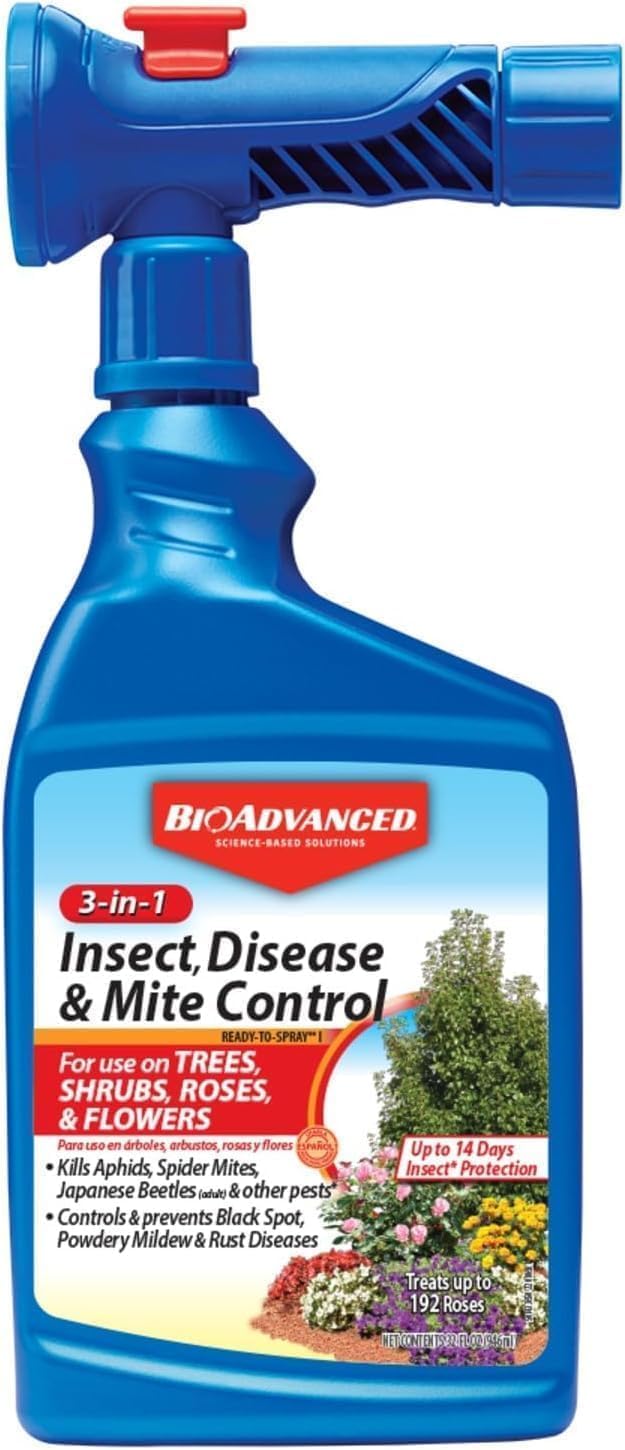
BioAdvanced 3-in-1 Insect, Disease & Mite Control Spray, 32 fl oz
| Unit Count | 32 Fluid Ounces |
|---|---|
| Item Form | Spray |
| Target Species | Aphids, caterpillars, leafminers, whiteflies and other listed pests |
| Active Ingredients | Tau-fluvalinate 0.61%, Tebuconazole 0.65% |
This BioAdvanced 3-in-1 spray is a performance-focused ready-to-use treatment that kills common pests on contact while also preventing and curing listed fungal diseases and controlling spider mites. It attaches to a garden hose for broad, even coverage and is labeled to treat up to 192 rose bushes, making it practical for medium to large beds and multiple shrubs. Key features include systemic ingredients plus contact control, rainproof protection lasting up to 14 to 30 days depending on labeled claims, and active ingredients targeting aphids, caterpillars, whiteflies, and mites. In use you spray foliage including undersides, and the product provides both immediate knockdown of insects and longer residual control so follow-up applications are less frequent. Limitations: it is a chemical treatment so users must follow safety directions and keep children and pets away until treated areas have dried, and it is not sold for use in New York. For someone prioritizing reliable, one-step control of aphids and associated fungal problems on roses and ornamentals, this bottle delivers convenient, broad-spectrum protection.
Best for: Gardeners who want a fast, high-performance one-step solution to control aphids and related pests while also preventing common fungal diseases on roses and ornamental plants.
Less Ideal for: Organic gardeners or those seeking nonchemical options should look for botanical or soap-based aphid controls instead.
- Combines insecticide, fungicide, and miticide in one ready-to-use formula for streamlined treatment
- Attaches to a garden hose for fast coverage of many plants including up to 192 roses
- Provides knockdown on contact and residual protection between labeled reapplications
- Controls a wide list of pests including aphids, spider mites, whiteflies, and caterpillars
- Contains chemical active ingredients that require careful handling and adherence to safety directions
- Not approved for sale in all states which limits availability for some users
Verdict: For gardeners focused on performance, this ready-to-spray 3-in-1 formula delivers fast aphid knockdown plus disease prevention in one convenient application.
Garden Safe Insecticidal Soap Ready-to-Use Spray, 32 oz

| Item Form | Spray |
|---|---|
| Target Species | Insects |
| Liquid Volume | 32 fluid ounces |
| Active Ingredients | Potassium Salts Of Fatty Acids |
Garden Safe Insecticidal Soap is a pre-mixed contact spray formulated with potassium salts of fatty acids to kill aphids, mealybugs, mites, whiteflies and other soft-bodied pests. You use it like a typical garden spray: thoroughly wet all plant parts, including leaf undersides, and reapply according to the label when pests persist. Because it is a contact insecticide, results are fast when you hit insects directly but it will not provide systemic or residual control. The ready-to-use format removes mixing steps and makes it convenient for quick spot treatments on vegetables, fruit trees, ornamentals and in greenhouses. It is labeled for use up to the day of harvest, which is helpful for edible crops, but users should avoid spraying in full sun and protect nearby water sources since it can harm aquatic invertebrates. Practical gardeners will appreciate the straightforward application and plant-safe formulation for many common garden pests, while those needing long-term prevention will need to integrate other controls.
Best for: Gardeners who prioritize quick, low-effort control of aphids and other soft-bodied pests on vegetables, ornamentals, and container plants and want a product safe for use up to harvest.
Less Ideal for: Growers who need long-term systemic control or broad residual protection should consider systemic insecticides or integrated approaches instead.
- Ready-to-use spray requires no mixing and is convenient for spot treatments
- Effective on contact against common soft-bodied pests like aphids and whiteflies
- Label allows use on edibles up to the day of harvest for quick backyard vegetable applications
- Safe for use in greenhouses and on ornamentals when label directions are followed
- Provides only contact control and no systemic or long-lasting residual protection
- Can be hazardous to aquatic invertebrates so requires care to avoid runoff
Verdict: Buy this if you want a fast, ready-to-use contact spray that safely knocks down aphids on edible and ornamental plants with minimal prep.
BioAdvanced Rose & Flower Insect Killer Spray, 24 oz

| Unit Count | 24 Fluid Ounces |
|---|---|
| Item Form | Spray |
| Target Species | Insects |
| Active Ingredients | Cyfluthrin |
This ready-to-use BioAdvanced spray targets common rose and flower pests including aphids, whiteflies, Japanese beetles, and caterpillars. You simply spray leaves until evenly coated and the cyfluthrin-based formula kills listed insects on contact while leaving a residual barrier that can protect plants for up to two weeks. The trigger sprayer makes spot treatments quick around rose bushes, ornamentals, shrubs, and vegetable gardens, so it is convenient for small to medium infestations. Practical benefits include an EPA-registered active ingredient, a broad list of labeled pests, and no mixing or measuring required. Important limitations are that it is a synthetic insecticide so you should avoid applying it during bloom to protect pollinators and follow label timing to limit exposure to beneficial insects, and it is not intended for continuous organic use. For gardeners watching their budget, the 24-ounce ready-to-use bottle is an easy grab-and-spray option for recurring aphid outbreaks without extra equipment or dilution steps.
Best for: Gardeners who need a straightforward, low-effort solution to control aphids and other common rose pests and prefer a ready-to-spray product that works quickly.
Less Ideal for: People managing pollinator-friendly plantings during bloom or those committed to strictly organic pest control methods should consider alternative treatments.
- Kills a long list of listed pests on contact including aphids and whiteflies
- Provides up to 14 days of residual protection after application
- Ready-to-use sprayer requires no mixing or extra equipment
- Contains a synthetic pyrethroid active ingredient which can harm pollinators and beneficial insects if applied during bloom
- Not suitable for gardeners seeking organic or all-natural solutions
Verdict: A convenient ready-to-use spray that kills aphids and many other rose pests on contact and protects plants for up to two weeks, making it a strong budget-friendly choice for quick knockdown and short-term control.
Athena IPM Insecticide & Fungicide Ready-to-Use Spray, 32 fl oz

| Brand | Athena |
|---|---|
| Unit Count | 32 Fluid Ounces |
| Part Number | IPM-32OZ-RTU |
Athena IPM is a 32-ounce ready-to-use spray designed to kill common soft-bodied pests and treat powdery mildew on contact. You shake the bottle and spray directly on affected foliage, making it convenient for quick spot treatments on houseplants, vegetables, ornamentals and in greenhouses. The formula targets spider mites, aphids and thrips while also delivering fungicidal activity, so it can simplify routine pest management by handling multiple problems with one product. Its EPA 25(b) minimum risk ingredients mean it is marketed as an eco-friendlier option and is suitable for use around people and pets when directions are followed. Because it is pre-mixed no measuring or equipment is required, which saves time for gardeners who want a dependable, no-fuss solution. Limitations: it is a contact treatment so thorough coverage is essential and it may require repeat applications to control heavy or hidden infestations; also it carries standard safety warnings and a California Prop 65 notice that some buyers will want to consider.
Best for: Gardeners who prioritize a dependable, easy-to-use pest control that handles aphids and other common pests without mixing or special equipment and who prefer products marketed as lower-risk for people and pets when used correctly.
Less Ideal for: Users seeking a systemic, long-lasting insecticide for severe or hidden infestations or those who need a product without any regulatory warnings should consider other options.
- Ready-to-use formula requires no mixing or extra equipment
- Broad-spectrum activity against aphids, spider mites and thrips plus powdery mildew control
- Uses EPA 25(b) minimum risk ingredients suitable for use around people and pets when used as directed
- Versatile for indoor plants, vegetable gardens, ornamentals, greenhouses and hydroponic systems
- Contact-only action requires complete coverage and repeat sprays for heavy infestations
- Contains a California Prop 65 warning which may concern some users
Verdict: Choose Athena IPM when you want a reliable, ready-to-use spray that quickly knocks down aphids and other soft-bodied pests while also treating powdery mildew.
Bonide Captain Jack's Ready-to-Use Neem Oil Spray, 32 oz

| Item Form | Liquid |
|---|---|
| Target Species | Insects |
| Liquid Volume | 32 fluid ounces |
| Active Ingredients | Clarified Hydrophobic Extract of Neem Oil |
Bonide Captain Jack's Ready-to-Use Neem Oil Spray is a multi-purpose garden spray derived from neem seed oil that targets insects, mites, and several fungal diseases. It is supplied in a 32 oz trigger bottle ready for spot or broad-spray applications on roses, vegetables, herbs, houseplants, shrubs and trees. In practice you shake the bottle, spray all plant surfaces including undersides of leaves, and reapply every 7 to 14 days or at the first sign of pests. The product kills eggs, larvae and adults and lists efficacy against aphids, spider mites, whiteflies and common fungal issues such as powdery mildew. Because it is an organic-approved formulation it fits into organic or edible gardens and can be used up to harvest. Limitations include the need for repeat applications for full control and the caution to avoid spraying in peak sun to prevent plant stress; it is not an instantaneous knockdown like some synthetic contact insecticides. For gardeners preferring lower-toxicity, proof-backed options, this neem spray provides broad coverage with straightforward application and established effectiveness against aphids when used as directed.
Best for: Gardeners who prioritize lower-toxicity, proven options and want a single spray to manage aphids, mites and common fungal problems on ornamentals and edible plants.
Less Ideal for: Users needing a fast, single-treatment knockdown for severe infestations or commercial growers who require high-throughput systemic controls.
- Ready-to-use trigger bottle for easy spot or broad application
- Controls multiple pest stages including eggs, larvae and adults
- Acts as insecticide, miticide and fungicide in one product
- Approved for organic gardening and safe for use up to day of harvest
- Requires repeat applications (typically every 7–14 days) for sustained control
- Can cause plant stress if applied during peak sunlight
Verdict: A convenient, organic-approved neem spray that reliably controls aphids and related pests while also preventing common fungal problems for home gardeners.
Atticus Talak 7.9% Bifenthrin Indoor/Outdoor Insecticide Concentrate (32 oz)

| Active Ingredients | Bifenthrin |
|---|---|
| Formulation | Suspension Concentrate |
| Liquid Volume | 32 fluid ounces |
| Length of Control | Up to three months |
| Target Species | Insects |
Talak 7.9% is a water-based bifenthrin concentrate designed for both indoor perimeter and outdoor landscape use. You dilute the product with water according to the label and apply it with a pump or hose sprayer to lawns, shrubs, hardscapes, baseboards and other perimeter areas. The formula targets more than 75 pests including aphids, mites, ants and spiders and is intended to kill on contact while providing residual control for up to three months. Notable features are clear-drying, low odor, and the ability to treat turf, plants and structural cracks and crevices, plus clear mixing guidelines for different applications. For a cautious buyer, its EPA specification and a long track record for bifenthrin offer predictable performance. Practical limitations are that mixed spray should be used same day and it is not approved for foggers; label directions must be followed closely for safe use around people, pets and food areas. Also some states restrict sale, so check local regulations before planning use.
Best for: Buyers who prioritize a proven, conventional insecticide for routine perimeter and landscape pest control and want predictable residual control with clear label directions.
Less Ideal for: People seeking an organic or non-synthetic option or those who need a product approved for fogging or long-term stored mixes should consider alternatives.
- Broad-spectrum control that lists aphids among target pests
- Water-based formula that dries clear and leaves no residue or strong odor
- Flexible dilution rates for lawns, landscapes and indoor perimeter treatments
- Provides residual control lasting up to three months after application
- Mixed spray solutions cannot be stored and must be used the same day
- Not labeled for fogger use and restricted from sale in some states
Verdict: A reliable bifenthrin concentrate for homeowners who want a predictable, long-lasting indoor and outdoor treatment against aphids and many other common pests.
Choosing the Right Insecticide for Aphids: Key Factors to Consider
Mode of Action and Contact Vs Systemic Control
Understanding how an insecticide kills aphids determines when and how it will work in your garden. Contact insecticides require direct spray on aphids to be effective and tend to knock down populations quickly, but they may miss sheltered nymphs. Systemic options are taken up by the plant and control aphids that feed on treated tissue, offering protection for new growth.
Choosing between contact and systemic products affects timing and coverage. Contact materials are useful for spot treatments during visible outbreaks. Systemics are better when you need ongoing protection or when aphids are hard to reach, such as on inner canopy leaves.
Plant Safety and Crop Labeling
Not all insecticides are safe on every ornamental or edible plant. Label directions indicate which species can be treated and at what rates, including maximum preharvest intervals for edible crops. Some formulations can scorch tender foliage or leave residues on herbs and leafy greens if applied too strongly or in hot sun.
Always match the product label to the plants you intend to treat to avoid damage. For mixed plantings, choose options labeled for a broad range of ornamentals and vegetables or use targeted spot treatments to limit exposure.
Impact on Beneficial Insects and Pollinators
Beneficial predators and parasitoids often keep aphid numbers in check, so preserving them is critical for long-term control. Broad-spectrum insecticides can quickly eliminate aphid predators and pollinators, potentially causing secondary pest outbreaks.
To protect beneficials, consider products with low residual toxicity to predators, apply in the evening when pollinators are less active, or use spot treatments. Products labeled as compatible with integrated pest management are preferable for gardens where biological control is part of the strategy.
Application Method and Coverage Needs
Different formulations require different application techniques. Foliar sprays demand thorough coverage of both upper and lower leaf surfaces where aphids congregate. Soil-applied or drench systemics depend on uptake through the root zone and require correct timing and watering to be effective.
Consider whether you can achieve good spray coverage with your equipment, the plant size, and whether overhead irrigation will wash off foliar residues. For large shrubs or trees, soil systemic applications or targeted trunk injections (where labeled and appropriate) may be more practical.
Residual Activity and Reapplication Interval
Residual activity determines how long a single application continues to suppress aphids. Short-residual contact treatments may require frequent reapplication to manage new crawlers, while longer-residual systemics can protect new growth for weeks.
Balance persistence with safety: longer residuals can increase non-target exposure. Follow label reapplication intervals to avoid buildup and resistance, and rotate modes of action where labels recommend doing so to slow resistance development.
Residue Concerns for Edible Crops
When treating vegetables, herbs, or fruiting plants, residue limits and preharvest intervals matter. Some effective aphid controls are cleared for ornamentals but restricted or limited on food crops.
Consult label instructions for harvest timing and allowable crops. For quick-turnaround harvests like lettuce or herbs, choose products with short preharvest intervals or stick to physical and biological controls until after harvest.
When to Treat Versus When to Monitor
Not every presence of aphids requires full-scale treatment. Low numbers can often be tolerated while natural enemies and weather reduce populations. Inspect plants weekly, especially new growth and underside of leaves, and use thresholds based on plant health and aesthetic tolerance rather than reacting to a single sighting.
- Look for sticky honeydew, distorted growth, and colonies on new shoots as signs that treatment is needed.
- Treat quickly when plants show stress, virus symptoms, or heavy honeydew that attracts sooty mold.
Nonchemical and Cultural Controls to Use First
Cultural measures reduce aphid pressure and increase the effectiveness of any insecticide used later. Practices include strong water sprays to dislodge colonies, maintaining plant vigor through proper fertilization, and encouraging beneficial predators with diverse plantings.
Applying these methods before chemical controls can lower the number of applications needed and protect non-target insects.
- Use reflective mulches or row covers for temporary protection.
- Avoid excess nitrogen fertilization that promotes tender growth favored by aphids.
Timing Applications to Minimize Pollinator Risk
Apply treatments in the evening or early morning when pollinators are less active and avoid spraying open flowers. For systemic products, be mindful of systemic residues moving into nectar or pollen and follow label restrictions for flowering plants.
Timing reduces unintended harm while maintaining control over aphid populations.
- Remove or cover bees boxes during application if work is near hives.
- Spot-spray nonflowering stems when possible to limit exposure.
Monitoring Resistance and Rotating Modes of Action
Repeated use of the same chemistry can select for resistant aphid populations. Rotate between products with different modes of action when labels indicate distinct mechanisms. Combine rotation with nonchemical tactics to reduce selection pressure.
Record treatments and outcomes so you can spot reduced efficacy and change strategies before control fails.
- Alternate contact and systemic modes of action across seasons when practical.
- Use lower-risk products as part of an integrated rotation plan.
Application Safety and Household Considerations
Follow label PPE and mixing instructions to protect yourself and family members. Keep children and pets out of treated areas until the product has dried or the label's re-entry interval has passed.
Store products safely and mix only the amount you need to reduce leftover waste and disposal concerns.
- Calibrate sprayers to deliver labeled rates and avoid drift.
- Rinse equipment away from vegetable plots to prevent contamination.
How We Chose the Best Insecticide for Aphids
We prioritized insecticides that offer reliable control of aphids across typical garden settings while minimizing harm to plants and beneficial insects. Selection began with products formulated or commonly recommended specifically for sap-sucking pests, then we applied filters focused on practical gardener needs. Key evaluation criteria included contact and systemic effectiveness against aphids, plant safety across common ornamental and edible species, application flexibility for foliar sprays or soil drench use, persistence and residual activity, and compatibility with integrated pest management including beneficial insects and pollinators. Excluded items included general household insect sprays not labeled for garden use, products with restricted-use designations, and formulations lacking clear horticultural directions. We also deprioritized controls that require specialized equipment beyond typical home-garden sprayers. The final list balances rapid knockdown options with gentler alternatives suitable for IPM and edible plantings.
FAQ
How quickly will an insecticide reduce an aphid colony?
Many contact insecticides produce visible knockdown within hours, while systemic products can take a day or more as they move into plant tissues. Effectiveness depends on coverage, aphid density, and whether nymphs are protected in tight clusters.
Can I use insecticides on edible plants like lettuce and herbs?
Yes, but you must follow the label for crop permissions and preharvest intervals. Some products are labeled for ornamentals only, so choose formulations cleared for vegetables and respect harvest timing to avoid residues.
Will treating for aphids kill pollinators and beneficial insects?
Broad-spectrum contact treatments can harm beneficials if applied to flowering plants or when predators are active. To reduce impact, apply in evenings, avoid spraying blooms, use spot treatments, or select options with lower non-target toxicity.
How often should I reapply an aphid insecticide?
Reapplication intervals vary by product and residual activity. Short-residual contact sprays may need repeating weekly, while systemic treatments can protect new growth for several weeks. Always follow label directions for timing.
Are homemade sprays effective against aphids?
Soap and horticultural oil sprays can be effective on small infestations when applied thoroughly and repeatedly. They are less persistent than commercial insecticides but have lower non-target impacts and work well as part of an integrated approach.
Final Verdict
Choose an aphid control based on how quickly you need knockdown, the plants you must protect, and your tolerance for affecting beneficial insects. For immediate outbreaks on nonflowering ornamentals, a contact spray with good coverage can restore plant health fast. For longer protection on mixed beds or edible plots, a plant-safe systemic or careful spot treatments combined with cultural controls and predator conservation often give the best long-term results. Prioritize label-matched plant safety, rotate modes of action to lessen resistance risk, and use timing and application methods that protect pollinators. With those tradeoffs in mind, you can select an insecticide strategy that balances rapid control with ecological caution.
