

Note: This article contains affiliate links. If you click on these links and make a purchase, I may earn a small commission at no extra cost to you. This helps support my research and content. Read my full affiliate disclosure here.
If ticks are turning your yard into a hazard, choosing the right lawn insecticide for ticks matters more than one-off treatments. The correct product reduces questing numbers, lowers the chance of tick encounters on people and pets, and helps protect high-use areas like play spaces and pet paths. This guide shortlists the top options for tick control and explains how we assessed knockdown, residual activity, and application fit for typical home lawns. Below are our top picks and the practical reasons each type of product could work in your yard. We evaluated products for kill speed, how long they keep working, and how easy they are to apply so you can match a solution to your lawn and lifestyle.
Top Picks at a Glance
| Best Overall The best all-around choice for most situations | Ortho Tick B-gon Tick Killer Ready-to-Spray, 32 fl. oz. | 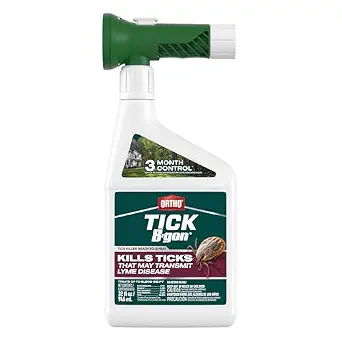 |
| Best Quality Built to a higher standard if you want something more solid | Talstar One Insecticide 1 Gallon Concentrate (Bifenthrin) |  |
| Best Value The sweet spot between price and what you get | Ortho BugClear Lawn Insect Killer, 10 lb (granules) |  |
| Best Budget The cheapest option that still gets the job done reliably | Mosquito Magician Ready-to-Use Mosquito Yard Spray, 2 Gal |  |
| Highest Rated A top-rated pick with lots of positive feedback | Zoecon Essentria Mosquito & Tick Concentrate, 32 oz |  |
| Most Popular A crowd favorite that many people choose with confidence | Atticus Talak 7.9% Bifenthrin Indoor/Outdoor Insecticide Concentrate (32 oz) |  |
Ortho Tick B-gon Tick Killer Ready-to-Spray, 32 fl. oz.

| Item Form | Spray |
|---|---|
| Scent Name | Unscented |
| Target Species | Insects |
| Active Ingredients (by wt) | Bifenthrin 0.300%, Zeta-Cypermethrin 0.075% |
Ortho Tick B-gon Ready-to-Spray is a hose-end insecticide designed to treat lawns, garden beds, and perimeter areas to reduce ticks, fleas, and a long list of other pests. You attach the bottle to a garden hose, spray target areas until wet, and the active ingredients begin killing listed pests within minutes while leaving a protective barrier that the label says lasts up to three months for American dog ticks and fleas. It is formulated for broadcast treatment of lawns and can also be applied around ornamental plants, trees, shrubs, vegetables, and fruit trees following label directions. The ready-to-spray format makes coverage fast for medium to large yards and the product claims treatment areas up to several thousand square feet from one bottle. Important limitations are that it is a pesticide with synthetic active ingredients so treated areas must dry before people and pets re-enter and it is not for use directly on pets; follow label timing for edible plants and harvest restrictions. Overall it is a practical option for homeowners who want a straightforward, long-lasting lawn treatment to reduce tick risk across an entire yard.
Best for: Homeowners who want a single, easy-to-use lawn treatment to reduce tick and flea pressure across the yard and surrounding plantings without repeated spot-treating.
Less Ideal for: People seeking an organic or non-chemical approach, or those who only need occasional spot treatment of small areas should consider alternatives.
- Ready-to-spray hose-end applicator simplifies coverage of lawns and perimeter areas
- Provides up to three months of control against American dog ticks and fleas per label
- Labels lists effectiveness against 235 named pests so it targets a broad range of common yard insects
- Suitable for use on lawns and around ornamentals, trees, shrubs, vegetables and fruit trees when following directions
- Contains synthetic pyrethroid active ingredients which require careful use and re-entry precautions
- Not for direct use on pets and has specific timing restrictions for edible plants
Verdict: A fast, easy hose-end treatment that gives homeowners broad-spectrum knockdown and up to three months of yard protection against ticks and fleas.
Talstar One Insecticide 1 Gallon Concentrate (Bifenthrin)

| Active ingredient | Bifenthrin 7.9% |
|---|---|
| Formulation | Concentrate |
| Use areas | Indoor and outdoor (perimeter, structures, lawns, ornamentals) |
Talstar One is a one-gallon concentrate built for professional-strength perimeter and spot treatments where lasting control is the priority. The product mixes with water to treat foundations, doorways, cracks and crevices, lawns, ornamentals and shrubs, delivering residual control against ants, spiders, roaches, fleas, ticks and mosquitoes. Its water-based, low-odor formula dries clear, so treated surfaces and outdoor living areas remain presentable after application. The high bifenthrin content means treatments often provide extended residual activity compared with basic ready-to-use sprays, so you can cover larger properties or stretch seasonal applications. Important limitations are that it is a concentrated pesticide that must be mixed and applied according to the label and safety rules, and it is not a selective option for beneficial insects so targeted application is required to limit non-target exposure. For homeowners focused on performance and long-term perimeter protection, Talstar One is designed to reduce repeat treatments while covering a wide pest range.
Best for: Buyers who prioritize strong, long-lasting pest control for yards and perimeters and are comfortable mixing and applying a professional-grade concentrate safely.
Less Ideal for: People who want an easy ready-to-use spray, want selective treatments that spare beneficial insects, or prefer non-chemical pest strategies.
- High-concentration bifenthrin formula provides extended residual control
- Versatile for indoor crack-and-crevice work and outdoor perimeter, lawn and ornamental treatments
- Water-based, low-odor formula dries clear for minimal appearance impact
- Controls a wide list of pests including ticks, mosquitoes, ants and fleas
- Concentrate requires proper mixing and safe handling; not ready-to-use
- Non-selective insecticide that can affect beneficial insects if broadly applied
Verdict: Choose Talstar One when you need a concentrated, high-performance insecticide for long-lasting perimeter and lawn control against ticks and other nuisance pests.
Ortho BugClear Lawn Insect Killer, 10 lb (granules)

| Unit Count | 160 Ounce |
|---|---|
| Item Form | Granules |
| Target Species | Insects |
| Coverage | Up to 16,500 sq ft |
Ortho BugClear Lawn Insect Killer is a 10 lb granular treatment formulated to kill and prevent common lawn pests when applied with a broadcast spreader and watered in. It is used on lawns, around home perimeters, in flower beds and on listed vegetables to target ants, spiders, ticks, fleas, armyworms, grubs and other listed insects. The granules begin killing by contact within minutes for most pests and provide up to six months residual control for ants and up to three months for other listed insects, which reduces the need for frequent reapplication during peak season. The product treats up to 16,500 sq ft from a single bag and is compatible with standard spreaders for even coverage. Important limitations are that it excludes some ant species from the long-term claim, is not immediate for fire ants, and requires watering after application and adherence to label directions to protect desirable plants and avoid runoff. This is a practical option for homeowners who want a broadcast granular solution that balances fast knockdown and extended residual control with straightforward application steps.
Best for: Homeowners who want a low-effort, broadcast treatment to reduce tick and other insect pressure across medium to large lawns and prefer seasonal residual protection over spot treatments.
Less Ideal for: People who need an immediate solution for active fire ant mounds or who prefer non-chemical integrated pest management approaches for small or sensitive plantings.
- Broad-spectrum control including ticks, fleas, grubs and common lawn pests
- Fast contact kill for most listed insects with residual protection for weeks to months
- Covers up to 16,500 sq ft from one 10 lb. bag suitable for medium to large yards
- Easy to apply with common broadcast spreaders and activated by watering in
- Not effective as an instant knockdown for fire ants
- Label excludes certain ant species from the six-month control claim
- Requires proper watering and timing to avoid reduced effectiveness or runoff
Verdict: A practical granular option for homeowners who want broad tick and lawn insect control with long-lasting residual protection and simple spreader application.
Mosquito Magician Ready-to-Use Mosquito Yard Spray, 2 Gal

| Ingredients | Cedarwood, Lemongrass, Garlic, Rosemary, Geraniol, Citronella |
|---|---|
| Formulation | Ready-to-use liquid |
| Coverage | Treats up to 10,000 sq ft (2 gallons) |
| Targets | Mosquitoes, Fleas, Fire Ants, Ticks |
Mosquito Magician Ready-to-Use Mosquito Yard Spray is a plant-oil based, large-area treatment intended for yards, patios, and turf where mosquitoes and similar pests are a problem. You apply it with a pump or backpack sprayer, hose-end, or cold fogger (not with propane or hot foggers) and it is designed to create a protective barrier that can last up to two weeks. The formula uses six essential oils including citronella, lemongrass, garlic, rosemary, cedarwood, and geraniol which makes it safe for use around kids and pets when directions are followed. It covers up to about 10,000 sq ft per two-gallon container and is marketed to reduce mosquito activity and also control fleas, fire ants, and ticks. Practical benefits include ready-to-use convenience with no measuring for the RTU version, plant-based ingredients for households avoiding harsh chemicals, and flexibility to treat landscaped areas and hardscapes without leaving a slippery residue. Important limitations are variable effectiveness compared with synthetic chemical insecticides in high tick-pressure areas and the restriction against hot fogger equipment, so heavy-infestation treatments or professional-grade applications may require stronger alternatives.
Best for: Buyers who want an affordable, plant-based yard treatment to reduce mosquito activity and help control ticks around family and pet areas without using heavy synthetic chemicals.
Less Ideal for: Homeowners facing severe or persistent tick infestations who need the stronger residual control provided by professional synthetic insecticides or licensed applicators.
- Plant-based formula built from six essential oils, reducing reliance on harsh synthetic pesticides
- Ready-to-use convenience for sprayer application with no mixing required for the RTU version
- Broad-spectrum activity that targets mosquitoes, fleas, fire ants and offers tick suppression
- Large coverage per container suitable for treating yards and patios up to thousands of square feet
- Less potent than many synthetic professional insecticides for severe tick infestations
- Not compatible with propane or hot fogger type applicators
Verdict: A budget-friendly, plant-powered yard spray that provides convenient, family-safe suppression of mosquitoes and offers useful tick control for low to moderate infestations.
Zoecon Essentria Mosquito & Tick Concentrate, 32 oz

| Active ingredients | Geraniol 10.0%; Cinnamon Oil 5.0%; Cornmint Oil 2.0%; Sodium Lauryl Sulfate 3.3% |
|---|---|
| Formulation | Water-based concentrate |
| Uses | Mosquito and tick control; repels mosquitoes up to 14 days |
| Application methods | Automated spraying systems, fogging systems, mist blowers |
Zoecon Essentria Mosquito & Tick Concentrate is a botanically derived, water-based insecticide concentrate intended for controlling ticks and repelling mosquitoes around yards and outdoor living areas. It mixes into spray, fogging, or misting systems and is built to work with automated application equipment, which makes it useful for routine perimeter treatments or spot applications where coverage consistency matters. The formula lists geraniol, cinnamon oil, and cornmint oil as active ingredients and claims up to 14 days of mosquito repellency while killing ticks on contact. Practical benefits include a lower-toxic profile compared with conventional synthetic pesticides and compatibility with common powered applicators for even coverage. Limitations are that it is a 25b essential oil product, so results can vary with pest pressure and application technique and it may require more frequent repeat treatments in heavy tick infestations. Users should follow label directions for proper dilution and reapplication intervals to achieve reliable control.
Best for: Buyers who prioritize a lower-toxicity, repeatable perimeter treatment and want a concentrate that works with automated or powered application systems for consistent routine control.
Less Ideal for: Homeowners seeking a single heavy-duty professional synthetic treatment for severe, established tick infestations should consider alternatives with longer residual chemistry.
- Botanically derived, water-based concentrate with essential oils as active ingredients
- Designed for use with automated sprayers, foggers, and mist blowers for even coverage
- Claims up to 14 days of mosquito repellency while also killing ticks
- Contains commonly used active oils (geraniol, cinnamon oil, cornmint) and food-grade inerts
- As a 25b essential oil product, efficacy can be variable and may need more frequent reapplications under heavy pest pressure
- Requires proper dilution and powered application equipment for best results
Verdict: Choose this concentrate if you want a botanically based, equipment-ready option for regular perimeter treatments that balances lower toxicity with repeatable, systemized applications.
Atticus Talak 7.9% Bifenthrin Indoor/Outdoor Insecticide Concentrate (32 oz)

| Liquid Volume | 32 fluid ounces |
|---|---|
| Item Form | Liquid |
| Active Ingredients | Bifenthrin |
| Target Species | Insects |
| Specification Met | EPA |
Talak 7.9% is a liquid concentrate that you dilute with water and apply as a spray for lawns, landscapes, perimeter barrier treatments and indoor baseboards and corners. The active ingredient bifenthrin delivers fast contact kill and residual control against a broad list of pests including ticks, ants, spiders and mosquitoes. The label gives clear dilution rates for turf, shrubs and surface treatments so one mixed gallon treats about 1,000 sq ft when used at typical rates. The formula is water‑based, dries clear, leaves little odor and is formulated to avoid phytotoxicity on plants. Practical benefits include a convenient pour bottle for measured mixing and the ability to treat fire ant mounds as a mound drench. Important limitations are that solutions should be mixed fresh each day and the product is not approved for fogger use; follow label safety directions closely. Also some states restrict sale. For anyone focused on reliable, residual tick control across lawn and perimeter areas, this concentrate is geared toward planned, label‑direct applications rather than casual spot treatments.
Best for: Buyers who prioritize proven, longer‑lasting control and want a professional‑style concentrate for planned lawn and perimeter treatments targeting ticks and other pests.
Less Ideal for: People who need ready‑to‑use sprays for small spot jobs or who prefer non‑chemical tick control methods should consider alternatives.
- Broad spectrum control that lists ticks among target pests
- Water‑based formula that dries clear and is low‑odor
- Up to three months residual control per application when used as directed
- Clear dilution instructions for turf, landscape and perimeter treatments
- Bottle design with pour markings for easier, measured mixing
- Solutions cannot be stored and must be mixed fresh for same‑day use
- Not labeled for use in foggers and unavailable for sale in some states
Verdict: Choose Talak 7.9% if you want a water‑based bifenthrin concentrate that delivers proven, residual tick control for lawns and perimeter treatments.
Choosing the Right Lawn Insecticide for Ticks: Key Factors to Consider
Active Ingredient and Mode of Action
Knowing the active ingredient is the first step toward an effective tick control plan. Different chemistries work by contact, ingestion, or nervous-system disruption, and some deliver a faster kill while others provide longer residual activity. For a home lawn, choose a product with an active ingredient that has documented efficacy against common tick species in your region.
Understanding mode of action also helps rotate chemistries across seasons to reduce the chance of reduced sensitivity. Read label details on what life stages of ticks are controlled and whether the product treats nymphs and adults for broader population reduction.
Residual Duration and Reapplication Interval
Residual protection determines how often you must treat to keep ticks suppressed. Some lawn insecticides provide several weeks of control under ideal conditions while others drop off faster after rainfall or mowing. Consider your yard's exposure to sun, irrigation practices, and mowing frequency because heavy watering or frequent clipping removal can shorten labeled residual periods.
Plan reapplications around the label interval rather than guesswork. In many cases, strategic spot treatments in high-traffic zones between scheduled whole-lawn applications can extend overall protection while reducing total product use.
Application Method and Coverage
Application method affects how well a product reaches tick harborages. Broadcast liquid sprays, granular formulations, and ready-to-use hose-end applicators each cover turf differently. Liquids typically give more uniform coverage and can be diluted to treat larger areas, while granules are easier for small lawns and require less mixing.
Think about your yard layout. Edges, leaf litter zones, ornamental borders, and shaded areas where host animals rest are the places ticks concentrate. Choose an application method that lets you treat those microhabitats effectively without unnecessary overspray.
Safety for People, Pets, and Beneficials
Safety considerations guide timing, buffer zones, and access restrictions after treatment. Labels specify how long pets and people should stay off treated turf and outline any precautions for pollinator-attractive plants. For home lawns, select products with clear, practical safety instructions that match how you use the space.
If children or pets roam the yard frequently, favor application schedules and product forms that minimize exposure windows. Use targeted treatments in nonflowering turf and keep applications away from pollinator plantings to preserve beneficial insects.
Environmental Persistence and Runoff Risk
Some active ingredients bind to soil and persist, while others break down quickly in sunlight or via microbial action. Consider slope, soil type, and the location of storm drains or water features when planning treatments. Products with high mobility pose greater runoff risk, especially when heavy rain is expected shortly after application.
Avoid treating immediately before forecasted heavy rain and use buffer distances near aquatic areas as directed on the label. For yards with clay soils or steep slopes, select formulations and application rates that reduce potential off-site movement.
Label Restrictions and Local Regulations
Always follow the product label; it is legally binding and contains crucial instructions on application rates, protective equipment, and permitted use sites. Some localities have restrictions on certain active ingredients or applicator licensing for larger areas, and homeowner-use labels can differ from professional formulations.
Check local extension recommendations as they often reflect regional ticks and seasonal timing. If municipal rules limit certain chemistries, plan for alternative approaches such as targeted spot treatments or integrated landscape practices to reduce tick habitat.
When to Treat Your Lawn for Ticks
Timing treatments to coincide with peak tick activity maximizes results and reduces unnecessary applications. In many regions, late spring and early summer correspond with nymphal activity while adults are more active in cooler months. Treating just before and during peak questing windows reduces the number of host-seeking ticks in high-use areas.
- Target high-use areas such as play zones, pet paths, and yard edges in early season.
- Consider a follow-up treatment after heavy rain if the product label permits.
- Combine whole-lawn treatments with spot treatment of brush and leaf litter where ticks hide.
How to Treat Problem Spots Versus Whole-Lawn Applications
Not every square foot of turf needs the same attention. For many yards, strategic spot treatments in likely tick harborages are more efficient and reduce chemical load. Focus on shady borders, woodline edges, brush piles, and areas where deer or rodents travel.
Whole-lawn applications make sense when infestation is widespread or when you want uniform protection across a play or recreation area. Use broadcast methods for coverage and granular or hose-end options for small to medium yards where ease of use is important.
- Inspect property edges and under shrubs to map treatment zones.
- Use lower-rate spot treatments in isolated trouble areas to limit overall pesticide use.
- Reserve whole-lawn applications for seasons of peak activity or after a confirmed high tick presence.
Integrating Lawn Management to Reduce Tick Habitat
Cultural practices reduce the microhabitats ticks depend on. Regular mowing, clearing leaf litter, and creating a dry, sunny border between woods and lawn reduce humidity and shade that ticks prefer. Removing brush and limiting groundcover near patios and play areas lowers host traffic and tick abundance.
Create physical barriers such as wood chip borders between yard and wooded areas to discourage host animal movement. Landscape choices that reduce ground-level moisture will make treatments more effective and shorten the intervals between needed applications.
- Keep grass mowed to reduce humidity and make ticks less hospitable.
- Clear leaf litter and trim low branches to increase sunlight penetration.
- Install landscape barriers to separate recreational lawn from wild edges.
Protecting Pets During and After Treatments
Pets often encounter ticks close to the ground, so coordinating insecticide timing with pet outdoor access is important. Follow label directions for re-entry intervals and avoid treating areas where pets sleep or rest until the product is dry or the specified wait time has passed.
Complement lawn treatments with veterinarian-recommended tick prevention products for animals. Treat bedding and resting areas separately if the label allows, and consider leash or supervised outdoor times during peak tick season to reduce exposure.
- Keep pets off treated turf for the interval stated on the label.
- Wash pet paws and bedding separately if pets had prior exposure before label re-entry time has elapsed.
- Coordinate lawn treatments with routine pet tick prevention for layered protection.
Nonchemical Alternatives and Complementary Tactics
Nonchemical steps reduce reliance on insecticides and can extend the effectiveness of treatments. Rodent control reduces hosts that carry tick larvae and nymphs, while deer deterrents and fencing limit large-host traffic through yards. Habitat modification such as removing brush piles and improving drainage lowers tick pressure.
Consider targeted biological controls or products that are labeled for tick suppression as complementary measures. These tactics are not always sufficient alone for severe infestations but they support an integrated approach and can reduce the frequency of chemical applications.
- Remove rodent shelters and seal small openings around foundations.
- Install deer-resistant plantings or barriers to reduce large-host travel through the yard.
- Use targeted mechanical interventions like leaf litter removal to reduce suitable tick habitat.
How We Chose the Best Lawn Insecticide for Ticks
We focused on products that are formulated and labeled specifically to reduce tick populations in lawns and adjacent turf edges. Our selection filtered for controls offering either quick knockdown to reduce immediate exposure or multi-week residual protection to limit reinfestation. We prioritized products with clear homeowner or professional application options that fit common residential settings. Evaluation criteria used across the shortlist included active ingredient effectiveness against common tick species, documented residual duration under normal lawn conditions, application method and coverage feasibility for typical yard sizes, and safety guidance for people, pets, and pollinators when used as directed. We excluded products without explicit tick labeling, those intended solely for non-turf uses, and any formulations lacking clear homeowner application instructions. The result is a curated set of options that balance efficacy, persistence, and practical use in home landscapes.
FAQ
How long after treatment will I see fewer ticks?
You may notice fewer questing ticks within a day or two if the product offers rapid knockdown, but full population reduction depends on residual activity and follow-up treatments. Expect visible reductions quickly in treated zones, with longer-term suppression appearing over several weeks when residual protection holds.
Can I treat the whole lawn if I have pollinator plants nearby?
Treat with care near flowering plants. Many labels advise avoiding applications to blooming plants to protect pollinators. Focus on turf and shaded edges rather than flower beds, and schedule treatments when pollinators are less active, such as early morning or evening, if label guidance allows.
Is it safe to use lawn insecticides around children and pets?
Safety depends on the product and how closely you follow label instructions. Most homeowner-use products include re-entry times for people and pets and specific handling instructions. Keep children and pets off treated areas for the labeled interval and store products securely.
How does rainfall affect treatment effectiveness?
Rain can reduce residual activity, especially if it occurs shortly after application. Some formulations are rainfast after a set drying time. Check the label for rainfast periods and avoid treating when heavy rain is forecast to ensure the product has time to bind or dry.
Can I mix different products to improve control?
Mixing products is not recommended unless the labels explicitly allow it. Labels provide safe tank-mix partners and rates. Combining incompatible chemistries can reduce effectiveness or increase non-target risk. When in doubt, follow label directions or consult extension advice.
How often should I reapply during tick season?
Reapplication frequency depends on the residual duration of the product, local tick pressure, and environmental conditions. Many homeowner options recommend reapplying every few weeks during peak activity, but always follow the specific interval on the label rather than a fixed schedule. Spot treatments between full applications can help in high-traffic areas.
Final Verdict
Prioritize products that match the threat level and the way you use your yard. Fast-knockdown formulations reduce immediate tick encounters while longer-residual options limit reinfestation between service events. Combine careful product selection with habitat modification, targeted spot treatment, and pet protection to get balanced, lasting results. Decide first whether you need whole-lawn coverage or focused border and spot control, then pick a formulation and application method that matches your lawn size and safety priorities. Following label directions and timing treatments for peak tick activity gives the best chance of reducing ticks without unnecessary exposure or repeat applications.
