

Note: This article contains affiliate links. If you click on these links and make a purchase, I may earn a small commission at no extra cost to you. This helps support my research and content. Read my full affiliate disclosure here.
If you want lush trailing greenery in a dim room, choosing the right low light hanging plants matters more than you might think. Many hanging species tolerate lower light but differ in how often they need water, what humidity they tolerate, and how quickly they trail or clump. This guide covers a shortlist of seven top low light hanging plants chosen for indoor settings like north-facing rooms, bathrooms with small windows, or shaded patios. We'll explain the practical strengths and limitations of each type and the evaluation criteria used to compare them so you can pick the best trailing plant for your space. Read on for straightforward care notes and the factors that matter when placing hanging plants in low light.
Top Picks at a Glance
| Best Overall The best all-around choice for most situations | Shop Succulents Ficus Repens (Creeping Fig) — Live Indoor Trailing Plant, 6-inch Nursery Pot |  |
| Best Quality Built to a higher standard if you want something more solid | Tricolor Hoya Krimson Queen (Hoya Carnosa Variegata) — Live 6" Hanging Plant |  |
| Best Value The sweet spot between price and what you get | Thorsen's Greenhouse Hahn's Green Ivy Plant (4" Hanging Pot) |  |
| Best Budget The cheapest option that still gets the job done reliably | Golden Pothos Live Plant in Grower's Pot |  |
| Highest Rated A top-rated pick with lots of positive feedback | Plants for Pets Boston Fern Hanging Plant in 6" Hanger |  |
| Most Popular A crowd favorite that many people choose with confidence | American Plant Exchange English Ivy 8-Inch Hanging Basket |  |
Shop Succulents Ficus Repens (Creeping Fig) — Live Indoor Trailing Plant, 6-inch Nursery Pot

| Indoor Outdoor Usage | Indoor |
|---|---|
| Sunlight Exposure | Partial Sun |
| Unit Count | 1 Count |
The Shop Succulents Ficus Repens (Creeping Fig) is a compact trailing houseplant intended for indoor decoration and low-light spots. It arrives in a 6-inch nursery pot and produces dense, small green leaves that form an attractive cascade for hanging baskets or for training up small trellises. This variety is tolerant of bright indirect light and will also perform acceptably in lower light, making it a good option for offices, bathrooms, or shaded living-room corners. Care is straightforward: water only when the top inch of soil dries and avoid overwatering. The plant’s trailing habit and easy trainability let you use it as a hanging accent or a tabletop spillover, and its low-maintenance needs suit busy owners or beginners. Expect moderate growth rather than rapid filling of large spaces, and occasional pruning to control length and encourage denser foliage. If you want a dramatic, fast-climbing specimen or an outdoor landscape vine, this indoor-focused plant may not meet those goals.
Best for: Buyers who want an easy-care, decorative trailing houseplant for low-light indoor spots and prefer something adaptable that needs minimal daily attention.
Less Ideal for: People seeking a fast-growing outdoor climber or a large statement plant for big spaces should look at larger species or outdoor varieties instead.
- Tolerates a range of light from bright indirect to low light, good for shaded indoor spots
- Trailing growth habit works well in hanging baskets or trained on small trellises
- Low watering needs; thrives when watered only after the top inch of soil dries
- Arrives ready in a 6-inch nursery pot for immediate placement or easy repotting
- Moderate growth rate means it will not quickly fill large hanging displays
Verdict: A low-maintenance trailing indoor plant that fits low-light hanging or shelf displays and is well suited to busy or beginner plant owners.
Tricolor Hoya Krimson Queen (Hoya Carnosa Variegata) — Live 6" Hanging Plant
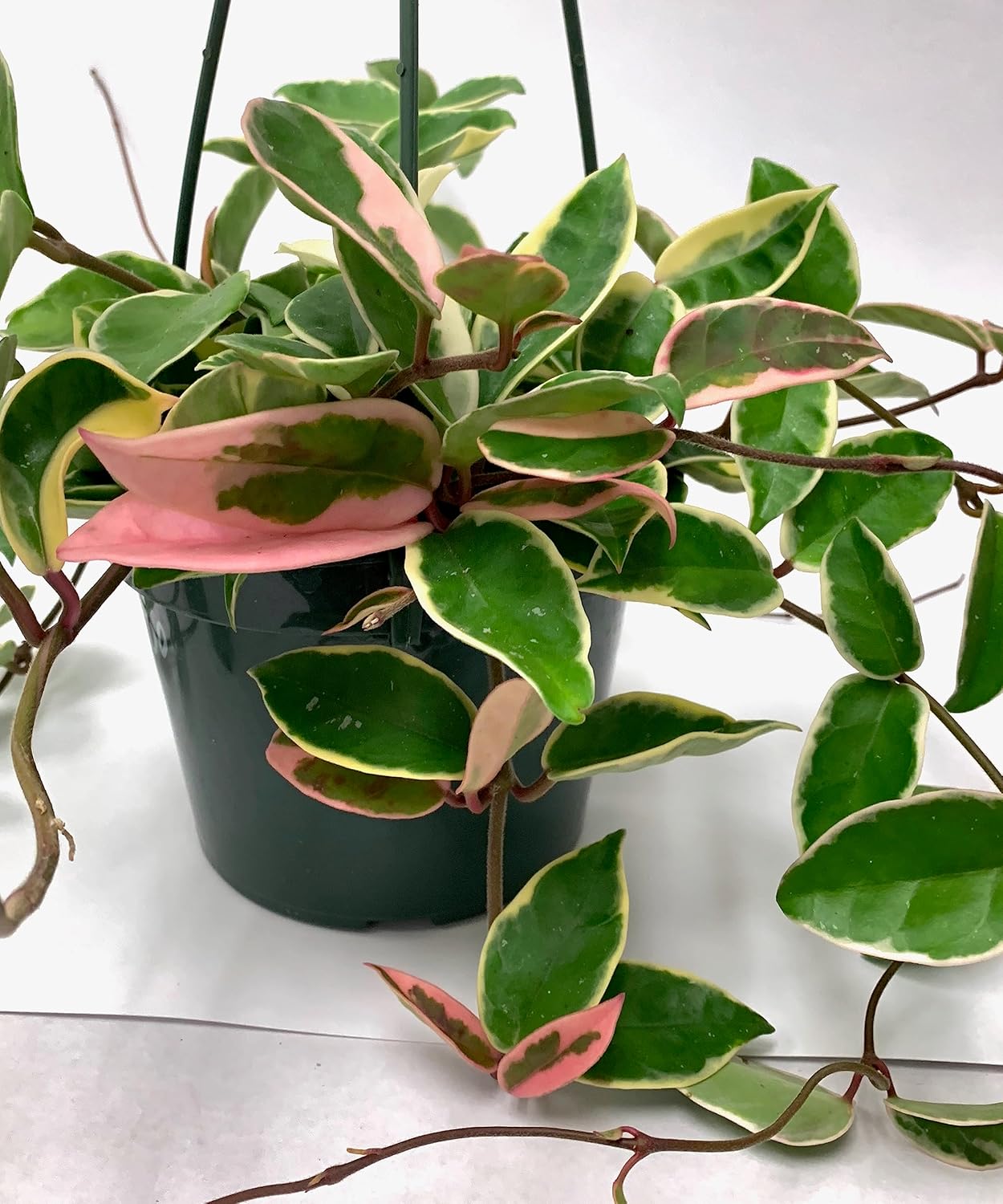
| Indoor Outdoor Usage | Indoor |
|---|---|
| Soil Type | Well Draining |
| Moisture Needs | Little To No Watering |
| Bloom Season | Spring to Summer |
| USDA Hardiness Zone | 10 |
The Hoya Krimson Queen is a compact, trailing houseplant prized for its variegated foliage and easy-care habit, sold here in a 6-inch hanging pot ready for suspension. It performs best in bright, indirect light but tolerates lower light, making it flexible for living rooms, bathrooms, or covered patios where direct sun is limited. Watering is low-maintenance: allow the top inch of soil to dry between waterings and use a well-draining medium to avoid root rot. The plant is already rooted and will steadily push out new leaves and occasionally bloom from spring into summer. Notable features include built-in air-purifying benefits and seasonal pink tones on new leaves in the right conditions. Practical benefits are low watering demands, a trailing habit that suits hanging displays, and straightforward propagation for enthusiasts who want to expand their collection. Limitations are that the pink coloration is seasonal and cannot be guaranteed at delivery and the plant is recommended for milder climates or strictly indoor environments given its USDA zone 10 rating.
Best for: Buyers who want a low-maintenance, decorative hanging plant that performs reliably in indoor settings and rewards attention with steady growth and occasional blooms.
Less Ideal for: Gardeners seeking a cold-hardy outdoor specimen or those who need guaranteed seasonal coloration year-round should consider other plants.
- Variegated trailing foliage adds visual interest in hanging displays
- Tolerates lower light while preferring bright indirect light for best growth
- Low watering needs when grown in well-draining soil
- Blooms in spring to summer and propagates easily for collectors
- Pink leaf coloration is seasonal and not guaranteed at purchase
- Recommended for indoor or warm-climate use only (USDA Zone 10)
Verdict: A low-effort, eye-catching hanging Hoya that delivers attractive variegation and easy indoor performance for buyers prioritizing reliable, low-maintenance plants.
Thorsen's Greenhouse Hahn's Green Ivy Plant (4" Hanging Pot)

| Indoor Outdoor Usage | Indoor |
|---|---|
| Other Special Features of the Product | Air Purification, Low Maintenance |
| Sunlight Exposure | Partial Shade |
| Moisture Needs | Moderate Watering |
| Soil Type | Peat Soil |
This Hahn's Green Ivy is a compact, trailing houseplant sold ready-to-hang in a 4-inch grower pot with a plastic hanging cover and saucer. It is typically used in hanging baskets, on shelves, or trained up a small trellis where its fast-growing vines add green texture without much fuss. The listing highlights moderate watering needs, preference for bright indirect to partial shade, and a spring to summer growth period; those traits make it a good fit for rooms with limited direct sun. Practical features include the removable saucer and drainage in the hanger which simplify watering, and the plant is described as low-maintenance and NASA-recognized for air purification. Expect modest size at delivery (about 5 to 7 inches) and normal variation between specimens. Important limitations are that shipping can stress live plants so some leaf loss or wilting on arrival is possible and growth will slow in low light, requiring occasional pruning or propagation to keep a full look.
Best for: Buyers who want an easy, low-light hanging plant that adds fast-growing green coverage with minimal weekly care and simple watering management.
Less Ideal for: Gardners seeking a large statement plant or instant mature coverage should look for larger specimens or nursery-grown mature vines; this is not suited to outdoor use outside USDA zones 5–9.
- Ready-to-hang design with drainage and detachable saucer for easier watering
- Tolerates lower light and suits partial-shade indoor spots
- Fast-growing trailing habit gives quick visual impact in hanging baskets or on shelves
- Low maintenance care with moderate watering and infrequent feeding during winter
- Small starter size may require repotting within months for continued growth
- Live-plant shipping can cause temporary leaf loss or wilting on arrival
Verdict: A practical, low-light hanging ivy that delivers fast trailing growth and simple care for buyers who value easy maintenance and quick greenery.
Golden Pothos Live Plant in Grower's Pot

| Indoor Outdoor Usage | Indoor |
|---|---|
| Sunlight Exposure | Partial Sun |
| Moisture Needs | Regular Watering |
| Other Special Features of the Product | Air Purification |
| USDA Hardiness Zone | 10 |
This Golden Pothos arrives in a small grower pot and is presented as an easy-care indoor vine suited to low or medium indirect light. Typical use is as a tabletop or hanging plant where its trailing stems can drape from shelves, baskets, or a planter. The listing highlights basic care guidance of a cup of water once a week and potting soil as the planting medium, which makes it straightforward for beginners or busy owners. Its strengths are simplicity and versatility: it tolerates partial sun, helps with indoor air quality, and requires only regular watering rather than constant attention. Practical limitations are that the plant is sold in a small plastic grower pot, so you will likely want to repot to a larger container for faster growth and longer-term health, and it is intended for USDA zone 10 which limits outdoor use in colder climates. Expect a compact starter plant rather than an immediate full trailing display.
Best for: Buyers wanting an inexpensive, easy-to-care-for hanging or trailing houseplant to brighten a low-light room or desk without complex care routines.
Less Ideal for: Gardeners seeking an instantly full, mature hanging specimen or those who need a plant rated for outdoor use in cooler zones.
- Low-maintenance care with guidance of medium indirect light and weekly watering
- Vining habit works well for hanging baskets, shelves, or trailing displays
- Marketed with air-purifying benefits for indoor spaces
- Arrives in a small plastic grower pot and will need repotting for long-term growth
- Listed for indoor use and USDA zone 10, so not suitable for cold outdoor climates
Verdict: A budget-friendly, low-effort pothos that's ideal as a starter hanging or trailing houseplant for low to medium light rooms.
Plants for Pets Boston Fern Hanging Plant in 6" Hanger

| Included Components | Plant Hanger |
|---|---|
| Plant Type | Boston fern (Nephrolepis exaltata) |
| Mounting Type | Hanging |
| Indoor Outdoor Usage | Indoor |
This Plants for Pets Boston fern arrives ready to hang in a 6-inch basket and is aimed at bringing classic cascading foliage to low-light spots. It is typically used in bathrooms, kitchens, porches, or shaded outdoor areas where humidity is higher and light is indirect. Notable features include fully rooted delivery in a hanging planter, tolerance of low light, and labeling as non-toxic to cats and dogs. In practice the fern creates a lush, air-refreshing display and is well suited to rooms where you want greenery without direct sun. Care involves keeping the soil consistently moist, providing humidity with a pebble tray or grouping, and occasional balanced feeding during the growing season. Important limitations are that it prefers steady moisture and humidity so it is not a forgettable houseplant, and the included plastic pot and hanger may limit decorative styling for some buyers. The plant's fronds can also grow long and will need occasional trimming or space to cascade cleanly.
Best for: Buyers who want a dependable, low-light hanging plant that provides lush greenery and is safe to keep around pets, and who are willing to maintain regular watering and humidity.
Less Ideal for: People seeking a near-care-free plant for dry, bright rooms or those who prefer a decorative ceramic hanging planter out of the box.
- Arrives fully rooted in a hanging basket ready to display
- Tolerates low light and performs well in humid spots like bathrooms
- Non-toxic to cats and dogs, easing concerns for pet owners
- Lush, cascading fronds provide effective hanging greenery and air-refreshing presence
- Requires consistently moist soil and higher humidity so it needs regular attention
- Comes in a basic plastic planter which may not suit decorative preferences
Verdict: Choose this Boston fern when you need a reliable, pet-safe hanging plant that thrives in low light and humid indoor spots.
American Plant Exchange English Ivy 8-Inch Hanging Basket

| Indoor Outdoor Usage | Indoor |
|---|---|
| Other Special Features of the Product | Air Purification |
| Sunlight Exposure | Partial Shade |
| Material Features | Live Plant, Nursery Pot, Potting Soil |
| Included Components | Pot, Hanging Holder |
This English Ivy arrives ready to hang in an 8-inch plastic basket and is designed for low-effort display on patios, porches, or shaded outdoor spots. It produces trailing vines that can be left to cascade or trained up a trellis and tolerates bright indirect light to partial shade, so placement is flexible around most covered outdoor living areas. The included hanging holder and nursery pot make setup immediate, and the plant’s reputation for modest air‑purifying ability adds a practical benefit indoors or in semi-enclosed patios. Expect routine maintenance of occasional watering and pruning to manage growth and keep the foliage looking tidy. Limitations to note are typical of live plants: initial size and fullness vary, and an outdoor hanging location with full sun or heavy exposure could stress the plant. Buyers who want an easy, decorative trailing vine for sheltered outdoor baskets will find this a straightforward option, while those seeking a specimen with precise variegation, guaranteed size, or sun tolerance should consider alternatives.
Best for: Buyers who want an easy, ready-to-hang trailing vine for sheltered outdoor baskets or covered porches and value low maintenance and immediate visual impact.
Less Ideal for: Gardeners seeking a sun-loving plant for fully exposed locations or those who require guaranteed mature size and dense coverage from day one.
- Ships pre-potted in an 8-inch basket with a hanging holder for immediate display
- Tolerates bright indirect light to partial shade, making placement flexible
- Low maintenance needs — occasional watering and pruning are usually sufficient
- Commonly listed as having air-purifying qualities for indoor or semi-enclosed spaces
- Performance and fullness can vary between individual live plants
- Not suited for exposed full-sun outdoor locations where foliage may scorch
Verdict: A ready-to-hang, low-maintenance English ivy that works well in sheltered outdoor hanging baskets and shaded patios for instant trailing greenery.
Choosing the Right Low Light Hanging Plants: Key Factors to Consider
True Light Requirements
Low light hanging plants are not all the same. Some species survive in very dim rooms with less than a couple hours of indirect sun, while others only tolerate moderate low light and will stretch or drop leaves if too dark. Understanding a plant's true light needs helps you decide where to hang it. Place truly low-light tolerant plants in north-facing rooms, hallways, or bathrooms with small windows; reserve brighter indirect spots for species that are only somewhat shade tolerant.
Light quality also matters. Even low-light plants benefit from indirect natural light or supplemental artificial lighting a few times per week. Avoid placing hanging plants in complete darkness or right under direct midday sun, both of which can cause stress.
Watering Rhythm and Soil Drainage
Plants in hanging baskets dry out faster than those in ground beds because air circulates above and below the pot and they often use smaller containers. For low light types, overwatering is a common problem because reduced light slows growth and evaporation. Choose well-draining potting mixes and containers with adequate drainage holes so you can water thoroughly and let excess drain away.
Know each species' preferred moisture level. Some trailing plants want consistently even moisture, while others do better if the top inch of soil dries between waterings. Matching your watering rhythm to a plant's preference prevents root rot and leaf drop.
Humidity and Indoor Climate
Low light areas like basements or interior rooms can also be dry, especially in winter when heating runs. Many trailing species appreciate moderate to high humidity; low humidity can cause brown leaf tips, slowed growth, and castor leaf drop. Assess your indoor climate: bathrooms and kitchens often provide higher humidity, while living rooms and bedrooms may need a humidifier or occasional misting to keep foliage healthy.
Choose plants that tolerate the humidity range you can provide without extra equipment, or be prepared to cluster plants, use pebble trays, or add a small humidifier for more demanding species.
Growth Rate and Maintenance Needs
Trailing plants vary from slow growers that need little maintenance to vigorous growers that require frequent pruning and repotting. If you want a no-fuss display, favor slower or moderate growers that hold their shape in hanging baskets. If you like dramatic cascades, pick faster growers and plan for more trimming, training, and occasional fertilizing.
Also consider how often you can repot or prune. Hanging plants in hard-to-reach spots will be harder to service, so pick species whose maintenance fits your willingness to climb a ladder and handle routine care.
Size at Maturity and Pot Compatibility
Estimate how large the plant will get and how long its trailing stems will become. Some low light hanging plants remain compact and form neat mounds, while others can extend long vines that overhang furniture or pathways. Choose a hanging basket depth and width that accommodates root growth and gives the plant stability as it matures.
Consider weight, too. A densely planted, wet pot can be heavy. Match your hanging hardware and anchor points to the expected size and wet weight of the mature display to avoid safety issues.
Toxicity and Household Safety
If you have children, dogs, or curious pets, toxicity should factor into your choice. Several popular trailing plants contain compounds that can cause irritation or more serious symptoms if chewed. Check general toxicity profiles for the types of plants you are considering and avoid highly toxic species in reach of pets or small children.
When doubts remain, choose non-toxic alternatives or place plants well out of reach and ensure plant debris is promptly cleaned up to reduce accidental ingestion.
Placement Strategies for Dim Spaces
Placement makes the difference between a healthy trailing plant and one that languishes. In low light rooms, hang plants near any available indirect light source like windows, glass doors, or under skylights. Even a modest increase in light exposure will improve leaf color and reduce legginess.
If natural light is sparse, rotate the plant periodically so all sides receive similar light and consider brief relocation to brighter spots for a week every few months to recharge reserves.
- Hang near windows but out of direct sun to avoid scorching.
- Rotate baskets every 2 to 4 weeks for even growth.
- Use reflective surfaces or light paint to boost available light.
Practical Care Schedule for Hanging Baskets
Set a simple routine so you do not overcare or undercare trailing plants. Check soil moisture with your finger once a week at the pot rim; adjust frequency based on season and indoor humidity. Trim dead or leggy stems during routine checks to encourage denser growth and prevent tangled vines.
Feed lightly during the active growth season with a balanced houseplant fertilizer following label dilution. In winter, reduce or pause feeding as growth slows to avoid salt build-up in the potting mix.
- Finger-test soil at the pot edge rather than the center.
- Water deeply until excess drains, then let the top inch dry for most low light types.
- Prune lightly to maintain shape and stimulate branching.
Propagation Methods for Trailing Varieties
Most hanging plants are easy to propagate from tip cuttings, which lets you multiply favorites to fill more baskets or share with friends. Use clean shears, take 2- to 4-inch cuttings with a node, and root in water or a moist sterile mix. Keep cuttings out of direct sun while roots form.
Propagation also gives a way to rejuvenate older specimens: take multiple cuttings and restart the plant in fresh soil for a fuller hanging display.
- Root cuttings in water for visible root development.
- Use a well-draining propagation mix for soil rooting.
- Label cuttings with date and parent plant so you can track success.
Managing Pests and Low Airflow Problems
Hanging plants in low light and low airflow spots can attract scale, mealybugs, and spider mites. Inspect undersides of leaves and junctions where stems meet soil regularly. Early detection and physical removal are the best defenses in constrained light conditions where chemical sprays may stress plants.
Improve airflow with a small fan on low if humidity is high and pests persist. Quarantine new plants for a few weeks before introducing them near existing collections to avoid spreading pests.
- Inspect foliage weekly, especially underside of leaves.
- Wipe leaves with a damp cloth to remove dust and small pests.
- Isolate and treat infested plants promptly to protect others.
Design Ideas for Low Light Hanging Displays
Think about texture and contrast when grouping hanging plants. Combine trailing vines with compact foliage or a single upright plant to create depth in dim corners. Use varying basket lengths to cascade greenery at different heights for visual interest.
Consider decorative but functional containers with inner nursery pots so you can easily remove plants for watering and inspection without disturbing the display.
- Mix textures: variegated leaves add brightness in low light.
- Vary hanging heights for layered effect.
- Use lightweight, well-draining liners to simplify maintenance.
How We Chose the Best Low Light Hanging Plants
We selected seven low light hanging plants by focusing on real indoor performance and gardener-friendly traits. Our evaluation emphasized species-level characteristics that affect success in dim conditions: light tolerance under typical home lighting, humidity and temperature range, ease of propagation and establishment, pest and disease resistance in low airflow spots, and maintenance needs including pruning and watering frequency. We prioritized plants with predictable trailing habits so they work well in hanging baskets and allowed for a range of growth rates to suit both patient and impatient gardeners. We excluded varieties that require bright indirect light or specialized greenhouse conditions, plus any plants known to be highly toxic in households with frequent child or pet contact. Selections favored broadly available, easy-to-source species and those that respond well to common low-light care adjustments like reduced watering and occasional leaf cleaning. The scoring framework reflects these practical dimensions so readers can match a plant to their specific indoor microclimate and lifestyle.
FAQ
How much light do true low light hanging plants actually need?
True low light hanging plants usually do well with indirect light from a north-facing window or a few hours of weak morning light. They still need some ambient light to photosynthesize; complete darkness will cause decline. Supplemental grow lights can help in rooms with almost no natural light.
Can I keep low light hanging plants in the bathroom?
Bathrooms with windows or consistently higher humidity are often good homes for low light trailing plants. The added humidity benefits many species, but ensure there is at least some indirect natural light or a short daily period of artificial light if the bathroom is windowless.
How often should I fertilize these plants?
Fertilize sparingly during the active spring and summer growth period with a balanced houseplant feed diluted to half strength every 4 to 6 weeks. Reduce or stop fertilizer in fall and winter when growth slows to avoid salt accumulation and weak new growth.
Why are the leaves turning yellow or dropping?
Yellowing or leaf drop in low light hanging plants often signals overwatering or insufficient light. Check soil moisture and root health first. Also consider recent temperature changes, drafts, or low humidity as contributing factors.
Are trailing low-light plants safe around pets?
Safety depends on the plant species. Some commonly used trailing varieties are mildly toxic while others are safer. If pets are curious or chew on greenery, choose species known to be non-toxic or keep plants well out of reach.
Final Verdict
Pick a low light hanging plant that matches the light and humidity you actually have, and favor species with a watering rhythm you can keep up with. Prioritize true low-light tolerance, predictable watering needs, and a growth habit that fits your basket and hanging height. If you cannot provide moderate humidity or occasional brighter light, choose the hardiest, slow-growing types and plan for occasional rotation to brighter spots. With realistic expectations and a simple care routine, low light hanging plants can bring welcome trailing greenery to dim corners without endless fuss.
