

Note: This article contains affiliate links. If you click on these links and make a purchase, I may earn a small commission at no extra cost to you. This helps support my research and content. Read my full affiliate disclosure here.
Growing healthy, productive tomato plants often comes down to consistent feeding at the right times. Liquid fertilizer for tomatoes delivers nutrients quickly through the soil and foliage, which helps when plants need a boost during flowering and fruit set. This guide covers seven shortlisted options suited to garden beds, containers, and patio setups, and explains the practical strengths and tradeoffs of each choice. We evaluated products for nutrient balance, application ease, and suitability across different growing situations so you can pick a fertilizer that matches your watering routine and harvest goals.
Top Picks at a Glance
| Best Overall The best all-around choice for most situations | Neptune's Harvest Organic Tomato & Vegetable Liquid Fertilizer (2-4-2), 1 Gallon |  |
| Best Quality Built to a higher standard if you want something more solid | FoxFarm Grow Big Liquid Plant Food, 6-4-4 Quart Concentrate |  |
| Best Value The sweet spot between price and what you get | True Organic Liquid Tomato & Vegetable Food, 32 fl oz |  |
| Best Budget The cheapest option that still gets the job done reliably | True Organic Liquid Tomato & Vegetable Food, 16 fl oz |  |
| Highest Rated A top-rated pick with lots of positive feedback | AlgoPlus Tomato Liquid Fertilizer 1 Litre |  |
| Most Popular A crowd favorite that many people choose with confidence | Neptune's Harvest Tomato & Vegetable Organic Liquid Fertilizer (2-4-2), 36 oz |  |
| Best Seller A high-volume bestseller chosen again and again | Farmer's Secret Tomato Booster Fertilizer (32 oz) |  |
Neptune's Harvest Organic Tomato & Vegetable Liquid Fertilizer (2-4-2), 1 Gallon

| Item Form | Liquid |
|---|---|
| Specific Uses For Product | Soil Conditioning |
| Application Method | Dilute in water and apply to soil or foliage |
| Target Species | Vegetables, Houseplants |
| Mixing Ratio | Outdoor: 1/8 cup per gallon; Houseplants: 1 tbsp per gallon |
Neptune's Harvest Tomato & Vegetable 2-4-2 is a fish-and-seaweed based liquid fertilizer designed to boost leaf and root development during the vegetative stage of tomatoes and other vegetable crops. It is used diluted in water as a soil drench or foliar feed with clear mixing guidance for outdoor plants and houseplants, and the gallon concentrate supplies enough feed for repeated applications. Key features are its organic ingredient blend of hydrolyzed fish, seaweed, molasses, humic acids and calcium plus added biological microbes that support soil biology and improve nutrient uptake. In practice this product encourages vigorous foliage, stronger stems and improved soil structure, which can translate to higher yields and better fruit quality when used regularly. The formula is versatile for both containers and garden beds, but because it is an organic fish-based liquid it has a noticeable odor and requires consistent feeding rather than a one-time fix. Users should follow the dilution rates closely to avoid overfeeding and be prepared to reapply on the schedule recommended for best results.
Best for: Gardeners seeking an organic, biology-friendly liquid feed for tomatoes and vegetable beds who prioritize steady vigorous growth and improved soil health.
Less Ideal for: People wanting a no-odor synthetic fertilizer or a single-application slow-release product for low-maintenance gardens.
- Organic, natural nutrient sources (fish, seaweed, molasses) that support soil biology and slow nutrient release
- Clear mixing ratios for both outdoor plants and houseplants make dosing straightforward
- Versatile application as a soil drench or foliar feed suitable for beds and containers
- Contains calcium and humic acids which can improve root health and nutrient uptake
- Has a strong fish-based odor that some users may find unpleasant
- Requires regular applications on a schedule rather than a single long-lasting treatment
Verdict: Choose this if you want an organic, fish-and-seaweed liquid fertilizer that reliably promotes vigorous foliage and stronger roots for tomatoes and vegetables.
FoxFarm Grow Big Liquid Plant Food, 6-4-4 Quart Concentrate
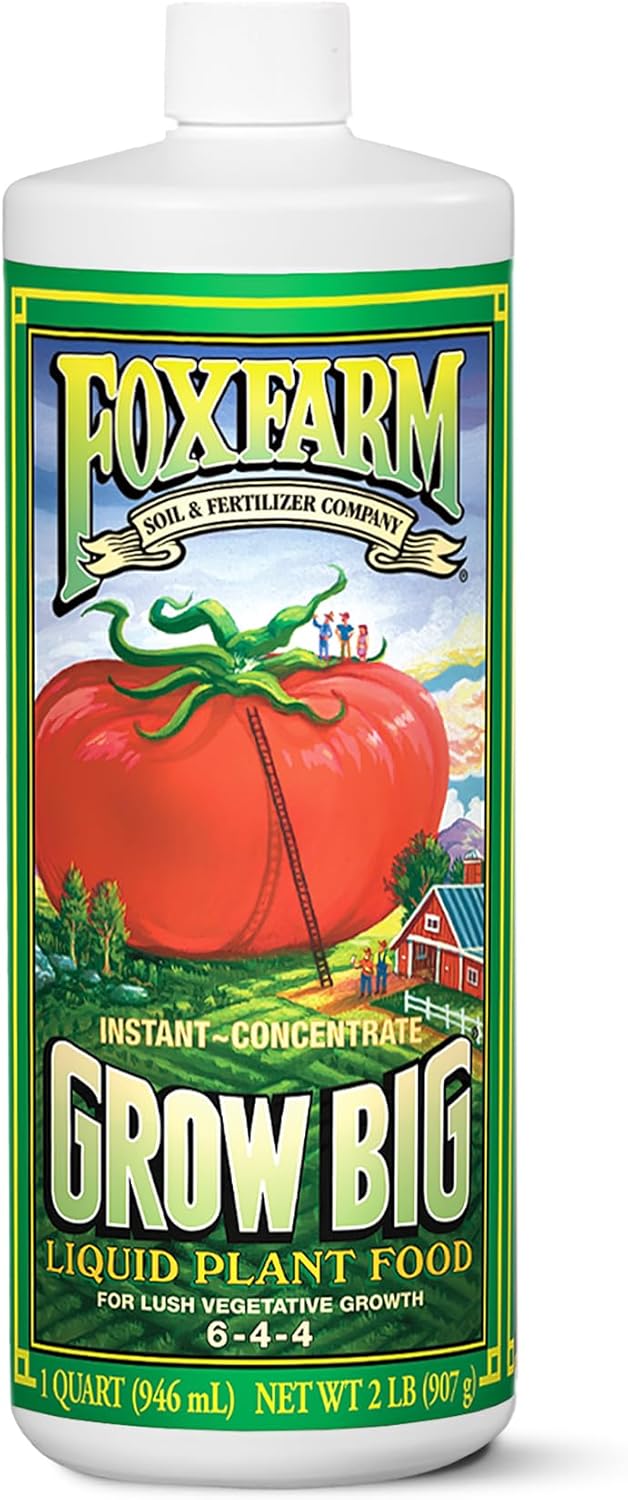
| N-P-K | 6-4-4 |
|---|---|
| Form | Liquid concentrate |
| Unit count | 32 Fluid Ounces |
| Mixing ratio | 2-3 teaspoons per gallon |
FoxFarm Grow Big is a water-soluble concentrate designed to boost vegetative growth and speed nutrient uptake in vegetable gardens and ornamentals. Mixed at 2 to 3 teaspoons per gallon, it can be applied through watering or foliar feeding to quickly deliver nitrogen-focused nutrition that supports larger plants and stronger stems. The low pH formula helps keep micronutrients stable so feedings remain effective, and the quart concentrate covers repeated applications for a small plot or a set of containers. Practical benefits include clear mixing instructions, versatility for both indoor and outdoor use, and a fast-acting effect when plants need a growth push. Limitations to note are the higher nitrogen emphasis, which favors leaf and stem growth over bloom or fruit set, and the presence of phosphorus in the formula that may be restricted in some local lawn rules. For gardeners who prioritize consistent, predictable feedings, this product is straightforward to measure and integrate into a regular watering schedule.
Best for: Gardeners who want a reliable, easy-to-dose liquid fertilizer to encourage rapid vegetative growth in vegetable beds, containers, and established plants and who value predictable results from each feeding.
Less Ideal for: Growers focused primarily on maximizing flowering or fruit set who need a bloom-boosting formula or those working under strict phosphorus-use restrictions in their area.
- Concentrated liquid formula for fast nutrient uptake and quick visible response
- Low pH formulation helps maintain micronutrient stability during storage and application
- Versatile application by watering or foliar feeding for indoor and outdoor use
- Clear mixing ratio (2–3 teaspoons per gallon) simplifies repeatable feedings
- Nutrient ratio (6-4-4) emphasizes vegetative growth rather than flowering or fruit production
- Contains phosphorus which may be restricted by local regulations for turf or non-agricultural use
Verdict: Choose this concentrate when you want a dependable, fast-acting liquid feed to promote vigorous leafy and structural growth in a vegetable garden.
True Organic Liquid Tomato & Vegetable Food, 32 fl oz

| Item Form | Liquid |
|---|---|
| Liquid Volume | 32 fluid ounces |
| Mixing Ratio | 2 oz. per gallon of water |
| Specific Uses For Product | Root Development, Seed Development, Gardening, Agriculture |
True Organic Liquid Tomato & Vegetable Food is a ready-to-mix organic fertilizer designed to feed tomato and vegetable plants in both containers and in-ground beds. You mix 2 oz. per gallon of water and apply every two weeks during the growing season, which makes it easy to add to routine watering or foliar-feeding schedules. The formula blends fish solubles, molasses, kelp extract and soy protein hydrolysate to support root development, soil biology, and fruit set rather than supplying only synthetic NPK. A 32 fl. oz. bottle is sized for small to medium plots and claims coverage around 60 sq. ft., so it is convenient for kitchen gardens and several container groups. Expect steadier growth and improved plant vigor when used consistently, especially where gardeners prefer certified-organic inputs. Limitations are typical of organic liquids: nutrient levels are lower than concentrated synthetic options, so heavier-feeding or larger acreage plantings may need larger quantities or supplementary products to meet peak demand.
Best for: Gardeners who prioritize organic inputs and want a simple, repeatable liquid feed for tomato beds and mixed vegetable patches, especially in small to medium plots or containers.
Less Ideal for: Large-scale growers or those needing very high, fast-acting nutrient doses should consider concentrated synthetic fertilizers or bulk organic solids instead.
- Organic, multi-source nutrient blend including soy protein hydrolysate and kelp to support plant and soil health
- Liquid form mixes easily for foliar or soil applications using the 2 oz per gallon ratio
- Suitable for both containers and in-ground tomato and vegetable plantings
- 32 fl. oz. bottle sized for small to medium gardens with stated coverage of about 60 sq. ft.
- Lower nutrient concentration than synthetic concentrates so you may need more product for high-demand periods
- Not intended for human consumption and contains fish- and molasses-derived ingredients that may have odor during application
Verdict: A user-friendly organic liquid feed that makes consistent two-week nourishment simple for small to medium tomato and vegetable gardens.
True Organic Liquid Tomato & Vegetable Food, 16 fl oz

| Item Form | Liquid |
|---|---|
| Application Method | Mix with water and apply to soil |
| Mixing Ratio | 2 fl oz per gallon of water |
| Coverage | Approx. 30 sq ft per 16 fl oz |
True Organic Liquid Tomato & Vegetable Food is a concentrated organic feed meant to boost fruit and vegetable yields by feeding plants and supporting soil microbial life. You mix 2 fl oz per gallon of water and soak the soil every two weeks, which makes it easy to use for both in-ground beds and containers. The formula includes soy protein hydrolysate, fish solubles, kelp extract and molasses, ingredients that supply nitrogen, micronutrients and compounds that can stimulate beneficial soil biology. A 16 fl oz bottle covers roughly 30 sq ft, so it is well suited to small to medium tomato patches or a set of container plants. Because it is liquid, application is precise and fast compared with granular fertilizers. Expect steady, moderate nutrient delivery rather than a quick synthetic boost, and you will need to reapply regularly through the season. Also the coverage means larger plots will require multiple bottles, so calculate how much you need before starting a season.
Best for: Home gardeners on a budget who grow tomatoes or vegetables in small beds or containers and prioritize organic soil-friendly feeds and simple dosing.
Less Ideal for: Large-scale growers or those who need a fast, high-nitrogen quick fix for severe nutrient deficiency should consider more concentrated or bulk options.
- Certified organic inputs that support soil health rather than synthetic chemicals.
- Liquid concentrate allows precise dosing and easy use for containers and raised beds.
- Includes kelp and soy protein hydrolysate to supply micronutrients and stimulate microbial activity.
- Clear mixing directions and a coverage estimate for planning small gardens.
- 16 fl oz covers about 30 sq ft so larger gardens require multiple bottles.
- Provides gradual organic nutrition rather than an immediate high-nitrogen spike.
Verdict: A small, easy-to-use organic liquid fertilizer that reliably feeds tomato and vegetable plants while supporting soil health, ideal for small gardens and container growers.
AlgoPlus Tomato Liquid Fertilizer 1 Litre
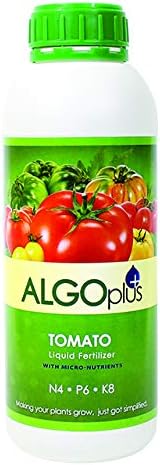
| Item Form | Liquid |
|---|---|
| Specific Uses For Product | Plant Growth for Tomatoes |
| Liquid Volume | 1 liters |
| Mixing Ratio | 4:6:8 |
This AlgoPlus liquid tomato fertilizer is a ready‑to‑mix plant food designed to boost fruit set and size by supplying extra potassium. It is used diluted according to the provided 4:6:8 mixing ratio and can be applied at each watering, making it suitable for regular feeding of tomatoes, peppers, cucumbers, and melons. The liquid form allows quick uptake compared with granular fertilizers and simplifies portioning for container or in‑ground plants. Notable features are its tomato‑targeted formulation and medium coverage, which fit home gardens and small plots. Practical benefits include easier absorption for faster visible results and straightforward dosing when following the label. Important limitations are that the package gives a general application instruction without specifying plants‑per‑bottle coverage, so reliable dosing for large beds requires careful calculation, and repeated use demands attention to avoid overfertilization and issues like blossom end rot. Safety guidance recommends keeping it away from children and pets and avoiding skin or eye contact.
Best for: Gardeners who prioritize consistent, easy-to-apply feeding for tomato plants and want a product aimed specifically at improving fruit size and yield through regular liquid applications.
Less Ideal for: Large-scale growers who need explicit per-area coverage and dosing guidance or gardeners who prefer slow-release granular fertilizers that require less frequent attention.
- Formulated with higher potassium to encourage larger, more plentiful fruit
- Liquid concentrate allows faster nutrient uptake than granular options
- Suitable for tomatoes and other fruiting vegetables like peppers and cucumbers
- Clear mixing ratio provided for regular applications
- Label does not specify how many plants or area the full bottle will cover
- Risk of overapplication if users do not precisely calculate dilution and frequency
Verdict: Choose this liquid fertilizer if you want a tomato‑focused, potassium‑rich concentrate that makes regular, fast-acting feeding straightforward for home gardens.
Neptune's Harvest Tomato & Vegetable Organic Liquid Fertilizer (2-4-2), 36 oz

| Item Form | Liquid |
|---|---|
| Specific Uses For Product | Plant Growth, Vegetable Development, Houseplant Care |
| Application Method | Liquid |
| Coverage | Medium |
| Mixing Ratio | 2-4-2 |
Neptune's Harvest Tomato & Vegetable fertilizer is a fish and seaweed based liquid plant food designed for the vegetative stage of tomatoes and other vegetables. You mix the concentrate with water (manufacturer recommends about 1 oz per gallon for outdoor plants) and apply as a root drench or foliar feed every 1 to 2 weeks for garden plants or weekly for houseplants. The 2-4-2 NPK and added calcium, molasses, humates, yucca extract, and biological microbes support leafy growth, root development, and soil biology rather than just a short burst of nitrogen. In practice it helps produce fuller foliage and can improve fruit set and quality when used consistently through the season. Because it is organic and low in salt it is forgiving of slightly overenthusiastic feeding, but the nutrient concentrations are lower than synthetic bloom boosters so expect slower, steadier gains rather than immediate big pushes in flowering or fruiting. Best used by gardeners focused on steady yield improvement and soil health rather than rapid, high-N fertilization programs.
Best for: Potted-tomato growers who prioritize reliable plant health, steady yield increases, and improved soil biology over rapid chemical forcing. Ideal for gardeners who prefer organic inputs and regular, measured feedings.
Less Ideal for: Growers seeking very rapid, high-impact flowering or fruiting with synthetic-strength fertilizers or those who need an odor-free product for indoor use in tight spaces.
- Organic, fish-and-seaweed based formula that supports soil biology and root health
- Versatile application as both a root drench and foliar feed
- Includes secondary ingredients (calcium, molasses, humates, yucca extract) that aid overall plant vigor and stress resistance
- Concentrated 36 oz bottle provides many feedings for potted tomato plants when mixed to label rates
- Lower NPK intensity compared with synthetic bloom or fruit boosters, so results are steadier not immediate
- Strong natural odor from fish-based ingredients which some users may find unpleasant
Verdict: A dependable organic liquid fertilizer that builds healthier roots and steady yields for potted tomatoes while supporting long-term soil biology.
Farmer's Secret Tomato Booster Fertilizer (32 oz)

| NPK ratio | 3:8:7 |
|---|---|
| Form | Liquid |
| Target | Tomatoes |
| Volume | 32 fluid ounces |
| Mixing ratio | 2 tsp : 1 gal |
This is a super‑concentrated liquid feed designed specifically for tomato production and intended to be diluted for weekly use. With a 3:8:7 NPK ratio plus added humic acid, iron and calcium, it targets flowering and fruit development while helping with nutrient uptake. You can apply it as a soil drench or foliar spray at the manufacturer suggested rate of 2 teaspoons per gallon, so one 32 ounce bottle makes many gallons of feed. The formula is described as professionally developed by agronomists and includes safety guidance for handling. Practical benefits include targeted nutrients for bigger, juicier fruit, convenience of a single concentrated bottle, and flexible application methods. Important limitations are that the label supplies only a single mixing ratio and weekly schedule without detailed stage‑by‑stage instructions, and a concentrated liquid requires careful measuring and protective gear when mixing. Gardeners should also watch for nutrient imbalances if they are already following another feeding program.
Best for: Gardeners who want a tomato-specific, lab-developed liquid feed they can apply weekly and who prefer the economy and flexibility of a concentrated product.
Less Ideal for: Beginners who want step-by-step feeding schedules for different growth stages or gardeners who prefer granular or slow-release fertilizers that need less frequent handling.
- Formulated specifically for tomatoes with a 3:8:7 NPK profile aimed at fruit set and development
- Includes humic acid, iron and calcium to support nutrient uptake and reduce blossom end rot risk
- Super concentrated formula yields many gallons from one 32 oz bottle
- Can be applied as a foliar spray or soil drench for flexible feeding
- Label gives only a single mixing ratio and weekly timing without detailed stage-specific guidance
- Concentrated liquid requires careful measuring and protective equipment during mixing
Verdict: A concentrated, tomato-focused liquid feed that delivers targeted nutrients for bigger fruit while stretching a single 32 oz bottle into many gallons of weekly feed.
Choosing the Right Liquid Fertilizer for Tomatoes: Key Factors to Consider
Nutrient Ratio and Analysis
Tomato plants require different nutrient balances at vegetative, flowering, and fruiting stages. A liquid fertilizer's N-P-K ratio determines whether it promotes leaf growth, blooms, or fruit development. Understanding the analysis helps you time feedings and avoid pushing too much foliage at the expense of flowers.
Concentration affects how much you dilute per application and how often you feed. Concentrated liquids can be economical but need accurate measuring to avoid overfeeding. Look for clear labeling that lists nutrient forms and secondary elements like calcium and magnesium, which influence blossom health and reduce common problems such as blossom end rot.
Solubility and Mixing Behavior
A good tomato liquid fertilizer should dissolve cleanly in water without leaving residue that can clog watering systems or sprayers. Well-formulated liquids mix reliably at recommended dilutions so you can use them in watering cans, hose-end sprayers, or fertigation systems.
Poor solubility increases the risk of uneven feeding and maintenance issues. Also consider whether the product needs pre-mixing, shaking, or heating; simpler mixing reduces mistakes during busy watering routines.
Application Methods and Frequency
Liquid fertilizers can be applied as soil drenches, root feeds, or foliar sprays. The method affects uptake speed and risk. Soil drenches deliver nutrients to roots and work well for container-grown tomatoes, while foliar sprays offer rapid correction for deficiencies but come with a higher risk of leaf burn if applied in hot sun or at too strong a dilution.
Frequency recommendations influence convenience. Some liquids are designed for weekly, biweekly, or feeding-once-per-season programs. Choose a product whose timing fits your watering schedule and whether you prefer quick corrective feeds or routine maintenance dosing.
Plant Safety and Salt Load
Liquid fertilizers vary in soluble salt levels, which influence the risk of root or foliar burn. High-salt formulas can stress young plants and container-grown tomatoes if overapplied. Always check recommended rates and observe plants after initial applications.
Consider whether the product includes chelated micronutrients or additives that reduce salt stress. Safety guidance about application to stressed, newly transplanted, or drought-affected plants is useful for minimizing damage.
Compatibility With Other Treatments
Gardeners often combine feeding with pest control, foliar micronutrient sprays, or soil amendments. Compatibility information is helpful if you plan to tank-mix with fungicides, insecticides, or calcium sprays. Incompatible mixes can reduce effectiveness or harm plants.
When compatibility is unclear, separate applications by a day or follow label guidance. Also look for guidance on pH sensitivity and whether the fertilizer changes the irrigation water chemistry, which can affect nutrient availability.
Packaging, Measurement, and Waste
Practical packaging affects daily use. Measured caps, clear dilution charts on the label, and refill-friendly containers make routine feeding easier and reduce spills. Smaller bottles suit container gardeners who need portability, while larger jugs can be better for in-ground beds but must store without degrading.
Consider packaging that protects liquid from sunlight and heat to preserve stability. Easy-to-use dispensers help prevent overconcentration mistakes that often lead to plant damage.
When to Switch Feeding Focus During the Season
Timing feed changes improves outcomes for tomatoes. Early in the season prioritize a formula that supports strong root and leafy growth. As plants begin to set flowers and small fruit, shift to a fertilizer with higher phosphorus and potassium emphasis to encourage bloom retention and fruit development.
Avoid abrupt, large increases in nutrient concentration. Instead, change to a bloom/fruiting-focused feed and monitor plants for response over two weeks. Adjust frequency rather than concentration when trying to influence flowering or fruit set.
- Vegetative stage: moderate nitrogen, balanced micronutrients
- Flowering to fruiting: reduced nitrogen, more phosphorus and potassium
- Late season: maintain steady potassium to support ripening
Feeding Containers Versus In-Ground Tomatoes
Container tomatoes need more frequent liquid feeding because potting mixes hold fewer nutrients than garden soil. Use shorter, lighter feed cycles to prevent salt buildup and flush containers occasionally with plain water to leach excess salts.
In-ground plants will often need less frequent feeding, especially in amended soils or beds with compost. Monitor foliage color and fruit set more than sticking to a rigid schedule, and supplement with foliar feeds only when signs of deficiency appear.
- Containers: dilute more often at lower strength
- In-ground: deeper root access reduces feeding frequency
- Flush containers monthly when using concentrated liquids
Foliar Feeding: When It Helps and When to Avoid It
Foliar feeding can correct micronutrient deficiencies quickly and help during rapid growth or when root uptake is limited by cool or compacted soil. Apply in the cool part of the day and use recommended dilutions to reduce the risk of leaf scorch.
Avoid foliar sprays during hot midday sun or on water-stressed plants. Rely on soil drenches for steady nutrient delivery and reserve foliar applications for targeted corrections or short-term boosts.
- Best used for micronutrient corrections and quick boosts
- Apply early morning or late evening to avoid leaf burn
- Do not exceed label concentrations to protect foliage
Addressing Blossom End Rot With Fertilizer Choices
Blossom end rot is often linked to calcium availability and inconsistent watering rather than lack of calcium in the soil alone. Choosing a liquid feed that includes soluble calcium or pairing a balanced feed with a separate calcium foliar spray can reduce incidence.
Regular moisture management and mulching are as important as the fertilizer choice. If blossom end rot appears, reduce high-salt nitrogen feeds and use a product or supplement that improves calcium uptake rather than simply adding more nitrogen.
- Consider feeds with calcium or compatible calcium supplements
- Keep watering even to aid calcium movement into fruit
- Avoid high-salt formulations that interfere with nutrient uptake
Practical Tips for Mixing and Storing Liquid Fertilizers
Always follow label dilution instructions and mix in a clean container. Measure accurately and add fertilizer to water rather than water to concentrate when practical to reduce foaming and splashing.
Store liquids in a cool, shaded place and use within the recommended shelf life. Rinse measuring tools after use to prevent residue buildup and cross-contamination between different products.
- Measure with dedicated cups or syringes for accuracy
- Mix at recommended concentration and use promptly
- Store sealed away from direct sunlight and freezing temperatures
How We Chose the Best Liquid Fertilizer for Tomatoes
We focused on selection criteria that matter to gardeners feeding tomato plants through the season. Primary factors included the nutrient ratio and concentration, because tomatoes need a predictable balance of nitrogen, phosphorus, and potassium at different growth stages. We also evaluated solubility and dilution clarity so the product mixes reliably without clogging sprayers or drippers. Application flexibility was important for both soil drench and foliar feeding, with attention to directions for frequency and safe concentrations. Plant safety and phytotoxicity risk were considered by checking recommended rates and compatibility with common tomato varieties. Packaging and dispensing design were assessed for ease of measuring and reducing waste in routine use. We excluded granular-only formulas and slow-release products because they behave differently from true liquid fertilizers and were outside this use-case. Our filters prioritized products with clear analysis labeling, instructions for tomatoes or fruiting vegetables, and good practical handling characteristics. The scoring emphasized nutrient formula, application versatility, solubility, plant safety, and packaging usability.
FAQ
How often should I feed tomato plants with liquid fertilizer?
Frequency depends on concentration and growing conditions. Container plants often need lighter, weekly or biweekly feeds, while in-ground plants may be fed every two to four weeks. Always follow label dilution guidance and adjust based on plant response.
Can I use the same liquid fertilizer for seedlings and mature plants?
Seedlings are sensitive to concentration and usually need a very diluted feed. Mature plants tolerate stronger mixes aimed at fruiting. Use a product whose label provides seedling or transplant rates, or dilute the same product further for young plants.
Is foliar feeding safe for tomato leaves?
Foliar feeding can be safe and effective when applied at recommended dilutions during cool parts of the day. Avoid spraying in direct midday sun or on drought-stressed plants to reduce the risk of leaf burn.
Will a higher phosphorus number guarantee more fruit?
Higher phosphorus can encourage flowering and fruit set, but it is not a guarantee. Overall plant health, pollination, watering consistency, and potassium levels also influence fruit production, so balance matters more than a single number.
How do I prevent fertilizer burn when using liquids?
Prevent burn by measuring accurately, using recommended dilutions, and avoiding high concentrations on young or stressed plants. Flush container soils periodically if salts accumulate and reduce application frequency rather than increasing concentration when plants show stress.
Can I mix a liquid fertilizer with a pesticide or fungicide?
Compatibility varies. Some fertilizers are safe to tank-mix with certain pesticides or fungicides, but others are not. When in doubt, separate applications by time or consult product guidance to avoid reduced efficacy or plant harm.
Final Verdict
Choose a liquid fertilizer for tomatoes by matching the nutrient ratio and concentration to the plant stage and your growing setup. Prioritize products that dissolve cleanly, offer clear dosing instructions, and list calcium or micronutrients if blossom end rot is a concern. Balance the convenience of application methods with safety guidance to avoid salt buildup or foliar burn. Focus on predictable, repeatable feeds and watch plant response. With the right feeding plan and attention to timing, you can support stronger fruit set and healthier plants throughout the season.
