

Note: This article contains affiliate links. If you click on these links and make a purchase, I may earn a small commission at no extra cost to you. This helps support my research and content. Read my full affiliate disclosure here.
Choosing the right ground cover for trees matters because the wrong plant can compete with roots, fail in deep shade, or demand more upkeep than the spot allows. In many yards the area under trees is high-traffic, dry, and shaded, so you need options that survive with limited soil moisture, minimal digging, and light beneath the canopy. This guide covers the top shortlisted ground covers for trees and explains how each option performs for shade tolerance, root safety, and maintenance. Use the evaluation criteria to match a cover to your tree species and site conditions.
Top Picks at a Glance
| Best Overall The best all-around choice for most situations | Burloptuous 40 in x 6.6 ft Natural Jute Burlap Roll |  |
| Best Quality Built to a higher standard if you want something more solid | Rocky Mountain 30-Inch Recycled Rubber Tree Mulch Ring |  |
| Best Value The sweet spot between price and what you get | ZeeDix 18" Coconut Fiber Tree Ring Mulch Mat, 6-Pack |  |
| Best Budget The cheapest option that still gets the job done reliably | Tree Mulch Ring Reusable Non‑Woven Landscape Fabric Ground Cover Mat |  |
| Highest Rated A top-rated pick with lots of positive feedback | FuyoSegen 12-Pack 20.5" Non-Woven Tree Mulch Rings |  |
| Most Popular A crowd favorite that many people choose with confidence | Outsidepride Irish Moss (Sagina subulata) Ground Cover Seeds, 5000 Pack |  |
| Best Seller A high-volume bestseller chosen again and again | Pterying Weed Barrier Landscape Fabric, 2.6ft x 100ft |  |
Burloptuous 40 in x 6.6 ft Natural Jute Burlap Roll

| Material Type | Jute |
|---|---|
| Item Length | 6.6 feet |
| Number of Items | 1 |
This 40 in x 6.6 ft burlap roll is a tightly woven natural jute fabric designed for garden and landscape use. In practice it works well as a breathable ground cover around trees, a temporary weed barrier, tree trunk wrap for winter protection, and erosion control on small slopes. The untreated jute is biodegradable and chemical-free, so it will break down over time if left outdoors and is a sensible alternative to plastic sheeting where airflow and soil contact matter. At 40 inches wide the roll covers a good radius around smaller to medium trees without many seams, and the fabric is easy to cut, fold, pin, or staple in place for seasonal use. Expect some initial jute odor that benefits from airing before use and reduced longevity compared with synthetic fabrics if you need a permanent barrier. It also will eventually rot where it stays constantly wet, so plan to replace or remove it after a season or two for long-term installations.
Best for: Gardeners who want an eco-friendly, temporary ground cover or tree-wrap solution that breathes and breaks down naturally after seasonal use.
Less Ideal for: People needing a long-term, permanent weed barrier or heavy-duty erosion control on constantly wet slopes should consider synthetic landscape fabrics or geotextiles instead.
- 100% natural jute fabric is breathable and biodegradable
- 40-inch width covers a wide area around tree bases with fewer joints
- Tightly woven construction provides effective temporary weed suppression
- Easy to cut, fold, staple, or pin for custom shapes and seasonal use
- Will degrade faster than synthetic landscape fabrics when exposed to moisture and soil
- Natural jute can have an initial odor that needs airing before installation
Verdict: Choose this natural jute burlap roll when you want a breathable, biodegradable ground cover and tree wrap that is easy to cut and use for seasonal garden protection.
Rocky Mountain 30-Inch Recycled Rubber Tree Mulch Ring

| Material | Recycled rubber |
|---|---|
| Diameter | 30-Inch |
| Mower safe | Yes |
This recycled rubber tree mulch ring is built for long-term, low-maintenance tree ground cover. It slips around the trunk to create a neat 30-inch mulch bed that suppresses weeds while allowing water to percolate through the porous design. The heavy-duty recycled rubber construction keeps the ring in place without the need for landscape staples, and its mower-safe profile protects both the ring and lawn equipment during routine mowing. Installation is simple: place around the base of the tree and adjust for a natural look. The textured neutral finish mimics organic mulch without breaking down, so you avoid yearly replenishing but also lose the soil-improving benefits of organic materials. Expect durable performance and tidy beds, though the rubber surface can retain heat more than organic mulch in very hot climates and does not contribute nutrients to soil. For gardeners prioritizing longevity and a clean appearance, this ring reduces upkeep and trims maintenance time compared with loose mulch.
Best for: Gardeners who want a durable, low-maintenance ground cover that keeps tree bases tidy and minimizes seasonal upkeep, especially where long-lasting, performance-focused solutions are preferred.
Less Ideal for: People aiming to build soil fertility or those who prefer a fully natural, living mulch solution should consider organic mulches instead.
- Heavy recycled rubber construction resists weathering and lasts multiple seasons
- Porous design allows water to seep through to the root zone
- Mower-safe shape protects both the ring and lawn equipment
- No landscape staples required so installation is quicker and cleaner
- Does not break down to add organic matter or nutrients to soil
- Can retain more heat than organic mulch in hot conditions
Verdict: Buy this if you want a long-lasting, no-staples tree ring that keeps a neat, low-maintenance mulch bed around trees.
ZeeDix 18" Coconut Fiber Tree Ring Mulch Mat, 6-Pack

| Package Quantity | 6 pack |
|---|---|
| Material | Coco coir |
| Diameter | 18 Inch |
| Manufacturer | ZeeDix |
These coconut fiber tree rings are a simple, low-maintenance ground cover for trees and large pots. Made from 100% coco coir, the mats sit around trunks or pots to block weed growth, reduce soil splash when watering, and help the root zone retain moisture and moderate temperature. They arrive flat and are easy to trim to fit smaller trunks or planters, so installation is fast and tool-free. The natural fiber construction is breathable so water and air still reach the soil while slowing evaporation. Because the rings are organic, they will gradually break down over time and need replacement, and they are not rigid so they can shift on steep slopes or in high-traffic areas. For someone looking to keep tree bases neat without plastic edging or constant mulching, these provide an attractive, biodegradable option that reduces maintenance and protects roots from pets and light disturbance.
Best for: Buyers who want a low-effort, natural-looking way to keep tree bases and large pots tidy while reducing weeds and watering frequency.
Less Ideal for: Not the best choice for steep, high-traffic areas or for buyers wanting a permanent, rigid edging solution.
- Made from 100% natural coco coir for biodegradable ground cover
- 18-inch diameter is large enough to cover root flare for small trees and most large pots
- High water retention helps reduce evaporation and supports root moisture
- Easy to trim to size for custom fit around trunks or pots
- Breathable construction allows water and air to reach the soil while suppressing weeds
- Will slowly decompose and require periodic replacement
- Flexible, non-rigid material can shift on slopes or with heavy foot traffic
Verdict: A simple, biodegradable mulch ring set that keeps tree bases neat and conserves soil moisture with minimal upkeep.
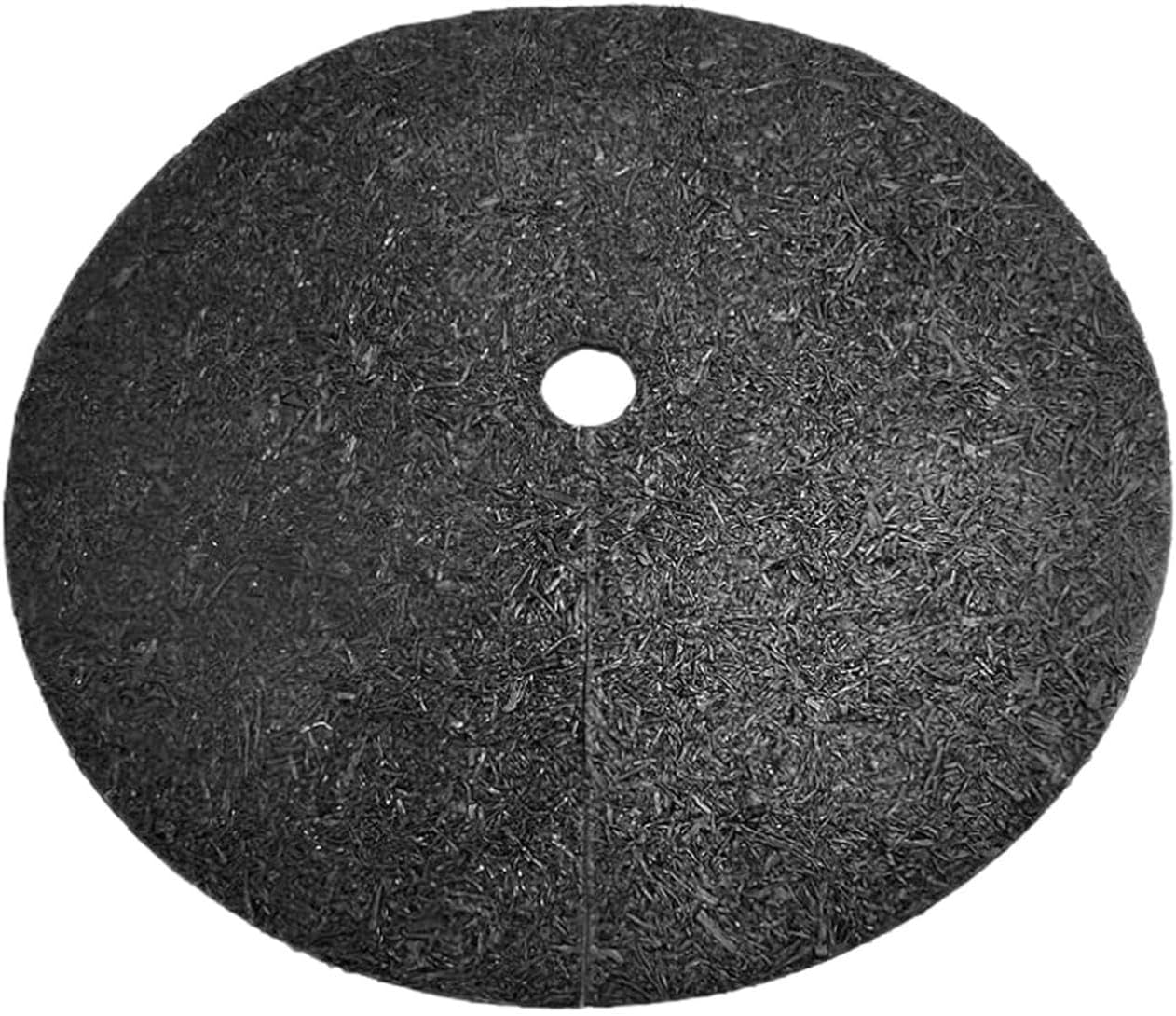
Tree Mulch Ring Reusable Non‑Woven Landscape Fabric Ground Cover Mat
| Manufacturer | Generic |
|---|---|
| ASIN | B0HGWSTB58 |
| Item model number | WTINVJ9FOJWT84FRIRGK |
This tree mulch ring is a simple ground cover mat made from heavy-duty nonwoven landscape fabric to sit around a tree trunk and keep grass and weeds away. It is installed by slipping the pre-cut center hole around the trunk so the permeable fabric lies flat over the root zone; the material channels water to the soil while helping prevent surface compaction and unwanted plant growth. The reusable, weather-resistant fabric makes it suitable for seasonal repositioning or replacement and gives a tidy, low-maintenance look to beds and lawn edges. Because it is lightweight and breathable, the mat supports root watering and air circulation rather than sealing the soil. Limitations are its basic design: it does not include anchoring stakes, decorative edging, or built-in irrigation, and it offers a functional, not decorative, finished appearance.
Best for: Buyers who want an inexpensive, low-effort way to protect tree root zones and reduce weeding without investing in permanent or decorative solutions.
Less Ideal for: Gardeners seeking a decorative mulch ring, built-in irrigation, or a heavy-duty anchored solution for steep or exposed sites should look elsewhere.
- Permeable fabric directs water to roots while allowing air circulation
- Reusable heavy-duty nonwoven material resists outdoor weather
- Pre-cut center hole makes installation quick and simple
- Helps suppress weeds and reduce soil compaction around tree bases
- No included anchors or fastening system so it may shift on slopes
- Plain functional appearance with no decorative edging
- Does not incorporate irrigation or padding for root protection
Verdict: A budget-friendly, reusable fabric mat that quickly reduces weeds and improves root-zone moisture and aeration around trees.
FuyoSegen 12-Pack 20.5" Non-Woven Tree Mulch Rings

| Quantity | 12 pieces |
|---|---|
| Diameter | 20.5 inch |
| Material | Non-woven fabric |
These 20.5 inch non-woven tree mulch rings provide a simple, low-maintenance way to keep the area around young trees and shrubs tidy while suppressing grass and weeds. Made from degradable non-woven fabric, the mats sit on the soil surface around trunks to reduce competition, help retain moisture, and protect roots from lawn mower and foot traffic. They come as a 12-pack and are very lightweight, so installation is quick: lay the ring, enlarge the center if needed, and secure with stakes. The material is permeable, so water and air still reach the root zone, but because the fabric is relatively thin it will eventually break down and need replacement after a few seasons. These rings are best for straightforward weed control and visual neatness rather than long-term, heavy-duty barrier solutions. They are easy to cut to fit different trunk sizes and work well in orchards, new plantings, or landscaped beds where you want an eco-friendly, temporary cover.
Best for: Gardeners who prioritize reliable, low-effort weed control around trees and want an eco-friendly, short-to-medium term ground cover that is simple to install and maintain.
Less Ideal for: People seeking a permanent, heavy-duty weed barrier or a visually decorative mulch solution should look for thicker synthetic mats or decorative mulch alternatives.
- Degradable non-woven fabric lets water and air reach roots while reducing weed growth
- Comes in a 12-pack which covers multiple trees or shrubs for neighborhood-scale projects
- Lightweight and easy to install and trim to fit different trunk sizes
- Helps protect trunks and roots from mower and animal damage
- Material is relatively thin and designed to degrade, so it will need replacement after a few seasons
Verdict: A practical, eco-friendly pack of disposable tree rings that reliably suppress weeds and protect trunks with minimal installation effort.
Outsidepride Irish Moss (Sagina subulata) Ground Cover Seeds, 5000 Pack

| Unit Count | 5000 Count |
|---|---|
| USDA Hardiness Zone | 4 |
| Sunlight Exposure | Partial Sun |
| Moisture Needs | Moderate Watering |
| Material Features | GMO Free |
These Outsidepride Irish Moss seeds produce a dense, low carpet of green ideal for filling bare soil under trees or between stepping stones. Sow the tiny non-GMO seeds on well-drained soil in spring, surface-sowing without covering for best germination; the packet is sized to cover roughly 100 sq ft. The plants stay 1–2 inches tall, tolerate partial shade, and produce small white flowers in late spring to early summer, which makes them unobtrusive under tree canopies. Benefits for tree areas include soil stabilization, moisture retention, and a soft, barefoot-friendly surface with light foot traffic tolerance. Expect slow initial establishment; patches may need supplemental watering and weed control while seedlings fill in. Because the seeds are surface-sown and very small, even distribution and consistent moisture are important to avoid patchiness. Also, Irish Moss is best in areas with lighter leaf litter and limited heavy traffic since thick mulch or constant footfall will hinder establishment.
Best for: Gardeners who want a low-growing, shade-tolerant carpet to stabilize soil and soften the look beneath trees and along shaded paths, and who are prepared to water and weed during the establishment period.
Less Ideal for: People needing a fast-covering or high-traffic tolerant turf substitute or those who cannot commit to regular watering while seedlings establish.
- Very low growth habit creates a neat carpet under trees without competing vertically with lower branches
- Shade tolerant so it performs well in partial shade beneath tree canopies
- Pack size (5000 seeds) is sufficient to seed approximately 100 square feet for broad coverage
- Non-GMO seeds and perennial habit provide a lasting groundcover that helps reduce erosion and retain moisture
- Seeds are very small and require careful surface-sowing and consistent moisture for uniform establishment
- Establishment is slow so bare spots can persist until seedlings thicken up
Verdict: A shade-tolerant, low-growing seed option for gardeners who want a soft, soil-stabilizing carpet under trees and are willing to nurse seedlings through establishment.
Pterying Weed Barrier Landscape Fabric, 2.6ft x 100ft

| Material | Woven polypropylene |
|---|---|
| Weight | 2 oz per square yard |
| Permeability | Water- and air-permeable |
| Intended uses | Garden beds, gravel underlayment, pathways |
This woven polypropylene landscape fabric is intended as a durable, general-purpose weed barrier for flower beds, vegetable gardens, pathways, and under gravel. It blocks sunlight to prevent weed seed germination while remaining water- and air-permeable so irrigation reaches roots and the soil can breathe. Installation is straightforward: roll out, use the green alignment stripes for spacing, cut planting Xs, and secure edges with staples or U-pins; the manufacturer recommends taping cut lines to reduce fraying. At 2 to 2.4 ounces per square yard this is a midweight option that balances tear resistance with ease of handling, so it will support gravel underlayment and light driveway use but is not the heaviest commercial grade. The fabric is advertised as UV-stabilized for extended outdoor life and safe for use around edibles because it is polypropylene and non-leaching. Expect reliable weed suppression when seams are overlapped and edges are well anchored, but very aggressive perennial roots or weeds may eventually find weak points if not paired with proper edging and maintenance.
Best for: Buyers who want a reliable, easy-to-install weed barrier for beds, vegetable gardens, and light landscape underlayment and who prioritize predictable, low-risk performance over specialty heavy-duty options.
Less Ideal for: People needing the toughest commercial-grade fabric for heavy vehicle driveways or sites with persistent deep-rooted weeds should consider heavier-weight geotextiles or mechanical methods instead.
- Woven polypropylene construction blocks light while allowing water and air to pass
- Green alignment stripes simplify planting layout and spacing
- Midweight fabric with tear resistance suitable for garden beds and gravel underlayment
- UV-stabilized and described as non-leaching, making it safe for vegetable gardens
- Not the heaviest commercial grade so very aggressive roots or heavy vehicle traffic may require a heavier option
- Landscape staples or pins are sold separately and needed for reliable edge security
Verdict: A dependable midweight woven weed barrier that balances durability and breathability for low-risk garden and landscape projects.
Choosing the Right Ground Cover for Trees: Key Factors to Consider
Shade Tolerance and Light Requirements
Under a mature tree canopy light levels can be dramatically reduced and highly variable across the year. Assess whether the planting area receives deep shade, dappled light, or bright filtered sun. Ground covers that tolerate deep shade will still differ in performance; some will stagnate and form sparse mats while others will produce steady foliage. Choose plants described for the appropriate shade level so you avoid repeated replanting.
Light also affects seasonal interest. Some shade-tolerant ground covers remain evergreen in mild climates while others die back and need spring fill-in. Think about visual goals as well as survival when matching light needs to the cover.
Root Interaction and Tree Health
Trees and ground covers share the same soil volume and moisture. Prefer covers with shallow, non-invasive root systems that do not aggressively compete with tree roots for water and nutrients. Avoid species known to produce deep or spreading root systems that can outcompete young trees or disturb root flare areas.
Consider the depth of the tree roots and the proximity of structural roots. Select covers that can be established with minimal excavation and that tolerate periodic root exposure during seasonal root growth. The goal is coexistence rather than replacement.
Moisture Needs and Drainage
Soil moisture under trees tends to be lower where root uptake is heavy and surface evaporation is reduced. Match ground covers to the realistic moisture regime of the site: drought-tolerant covers for dry, compacted soils and moisture-loving species only where irrigation is available or shade keeps soils consistently damp.
Good drainage is important even for moisture-tolerant plants; pooling water around the trunk invites root disease. Evaluate soil texture and microdrainage before planting and choose covers suited to those conditions.
Maintenance and Long-Term Upkeep
Maintenance includes pruning, thinning, refilling bare patches, and leaf or debris management. Low-maintenance ground covers will suppress weeds, require little thinning, and tolerate periodic leaf litter without succumbing to rot. High-maintenance covers may need frequent trimming or replacement of gaps created by falling branches or drought.
Think about long-term chores: will you want evergreen coverage year-round, or are you willing to do seasonal touch-ups? Also consider how labor-intensive it is to remove or replace the cover if plans change.
Invasiveness and Local Ecology
Some ground covers spread aggressively and can escape into surrounding beds or natural areas, crowding out native plants. Check whether a species is considered invasive in your region and prefer locally appropriate, non-invasive options when possible. Native or regionally adapted ground covers often support local pollinators and require fewer inputs.
Balancing coverage efficiency with ecological compatibility reduces long-term management and protects nearby plantings.
Seasonal Interest and Aesthetic Fit
Ground cover under trees contributes to the look of the landscape through foliage color, texture, and seasonal blooms. Decide whether you want blooms in spring, evergreen structure in winter, or a uniform carpet that visually simplifies the area. Some covers have attractive foliage or fall color that offsets the bare lower canopy of deciduous trees.
Aesthetic choices should be compatible with functional needs. A pretty but high-maintenance cover may not be the best match for a large, low-care shade tree area.
Preparing the Soil Under Trees
Most tree root zones do not tolerate heavy digging or deep soil disturbance. Prepare the planting area by removing only surface debris and loosening compacted topsoil gently. If soil amendments are needed, work a thin layer of organic matter into the top few inches rather than deep cultivation that can sever roots.
Apply a light, well-broken mulch or compost layer to improve moisture retention and encourage microbial activity. Avoid piling mulch against trunks, and choose a depth that helps seedlings establish while allowing oxygen exchange for roots.
- Clear fallen leaves and large debris before planting
- Avoid deep tilling within the tree dripline
- Use light topdressing of compost instead of heavy soil replacement
Planting Techniques for Minimal Root Disturbance
When placing plugs or small plants, slide a narrow trowel between surface roots to create a planting pocket rather than excavating wide holes. Keep planting depth at the same level as nursery pots to prevent smothering and encourage quick root spread.
Group plants in small clusters to speed canopy closure and reduce weed pressure. Water new plantings gently and infrequently to encourage roots to search outward rather than staying in the planting hole.
- Space plants to allow mature spread without overcrowding
- Avoid planting directly against trunks or on major roots
- Water at the base of plants to limit surface moisture near the tree trunk
Managing Leaf Litter and Mulch With Ground Cover
Leaf litter is inevitable beneath trees. Many ground covers tolerate or even benefit from a seasonal leaf layer, which decomposes and returns nutrients. However, thick, persistent litter can smother delicate seedlings and promote fungal issues in damp climates.
Use a light raking in spring to expose new growth, or choose a coarse, well-draining mulch that resists matting. If the cover requires seasonal light pruning, do that after the main leaf drop to reduce debris accumulation.
- Prefer coarse mulch or thin leaf layers rather than dense mats
- Gently rake to expose small plants in spring if needed
- Monitor for mold or rot in persistently wet conditions
Combining Ground Cover With Mulch and Pathways
Ground covers can be combined with mulched rings or stepping-stone pathways to create functional understory landscapes. Use paths to reduce foot traffic across sensitive root zones and maintain planting integrity.
When blending mulch and live covers, allow a transition zone so that mulch does not smother plants. Choose mulch materials that break down slowly and mesh with the aesthetic and moisture profile of the bed.
- Create defined edges between mulch and planting areas
- Use permeable stepping surfaces to limit compaction
- Allow some open soil near the trunk base for gas exchange
When to Replace or Thin Ground Cover
Replace or thin ground cover when it becomes patchy, when invasive tendencies start to affect nearby beds, or when tree health shows signs of stress around the root collar. Early intervention prevents larger problems later.
Thinning can be done by removing sections and replanting with slower-spreading varieties or by cutting runners to control spread. Stagger replacements so there is always protective cover against erosion.
- Watch for growth that climbs trunks or invades neighboring plantings
- Thin during the growing season when plants recover fastest
- Remove only small patches at a time to maintain soil protection
How We Chose the Best Ground Cover for Trees
We focused on practical, garden-tested traits that determine how well a ground cover works beneath an existing tree canopy. Primary evaluation criteria included shade tolerance, root friendliness, maintenance demands, disease and pest resistance, and establishment speed. Shade tolerance mattered because light under trees is the single biggest limiter of plant success. Root friendliness encompassed non-invasive root habits and low competition for water and nutrients to avoid stressing trees. Maintenance demands looked at pruning, thinning, and the need for supplemental irrigation or fertilizer. Disease and pest resistance favored plants that persist without frequent chemical inputs. Establishment speed helped separate covers that give quick soil protection from slower spreaders that may need patrol for weeds during the first season. We excluded aggressive, highly invasive ground covers and species known to damage tree roots or foundations. Also excluded were plants requiring full sun or heavy supplemental irrigation, since those contradict the typical tree understory environment. The shortlist therefore favors plants and mixes that establish reliably in shade, coexist with tree roots, and reduce soil erosion and weed pressure.
FAQ
Can I plant ground cover right up to the tree trunk?
Usually you should leave a small mulch or bare-soil ring around the trunk to allow air circulation and prevent moisture buildup that can invite rot. Avoid piling soil or heavy mulch against the trunk flare.
How long before ground cover will fully fill the area?
It depends on the species and conditions. Faster-spreading covers may fill a small area in one growing season, while slower or clumping types can take several seasons to achieve full coverage. Establishment speed is one of the criteria to consider.
Will ground cover harm tree roots by competing for water?
Some competition is inevitable, but choosing low-water, shallow-rooted covers reduces stress on trees. Matching the cover to the moisture regime and avoiding deep-rooted, thirsty plants minimizes negative impacts.
Are native ground covers better under trees?
Native species are often well-adapted to local soils and climate and can support local wildlife with fewer inputs. They are a good choice when they meet the light and moisture needs of your tree site.
How should I water new ground cover under trees?
Water new plantings deeply but infrequently to encourage roots to grow outward. Avoid constant shallow watering that favors surface roots and fungal problems. Monitor soil moisture because tree roots can steal available water quickly.
Can ground cover reduce weed problems under trees?
Yes, a healthy, dense ground cover suppresses weeds by shading soil and occupying space. However, during establishment you may still need to hand-pull weeds until the cover is dense enough to outcompete them.
Final Verdict
Choose a ground cover for trees based on realistic site conditions: match shade tolerance and moisture needs first, then prioritize non-invasive root behavior and low maintenance. Faster-establishing covers give quick protection but may need management to prevent spread, while slower types can be gentler on tree roots. Balance aesthetic goals with long-term upkeep and pick the option that reduces competition with the tree while delivering the coverage and look you want.
