

Note: This article contains affiliate links. If you click on these links and make a purchase, I may earn a small commission at no extra cost to you. This helps support my research and content. Read my full affiliate disclosure here.
If your dog spends time outdoors, especially in warm months or on farms, flies can cause constant irritation, allergic reactions, and even skin infections. Choosing the right fly spray for dogs matters because products vary in active ingredients, contact duration, and how gentle they are on canine skin and coats. This guide narrows the options to the top picks for different needs and shows how we judged safety, lasting deterrence, and ease of use. Below you'll find the shortlisted fly sprays and a clear explanation of the criteria we used to evaluate them before the product list.
Top Picks at a Glance
| Best Overall The best all-around choice for most situations | Vet's Best Flea & Tick Easy Spray for Dogs, 14 oz (Cotton Spice) |  |
| Best Value The sweet spot between price and what you get | Wondercide Flea, Tick & Mosquito Spray for Pets & Home, Lemongrass, 32 oz |  |
| Best Budget The cheapest option that still gets the job done reliably | Vet's Best Mosquito Repellent Spray for Dogs & Cats, 8 oz |  |
| Highest Rated A top-rated pick with lots of positive feedback | Farnam Flys-Off Insect Repellent Spray for Dogs and Cats, 8 fl oz |  |
| Most Popular A crowd favorite that many people choose with confidence | Wondercide Flea, Tick & Mosquito Spray for Pets & Home, Rosemary, 16 fl oz |  |
| Best Seller A high-volume bestseller chosen again and again | Absorbine UltraShield EX Insecticide & Repellent, 1 Gallon |  |
Vet's Best Flea & Tick Easy Spray for Dogs, 14 oz (Cotton Spice)

| Unit Count | 14 Fluid Ounces |
|---|---|
| Item Form | Spray |
| Scent Name | Cotton Spice |
| Target Species | Cat, Dog |
| Active Ingredients | Clove Oil 0.05%, Cottonseed Oil 0.05% |
Vet’s Best Flea & Tick Easy Spray is a 14 oz plant‑powered spray designed to treat dogs 12 weeks and older and nearby surfaces like bedding and carpets. The formula uses small amounts of clove oil and cottonseed oil plus common inert ingredients to repel and kill fleas, flea eggs, ticks, and mosquitoes on contact. You use it by lightly spraying the dog’s coat and brushing so the product reaches the skin, or by applying light sprays to pet bedding and rugs; directions call for twice‑weekly use for active infestations and weekly for maintenance. Notable features include a pleasant cotton spice scent and a trigger spray bottle for even coverage. Practical benefits are that it offers a non‑synthetic alternative to conventional pesticides, can be used around the home and pet environments, and fits into a multi‑product prevention routine. Important limitations are the low concentrations of active oils, which means it is best suited as part of an integrated approach rather than a standalone solution for severe infestations, and you must follow label precautions and test fabrics for colorfastness.
Best for: A buyer who prioritizes natural, veterinarian‑formulated options and looks for products with strong user feedback for regular household use and prevention.
Less Ideal for: Owners facing a severe or fast‑spreading flea infestation who need rapid, high‑potency chemical control should consider veterinary treatments or stronger insecticides instead.
- Plant-based formula targets fleas, flea eggs, ticks, and mosquitoes on contact
- Safe for use on dogs 12 weeks and older and on household surfaces when used as directed
- Pleasant cotton spice scent that is milder than strong peppermint or citrus options
- Trigger spray design allows for even, targeted application to coat and fabrics
- Active ingredients are present at very low concentrations, so heavy infestations may require veterinary treatment or stronger products
- Not recommended for animals younger than 12 weeks or for off‑label species without veterinary approval
Verdict: Choose this spray if you want a plant‑based, home‑and‑pet safe option for routine flea and tick prevention that fits into a multi‑product control strategy.
Wondercide Flea, Tick & Mosquito Spray for Pets & Home, Lemongrass, 32 oz
| Unit Count | 32 Ounce |
|---|---|
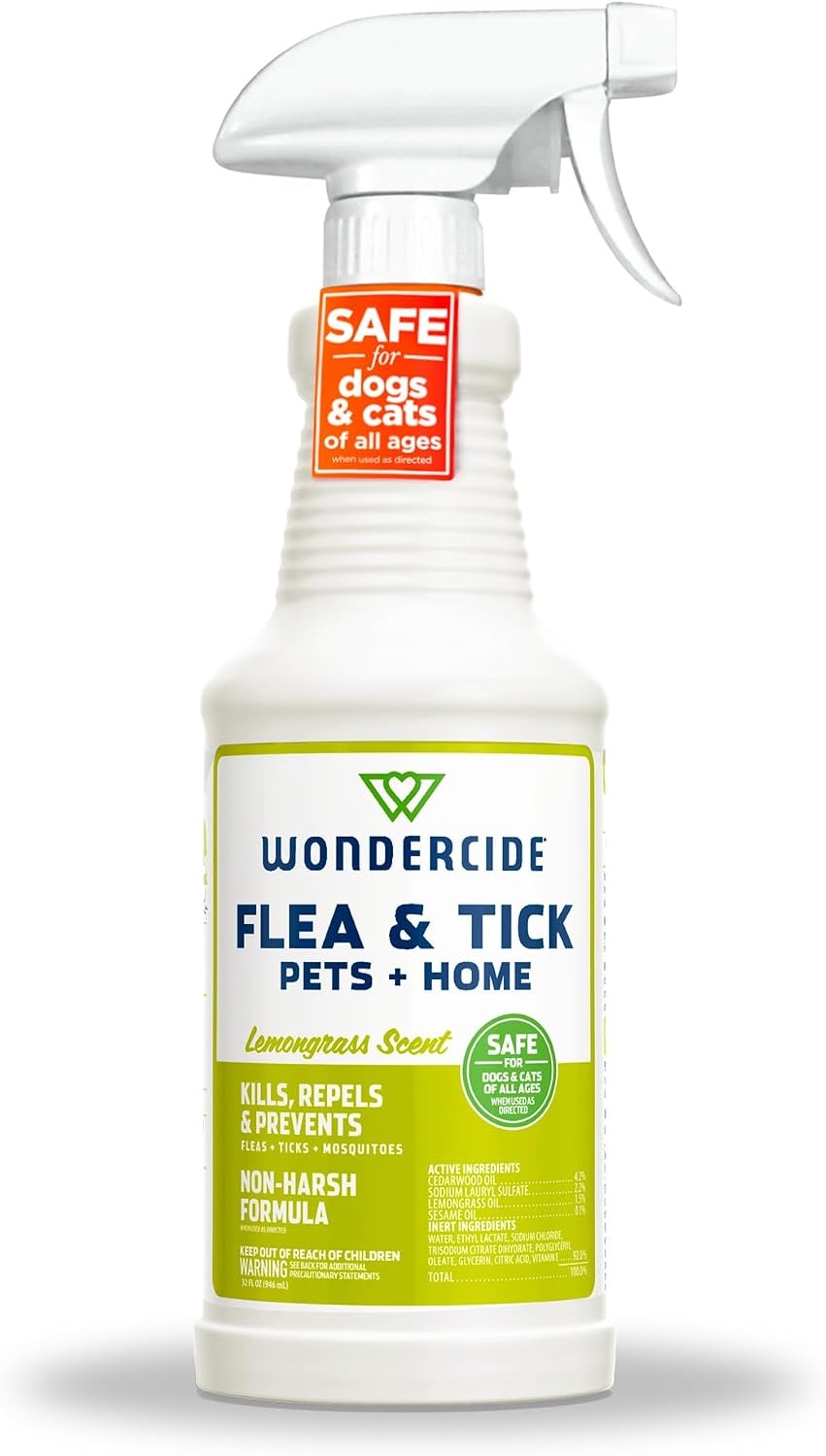
| Active Ingredients | Lemongrass Oil, Cedar Oil |
| Target Species | Dog |
| Age Range Description | All Life Stages |
Wondercide Lemongrass Flea, Tick & Mosquito Spray is a 32 oz plant-powered topical and household spray designed to kill by contact and repel common pests on dogs and cats and in pet environments. You use it like a conventional spray: mist pets (avoiding eyes and mucous membranes) for spot treatments or spray around bedding, carpets, kennels, and furniture to reduce fleas and ticks in the home. The formula lists cedar oil, lemongrass oil and mild surfactants and is labeled safe for all life stages when directions are followed, making it suitable for frequent use and for households with puppies or kittens. Practical benefits include a non-harsh scent that freshens rooms and a multiuse application that can break the flea life cycle by targeting eggs, larvae and adults. Limitations are that efficacy claims are based on lab testing rather than field guarantees, it is a topical/contact product so full-season control may require repeated applications, and users should follow label guidance and spot-test for skin sensitivity.
Best for: Buyers who want a practical, plant-based spray to manage fleas, ticks, and mosquitoes on pets and in the home and who prioritize a non-chemical alternative they can apply themselves.
Less Ideal for: Owners facing heavy or persistent infestations who need fast, guaranteed whole-animal or systemic control should consult veterinary options instead.
- Plant-based active ingredients (cedar oil and lemongrass) suitable for households preferring natural options
- Works as both a pet topical and household spray to target fleas, ticks, and mosquitoes
- Safe for use on all life stages when directions are followed, including puppies and kittens
- Large 32 oz size supports repeated applications around pets and the home
- Effectiveness is reported from laboratory testing and may require repeated applications in real-world infestations
- Not a systemic treatment so it may not replace monthly oral or topical veterinary preventives for heavy infestations
Verdict: A practical, plant-powered spray for pet owners who want a multiuse, gentle option to reduce fleas, ticks, and mosquitoes around pets and the home.
Vet's Best Mosquito Repellent Spray for Dogs & Cats, 8 oz

| Item Volume | 8 fluid ounces |
|---|---|
| Target Species | Dog |
| Scent Name | Citronella, Lemongrass |
| Item Form | Oil |
Vet’s Best Mosquito Repellent is a plant-based spray formulated for dogs and cats 12 weeks and older to repel mosquitoes during outdoor and indoor activities. You shake and mist the coat while avoiding the face and genital areas, focusing on exposed skin like the belly; directions recommend reapplying about every two hours. The formula uses certified essential oils such as lemongrass, geraniol and peppermint and is free of DEET, which makes it a gentler alternative for pet owners who prefer botanical ingredients. Practical benefits include a light scent, suitability for use on bedding and pet areas when used as directed, and simple application for walks, hikes, or backyard time. Limitations are that protection is short duration compared with chemical repellents so frequent reapplication is needed, and it is labeled for pets 12 weeks or older so it is not for very young or pregnant animals. Also the active oil concentrations mean you should avoid contact with eyes and mouths and follow label directions closely.
Best for: Buyers who want a budget-friendly, chemical-free mosquito repellent for routine outdoor use and who prioritize gentler, natural ingredients over long-lasting synthetic protection.
Less Ideal for: Pet owners who need all-day, low-maintenance protection or who treat very young or pregnant animals should choose a longer-lasting or veterinarian-prescribed option instead.
- Plant-based, DEET-free formula using certified essential oils
- Clear, simple spray application for coat and pet areas
- Safe for dogs and cats 12 weeks and older when used as directed
- Light, non-staining scent suitable for indoor and outdoor use
- Requires reapplication roughly every two hours for continued protection
- Not validated for species or animals younger than label age
Verdict: A affordable, plant-based spray that provides short-term, DEET-free mosquito protection for dogs and cats when reapplication is acceptable.
Farnam Flys-Off Insect Repellent Spray for Dogs and Cats, 8 fl oz

| Unit Count | 8 Fluid Ounces |
|---|---|
| Item Form | Liquid |
| Pet Type | Dog |
| Age Range Description | All Life Stages |
Farnam Flys-Off is a dual-action, ready-to-use spray for dogs and cats that combines short-term repellency with on-contact killing of fleas, ticks, and lice. It is applied as a fine mist to the coat until damp, directing spray against the natural lay of the hair for skin penetration; long-haired animals may require extra product. The label recommends repeating every nine days, making it useful for short-term protection during travel, outdoor activities, or as a supplement between regular preventative treatments. The formula is EPA-registered and also suitable for targeted indoor use around pet bedding and baseboards when areas are vacated and allowed to dry. Practical benefits include easy trigger-spray application and a larger 8 ounce bottle for extended use. Important limitations are that protection lasts up to nine days so it is not a long-term monthly solution, it must not be used on animals under 12 weeks, and careful application is needed to avoid over-wetting or improper coverage on very long-coated pets.
Best for: Buyers who prioritize dependable, EPA-registered short-term protection for pets and want an easy-to-apply spray for travel or supplemental control between regular treatments.
Less Ideal for: Owners seeking a single long-term monthly protection method or a product for puppies under 12 weeks should consider other options.
- Dual-action formula that both repels flies, mosquitoes, and gnats and kills fleas, ticks, and lice on contact
- EPA-registered for verified insect control
- Fine mist trigger spray allows easy, full-coat coverage and can be used on pets and in pet areas
- Larger 8 fl oz bottle provides more applications compared with smaller sizes
- Provides short-term protection only and requires reapplication every nine days
- Not for use on animals younger than 12 weeks
Verdict: Choose this spray if you need a reliable, EPA-registered short-term repellent and on-contact flea and tick treatment for dogs and cats.
Wondercide Flea, Tick & Mosquito Spray for Pets & Home, Rosemary, 16 fl oz

| Unit Count | 16 Fluid Ounces |
|---|---|
| Item Form | Spray |
| Scent Name | Rosemary |
| Active Ingredients | 4.2% Cedar Oil; 1.5% Rosemary Oil; 0.1% Sesame Oil |
Wondercide Rosemary spray is a plant‑powered topical and household spray designed to kill and repel fleas, ticks, and mosquitoes on pets and in the home. You apply it directly to fur by misting and rubbing through the coat for spot or whole‑body use, and you can also spray bedding, furniture, and play areas from 8 to 12 inches away. The formula lists cedar oil, rosemary oil, and sesame oil as active ingredients with water and mild surfactants as carriers, which makes it a low‑chemical alternative to conventional pesticides and suitable for use around families when directions are followed. Practical benefits include a pleasant rosemary scent, non‑staining water‑based formula, and a single product that treats both pets and living spaces. Limitations are that it is a contact‑kill product rather than a systemic treatment, so thorough application and repeated use are needed to break an infestation cycle, and it is not registered with the EPA as a traditional pesticide which may concern buyers wanting regulatory oversight. Follow the label for patch testing and avoid use on birds, reptiles, aquatic environments, or pets with compromised health.
Best for: Buyers who prioritize safer, plant‑based solutions and want a single spray for spot treatment of pets and to freshen and protect pet areas in the home.
Less Ideal for: Those who need a systemic or long‑lasting prescription strength flea treatment or who prefer products with full EPA pesticide registration.
- Plant‑based active ingredients (cedar oil, rosemary oil) offer a gentler alternative to conventional pesticides
- Can be applied to both pets and home surfaces, treating bedding, furniture, and play areas
- Water‑based, non‑staining formula with a mild rosemary scent
- Suitable for puppies, kittens, and senior pets when used as directed and after patch testing
- Kills by contact only, so it requires thorough and repeated application to control established infestations
- Not registered by the EPA as a conventional pesticide, which may be a concern for buyers seeking regulatory approval
Verdict: Choose this spray if you want a plant‑based, dual pet-and-home option that reduces pests by contact while avoiding harsh chemical treatments.
Absorbine UltraShield EX Insecticide & Repellent, 1 Gallon

| Unit Count | 128 Ounce |
|---|---|
| Item Form | Liquid |
| Scent Name | Unscented |
| Recommended Uses For Product | Fly Control |
| Active Ingredients | Pyrethrins |
Absorbine UltraShield EX is a water-based, ready-to-use fly spray formulated to kill and repel more than 70 insect species while conditioning the coat and offering sun protection. It is typically applied directly to animal coats and around barns or doorways as a premise spray; the label gives guidance on application rate and safety. Notable features include UltraBond Technology for weatherproof protection up to 17 days, active ingredients that include pyrethrins and permethrin, and conditioning additives such as aloe and sunscreens. In practice that means fewer reapplications in dry or variable conditions and a non-greasy finish that leaves hair damp rather than oily. Because it is labeled for both horses and dogs (EX is approved for dogs), it covers multiple animals on a small farm or property. Important limitations are that it contains pyrethrins/permethrin so users must follow label precautions for people, animals, and environment, and some formulas in the UltraShield line differ in species approvals and reapplication intervals so check the bottle for the right use. For someone focused on dependable tick and fly control, this is a practical, long-lasting option when used as directed.
Best for: Buyers who prioritize reliable, low-effort pest control for horses and dogs and want a product with proven, longer-lasting protection that reduces application frequency.
Less Ideal for: People seeking completely natural, pesticide-free repellents or those who prefer daily, mild treatments for very young or chemically sensitive animals should consider alternative products.
- Ready-to-use water-based formula requires no mixing and leaves no greasy residue
- Weatherproof UltraBond Technology can provide protection up to 17 days between applications
- Kills and repels a broad spectrum of pests including flies and ticks as listed on the label
- Includes coat conditioners and sunscreens to protect and improve animal coat appearance
- Contains insecticidal actives (pyrethrins and permethrin) that require careful adherence to label safety instructions
Verdict: Choose UltraShield EX when you want a ready-to-use, weatherproof spray that reliably kills and repels ticks and flies with fewer reapplications.
Choosing the Right Fly Spray for Dogs: Key Factors to Consider
Active Ingredient and Mode of Action
Different fly sprays use different active ingredients that kill or repel flies. Some are pyrethroid-based or contain synthetic pyrethrins that provide rapid knockdown, while others rely on botanical oils that repel without killing. Knowing the ingredient helps predict how quickly the spray will stop fly activity and how long protection will last.
Active ingredients matter for specific fly species common in your area, and for dogs with known sensitivities. If your dog has a history of skin reactions, opt for a milder mode of action and look for clear dosing guidance for canines.
Safety for Dogs and Household
Safety covers both acute toxicity and skin irritation risk. Canine skin is different from human skin, and some ingredients that are fine for livestock or horses can be too strong for dogs, especially small breeds or puppies. Check whether a product is formulated for topical use on dogs and whether it includes precautions about contact with eyes, mouth, or open wounds.
Also consider household safety: if you have children, other pets, or livestock that share the same space, pick sprays with clear warnings and minimal risk of secondary exposure. Ingredients that are nonpersistent and break down quickly outdoors reduce the chance of lingering residues on bedding or in play areas.
Duration of Protection Outdoors
How long a spray keeps flies off under real conditions is crucial. Some formulations offer only short-term relief and require reapplication after rain, swimming, or heavy sweating. Others claim longer repellency but may rely on stronger chemicals that increase irritation risk.
Think about your typical outdoor use: short walks and yard play versus long farm chores or trail work. Match the claimed protection time to your routine and plan for reapplication intervals that are realistic given your dog's activities.
Ease of Application and Handling
Sprays that are easy to apply reduce stress for both dog and owner. Pump or spray bottles with targeted nozzles help treat tricky areas like ears, armpits, and the groin without soaking the whole coat. Foams or spot-on applicators may be better for dogs who dislike sprays. The ergonomics of the bottle and clarity of instructions determine whether you can apply the product quickly, accurately, and consistently.
Also consider how a formulation smells and how greasy it leaves the coat. Strong odors or sticky residues can make a dog more uncomfortable and may discourage regular use.
Compatibility With Baths and Grooming
Dogs get wet, roll in dirt, and are bathed or groomed regularly. A fly spray that rinses off too easily will require frequent reapplication, while one that binds too strongly may interfere with shampoos or topical treatments. Check whether the product notes compatibility with routine bathing and other topical medications like flea treatments.
If your dog is groomed professionally, choose a product that does not leave long-term residues on fur or skin and that is safe to use before or after standard grooming appointments.
Environmental Conditions and Residue
Outdoor conditions such as heat, humidity, and rain affect how well a fly spray performs. Some ingredients evaporate faster in hot weather, shortening protection, while others may persist longer but accumulate where your dog rests. Consider the typical conditions where you and your dog spend time and whether the product leaves sticky or oily residues that attract dust or mat the coat.
For dogs that spend time near water or in muddy pastures, prioritize sprays labeled as water-resistant and that leave minimal residue on fur and bedding.
How Fly Sprays Work on Canine Skin
Fly sprays either repel insects so they avoid landing or provide a quick knockdown after contact. Repellents create a scent or chemical barrier that discourages flies from approaching, while contact insecticides rely on flies touching treated fur and being incapacitated. The distinction matters when you need immediate relief versus ongoing deterrence.
Topical repellents applied to coat surfaces behave differently than spot-on veterinary products that absorb into skin oils. Understanding that difference helps you decide where to apply the spray and how often you need to reapply after activity or bathing.
- Repellents deter landing and reduce nuisance without necessarily killing insects
- Contact insecticides act quickly but may require more careful handling and safety measures
- Application site and coat length affect how evenly the product covers vulnerable areas
Application Tips for Calm, Effective Treatment
Approach application with your dog restrained but comfortable. Use short bursts and hold the nozzle a few inches from the coat to avoid startling the animal. Start with less sensitive areas such as the back and shoulders, then carefully treat around the face and ears using a cloth or the corner of a towel rather than spraying directly at the head.
For long-haired dogs, lift the coat and spray close to the skin so the active ingredient reaches the areas flies prefer. After applying, let the coat dry before allowing your dog to rub on surfaces or other animals to minimize transfer.
- Test a small patch first if your dog has sensitive skin
- Avoid spraying open wounds, mucous membranes, or the eyes
- Wash hands immediately after application and keep sprays away from children
Seasonal and Situational Use
Use lighter, fragrance-free formulations for routine backyard time and reserve longer-lasting or stronger options for heavy-exposure situations like farms, trail work, or events where flies are concentrated. During peak fly season, increase monitoring and be prepared to reapply after rain or swimming.
If you travel with your dog to different regions, check local pest pressure and choose products effective against the common species there. In high-heat conditions, expect shorter protection times and plan more frequent reapplication.
- Rotate application frequency with activity level and weather
- Pay special attention to ears and around the eyes where flies congregate
- Consider combining environmental control measures like manure removal with topical sprays
Managing Sensitive Dogs and Allergic Reactions
Some dogs develop allergic reactions to fly bites or to ingredients in sprays. If you notice increased scratching, redness, or hair loss after application, discontinue use and consult a veterinarian. For dogs with atopic dermatitis or other skin conditions, choose formulations labeled as hypoallergenic or that list gentle botanical ingredients.
A patch test on a small area for 24 to 48 hours helps reveal immediate irritations. When in doubt, use physical barriers such as fly masks or head coverings for dogs that cannot tolerate topical treatments.
- Patch-test new products on a small skin area before full application
- Monitor treated dogs for 48 hours after first use for signs of irritation
- Use barrier methods if topical options cause adverse reactions
Integrating Fly Spray With Other Pet Care
Coordinate fly spray use with flea, tick, and heartworm prevention schedules. Some topical preventatives interact poorly with additional topical products, altering absorption or causing skin stress. Read labels to confirm compatibility or allow recommended intervals between applications.
Grooming routines can reduce fly attraction: keeping coats clean, trimming long hair around the face and rear, and promptly treating wounds all lower the chance of fly irritation. Use sprays as one part of a combined approach that includes environmental cleanup and good hygiene.
- Check compatibility notes on other topical medications before applying
- Keep wounds clean and covered when possible to avoid fly access
- Regular grooming reduces hotspots that attract flies
How We Chose the Best Fly Spray for Dogs
We prioritized products that balance effective insect control with canine safety and practical yard use. Evaluation centered on measurable, garden-relevant dimensions: active-ingredient efficacy against common biting flies, formulation safety for frequent application on dogs, duration of repellency under outdoor conditions, and ease of application for owners handling a struggling or wet pet. We also considered compatibility with bathing, spot-treating wounds, and use around children or livestock where cross-exposure happens. Excluded from consideration were products labeled only for agricultural equipment or indoor pest control that lack clear guidance for topical pet use, and any formulations intended solely for livestock without canine dosing instructions. We filtered out products with unclear ingredient lists or without publicly available safety data. The final list emphasizes sprays that offer documented repellency times, clear safety instructions, and user-friendly packaging appropriate for routine outdoor use on dogs.
FAQ
Are fly sprays safe to use on puppies?
It depends on the formulation. Many sprays include age or weight guidelines; avoid products that do not list puppy-safe directions. For very young puppies, use physical barriers and consult a veterinarian before topical treatments.
How often should I reapply fly spray after my dog swims or gets rained on?
Most sprays lose effectiveness after heavy water exposure. Reapply after the coat is dry and follow the product's stated interval, which often ranges from a few hours to a full day depending on water resistance.
Can fly sprays be used around the dog's eyes and ears?
Sprays should not be applied directly to eyes or inside the ear canal. Use a damp cloth to carefully treat the face area or choose products that provide guidance for periocular and ear application.
Will fly spray interfere with flea and tick treatments?
Some topical flea and tick preventatives can interact with additional topical products. Check product labels for compatibility and allow recommended intervals between different applications. When unsure, consult your veterinarian.
What should I do if my dog shows signs of irritation after application?
Stop using the product immediately and wash the area with mild pet-safe shampoo. If symptoms are severe or persist, contact your veterinarian for advice and bring a sample of the product label if possible.
Final Verdict
When choosing a fly spray for dogs, prioritize formulations that match your dog's skin sensitivity, the typical duration you need outdoors, and how often the dog swims or is bathed. Balance fast-acting ingredients for heavy fly pressure with gentler options for routine use, and plan application methods that minimize stress for both you and your pet. In the end, the right choice reduces fly-borne irritation and keeps outdoor time more comfortable for your dog.
