

Note: This article contains affiliate links. If you click on these links and make a purchase, I may earn a small commission at no extra cost to you. This helps support my research and content. Read my full affiliate disclosure here.
If wildlife is chewing plants, digging beds, or visiting your patio at night, the right ultrasonic animal pest repeller can make a noticeable difference. These devices rely on high-frequency sound and other deterrent features to encourage animals to leave an area without lethal methods. Choosing the best option matters because coverage pattern, weather resistance, and power source determine whether a unit works on a small balcony, across a raised bed, or for a larger yard. This guide covers seven shortlisted ultrasonic animal pest repellers that performed well on core practical metrics. We evaluate each pick for how far it projects sound, how it stands up to outdoor conditions, and how simple it is to set up and maintain. Read on to find a model that fits your garden layout and the species you need to deter.
Top Picks at a Glance
| Best Overall The best all-around choice for most situations | Grrwz Solar Ultrasonic Outdoor Animal Repellent, 2-Pack |  |
| Best Quality Built to a higher standard if you want something more solid | G-Jyuncyou Solar Ultrasonic Animal Repeller (2-Pack) |  |
| Best Value The sweet spot between price and what you get | BORHOOD Solar Ultrasonic Mole and Pest Repellent, 4-Pack |  |
| Best Budget The cheapest option that still gets the job done reliably | MOOB Outdoor Solar Ultrasonic Animal Repeller |  |
| Highest Rated A top-rated pick with lots of positive feedback | Thcritter Solar Ultrasonic Animal Repeller (2026 Upgraded) |  |
| Most Popular A crowd favorite that many people choose with confidence | Broox RB-101 Solar Ultrasonic Animal Repellent |  |
| Best Seller A high-volume bestseller chosen again and again | CKCOEO Solar Ultrasonic Animal Repellent with Motion Sensor and Strobe Light |  |
Grrwz Solar Ultrasonic Outdoor Animal Repellent, 2-Pack

| Unit Count | 2 Count |
|---|---|
| Detection range | Up to 30 ft |
| Coverage angle | 150° |
| Weather resistance | IP65 |
This Grrwz two-pack of solar ultrasonic repellers is designed to protect gardens and yards by pairing a PIR motion sensor with high-frequency sound and a bright strobe when animals enter a 150°/30 ft detection zone. Set up is simple: stake the unit about 9 to 10 inches into the ground or hang it on a fence, let the panel charge in sun for a short period, then leave it to run day and night using stored solar energy. The combination of sound plus flashing light gives a clear, nonlethal deterrent that requires no chemicals, baits, or maintenance beyond occasional cleaning. The ABS housing and IP65 rating mean the units tolerate rain and snow so you can leave them outside year-round. Practical limitations to note are that effectiveness depends on placement and line of sight, some wild animals can become habituated over time, and very cloudy locations will reduce daily solar charging and runtime. For a performance-focused solution that minimizes hands-on upkeep, these devices offer a scalable way to protect multiple problem areas around a yard.
Best for: Buyers who want a low-maintenance, performance-focused way to reduce cat and other animal activity around gardens or yards without chemicals or traps.
Less Ideal for: People who need guaranteed exclusion for heavily infested areas or who lack reliable sunlight for solar charging should consider wired or higher-powered alternatives.
- Motion-activated PIR sensor with up to 30 ft range and 150° coverage for wide detection
- Dual-action deterrent using ultrasonic sound and bright strobe light for stronger stimulus
- Solar-powered with battery backup for continuous day and night operation without wiring
- IP65 weatherproof ABS housing built to withstand rain, snow, and outdoor conditions
- Performance depends on correct placement and sufficient sunlight for charging
- Some wildlife may habituate to the stimulus over time, reducing long-term effectiveness
Verdict: A hands-off, solar-powered deterrent built for reliable, wide-coverage animal control around yards and gardens.
G-Jyuncyou Solar Ultrasonic Animal Repeller (2-Pack)
| Power Source | Solar Powered |
|---|---|
| IP Rating | IP65 |
| Frequency Range | 18–45 kHz |
| Charging | Solar and USB charging option |
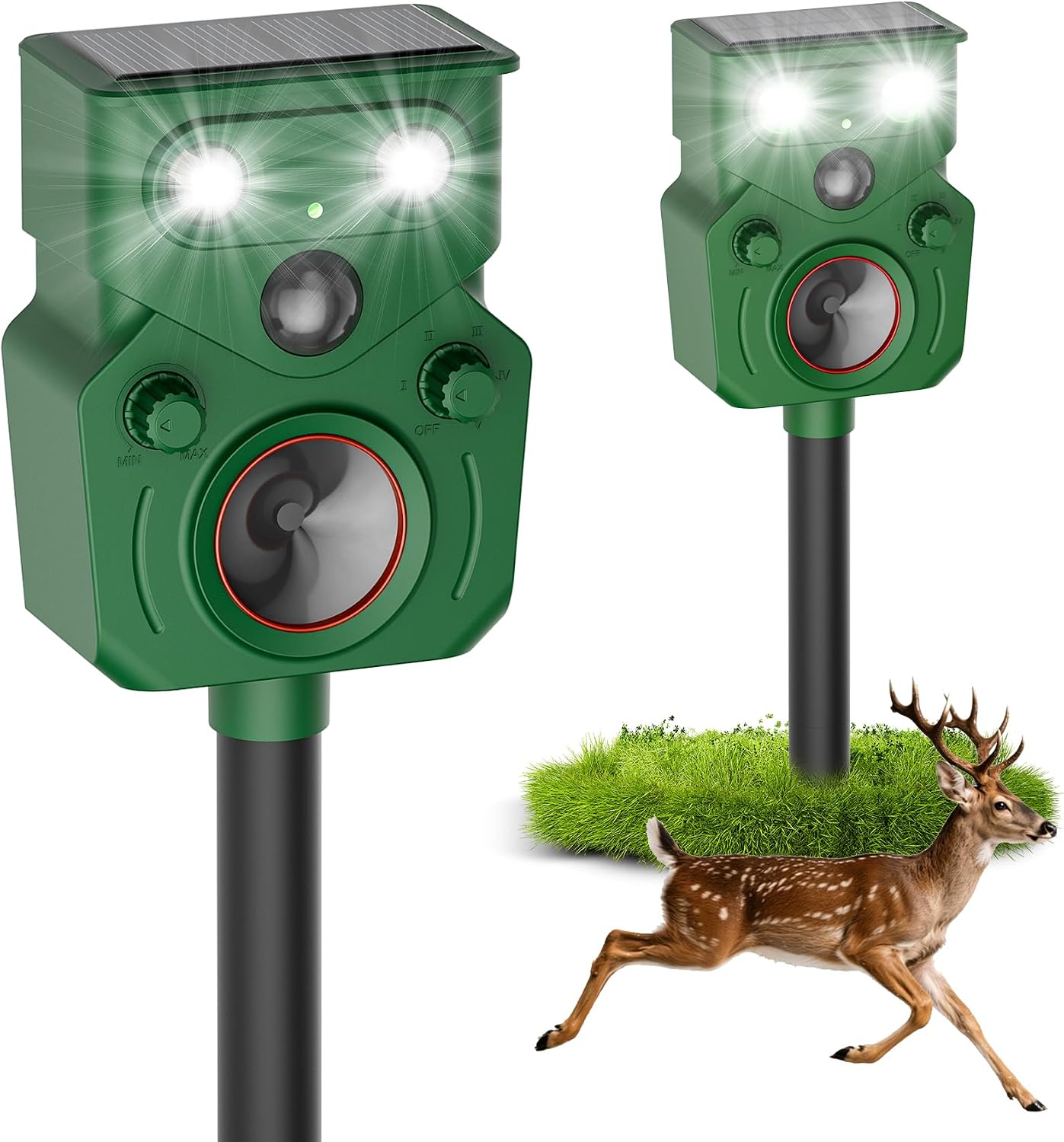
This two-pack of G-Jyuncyou solar ultrasonic repellers combines PIR motion detection, adjustable ultrasonic frequency and strobe lighting to protect yards, orchards, and gardens from deer, raccoons, coyotes and similar animals. Install by staking into the ground or hanging; the PIR sensor triggers ultrasonic pulses (18–45 kHz depending on mode) and flashing LEDs when animals enter the detection zone. There are five modes including sweep, high-frequency, full cycle and strobe-only, plus separate knobs for sensitivity and frequency so you can tune coverage for different animals and distances. Solar panels recharge during the day and a USB port lets you top up the internal battery when sunlight is limited. The unit is IP65 rated, built from ABS plastic, and intended for continuous outdoor use. Important limitations are that ultrasonic effectiveness varies by species and environment and requires correct placement and angle; sound does not physically harm animals and results are not instant in every situation. The device is best used as part of a layered approach to deer control rather than a guaranteed single solution.
Best for: Buyers who prioritize a low-maintenance, weatherproof deterrent they can rely on for continuous outdoor protection and who want the ability to fine-tune detection and frequency settings.
Less Ideal for: Those seeking an immediate, guaranteed elimination of large herd deer or users who prefer physical exclusion methods only should consider alternative or additional solutions.
- Adjustable frequency and sensitivity knobs let you target different animals and tune detection range.
- Dual charging via solar panel plus USB ensures power even in cloudy weather or winter.
- IP65 waterproof rating and ABS construction for outdoor durability.
- Multiple working modes including strobe-only and full-cycle provide flexible deterrent patterns.
- Ultrasonic effectiveness depends on species, landscape and placement so results can vary.
- No detailed coverage radius provided, so planning exact placement requires trial and error.
Verdict: A weatherproof, adjustable solar-powered repeller that provides reliable, low-maintenance deterrence when used as part of a broader deer-control strategy.
BORHOOD Solar Ultrasonic Mole and Pest Repellent, 4-Pack

| Power source | Solar |
|---|---|
| Waterproof rating | IP65 |
| Pack size | 4 pack |
| Coverage per unit | Up to 7000 square feet |
This four-pack solar ultrasonic repellent combines a small solar panel, vibration motor, and ultrasonic pulses to discourage moles, gophers and a range of small mammals from burrowing in lawns and garden beds. Installation is simple: press each stake into the soil, flip the switch and let the units run continuously; the manufacturer says the pulses repeat roughly every 20 seconds so the effect is intermittent rather than constant. The units are rated IP65 for weather resistance and run off solar energy so there is no wiring or battery replacement required under normal conditions. In practice the stakes are best for open, well-drained areas where sunlight can recharge the panels and where you can deploy multiple units to cover the whole yard. Expect to give the product a week or two to notice reduced activity rather than immediate elimination of tunnels. Limitations include variable effectiveness depending on soil type and animal behavior and the fact that ultrasonic/vibration devices rarely guarantee complete removal of persistent pests, so this is most effective as a preventive or part of a layered approach.
Best for: Homeowners who prefer low-maintenance, nonchemical options and want an easy-to-install deterrent to reduce burrowing activity across lawns and garden beds.
Less Ideal for: People facing severe, long-standing gopher or mole infestations who need immediate removal or professional trapping and exclusion methods.
- Solar-powered operation eliminates the need for batteries or wiring
- IP65 weather resistance for continuous outdoor use
- Covers a large advertised area per unit, useful for yard-wide protection
- Easy installation—stake into soil and switch on
- Effectiveness varies with soil type and local pest behavior
- May take a week or more to show measurable results
- Ultrasonic/vibration devices do not reliably eliminate entrenched infestations
Verdict: A low-maintenance, nonchemical solar stake system that provides broad deterrent coverage for homeowners seeking a simple preventive solution against moles and gophers.
MOOB Outdoor Solar Ultrasonic Animal Repeller

| Power Source | Solar Powered |
|---|---|
| Number of Pieces | 1 |
| Material Type | Plastic |
The MOOB Outdoor Solar Ultrasonic Animal Repeller is a simple, budget-friendly device that uses adjustable ultrasonic frequencies, a motion sensor, an LED strobe and a buzzer to discourage a range of animals from entering lawns and garden beds. You mount the stake in the ground where the 110° PIR sensor can see activity, and when motion is detected within about 8 meters the unit runs a 30-second deterrent cycle that combines ultrasound, sound and flashing light. The unit offers eight frequency settings (13 kHz to 60 kHz) so you can attempt to target different species and a night mode that switches the buzzer to a sweep to reduce disturbance. It charges by solar with USB backup and shows charging status with LEDs, making it low-maintenance for outdoor use. Expect straightforward installation and humane deterrence at a low price, but effectiveness can vary with species, local conditions, and animals that become habituated to noise-based devices.
Best for: Buyers who want a low-cost, low-maintenance humane deterrent for common garden pests and prefer a solar-powered device they can set and forget.
Less Ideal for: People needing guaranteed removal of persistent or burrowing pests or those who require proofed hard-wearing hardware for harsh climates should consider more robust or multi-method solutions.
- Solar-powered with USB backup for continuous outdoor operation
- Adjustable 8-frequency range (13–60 kHz) to target different animals
- 110° PIR motion sensor detects movement up to about 8 meters
- Night mode and 30-second automatic deterrent cycle conserve power and cut disturbance
- Sound- and light-based deterrents can lose effectiveness if animals habituate
- Plastic construction may be less durable in extreme weather over time
Verdict: A very affordable, solar-powered ultrasonic repeller that provides a humane, low-effort way to help reduce common animal visits in yards and gardens.
Thcritter Solar Ultrasonic Animal Repeller (2026 Upgraded)

| Power Source | ac |
|---|---|
| Number of Pieces | 2 |
The Thcritter Solar Ultrasonic Animal Repeller is a weatherproof, solar-powered unit that uses a PIR motion sensor to detect moving animals and emit ultrasonic pulses to discourage them from gardens, lawns, orchards, and similar outdoor areas. Installation is straightforward: charge the panel in direct sun for a couple of days, assemble, and stake the unit about 9–10 inches above ground where the 110° sensor can cover its 25–30 foot detection arc. The unit cycles into standby after a brief activation and only emits sound when motion is detected, which helps conserve stored solar energy. Construction uses ABS plastic and the device carries an IP66 rating, so it stands up to rain and outdoor exposure. Practical limits include reliance on sufficient sunlight for charging and the inherent variability of ultrasonic effectiveness depending on species and environmental obstacles; it is best used as part of a broader pest-control plan rather than a single guaranteed solution.
Best for: Buyers who want a low-maintenance, weatherproof deterrent to reduce animal intrusions in yards and gardens and who prioritize a device that runs on solar power and activates only when motion is detected.
Less Ideal for: People seeking an immediate, guaranteed solution for burrowing pests or species known to be insensitive to ultrasonic frequencies should consider alternative or supplementary control methods.
- Solar-powered with built-in rechargeable storage reduces need for batteries
- PIR motion sensor with approximately 25–30 ft detection and 110° coverage targets moving animals only
- IP66 waterproof construction suitable for outdoor exposure
- Simple stake-and-go installation and automatic standby to conserve power
- Effectiveness varies by species and can be limited by obstacles or ambient noise
- Depends on adequate sunlight to maintain charge and operation
Verdict: A weatherproof, solar-powered motion-activated repeller that offers a low-maintenance option to reduce common garden pests.
Broox RB-101 Solar Ultrasonic Animal Repellent

| Target Species | Cat, Dog, Rabbit, Raccoon, Skunk, Squirrel |
|---|---|
| Infrared sensor angle | 110 degrees |
| Detection range | 20-25 feet |
| Power supply | Solar plus 3 Ni-MH rechargeable batteries with USB charging |
The Broox RB-101 is a weatherproof, solar-powered ultrasonic animal repellent intended to keep gardens and yards clear of cats, squirrels, raccoons, deer and similar animals. It mounts in the ground or on a wall, uses an infrared motion sensor to trigger ultrasonic tones and a flashing LED, and offers five frequency modes and a sensitivity knob so you can match output to different species and detection distances. Practical benefits include solar charging with USB backup so it can run with minimal maintenance, a 110 degree sensor sweep and roughly 20–25 foot detection range for decent coverage of small to medium areas, and clearly labeled mode settings that make it easy to adjust. Limitations are that effectiveness depends on animals being sensitive to ultrasonic frequencies and on correct placement and orientation, and some users may not hear the device because the sound is above human hearing range. The unit is a straightforward, low-effort option for reducing nuisance wildlife where a humane, nonchemical approach is preferred.
Best for: Someone who wants a low-maintenance, humane way to discourage common garden pests and prefers configurable settings to tailor coverage to specific animals and areas.
Less Ideal for: People needing guaranteed removal of burrowing or hearing-insensitive animals or those who require a solution for very large acreage beyond the stated detection range.
- Solar panel with USB backup reduces need for frequent battery changes
- Adjustable frequency and sensitivity knobs let you target different species and distances
- Motion-activated ultrasonic sound plus flashing LED adds both audio and visual deterrence
- IP65 weatherproof construction suitable for outdoor exposure
- Relies on animals being able to hear ultrasonic frequencies so it will not affect all species
- Effectiveness depends on correct placement and periodic repositioning if animals habituate
Verdict: A simple, weatherproof solar ultrasonic repeller with adjustable frequency and motion detection that offers a low-effort, humane way to reduce common garden pests.
CKCOEO Solar Ultrasonic Animal Repellent with Motion Sensor and Strobe Light

| Power source | Solar |
|---|---|
| Detection angle | 150 degrees |
| Detection range | 25-30 ft |
| Waterproof rating | IP65 |
This solar ultrasonic repellent combines a PIR motion sensor, high-frequency sound pulses, and a flashing strobe to keep small mammals out of gardens and yards. Install it on a stake about 9 to 10 inches above the ground or hang it on a fence facing animal paths; when the sensor detects movement within about 25 to 30 feet and 150 degrees, the unit emits ultrasonic bursts and a bright LED flash for immediate deterrence and then returns to standby. The built-in solar panel charges the internal battery so the device runs after dark without wiring, and the IP65 ABS housing tolerates rain and sprinklers for year-round outdoor use. Practical benefits include easy, tool-free setup, chemical-free operation, and coverage that targets a wide range of species. Limitations to note are the need for good sun exposure to maintain charge, an advertised adjustment period of a few weeks for persistent animals, and the typical line-of-sight requirement of ultrasonic devices which reduces effectiveness around dense vegetation or obstructed approaches.
Best for: Gardeners and yard owners who want a low-maintenance, chemical-free deterrent that can be set-and-forgotten to reduce small mammal damage around beds and lawns.
Less Ideal for: People with shaded sites that get little direct sun or those who need immediate, guaranteed removal of persistent animals in heavily obstructed areas.
- Solar-powered with on-board charging so it runs at night without external power
- PIR motion sensor covers up to about 150 degrees and 25–30 feet for triggered activation
- IP65-rated ABS housing protects electronics from rain and outdoor conditions
- Dual-action deterrent using ultrasonic pulses plus flashing LED to startle animals
- Performance depends on direct sunlight for reliable charging and runtime
- Ultrasonic effectiveness is reduced by obstacles and may take weeks for animals to adapt or leave
Verdict: A hands-off, solar-powered ultrasonic repeller that gives practical, weatherproof protection against squirrels and other small pests for sun-exposed gardens.
Choosing the Right Ultrasonic Animal Pest Repeller: Key Factors to Consider
Coverage Area and Detection Range
How far a repeller projects ultrasonic sound and whether it includes motion detection determines how much of your garden it will protect. Ultrasonic output is directional and can be blocked by vegetation, walls, or garden furniture, so the stated coverage area should match your layout. For small balconies or container gardens a narrow-angle unit may suffice, while larger lawns require devices with broader dispersion or multiple units spaced across the site.
Also consider whether the repeller specifies detection distance for triggers such as PIR sensors. A long detection range helps against fast-moving animals but can produce false triggers from passing people or pets. Positioning and the device's effective cone of sound are as important as raw meter measurements when mapping protection zones.
Weatherproofing and Build Durability
Outdoor repellers must resist moisture, temperature swings, and UV exposure. Look for IP ratings or clear descriptions of sealed housings and corrosion-resistant fittings. Plastic enclosures vary in UV stability; a brittle casing can crack after a season in full sun, while better UV-stabilized polymers last longer.
Consider drainage and mounting hardware too. Units intended for garden beds should prevent water pooling around electronics and offer stakes or bracket options for secure placement. Longevity impacts cost-effectiveness because a device that fails after one winter will require replacement and reinstallation.
Power Source and Installation Flexibility
Repellers come in mains-powered, battery-powered, rechargeable, or solar-assisted variants. Your access to outdoor outlets, desire to avoid cords, and tolerance for battery maintenance will influence the best choice. Solar-powered or rechargeable units reduce ongoing battery costs but need adequate sun exposure; battery-only units are easier to place under cover but require periodic replacement.
Installation options matter in diverse garden settings. Stakes are handy for soil beds, while wall or post mounts work better on fences and patios. Consider cable routing, the need for adapters, and whether the unit can be positioned high enough to avoid interference from plants and obstructions.
Acoustic Characteristics and Adjustable Modes
Different species respond to different frequencies and pulse patterns, so adjustable sound modes increase a device's usefulness. Check whether a repeller offers multiple ultrasonic frequencies, intermittent pulses, or combined sonic and ultrasonic output. Some units add flashing lights or predator calls to increase deterrence, which may help against species less affected by ultrasound alone.
Avoid models that lock you into a single frequency or a static pattern that animals quickly habituate to. The ability to change intensity and timing reduces habituation and lets you tailor the device to the target animals and site conditions.
Safety and Non-target Animal Considerations
Ultrasonic devices are marketed as humane, but you should still assess risk to pets, beneficial wildlife, and neighbors. Sound intensity and frequency can affect domestic pets differently; choose a device with adjustable output or placement options that keep household animals out of the beam. Also consider whether lights or sound could disturb nearby people or protected species.
Think about placement to protect pollinators that use the area and to avoid directing high-frequency sound into neighboring yards. Devices that allow you to direct sound away from non-target zones reduce the chance of unintended disturbance.
Maintenance and Long-Term Reliability
Routine care affects how well repellers perform over time. Easy access to battery compartments, simple cleaning of sensors and speaker grills, and replaceable stakes or mounts make upkeep straightforward. Regularly removing debris and checking seals prevents moisture ingress and maintains detection accuracy.
Also plan for seasonal storage if you live in a harsh climate. Units designed for easy disassembly and with non-corroding fasteners are simpler to winterize, which preserves function and extends service life.
Matching Repeller Type to Your Garden Layout
Start by mapping the areas where animals cause the most damage and note sight lines, fences, and dense planting that could block ultrasonic waves. For narrow corridors and raised beds a focused, stake-mounted unit aimed along the bed gives the best coverage. In open lawns or large patios you may need multiple units spaced to overlap coverage cones.
Place devices higher than ground level when targeting animals that lift their heads, such as squirrels. For burrowing species mount units low and angle them toward entrances. A small investment in testing placement can avoid blind spots where animals can continue to access plants.
- Use one unit per sheltered 500-1,000 square feet as a rough starting point, then adjust for obstacles
- Aim repellers along typical animal paths rather than directly at plants
- Test placement for a week and move units if you still see activity
Combining Ultrasonic Repellents with Physical Barriers
Ultrasonic devices work best when paired with simple physical defenses. Low fencing, hardware cloth over vulnerable beds, or raised borders can prevent determined animals that ignore or habituate to sound alone. For burrowers, reinforcing soil edges and sealing known entry points reduces pressure on a repeller to perform perfectly.
Use repellents as part of an integrated approach rather than the only measure. Combining methods reduces the chance of habituation and covers gaps in coverage caused by garden clutter or changes in plant growth.
- Install wire mesh where digging is common
- Add motion-activated lights in areas where nighttime visitors are a problem
- Rotate deterrent strategies seasonally to prevent habituation
Placement Tips to Avoid False Triggers and Disturbance
False triggers from passing people, wind-blown vegetation, or domestic pets reduce effectiveness and waste power. Mount motion-sensitive models away from footpaths and secure loose branches or garden waste that might set them off. For solar units avoid shade from trees or structures that reduce charging efficiency.
If neighbors are close, angle units away from property lines and test at varying times to ensure the sound pattern does not create complaints. Some units include pet-friendly modes or sensitivity adjustments that help contain effects to intended targets.
- Keep sensor height matched to the target animal's typical height
- Trim vegetation in front of sensors and speakers
- Use timers or schedule modes to limit operation during peak problem hours
Seasonal Use and Storage
Many gardeners prefer to run repellers during the seasons when animal activity is highest, then store them indoors in winter. Removing batteries before long-term storage prevents leakage, and drying units thoroughly after exposure to heavy wet weather reduces corrosion risk.
For units left outside year-round check seals and mounts at season changes. Replace worn stakes and weathered mounting hardware to maintain correct orientation and prevent water ingress that can damage electronics.
- Remove rechargeable batteries for winter storage if recommended
- Inspect seals and speaker grills each spring
- Store stakes and small mounts together so reinstalling is fast
When Ultrasonic Repellents May Not Be Enough
Some species become habituated to sound or are primarily driven by food sources that require removing attractants rather than relying solely on deterrents. If animals are attracted by accessible compost, pet food, or dense groundcover offering shelter, address those attractants first.
Persistent or large populations often need a layered strategy combining sound repellents with exclusion, habitat modification, or targeted removal of food and shelter. Consider using repellers to protect particularly vulnerable areas while applying other measures for broader control.
- Remove unsecured food sources before relying on a repeller
- Use exclusion for long-term protection of small beds
- Evaluate whether increased coverage or multiple tactics are needed if activity persists
How We Chose the Best Ultrasonic Animal Pest Repeller
We shortlisted units that match the needs of typical gardeners and homeowners, focusing on measurable, garden-relevant features. Key evaluation criteria included coverage area and effective detection range, because an insufficient projection leaves plants unprotected. We tested reported weatherproofing and build durability to ensure outdoor units last through rain and temperature swings. Power and installation options were compared to reflect how gardeners actually use devices in beds, containers, or open lawns. Acoustic output characteristics and adjustable modes were examined because different animals respond to different frequencies and intermittent patterns. Finally, we considered practical maintenance factors such as battery access, ease of cleaning, and whether the device attracts debris. Units were excluded if they lacked outdoor-rated housings, provided no clear coverage specifications, or relied solely on unproven advertising claims without practical mounting or power options. We favored devices with verifiable specs, flexible installation, and straightforward user controls aligned with real garden situations.
FAQ
Will an ultrasonic repeller harm my pets or beneficial wildlife?
It often depends on frequency and placement. Many devices allow you to adjust output or direct sound away from areas where pets spend time. Avoid placing units where household animals sleep or frequent and use lower-intensity or pet-friendly modes when available.
How long does it take to see results after installing a repeller?
Results vary by species and site, but you may notice reduced activity within days for curious animals and a few weeks for more cautious species. If activity continues, try repositioning the unit or adding coverage to eliminate blind spots.
Do solar-powered repellers work in shaded or cloudy gardens?
Solar units need consistent sun to maintain charge. In heavily shaded gardens or regions with long cloudy periods, rechargeable or battery-powered models provide more reliable operation. Check the manufacturer's stated charging requirements before relying on solar power.
Can animals get used to ultrasonic sounds?
Habituation can occur, especially with static patterns. Choosing units with variable frequencies, intermittent pulses, or additional stimuli like flashing lights reduces the chance of animals becoming accustomed to the sound.
How should I position a repeller to target burrowing animals?
Mount low and point the device toward known burrow entrances. Combining a low-mounted repeller with soil barriers or hardware cloth around burrow sites interrupts access and increases the repeller's effectiveness.
Are there legal or neighbor considerations when using ultrasonic devices?
Regulations are usually minimal, but you should be mindful of noise or light that might disturb neighbors. Angle devices away from property lines and test operation at different times to ensure you are not creating a nuisance.
Final Verdict
Prioritize coverage, weather resistance, and power flexibility when choosing an ultrasonic animal pest repeller for garden use. Map your problem areas first, then match a unit with the right projection pattern and mounting options to that layout. Be realistic about tradeoffs: solar convenience requires sun, battery units need maintenance, and no ultrasonic device replaces good exclusion and removal of attractants. Use repellers as one element in an integrated approach. Focus on durable weatherproof housings, adjustable acoustic modes, and placement that limits effects on non-target species. With those priorities, you can select a repeller that reduces damage while fitting your garden's specific needs.
