

Note: This article contains affiliate links. If you click on these links and make a purchase, I may earn a small commission at no extra cost to you. This helps support my research and content. Read my full affiliate disclosure here.
Hibiscus trees respond quickly to the right feeding plan, so picking a fertilizer that suits your planting site and watering habits matters. The wrong nutrient balance or slow-release schedule can lead to leggy growth, few flowers, or leaf yellowing. This guide focuses on fertilizers for hibiscus tree and explains which products gardeners tend to reach for based on bloom production, leaf health, and ease of use. We shortlisted seven options that represent different feeding strategies and application styles. Below you will find how each option stacks up on nutrient formula, feeding frequency, and garden practicality, plus the factors you should weigh when choosing a fertilizer for your hibiscus tree.
Top Picks at a Glance
| Best Overall The best all-around choice for most situations | Nelson Plant Food NutriStar Hibiscus Granular Fertilizer (10-4-12) |  |
| Best Quality Built to a higher standard if you want something more solid | Cz Garden BloomBiscus Hibiscus Plant Food 10-4-12 (4 lb) |  |
| Best Value The sweet spot between price and what you get | BGI Fertilizers Hibiscus Fertilizer, 10 lb Bag |  |
| Best Budget The cheapest option that still gets the job done reliably | Jobe's Rose Fertilizer Spikes, 10 Count (9-12-9) |  |
| Highest Rated A top-rated pick with lots of positive feedback | MicroLife Palms & Tropical Granular Organic Fertilizer (4-2-4), 7 lb |  |
| Most Popular A crowd favorite that many people choose with confidence | Osmocote Smart‑Release Plant Food Plus Outdoor & Indoor, 2 lb |  |
| Best Seller A high-volume bestseller chosen again and again | EarthPods Tropical Flower Fertilizer Spikes, 100 Count |  |
Nelson Plant Food NutriStar Hibiscus Granular Fertilizer (10-4-12)

| Item Form | Granules |
|---|---|
| Application Method | Sprinkle granules around the base of the plant |
| Target Species | Hibiscus |
| Mixing Ratio | 10-4-12 |
Nelson NutriStar Hibiscus is a granular, slow‑release plant food designed for monthly feeding of hibiscus and other tropical flowering plants both indoors and out. It is applied by sprinkling granules around the plant base and works with soil biology to release nutrients over time, reducing the need for frequent liquid feeding. The 10-4-12 N‑P‑K mix, fortified with calcium, iron, and magnesium, targets stronger roots, better foliage and more abundant blooms, and the higher potassium helps flower production. Its consistency makes it easy to use in hanging baskets, pots, and garden beds. Because it is medium coverage and slow release, you get sustained nutrition rather than quick bursts, but that also means it is not a fast corrective for severe nutrient deficiencies. The product is straightforward to use for routine maintenance and best suited to growers who want a low‑maintenance monthly feed to keep tropical flowering plants healthy and blooming through the season.
Best for: Buyers who want a low‑maintenance, month‑to‑month fertilizer to encourage bigger blooms and healthier tropical plants without frequent liquid feeding.
Less Ideal for: Growers needing an immediate corrective treatment for nutrient deficiencies or those managing very large landscapes who need bulk coverage planning.
- Slow‑release granular formula for once‑a‑month feeding
- 10-4-12 N‑P‑K balance with added calcium, iron, and magnesium
- Suitable for indoor and outdoor use including hanging baskets and potted plants
- Easy granular application that works with soil biology for extended feeding
- Not formulated for rapid correction of acute nutrient deficiencies
- Coverage described as medium so larger plantings may need multiple applications or larger package sizes
Verdict: Use this slow‑release granular formula for simple, monthly maintenance that boosts blooms and root health in hibiscus and other tropical flowering plants.
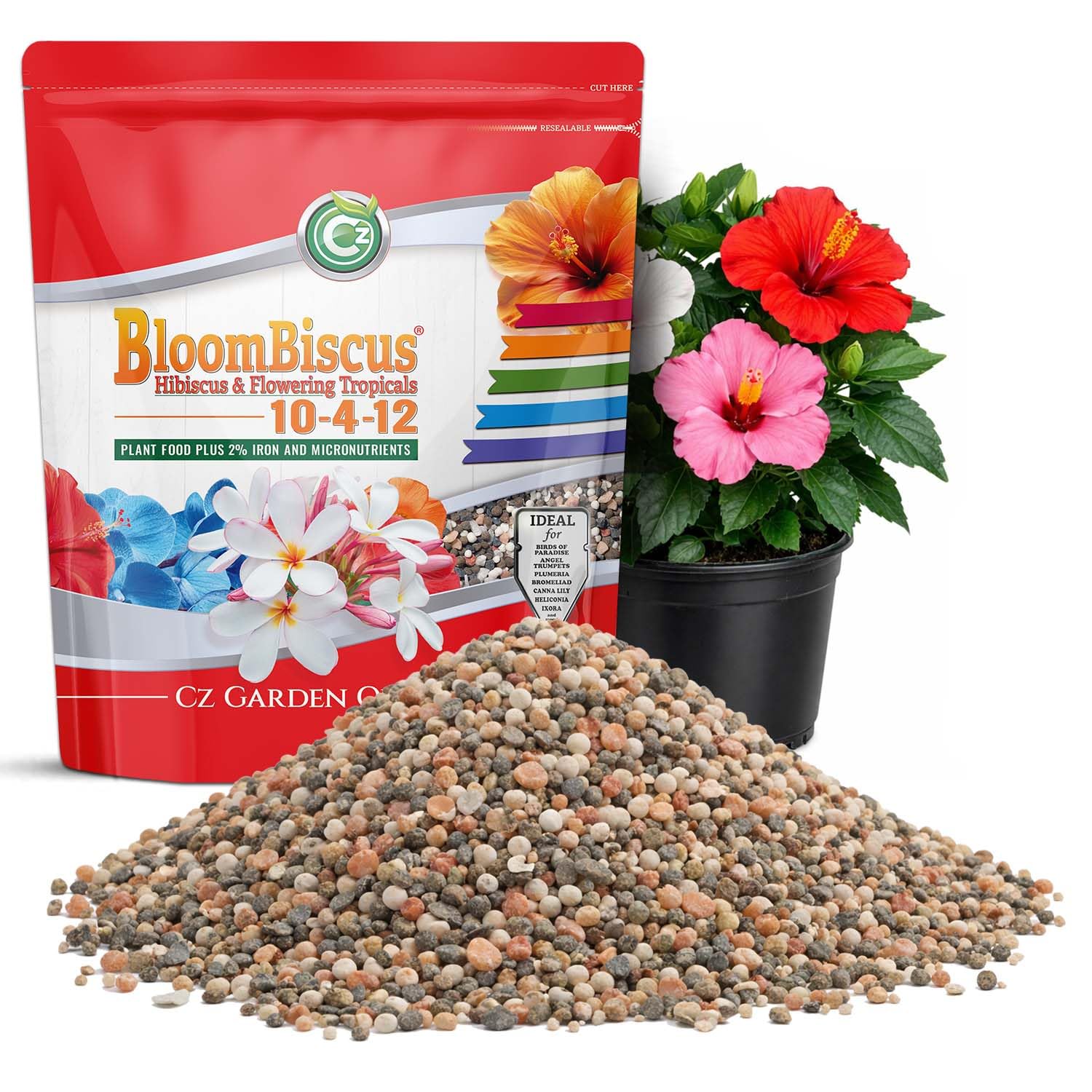
Cz Garden BloomBiscus Hibiscus Plant Food 10-4-12 (4 lb)
| Item Form | Granules |
|---|---|
| Specific Uses For Product | Plant Growth, Root Development, Seed Development, Soil Conditioning |
| Target Species | Flowering Tropicals |
| Unit Count | 64 Ounce |
| Mixing Ratio | 10-4-12 |
This granular BloomBiscus formula is designed to boost blooms and overall vigor in hibiscus and similar tropical flowering plants. It is typically worked into potting mix or applied around the root zone and watered in according to package directions. The 10-4-12 NPK delivers higher potassium for flowering and fruiting while the modest nitrogen supports leaf growth without excessive lushness that can reduce blooms. The added 2% iron and micronutrients help correct common deficiencies that dull flower color. Packaging comes in a resealable pouch for easy pouring and storage. Practical benefits include targeted nutrition for bloom production, broad suitability across many tropical species, and US-made ingredient sourcing. Limitations are that the product is a general granular feed rather than a slow-release or time-release formula so it may require regular reapplication and careful dosing for container-grown plants. Directions are brief on the label so growers who want a feeding schedule may need to follow common hibiscus fertilizing guidelines or consult extension recommendations.
Best for: A gardener focused on getting bigger, more consistent blooms from hibiscus and other tropical flowering plants who prefers a targeted, performance-oriented fertilizer.
Less Ideal for: Those who want a long-term slow-release feed or a liquid program for weekly foliar feeding should consider alternative formulations.
- NPK ratio (10-4-12) concentrated toward flowering and fruiting
- Includes 2% iron plus micronutrients to address common deficiencies
- Resealable heavy-duty pouch for easy pouring and storage
- Formulated specifically for hibiscus and other flowering tropicals
- Not specified as slow-release so it may need more frequent reapplication
Verdict: Choose this 10-4-12 granular with 2% iron when your main goal is stronger, more reliable hibiscus blooms.
BGI Fertilizers Hibiscus Fertilizer, 10 lb Bag

| Item Form | Granules |
|---|---|
| Specific Uses For Product | Plant Growth |
| Coverage | Resealable |
| Target Species | Hibiscus |
| Mixing Ratio | No mixing required |
This 10 lb bag of BGI Hibiscus Fertilizer is a straightforward granular feed formulated specifically for hibiscus, developed by commercial growers. It is applied directly on top of soil or mulch with no mixing required, which makes routine monthly feedings quick and low-effort. The resealable bag and built-in handle help keep product fresh and simplify storage and measuring for multiple applications. Because it is made for frequent light applications, it supports steady bloom and growth when used as part of a regular feeding schedule. Limitations to note are that the label provides general directions rather than precise N-P-K numbers, so gardeners who track exact nutrient ratios or require a specific formulation may find the information insufficient. Also it is a single-purpose hibiscus product, so users growing a wide mix of plants may still need other fertilizers for different nutritional needs.
Best for: Gardeners who want a reliable, low-effort fertilizer targeted to hibiscus and who plan to feed plants regularly throughout the growing season.
Less Ideal for: Growers who require exact nutrient formulations or a multi-plant fertilizer solution should consider a product with full N-P-K labeling or a more general-purpose formula.
- Formulated specifically for hibiscus and developed by commercial hibiscus growers
- Granular form applied directly to soil or mulch with no mixing required
- Resealable 10 lb bag with handle for easier storage and repeated use
- Supports frequent light feedings recommended for heavy-feeding hibiscus
- Product listing does not provide explicit N-P-K nutrient percentages
- Focused on hibiscus so may not meet the needs of other plant types
Verdict: Choose this product if you want a purpose-built, easy-to-apply fertilizer that simplifies regular feeding for healthy hibiscus blooms.
Jobe's Rose Fertilizer Spikes, 10 Count (9-12-9)

| Unit Count | 10 Count |
|---|---|
| NPK | 9-12-9 |
| Application Method | Insert into soil |
| Item Form | Sticks |
Jobe's Rose Fertilizer Spikes are premeasured sticks you insert into the soil around roses and other flowering shrubs, including hibiscus. Each spike releases a balanced 9-12-9 formula slowly over about eight weeks so you do not need to mix or apply granular fertilizer frequently. Typical use is to push spikes into the root zone in early spring when new growth begins and replace every two months during the growing season. The spikes are convenient and mess free, come in a resealable pouch, and are formulated from feather meal, bone meal, and sulfate of potash to support blooms and root development. Because the nutrients are delivered at the roots they are less likely to wash away with watering. Limitations are that spikes provide medium coverage per unit and are best for individual shrubs or small groups rather than broad beds, so you may need multiple packs for larger plantings; they also deliver nutrients on a set schedule so you have less control over timing and exact rates than with granular or liquid options.
Best for: Gardeners who want a low-effort, no-mess way to feed individual hibiscus plants or small groups and prefer scheduled, slow-release feeding over frequent applications.
Less Ideal for: Those managing large beds, landscapes, or who need precise, adjustable nutrient dosing should consider granular or liquid fertilizers instead.
- Premeasured spikes are easy and clean to apply with no mixing required
- Slow-release 9-12-9 formula feeds roots for about eight weeks
- Formulated to support blooms and root development using feather meal and bone meal
- Resealable waterproof pouch keeps unused spikes dry
- Medium coverage means multiple packs are needed for larger plantings
Verdict: A simple, low-effort slow-release spike that makes regular feeding of hibiscus easy and mess free.
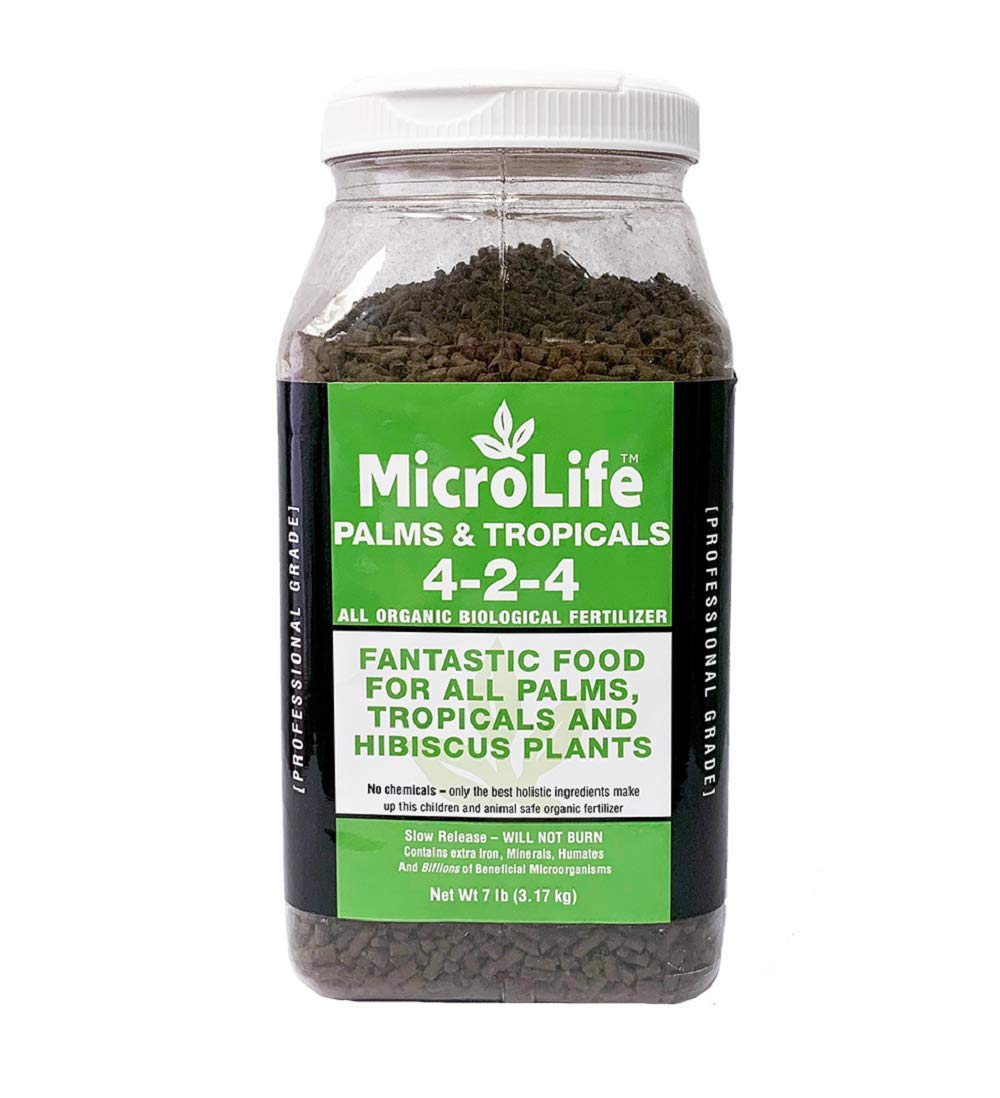
MicroLife Palms & Tropical Granular Organic Fertilizer (4-2-4), 7 lb
| Item Form | Granules |
|---|---|
| Specific Uses For Product | Organic |
| Target Species | Palms, tropicals & hibiscus |
| Mixing Ratio | 1:1:1 |
This granular formula delivers steady nutrition with a 100 percent slow-release profile designed to avoid burning sensitive tropical plants. You apply it to soil around the base of new plantings and as part of annual maintenance; the slow-release granules feed over time so you do not need frequent reapplication. The product includes extra potassium, magnesium, manganese, and iron, which support strong foliage color and stress tolerance in nutrient-hungry tropicals. Its professional-grade concentration means you can expect robust, gradual growth and improved plant resilience rather than a short burst of lush but weak growth. On the downside it is a specialty palm/tropical blend so it is not tailored for every fruiting crop and directions must be followed to get the intended slow-release benefit. Also the granular form requires spreading or incorporation into soil, so it is less convenient than a liquid feed for foliar applications. For gardeners focused on steady, dependable nutrition this fertilizer simplifies seasonal feeding for tropical and hibiscus plantings.
Best for: Buyers who prioritize dependable, low-maintenance nutrition for tropical plants and want a slow, steady feeding program rather than frequent dosing.
Less Ideal for: Growers seeking a fertilizer optimized specifically for pineapple fruit production or those who prefer liquid or foliar feeds for quick correction.
- 100% slow-release granules reduce risk of fertilizer burn and provide sustained feeding
- Includes added potassium, magnesium, manganese and iron to support foliage health and stress tolerance
- Professional-strength formula suited for new plantings and annual maintenance
- Formulated specifically for palms and tropicals so nutrient balance may not match all fruiting crops
- Granular form requires soil application and is not suitable for quick foliar feeding
Verdict: Choose this slow-release tropical fertilizer when you want reliable, low-risk seasonal feeding to maintain healthy foliage and steady growth.
Osmocote Smart‑Release Plant Food Plus Outdoor & Indoor, 2 lb

| Item Form | Granules |
|---|---|
| Application Method | Sprinkle |
| Target Species | All plants |
| Mixing Ratio | 1 capful (3 tablespoons) per 2 gallons soil or per 4 sq. ft. |
| Unit Count | 32 Ounce |
Osmocote Smart‑Release Plant Food Plus is a granular, resin‑coated fertilizer designed to feed flowers and other plants steadily for up to six months with 11 essential nutrients. You apply it by sprinkling the recommended amount into the top inch or two of potting mix or garden soil, watering it in, and reapplying every six months; indoor plants use about half the outdoor rate. The resin coating times nutrient release to moisture and temperature, which reduces the need for frequent feedings and lowers the risk of fertilizer burn when used as directed. It works across containers, raised beds, and in‑ground flower beds and covers up to roughly 75 square feet per 2 lb container. Limitations are that a single 2 lb container is only enough for small gardens or several pots, and the slow‑release formula is not suitable when an immediate corrective boost is needed for acute nutrient deficiencies. For gardeners focused on steady, maintenance feeding for flowering plants this is an easy, low‑effort option.
Best for: Gardeners who want reliable, low‑maintenance feeding for flowers and mixed plantings and prefer a consistent supply of nutrients over months rather than frequent liquid feedings.
Less Ideal for: Growers who need fast corrective feeding for visible nutrient deficiencies or those managing very large beds who want bulk fertilizer options to reduce trips to reapply.
- Feeds continuously up to six months with a single application
- Resin coating times nutrient release to plant needs based on moisture and temperature
- Formulated with 11 essential nutrients suitable for a wide range of flowering plants
- No-burn pledge when used as directed reduces risk of overfeeding
- 2 lb container only covers about 75 sq. ft., so frequent repurchase is needed for larger gardens
- Slow‑release formulation does not provide a rapid corrective nutrient boost
Verdict: Choose this product if you want a hands-off, long‑lasting fertilizer that keeps flowering plants fed for months with a single application.
EarthPods Tropical Flower Fertilizer Spikes, 100 Count

| Item Form | Capsules |
|---|---|
| Specific Uses For Product | Bougainvillea, Hibiscus, Plumeria, Tropical flowers |
| Unit Count | 100 Count |
| Coverage | Compact |
| Target Species | Tropical flowers | Hibiscus | Bougainvillea | Plumeria | Anthurium | Bird of paradise |
These EarthPods come as 100 push-in capsules formulated for tropical flowering plants like plumeria, hibiscus and bougainvillea. You insert the recommended number of capsules into moist soil near the stem and water; nutrients and trace minerals release slowly for roughly two to three weeks so you can avoid frequent liquid feeding. The capsules are organic and intended for pots or garden beds, which makes them convenient for container plumerias and patio specimens. Directions give clear dosing by plant size and a repeat schedule during active growth, so a cautious gardener can follow simple steps without measuring liquids. The product is compact and mess-free, but it is a repeat-application style fertilizer rather than a one-time long-season feed, so you will need to reapply every 14 to 21 days during bloom periods. Also the label emphasizes garden use only, so it is not a multi-purpose household product.
Best for: A gardener who prefers low-mess, easy-to-follow feeding for plumerias and other tropical flowering plants and values organic ingredients and predictable, short-term nutrient release.
Less Ideal for: People seeking a single, long-season fertilizer or a multiuse product for lawns, vegetables, or non-garden purposes should look elsewhere.
- Organic slow-release formula tailored for tropical flowering plants
- Simple push-in capsules eliminate liquid measuring and reduce mess
- Clear dosing guidance for small, medium and large plants
- Suitable for both containers and in-ground tropical specimens
- Requires regular reapplication every 14 to 21 days during active growth
- Not intended for uses outside garden plant feeding
Verdict: An easy, low-mess organic spike system that reliably feeds plumerias and other tropical flowering plants on a 14–21 day schedule.
Choosing the Right Fertilizer for Hibiscus Tree: Key Factors to Consider
Nutrient Ratio and Bloom Promotion
Hibiscus favor fertilizers that encourage flower set while keeping foliage healthy. A formula with moderate nitrogen, higher phosphorus, and balanced potassium nudges plants toward blooms rather than excessive leafy growth. Overly high nitrogen can produce lush foliage but reduce flowering, while too little nitrogen will stunt growth and weaken the plant.
Consider how often you want blooms and whether your plant is in active flowering season. Some gardeners prefer slightly higher phosphorus during bud set, then switch to a balanced feed after peak bloom. Reading the NPK and timing your feed accordingly helps avoid common hibiscus problems like sparse flowers or yellowing leaves.
Release Type and Feeding Frequency
Fertilizers come as water-soluble powders, liquid concentrates, or granular slow-release pellets. Water-soluble and liquid feeds give quick nutrient availability and are useful when you want fast bloom response. Slow-release pellets reduce how often you need to feed, which suits low-maintenance gardens or busy schedules.
Decide whether you want frequent quick feeds to push blooms or steady background nutrition. Containers often benefit from regular soluble feeding because nutrients wash out of potting mix, while established in-ground trees can do well with periodic granular feeds that release over weeks or months.
Micronutrients and Calcium Needs
Hibiscus do not just need NPK; they also require micronutrients like iron, magnesium, and manganese to keep leaves green and prevent chlorosis. Calcium and magnesium help cell strength and overall resilience, which matters if your plant faces wind or heavy rain.
Look for fertilizers that list key micronutrients or include a chelated trace mix. If your soil is prone to lock-up or high pH, choosing a product with available iron or buying one you can supplement helps maintain deep green foliage and steady bloom production.
Solubility and Irrigation Compatibility
How a fertilizer dissolves and how it interacts with your irrigation determine real-world convenience. Water-soluble powders and liquid concentrates should dissolve cleanly without leaving residue that clogs drippers or hoses. Granules must break down at a predictable rate in your climate.
If you use drip irrigation or automatic sprinklers, select a formula labeled safe for those systems or that dissolves fully when applied by hand watering. Ease of mixing and the chance of clogging are practical considerations many gardeners overlook until feeding day.
Soil Type and pH Interaction
Hibiscus tolerate a range of soils but prefer slightly acidic to neutral pH. Soil type affects nutrient availability and how long nutrients remain accessible. Sandy soils drain fast and need more frequent feeding, while clay holds nutrients but can lock them up if pH is off.
Test your soil or observe leaf color and growth to choose the right feeding cadence and formulation. If your soil trends alkaline, favor products formulated for ornamentals with chelated micronutrients or plan to acidify with amendments to improve nutrient uptake.
Ease of Use and Safety for Garden Settings
Application simplicity affects whether you will stick to a feeding schedule. Products with clear mixing ratios, measured dispensers, or pelleted forms that you can broadcast are easier to use accurately. Consider safety around pets and children and whether the product dusts or spills during application.
Also think about storage and shelf life. Liquid concentrates often have shorter storage windows once opened, while sealed granular packages can remain stable season to season. Choose a format that fits how you garden and how precise you want your dosing to be.
When to Feed Hibiscus Throughout the Year
Timing fertilizer applications to the plant's growth cycle prevents wasted nutrients and supports consistent bloom. In spring, start with a balanced or bloom-promoting feed as new growth appears. Increase frequency slightly during the primary flowering months and reduce or stop feeding during winter dormancy or when growth slows.
- Begin light feeding when active new shoots are visible.
- Feed more consistently during peak bloom months to maintain bud set.
- Cut back in late fall or when temperatures drop to slow growth before winter.
Feeding Container-Grown Versus In-Ground Hibiscus
Containers lose nutrients faster through watering, so potted hibiscus typically need more frequent soluble or liquid feeds. In-ground plants have greater access to soil reserves and benefit from less frequent but deeper applications. Match the fertilizer type to the planting situation to avoid nutrient swings and root stress.
- Use water-soluble or liquid feeds every 1 to 2 weeks for containers.
- Apply granular slow-release or deep-root feeding annually or biannually for in-ground trees.
- Monitor leaf color rather than sticking rigidly to a calendar.
Addressing Common Nutrient Deficiencies
Yellowing between veins, stunted buds, or poor flower development often point to specific deficiencies. Iron deficiency shows as interveinal chlorosis on new leaves, while magnesium shortages can cause older leaves to yellow with green veins. A targeted micronutrient supplement or a balanced fertilizer with trace elements corrects these issues more reliably than increasing nitrogen alone.
- Look for small new-leaf symptoms for iron issues.
- Older leaf yellowing hints at magnesium or potassium shortfalls.
- Choose a fertilizer that lists micronutrients if you see patterned discoloration.
Practical Mixing and Application Tips
Measure carefully and stick to label directions for concentration and frequency. Too strong a solution can burn roots and reduce bloom production. When using concentrates, mix with warm water to help dissolution and apply evenly to moist soil to reduce transplant shock or root burn.
- Pre-dissolve powders completely before applying through irrigation.
- Water the plant before feeding to reduce root stress.
- Rinse sprayers and irrigation lines after use if using soluble concentrates to avoid residue buildup.
Organic Versus Synthetic Approaches for Hibiscus
Organic fertilizers provide slow nutrient release and improve soil structure over time. They are gentler and often add beneficial organic matter. Synthetic feeds give faster, predictable nutrient availability and let you correct deficiencies quickly. Choose based on how rapidly you need results and whether soil building is a priority.
- Use organic options for long-term soil health and steady feeding.
- Use synthetic soluble feeds for quick correction and immediate bloom response.
- Combine strategies: build soil with organics and correct with occasional soluble feeds if needed.
How We Chose the Best Fertilizer for Hibiscus Tree
We selected products based on criteria that matter to gardeners growing hibiscus trees in containers, beds, and mixed borders. Primary evaluation points were nutrient ratio and bloom promotion, because hibiscus need a formula that supports flowering without forcing excessive vegetative growth. We also judged release type and application method for how well each product fits different maintenance routines and seasonal schedules. Solubility and compatibility with common watering and irrigation systems were checked to ensure straightforward use. Additional filters removed fertilizers formulated exclusively for lawns, heavy woody trees, or indoor houseplants; we focused on outdoor hibiscus needs. We excluded products with unclear nutrient labeling or no instructions for ornamental shrubs. Durability and consistency of results across different climates were considered, favoring formulas that tolerate a range of soil types and pH levels. The resulting list balances bloom-focused NPK balance, ease of application, and predictable feed timing. What we excluded: granular slow-release formulas designed for multi-year turf feeding, specialist crops with niche micronutrient regimens, and any products with incomplete application guidance.
FAQ
How often should I feed a hibiscus tree during the growing season?
Often depends on fertilizer type. Water-soluble or liquid feeds are usually applied every 1 to 3 weeks, while granular slow-release formulas are applied every few months. Monitor growth and bloom set and adjust frequency if leaves show discoloration or flowers drop.
Can I use a general-purpose garden fertilizer on hibiscus?
You can, but look at the nutrient ratio. General formulas that are high in nitrogen may promote foliage over flowers. Choose a balanced or bloom-focused ratio and consider a trace element supplement if the general fertilizer lacks micronutrients.
Will feeding more make my hibiscus bloom more?
Not necessarily. Excessive nitrogen encourages leaf growth at the expense of blooms. Targeted feeding timed for bud set and using phosphorus-rich or balanced formulas tends to improve flower production more than simply increasing quantity.
How do I correct yellow leaves on my hibiscus?
First check watering and soil drainage. If watering is adequate, nutrient deficiencies are likely. Interveinal yellowing on new leaves often indicates iron deficiency, while older leaf yellowing suggests magnesium or potassium issues. Use a fertilizer with micronutrients or a targeted supplement to correct the imbalance.
Is foliar feeding effective for hibiscus?
Foliar feeding can supply quick trace elements and help correct micronutrient deficiencies rapidly, but it is not a long-term substitute for root feeding. Use foliar sprays as a corrective measure for visible nutrient problems or to give a short-term boost during bloom set.
Final Verdict
Choose a fertilizer for hibiscus tree by matching nutrient balance and release type to your planting situation and feeding habits. Prioritize a formula that supports bloom production without excessive nitrogen, and ensure micronutrients are present if your soil trends alkaline or shows deficiency signs. Balance convenience against control: pick a soluble feed for quick results in containers or a slow-release option for lower-maintenance in-ground trees. Follow label directions and monitor leaf color and bloom frequency to fine-tune timing and strength for the best flowering performance.
