

Note: This article contains affiliate links. If you click on these links and make a purchase, I may earn a small commission at no extra cost to you. This helps support my research and content. Read my full affiliate disclosure here.
Hanging flower baskets put blooms where they show best, but their small soil volume makes feeding a frequent concern. The right fertilizer keeps flowers producing color and prevents rapid nutrient depletion between waterings. This guide compares seven top options chosen for containers and hanging use, focusing on nutrient balance, feeding frequency, and how they perform in minimal soil. Below you'll find concise guidance on how different fertilizer types behave in hanging baskets and why certain features matter for busy gardeners. The shortlist highlights products that suit a range of schedules and plant types, and we explain the criteria used to evaluate them.
Top Picks at a Glance
| Best Overall The best all-around choice for most situations | Miracle-Gro Water Soluble Bloom Booster Flower Food, 10-52-10, 1 lb |  |
| Best Quality Built to a higher standard if you want something more solid | FoxFarm Big Bloom Liquid Plant Food, 16 fl oz |  |
| Best Value The sweet spot between price and what you get | Osmocote Smart-Release Plant Food Flower & Vegetable, 1 lb. |  |
| Best Budget The cheapest option that still gets the job done reliably | Jobe's Flower Fertilizer Spikes for Potted Plants and Hanging Baskets, 18 Count |  |
| Highest Rated A top-rated pick with lots of positive feedback | Miracle-Gro Watering Can Singles All Purpose Plant Food, 24 Packets | 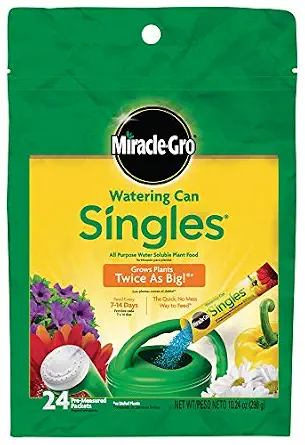 |
| Most Popular A crowd favorite that many people choose with confidence | Miracle-Gro Water Soluble All Purpose Plant Food, 1.5 lb |  |
| Best Seller A high-volume bestseller chosen again and again | Miracle-Gro Water Soluble Bloom Booster Flower Food (4 lb) |  |
Miracle-Gro Water Soluble Bloom Booster Flower Food, 10-52-10, 1 lb

| Item Form | Liquid |
|---|---|
| Application Method | Water Soluble |
| Coverage | 500 square feet |
| Target Species | all blooming plants |
| Mixing Ratio | 1 tablespoon/gallon (1.5 tsp/gal for indoor plants) |
This Miracle‑Gro Bloom Booster is a concentrated, water‑soluble fertilizer designed to encourage bigger, more frequent blooms on flowering annuals and perennials. It mixes easily in a watering can or can be used with the Miracle‑Gro garden feeder to feed hanging baskets and containers; the label recommends feeding every 7 to 14 days during bud set and bloom for quick results. The high middle number (phosphorus) is aimed at improving flower production rather than foliage growth, so you should see more color and bloom density after regular applications. Practical benefits include a simple mixing ratio and a coverage claim that one refill or the 1 lb supply treats several baskets or up to 500 sq ft with feeder use. Important limitations are that it is a bloom‑focused formula so it is not balanced for leafy green growth, and frequent use requires careful adherence to the label to avoid overfeeding. Also it is a soluble concentrate, so repeated applications are needed rather than a slow‑release product.
Best for: Gardeners who prioritize maximizing flower production in hanging baskets and container displays and who are willing to feed regularly for quick color.
Less Ideal for: People who want a low‑maintenance, slow‑release fertilizer or who need a balanced formula focused on foliage and general plant health.
- High phosphorus formula that promotes more and stronger blooms
- Water‑soluble for fast uptake and easy mixing in a watering can or garden feeder
- Clear mixing directions for outdoor and indoor use
- Suitable for containers and hanging baskets with regular feeding schedule
- Not formulated for promoting leafy growth or overall plant vigor
- Requires regular reapplication rather than providing slow long‑term feeding
Verdict: Use this soluble, high‑phosphorus bloom booster when you want fast, reliable increases in flower production for hanging baskets and container displays.
FoxFarm Big Bloom Liquid Plant Food, 16 fl oz

| Item Form | Liquid |
|---|---|
| Specific Uses For Product | Organic |
| Application Method | watering can, sprayer, or drip system |
| Liquid Volume | 16 fluid ounces |
FoxFarm Big Bloom is a concentrated liquid bloom fertilizer intended to boost blooms and fruit by supplying readily available organic nutrients. It is mixed into water (manufacturer recommends 4 tablespoons per gallon) and can be applied with a watering can, sprayer, or through a drip system, which makes it practical for use on hanging flower baskets where frequent light feedings help maintain flowering. Key features include an OMRI-listed organic formula and natural inputs such as bat guano and earthworm castings for fast uptake. For hanging baskets this means quicker color and extended bloom production without granular mess. Because it is a bloom-focused formula with low NPK numbers, it emphasizes flower and fruit development rather than vegetative growth. Users should watch dosing and local restrictions on phosphorus-containing fertilizers, and heavy use may require careful rinsing to avoid salt buildup in small pots. Overall it is a strong choice when you want an easy-to-mix, organic liquid that keeps hanging baskets flowering longer.
Best for: Gardeners who prioritize bloom performance and want an easy-to-apply organic liquid feed to keep hanging flower baskets producing abundant flowers through the season.
Less Ideal for: Those seeking a high-nitrogen feed for rapid foliage growth or gardeners who prefer dry granular fertilizers or pre-mixed slow-release options for low-maintenance containers.
- OMRI-listed organic formula using bat guano and earthworm castings for natural nutrient sources
- Liquid concentrate mixes easily for watering cans, sprayers, or drip systems suited to hanging baskets
- Designed for fast nutrient uptake to promote blooms and fruit quickly
- Works across all growth stages so you can use it regularly to extend the flowering season
- Contains phosphorus which may be restricted in some areas and requires checking local regulations
- Low NPK numbers mean it is focused on blooms rather than boosting leafy growth if that is needed
Verdict: A reliable organic liquid concentrate that makes it simple to keep hanging flower baskets blooming longer.
Osmocote Smart-Release Plant Food Flower & Vegetable, 1 lb.

| Item Form | Granules |
|---|---|
| Specific Uses For Product | Root Development |
| Application Method | Mix into soil |
| Target Species | vegetables and perennials |
Osmocote Smart-Release Flower & Vegetable is a 14-14-14 granular fertilizer designed to provide steady nutrition over an extended period. You sprinkle or mix the granules into the top inch or so of potting mix or garden soil and water; soil temperature controls the release so plants get continuous feeding rather than a single flush. For hanging baskets this means fewer feedings and less chance of overfertilizing while supporting both root development and vigorous top growth. The included applicator and clear coverage guidance make it easy to dose for small containers. Practical users will appreciate that one pound treats about 40 square feet and that the product is labeled as tolerant of modest over-application without burning. Limits for hanging-basket use are that it is granular rather than liquid, so it is not ideal for quick corrections or fertigation through drip systems, and release rate depends on soil temperature so nutrient delivery can vary with seasons.
Best for: Gardeners who want a low-maintenance feeding solution for hanging baskets and container-grown flowers and vegetables and prefer scheduled, steady nutrition over frequent liquid feeding.
Less Ideal for: Growers who need immediate nutrient corrections, use automated fertigation systems, or prefer precise liquid dosing for small decorative baskets.
- Slow-release 14-14-14 formula feeds plants for up to four months
- Granular form mixes into potting mix to reduce frequency of feeding in hanging baskets
- Includes applicator and clear coverage instructions for easy dosing
- Labeled as resistant to 'burn' even if over-applied within modest limits
- Granules are not suited for quick nutrient fixes or foliar feeding
- Release rate varies with soil temperature so feeding is less predictable in cool or fluctuating conditions
Verdict: A reliable, low-maintenance slow-release granular fertilizer that keeps hanging baskets fed for months with minimal intervention.
Jobe's Flower Fertilizer Spikes for Potted Plants and Hanging Baskets, 18 Count

| Unit Count | 18 Count |
|---|---|
| Application Method | Insert into soil |
| Item Form | Sticks |
| Mixing Ratio | 8-9-12 |
Jobe's Flower Fertilizer Spikes are pre-measured, slow-release sticks designed for potted plants and hanging baskets. To use, you push the spikes into the potting mix around the root zone and replace them roughly every eight weeks; the spikes dissolve slowly so nutrients are delivered at the roots rather than washed off the surface. The product uses an 8-9-12 NPK formula aimed at encouraging bloom and foliage development and is sold in an 18-count pack. Practical benefits include a mess-free application, reduced chance of overfertilizing because each spike is pre-measured, and convenience for busy gardeners who want low-maintenance feeding. Limitations are that the fixed NPK ratio and dosing may not suit every plant or growth stage and spikes provide medium coverage so very large baskets or dense plantings may need multiple spikes or more frequent replacement. Also this format does not allow custom blending of nutrients the way granular or liquid feeds do.
Best for: Ideal for budget-minded gardeners who want a low-effort, reliable way to keep hanging flower baskets and potted annuals fed without frequent mixing or measuring.
Less Ideal for: Not a good fit for growers who need precise control of nutrient ratios for specialty plants or for those managing very large or heavily planted baskets that need heavy feeding.
- Pre-measured slow-release sticks for mess-free, root-targeted feeding
- Feeds up to eight weeks per application reducing maintenance frequency
- Convenient insert-into-soil application suitable for hanging baskets and pots
- Formulated 8-9-12 NPK to support blooms and foliage
- Fixed nutrient ratio and dosage limit customization for specific plant needs
- Medium coverage means multiple spikes may be required for large or densely planted baskets
Verdict: A simple, low-maintenance spike feed that keeps hanging baskets blooming with minimal cost and effort.
Miracle-Gro Watering Can Singles All Purpose Plant Food, 24 Packets

| Number of Packs | 24 |
|---|---|
| Item Form | SOLID |
| Application Method | watering can |
| Mixing Ratio | 1 teaspoon per 1 gallon of water |
Miracle-Gro Watering Can Singles are single-use, pre-measured packets of water-soluble all-purpose plant food intended to be mixed into a watering can and applied while watering. They are used by tearing a packet into a gallon (outdoor) or two gallons (indoor) of water, then pouring the solution around the base of plants; reapply every 7 to 14 days during active growth. The main benefits are convenience and consistency: each packet removes the need to measure granular fertilizer or liquid concentrates, which reduces mess and the risk of overfeeding. The formula is labeled for use on flowers, vegetables, houseplants, roses, trees and shrubs, making it versatile for mixed container plantings and hanging baskets. Practical limits are that packets treat relatively small areas (each covers about 10 sq. ft.) so frequent gardeners with many baskets will need multiple packs, and the product is a general all-purpose feed rather than a bloom-specific formula that some flower basket growers prefer. For reliability-focused gardeners, the pre-measured dosing is the clearest advantage for consistent, repeatable feeding.
Best for: Gardeners who prioritize consistent, no-mess feeding for hanging baskets and mixed container flowers and who want a simple, repeatable routine for reliable results.
Less Ideal for: Growers who manage large numbers of baskets and need bulk, high-coverage solutions or who prefer a bloom-specific fertilizer for maximizing flower production.
- Pre-measured packets eliminate measuring and reduce mess when feeding plants
- Water-soluble formula feeds instantly when applied with a watering can
- Labeled safe for a wide range of plants including flowers and container-grown specimens
- Clear, simple directions for indoor and outdoor use support consistent dosing
- Each packet covers a modest area so larger collections require many packets
- All-purpose formulation is not specialized for increased flowering or bloom boosting
Verdict: If you want reliable, mess-free feeding for hanging baskets, these pre-measured packets make consistent, repeatable fertilizing effortless.
Miracle-Gro Water Soluble All Purpose Plant Food, 1.5 lb

| Item Form | Powder |
|---|---|
| Application Method | Watering Can |
| Target Species | All flowers, vegetables, trees, shrubs and houseplants |
| Mixing Ratio | 24-8-16 |
Miracle-Gro Water Soluble All Purpose Plant Food is a powder fertilizer you dissolve in water and apply with a watering can or garden feeder to give plants an instant nutrient boost. It carries an NPK analysis of 24-8-16 and is intended for a broad range of uses from houseplants and hanging baskets to vegetables, trees, shrubs, and roses. Typical use is simple: measure the scoop, mix with the recommended amount of water and soak the soil at the base of each plant every 7 to 14 days for outdoor plants or every two weeks for indoor plants. The product’s strengths are speed and convenience — because it is water-soluble it moves quickly to roots, so hanging baskets and containers respond faster than with granular feeds. It also includes clear mixing directions and can be used in a garden feeder for larger areas. Limitations are that it is a high-nitrogen formula, so it favors leafy growth over heavy flowering if overused, and frequent applications require careful measuring to avoid overfeeding. For hanging baskets you will want to follow the weaker indoor dilution or reduced frequency for flower-focused containers.
Best for: Buyers who want a proven, fast-acting fertilizer with lots of user feedback and predictable results for container and hanging-basket care.
Less Ideal for: Gardeners seeking a low-maintenance slow-release option or those preferring an organic, low-nitrogen bloom-focused fertilizer.
- Water-soluble formula delivers nutrients to roots quickly, producing fast visible results
- Clear, simple mixing directions for both indoor and outdoor use
- Versatile for containers, hanging baskets, in-ground gardens, and trees
- Can be used with a garden feeder or a watering can for flexible application
- High nitrogen ratio may encourage leafy growth rather than increased blooms if overapplied
- Requires regular reapplication every 1 to 2 weeks, which adds ongoing maintenance
Verdict: A fast-acting, widely used water-soluble fertilizer that delivers quick, reliable feeding for hanging baskets and other container plants.
Miracle-Gro Water Soluble Bloom Booster Flower Food (4 lb)

| Item Form | Powder |
|---|---|
| Application Method | Water Soluble |
| Target Species | flowers |
| Mixing Ratio | 1 tablespoon per gallon |
| Fertilizer Analysis | 10-52-10 |
Miracle-Gro Water Soluble Bloom Booster is a powder fertilizer designed to dissolve in water and feed flowering annuals and perennials on a regular schedule. You mix the measured dose (1 tablespoon per gallon for outdoor plants or a smaller amount for indoor plants) into a watering can or use it with the Miracle-Gro Garden Feeder to apply directly to the root zone every 7 to 14 days. The high phosphorus content is aimed at increasing bloom count and color, which is helpful for hanging baskets where visible flowers matter most. Because it is water soluble it works quickly and is easy to apply, and the powder format stores compactly between uses. Important limitations are that it is a bloom-focused formula, so it is not balanced for foliage vigor or all-purpose feeding needs, and repeated use without following label directions can risk nutrient imbalance. For gardeners who want predictable, frequent feeding for flowering containers, this makes bloom-focused maintenance simple and effective.
Best for: Gardeners who prioritize abundant, colorful blooms in hanging baskets and prefer a straightforward, repeatable feeding routine that delivers quick results.
Less Ideal for: Growers looking for a single all-purpose fertilizer to support foliage, root development, or long-term feeding schedules without frequent reapplication should consider a different formulation.
- High-phosphorus formula designed to encourage more blooms and stronger flower color
- Water-soluble powder mixes quickly for fast uptake and visible results
- Works with a watering can or the Miracle-Gro Garden Feeder for easy, repeatable application
- Clear dosing guidance for outdoor and indoor use simplifies safe routine feeding
- Formulation is focused on blooms so it is not an all-purpose balanced fertilizer
- Requires regular applications every 7 to 14 days to maintain results
Verdict: Use this water-soluble, high-phosphorus booster when you want an easy, fast-acting way to increase blooms and color in hanging flower baskets.
Choosing the Right Fertilizer for Hanging Flower Baskets: Key Factors to Consider
Nutrient Formulation
The nutrient ratio and the presence of micronutrients determine how well a fertilizer supports flowering and foliage in hanging baskets. A higher phosphorus level can encourage blooms, but too much can upset overall plant balance. For mixed containers that include foliage plants, a balanced N-P-K with trace elements is usually safer.
Because hanging baskets have limited soil volume, look for formulations designed for containers, with clear guidance on frequency and concentration. Micronutrients like iron and magnesium prevent deficiencies that are more likely in small, leached pots.
Release Type and Frequency
Slow-release granules, water-soluble feeds, and liquid concentrates each suit different gardener routines. Slow-release granules reduce the need for frequent feeding, which helps if baskets are hard to reach. Water-soluble and liquid feeds often give faster, visible results for boosting blooms but require regular dosing and careful measurement.
Consider how often you water and whether your baskets dry quickly. In very fast-draining mixes, a fertilizer with a longer release or a lower-salt soluble formula helps avoid nutrient spikes and burn.
Salt Content and Plant Safety
High soluble salt levels can damage plants in the small root zones of hanging baskets, causing leaf-tip burn and reduced flowering. Fertilizers formulated for containers typically report lower salt indices or provide dilution instructions to reduce risk.
If you rotate many annuals through baskets or use sensitive species, choose products with explicit low-salt recommendations and clear guidance on flushing the media after heavy feeding.
Application Method and Accessibility
Hanging baskets are often mounted overhead or on walls, which makes application method a real usability issue. Granules that require broadcasting may be messy and fall onto foliage. Liquid concentrates and ready-to-use sprays offer cleaner, even coverage when applied with a watering can or sprayer, reducing damage and waste.
Also consider how easy it is to measure doses at height. Larger-mouthed bottles, clear measuring caps, or pre-measured sachets simplify dosing for gardeners who do not want to climb up to baskets frequently.
Feeding Longevity Versus Control
Longer-lasting fertilizers reduce maintenance but also reduce your ability to correct nutrient levels quickly. Slow-release options are convenient for vacation or low-maintenance gardeners, while short-acting soluble feeds let you adjust pH and nutrient ratios more rapidly if plants show stress.
Think about whether you prefer steady background feeding or more control to tailor nutrients during peak bloom or after repotting.
Compatibility With Potting Mixes and Water Quality
Potting mixes and local water chemistry influence how fertilizers behave. Some mixes buffer nutrients well, while others flush quickly. Hard water can cause mineral buildup and change effective nutrient availability, so a fertilizer with chelated micronutrients or water-quality guidance will perform more predictably.
If you use rainwater, reverse-osmosis water, or very alkaline tap water, choose formulations that account for those conditions or include instructions for adjustments.
When To Use Slow-Release Versus Soluble Feeds
Slow-release fertilizers are convenient when baskets are difficult to reach or when consistent feeding with minimal fuss is the priority. They gradually release nutrients over weeks to months and reduce the risk of overfeeding from frequent applications.
Soluble feeds and liquids provide quicker symptom relief and more control. Use those when you need a fast bloom boost, are correcting a deficiency, or want to change feeding intensity through the season. For many gardeners a hybrid approach works well: a slow-release baseline with periodic liquid feed boosts during peak flowering.
- Slow-release: lower maintenance, steadier supply, better for long vacation periods
- Soluble feeds: faster results, adjustable dosing, good for targeted bloom pushes
- Hybrid approach: base slow-release plus occasional soluble feeding for peak display
Safe Dosing and How to Avoid Burn
Because hanging baskets have small root volumes, precise dosing matters. Always follow manufacturer dilution instructions and err on the weaker side if you are unsure. Apply fertilizer when soil is moist, not bone-dry, to reduce root stress.
If you see leaf-tip browning or wilting after feeding, leach the potting mix with fresh water to flush excess salts. Regular light applications are safer than infrequent heavy doses in confined containers.
- Water before feeding to reduce concentration spikes
- Start at half-strength for new plantings until roots establish
- Flush with plain water if signs of salt buildup appear
Feeding Schedule for Typical Annual Hanging Baskets
A practical feeding schedule balances plant vigor with effort. For baskets with fast-draining mixes, a weekly light liquid feed during the growing season keeps blooms prolific. If using a slow-release product rated for two to three months, supplement once mid-season with a liquid bloom booster if growth slows.
Adjust frequency based on plant response: more frequent feeding for heavy feeders like petunias and less for slower, foliage-focused combinations.
- Weekly light liquid feed for fast-draining mixes
- Biweekly to monthly for moderate-release granules depending on label
- Observe plants and adjust rather than strictly following a calendar
Special Considerations for Mixed Foliage and Flower Baskets
Mixed baskets containing both flowering and foliage plants need a balanced approach. Too much bloom-focused fertilizer can leave foliage looking weak. Choose a formulation that supplies micronutrients and does not heavily favor one growth type unless your planting is all-flower.
Consider the requirements of the most sensitive species in the container and feed to suit the lowest common denominator to avoid creating stress for delicate plants.
- Prioritize balanced formulas when mixing plant types
- Supplement with targeted foliar feed only for specific deficiency symptoms
- Monitor foliage as an early indicator of nutrient imbalance
Practical Tips for Feeding Hard-to-Reach Baskets
Use tools and techniques that reduce risk and mess when feeding overhead baskets. A lightweight watering can with a long, narrow spout or a hose-end injector set to low flow helps deliver fertilizer without over-splashing nearby surfaces. Pre-measured packets or measured caps prevent spills when working at height.
If you use a ladder, place a drip tray or cloth beneath the basket to catch splashes. Alternatively, remove baskets to a lower bench for feeding and let them drain before rehanging to keep walkways clean.
- Use long-spout cans or low-flow hose attachments
- Consider pre-measured dosing for overhead application
- Feed at ground level when possible to avoid mess and safety risks
How We Chose the Best Fertilizer for Hanging Flower Baskets
We narrowed candidates by focusing on traits that matter for the shallow, fast-draining environments of hanging baskets. Primary evaluation criteria included nutrient formulation and release type to match frequent watering, ease of application for overhead or hard-to-reach baskets, and feeding longevity so baskets need less frequent attention. We also assessed compatibility with common basket plants, including annuals and mixed foliage, and looked at salt content and risk of burning in small root volumes. Practical handling mattered too: packaging and dosing that make overhead feeding safe and simple were favored. We excluded products designed only for in-ground planting, hydroponic concentrates that require specialized equipment, and any fertilizers with unrealistic or unsupported feeding claims. Our selections prioritize safe, predictable performance in limited-potting-media volumes and real-world gardener workflows.
FAQ
How often should I feed hanging flower baskets?
It depends on the fertilizer type and mix drainage. Fast-draining baskets often need a light liquid feed weekly, while slow-release fertilizers can stretch to several weeks. Adjust based on plant vigor and flowering.
Can I use indoor plant fertilizer in outdoor hanging baskets?
Many indoor fertilizers work, but check the nutrient balance and salt concentration. Outdoor flowering baskets typically need higher phosphorus for blooms and formulations suited to higher light and temperature variations.
Will slow-release pellets damage roots in small baskets?
Properly sized slow-release products designed for containers rarely harm roots when used as directed. Avoid overapplication and choose a product labeled for containers to prevent localized high concentrations.
How do I fix yellowing leaves after feeding?
Yellowing can indicate overfeeding, nutrient imbalance, or a deficiency. Flush the potting mix with fresh water to remove excess salts, then resume feeding at a reduced strength and monitor recovery.
Is foliar feeding useful for hanging baskets?
Foliar sprays can quickly correct micronutrient shortages and give a temporary boost, but they do not replace root feeding. Use foliar sprays as a supplement for targeted correction rather than as the primary feeding method.
What is the best way to feed baskets while on vacation?
Use a slow-release fertilizer rated for the vacation duration or set up a drip watering system that can deliver diluted liquid feed. Choose options that minimize the need for human intervention while avoiding heavy one-time dosing.
Final Verdict
Choose a fertilizer for hanging flower baskets by matching release type and nutrient balance to your watering routine and plant mix. If accessibility is the main constraint, favor longer-release formulas or ready-to-use liquids with easy dosing. If you want precise control for peak blooms, use soluble feeds and monitor plant response closely. Prioritize low-salt container formulations and clear dosing instructions to avoid burn in small root volumes. With the right feeding approach you can keep hanging displays full and colorful while minimizing maintenance.
