

Note: This article contains affiliate links. If you click on these links and make a purchase, I may earn a small commission at no extra cost to you. This helps support my research and content. Read my full affiliate disclosure here.
Growing cherry trees in containers changes how soil behaves. In pots you need a medium that drains fast enough to prevent root rot while holding enough moisture and nutrients for fruiting. The wrong mix either bakes roots between waterings or stays soggy and invites disease. This guide highlights our seven top soils for cherry trees in containers, shortlisted for real-world container gardening. We focus on drainage, water-holding capacity, nutrient profile, and ease of repotting so you can pick a mix that suits your climate and pot size.
Top Picks at a Glance
| Best Overall The best all-around choice for most situations | Soil Sunrise Citrus Tree Potting Soil Mix (30 Quarts) |  |
| Best Quality Built to a higher standard if you want something more solid | FoxFarm Ocean Forest Potting Soil — 12 Quart |  |
| Best Value The sweet spot between price and what you get | Miracle-Gro Potting Mix, 16 qt. |  |
| Best Budget The cheapest option that still gets the job done reliably | Doter Citrus Tree Potting Soil Mix (1 qt) |  |
| Highest Rated A top-rated pick with lots of positive feedback | E.B. Stone Organics Citrus & Palm Mix Potting Soil, 1.5 cu ft |  |
| Most Popular A crowd favorite that many people choose with confidence | Miracle-Gro Organic Outdoor Potting Mix, 16 qt. |  |
| Best Seller A high-volume bestseller chosen again and again | Back to the Roots Organic Expanding Coco Coir Potting Soil Brick |  |
Soil Sunrise Citrus Tree Potting Soil Mix (30 Quarts)

| Volume | 30 quarts |
|---|---|
| Ingredients | Peat moss, perlite, sand, worm castings, lime |
| Unit Count | 1 Count |
This Soil Sunrise mix is a custom blend made from peat moss, perlite, coarse sand, worm castings, and lime intended to give potted fruit trees a well-draining, nutrient-stable medium. You would typically use it to pot or repot container citrus or other small fruit trees, where good aeration and a slightly alkaline adjustment from lime help keep roots healthy and reduce rot. The perlite and sand create an open texture so water moves through the root zone instead of pooling, while worm castings supply gentle, natural fertility. Because it is 100% natural with no additives, it suits growers who prefer organic inputs and want a ready-made mix rather than mixing components themselves. Important limitations are that the bag does not list controlled-release fertilizer concentrations or exact pH numbers, so you may still need to supplement nutrients or test pH for long-term container culture and fruit production. Also the peat base means gardeners seeking peat-free mixes will need a different product.
Best for: Gardeners who want a ready-to-use, natural potting mix that prioritizes drainage and steady nutrition for container fruit trees and prefer convenience over custom blending.
Less Ideal for: Growers who need precise soil lab values, a built-in fertilizer program, or who avoid peat products should consider other mixes or amendments.
- Formulated for potted fruit trees with ingredients that promote drainage and aeration
- Contains worm castings to provide natural nutrient input
- Includes lime to help stabilize pH for citrus-friendly conditions
- 100% natural blend without synthetic additives
- Resealable bag indicated by brand materials for easier storage
- No specific pH or nutrient analysis provided so additional testing or feeding may be needed
- Peat-based formula may not suit gardeners looking for peat-free alternatives
Verdict: Pick this ready-made natural blend if you want a convenient, well-draining potting soil that supports healthy container fruit trees without mixing your own components.
FoxFarm Ocean Forest Potting Soil — 12 Quart

| Item Form | Granules |
|---|---|
| Specific Uses For Product | Dry Fertilizer |
| Coverage | 4.8 sq ft |
| Mixing Ratio | 1:1 |
FoxFarm Ocean Forest is a premixed container potting soil designed to give young plants a vigorous start. It contains a mix of aged forest products, sandy loam and sphagnum peat moss for a light, well-aerated texture, plus organic amendments such as fish meal, crab meal and earthworm castings to supply nutrients. Typical use is filling pots or top-dressing containers and planting directly from the bag; the manufacturer advises no additional fertilizer for the first 30 days. For cherry trees in containers this mix provides good drainage with moisture retention and a nutrient reserve to support early root and shoot development. The soil is pH adjusted to help nutrient uptake and can be blended with other mixes at a 1:1 ratio if you want to tailor drainage or fertility. Limitations are that the bag size is modest for larger trees and heavier feeders will need supplemental fertilizing after the initial month; the formula is not a long-term potting substrate for large, established container trees without periodic nutrient additions and repotting as the tree grows.
Best for: Gardeners who prioritize strong early growth and want a nutrient-rich, ready-made potting medium to get container cherry trees off to a fast, healthy start.
Less Ideal for: Those planting large or mature cherry trees in big containers who need a long-term, high-volume substrate or want a custom soil recipe tailored for specific drainage or fertility needs.
- Ready-to-use out of the bag for quick planting
- Light, aerated texture that improves drainage and root development
- Includes organic amendments (fish meal, crab meal, earthworm castings) for initial nutrient supply
- pH adjusted to promote nutrient uptake and reduce early deficiencies
- 12 quart bag provides limited volume for larger container cherry trees and will require multiple bags or repotting
Verdict: Choose this mix when you want a ready-made, nutrient-rich potting soil that promotes fast root development and strong early growth for container cherry trees.
Miracle-Gro Potting Mix, 16 qt.

| Unit Count | 592 Ounce |
|---|---|
| Volume | 16 quarts |
| Feeds up to | 6 Months |
| Ingredients | Processed forest products, peat, coir/compost, perlite, fertilizer, wetting agent |
Miracle-Gro Potting Mix is a general-purpose container mix designed to support flowers, vegetables, shrubs, annuals and perennials in pots. It is typically used to fill containers with a drain hole, loosen root balls, and pot or repot plants; one 16 qt. bag is intended to fill about a 12-inch container. The mix contains peat/coir/processed forest products, perlite for drainage, and a built-in fertilizer that the manufacturer says will feed plants for up to six months. In practice that means less frequent fertilizing during a single growing season and a light, well-aerated medium that helps roots establish quickly. For container cherry trees the nutrient boost and good drainage help young trees avoid waterlogging and support early growth. Limitations are that the bag is relatively small for larger container trees so you will need multiple bags to fill big pots and the low percentages of slow-release nutrients mean you will still need a feeding plan after six months or for heavy feeders over multiple seasons.
Best for: Buyers who want an easy, low-effort potting mix that gives container fruit trees a nutrient head start and reliable drainage during the first growing season.
Less Ideal for: Not ideal for someone planting established, large cherry trees in oversized containers who needs bulk soil or a custom orchard-specific mix tailored for long-term nutrient management.
- Formulated for container use with perlite to improve drainage and aeration
- Includes slow-release fertilizer to feed plants for up to six months
- Light, loose texture makes repotting and root establishment easier
- 16 qt. bag is small for large containers so multiple bags are required to fill big pots
Verdict: A convenient, well-draining potting mix that gives container cherry trees an easy nutrient boost and strong root-starting medium for the first season.
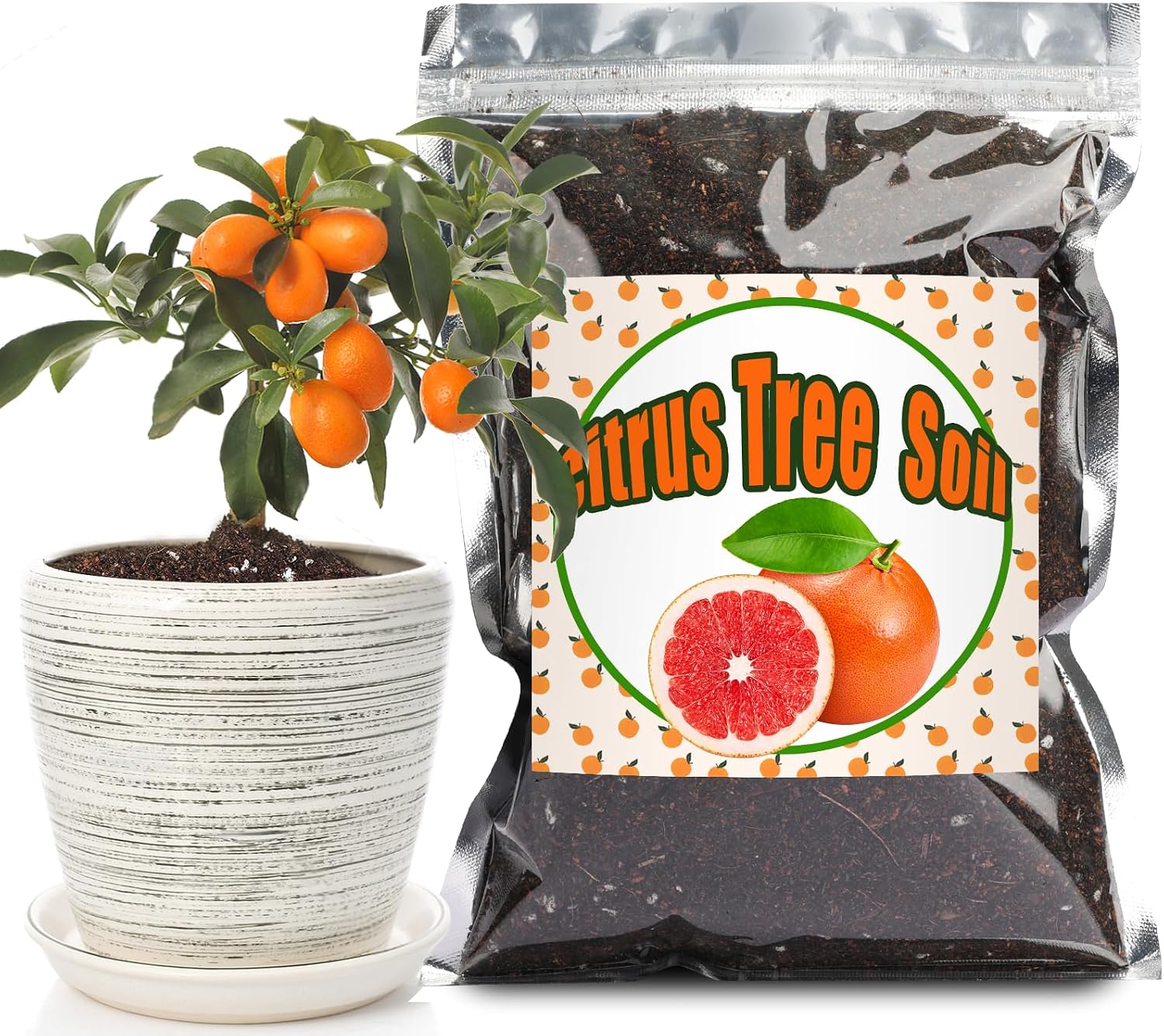
Doter Citrus Tree Potting Soil Mix (1 qt)
| Brand Name | Doter |
|---|---|
| Item Type Name | Garden soil |
| Volume | 1 quarts |
| Item Weight | 224 g |
| Manufacturer | Doter |
This 1-quart Doter potting mix is a preblended loamy soil aimed at fruiting trees, designed to combine good drainage with nutrient-rich organic matter. In practice it is a lightweight, ready-to-use option for container fruit trees where you want reliable aeration and a slightly acidic to neutral pH. You can use it straight from the package to top-dress seedlings, refresh small pots, or mix into larger containers as a component to improve structure and drainage. Notable features include an advertised pH of about 6.0–7.1, added organic nutrients, and materials meant to prevent waterlogging. The small one-quart size makes it easy to try without committing to a large bag, but it also means you will need many bags for full container fills or repotting mature trees. For cherry trees in pots it can be blended with coarser amendments like perlite or pine bark to tailor drainage and long-term stability. Expect practical benefits in seedling vigor and short-term nutrient support, while planning to mix or top up with larger-volume mixes for long-term container culture.
Best for: Gardeners on a tight budget who want a small, trial-size loamy mix to test or top-dress container fruit trees and seedlings without buying large bags.
Less Ideal for: Growers repotting mature container cherries or filling multiple large pots who need bulk soil and long-term structure should choose larger, purpose-formulated container mixes instead.
- Ready-to-use loamy mix suitable for potted fruit trees
- Formulated pH around 6.0–7.1, appropriate for many fruiting species
- Promotes drainage to reduce risk of root rot in containers
- Contains organic nutrients to support early growth
- Very small 1-quart volume so multiple bags are required for any full pot
- Not formulated specifically for cherry trees so may need amendment for long-term structure
Verdict: A convenient small trial bag that gives budget-conscious container growers an easy, well-draining loamy mix to test or top up potted fruit trees.
E.B. Stone Organics Citrus & Palm Mix Potting Soil, 1.5 cu ft

| Brand Name | E.B. Stone Organics |
|---|---|
| Volume | 1.5 cubic feet |
| Style Name | Potting Soil |
This citrus and palm potting mix is designed to give deep-rooted tropical plants the drainage and aeration they need while retaining enough moisture and nutrients to support steady growth. Packed with aged fir bark and pumice, the texture is chunky and fast-draining, which helps prevent the waterlogging that causes root rot in container trees. Beneficial mycorrhizae are included to improve root nutrient and water uptake, so newly potted or repotted specimens establish more quickly. It is ready to use straight from the bag for container potting or to amend planting holes for in-ground installation. The 1.5 cubic foot bag is a practical size for potting a few medium containers but may require multiple bags for larger trees or multi-pot projects. This mix is focused on drainage and biology rather than high synthetic feeding, so you may need to plan regular fertilization for heavy-fruiting trees like cherries to meet long-term nutrient demands.
Best for: Buyers who prioritize a reliable, biology-forward potting medium for container-grown fruit or tropical trees and want a mix that minimizes overwatering risk and supports root establishment.
Less Ideal for: Gardeners who need a bulk soil source for large beds or those seeking a pre-fertilized, long-term feeding potting blend for high-yield fruit production.
- Formulated for deep-rooted citrus, palms and tropicals which suits potted tree root habits
- Aged fir bark and pumice provide fast drainage and good aeration to reduce root rot risk
- Contains beneficial mycorrhizae to improve early root establishment and nutrient uptake
- Ready-to-use mix eliminates the need for on-the-spot blending or amendments
- Single 1.5 cu ft bag is relatively small for potting larger container trees requiring several bags
- Focuses on drainage and biology so additional fertilizers will be needed for heavy fruiting over time
Verdict: Choose this mix when you want a dependable, fast-draining organic potting soil that helps container trees establish healthy roots quickly.
Miracle-Gro Organic Outdoor Potting Mix, 16 qt.

| Item Highlight | Plant Soil For Outdoor Container Plants, Contains Quick-Release Natural Fertilizer, OMRI Listed |
|---|---|
| Brand Name | Miracle-Gro |
| Volume | 1 cubic feet |
| Unit Count | 1 Count |
This 16 qt. bag of Miracle-Gro Organic Outdoor Potting Mix is made for container gardening and is intended to feed outdoor pots for up to two months. It is blended from responsibly sourced peat and upcycled green waste and includes a quick-release natural fertilizer, so it helps get newly potted plants established without an immediate separate feed. Typical use is filling outdoor pots, loosening root balls, planting, and watering until drainage is clear. For container-grown cherry trees this mix offers good moisture retention and a nutrient boost that supports early growth, and the OMRI listing makes it acceptable for organic methods. Important limitations are that it is a general-purpose container mix rather than a tailored fruit-tree substrate, so heavier feeders or larger potted cherries will need regular repotting and supplemental fertilizer over time; the bag size fills roughly one 12-inch pot so several bags are required for bigger containers. Store leftover product in a dry spot to keep it usable between plantings.
Best for: Gardeners who want an organic-certified, ready-to-use container mix to establish and maintain outdoor potted plants with minimal upfront feeding and who value social-proof and proven brand formulations.
Less Ideal for: Growers planning to keep large cherry trees long-term in big containers or who need a custom fruit-tree soil blend should look for specialized potting mixes and a fertilization plan instead.
- OMRI listed for organic use which suits organic container growing
- Includes quick-release natural fertilizer that feeds up to two months
- Formulation holds moisture to protect roots in outdoor pots
- Made with responsibly sourced peat and upcycled green waste
- Bag size is small for large containers so multiple bags are needed for bigger cherry trees
- Not specifically formulated for fruit trees so additional fertilizer and repotting will be required for long-term tree production
Verdict: A convenient OMRI-listed outdoor potting mix that jumpstarts container plants with built-in, short-term nutrition, making it a solid choice for establishing cherry trees in small to medium pots.
Back to the Roots Organic Expanding Coco Coir Potting Soil Brick

| Item Highlight | 10 lb compressed coco coir brick; peat-free; OMRI Listed |
|---|---|
| Item Type Name | Coconut Coir |
| Volume | 2 cubic feet |
This compressed coco coir block expands into a light, fluffy, peat-free potting medium when you add water, making it a convenient option for container-grown plants like cherry trees. It is OMRI listed and pH balanced so it can be used alone or mixed with existing soil to improve aeration and water retention in pots. The block is easy to store and transport compared with bulky bags, and it is useful for starting seeds, topping up potting mixes, or refreshing container soil. For container cherry trees it helps prevent compaction and encourages root growth when blended with compost or slow-release fertilizer, though you will still need to manage nutrients since coir has little inherent fertility. A practical downside is that it is a single-ingredient substrate, so expect to add amendments for long-term fruiting trees and to monitor watering more carefully in larger pots because coir drains differently than loam-based mixes.
Best for: Buyers who want a low-mess, organic base medium for container fruit trees or starting seedlings and who plan to amend the substrate with nutrients for long-term growth.
Less Ideal for: Gardeners seeking a complete, ready-to-use fertilized potting mix for mature fruiting trees or those who do not want to add separate amendments and fertilizers.
- Expands to about 2 cubic feet from a compact 10 lb brick for easy storage and transport
- Peat-free and OMRI listed for organic gardening
- Light, airy texture improves aeration and reduces compaction in container soils
- pH balanced and versatile to use alone or mixed with existing potting mixes
- Contains no nutrients, so fertilizers or compost are needed for fruiting trees
- Drains and retains water differently than garden loam, requiring watering adjustments
Verdict: A compact, organic coco coir block that gives you an airy, peat-free base for container cherry trees when paired with compost or fertilizer.
Choosing the Right Soil for Cherry Trees in Containers: Key Factors to Consider
Drainage and Aeration
Container cherry trees need a soil that drains quickly to prevent standing water around the roots. Good drainage comes from a mix of particle sizes and inert components such as coarse sand, perlite, or pine bark that keep pore space open. Aeration matters because oxygen-starved roots are more susceptible to root rot and poor nutrient uptake.
When assessing drainage, consider how fast water runs through the pot after a heavy watering and whether the mix compacts with time. A soil that retains structure over months reduces the need for frequent repotting and helps roots spread naturally.
Moisture Retention
While drainage is critical, so is the ability to hold enough moisture between waterings. Container soils that are too free-draining force more frequent watering and stress trees in hot weather. Organic components such as coconut coir, composted bark, or well-decomposed leaf mold help retain plant-available water without becoming waterlogged.
Match moisture retention to your climate and pot size. Small pots dry faster and therefore benefit from a mix with slightly higher water-holding components, while large containers can use freer-draining mixes that still include some organic matter for steady moisture release.
Nutrient Holding Capacity
Cherry trees in containers rely on the potting medium for nutrients, so the mix should have good cation exchange capacity or include slow-release organic material. Soils with higher organic matter and mineral components like aged compost or humus store and gradually release nitrogen, potassium, and phosphorus for flowering and fruit set.
Avoid mixes entirely composed of inert fillers with no nutrient reserve unless you plan a strict fertilizer schedule. A balanced nutrient-holding mix reduces fertilizer burn risk and smooths nutrient availability through the season.
pH and Mineral Balance
Cherry trees typically prefer slightly acidic to neutral soils. The potting medium should either be in that pH range or be easily adjustable with routine amendments. Excessive lime or high alkalinity can limit iron and micronutrient uptake and cause chlorosis in sensitive cultivars.
Look for mixes that list pH range or include buffering ingredients. If you live in an alkaline area, choose a mix with acidic organic material or plan on acidifying amendments to maintain optimal nutrient availability.
Texture and Particle Size Stability
The physical feel of the soil affects root growth and water movement. A stable texture with a mix of coarse and fine particles helps roots anchor while permitting even moisture distribution. Materials that break down quickly will compact and reduce aeration, requiring more frequent repotting.
Consider how long the texture is likely to hold in your environment. Bark-based and pumice-amended mixes tend to remain loose longer, while fine compost-rich mixes may require refreshment after a season or two.
Weight and Container Practicalities
Soil weight matters for very large pots, balconies, or mobile planters. Dense or purely mineral-heavy mixes make moving pots difficult and add structural load to decks. Lightweight aggregates like pumice or expanded clay reduce overall mass while maintaining drainage.
Balance weight against moisture retention and root support. In some situations, using a lighter top mix and heavier base material, or a mix with lightweight fillers, will make maintenance and seasonal moves more practical.
Choosing a Mix by Pot Size
Pot size changes the soil behavior. Small containers hold less moisture and heat up faster, so they do better with mixes that include more water-holding organic components. Larger containers buffer temperature and moisture swings, allowing for freer-draining blends that still supply nutrients.
For bonsai-style or dwarf cherries in shallow containers, focus on mixes with higher porosity and careful moisture management. For standard and larger patio trees, prioritize stable texture and nutrient reserves so roots can develop deeply without frequent repotting.
- Small pots: Add more coir or compost to retain moisture.
- Large pots: Use bark or pumice to improve drainage and reduce compaction.
- Shallow containers: Keep roots supported with firmer particles to prevent root ball collapse.
Adjusting Soil for Your Climate
Hot, dry climates accelerate drying and may require mixes with increased water-holding content or the use of water-retentive amendments. Cooler, wetter climates need mixes biased toward drainage to limit soggy conditions that promote fungal issues.
You can tweak a base mix seasonally by adding more organic material in summer for water retention or extra pumice and grit in winter to keep the root zone aerated during prolonged wet periods.
- Arid regions: Increase organic matter and mulching on top of the soil.
- Humid regions: Increase coarse drainage components and elevate the pot where possible.
Feeding and Amendment Strategy
Container soils deplete nutrients faster than in-ground soils, so plan a feeding schedule. Start with a mix that includes slow-release organic inputs or composted material, then supplement with periodic liquid feeds during the growing season.
Mulching the top of the pot with compost or well-rotted material can add slow nutrients and protect the surface from drying. Avoid over-application which can create salt buildup in confined containers; flush pots occasionally if salts accumulate.
- Use balanced fertilizers in spring and early summer for fruit development.
- Consider foliar feeds for quick micronutrient corrections.
Repotting and Refreshing Container Soil
Cherry trees generally need a partial top-up or repot every one to three years depending on growth rate and mix longevity. Older soil often compacts and loses structure which reduces aeration and drainage.
When repotting, remove the outer inch or two of old soil and replace with fresh mix, or if roots are dense, consider a full root-prune and fresh medium. Inspect for root-bound conditions and refresh the soil more frequently for smaller containers.
- Partial refresh: Remove top 2 to 3 inches and replace with fresh mix.
- Full repot: Inspect roots, prune if necessary, and replace majority of old soil.
Managing Watering in Containers
Watering technique often matters more than any specific soil choice. Water deeply until water runs from the drainage holes, then allow the surface to dry slightly depending on your mix. Frequent shallow watering encourages shallow roots and stress.
Use the finger test or a moisture meter to check the root zone rather than relying on surface dryness alone. Adjust frequency seasonally and after fertilizing, which can increase water demand.
- Deep soak method encourages deeper root growth.
- Monitor drainage holes for steady flow rather than slow seepage.
How We Chose the Best Soil for Cherry Trees in Containers
We evaluated candidate soils against criteria that matter to container cherry trees rather than broad marketing claims. Key filters included particle texture and drainage to limit waterlogged roots, organic matter and cation exchange capacity for sustained nutrient supply, and weight and bulk density so large pots are manageable. We also checked pH buffering and lime content because cherries prefer slightly acidic to neutral conditions, and we considered the presence of slow-release amendment sources versus mixes that require frequent feeding. Longevity and ease of repotting were assessed by looking at how quickly mixes compact over a growing season. We excluded mixes formulated only for lawns, indoor houseplants, or heavy clay garden beds because their drainage profile or density is inappropriate for large container fruit trees. Seed-starting-only mixes were also excluded since they lack the nutrient and structure requirements for maturing cherry trees. The remaining contenders were judged on the concrete horticultural dimensions listed above and on how a gardener would experience them in a patio or balcony container over a full season.
FAQ
How often should I repot a cherry tree in a container?
It depends on growth rate and soil stability, but many container cherry trees benefit from a partial refresh every 1 to 2 years and a full repot every 3 to 5 years. Faster-growing specimens or those in fine-textured mixes may need more frequent attention.
Can I use garden soil in a container for cherry trees?
Garden soil is usually too dense for containers and can compact, reducing aeration and drainage. It is better to use a formulated container mix or amend garden soil heavily with coarse components to improve structure.
What pH should I aim for when growing cherries in pots?
Aim for slightly acidic to neutral pH, roughly 6.0 to 7.0. That range supports nutrient availability for flowering and fruiting. Test periodically and adjust with sulfur or lime sparingly if needed.
Should I add fertilizer to potting mixes before planting?
A mix with some organic matter or slow-release additives reduces the need for immediate feeding. If using an inert mix, incorporate a starter nutrient or plan to begin a feeding schedule within a few weeks of planting.
How can I improve drainage if my potting mix stays too wet?
Amend the mix with coarse materials like perlite, pumice, or sharp sand to increase pore space. You can also raise the pot on feet and ensure drainage holes are clear to speed excess water removal.
Final Verdict
Choose a container soil that balances free drainage with enough moisture retention and nutrient-holding capacity for fruit production. Prioritize stable particle texture and appropriate pH so roots can grow without periodic stress from waterlogging or nutrient lock-up. Weigh tradeoffs like weight versus water-holding and plan a repotting and feeding schedule that matches your pot size and climate. With the right mix and routine maintenance you can keep container-grown cherry trees healthy and productive.
