

Note: This article contains affiliate links. If you click on these links and make a purchase, I may earn a small commission at no extra cost to you. This helps support my research and content. Read my full affiliate disclosure here.
Tomatoes grown in containers have different feeding needs than those in the ground. Pots limit root volume and available nutrients, so the right natural fertilizer keeps plants productive without burning roots or causing excessive leafy growth. This guide shortlists five top natural fertilizer options suited to tomato culture in pots and explains how we judged them on nutrient balance, release behavior, and ease of use. Use these picks and the accompanying guidance to match a fertilizer to your container size, potting mix, and harvest goals.
Top Picks at a Glance
| Best Overall The best all-around choice for most situations | Espoma Organic Tomato-tone 3-4-6 Organic Tomato Fertilizer (4 lb) |  |
| Best Quality Built to a higher standard if you want something more solid | FoxFarm Happy Frog Tomato & Vegetable Fertilizer, 5-7-3 Blend, 4 lb |  |
| Best Budget The cheapest option that still gets the job done reliably | Jobe's Tomato Fertilizer Spikes, 18 Count |  |
| Highest Rated A top-rated pick with lots of positive feedback | Coast of Maine Organic Fertilizer for Tomatoes, Vegetables & Herbs, 4 lb |  |
| Most Popular A crowd favorite that many people choose with confidence | Miracle-Gro Shake 'N Feed Tomato, Fruit & Vegetable Plant Food (1 lb) |  |
Espoma Organic Tomato-tone 3-4-6 Organic Tomato Fertilizer (4 lb)
| Mixing Ratio | 3:4:6 |
|---|---|
| Item Form | Granules or Pellets |
| Target Species | tomatoes and vegetables |
| Unit Count | 64 Ounce |
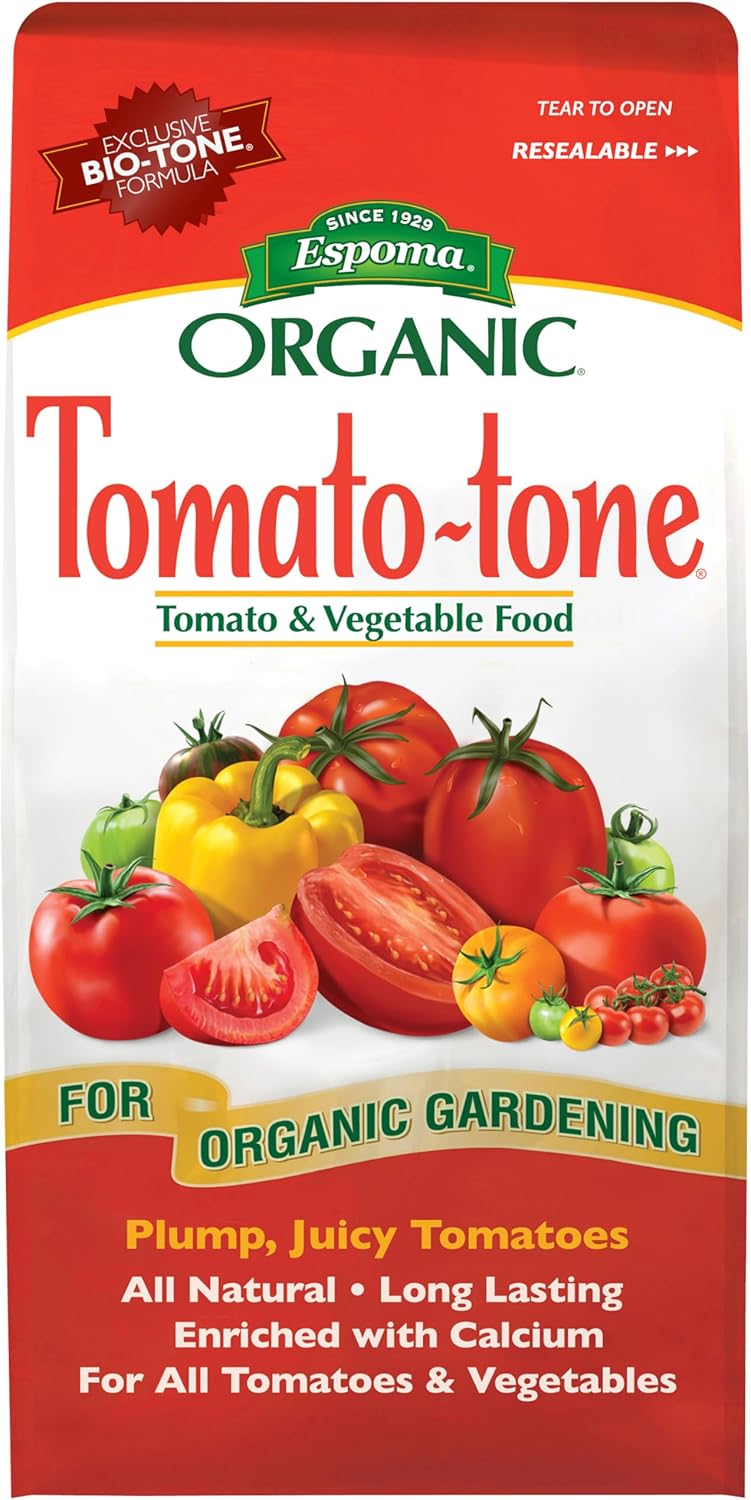
Espoma Organic Tomato-tone is a ready-to-use granular fertilizer formulated specifically for tomatoes and other vegetables. Applied to the soil around the plant drip line every two weeks during the growing season, it delivers a 3-4-6 NPK balance with an added 8% calcium that supports fruit set and can reduce blossom end rot. The granule form is easy to spread by hand and requires watering in rather than mixing, making it convenient for in-ground beds and large containers. Because it is an OMRI-approved organic input and made from natural ingredients, it is a good fit for organic gardeners who want continuous feeding without synthetic products. Limitations include the need for regular reapplication every two weeks and that granular feeding gives slower nutrient release than some liquid or water-soluble options, so results develop over time rather than immediately. It is not a complete soil amendment if your garden has other nutrient deficiencies, so occasional soil testing and supplementing may still be necessary.
Best for: Gardeners focused on producing consistent, flavorful tomato harvests who prefer organic inputs and an easy granular application routine.
Less Ideal for: Growers who need fast, immediate correction of nutrient deficiencies or those who prefer precise, frequent dosing via liquid fertilizers for hydroponics or rapid-response feeding.
- Formulated specifically for tomatoes and vegetables to promote flowering and fruiting.
- Contains 8% calcium to help prevent blossom end rot.
- OMRI-approved organic input suitable for certified organic production.
- Granular, ready-to-use form is easy to apply around the plant drip line without mixing.
- Requires reapplication every two weeks during the growing season for best results.
- Slower nutrient availability compared with water-soluble or liquid fertilizers.
Verdict: A convenient organic granular fertilizer designed to boost tomato fruiting and reduce blossom end rot with built-in calcium.
FoxFarm Happy Frog Tomato & Vegetable Fertilizer, 5-7-3 Blend, 4 lb

| Item Form | Granules |
|---|---|
| Specific Uses For Product | Vegetables, Tomatoes, Soft Fruits, and Berries |
| Unit Count | 64 Ounce |
| Mixing Ratio | 5:7:3 |
| Target Species | Vegetables |
This granular FoxFarm Happy Frog fertilizer supplies a balanced 5-7-3 N-P-K blend designed to support leafy growth and plentiful fruit set, plus added calcium and mycorrhizal fungi to improve root uptake and reduce blossom end rot. It is applied to in-ground beds and containers following the package directions and is suitable across vegetable plantings. The OMRI listing means it fits organic-minded plots, and the inclusion of mycorrhizae can help young roots access nutrients and moisture more efficiently. For root crops such as turnips the moderate nitrogen level encourages healthy foliage without overly stimulating excessive top growth that can reduce root development when used at recommended rates. Practical limits are that it is a general vegetable formula rather than a turnip-specific mix, so tight control of nitrogen and timing is still needed for optimal root size, and application rates must be followed to avoid uneven root formation. The dry granules are easy to store and apply but require incorporation or watering in to activate nutrients.
Best for: Gardeners focused on reliable, performance-oriented nutrition for a variety of vegetable crops who want an organic-certified, all-purpose fertilizer that supports both roots and fruiting.
Less Ideal for: Growers seeking a specialized low-nitrogen or root-maximizing formula specifically for large-scale root vegetable production should consider a product formulated expressly for root crops.
- Balanced 5-7-3 N-P-K suited to vegetables that need both foliage and root development
- Contains calcium to help prevent blossom end rot and related fruiting issues
- Includes mycorrhizal fungi to improve root nutrient and water uptake
- OMRI listed, making it acceptable for organic gardens
- Granular form is simple to store, measure, and apply to containers or beds
- Not tailored specifically to root crops so growers may need to adjust application timing or rates for turnips
- Sold in a single size that may require multiple purchases for larger plots
Verdict: Choose this OMRI-listed 5-7-3 granular if you want a performance-oriented, organic-friendly fertilizer that supports healthy roots and reliable vegetable yields.
Jobe's Tomato Fertilizer Spikes, 18 Count

| Unit Count | 18 Count |
|---|---|
| NPK | 6-18-6 |
| Application Method | Insert spikes around the plants |
| Target Species | Tomato |
Jobe's Tomato Fertilizer Spikes are simple root-feeding sticks designed to deliver balanced nutrients directly to tomato roots over several weeks. Use one or more spikes inserted into the soil around each plant at planting or early in the season and the slow-release formula releases phosphate-heavy nutrition aimed at supporting flowering and fruit set. The pre-measured spikes eliminate guesswork and reduce mess compared with granular or liquid feeds, and the waterproof pouch helps keep leftovers dry. Practical benefits include targeted feeding that is less likely to wash away and an easy schedule—reapply roughly every eight weeks during the growing season. Limitations are that spikes provide a fixed NPK (6-18-6) so you cannot fine-tune ratios mid-season, and the fixed dose may not match very large or very small plants exactly. Also phosphorus-containing fertilizers are regulated in some areas, so check local guidance before use.
Best for: Gardeners who want a low-effort, no-mess way to support tomato flowering and fruiting and who prefer simple, periodic feeding over frequent applications.
Less Ideal for: Growers who need precise control over nutrient ratios, those managing large-scale production, or gardeners in jurisdictions restricting phosphorus use.
- Slow-release spikes deliver nutrients directly to the root zone for up to eight weeks
- Pre-measured sticks remove mixing and measuring errors and reduce mess
- High phosphorus (18) supports flower development and fruit set
- Waterproof resealable packaging keeps unused spikes dry
- Fixed 6-18-6 formula does not allow adjusting nutrient ratios for specific plant needs
- Single-dose spikes may be too strong or too weak for unusually large or small plants
Verdict: An easy, budget-friendly root-feeding option that reliably boosts tomato flowering and fruit set with pre-measured slow-release spikes.
Coast of Maine Organic Fertilizer for Tomatoes, Vegetables & Herbs, 4 lb

| NPK Ratio | 4-5-4 |
|---|---|
| Form | Granules |
| Target Species | Vegetables |
| Item Weight | 4 pounds |
This Coast of Maine granular fertilizer is a slow-release, organic blend intended to build soil and feed vegetables like cucumbers steadily through the season. It is formulated with lobster and crab shell meal, kelp, fish bone meal, feather meal and worm castings to supply nitrogen, phosphate, potash and extra calcium for stronger roots, flowering and fruit set. Typical use is mixing into planting holes, working into topsoil for new beds, or top-dressing established plants then watering in to move nutrients to the root zone. The slow-release nature reduces how often you need to reapply and the added calcium helps minimize blossom end rot in fruiting crops. Practical benefits include improving soil biology over time and providing balanced nutrition tailored to vegetable production. Limitations are that it is granular so it requires incorporation and watering to be effective and it is not a quick soluble feed for an immediate green-up. Follow the package rates closely because overapplication can encourage leafy growth at the expense of fruit.
Best for: Gardeners who want a dependable, low-maintenance organic fertilizer to build living soil and feed cucumbers and other vegetables reliably through the season.
Less Ideal for: Growers who need a fast-acting liquid feed for rapid correction or those unwilling to follow measured application rates for organic fertilizers.
- Organic blend of land and ocean ingredients supports soil health and beneficial microorganisms
- Slow-release 4-5-4 formula provides steady season-long nutrition for fruiting vegetables
- Includes calcium-rich amendments that help reduce blossom end rot risk
- Versatile application: suitable for in-ground beds, raised beds, containers and transplants
- Granular formula requires incorporation and watering to activate rather than delivering immediate soluble nutrients
Verdict: Choose this product if you want a tested, slow-release organic fertilizer that builds soil and delivers steady, reliable nutrition for cucumbers and other vegetables.
Miracle-Gro Shake 'N Feed Tomato, Fruit & Vegetable Plant Food (1 lb)

| Item Form | Granules |
|---|---|
| Target Species | Tomato, Fruit & Vegetable Plant Food |
| Unit Count | 16 Ounce |
| Item Type Name | Continuous Release Plant Food Plus Calcium |
| Coverage | Full |
Miracle-Gro Shake 'N Feed Tomato, Fruit & Vegetable is a granular, continuous-release fertilizer aimed at vegetable gardens and container-grown edibles. You apply it dry to the soil surface or mix it into potting mix at planting, then water to activate feeding that lasts up to three months. The formula includes natural ingredients that feed soil microbes and added calcium to strengthen cell walls and reduce common calcium-related disorders in fruiting crops. For container cucumbers this product provides steady nutrition without weekly liquid feeding and is simple to dose at planting or between seasons. Limitations include the fixed N-P-K profile and that it is not water-soluble for immediate foliar feeding, so rapid correction of major nutrient deficiencies will require a soluble supplement. It also requires correct incorporation or surface application and watering to avoid uneven distribution in small pots. Overall it is a low-effort option to keep container cucumbers producing through a season when used alongside regular watering and good potting mix.
Best for: Gardeners who want a low-maintenance fertilizing routine for container-grown cucumbers and value steady month-to-month feeding over frequent liquid feeds.
Less Ideal for: Growers who need rapid correction of a diagnosed nutrient deficiency or who prefer precise, water-soluble dosing for each watering cycle.
- Continuous-release granules feed plants for up to three months reducing application frequency
- Contains calcium to help prevent blossom end rot and improve fruit quality
- Formulated for fruits and vegetables and suitable for both in-ground and container use
- Feeds soil microbes via natural ingredients which can improve root health and nutrient availability
- Not water-soluble so it will not correct acute nutrient deficiencies quickly
- Fixed formulation may not match specific soil test recommendations for containers
Verdict: A convenient, slow-release granular feed that keeps container cucumbers nourished for months with minimal fuss.
Choosing the Right Natural Fertilizer for Tomatoes in Pots: Key Factors to Consider
Nutrient Ratio and Available Nutrients
Tomatoes need different nutrients during vegetative growth and fruiting. In pots you should look for sources that supply accessible nitrogen for leaf growth early on, but that also have adequate phosphorus and potassium for flowering and fruit development. A fertilizer labeled with a balanced N-P-K or supplemental micronutrients helps prevent common container issues such as weak fruit set or pale foliage.
Because container media have limited buffering capacity, the chemical form of nutrients matters. Natural fertilizers that release nutrients in plant-available forms or feed soil microbes that mineralize nutrients are preferable to those that lock nutrients into organic matter that takes a long time to break down.
Release Rate and Salt Management
Containers are more vulnerable to salt buildup because water drains through a limited volume of potting mix. Slow-release natural granules can provide steady nutrition but must release at rates suited to frequent watering and smaller root systems. Liquid feeds offer rapid uptake but require more frequent applications.
Consider whether a fertilizer is prone to creating soluble salts or requires leaching. For tomatoes in pots, choose products with predictable release profiles or those that are easily rinsed from media if salts accumulate. Managing release rate reduces the risk of root burn and uneven fruiting.
Compatibility With Potting Mixes and Soil Life
Most container tomatoes are grown in sterile potting mixes that lack the microbial communities found in garden soil. Natural fertilizers that promote beneficial microbes or include organic matter compatible with potting mixes improve nutrient cycling and water retention. Some natural options can also alter pH or affect drainage, so compatibility with the specific potting medium is important.
If your container mix is lightweight and fast-draining, select fertilizers that do not compact the media or hold excessive moisture. Conversely, heavier feeds that boost microbial activity can help lighter mixes retain nutrients between waterings.
Application Method and Gardener Convenience
Container gardeners often prefer low-mess, easy-to-dose fertilizers. Options include water-soluble powders, liquid concentrates, slow-release granules, and pelletized organics. The method affects how often you feed and how precise you can be with dosing for individual pots.
Consider the effort you are willing to put in. Frequent liquid feeding can yield quick corrections but requires routine attention. Granules or spikes reduce application frequency but may be harder to adjust for rapidly changing plant needs or multiple pots with different sizes.
Micronutrients and Calcium Management
Tomatoes require more than N-P-K. Calcium in particular is crucial to prevent blossom end rot, a common issue in potted tomatoes where calcium uptake is limited. Choose natural fertilizer options that either supply calcium or work with supplemental calcium sources. Other micronutrients such as magnesium, iron, and boron support fruit quality and color.
Because container-grown plants can experience fluctuations in moisture and nutrient availability, selecting a feed that includes a full micronutrient profile or pairing a primary fertilizer with targeted supplements will help maintain consistent fruit development.
Environmental and Safety Considerations
Natural does not automatically mean inert. Check the source of organic materials and whether they are stable and free from weed seeds or contaminants. Some manures and composts can introduce salts or pathogens if not properly processed, which is a concern for edible container crops.
Also consider runoff from balcony or patio watering. Use fertilizers that minimize soluble nutrient loss and avoid heavy applications right before rain or overwatering events. Safe handling and storage are important for gardeners with pets or children.
Matching Feed Strategy to Container Size
Smaller pots need more frequent, lower-dose feeding because their nutrient reservoirs are limited. A liquid or soluble feed applied every one to two weeks often works well for 2 to 5 gallon containers. Larger patio planters and grow bags can tolerate slower-release granules that feed for several weeks.
Decide whether you want a steady low-effort approach or more hands-on control. For many balcony growers, alternating a diluted liquid feed with a slow-release product delivers steady growth and reduces the chance of sudden nutrient swings.
- Small pots: regular liquid feeding, watch for salt buildup
- Medium pots: liquid feed plus occasional granular top-ups
- Large planters: slow-release granules or layered feeding
Timing Fertilizer Use by Tomato Growth Stage
Adjust feeding through the season. Start with a slightly higher nitrogen approach during early vegetative growth to build healthy foliage. Once blooms form, switch to a formula or schedule that favors phosphorus and potassium to support flowering and fruit set.
Avoid heavy nitrogen during peak fruiting, which can stimulate lush leaves at the expense of tomatoes. Regular, lighter feeds are generally better for container plants than infrequent heavy applications.
- Seedling/early growth: gentle nitrogen support
- Flowering/set: more phosphorus and potassium focus
- Fruit development: steady balanced feeding with calcium support
Preventing and Managing Blossom End Rot in Pots
Blossom end rot is often a symptom of inconsistent calcium uptake rather than a lack of calcium in the potting mix. In containers, irregular watering and high soluble nitrogen can reduce calcium movement to fruit. Maintain consistent moisture and avoid large swings between dry and soaked conditions.
When selecting a natural fertilizer, prefer options that supply calcium or pair your feed with a calcium source such as crushed eggshells or a dedicated soluble calcium product. Apply supplemental calcium gently and monitor for improvement over a few weeks.
- Keep soil evenly moist to aid calcium transport
- Avoid sudden heavy nitrogen applications during fruit set
- Supplement calcium if symptoms appear, but do so gradually
Feeding for Flavor and Fruit Quality
Fertilizer affects more than yield. Imbalanced feeding can dilute sugars or reduce acidity, changing tomato flavor. Regulate nitrogen so plants do not produce excessive foliage, which can divert sugars away from fruit.
Natural fertilizers that support soil biology often improve nutrient uptake efficiency and can contribute to better-tasting tomatoes over the season. Using compost teas or microbial inoculants alongside a balanced feed can enhance nutrient availability in container media.
- Moderate nitrogen during ripening for better sugar accumulation
- Include potassium for fruit firmness and color
- Support microbes for improved nutrient conversion
Practical Storage and Application Tips for Balcony Gardeners
Store natural fertilizers in a dry, cool place to prevent clumping and nutrient loss. Keep granular and powdered products sealed against moisture and pests. Label containers and keep them out of reach of children and pets.
When applying on balconies, place saucers beneath pots to catch runoff and avoid staining surfaces. Apply in the morning or early evening to reduce stress on plants, and always follow dilution and frequency guidance to avoid overfeeding.
- Keep fertilizers dry and sealed
- Use saucers to capture runoff
- Apply during cooler parts of the day
How We Chose the Best Natural Fertilizer for Tomatoes in Pots
We focused on attributes that affect tomato performance specifically in containers. Key evaluation criteria included nutrient balance with accessible nitrogen, phosphorus, and potassium ratios appropriate for flowering and fruit set; release rate that matches container dynamics to avoid salt buildup or quick depletion; suitability for use in potting mixes and with regular watering schedules; organic source and soil biology friendliness to support beneficial microbes; and application convenience for balcony or patio gardeners who need easy, low-mess feeding methods. We excluded amendments intended solely for in-ground beds, large-acreage fertilizers, and synthetic formulations. We also filtered out products that require heavy soil disturbance or complex pre-treatment. The resulting shortlist prioritizes natural sources that can be applied directly to container media or dissolved for regular liquid feedings. These filters align with the scorecard dimensions above and with common container tomato problems such as blossom end rot, nutrient lockup, and uneven ripening.
FAQ
How often should I feed potted tomatoes with a natural fertilizer?
It depends on the product. Water-soluble feeds are usually applied every one to two weeks, while slow-release granules may last four to twelve weeks. Smaller pots need more frequent feeding because nutrients are used up faster.
Can I use compost in tomato pots instead of a commercial natural fertilizer?
Compost can be a good supplement but it often releases nutrients slowly and may not meet the immediate needs of fruiting tomatoes in small pots. Mixing a compost addition with a targeted natural feed provides both long-term soil health and timely nutrition.
Will natural fertilizers prevent blossom end rot?
Natural fertilizers help when they supply calcium or improve calcium availability, but blossom end rot is mainly caused by uneven water and disrupted calcium transport. Consistent watering and appropriate calcium supplementation are both important.
Are liquid organic feeds better than slow-release granules for containers?
Each has tradeoffs. Liquid feeds give quick correction and fine control in small pots, while slow-release granules reduce application frequency and lower handling. Many gardeners use a combination to balance convenience and consistent nutrition.
How do I avoid salt buildup when using natural fertilizers in pots?
Avoid over-application and flush the potting mix occasionally by watering thoroughly to leach excess salts. Choose natural options known for gentle release and monitor leaf tips and growth for signs of salt stress.
Final Verdict
For tomatoes in pots, prioritize a fertilizer strategy that matches container size, growth stage, and watering routine. Balance accessible N-P-K with micronutrients and calcium, and choose a release profile that avoids sudden salt spikes. Practical tradeoffs include frequency of application versus effort; combine liquid feeds for quick correction with slow-release products for steady baseline nutrition. With the right approach you can reduce common container problems and produce steady, flavorful harvests from balcony and patio tomato plants.
