

Note: This article contains affiliate links. If you click on these links and make a purchase, I may earn a small commission at no extra cost to you. This helps support my research and content. Read my full affiliate disclosure here.
Picking the right soil for container gardening vegetables changes how your plants establish roots, hold moisture, and access nutrients. In pots and grow bags you do not get the buffering benefits of garden beds, so soil choice affects watering frequency, fertiliser needs, and ultimately yields. This guide covers seven top shortlisted soils suited for container vegetable growing and explains the practical tradeoffs you should expect. We evaluate texture, drainage, nutrient retention, and organic content so you can choose a mix that fits your watering style, container type, and the crops you want to grow.
Top Picks at a Glance
| Best Overall The best all-around choice for most situations | Burpee Premium Organic Potting Mix with Coconut Coir (9 Qt) |  |
| Best Quality Built to a higher standard if you want something more solid | FoxFarm Ocean Forest Potting Soil, 12 qt |  |
| Best Value The sweet spot between price and what you get | Miracle-Gro Organic Outdoor Potting Mix, 16 qt. |  |
| Best Budget The cheapest option that still gets the job done reliably | Miracle-Gro Indoor Potting Mix for Seed Starting, 8 qt. (2-Pack) |  |
| Highest Rated A top-rated pick with lots of positive feedback | FoxFarm Happy Frog Potting Soil, Container Garden, 2 cu ft (with 2 Plant Tags) |  |
| Most Popular A crowd favorite that many people choose with confidence | Miracle-Gro Potting Mix, 16 qt. (2-Pack) |  |
| Best Seller A high-volume bestseller chosen again and again | Back to the Roots Premium Organic Potting Mix, 6 Quart |  |
Burpee Premium Organic Potting Mix with Coconut Coir (9 Qt)

| Item Form | Powder |
|---|---|
| Specific Uses For Product | Plant Growth, Root Development, Seed Development, Soil Conditioning |
| Coverage | 9 Qt Container |
| Included Components | Fertilizer |
Burpee Premium Organic Potting Mix is a ready-to-use container soil that combines organic ingredients and coco coir to support seed starting, root development, and sustained feeding for up to three months. You use it straight from the bag to fill pots, planters, and raised containers for vegetables, flowers, or herbs; the coir improves drainage and helps retain moisture so pots do not waterlog yet need less frequent watering. The mix is OMRI listed, which makes it a sensible choice for gardeners who prefer organic inputs, and it includes slow-release nutrients to feed young plants through early growth stages. Practical benefits include improved aeration for roots, better moisture balance for containers, and convenience for seed starting or transplanting. Limitations are the small 9-quart bag size, which means you'll need multiple bags for larger projects, and the product does not list detailed nutrient analysis or specific fertilizer ratios on the packaging, so growers who want precise feeding plans will need to supplement or test separately.
Best for: Home gardeners planting vegetables, herbs, or flowers in containers who want an organic, easy-to-use mix that balances moisture retention and drainage for reliable early growth.
Less Ideal for: Large-scale growers or raised-bed gardeners who need bulk soil or exact fertilizer formulations should look for larger-volume or lab-analyzed mixes.
- OMRI listed organic formula suitable for organic container gardening
- Coconut coir improves drainage while retaining moisture in pots
- Contains slow-release nutrients that feed plants for up to three months
- Lightweight, ready-to-use mix suitable for seed starting and transplanting
- Small 9-quart bag requires buying multiple units for larger container gardens
- No detailed N-P-K breakdown provided on the listing for precise nutrient planning
Verdict: A compact, OMRI-listed potting mix with coco coir that makes starting and growing vegetables in containers easy and low-maintenance.
FoxFarm Ocean Forest Potting Soil, 12 qt

| Item Form | Granules |
|---|---|
| Specific Uses For Product | Dry Fertilizer |
| Coverage | 4.8 sq ft |
| Mixing Ratio | 1:1 |
FoxFarm Ocean Forest is a premium potting mix designed for container gardening and houseplants. It combines aged forest products, sandy loam, and sphagnum peat moss to create a light, well-aerated medium that drains but retains enough moisture for vegetable seedlings and container crops. The formula includes organic amendments such as fish meal, crab meal, and earthworm castings so young plants get a nutrient boost without additional fertilizing for roughly the first 30 days. It is sold ready to use straight from the bag and works well for transplanting starts, filling pots, or top-dressing existing containers. Expect vigorous early growth and improved root development compared with basic bagged soils. Limitations to consider are that the built-in fertility is temporary, so regular feeding is needed for longer-season vegetables, and the mix can be pricier than generic alternatives. Also follow handling warnings and use gloves to avoid irritation when repotting.
Best for: Serious vegetable container gardeners who prioritize faster establishment and stronger early growth for seedlings and transplants and who plan to follow with a feeding schedule.
Less Ideal for: Casual or budget-focused gardeners who prefer to mix their own media or need a low-cost bulk soil for large-scale container plantings.
- Ready-to-use light, aerated texture suitable for container plants
- Includes organic amendments (fish meal, crab meal, earthworm castings) for an initial nutrient boost
- pH adjusted for nutrient uptake and seedling support
- Retains moisture while providing good drainage, aiding root development
- Nutrient content is temporary and requires follow-up fertilization for long-season vegetables
- Contains ingredients that may irritate skin so safe handling is recommended
Verdict: Choose this soil when you want a ready-made, nutrient-rich potting mix that accelerates early growth and establishes strong roots in container vegetables.
Miracle-Gro Organic Outdoor Potting Mix, 16 qt.

| Volume | 16 qt. |
|---|---|
| Feeds up to | 2 months |
| OMRI Listed | Yes |
| Made with | Responsibly sourced peat and upcycled green waste |
This 16 qt. Miracle-Gro Organic Outdoor Potting Mix is made for planting in outdoor containers and is aimed at keeping vegetables, herbs and flowers fed and moist between repottings. The bag includes responsibly sourced peat and upcycled green waste, and contains a quick-release natural fertilizer that the brand says feeds for up to two months. In practice it is used by partially filling a pot, loosening the plant root ball, setting the plant and topping up with mix before watering. For container vegetable gardeners the mix's moisture retention and built-in organic nutrition reduce the need for immediate amendments and make establishment easier. It is OMRI listed which supports organic growing. Expect to repot or refresh soil about every six months to avoid compaction and replenish nutrients. The bag volume is best for small to medium pots; larger planters will need multiple bags or bulk soil. If you prefer completely peat-free mixes or long-term, slow-release fertility you may want an alternative blend or to add your own compost and slow-release fertilizer.
Best for: Gardeners who grow vegetables and herbs in outdoor pots and want an easy, organically certified mix that speeds establishment and reduces initial feeding chores.
Less Ideal for: Growers who need peat-free or bulk soil solutions for large raised beds or long-term in-ground beds should choose a different product.
- OMRI listed for use in organic container gardening
- Includes quick-release natural fertilizer that feeds up to two months
- Formulated to retain moisture for outdoor container conditions
- Made with responsibly sourced peat and upcycled green waste
- 16 qt. bag only suitable for small to medium containers so larger projects need multiple bags
- Fertility is short-term and requires re-potting or additional feedings every few months
Verdict: A convenient OMRI-listed potting mix that simplifies getting vegetables and herbs established in outdoor containers by combining moisture retention with short-term organic nutrition.
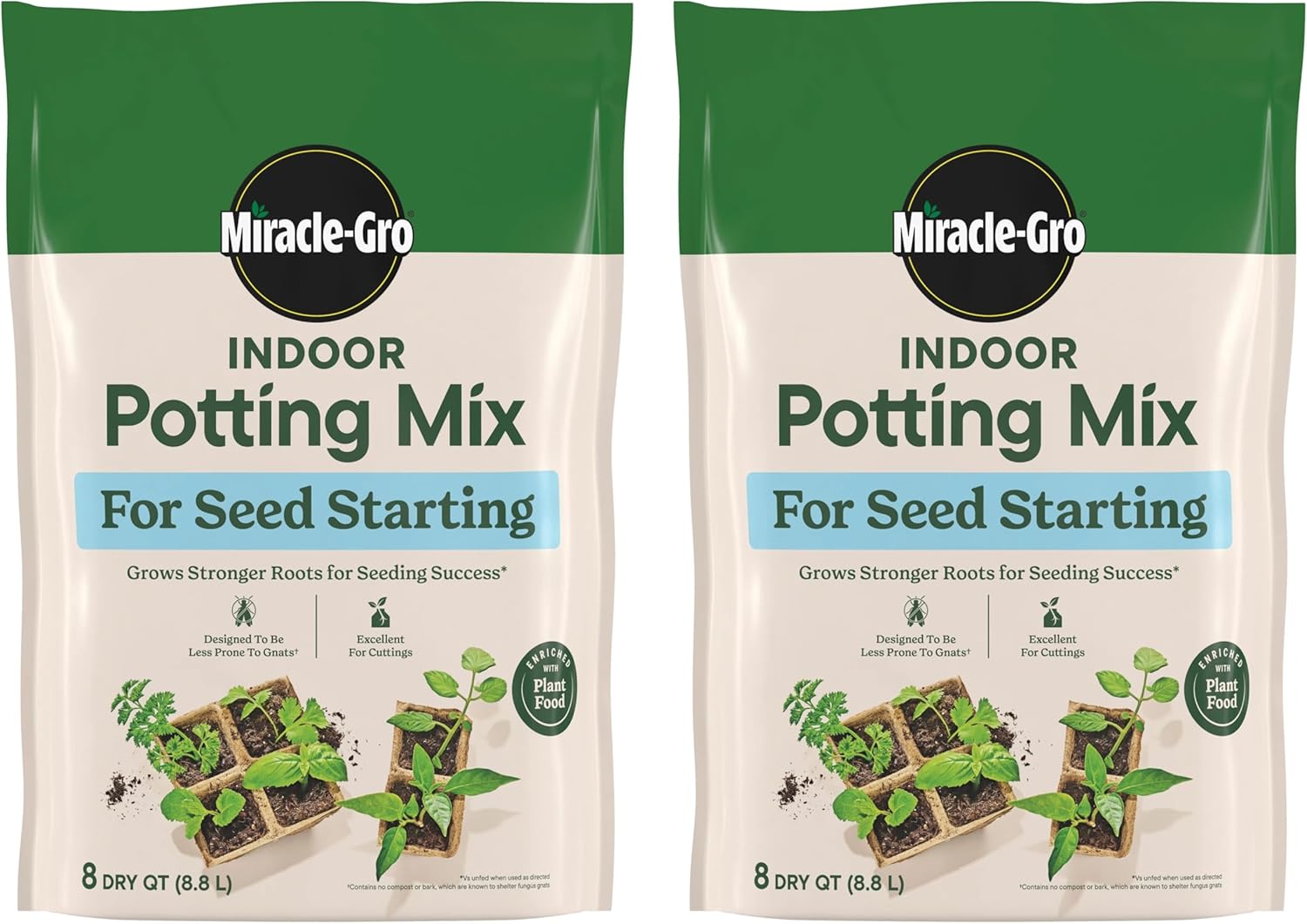
Miracle-Gro Indoor Potting Mix for Seed Starting, 8 qt. (2-Pack)
| Brand Name | Miracle-Gro |
|---|---|
| Item Type Name | Potting Mix |
| Number of Packs | 2 |
| Volume | 8 quarts |
Miracle-Gro Indoor Potting Mix for Seed Starting is a ready-to-use, lightweight mix designed to get seeds and cuttings off to a strong start. It is typically used in cell trays or small containers to germinate vegetable, flower, and herb seeds or to root leaf and stem cuttings. The blend includes plant food to promote quicker root development versus unfed media and intentionally omits compost and bark to reduce habitat for fungus gnats. Practical benefits for container vegetable gardeners include its ease of use straight from the bag, predictable light texture that helps delicate roots establish, and enough volume in this 2-pack to fill several 72-cell trays. Important limitations are that it is formulated specifically for starting and propagation rather than long-term container culture, so transplants will usually need to be moved into a richer potting mix or amended soil for final growth. Also, because it contains fertilizer, careful handling is required and runoff should be managed to avoid environmental impact.
Best for: Buyers looking to start vegetable seeds indoors on a budget who want an easy, ready-to-use medium that encourages quick root growth and reduces pest risk during propagation.
Less Ideal for: Gardeners seeking a final potting soil for mature container vegetables or those who prefer fully organic, compost-rich mixes should look elsewhere.
- Lightweight, fine texture suited to seed trays and small containers
- Contains plant food to support faster root development during starting
- No compost or bark, which helps reduce fungus gnat habitat
- Two 8-quart bags provide enough mix to fill multiple 72-cell trays
- Not formulated for long-term container growing without repotting into a richer mix
- Contains fertilizer so it requires careful handling to avoid inhalation or runoff risks
Verdict: A budget-friendly, ready-to-use seed starting mix that helps seedlings and cuttings establish strong roots before transplanting.
FoxFarm Happy Frog Potting Soil, Container Garden, 2 cu ft (with 2 Plant Tags)

| Brand Name | FoxFarm |
|---|---|
| Item Highlight | Ready-to-Use Amended Container Blend with Soil Microbes, Earthworm Castings, Bat Guano, and Aged Forest Products |
| Volume | 2 cubic feet |
| Style Name | Container Garden |
FoxFarm Happy Frog Potting Soil is a premixed container blend designed to give potted vegetables and other container plants a nutrient-rich, microbiome-friendly growing medium. It is intended for direct use in pots and raised planters; fill containers, plant, and water without needing to mix in additional base soil. The formula lists earthworm castings, bat guano, aged forest products, and a custom soil microbe mix, which should support steady root development and more efficient nutrient uptake for leafy greens, herbs, and fruiting vegetables. pH adjustment in the bag helps with initial nutrient availability. Practical benefits include reduced need for immediate fertilizer and a lightweight, ready supply for multiple small to medium containers. Limitations are that the bag is a fixed 2 cu ft volume so you may need several bags for larger raised beds, and specific nutrient levels or NPK values are not provided so growers wanting precise fertilization plans will still need to monitor and supplement over the season.
Best for: Gardeners who want a reliable, ready-made potting mix that promotes healthy root growth and reduces up-front fiddling when planting vegetables in containers.
Less Ideal for: Growers who need exact nutrient specifications or who are planting very large raised beds and prefer to formulate their own soil mixes.
- Ready-to-use amended mix tailored for container use with beneficial microbes included
- Contains organic amendments such as earthworm castings and bat guano to boost fertility
- pH adjusted in the bag to improve early nutrient uptake
- Includes two plant tags for tracking varieties and planting dates
- Nutrient analysis (NPK) is not listed, so additional fertilization may be needed for long-season vegetables
- Only sold in 2 cu ft bags which may require multiple bags for larger container setups
Verdict: Choose this potting soil when you want a dependable, ready-to-use container mix that brings organic amendments and beneficial microbes to vegetable pots with minimal prep.
Miracle-Gro Potting Mix, 16 qt. (2-Pack)

| Number of Packs | 2 |
|---|---|
| Volume | 16 quarts |
| Item Highlight | For Container Plants, Feeds up to 6 Months |
| Ingredients | Sphagnum Peat Moss, Perlite, Compost, Fertilizer |
Miracle-Gro Potting Mix is a ready-to-use container soil designed to support outdoor potted vegetables, herbs, and flowering plants. Gardeners typically use it to fill pots, planters, and hanging baskets following simple potting steps: choose a drained container, fill about one third, set the plant, then top off and water through. The mix contains peat moss, perlite, compost, and fertilizer so it drains well while holding enough moisture for roots to breathe and establishes plants quickly. It is formulated to feed plants for up to six months, which reduces the need for frequent fertilizing early in the season and helps produce fuller growth compared with unfed soil. Practical benefits include consistent texture that is easy to work with, predictable drainage for container-grown vegetables, and compatibility with routine repotting. Important limitations are that it is a bagged potting mix intended for containers only and not formulated to amend heavy in-ground beds, and nutrients decline over the six-month period so you will need to refresh or fertilize later in the season for extended crops.
Best for: Gardeners who want a dependable, low-effort potting mix for outdoor containers and are looking for a product that helps establish vegetables and herbs quickly with minimal early fertilizing.
Less Ideal for: Those seeking a product to amend heavy in-ground garden soil or a long-term no-maintenance substrate for multi-season plantings should consider garden soil blends or scheduled fertilization instead.
- Formulated for containers with good drainage and root aeration
- Includes starter fertilizer that feeds plants up to six months
- Consistent texture makes potting and repotting easy
- Works across many outdoor container plants including vegetables and herbs
- Not intended as a soil amendment for in-ground beds
- Nutrient levels taper after about six months requiring refeeding or fresh mix
Verdict: A reliable, ready-to-use potting mix that simplifies container vegetable growing by providing good drainage and six months of feeding.
Back to the Roots Premium Organic Potting Mix, 6 Quart

| Unit Count | 192 Fluid Ounces |
|---|---|
| Item Highlight | Peat-free potting soil for outdoor plants, indoor plants, vegetables, herbs and flowers |
| Item Type Name | 100% Organic Potting Mix |
| Volume | 6 quarts |
Back to the Roots Premium Organic Potting Mix is an all-purpose, peat-free potting soil designed for container vegetables, herbs and flowers. The 6 quart bag blends organic plant food, upcycled plant matter and wood fines with yucca extract to help moisture distribution and dolomitic limestone to stabilize pH. In practice it produces a light, workable mix that drains better than heavy garden soils while still retaining enough moisture for pots and planters. The organic ingredients make it suitable for edibles and indoor-transplanted seedlings, and the small bag size is convenient for spot filling and container refreshes. Limitations to note are the small volume per bag for larger projects and the lack of detailed nutrient analysis on the label, so you may need to supplement with a fertilizer schedule for heavy-feeding vegetables. For everyday container vegetable growing this mix simplifies potting and reduces handling of peat-based products.
Best for: Buyers who prefer a low-risk, ready-to-use organic potting mix for container vegetables and herbs and who value simple, peat-free ingredients over custom soil blending.
Less Ideal for: Gardeners planning to fill many large containers or raised beds who need bulk soil or a mix with a specified fertilizer profile.
- 100% organic and peat-free formulation suitable for edible plants
- Contains yucca extract for improved moisture distribution in containers
- Dolomitic limestone included to help stabilize pH for many vegetables
- Light, well-structured blend that improves drainage compared with garden soil
- Only 6 quart volume per bag, requiring multiple bags for larger container gardens
- No full nutrient breakdown provided, so additional feeding may be needed for heavy feeders
Verdict: A convenient, peat-free organic potting mix that makes container vegetable growing simple and low risk for mainstream gardeners.
Choosing the Right Soil for Container Gardening Vegetables: Key Factors to Consider
Drainage and Aeration
Proper drainage and aeration control how roots access oxygen and avoid saturation. In containers the soil volume is limited, so mixes need larger particles like perlite or coarse sand to create pore space. If a mix is too fine it compacts quickly, reducing oxygen and increasing disease risk.
Evaluate how a soil behaves after a heavy watering and during drying cycles. Fast-draining blends help prevent root rot but can require more frequent irrigations. Balance comes from a mix that maintains stable pore structure while allowing excess water to escape.
Water-Holding Balance
Water-holding capacity determines how often you will water and how tolerant the container system is to heat or dry spells. Components like coconut coir and peat hold moisture, which is useful for shallow pots and hot patios. Too much holding capacity can lead to poor aeration in small pots, while too little increases labor for daily watering.
Consider your container size, sun exposure, and how often you can water. For larger tubs, a faster-draining mix with moderate water retention reduces the chance of soggy zones. For small pots or mobile containers, prioritize mixes with a bit more moisture buffering.
Nutrient Content and Retention
Vegetables are heavy feeders compared with many ornamentals, so initial nutrient content and the soil's ability to retain those nutrients matter. Some mixes include starter fertiliser or slow-release granules that support the first 4 to 6 weeks, which is helpful for transplants and early growth. Others rely on gardeners to provide all nutrients through feeding.
Also think about cation exchange capacity and organic matter that help hold and slowly release nutrients. A good container soil will balance immediate fertility with the capacity to retain liquid feeds between applications, so nutrients do not wash out after every watering.
Organic Matter Quality and Stability
Organic components feed soil biology but decompose over time. Fast-breaking materials can compact and reduce porosity within a single season, especially in warm containers. Stable organic matter such as well-composted fibre or coir preserves structure longer and supports beneficial microbes without collapsing.
For repeated cropping or long-season vegetables, choose soils formulated with stable organics or plan to refresh the top layers annually. Consider how often you want to repot or refresh soil and pick a stability level that matches that maintenance cadence.
Particle Size and Texture
Texture dictates the feel of the mix and how it behaves with water. Coarse textures provide structure and resist compaction, while fine textures pack tightly and hold more water. For root development and transplanting ease, a balanced particle size distribution that includes coarse mineral and fibrous organic pieces is ideal.
Test a sample by squeezing a moist pinch: it should hold shape loosely but crumble with a gentle poke. That tactile check helps predict how the mix will drain and how roots will penetrate.
Ingredient Transparency and Cleanliness
Knowing what is in the bag is crucial for edibles. Look for mixes that list components rather than vague wording. Clean, screened ingredients reduce the risk of weed seeds, pathogens, or contaminants that are more problematic in closed container systems.
Also consider whether the mix has been pasteurized or treated for pests, especially if you are growing in shared or indoor spaces. Clear ingredient lists help you plan feed schedules and adjust pH or mineral supplementation when needed.
Matching Mix Texture to Container Type
Different container sizes and materials change how soil behaves. Shallow pots and window boxes dry faster and benefit from mixes with higher water-holding components, while large planters need structure to avoid waterlogged pockets. Terracotta pots wick moisture from the soil faster than plastic, so gardeners using terracotta should lean toward mixes with better moisture buffering.
For mobile containers or balconies that experience wind, use slightly coarser mixes to reduce drying and compaction. In contrast, indoor container vegetable setups can use a slightly finer but still well-aerated mix since environmental conditions are more stable.
- Shallow pots: moderate water retention, good aeration
- Large tubs: structured mix with stable organics
- Terracotta: more water-holding components
- Indoor containers: finer textures acceptable if aeration is ensured
Adjusting Soil for Different Vegetable Types
Leafy greens, herbs, and root crops have different soil needs. Fast-growing leafy greens like lettuces prefer mixes that drain well but retain steady moisture to avoid bolting. Root crops do best in loose, deep mixes that let roots expand without encountering compacted zones.
Fruit-bearing crops such as tomatoes and peppers need soils that combine nutrient retention with good drainage. These crops also benefit from regular feedings, so starter fertility plus a schedule for liquid or slow-release feeding will keep production consistent.
- Leafy greens: even moisture, lighter feed schedule
- Root crops: deep, loose texture with low compaction risk
- Fruit crops: balanced retention and fertility with regular feeding
Managing pH and Mineral Needs in Containers
Container soils can drift in pH faster than ground beds. Most vegetables prefer slightly acidic to neutral ranges, so monitor pH periodically. Amendments like lime or sulfur change pH slowly; follow recommended rates and retest after a few weeks.
Also be aware of mineral imbalances that show up when using bagged mixes long term. If plants show nutrient deficiency signs, adjust with targeted feeds rather than broad additions. A soil test or plant tissue check helps pinpoint whether you need more calcium, magnesium, or trace elements.
- Test pH annually or when symptoms appear
- Use targeted amendments for specific deficiencies
- Avoid over-liming; small adjustments are safer in containers
Refreshing and Reusing Container Soil
Container soil can be refreshed between crops rather than replaced entirely. Top-dressing with compost, adding slow-release fertiliser, or mixing in fresh stable organic matter restores nutrients and structure. For long-season plantings, side-dress feeds maintain fertility without disturbing roots.
If you plan to reuse soil from year to year, screen out large roots and debris, then refresh with amended compost and a structural amendment like perlite to restore porosity. Replace soil that smells sour or shows persistent disease symptoms.
- Top-dress with compost between crops
- Screen and refresh reused soil to remove compaction
- Replace soil with disease history or foul odors
Feeding Strategy for Container Vegetables
Container-grown vegetables rely on external feeding more than ground-planted crops because nutrients wash out with repeated waterings. Combine an initial soil with starter fertility and a predictable feeding schedule using liquid feeds or slow-release granules to match crop demand.
Adjust feed strength according to plant growth stage. Young transplants need gentler feeds, while flowering and fruiting stages require higher potassium and phosphorus. Monitor plant response and reduce frequency if you see signs of nutrient burn.
- Starter fertiliser + planned liquid feeds for season-long production
- Gentle feeds for transplants; stronger feeds during fruiting
- Watch for nutrient burn; back off if leaf tips brown
How We Chose the Best Soil for Container Gardening Vegetables
We focused on attributes that matter most when growing vegetables in containers rather than beds. Primary evaluation criteria included particle texture and drainage to ensure air at the root zone; nutrient retention and starter fertility to reduce early deficiencies; water-holding capacity to balance watering frequency with pot size; and organic stability and decomposition rate to avoid rapid compaction or nutrient loss. We also considered ingredient transparency and pest/weed screening to limit unexpected contaminants in a confined container environment. Mixes designed specifically for vegetables or labeled for edible-container use were prioritized over general-purpose mixes that lack sufficient drainage or fertility. We excluded products lacking clear ingredient lists or those formulated primarily for ornamentals or seedlings, since those often use finer particles that compact in larger vegetable pots. In short, shortlisted soils scored well for consistent texture, reliable moisture behavior in small volumes, clear nutrient profiles, and stable organic components that support vegetables through a full cropping cycle.
FAQ
How often should I water container vegetables with a high-drainage soil?
Often depends on container size and weather, but high-drainage soils generally require more frequent waterings. Expect daily watering in hot, windy conditions for small pots, while larger containers may hold enough moisture for two to three days between waterings.
Can I mix my own soil for container vegetables?
Yes. Many gardeners blend screened compost, coconut coir or peat, and a mineral amendment like perlite or coarse sand to control drainage and retention. Homemade mixes give control over ingredients but require testing to get the right texture and nutrient balance.
Is potting soil the same as soil for container vegetables?
Not always. Generic potting soils may be designed for ornamentals or seedlings and can be too fine or low in nutrients for heavy-feeding vegetables. Choose mixes labeled for edibles or specifically formulated for vegetables when possible.
How long does container soil stay productive before I need to replace it?
It depends on mix stability and cropping intensity. Well-structured soils with stable organics can support several seasons with periodic refreshes, while mixes with fast-decomposing organics may need replacement after one full season of heavy cropping.
Should I sterilize used container soil before reusing it?
Sterilizing can reduce pathogens but also kills beneficial microbes. For most home gardeners, refreshing soil with compost and avoiding reuse of soil that had disease problems is a more balanced approach. Hot treatment or solarization is an option for heavily infested soil.
Final Verdict
Choosing the right soil for container gardening vegetables is about balancing drainage, moisture buffering, and nutrient retention to match your container type and crop choices. Prioritize mixes with clear ingredient lists and stable organic matter if you expect repeated cropping or long-season plants. Accept tradeoffs: faster-draining mixes reduce disease risk but demand more frequent watering, while higher water-holding soils lower irrigation needs but need careful attention to aeration. Use the evaluation criteria above to match a mix to your routine and container setup so you can focus on feeding and crop care rather than constant troubleshooting.
