

Note: This article contains affiliate links. If you click on these links and make a purchase, I may earn a small commission at no extra cost to you. This helps support my research and content. Read my full affiliate disclosure here.
Choosing the right plants for pots outside matters because containers behave differently than in-ground beds. Soil volume, drainage, and exposure affect root temperature, watering frequency, and how quickly nutrients are used up. The right selections will thrive in confined soil, tolerate the microclimate of a patio or balcony, and give you consistent color or foliage through the season. This guide shortlists seven dependable container plants suited for outdoor pots and evaluates them on practical criteria gardeners care about, including sun tolerance, water needs, and ease of maintenance. Read on to see which types match your light conditions and how to keep them flourishing in limited soil.
Top Picks at a Glance
| Best Overall The best all-around choice for most situations | Perfect Plants Peach Drift Rose, 1 Gallon Live Flower Plant |  |
| Best Quality Built to a higher standard if you want something more solid | PERFECT PLANTS Frostproof Gardenia Live Plant, 1 Gallon |  |
| Best Value The sweet spot between price and what you get | SD Succulent Growers Live Trailing Succulent 4-Pack (2" Pots) |  |
| Best Budget The cheapest option that still gets the job done reliably | KVITER Rainbow Coleus Seeds — 1,600 Heirloom Coleus (Plectranthus scutellarioides) |  |
| Highest Rated A top-rated pick with lots of positive feedback | Mountain Crest Gardens Sempervivum Succulents Variety Pack — 6 Live Rosette Plants (rooted in 2" pots) |  |
| Most Popular A crowd favorite that many people choose with confidence | Sow Right Seeds Rainbow Coleus Seeds (800 Count) |  |
| Best Seller A high-volume bestseller chosen again and again | The Three Company Lavender (2-Pack) Live Fragrant Purple Perennials in 1-Qt Pots |  |
Perfect Plants Peach Drift Rose, 1 Gallon Live Flower Plant

| Indoor Outdoor Usage | Outdoor |
|---|---|
| Sunlight Exposure | Full Sun |
| Other Special Features of the Product | Drought Tolerant |
| Expected Blooming Period | Winter |
| Moisture Needs | Moderate Watering |
The Peach Drift rose is a compact, groundcover-style rose sold as a 1-gallon live plant intended for outdoor planting in full sun. It produces peach-colored blooms for much of the year and is offered with plant food to help establishment. Typical uses are massing along walkways, in pots on sunny patios, or as a low hedging/groundcover where a 1 to 2 foot plant height and spreading habit are desired. Notable features listed are drought tolerance, winter hardiness across multiple USDA zones, and moderate water needs, which together make it forgiving for busy gardeners and suitable for containers that drain well. Practical benefits include long bloom periods, attractive low-maintenance form, and easy placement in full-sun spots. Limitations are that it ships as a small 1-gallon specimen so it will take a season or two to fill a space, and it is not suitable for shady locations or climates outside the listed hardiness zones.
Best for: Buyers who want a low-maintenance, sun-loving container plant or groundcover that provides long-lasting color with minimal fuss and proven customer satisfaction.
Less Ideal for: Gardeners seeking an instant, mature specimen or plants for shady locations should look elsewhere.
- Long bloom period with peach-colored flowers for seasonal interest
- Drought tolerant and winter hardy across several USDA zones for low-maintenance care
- Compact, groundcover growth habit works well in pots or mass plantings
- Includes easy-to-use plant food to support establishment
- Arrives as a 1-gallon plant so it needs time to reach mature spread and height
Verdict: An easy-care, sun-loving rose that delivers long-lasting peach blooms in containers or mass plantings for gardeners who prioritize reliable performance.
PERFECT PLANTS Frostproof Gardenia Live Plant, 1 Gallon

| Indoor Outdoor Usage | Outdoor |
|---|---|
| Other Special Features of the Product | Deer Resistant, Fragrant |
| Expected Blooming Period | Summer |
| Sunlight Exposure | Full Sun, Partial Shade |
| Expected Planting Period | Spring |
This 1-gallon Frostproof gardenia is a compact, fragrant shrub intended for outdoor landscape use. It arrives as a live plant with a recommended mature height around 5 feet and is typically planted in mulch beds, as a low hedge, or as an accent near entries where its scent can be enjoyed. Notable features include deer resistance, a history of reliable spring and summer blooms, and included easy-to-use plant food for a simpler start. The plant prefers full sun to partial shade, so it will tolerate some shaded locations but performs best where it receives several hours of direct light. Practical benefits for a cautious buyer are straightforward care, minimal pruning to maintain shape, and an aromatic presence that enhances small gardens or patios. Limitations are that it is sold as a 1-gallon specimen so it will need time to reach mature size, and the product text notes shipping exclusions to a few states which affects availability for some buyers.
Best for: Buyers who want an easy-care, scented shrub for a small garden or patio and prefer reliable, low-maintenance plants that establish steadily rather than instant large specimens.
Less Ideal for: Gardeners seeking an immediate tall screening hedge or a plant for deep, full shade should consider alternative species better suited to dense shade or instant privacy needs.
- Fragrant white blooms that enhance outdoor seating areas during spring and summer
- Deer resistant variety reduces need for protective measures in deer-prone yards
- Includes plant food to simplify initial establishment
- Tolerates partial shade, allowing placement in spots without full sun all day
- Sold as a small 1-gallon plant so it requires time to reach mature size
- Per product notes it does not ship to certain states which limits access for some buyers
Verdict: Choose this gardenia if you want a low-maintenance, fragrant shrub that tolerates some shade and adds seasonal white blooms to small outdoor spaces.
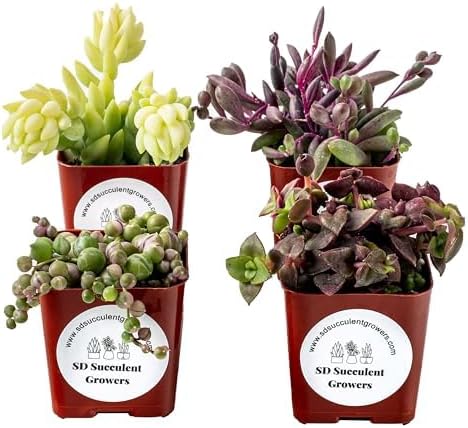
SD Succulent Growers Live Trailing Succulent 4-Pack (2" Pots)
| Indoor Outdoor Usage | Indoor |
|---|---|
| Other Special Features of the Product | Low Maintenance |
| Sunlight Exposure | Partial Sun |
| Soil Type | Sandy Soil |
| Moisture Needs | Moderate Watering |
These trailing succulents arrive as small, well-rooted starter plants in 2-inch pots intended for hanging baskets, shelves, or container displays outdoors. The pack is a mystery assortment that commonly includes varieties such as String of Pearls, Ruby Necklace, Burro's Tail, and other cascading species, so you get mixed textures and colors for a layered look. They are grown for bright, indirect light and need sandy, fast-draining soil with watering only after the mix dries, which makes them low maintenance once established in a pot. Practical benefits include quick visual impact in hanging pots, easy propagation from cuttings as the trails lengthen, and suitability for north or east-facing locations that avoid harsh afternoon sun. Limitations are that plants arrive small and may need repotting to show their trailing habit, and because this is a mystery pack you may receive duplicates or species that prefer slightly different care. Expect an initial rest period after delivery and plan to acclimate them before placing in permanent outdoor pots.
Best for: Gardeners who want an easy, space-efficient way to add cascading texture to outdoor pots and hanging displays and who value low-maintenance plants they can quickly multiply.
Less Ideal for: Buyers seeking large, mature trailing specimens ready to fill a planter immediately or customers who need a specific named variety for a matched display.
- Hand-selected trailing varieties provide immediate cascading interest for hanging pots
- Arrives well rooted and ready to repot or display in hanging baskets
- Low maintenance when planted in sandy, fast-draining soil with infrequent watering
- Good material for propagation to expand displays from cuttings
- Plants are starter size in 2-inch pots and often need repotting to develop full trailing habit
- Mystery assortment can include duplicates or species you might not prefer
Verdict: Choose this 4-pack if you want an inexpensive, low-maintenance way to add cascading succulents to outdoor pots and hanging displays and easily propagate more plants.
KVITER Rainbow Coleus Seeds — 1,600 Heirloom Coleus (Plectranthus scutellarioides)

| Unit Count | 1600 Count |
|---|---|
| USDA Hardiness Zone | 4-10 |
| Sunlight Exposure | Partial Shade |
| Material Features | GMO Free, Heirloom |
| Moisture Needs | Regular Watering |
These KVITER Rainbow Coleus seed packets deliver a high-count mix of heirloom, non-GMO coleus seeds designed for easy container and border planting. The seeds are billed for part-shade locations and come with a step-by-step growing guide on every packet, which helps take the guesswork out of starting indoors 6–8 weeks before the last frost or sowing directly into pots and trays. Coleus produces colorful foliage rather than showy flowers and reaches about a foot tall, making it well suited to outside pots, hanging baskets, and shaded patio corners. The seeds are labeled low-maintenance and shade resistant, so once established they respond well to regular watering and occasional pinching to encourage bushier growth. Because this is a bulk 1,600-count pack, it is best for gardeners who want to fill several containers or create repeated plantings through the season. Expect germination within 7–14 days under good light; results can vary with local soil and care. The package focuses on starter guidance rather than advanced cultivation details, so experienced growers may want more specific spacing or fertilization notes.
Best for: Gardeners who prefer low-risk, easy-to-follow planting and want colorful, shade-tolerant foliage for multiple outside pots or shaded patio containers.
Less Ideal for: Buyers who only need a few plants for a single small pot or who want edible or flowering plants rather than foliage-focused coleus.
- Very large 1600-seed count is suitable for filling many pots or repeating plantings
- Heirloom, non-GMO seeds with a step-by-step growing guide on each packet
- Shade-tolerant foliage plant that performs well in part-sun/part-shade container locations
- Low-maintenance habit and responds to pinching for bushier growth
- Bulk quantity may be more than needed for casual single-pot gardeners
- Limited cultivation details on fertilizing and advanced care provided
Verdict: A risk-averse choice for filling multiple shaded pots with colorful, low-maintenance coleus foliage thanks to a large heirloom seed pack and clear growing instructions.
Mountain Crest Gardens Sempervivum Succulents Variety Pack — 6 Live Rosette Plants (rooted in 2" pots)

| Indoor Outdoor Usage | Indoor, Outdoor |
|---|---|
| Other Special Features of the Product | Drought Tolerant, Hardy outdoors in zones 5–10, Live Sempervivum rosettes, Low Maintenance, Multiple varieties per pack, Rooted in 2-inch pots |
| Sunlight Exposure | Full Sun, Partial Sun |
| USDA Hardiness Zone | 5 |
| Moisture Needs | Moderate Watering |
These Sempervivum from Mountain Crest Gardens are a practical choice for outdoor pots and rock gardens where reliability matters. The pack delivers six different sempervivum species or cultivars, each rooted in a 2-inch nursery pot so you can plant them into containers or keep them temporarily in the pots. They are drought tolerant, designed for full to partial sun, and hardy to USDA zone 5 which means they tolerate frost and seasonal cold once established. The plants arrive in coconut coir potting medium and plastic nursery pots that can be reused, and care instructions stress sharp drainage and watering only when the soil is dry — straightforward rules that suit busy gardeners. Expect seasonal color shifts and durable rosette forms that require little attention other than occasional deep watering and protection from prolonged wet soil. Limitations are the small pot size at arrival which means repotting for long-term container displays, and moderate watering needs that still require you to avoid overwatering in cool, wet seasons.
Best for: Gardeners who prioritize dependable, low-care plants for outdoor pots and rock gardens and want hardy succulents that survive seasonal cold with minimal fuss.
Less Ideal for: People seeking instant large container specimens or those who prefer moisture-loving container plants that tolerate constant damp conditions.
- Six distinct sempervivum varieties with no duplicates for visual variety in pots or rock gardens
- Hardy to USDA zone 5 so reliable through cold winters once established
- Low-maintenance and drought tolerant when planted into well-draining soil
- Arrives rooted in 2-inch nursery pots ready for easy transplanting
- Coconut coir medium and reusable plastic pots simplify initial setup
- Ships in small 2-inch pots so you will likely need to repot for long-term container displays
- Not suited to locations with prolonged wet soil without excellent drainage
Verdict: Choose this six-pack when you want hardy, low-maintenance sempervivum that reliably perform in outdoor pots and rock gardens through cold seasons.
Sow Right Seeds Rainbow Coleus Seeds (800 Count)

| Unit Count | 800 Count |
|---|---|
| Plant or Animal Product Type | Plectranthus scutellarioides |
| Sunlight Exposure | Partial Sun |
| Expected Blooming Period | Spring to Summer |
| Material Features | GMO Free, Heirloom |
These Rainbow Coleus seeds come in a large packet (about 800 seeds) and are aimed at gardeners who want bright, foliage-focused plants for containers or shaded beds. Coleus is grown for its colorful leaves rather than flowers and this mix produces a wide range of yellow, pink, green, red and maroon patterns that show well in pots and hanging baskets. The packet lists a high germination rate and seedlings typically emerge in 10 to 14 days at soil temperatures around 70 to 75°F. Directions call for shallow planting and spacing appropriate for container culture; mature plants reach roughly 18 to 30 inches tall so they make a substantial potted specimen or companion plant. Because these are non-GMO heirloom seeds sold in a bulk packet, you get many plants for your investment which is useful when filling multiple containers. Limits to expect are typical for coleus: they prefer partial shade and warm conditions and are tender in cold weather, so they need protection or to be brought indoors in cool climates.
Best for: Gardeners who want an affordable way to mass-fill outside pots with colorful, shade-friendly foliage and who prefer growing many plants from seed rather than buying individual transplants.
Less Ideal for: Someone who needs uniform, predictable single-color plants from the start or who wants immediate mature plants without waiting for seed-grown development.
- Very large seed count (about 800) gives good value for filling multiple pots or containers
- Non-GMO heirloom seeds suitable for saving and replanting
- High germination rate and clear planting instructions for quick establishment
- Shade-tolerant foliage plant that performs well in partial sun pots and hanging baskets
- Tender to cold and not suitable for frost-prone outdoor locations without protection
- Packet contains a mix so you cannot predict exact colors or patterns for each plant
Verdict: A budget-friendly way to fill outside pots with vibrant, shade-tolerant coleus foliage by growing many plants from a single large packet of heirloom seeds.
The Three Company Lavender (2-Pack) Live Fragrant Purple Perennials in 1-Qt Pots

| Sunlight Exposure | Full Sun |
|---|---|
| USDA Hardiness Zone | 5-9 |
| Moisture Needs | Low |
| Expected Blooming Period | Late Spring to Summer |
These lavender plants arrive as two 1‑quart pots of Lavandula Purple intended for outdoor planting in full sun. They are compact, mounded perennials that reach roughly 12–18 inches tall and are typically used in containers, balcony planters, or low hedge borders where their purple blooms and strong scent add visual and aromatic interest. The plants prefer well‑draining soil and low moisture once established, which makes them low‑maintenance for sunny balconies. Notable features include pollinator‑attracting flowers, deer‑deterring scent, and suitability for USDA zones 5–9, which covers many temperate climates. Because these are live plants shipped from a greenhouse, success depends on initial care during the first weeks after planting and ensuring pots have drainage. Plant size on arrival and bloom timing will vary by season, and buyers in very hot or very cold microclimates should adjust care accordingly. For small‑space gardeners wanting fragrant, drought‑tolerant color in full sun, these lavenders are a practical choice when tended promptly after delivery.
Best for: Gardeners with sunny balconies who want low‑maintenance, fragrant flowering plants that perform well in containers and attract pollinators.
Less Ideal for: People with shaded or mostly north‑facing balconies or those unwilling to water and pot the plants promptly after delivery.
- Compact habit suited to containers and balcony planters
- Fragrant purple blooms that attract pollinators
- Low water needs once established for easy care
- Shipped as live plants directly from greenhouse so you receive established starts
- Success depends on prompt transplanting and initial watering care after arrival
- Not suitable for shady balconies since it requires full sun
Verdict: A compact, fragrant lavender pair that gives sunny balconies long‑lasting color and low‑maintenance scent when planted in well‑draining containers.
Choosing the Right Plants for Pots Outside: Key Factors to Consider
Light Exposure
Containers on patios and balconies experience more intense or more variable light than garden beds because of reflective surfaces and elevation. Assess whether your spot is full sun, part shade, or full shade across the growing season before choosing plants.
Sun-loving species will tolerate prolonged direct light but may need larger soil volume or afternoon shade in very hot climates. Shade-tolerant container plants perform best where sunlight is dappled or limited to morning hours. Selecting plants matched to your light prevents stress, reduces leaf scorch, and lowers irrigation demands.
Pot Size and Root Space
Pots restrict root growth, so choose plants suited to the container volume you can provide. Small pots dry quickly and favor compact or shallow-rooted plants, while larger containers support bigger foliage and more sustained flowering. Consider the final mature size of the plant and whether it will need repotting during the season.
Root-bound plants in undersized pots can suffer nutrient deficiencies, uneven watering needs, and reduced blooming. If you want long-lasting displays without frequent repotting, pick species known to tolerate limited root volume or plan for appropriately sized containers from the start.
Watering Needs and Soil Mix
Containers dry out faster than ground soil, so understanding a plant's watering rhythm matters. Some container-friendly plants are drought-tolerant and recover quickly between waterings. Others need consistently moist media and perform poorly when allowed to dry.
Use a well-draining potting mix that balances moisture retention and aeration. Grouping plants with similar water requirements in the same container reduces stress and simplifies maintenance. Think about how often you can realistically water when choosing higher-need species for pots.
Cold Hardiness and Seasonal Longevity
Plants in pots are more exposed to temperature swings because the root zone is less insulated. If you live in a cooler climate, choose varieties that can tolerate the typical low temperatures for your area or plan to overwinter containers indoors or protected.
For seasonal containers, consider whether you want annual rotation for summer color or perennials that can survive multiple seasons with winter protection. The plant's cold tolerance affects how long it will remain attractive in the pot and what winter care is required.
Maintenance and Pruning Requirements
Maintenance demands differ between plants; some containers need regular deadheading, pinching, or pruning to maintain shape and encourage bloom, while others are largely hands-off. Evaluate the time you can commit to trimming, fertilizing, and monitoring for pests.
Low-maintenance choices reduce labor but may offer less control over form. High-maintenance plants can reward effort with prolonged flowering or sculpted shapes, but they need more frequent attention, especially in the limited soil of a pot.
Pest and Disease Susceptibility in Containers
Containers can concentrate pests and diseases because airflow and soil conditions differ from beds. Some species are naturally less attractive to common container pests or are more tolerant of fungal issues in potting mix.
Inspect plants regularly and choose resistant varieties when possible. Proper watering, good drainage, and using sterile potting media help reduce problems. Understand that a problem in one pot can spread quickly to nearby containers, so early detection matters.
Matching Plants to Container Styles and Locations
Different containers alter microclimates. Dark ceramic pots heat up more in sun and speed soil drying, while light-colored or glazed pots reflect heat and help keep roots cooler. Hanging baskets experience more airflow and evaporation than ground-level tubs. Choose plants whose water use and root tolerance suit the type of pot you intend to use.
Place tall, top-heavy plants in wider, heavier pots to prevent tipping. For small balconies or rail planters, prioritize compact or trailing types that do not require deep root spread. Consider how drainage holes, saucers, and pot material will affect moisture retention and the plant's long-term health.
- Use heavier pots for large, top-heavy specimens
- Match trailing plants to hanging or edge-hanging containers
- Consider thermal properties of pot materials in hot climates
Seasonal Rotation and Companion Planting
Plan for seasonal interest by combining plants with staggered peak times. Pair a longer-blooming base plant with seasonal accents to extend color or texture across months. Use edgings or fillers to conceal bare stems as annuals decline.
When grouping multiple plants in one container, match water and light requirements. Use taller plants as focal points and surround them with lower-growing or trailing companions to create a balanced display and cover soil quickly.
- Combine long-blooming anchors with short-lived seasonal accents
- Avoid mixing thirstier plants with drought-tolerant companions
- Use edible herbs or compact vegetables as dual-purpose fillers
Container Soil and Fertilizing Strategy
Good potting mix is essential because it determines drainage, nutrient availability, and aeration. Select a mix formulated for containers and consider additives like slow-release fertilizer or water-retaining granules depending on your climate and plant choices.
Fertilize regularly during the growing season since nutrients wash out faster in pots. Use a balanced routine appropriate to the plants' feeding needs. Overfertilizing can burn roots in limited soil, so follow label guidance and reduce strength when symptoms of stress appear.
- Use a well-draining container mix rather than garden soil
- Top-dress with compost or use slow-release feeds for longer displays
- Adjust fertilizing frequency for heavy feeders versus light feeders
Managing Water in Hot and Windy Conditions
Wind and heat increase evaporation and can quickly dry pots. Place containers where they benefit from some wind shelter or provide afternoon shade when necessary. Water deeply so the entire root zone is moistened, and check moisture below the surface before topping up.
Consider self-watering containers or thick mulch on the soil surface to stabilize moisture. For extended absences, group pots together and move them into shadier spots to reduce stress, or use wicking devices and water-retaining crystals as temporary measures.
- Group pots to create humidity and reduce evaporation
- Use self-watering systems for consistently thirsty containers
- Mulch the soil surface to slow moisture loss
Overwintering and Protecting Containers
Containers expose roots more to freezing temperatures, so protect vulnerable plants by moving pots to sheltered locations, wrapping containers, or sinking pots into the ground for insulation. For perennials you want to keep, reduce watering and provide a frost cloth when cold snaps occur.
If overwintering indoors, acclimate plants gradually to lower light and reduced watering. For truly tender species, treat container culture as a seasonal display and replace them with cold-hardy options before the first frost.
- Insulate pots or move them to protected microclimates
- Reduce fertilizing and watering as plants go dormant
- Bring tender containers inside before hard frosts
How We Chose the Best Plants for Pots Outside
We selected plants that reliably perform in containers rather than beds, focusing on species and varieties known for strong container habits. Criteria included proven tolerance for restricted root space, predictable water-use patterns, and resilience to common container stresses like heat, wind, and variable moisture. We emphasized plants that establish quickly in potting mix, show consistent seasonal interest (flowers or foliage), and respond well to standard container care such as regular fertilizing and pruning. Other evaluation factors were shade and sun adaptability, susceptibility to pests and disease in containers, and how well a plant pairs with typical pot sizes and mixes. We excluded plants that require deep, undisturbed soil, extensive root space, or complicated grafting and cold-frames. Also excluded were species that need specialized greenhouse conditions or frequent transplanting to perform. The result is a practical list focused on real-world container gardening outcomes for patios, balconies, and small yards.
FAQ
How often should I water plants in pots outside?
It depends on pot size, plant type, and weather. Small pots and hot, windy days usually mean daily checks, while large containers in cool weather may need watering every few days. Check moisture by feeling the potting mix an inch or two below the surface and water thoroughly when it starts to dry.
Can I grow vegetables in the same pots as ornamental plants?
Often yes, if the plants share similar light and water needs. Choose compact edible varieties and avoid mixing heavy-feeding vegetables with delicate ornamentals. Ensure the pot is large enough to support root competition and increase fertilization for edible crops.
What size pot is best for long-lasting container displays?
Bigger is usually better because larger pots hold more moisture and nutrients, reducing the need for frequent watering and repotting. However, space and weight limit size on balconies. Match pot size to the plant's mature root spread and the site where the container will sit.
How can I keep potted plants blooming longer?
Provide the right light, consistent watering, and regular feeding. Deadhead spent flowers and pinch leggy growth to encourage new blooms. Also ensure the potting mix is fertile and drains well to prevent root stress that shortens flowering.
Should I fertilize container plants differently than garden plants?
Yes. Containers lose nutrients faster, so container plants usually need more frequent, lighter feedings. Use a balanced liquid feed on a schedule or a slow-release product mixed into the potting media at planting. Monitor for signs of overfertilizing and adjust accordingly.
How do I prevent root rot in outdoor pots?
Use a well-draining potting mix and ensure pots have effective drainage holes. Avoid letting containers sit in stagnant water and water less often when growth slows. Repot if the soil becomes compacted and consider adding coarse material to improve drainage for susceptible species.
Final Verdict
When choosing plants for pots outside, prioritize light compatibility, realistic pot size, and matching water needs. Tradeoffs are inevitable: smaller containers mean more frequent watering but easier mobility, while larger pots reduce maintenance but require more space and weight support. Decide whether you want long-running perennials or seasonal displays and pick species that match how much time you can commit to care. Focus on the evaluation criteria above to make confident choices that keep your outdoor containers healthy and attractive.
