

Note: This article contains affiliate links. If you click on these links and make a purchase, I may earn a small commission at no extra cost to you. This helps support my research and content. Read my full affiliate disclosure here.
Picking the right fertilizer for coneflowers matters because these native perennials respond to specific nutrient balances and application timing more than many annuals. In the wrong formulation or applied at the wrong time, you can encourage floppy growth, fewer blooms, or unnecessary visitor management. This guide shortlists six well-suited fertilizer types and formulations gardeners commonly use for coneflowers and explains how we evaluated them. The selections that follow focus on treatments that support steady root development, encourage prolific flowering, and fit typical garden routines. We evaluate each pick on nutrient profile, ease of use, longevity of feed, and how it performs in common garden situations so you can match a fertilizer to your site and maintenance style.
Top Picks at a Glance
| Best Overall The best all-around choice for most situations | Miracle-Gro Water Soluble Bloom Booster Flower Food (4 lb) |  |
| Best Quality Built to a higher standard if you want something more solid | FoxFarm Tiger Bloom Liquid Plant Food (16 fl oz) |  |
| Best Value The sweet spot between price and what you get | Miracle-Gro Shake 'N Feed All Purpose Plant Food, 1 lb |  |
| Highest Rated A top-rated pick with lots of positive feedback | Miracle-Gro Water Soluble All Purpose Plant Food, 12.5 lb |  |
| Most Popular A crowd favorite that many people choose with confidence | Miracle-Gro Water Soluble All Purpose Plant Food, 1.5 lb |  |
| Best Seller A high-volume bestseller chosen again and again | Miracle-Gro Water Soluble All Purpose Plant Food, 3 lb |  |
Miracle-Gro Water Soluble Bloom Booster Flower Food (4 lb)

| Item Form | Powder |
|---|---|
| Application Method | Water Soluble |
| Target Species | flowers |
| Mixing Ratio | 1 tablespoon per gallon |
Miracle-Gro Water Soluble Bloom Booster is a powdered, water-soluble flower food formulated with a high phosphorus NPK ratio (10-52-10) to encourage more and stronger blooms. You mix it with water (1 tablespoon per gallon for outdoor use, 1/2 teaspoon per gallon for indoor) and apply with a watering can or the Miracle-Gro Garden Feeder every 7 to 14 days during the growing season. For coneflowers this product supports heavier flowering and more vivid color compared with unfed plants, and it acts quickly because nutrients are immediately available in solution. The 4 pound unit gives multiple feedings for several seasons of containers and in-ground beds. Limitations: the formula focuses on bloom production rather than balanced long-term soil building, so it should be used as part of a broader care plan that includes good soil and occasional organic amendments, and care must be taken to follow mixing directions to avoid overfeeding.
Best for: Gardeners who want deliberate, repeat feedings to maximize flowering on coneflowers in beds or containers and who prefer quick, visible results.
Less Ideal for: Gardeners seeking slow-release or organic soil-building fertilizers as their primary nutrition strategy should consider alternative products.
- High phosphorus formula to promote more and larger blooms
- Water-soluble powder that dissolves quickly for fast uptake
- Works with a watering can or Miracle-Gro Garden Feeder for easy application
- Simple, clear mixing rates for outdoor and indoor use
- Focused on bloom boosting rather than long-term soil amendment
Verdict: Use this water-soluble bloom booster when you want fast, repeatable feeding to increase the number and color of coneflower blooms.
FoxFarm Tiger Bloom Liquid Plant Food (16 fl oz)
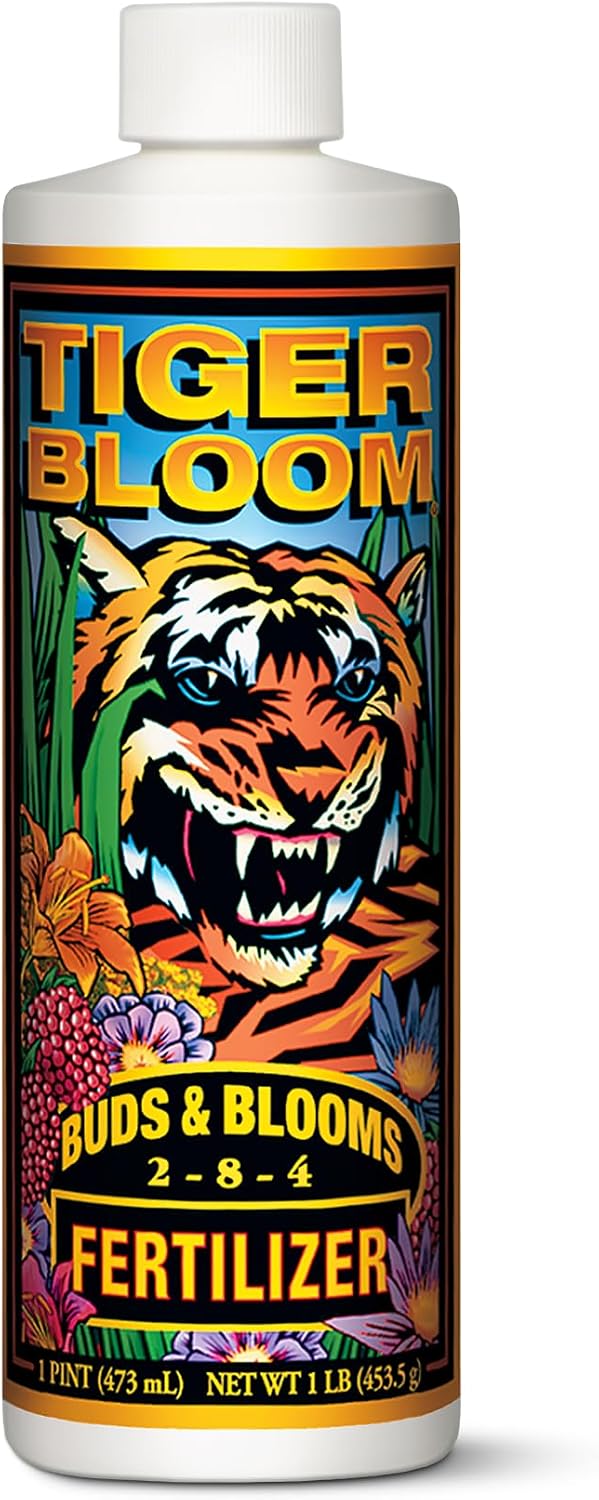
| N-P-K ratio | 2-8-4 |
|---|---|
| Form | Liquid |
| Unit Count | 16 Fluid Ounces |
| Application Method | Watering; Foliar spraying |
| Specific Uses For Product | Hydroponic |
FoxFarm Tiger Bloom is a phosphorus-focused liquid concentrate designed to push plants into strong flowering and bud set. You mix a small amount (2 to 3 teaspoons per gallon for regular feeding, up to 4 teaspoons for heavy feeding) into water and apply through watering or as a foliar spray every other watering once blooms begin. Its 2-8-4 N-P-K ratio and added micronutrients make nutrients quickly available, which helps coneflowers develop fuller heads and more persistent blooms during the flowering season. The product works in both soil and hydroponic setups and its liquid form is easy to meter into drip systems or watering cans. Practical limitations are that it is bloom-focused rather than an all-purpose feed so it is not intended for vegetative growth stages and contains phosphorus which some local regulations restrict for lawn use. Also the 16-ounce bottle is concentrated but will still require regular repurchasing for larger beds or frequent heavy feeding.
Best for: Gardeners seeking a performance-oriented bloom booster for flowering perennials who want a fast-acting, easy-to-mix liquid to increase coneflower bloom size and production.
Less Ideal for: Beginners who prefer an all-in-one feed for both growth and flowering or gardeners focusing on non-flowering foliage plants should consider a balanced or vegetative formula instead.
- High phosphorus N-P-K (2-8-4) to promote bud set and larger blooms
- Concentrated liquid form mixes easily for watering or foliar feeding
- Suitable for both soil and hydroponic systems for flexible use
- Quick nutrient uptake and included micronutrients support visible bloom response
- Formulated for flowering only and not ideal as a standalone vegetative fertilizer
- Contains phosphorus which may be restricted in some localities
Verdict: Use Tiger Bloom when you want a targeted, fast-acting liquid fertilizer to boost coneflower bloom size and production during the flowering stage.
Miracle-Gro Shake 'N Feed All Purpose Plant Food, 1 lb

| Item Form | Granules |
|---|---|
| Application Method | Shake and work into soil |
| Target Species | Flowers, Vegetables, Herbs |
| Mixing Ratio | 10-10-10 |
Miracle-Gro Shake 'N Feed All Purpose is a granular, continuous-release fertilizer designed to be shaken onto soil and watered in to feed plants for up to three months. Typical use is straightforward: sprinkle around the root zone of established plants or mix into potting soil at planting, lightly work it into the top inch or two of soil, then water to activate. Notable features include an all-purpose NPK balance shown as 10-10-10, micronutrients to support root and foliage development, and a formula intended to nourish soil microbes for improved nutrient availability. For coneflowers this means less frequent feeding and steady nutrients through the bloom period, which supports stronger stems and more consistent flowering. Practical benefits are ease of application, suitability for in-ground beds and containers, and measured feeding that reduces the need for weekly treatments. Limitations are that it is a general-purpose product rather than a bloom-boosting fertilizer tailored specifically for coneflowers and it must be applied to soil rather than used as a foliar feed.
Best for: Gardeners who want a low-fuss, infrequent feeding option to keep coneflowers and mixed flower beds healthy without frequent maintenance.
Less Ideal for: Growers seeking a specialized high-phosphorus bloom booster or a fast-acting liquid feed for quick corrective feeding.
- Continuous-release granules feed plants for up to three months, reducing application frequency
- All-purpose NPK (10-10-10) with added micronutrients supports both roots and foliage
- Easy shake-on application works for in-ground beds and container plants
- Formulation is stated to support soil microbes, which can improve long-term soil health
- Not specifically formulated as a bloom booster for flowering-only results
- Requires working into soil and watering in rather than quick foliar feeding
Verdict: A convenient, low-maintenance granular fertilizer that delivers steady, three-month feeding ideal for keeping coneflowers healthy with minimal effort.
Miracle-Gro Water Soluble All Purpose Plant Food, 12.5 lb

| Item Form | Powder |
|---|---|
| Specific Uses For Product | Plant Food |
| Coverage | general purpose, suitable for various plants |
| Mixing Ratio | 1 tablespoon per gallon of water |
| Unit Count | 200 Ounce |
Miracle‑Gro Water Soluble All Purpose Plant Food is a concentrated powder fertilizer you mix with water to feed container and in‑ground plants. It supplies a balanced NPK formula and is designed for frequent, repeat applications using a watering can or a garden feeder. Typical use is straightforward: measure the scoop, dissolve in the recommended volume of water, and soak the soil at each plant's base every 1 to 2 weeks. For coneflowers this product provides quick, soluble nutrients that encourage stronger growth and more blooms compared with unfed plants. Notable features include an included scoop and directions for both indoor and outdoor rates and a stated coverage estimate for large areas. Limitations are that it is a general purpose formula rather than a coneflower‑specific bloom booster and it requires regular reapplication during the growing season; gardeners wanting slow‑release feeding or less frequent maintenance may prefer a granular slow‑release or specialty bloom formula instead.
Best for: Buyers who prioritize a reliable, easy‑to‑use fertilizer that delivers fast, visible feeding for perennials like coneflowers and who are willing to follow a regular feeding schedule.
Less Ideal for: Gardeners who want one‑time slow‑release feeding or a specialized bloom‑boosting formula tailored to flowering perennials.
- Water‑soluble formula delivers nutrients quickly to the root zone
- Clear mixing directions and included scoop for easy measuring
- Suitable for both indoor and outdoor use, including containers and in‑ground beds
- Large 12.5 lb container covers a substantial garden area (manufacturer estimate)
- Not formulated specifically for coneflower bloom enhancement
- Requires frequent applications rather than providing long‑lasting release
Verdict: A dependable, fast‑acting water‑soluble fertilizer that reliably feeds coneflowers when used on a regular 1–2 week schedule.
Miracle-Gro Water Soluble All Purpose Plant Food, 1.5 lb

| Item Form | Powder |
|---|---|
| Application Method | Watering Can |
| Target Species | For all flowers, vegetables, trees, shrubs and houseplants |
| Mixing Ratio | 24-8-16 |
This Miracle-Gro water-soluble plant food is a fast-acting powdered fertilizer you mix into a watering can and apply to container or in-ground plants. With an NPK analysis listed as 24-8-16 it supplies a high dose of nitrogen for leafy growth while providing phosphorus and potassium for blooms and root health. Typical use is every 7 to 14 days outdoors or every two weeks for houseplants, using the included scoop for correct dilution or a garden feeder for larger areas. Practical benefits include rapid uptake at the roots, straightforward measuring and application, and broad compatibility with flowers, vegetables, shrubs and trees. Important limitations are the high nitrogen ratio, which favors foliage over flower set if overused, and the need for careful measuring to avoid overfeeding; it is not a slow-release product so benefits are short term and require repeat applications. This is a convenient choice for gardeners who want predictable, quick results and are comfortable following dilution directions.
Best for: Gardeners who want a reliable, quick-acting feed for mixed flower and vegetable beds and who follow label dilution instructions closely to manage risk.
Less Ideal for: Growers seeking a slow-release or low-nitrogen formula tuned specifically to maximize flowering without frequent reapplication should consider specially balanced bloom boosters instead.
- Water-soluble formula starts working quickly at the roots
- Simple watering-can application with included scoop and feeder compatibility
- Labeled for use on a wide range of plants including flowers and vegetables
- Feeds approximately 600 sq. ft. from the 1.5 lb container
- High nitrogen-heavy 24-8-16 ratio can encourage leaf growth over blooms if used too often
- Requires regular reapplication because it is not slow-release
- Must be mixed carefully to avoid overfeeding sensitive plants
Verdict: Use this if you want a fast, easy-to-apply fertilizer that gives predictable, quick growth for coneflowers and mixed garden plantings.
Miracle-Gro Water Soluble All Purpose Plant Food, 3 lb

| Item Form | Powder |
|---|---|
| Application Method | Mix with water in a watering can |
| Target Species | Indoor and outdoor plants, flowers, vegetables, trees and shrubs |
| Unit Count | 48 Ounce |
| Fertilizer Analysis (N-P-K) | 24-8-16 |
Miracle-Gro Water Soluble All Purpose Plant Food is a powdered fertilizer you mix with water to give plants a fast nutrient boost. It is typically used by dissolving the measured scoop into a watering can and soaking the soil at the base of flowers, vegetables, shrubs, trees, or container plants every 7 to 14 days. Notable features include a high-nitrogen 24-8-16 formula that starts working immediately and a clear dosing guide for indoor and outdoor applications. In practice it promotes rapid green growth and can help coneflowers produce healthy foliage and support blooming when applied as directed. Because it is water soluble it delivers nutrients to roots quickly, but that also means it is a short-term feed rather than a slow-release option, so repeat applications are needed during the growing season. The product is presented with usage instructions and an included scoop, and one 3 lb container covers a substantial garden area when mixed according to directions. Avoid overapplication and keep the powder dry and out of reach of children and pets.
Best for: Buyers who want a straightforward, low-risk way to feed coneflowers and other garden plants regularly and prefer clear instructions and predictable results.
Less Ideal for: Gardeners who want a single long-lasting feeding or those seeking an organic or slow-release fertilizer should consider alternative products.
- Fast-acting water-soluble formula delivers nutrients to roots quickly
- Clear mixing and application instructions for indoor and outdoor use
- All-purpose formula safe for a wide range of plants when used as directed
- Includes scoop for consistent dosing and covers a large area when mixed correctly
- Requires frequent reapplication compared with slow-release granular fertilizers
- High nitrogen ratio favors foliage growth and may need pairing with bloom-focused formulas for maximum flower production
Verdict: A reliable, easy-to-use water-soluble feed that gives coneflowers a quick nutrient boost for consistent, low-risk results.
Choosing the Right Fertilizer for Coneflowers: Key Factors to Consider
Nutrient Ratio and Bloom Promotion
Coneflowers need a balanced supply of nitrogen, phosphorus, and potassium with an emphasis on not overdoing nitrogen. Too much nitrogen early in the season encourages leafy, floppy growth and fewer flowers. A formula with modest nitrogen, adequate phosphorus, and steady potassium usually supports robust bloom set and stem strength.
Look for fertilizers that also include trace micronutrients such as iron, manganese, and magnesium. Those elements help with overall plant vigor and color retention, especially in soils that are slightly acidic or depleted. The right nutrient ratio keeps clumps healthy and reduces the need for corrective applications later in the season.
Release Type: Quick Feed Versus Slow Release
Quick-release fertilizers deliver an immediate nutrient boost that is useful for jump-starting growth or rescuing a nutrient-deficient planting. However, they can require more frequent applications and risk burning roots if misapplied. Slow-release or controlled-release formulations provide steadier feeding over weeks to months and fit low-maintenance planting styles.
Choose quick-release for targeted corrections or when you need a rapid bloom response. Choose slow-release when you want consistent nutrition with fewer interventions, such as in mixed borders or when planting large numbers of coneflowers.
Application Method and Ease
How a fertilizer is applied affects accuracy and convenience. Granular spreads are simple for beds and borders and can be worked into the topsoil or left on the surface for slow release. Water-soluble or liquid feeds allow precise dosing and are ideal for small containers or spot treatments but require a watering tool and more frequent applications.
Consider how much time you want to spend feeding. If you care for a large bed of coneflowers, a broadcastable granular formula or a slow-release stake can save time. For container-grown plants or young transplants, water-soluble feeds let you control strength and frequency more closely.
Soil Type and pH Compatibility
Coneflowers perform well in a range of soils but nutrient availability depends on soil texture and pH. Sandy soils drain quickly and may need more frequent feeding and organic matter to hold nutrients. Clay soils hold nutrients better but can become compacted; fertilizers that encourage root health are helpful there.
Also consider pH-sensitive micronutrients. In acidic soils some elements are more available, while alkaline soils can lock up iron and manganese. If your soil is outside the neutral range, pick a formulation or accompanying amendment that keeps essential micronutrients accessible.
Feeding Schedule and Maintenance
Feeding frequency affects workload and plant response. Some gardeners prefer a single early-season application of a slow-release product, while others plan periodic liquid feeds through the growing season to maintain peak bloom. Think about the time you have for maintenance when selecting a fertilizer.
Also factor in seasonal needs: a lighter feeding in late summer helps plants prepare for dormancy, whereas heavy late-season nitrogen can delay hardening off. A predictable schedule matched to the product type reduces the risk of overfeeding or missing critical nutrient windows.
Environmental Impact and Runoff Risk
Fertilizer choice influences local water quality and pollinator safety. Highly soluble formulas increase the risk of nutrient runoff after heavy rain, especially on sloped beds or compacted soil. Slow-release options and those with moderate nutrient concentrations lower runoff risk and reduce peak nutrient pulses.
If your garden is near waterways or you manage pollinator plantings, consider products designed to minimize leaching and that do not contain unnecessary additives. Proper application rates and timing also reduce environmental impact while keeping coneflowers healthy.
When to Feed Coneflowers During the Season
Timing feeding to the coneflower growth cycle gives the best results. Apply a light feeding in early spring as new shoots emerge to support root and stem development. Avoid heavy nitrogen later in summer when plants should be shifting toward seed and dormancy.
If you use a slow-release fertilizer, a single application in spring often suffices. With water-soluble feeds, plan 4 to 6 applications spaced several weeks apart through the active growing season, tapering off as bloom declines.
- Early spring: light feed to support growth
- Mid-season: target bloom with balanced nutrients
- Late season: reduce nitrogen to help hardening
Soil Preparation and Incorporating Fertilizer
Good soil preparation increases fertilizer effectiveness. Work organic matter into the planting area to improve structure and nutrient-holding capacity before applying granular fertilizers. For existing beds, top-dressing with compost plus a targeted fertilizer can refresh nutrients without major disturbance.
When incorporating granular products, follow label spread rates and avoid placing granules directly against plant crowns. For water-soluble feeds, apply after watering or during a watering cycle so nutrients move into the root zone.
- Add compost to increase water retention in sandy soils
- Surface top-dressing is usually sufficient for established clumps
- Water in granular applications to reduce volatilization
Fertilizing Potted or Container-Grown Coneflowers
Containers have limited soil volume and require more frequent feeding than in-ground plantings. Choose a water-soluble fertilizer at a reduced strength and apply on a regular schedule, usually every two to four weeks during active growth. Slow-release granules formulated for containers are another low-effort option but monitor for salt buildup.
Use a potting mix with added organic matter to buffer nutrient swings and flush containers periodically to prevent mineral accumulation. Reduce feeding in late summer to encourage normal seasonal transition.
- Use half-strength liquid feeds for regular applications
- Consider slow-release granules labeled for container use
- Flush containers once a year to prevent salt build-up
Supporting Pollinators While Fertilizing
Coneflowers are pollinator magnets, so fertilizing practices should avoid harming bees and butterflies. Avoid foliar sprays during peak bloom times and do not apply fertilizer in a way that leaves sticky residues on flowers. Applying granular feeds to the soil rather than spraying foliage reduces direct contact with pollinators.
Time applications for early morning or late afternoon when pollinator activity is lower. Also avoid broad-spectrum pesticide additives or systemic products combined with feeds when pollinator presence is high.
- Apply to soil, not flower heads
- Avoid spraying during midday pollinator activity
- Use products free of unnecessary pesticide additives
Adjusting Feeding for Different Garden Conditions
Match feeding to local conditions such as sun exposure, moisture, and soil fertility. In high-light, well-drained sites, coneflowers may use nutrients faster and benefit from slightly more frequent feeding. In heavier shade or poor-draining soils, reduce frequency and focus on improving soil drainage and organic matter first.
For drought-prone gardens, select formulations that do not require frequent watering to be effective, or pair fertilizer with mulching and moisture-conserving practices to avoid stressing plants.
- Sunny, well-drained: more frequent, lighter feeds
- Shady or wet sites: reduce frequency and improve soil
- Drought-prone: use moisture-retentive amendments with fertilizer
How We Chose the Best Fertilizer for Coneflowers
Our shortlist focuses on fertilizers that are appropriate for established and recently planted coneflowers in typical home-garden settings. We prioritized products and formulations that deliver the nutrient timing and balance coneflowers need without promoting weak, leggy growth. Key evaluation criteria included nutrient ratio and release type, ease of application, longevity of feeding, and suitability for common soil types and garden conditions. We excluded specialty formulations intended only for turf, houseplants, or high-nitrogen general-purpose feeds that commonly push excessive leafy growth on flowering perennials. We also excluded products requiring specialized applicators or professional-only equipment. The specific dimensions we judged were: the macronutrient balance and presence of micronutrients relevant to flowering, whether the fertilizer is slow-release or quick-acting, how simple it is to apply correctly in a small garden bed or mixed perennial border, and the expected frequency of reapplication. We also considered how well each option fits low-maintenance versus hands-on care routines. These criteria reflect practical tradeoffs gardeners face when keeping coneflowers healthy and floriferous.
FAQ
How often should I fertilize established coneflower clumps?
Often once in spring with a slow-release product is enough for established clumps. If using a water-soluble feed, gardeners usually apply every 4 to 6 weeks through the growing season, tapering off in late summer.
Can I use a high-nitrogen fertilizer to make coneflowers greener?
High nitrogen will promote leafy growth but can reduce flowering and make stems floppy. Choose a balanced or bloom-focused ratio rather than a high-nitrogen turf or lawn formula.
Should I feed coneflowers planted in poor soil differently?
Yes. Improve soil with compost first and consider a slow-release fertilizer to provide steady nutrients. Poor soils may need slightly more frequent applications until organic matter builds up.
Are organic fertilizers effective for coneflowers?
Organic fertilizers can be effective, supplying nutrients more slowly and improving soil biology. They often require more frequent or higher-volume applications early on but benefit soil structure over time.
Will fertilizing affect seedhead production for winter interest?
Feeding generally does not prevent seedhead formation unless heavy late-season nitrogen delays dormancy. To preserve seedheads, reduce or stop fertilizing late in the season.
How do I avoid fertilizer burn on young transplants?
Use diluted water-soluble feeds at half strength for young plants and avoid placing granular fertilizer in direct contact with roots or the crown. Ensure new transplants are well watered before and after feeding.
Final Verdict
Choose a fertilizer that matches your maintenance style and the soil conditions in your garden. Prioritize a nutrient balance that supports blooming over excessive foliage, and pick a release type that fits how often you want to feed. Consider soil improvement and application care to reduce runoff and protect pollinators. The right approach depends on whether you prefer low-effort spring applications or hands-on liquid feeding for peak-season blooms. Match the product type to your routine and site conditions to keep coneflowers healthy and floriferous year after year.
