

Note: This article contains affiliate links. If you click on these links and make a purchase, I may earn a small commission at no extra cost to you. This helps support my research and content. Read my full affiliate disclosure here.
Dianthus are compact, fragrant perennials and annuals that reward consistent care with abundant, long-lasting blooms. Choosing the right fertilizer for dianthus matters because these plants respond to nutrient balance and feeding frequency more than sheer strength. The wrong ratio can produce excess leafy growth at the expense of flowers or aggravate soil salt buildup in shallow-rooted plants. This guide presents seven shortlisted fertilizers suited for dianthus and similar rock garden and border conditions. We evaluated options for nutrient ratio, application ease, and soil compatibility to help you pick the feeding approach that fits your garden and bloom goals.
Top Picks at a Glance
| Best Overall The best all-around choice for most situations | Miracle-Gro Water Soluble Bloom Booster Flower Food, 4 lb |  |
| Best Quality Built to a higher standard if you want something more solid | JR Peters Jack's Classic 10-30-20 Blossom Booster Water-Soluble Fertilizer, 1.5 lb |  |
| Best Value The sweet spot between price and what you get | Espoma Flower-Tone Organic Fertilizer, 4 lb. Bag, 2-Pack |  |
| Best Budget The cheapest option that still gets the job done reliably | Miracle-Gro Water Soluble Bloom Booster Flower Food, 10-52-10, 1 lb |  |
| Highest Rated A top-rated pick with lots of positive feedback | Miracle-Gro Water Soluble All Purpose Plant Food, 12.5 lb |  |
| Most Popular A crowd favorite that many people choose with confidence | Miracle-Gro Water Soluble All Purpose Plant Food, 1.5 lb |  |
| Best Seller A high-volume bestseller chosen again and again | Scotts Super Bloom Water-Soluble Plant Food (2 lb) |  |
Miracle-Gro Water Soluble Bloom Booster Flower Food, 4 lb

| Item Form | Powder |
|---|---|
| Application Method | Water Soluble |
| Target Species | flowers |
| Mixing Ratio | 1 tablespoon per gallon |
This Miracle‑Gro Bloom Booster is a water‑soluble powder designed to promote bigger, more colorful blooms on annuals and perennials. It mixes easily in a watering can (mixing ratio 1 tablespoon per gallon for outdoor use) and can also be used with a garden feeder to treat multiple containers and flower beds. The high phosphorus 10-52-10 formulation is the notable feature for encouraging bud set and more abundant flowers, and it delivers results quickly because nutrients dissolve and reach roots fast. Typical use is every 7 to 14 days during the growing season, which makes it convenient for regular maintenance of flowering groundcovers like creeping phlox or mixed container displays. Limitations include the frequent reapplication schedule compared with slow‑release granular fertilizers and the focused bloom‑boosting formula which is not balanced for leafy growth or nonflowering plants. It is best used as a periodic flowering supplement alongside a basic all‑purpose feed or when you specifically want to increase bloom production.
Best for: Gardeners who prioritize frequent, visible flowering results and want an easy soluble booster to use on spring and summer bloomers such as creeping phlox in beds and containers.
Less Ideal for: Those seeking a low‑maintenance, slow‑release fertilizer for foliage development or for primarily nonflowering perennials should consider an all‑purpose or slow‑release option instead.
- High phosphorus 10-52-10 formula to encourage bud formation and more blooms
- Water‑soluble powder that dissolves quickly for fast nutrient uptake
- Works with a watering can or Miracle‑Gro Garden Feeder for flexible application
- Clear mixing directions (1 tablespoon per gallon) make dosing straightforward
- Requires feeding every 7–14 days rather than long‑term slow release
- Specialized bloom formula may not support vigorous leafy growth for nonflowering periods
Verdict: Choose this bloom booster when you want a fast‑acting, water‑soluble fertilizer that reliably increases flower production in creeping phlox and other bloom‑focused plantings.
JR Peters Jack's Classic 10-30-20 Blossom Booster Water-Soluble Fertilizer, 1.5 lb

| Item Form | Powder |
|---|---|
| Application Method | Water-Soluble |
| Specific Uses For Product | Blend |
| Target Species | Flowers |
This Jack's Classic 10-30-20 Blossom Booster is a concentrated water-soluble powder designed to increase bloom production in flowering plants. You dissolve measured amounts in water to make multiple gallons of feed solution, which makes it easy to apply through a watering can or a hose-end sprayer for container-grown mandevilla and garden beds. The 10-30-20 N-P-K balance prioritizes phosphorus to encourage brighter, more plentiful flowers while included micronutrients support overall plant health. Because it is a powdered concentrate, a little goes a long way and storage life is typically longer than premixed liquids. Limitations are that you must measure and mix correctly to avoid overfeeding, and it is tailored to flowering performance rather than overall foliage growth. For gardeners who want consistent, bloom-focused feeding and predictable results, this formula is reliable and straightforward to use on mandevilla during the active flowering season.
Best for: Gardeners who prioritize dependable, bloom-focused feeding for flowering ornamentals and want a concentrated product that makes predictable, repeatable feed solutions.
Less Ideal for: People seeking an all-purpose fertilizer for vigorous leaf growth or those who prefer ready-to-use liquid feeds rather than mixing powder concentrates.
- High phosphorus ratio (10-30-20) to encourage abundant flowering
- Water-soluble powder concentrates make multiple gallons of feed from a small package
- Includes micronutrients to support balanced plant health
- Simple application compatible with watering cans and hose-end feeders
- Requires careful measuring and mixing to prevent nutrient burn
- Focused on bloom production so it may not address nitrogen-driven foliage needs
Verdict: A dependable, concentrated blossom booster that reliably promotes bigger, more plentiful flowers when mixed and applied correctly.
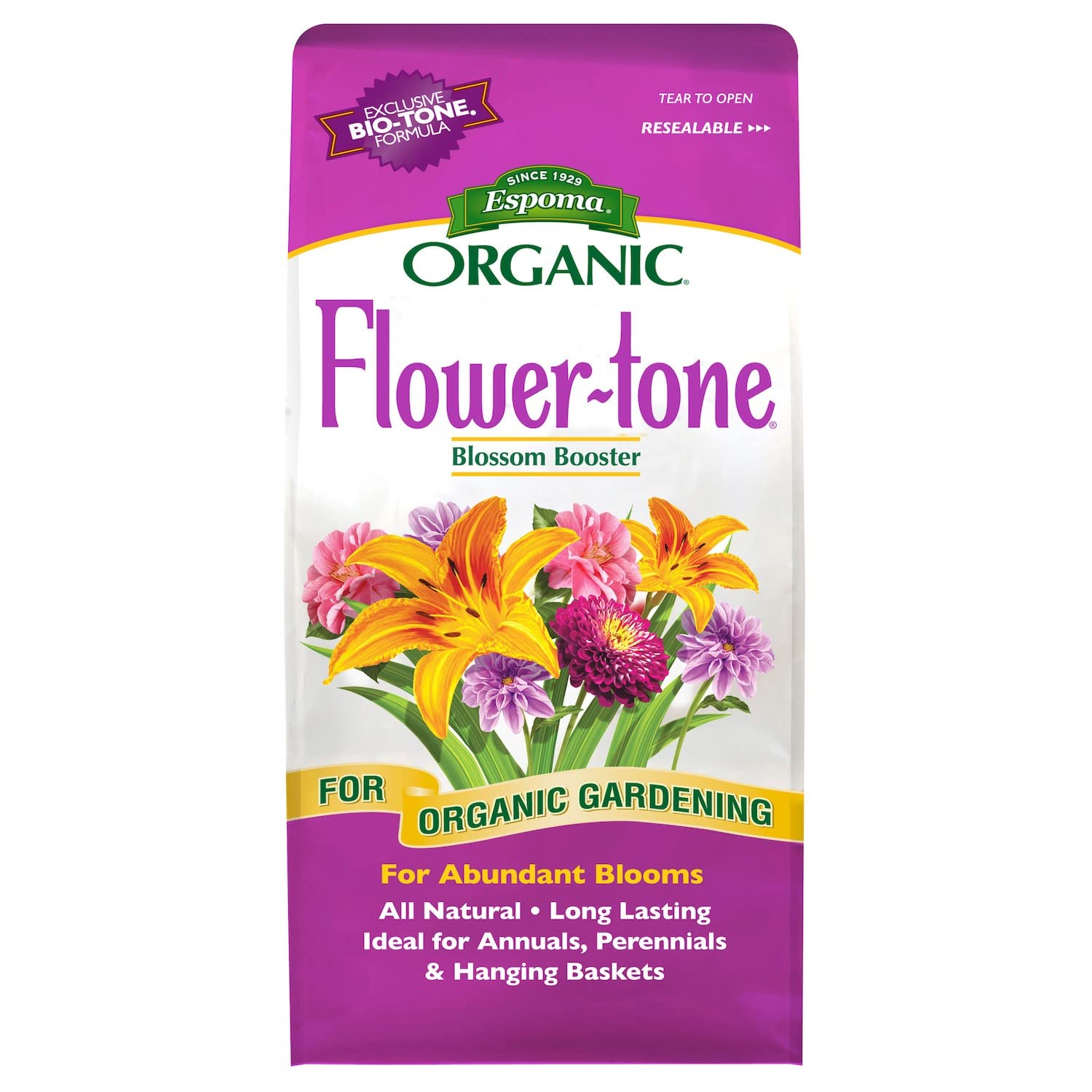
Espoma Flower-Tone Organic Fertilizer, 4 lb. Bag, 2-Pack
| Item Form | Granules |
|---|---|
| Specific Uses For Product | Gardening,Organic,Plant Food |
| Coverage | Medium |
| Target Species | flowers, annuals, perennials, roses |
| Mixing Ratio | 3:4:5 |
Espoma Flower-Tone is an organic granular plant food designed to promote abundant blooms in flowers, perennials, annuals and roses. It is applied directly to the soil around the plant drip line and watered in, with a recommended monthly application during the growing season. The 3-4-5 nutrient ratio with added calcium and the Bio-tone biological formula supply a balanced feed that supports flowering without high nitrogen that would favor foliage over blooms. Because it is granular and labeled for organic gardening, it works well for mixed perennial beds where you want steady, natural nutrient release and compatibility with organic practices. The product comes in convenient 4 pound bags sold as a two-pack for repeat applications. Limitations are that it is a medium-coverage granular feed rather than a fast-acting liquid, so results accumulate over weeks, and you must follow monthly repeat applications for sustained bloom performance.
Best for: Gardeners who want an easy, organic monthly feed to boost blooms in mixed perennial and flower beds and prefer a product that supports soil biology.
Less Ideal for: Growers who need immediate, fast-acting nutrient results or who are managing very large beds where concentrated coverage per application is the priority.
- Organic formula approved for organic gardening and safe for use around flowers and perennials
- Balanced 3-4-5 NPK with added calcium supports bloom production rather than excess leaf growth
- Granular form is easy to apply around drip lines and provides steady nutrient release
- Includes Espoma's Bio-tone biological formula to support soil biology and root health
- Medium coverage means larger beds will require multiple bags for full-season feeding
- Slower to show results compared with liquid or soluble fertilizers
Verdict: A dependable organic granular fertilizer that steadily promotes bigger, healthier blooms in perennial and flower beds when used as a monthly feed.
Miracle-Gro Water Soluble Bloom Booster Flower Food, 10-52-10, 1 lb

| Item Form | Liquid |
|---|---|
| Application Method | Water Soluble |
| Coverage | 500 square feet |
| Target Species | all blooming plants |
| Mixing Ratio | 1 tablespoon/gallon (1.5 tsp for indoor plants) |
This Miracle-Gro bloom booster is a water-soluble plant food designed for flowering annuals and perennials, and it is typically mixed into a watering can or used with a garden feeder. The 10-52-10 formula supplies a high phosphorus dose aimed at increasing bud set and flower production, and it starts working quickly through root and foliar feeding when applied as directed. Practical features include a simple mixing ratio (1 tablespoon per gallon for outdoor use, reduced rate for indoor plants) and compatibility with the Miracle-Gro garden feeder for easy coverage up to about 500 square feet per refill. For gardeners focused on colorful displays, the concentrated phosphorus and repeat feeding schedule (every 7 to 14 days during bloom) deliver noticeably fuller flower shows. Limitations are that it is specifically a bloom booster rather than an all-purpose fertilizer and should be used only during bud set and bloom to avoid nutrient imbalance; following label rates is important to prevent overfeeding. For basic container or bedding displays, it is an easy-to-use option that targets bloom performance without complicated application steps.
Best for: Gardeners who want an affordable, straightforward booster to increase flower production on annuals and container displays and who plan to feed regularly during the bloom period.
Less Ideal for: Those seeking an all-in-one, season-long fertilizer or a slow-release product for hands-off maintenance should look elsewhere.
- High phosphorus 10-52-10 formula to promote more blooms and better bud set
- Water-soluble for quick uptake and easy mixing in a watering can or garden feeder
- Clear mixing instructions with lower indoor rate to reduce risk of burning when used as directed
- Covers a substantial area per feeder refill, useful for beds and multiple containers
- Focused on bloom boosting rather than providing a balanced, all-season nutrient program
Verdict: If you want an inexpensive, easy-to-use booster that reliably increases blooms on annuals and containers, this is a strong, no-frills choice.
Miracle-Gro Water Soluble All Purpose Plant Food, 12.5 lb

| Item Form | Powder |
|---|---|
| Specific Uses For Product | Plant Food |
| Coverage | general purpose, suitable for various plants |
| Mixing Ratio | 1 tablespoon per gallon of water |
Miracle‑Gro Water Soluble All Purpose is a powder fertilizer designed to dissolve in water and deliver fast nutrients to indoor and outdoor plants. Gardeners mix the recommended scoop with a watering can or use a compatible garden feeder to apply directly to the soil around roots; the product gives routine feedings every 7 to 14 days outdoors or every 2 weeks for houseplants. Notable features include an NPK of 24‑8‑16 for strong vegetative growth, a quoted coverage of about 5,000 sq ft from a 12.5 lb container, and an included scoop with separate measuring ends for indoor and outdoor rates. In practice this means quick uptake for leafy growth and an easy, repeatable dosing routine for reliability across container and in‑ground Clusia specimens. Limitations are that it is a general‑purpose formula rather than a Clusia‑specific mix and frequent applications are required during the growing season, so you will need to follow the label closely to avoid overfeeding.
Best for: Buyers who want a dependable, easy‑to‑measure fertilizer to keep Clusia healthy with consistent, repeatable feedings and straightforward application routines.
Less Ideal for: Growers seeking a slow‑release or custom‑formulated Clusia fertilizer or those who prefer lower‑frequency, hands‑off feeding strategies.
- Fast‑acting water‑soluble formula for near‑instant nutrient availability
- Simple mixing ratios and included scoop make dosing consistent
- Large 12.5 lb container covers a lot of garden area for routine feedings
- Suitable for both container and in‑ground use so it works with potted Clusia and landscape plantings
- General all‑purpose NPK may not match specialized nutrient needs of Clusia at every growth stage
- Requires regular applications during the season rather than a slow‑release schedule
Verdict: A reliable, easy‑to‑mix water‑soluble fertilizer that delivers fast, consistent feedings for Clusia in both pots and landscape settings.
Miracle-Gro Water Soluble All Purpose Plant Food, 1.5 lb

| Item Form | Powder |
|---|---|
| Application Method | Watering Can |
| Target Species | For all flowers, vegetables, trees, shrubs and houseplants |
| Mixing Ratio | 24-8-16 |
Miracle-Gro Water Soluble All Purpose Plant Food is a powder concentrate you mix with water to give a quick nutrient boost to flowers, vegetables, houseplants, shrubs and trees. It is typically dissolved in a watering can or used with a compatible garden feeder to soak soil at the base of plants, delivering nitrogen-heavy nutrition that shows effects faster than granular fertilizers. Notable features include an easy scooping method for indoor and outdoor dosing, compatibility with containers and in-ground planting, and clear directions for feeding every one to two weeks. In practice this makes the product a convenient option when you want visible growth and greener foliage quickly, and the 1.5 lb container covers roughly 600 sq. ft. Important limitations are that it is a fast-release, high-nitrogen formula best used as a regular quick feed rather than a long-term slow-release solution, and it requires careful measuring to avoid overfeeding. For routine maintenance combine with good watering and follow the label to avoid nutrient imbalance.
Best for: Buyers who prefer proven, easy-to-use feeding routines and want noticeable growth quickly for a variety of garden and houseplants, guided by established usage directions and broad user experience.
Less Ideal for: Gardeners seeking a single, long-term slow-release solution or those who prefer organic or low-nitrogen fertilizers for sensitive plantings should consider alternative products.
- Water-soluble powder starts working quickly at the roots when mixed and applied
- Clear, simple dosing for indoor and outdoor use with included scoop guidance
- Suitable for a wide range of plants including vegetables, flowers, shrubs and houseplants
- Covers a large area from a small container (about 600 sq. ft. per 1.5 lb)
- Fast-release formula means benefits are short-term compared with slow-release granular fertilizers
- Requires precise measuring and regular reapplication to avoid overfeeding
Verdict: A reliable, fast-acting water-soluble plant food for gardeners who want easy, repeatable feeding and quick visible results.
Scotts Super Bloom Water-Soluble Plant Food (2 lb)

| N-P-K | 12-55-6 |
|---|---|
| Item Form | Liquid |
| Target Species | Outdoor flowers, fruiting plants, containers, bed areas |
| Mixing Ratio | 2 tsp per gallon; feed every 7-14 days |
| Unit Count | 32 Ounce |
Scotts Super Bloom is a water-soluble plant food designed to encourage flowering by supplying a high-phosphorus NPK of 12-55-6. It dissolves in water (two teaspoons per gallon) and is applied to the soil around the plant base with a watering can or jug every 7–14 days, which makes it simple to add into regular watering routines. For dianthus and other flowering perennials or annuals, the elevated phosphorus encourages stronger bud set and more prolific blooms without specialized equipment. The liquid form feeds plants instantly and the manufacturer notes it will not burn plants when used as directed, which suits gardeners who prefer cautious, repeat feedings. Limitations are that frequent application is required for results and the high phosphorus ratio is focused on flowering rather than leafy growth or overall balanced nutrition, so it should be used alongside a program that addresses other nutrient needs if desired.
Best for: Gardeners who prioritize reliably bigger, more frequent blooms and prefer a low-risk, easy-to-follow liquid fertilizer routine for outdoor flowers and container plantings.
Less Ideal for: Growers seeking an all-purpose balanced fertilizer for foliage development or those who want a slow-release, low-frequency feed option.
- High phosphorus formula (12-55-6) promotes stronger blooms and bud set
- Water-soluble and fast-acting when mixed into a watering can
- Simple, repeatable application instructions suitable for routine care
- Manufacturer states it is safe and will not burn when used as directed
- Requires feeding every 1–2 weeks to maintain bloom encouragement
- High phosphorus ratio is specialized for flowering and not a balanced all-purpose feed
Verdict: Use this high-phosphorus, water-soluble formula when you want a safe, easy-to-apply boost that reliably increases blooms on dianthus and other flowering plants.
Choosing the Right Fertilizer for Dianthus: Key Factors to Consider
Nutrient Ratio and Timing
Dianthus perform best with a balanced feeding approach that favors bloom production over vigorous leaf growth. Look for formulations with moderate nitrogen, slightly elevated phosphorus, and adequate potassium. That balance supports strong stems and abundant flowers without encouraging floppy foliage.
Timing is equally important. A light feed at planting followed by regular, low-strength applications during the active bloom period helps maintain continuous flowering. Heavy single-dose feeding can cause salt buildup or uneven growth, especially in containers.
Salt Index and Root Sensitivity
Many dianthus varieties have relatively fine, shallow root systems that are sensitive to high soluble salts. Fertilizers with a low to moderate salt index reduce the risk of root burn and leaf scorch. Organic or slow-release formulations generally present nutrients more gently than high-concentration water-soluble feeds.
If you plant in small pots or shallow borders that dry quickly, choose products labeled low-salt or use reduced-strength applications and frequent watering cycles to flush excess salts. Monitoring plants for leaf tip burn after feeding helps catch issues early.
Formulation and Application Method
Fertilizers come as granular, water-soluble, and slow-release coated prills, each with practical implications. Water-soluble feeds let you deliver nutrients quickly for a fast bloom response, but they require more frequent applications. Granular and slow-release options need fewer interventions and are better for gardeners who prefer low-maintenance care.
Consider whether you will fertilize in containers, border beds, or rock gardens; water-soluble products can be easier for container growers who water frequently, while slow-release granules are convenient in mixed perennial borders.
Soil pH and Compatibility
Dianthus generally prefer neutral to slightly alkaline soil. Some fertilizer formulations include acidifying ingredients that can gradually lower pH, which may not be desirable for dianthus in alkaline-loving stands. Check whether a product contains sulfur or acidifying salts if your soil already trends acidic.
If you are unsure of your soil pH, conduct a simple test before choosing a fertilizer. Adjust the feeding plan based on soil chemistry: in alkaline soils, focus on balanced nutrients without additional acidifiers; in slightly acidic soils, avoid feeds that reduce pH further.
Container Versus In-Ground Needs
Containers dry and leach nutrients more quickly than in-ground beds, so potted dianthus usually need more frequent, lighter feedings. Slow-release granules designed for containers release nutrients predictably over weeks to months, reducing the risk of overfeeding between waterings.
In-ground dianthus benefit from a balanced granular or slow-release product applied at the start of the season and again midseason if blooms begin to fade. Consider the planting depth and surrounding plants when choosing the feed type to avoid nutrient competition or runoff.
Ease of Use and Safety
Clarity of application instructions matters because overfeeding is a common mistake. Products with clear dosage guidelines for both containers and in-ground plantings are easier to use correctly. Look for feeds that allow adjustable application rates so you can feed lightly for continuous bloom or more assertively for a short bloom boost.
Also consider storage and child or pet safety. Dry granules and many slow-release pellets are easy to store and measure. Liquid concentrates require careful dilution and secure storage to prevent spills or accidental ingestion.
When to Start Feeding Dianthus
Begin feeding soon after plants are established and actively growing. For newly planted starts, wait two to three weeks after transplant so roots can settle before introducing supplemental nutrients. Established plants benefit from a light feed at the first sign of new spring growth.
During peak bloom, increase frequency slightly with lower-strength applications rather than a single heavy dose. After the main flush, taper feeding to allow the plant to harden off and prepare for cooler weather.
- Feed lightly at planting and again at first bloom
- Use reduced-strength applications during peak flowering
- Stop heavy feeding several weeks before dormancy
Feeding Schedule for Containers
Containers need more regular attention because nutrients leach with each watering. Use a water-soluble feed at quarter to half the label strength every one to two weeks, or apply a container-formulated slow-release granule at planting that lasts several months.
Always monitor moisture and flush pots occasionally with clear water to prevent salt accumulation. If foliage shows tip burn or leaf discoloration, reduce feed frequency and flush the potting mix.
- Water-soluble feeds: light every 7-14 days
- Slow-release granules: single application at planting for months of feeding
- Flush containers periodically to avoid salt build-up
Organic Options and Soil Health
Organic fertilizers release nutrients more slowly and support soil biology, which can benefit long-term soil structure and microbial activity. Composted amendments and fish-based feeds provide steady nutrition and are gentler on fine root systems.
If you prefer organic feeding, plan for slightly more frequent applications or combine organic granules with a light liquid feed during heavy bloom periods to maintain vigor.
- Organics improve soil biology and reduce salt risk
- May need more frequent applications for immediate bloom response
- Combine granular organics with light liquid feeds when needed
Correcting Common Nutrient Problems
Yellowing leaves and weak stems can indicate nitrogen deficiency, while poor flowering with lush foliage often points to excessive nitrogen relative to phosphorus. A targeted feed with a higher middle number in the N-P-K ratio can encourage more blooms.
If you suspect salt damage from overfeeding, flush the root zone thoroughly and hold off on further fertilizer until the plant recovers. Conduct a soil test for persistent issues to rule out pH or micronutrient imbalances.
- Leaf yellowing: check nitrogen and adjust feed
- Excess leaves with few flowers: reduce nitrogen, increase phosphorus slightly
- Salt damage: flush soil and pause feeding
Practical Tips for Long Blooming
Deadhead spent flowers to encourage more blooms and make the most of your feeding program. Regularly remove weakened or diseased growth so the plant directs energy to healthy stems.
Mulch lightly in borders to retain moisture and moderate soil temperature, but keep mulch away from the crown to avoid rot. Pair sensible irrigation with a balanced feeding schedule for the best bloom longevity.
- Deadhead regularly to prolong flowering
- Use light mulch to conserve moisture without burying crowns
- Match feeding to irrigation patterns for steady nutrient uptake
How We Chose the Best Fertilizer for Dianthus
We focused on fertilizers and feeding methods that match the cultural needs of dianthus: moderate nitrogen, a bloom-supporting phosphorus level, and low-to-moderate salt index to protect shallow roots. Selection criteria emphasized nutrient ratio clarity, delivery method suitability for containers and borders, and how forgiving a product is in varied soil pH and moisture conditions. We prioritized formulations that allow controlled feeding schedules to avoid nutrient spikes and that provide clear application guidance for repeat blooms. Excluded products included high-salt lawn feeds, concentrated starter solutions designed only for transplanting, and mixes formulated for heavy feeders that promote excessive foliage. We also excluded fertilizers without clear guaranteed analysis or unlabeled organic blends where nutrient content was indeterminate. Final choices favored a range of granular, water-soluble, and slow-release formats so gardeners can match product form to planting situation.
FAQ
How often should I fertilize dianthus in a garden bed?
Usually a light application at early spring growth and another midseason feed is sufficient. If blooms fade, a gentle, low-strength application can revive flowering. Avoid heavy or frequent feeds that encourage foliage over flowers.
Can I use general-purpose fertilizer on dianthus?
General-purpose fertilizers can work if they have a balanced ratio and you apply them at reduced strength. Avoid high-nitrogen lawn feeds or formulations meant for heavy feeders, which can reduce bloom production.
Are organic fertilizers effective for dianthus?
Organic feeds are effective and gentler on roots because they release nutrients slowly. They also improve soil biology, but may need slightly more frequent application to sustain heavy bloom periods compared with fast-acting synthetic liquids.
What signs indicate overfertilizing in dianthus?
Symptoms include leaf tip burn, unusual salt crust on the soil surface, and very lush leaf growth with few flowers. If you see these signs, flush the root zone with water and reduce or pause feeding.
Should I change fertilizer when moving dianthus from pots to the ground?
Yes. Transitioning to in-ground planting typically requires less frequent feeding. Use a slow-release granular feed at planting and monitor growth before adding more fertilizer.
Does soil pH affect fertilizer choice for dianthus?
It often does. Dianthus prefer neutral to slightly alkaline soil, so avoid feeds that acidify the soil if your pH already leans low. Testing soil pH helps you choose a compatible formulation.
Final Verdict
Prioritize a fertilizer that supports blooms with a slightly higher phosphorus component, a low salt index, and a delivery method that fits your planting situation. Containers need more frequent, lighter feeding while in-ground dianthus do well with timely granular or slow-release applications. Weigh the tradeoffs between quick-stimulus water-soluble feeds and gentler slow-release or organic options. With appropriate timing and dosage, you can maximize flower production without risking root stress or excessive foliage growth.
