

Note: This article contains affiliate links. If you click on these links and make a purchase, I may earn a small commission at no extra cost to you. This helps support my research and content. Read my full affiliate disclosure here.
Choosing the right fertilizer for raspberry bushes makes a tangible difference in cane strength, fruit size, and season-long productivity. Raspberry plants respond to both the nutrient mix and the way you apply feed, so the wrong choice or timing can waste effort and reduce yields. This guide covers seven well-chosen fertilizer options suited for raspberry beds and container-grown canes. We shortlisted products based on nutrient ratio, ease of use, and suitability for established bushes versus new plantings. Read on to understand the practical tradeoffs and how each option meets common garden situations.
Top Picks at a Glance
| Best Overall The best all-around choice for most situations | Espoma Berry-tone Organic Fertilizer 4-3-4 (4 lb, 2-Pack) |  |
| Best Quality Built to a higher standard if you want something more solid | Down To Earth Acid Mix Organic Fertilizer 4-3-6, 25 lb |  |
| Best Value The sweet spot between price and what you get | Espoma Berry-Tone Organic Fertilizer for Berries, 4 lb |  |
| Best Budget The cheapest option that still gets the job done reliably | Jobe's Organics Granular Fruit & Nut Fertilizer, 4 lb |  |
| Highest Rated A top-rated pick with lots of positive feedback | HOSS Berry Blend Fertilizer 8-12-12, Granular, 5 lb |  |
| Most Popular A crowd favorite that many people choose with confidence | Farmer's Secret Fruit & Bloom Booster Liquid Fertilizer (8 oz) |  |
| Best Seller A high-volume bestseller chosen again and again | Down To Earth Organic Acid Mix Fertilizer 4-3-6, 1 lb |  |
Espoma Berry-tone Organic Fertilizer 4-3-4 (4 lb, 2-Pack)

| Item Form | Granules |
|---|---|
| Target Species | Berries |
| Mixing Ratio | 4:3:4 |
| Coverage | Medium |
| Specific Uses For Product | Gardening |
Espoma Berry-tone is an organic granular fertilizer made specifically for berry crops such as raspberries. It supplies a balanced 4-3-4 NPK ratio with added sulfur and an organic Bio-tone mix intended to support root development and fruiting. Typical use is at planting—mixing a cup into amended soil per the directions—or as a seasonal feed in early and late spring to maintain vigor and yield. Because it is granular and ready to use, application is straightforward and does not require dilution. Practical benefits include organic-approved ingredients suitable for certified organic gardens, a formulation tailored to berries, and clear planting directions that help establish young bushes. Limitations are that the bag size and medium coverage mean multiple applications or larger quantities are needed for big plantings, and granular feeding gives slower nutrient release than soluble feeds when an immediate boost is required. Overall it fits gardeners who prefer organic, low-maintenance feeding for raspberry patches and other berry beds.
Best for: Gardeners who want an organic, low-fuss fertilizer tailored to raspberries and other berries and prefer feeding at planting and with predictable seasonal applications.
Less Ideal for: Growers seeking rapid-corrective feeding or those managing very large commercial plantings that need high-volume coverage or concentrated liquid feeds.
- Balanced 4-3-4 NPK formulated for berry growth and fruiting
- Organic ingredients and approved for organic gardening
- Granular, ready-to-use form that is easy to apply at planting or as a seasonal feed
- Medium coverage per bag may require multiple bags for larger raspberry patches
- Granular formula releases nutrients more slowly than liquid fertilizers
Verdict: A ready-to-use organic granular fertilizer tuned for berry plants that makes establishing and maintaining raspberry bushes simple and dependable.
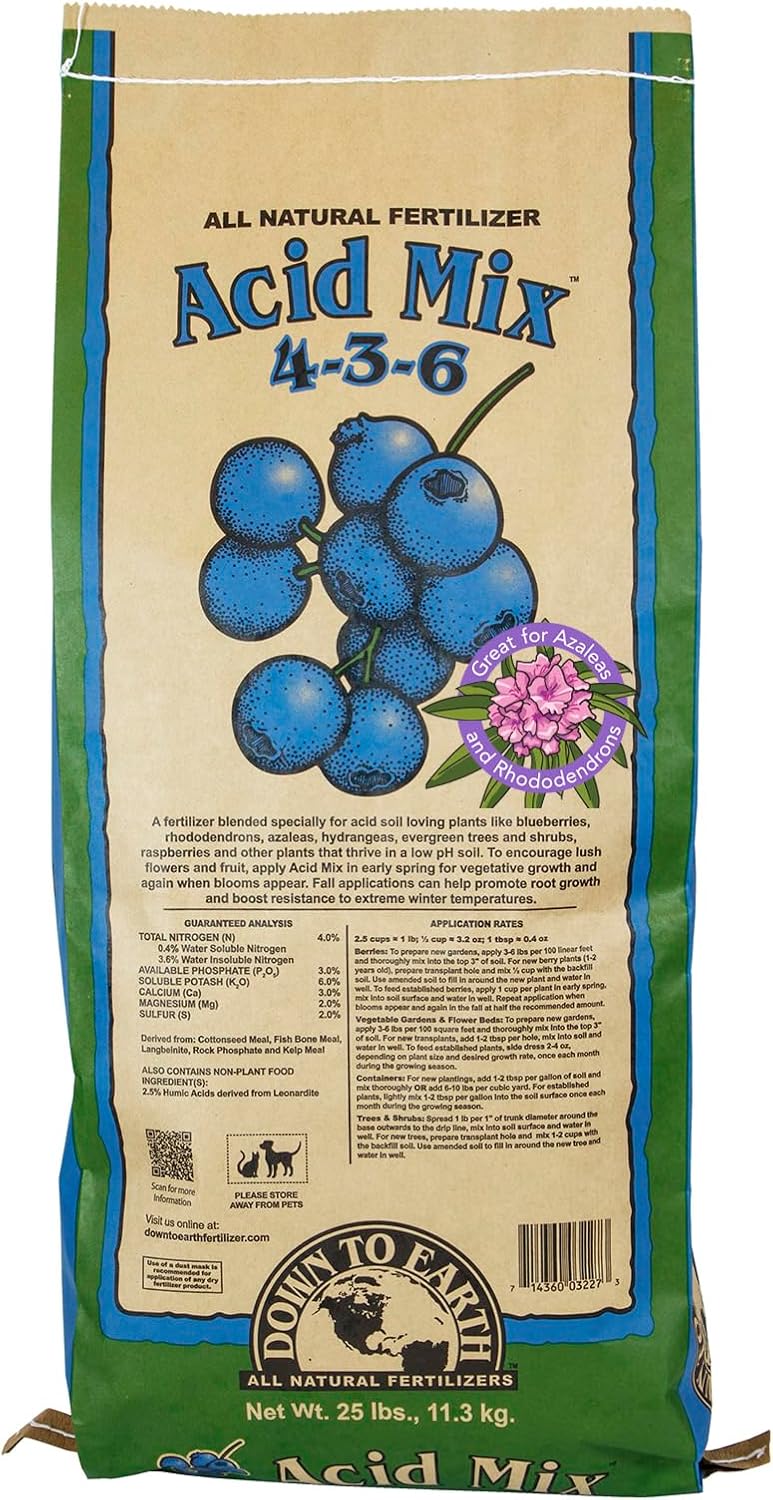
Down To Earth Acid Mix Organic Fertilizer 4-3-6, 25 lb
| Item Form | Granules |
|---|---|
| Target Species | Acid-Loving Plants |
| Mixing Ratio | 4-3-6 |
| Coverage | Medium |
Down To Earth Acid Mix is an all-natural granular fertilizer with an N-P-K ratio of 4-3-6 designed for acid-loving shrubs and fruiting plants. You spread it on the soil surface or work it into planting holes at transplant time and water in; the brand recommends applications in early spring, at bloom and in fall to support vegetative growth, flowering and root hardening. The formula lists ingredients like cottonseed meal, fish bone meal, rock phosphate, kelp and humates, which supply slow-release nitrogen and phosphate plus organic matter to improve soil biology over time. That organic feed approach supports steady growth and can boost flower set and fruit yield on raspberries without relying on synthetic salts. Important limitations are that it does not change soil pH, so it must be paired with sulfur if you need to lower pH, and the lower N content compared with high-analysis synthetic feeds means results are steadier rather than fast and flashy. Also it contains phosphorus so check local rules about phosphorus use on non-agricultural turf if relevant.
Best for: Gardeners focused on reliable, biologically driven performance for raspberry beds who prefer organic nutrient sources and steady, longer-term improvements in yield and plant health.
Less Ideal for: Growers who need very rapid, high-nitrogen feed for quick greening or who expect the fertilizer to correct acidic soil without additional amendments.
- Formulated specifically for acid-loving plants common to raspberry culture
- Organic ingredient blend (fish bone meal, kelp, humates) that supports soil biology and steady nutrient release
- Suitable for multiple application times: spring, bloom and fall for balanced growth and fruiting
- Granular form is easy to apply to beds or mix into planting holes
- Does not alter soil pH so a separate amendment is required to correct acidity
- Lower immediate N availability compared with high-analysis synthetic fertilizers, so effects are slower to appear
Verdict: A performance-minded organic fertilizer tailored to acid-loving fruiting shrubs that delivers steady nutrient release and supports better flowering and yields.
Espoma Berry-Tone Organic Fertilizer for Berries, 4 lb

| Item Form | Granules |
|---|---|
| Application Method | Sprinkle |
| Coverage | 40 square feet |
| Target Species | berries |
| Mixing Ratio | 10:100 (new beds), 5:100 (established beds) |
Espoma Berry-Tone is a ready-to-use granular organic fertilizer designed specifically for berries such as raspberries, strawberries, blueberries, and blackberries. It is typically sprinkled around newly planted crowns or applied to established beds in early and late spring to encourage healthy growth and fruit production. Notable features include an N-P-K analysis of 4-3-4, a Bio-tone microbial formula, and a sulfur component that can benefit acid-loving berries. Because it is approved for organic gardening, it fits into organic maintenance plans without mixing hassles. Practical benefits include easy application, targeted nutrient balance for berry needs, and coverage suitable for small plots—mixing ratios are provided for new and established beds when users want to incorporate it into soil. Limitations are that the product does not list a full ingredient breakdown on the label and the coverage figures are modest, so larger plantings will require multiple bags and regular reapplication according to feeding schedules.
Best for: Home gardeners who want a straightforward, organic fertilizer tailored to berry bushes and prefer low-effort seasonal feeding for better fruit yields.
Less Ideal for: Large-scale growers or those managing extensive raspberry plantings who need high-coverage or concentrated formulations for commercial production.
- Formulated specifically for berries with a 4-3-4 N-P-K balance
- Ready-to-use granules require no pre-mixing for surface applications
- Contains Bio-tone microbes and sulfur to support soil biology and acid-loving plants
- Approved for organic gardening and suitable for organic production
- Limited coverage per bag, so multiple bags are needed for larger raspberry patches
- Full ingredient breakdown is not specified on the label
Verdict: A simple, organic granular fertilizer tailored to berry plants that makes seasonal feeding quick and reliable for home raspberry growers.
Jobe's Organics Granular Fruit & Nut Fertilizer, 4 lb

| NPK | 3-5-5 |
|---|---|
| Form | Granules |
| Target Species | Fruit and nut |
| Application frequency | Every 4-8 weeks |
Jobe's Organics Granular Fruit and Nut Fertilizer is a small 4 lb bag of OMRI-listed organic granules formulated with a 3-5-5 NPK that deliver slow-release nutrients aimed at root uptake. You apply it around the root zone every 4 to 8 weeks during the growing season to support flowering and fruit set and to improve soil biology. Ingredients such as feather meal, bone meal and processed poultry manure supply nitrogen, phosphate and potassium plus calcium and sulfur for balanced nutrition. The granular form makes it easy to measure and spread without the splash or drift of liquids, and its slow-release nature reduces the risk of burning or overfeeding. Because the bag is compact this product is convenient for trial plots, small gardens or supplemental feeding of established raspberry bushes, but frequent applications or larger plantings will require buying multiple bags. It is safe for use around gardens when stored and applied as directed, though you should avoid windy application and keep it away from children and pets.
Best for: Gardeners looking for an affordable, organic granular fertilizer to supplement and maintain fruiting shrubs and small raspberry plantings who prefer slow-release feeding and simple application.
Less Ideal for: People managing large raspberry patches or commercial rows who need bulk coverage or a single-season high-analysis feed should consider larger or higher-strength options.
- OMRI-listed organic formula suitable for organic gardening
- Balanced 3-5-5 NPK with added calcium and sulfur for fruit development
- Slow-release granules reduce burn risk and feed roots over time
- Easy to measure and apply every 4–8 weeks
- Small 4 lb bag means limited coverage for multiple bushes or larger plots
Verdict: A budget-friendly organic granular fertilizer that delivers balanced slow-release nutrition for small raspberry gardens and supplemental feeding.
HOSS Berry Blend Fertilizer 8-12-12, Granular, 5 lb

| Item Form | Granules |
|---|---|
| Specific Uses For Product | Berry Plants, Blackberries, Raspberries, Strawberries |
| Unit Count | 80 Ounce |
| Item Weight | 5 pounds |
HOSS Berry Blend is a granular fertilizer formulated specifically for berry plants, delivering an 8-12-12 N-P-K balance with added micronutrients and soil amendments. It is typically applied to strawberry, raspberry, and blackberry beds or raised planters at planting and as a periodic feed during the growing season to support foliage, root development, and fruit set. Notable features include a mix of quick- and slow-release nitrogen sources, calcium, magnesium and trace minerals, plus biochar, humates and mycorrhizal fungi to aid soil health and nutrient uptake. In practice this means steadier feeding over weeks rather than a single flush, improved nutrient availability in light soils, and potential gains in flavor and color when used as part of a regular feeding program. Limits to consider are that it is a general berry formula rather than a raspberry-specific program and granules require even distribution and occasional incorporation to avoid uneven feeding. For reliability-focused gardeners it offers predictable, sustained nutrition without frequent reapplication.
Best for: Gardeners who want a dependable, season-long feeding plan for raspberry bushes and other small berry plantings and prefer a single balanced product that supports soil health as well as nutrition.
Less Ideal for: Growers seeking a crop-specific granular program with tailored microdosing or those who prefer liquid feeds for quick corrective applications.
- Balanced 8-12-12 N-P-K tailored to berry needs for foliage, roots, and fruit set
- Includes micronutrients (Ca, Mg, Fe, Mn, Zn, Cu) to correct common deficiencies
- Combines fast- and slow-release nitrogen for immediate and sustained feeding
- Contains soil-supporting additives (biochar, humates, mycorrhizae) to improve nutrient uptake
- Granular form requires manual spreading and light incorporation to ensure even distribution
- Not labeled with application rates for every berry variety so users must follow general guidance
Verdict: Choose this if you want a reliable, all-in-one granular fertilizer that delivers balanced N-P-K plus micronutrients and soil amendments to support healthy, productive raspberry bushes.
Farmer's Secret Fruit & Bloom Booster Liquid Fertilizer (8 oz)

| Item Form | Liquid |
|---|---|
| Unit Count | 8 Fluid Ounces |
| Mixing Ratio | 1 teaspoon : 2 gallons |
| Application Method | dilute with water and pour or spray |
Farmer's Secret Fruit & Bloom Booster is a concentrated liquid feed designed for use on flowering and fruiting plants, applied either to the soil or as a foliar spray. It is mixed at 1 teaspoon per 2 gallons of water and recommended every 1 to 2 weeks once plants begin to bud. The formula emphasizes higher phosphorus and potassium to encourage root development, bloom set and higher yields, and also contains nitrogen plus trace minerals like iron and zinc. In practice a little goes a long way, so the 8 ounce bottle will treat many applications for a small raspberry patch. Application is straightforward with a watering can, sprayer or through irrigation. Limitations: because it is a concentrated liquid you must measure carefully to avoid overfeeding, and it is intended for mid-to-late growth stages rather than general maintenance. For gardeners who prefer granular slow-release feeds or want an all-season fertilizer schedule, this product is a targeted bloom/fruit booster rather than a full-season sole feed.
Best for: Gardeners who want a proven, easy-to-use booster to increase blooms and fruit on raspberry bushes and are comfortable following dilution guidance and an occasional feeding schedule.
Less Ideal for: People seeking a single product to feed plants year-round or those who prefer granular, slow-release fertilizers for low-maintenance feeding.
- Concentrated formula treats many applications from a small bottle
- High phosphorus and potassium mix encourages flowering and fruit set
- Can be applied to soil or used as a foliar spray and is compatible with irrigation
- Includes trace minerals (iron, zinc, calcium) that support overall plant health
- Requires careful dilution to avoid overapplication
- Formulated for mid-to-late stages of growth and not intended as an all-season sole fertilizer
Verdict: Use this concentrated liquid booster when your raspberry canes begin to bud to encourage stronger roots, more blooms and bigger fruit yields.
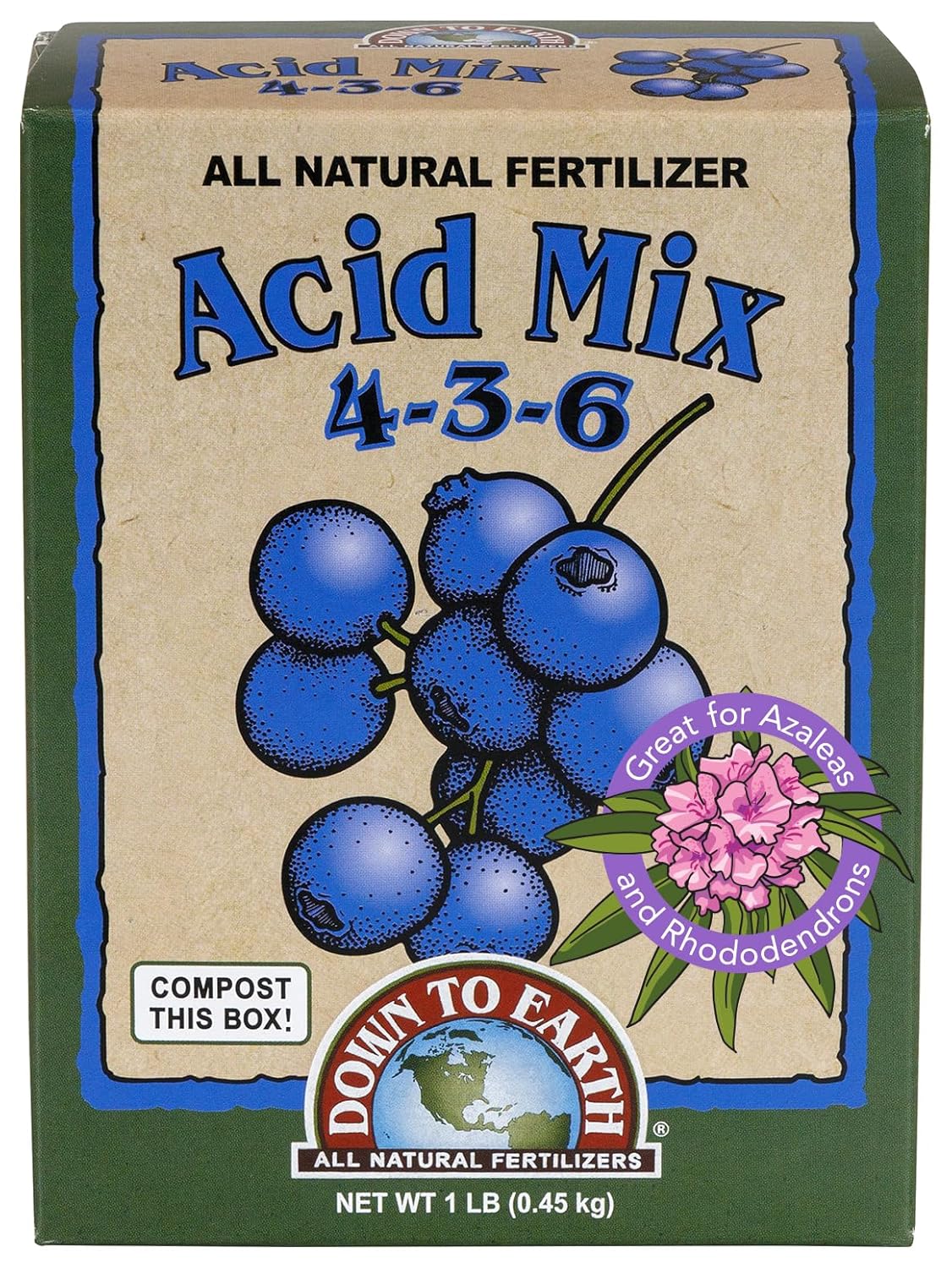
Down To Earth Organic Acid Mix Fertilizer 4-3-6, 1 lb
| Item Form | Granules |
|---|---|
| Specific Uses For Product | Acid-loving plants |
| Target Species | rhododendrons, azaleas, hydrangeas, evergreen trees and shrubs, blueberries, raspberries |
| Mixing Ratio | 4:3:6 |
This granular Acid Mix from Down To Earth is designed for acid‑loving shrubs and fruits and works well as a routine feed for raspberry bushes. It supplies slow‑release primary and secondary nutrients so you can apply it to the soil surface or work it into planting holes and water it in. The formula lists feather meal, fish bone meal, alfalfa meal, kelp and humates, which provide steady nitrogen and potassium along with organic matter that supports soil biology. Typical use is an early spring application for vegetative growth, a follow up when blooms appear, and an optional fall feed to support roots. The product is shelf stable and OMRI‑listed components support organic gardening. Limitations are that it does not change soil pH by itself and is sold in a small one‑pound size that may require more frequent purchases for larger plantings.
Best for: Home gardeners who prefer organic, low-risk feeding routines for raspberry bushes and want a steady slow‑release fertilizer that supports soil biology without synthetic inputs.
Less Ideal for: Large commercial growers or those who need bulk quantities and prefer a single product to alter soil pH and fertility at the same time.
- Formulated specifically for acid-loving plants like raspberries and blueberries
- Slow-release organic ingredients provide steady nutrition and support soil biology
- Can be applied to soil surface or mixed into soil during planting
- Shelf stable with natural ingredient blend including feather meal, fish bone meal and kelp
- Does not itself adjust soil pH, so separate pH amendments may be needed
- Small 1 lb package may be insufficient for larger raspberry patches
Verdict: A gentle, organic slow‑release fertilizer tailored to acid‑loving plants that makes routine feeding of raspberry bushes simple and low risk.
Choosing the Right Fertilizer for Raspberry Bushes: Key Factors to Consider
Nutrient Ratio and Timing
Raspberry bushes need a balance of nutrients at different growth stages. Early spring feeding should favor nitrogen to support new cane growth, while pre-flowering and fruit-set feeds should emphasize phosphorus and potassium to encourage flowering and fruit development. Overfeeding nitrogen late in the season can produce lush foliage at the expense of fruit or winter hardiness. Match the fertilizer's N-P-K ratio to your planting stage and plan a feeding schedule that aligns with cane development and harvest timing.
Release Type: Slow-Release Versus Quick-Release
Slow-release granular fertilizers provide a steady nutrient supply over weeks to months, reducing the chance of root burn and cutting down on how often you need to apply feed. They work well for established beds where predictable, low-maintenance feeding is desired. Quick-release or soluble fertilizers deliver nutrients rapidly and are useful for correcting deficiencies or giving a boost during flowering, but they require careful measurement and more frequent applications to avoid salt buildup. Consider weather and watering patterns: heavy rains can leach soluble nutrients, while dry spells reduce uptake.
Application Method and Handling
How you apply fertilizer affects both plant health and convenience. Granular spreaders or hand-sprinkled granules are straightforward for long rows, while water-soluble feeds are suited to drip irrigation or hand-watering for precise placement. Foliar feeds can correct short-term deficiencies quickly but should be used sparingly and not during hot sun. For container-grown raspberries, choose lower-dose formulations or frequent light feedings to avoid salt accumulation in the potting mix.
Soil Type and pH Compatibility
Raspberries prefer slightly acidic to neutral soils. Some fertilizers affect soil pH over time or are formulated to be pH-neutral; others contain lime or sulfur additives that alter pH. Test your soil before selecting a fertilizer so you can choose a product that complements existing soil conditions rather than forcing large pH changes. Sandy soils will need more frequent feeding and organic matter to retain nutrients, while heavy soils benefit from slow-release formulas to reduce leaching.
Salt Index and Root Safety
Fertilizer salt content determines how likely a product is to cause root burn, especially important for raspberry bushes with relatively shallow roots. High-soluble fertilizers or those with a high salt index can desiccate root tips when applied too heavily. Look for formulations recommended for shrubs and cane fruit, and follow label rates carefully. If you have recently planted canes, opt for lower-strength feeds and delay stronger applications until roots are established to avoid stressing young plants.
Organic Versus Synthetic Options
Organic fertilizers release nutrients more slowly and add beneficial organic matter, which improves soil structure and microbial activity around raspberry roots. They are a good fit for gardeners prioritizing soil health and long-term fertility though they may require larger application rates or more patience to correct deficiencies. Synthetic fertilizers offer precise nutrient ratios and rapid correction of shortages. Decide based on your maintenance style, whether you prefer steady long-term soil improvements or quick targeted feeding for immediate crop goals.
When to Feed Raspberry Bushes
Timing fertilizer applications around the raspberry growth cycle gives the most benefit. Apply a balanced feed in early spring as new canes emerge, then a bloom-time boost to support flower and fruit development. Avoid heavy nitrogen applications after mid-summer to reduce tender late-season growth that is vulnerable to cold damage.
Apply lighter, maintenance feeds during long harvests, and stop feeding several weeks before expected frost to allow canes to harden off. For newly planted canes, wait until the second season for heavier fruiting fertilizers; early aggressive feeding can stress young root systems.
- Early spring: feed for cane growth.
- Pre-flower: increase phosphorus and potassium.
- Mid-summer: maintain or reduce nitrogen.
- Pre-winter: stop heavy feeding to harden canes.
Feeding Raspberries in Containers Versus In-Ground
Container-grown raspberries need more frequent, lower-dose feedings because potting mixes have limited nutrient reserves and salts accumulate faster. Water-soluble or liquid feeds applied at half-strength on a regular schedule keep containers productive without risking buildup.
In-ground plants benefit from slow-release granulars or annual top dressings of compost and balanced fertilizer. Work amendments into the topsoil and water well to move nutrients into the root zone. Mulch helps moderate soil moisture and reduces nutrient leaching in lighter soils.
- Containers: frequent light feedings, monitor salt buildup.
- In-ground: slow-release or compost top dressing works well.
- Mulch conserves moisture and stabilizes nutrient availability.
Correcting Common Nutrient Problems
Yellowing leaves with green veins often indicate iron or manganese deficiency, which can be common in high-pH soils. Chlorosis that starts on new growth tends to be micronutrient-related and may respond to foliar sprays or soil amendments designed to lower pH slightly.
Stunted canes or small fruit can signal low phosphorus or overall low fertility. A targeted application of a higher-phosphorus feed in early spring and at bud break can encourage stronger root development and better fruit set. Always confirm with a soil test before heavy corrective applications to avoid masking underlying issues like compaction or poor drainage.
- Interpreting leaf symptoms helps target the right nutrient.
- Soil testing avoids unnecessary or harmful corrections.
- Foliar sprays give quick fixes but are temporary.
Integrating Organic Matter and Mulch
Regularly adding compost or well-rotted manure builds soil structure, feeds microbes, and supplies a slow-release nutrient source that supports raspberry health over seasons. Organic amendments reduce reliance on synthetic feeds and help retain moisture around shallow roots.
A two- to four-inch mulch layer around raspberry canes suppresses weeds, keeps berries clean, and moderates soil temperature. Avoid piling mulch against cane crowns; maintain a small clear zone at the base to reduce rot risk.
- Compost supplies long-term fertility and improves texture.
- Mulch conserves moisture and reduces weed competition.
- Keep mulch away from cane crowns to prevent rot.
Measuring and Applying Fertilizer Safely
Accurate measuring matters with fertilizers. Use the recommended rate for cane age and spacing, and avoid overapplication which raises salt levels and can scorch roots. When using soluble feeds, dissolve the recommended amount in water and apply evenly around the drip line rather than at the crown.
Water in granular applications to activate nutrients and move them to feeder roots. When in doubt, err on the side of lighter applications and repeat more often rather than heavy one-time doses.
- Measure carefully and apply around the root zone.
- Water after application to move nutrients toward roots.
- Lighter, repeated feedings reduce burn risk.
How We Chose the Best Fertilizer for Raspberry Bushes
We focused on real garden performance and practical application when shortlisting fertilizers for raspberry bushes. Key evaluation criteria included nutrient ratio and release type because raspberries need steady nitrogen for cane growth plus enough phosphorus and potassium for root development and fruiting. We assessed fertilizer format and handling to reflect how easy it is to apply feed across rows, patch beds, or containers. Soil compatibility and pH sensitivity were considered so recommendations suit both neutral and slightly acidic raspberry soils. Longevity of effect and feeding frequency mattered for gardeners who prefer low-maintenance seasonal feeding versus regular light doses. Finally, we looked at plant-safety and salt load to avoid burn risk near shallow raspberry roots. Products were excluded if they were formulated exclusively for lawns, contained excessive salts or high soluble nitrogen that risks leaf burn, or required specialized equipment most home gardeners do not have. The resulting list favors balanced, garden-appropriate fertilizers that match typical raspberry planting situations and maintenance styles.
FAQ
How often should I fertilize established raspberry bushes?
Established raspberry bushes typically benefit from a main application in early spring and an optional midseason boost around flower bud development. Frequency depends on fertilizer type: slow-release products may only need one application, while soluble feeds require more frequent light applications.
Can I use general-purpose fertilizer on raspberries?
General-purpose fertilizers can work if their nutrient balance matches raspberry needs, but choose formulations without excessive nitrogen. Match the N-P-K ratio to the growth stage and avoid repeated high-nitrogen applications during fruiting and late season.
Should I test soil before applying fertilizer?
Yes. A soil test reveals pH and nutrient levels so you can choose the right fertilizer type and avoid unnecessary corrections. Testing helps diagnose symptoms and prevents overapplication or pH-driven nutrient lockups.
Are organic fertilizers effective for raspberries?
Organic fertilizers are effective and improve soil structure and microbial activity over time. They release nutrients more slowly, so they are best for long-term fertility plans and gardeners willing to add organic matter regularly.
How do I avoid fertilizer burn on young cane roots?
Avoid high-strength applications near newly planted canes. Use lower-dose or slow-release formulations and keep granular fertilizer away from crowns. Water gently after applying to dilute salts and move nutrients into the root zone.
Can foliar feeding replace soil fertilization for raspberries?
Foliar feeding provides quick short-term correction of micronutrient deficiencies but does not replace soil fertilization. It is a useful supplement during stress or rapid growth but should be paired with soil-based feeding for sustained fertility.
Final Verdict
Selecting the right fertilizer for raspberry bushes comes down to matching nutrient ratios, release type, and application method to your planting situation and maintenance habits. Prioritize products that supply steady nitrogen in spring, with additional phosphorus and potassium at bloom, while avoiding high salt loads that risk root burn. Balance short-term performance with long-term soil health by combining targeted feeds with compost and mulch. With the right strategy, you can boost cane vigor and fruit production without overfeeding.
