

Note: This article contains affiliate links. If you click on these links and make a purchase, I may earn a small commission at no extra cost to you. This helps support my research and content. Read my full affiliate disclosure here.
Picking the right winter mulch matters for surviving cold snaps and late freezes. The wrong material can trap too much moisture, harbor pests, or fail to insulate roots against freeze-thaw cycles. In this guide we shortlisted the top winter mulches gardeners use to protect perennials, young shrubs, and vegetable beds through the cold season. Each option is evaluated for how well it insulates, controls moisture, and resists breakdown so you can match a mulch to your garden conditions and maintenance style. Read on to see the picks and the practical criteria we used to evaluate them.
Top Picks at a Glance
| Best Overall The best all-around choice for most situations | Plantonix Coco Chips Mulch Brick (10 lb) |  |
| Best Quality Built to a higher standard if you want something more solid | Hull Farm Cocoa Bean Shell Mulch, 2 Cubic Feet |  |
| Best Value The sweet spot between price and what you get | EZ-Straw Just Straw Clean Processed Straw Small Bale (1 Cubic Foot) |  |
| Best Budget The cheapest option that still gets the job done reliably | Legigo Coco Coir Chips Plant Growing Medium (Chunky Coco Husk) |  |
| Highest Rated A top-rated pick with lots of positive feedback | Home And Country USA Red Triple Shredded Hardwood Mulch, 2 cu ft |  |
| Most Popular A crowd favorite that many people choose with confidence | Riare Organic Coco Coir Chips, 2-Pack Compressed Coconut Husk Bricks |  |
| Best Seller A high-volume bestseller chosen again and again | Back to the Roots Organic Coconut Husk Mulch Block (expands to 2 cu ft) |  |
Plantonix Coco Chips Mulch Brick (10 lb)

| Brand | plantonix |
|---|---|
| Unit Count | 160 Ounce |
| Item Type Name | Soil and Soil Amendments |
| Volume | 15 gallons |
| Ingredients | Compressed Coconut Husk Chips |
Plantonix Coco Chips arrive as a compact 10 lb brick that you hydrate to produce lightweight coconut husk chips for mulching and soil amendment. Once expanded and spread, the chips form a breathable, water-retentive layer that reduces surface evaporation and helps moderate soil temperature through winter. Because the product is pre-screened, rinsed, and aged, it is low in dust and free of rocks and large debris, which makes it easy to work into raised beds, containers, or around ornamentals and shrubs. The chips also improve aeration and drainage compared with heavier wood mulches and create a tropical aesthetic that suits orchids and heat-loving plantings. Limitations: coco chips break down more slowly than fine organic mulches so they provide long-lived coverage but add less immediate soil enrichment; they can float or shift in heavy rain if not combined with heavier mulch or anchoring, and the product does require initial soaking and handling to expand before use. For winter mulching, the chips are best used to conserve moisture and insulate roots in milder climates or layered over insulating material in colder zones.
Best for: Gardners who want a low-maintenance, long-lasting organic mulch that conserves moisture and keeps beds tidy through the season, especially for containers, raised beds, tropical plants, and ornamentals.
Less Ideal for: Gardeners seeking a fast-composting mulch to quickly build soil fertility or those in very wet sites where a heavier, non-floating mulch is required.
- Expands from a compact brick for easy storage and transport
- High moisture retention to reduce watering frequency
- Pre-screened and washed to remove dust, sand, and rocks
- Lightweight and airy so it improves soil aeration and drainage
- Slow to break down so it contributes less quickly to soil organic matter
- May shift or float in heavy rain if not stabilized over sloped beds
Verdict: A convenient, long‑lasting organic mulch that expands from a compact brick to conserve moisture and improve aeration across beds and containers.
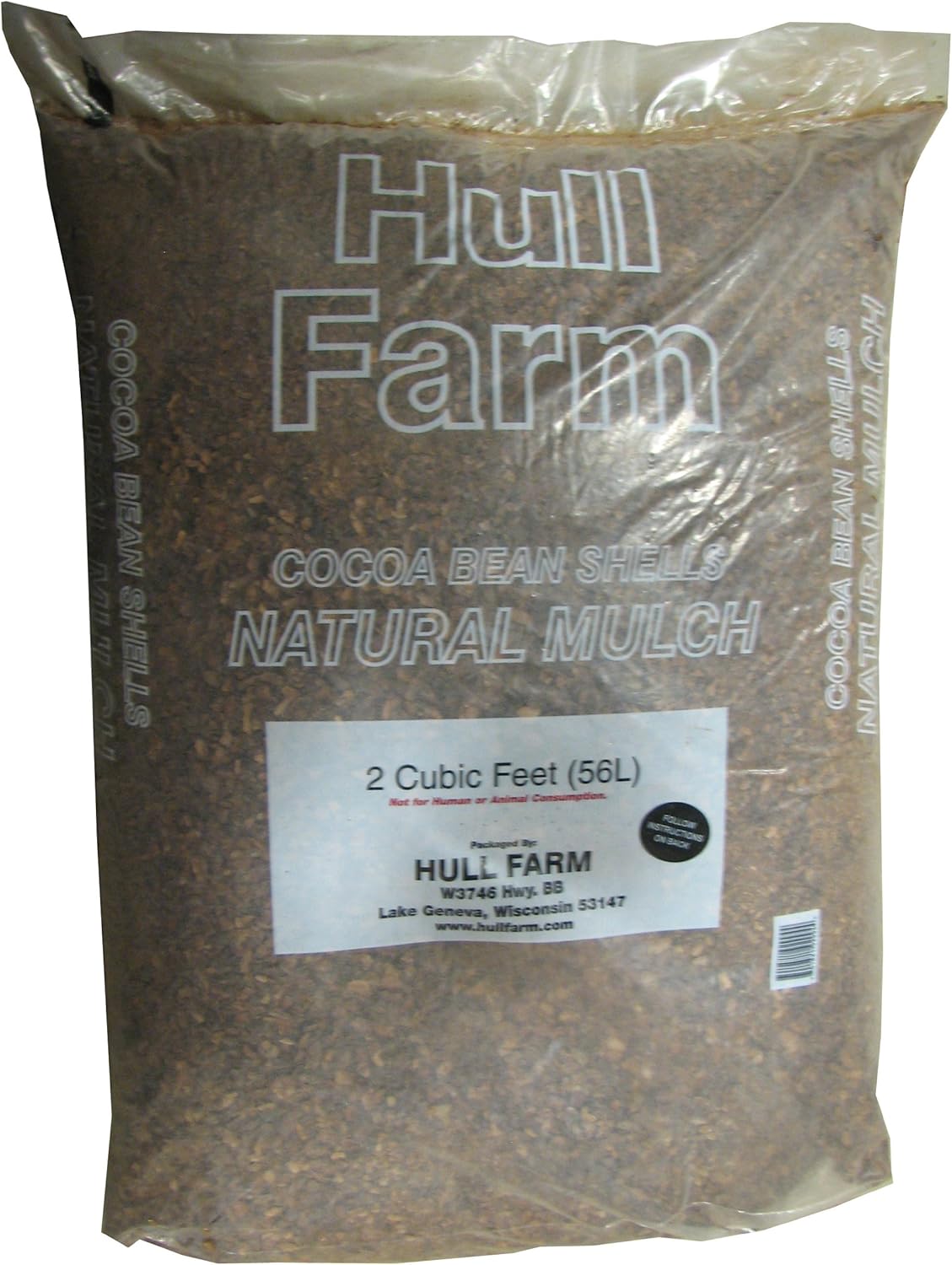
Hull Farm Cocoa Bean Shell Mulch, 2 Cubic Feet
| Volume | 2 Cubic Feet |
|---|---|
| Fertilizer value | Approx. 2.5-1-3 |
| Manufacturer | Hull Farm |
| Model | 50150 |
Hull Farm Cocoa Bean Shell Mulch is a decorative organic mulch made from cocoa bean shells sold in a 2 cu ft bag. It is used like any loose mulch: spread a 2–3 inch layer around beds and around tree bases to suppress weeds, retain soil moisture, and moderate soil temperature. The product lists a modest nutrient analysis (about 2.5-1-3) so it contributes small amounts of nitrogen, phosphorus, and potassium as it breaks down. The fine, chocolate-brown shells give a neat finished look for flower beds and ornamental plantings and are easy to rake and level. Because it is an organic, lightweight mulch it will decompose over the season and require replenishing to maintain depth and appearance. Also cocoa shell mulch can attract pets if the aroma is noticeable and it is not suitable for vegetable beds where food safety is a priority. For winter use the mulch will provide some insulation and help reduce freeze-thaw heaving when kept at sufficient depth, but expect some settling and partial breakdown by spring.
Best for: Gardeners who want an attractive, organic mulch for ornamental beds and are prioritizing visual finish along with some slow nutrient release during the cooler months.
Less Ideal for: People growing edible vegetable crops or those who want a permanent, non-decomposing mulch layer should choose a different product.
- Attractive chocolate-brown appearance that improves curb appeal
- Contains a modest fertilizer value (approx. 2.5-1-3) so it slowly feeds soil as it decomposes
- Lightweight and easy to spread and rake for quick application
- Good moisture retention and weed suppression when applied at recommended depth
- Organic shells break down over months and will need replenishing
- May attract pets or wildlife due to scent, so not ideal near animal areas
Verdict: Choose this cocoa shell mulch if you want an attractive organic winter mulch that adds modest nutrients while improving bed appearance.
EZ-Straw Just Straw Clean Processed Straw Small Bale (1 Cubic Foot)

| Manufacturer | Rhino Seed & Landscape, LLC |
|---|---|
| Item Weight | 10 pounds |
| Product Dimensions | 17 x 10 x 13 inches |
| Ingredients | All-Natural |
| Department | unisex-adult |
EZ-Straw Just Straw is a small, clean-processed bale of all-natural straw intended for broad outdoor and household use. In a winter-mulch context it is used as a loose protective layer over beds and around young plants to reduce freeze-thaw heaving and to retain insulating air pockets. The product comes bagged for easy handling and is described as UV-protected for outdoor storage. Notable features are its clean processing which reduces debris and seeds, and its versatility across tasks from pet bedding to seed mulch or packing material. Practical benefits include easy application by hand, the ability to cover uneven ground without machinery, and compostability after seasonal use. Limitations to expect are that loose straw can shift in wind and heavy rain so it may require anchoring or a netting layer, and it is bulky for storage and transport compared with packaged commercial mulches. For long-term erosion control or formal beds you may prefer denser materials or matting products.
Best for: Gardeners who want an inexpensive, biodegradable winter mulch that is easy to apply by hand and later compost into beds. It suits practical users who value multifunctional materials for small to medium garden areas.
Less Ideal for: People who need a permanent, low-maintenance mulch solution or who cannot tolerate any loose material in high-wind or heavy-rain locations.
- Clean processed straw reduces debris and stray seeds compared with unprocessed straw
- Bagged, UV-protected packaging makes storage and handling simpler
- All-natural and compostable so it can be incorporated into beds after use
- Versatile for multiple tasks including winter mulch, pet bedding, and seed cover
- Loose straw can blow away or wash out without anchoring
- Bulk packaging can be awkward to store and move by hand
Verdict: A simple, clean-processed straw bale that provides an affordable, compostable winter mulch and general-purpose yard material.
Legigo Coco Coir Chips Plant Growing Medium (Chunky Coco Husk)

| Brand | Legigo |
|---|---|
| Material | Coconut coir |
| Unit Count | 17.64 Ounce |
| Style Name | Coco Coir, Aerated, Drainage |
| Volume | 7 quarts |
Legigo coco coir chips are compressed bricks of natural coconut husk that expand when soaked to form a chunky, fibrous substrate for potting mixes, orchids, seed starting, and mulching. You soak the brick, fluff the chips, then mix them into potting soil or use as a top mulch to improve drainage and retain moisture. The product is low in salts and has a stable pH that supports root health and nutrient uptake, while the coarse fibers maintain aeration to reduce waterlogging. Practical benefits include long-lasting structure compared with fine coir, good moisture buffering through winter, and versatility as an amendment for containers, raised beds, or orchid baskets. Limitations are that coco chips are bulky when expanded compared with fine media so they take more storage room and are best used mixed with other components for small pots; they do not supply nutrients so fertilization is still needed. For gardeners looking for an affordable, reusable mulch or soil amendment to improve winter moisture retention and root aeration, these chips are a straightforward option.
Best for: Practical gardeners on a budget who want an inexpensive, reusable mulch or soil amendment to improve winter moisture retention and root aeration in pots, raised beds, and orchid growing.
Less Ideal for: Those who want an all-in-one potting mix with nutrients or need a fine-textured medium for very small seedlings or densely planted trays.
- Chunky fibrous structure improves aeration and prevents waterlogging
- High moisture retention that slowly releases water to plant roots
- Low EC and stable pH suitable for most plants and seedlings
- Compressed brick format is compact for shipping and expands 5–7× with water
- Provides no nutrients so regular fertilizing is required
- Expanded volume is bulky and needs more storage or larger containers
Verdict: A low-cost, long-lasting coco husk chip that improves winter moisture retention and soil aeration when used as mulch or mixed into potting media.
Home And Country USA Red Triple Shredded Hardwood Mulch, 2 cu ft

| Item Weight | 4.4 pounds |
|---|---|
| Manufacturer | Home and Country USA |
| Item model number | HCM |
This triple shredded hardwood mulch is a straightforward, no-frills option for gardeners who want dependable winter protection and curb appeal. It is used by spreading a 2 to 3 inch layer around trees, shrubs, and flower beds to insulate roots, slow soil freezing and thawing, and reduce moisture loss during cold months. The product is described as non-clumping with long-lasting color and good coverage, which makes it easy to rake into an even layer that stays put through wind and light precipitation. Because it is made from 100 percent natural, USA-sourced materials it will gradually break down and add organic matter to the soil over time. Practical limitations are that color will fade with sun and weather exposure and organic mulches need annual topping to maintain depth and weed control; also the bagged format requires manual handling for larger areas. For gardeners prioritizing reliable winter insulation and tidy beds, this mulch performs as expected without special maintenance.
Best for: Homeowners who want a reliable, low-maintenance winter mulch to protect roots, reduce watering needs, and keep beds looking tidy without specialty products.
Less Ideal for: People managing very large properties who need bulk delivery or those who want a permanent inorganic groundcover alternative.
- Made from 100% natural, USA-sourced hardwood for consistent composition
- Triple shredded texture spreads smoothly and resists clumping for an even layer
- Helps retain soil moisture and insulates roots against winter temperature swings
- Provides weed suppression by forming a light-blocking surface
- Breaks down over time to contribute organic matter to the soil
- Color will gradually fade with sun and weather exposure
- Requires annual refreshing as organic mulch decomposes
- Bagged 2 cu ft format can be labor intensive for large landscapes
Verdict: A dependable, USA-grown hardwood mulch that reliably insulates roots and tidies beds for winter-focused gardeners.
Riare Organic Coco Coir Chips, 2-Pack Compressed Coconut Husk Bricks

| Number of Packs | 2 |
|---|---|
| Item Type Name | Garden Soil |
| Material | Coco Chips |
| Volume | 7 gallons |
These Riare coco coir chips come as two compressed bricks that expand when soaked to create a loose, airy coconut-husk substrate used for potting mixes, orchid media, and surface mulch. Typical use is rehydrating a brick in water, squeezing excess, then mixing with soil, perlite, or using as a top mulch to protect roots and conserve moisture through colder months. Notable features include low electrical conductivity and a near-neutral pH that reduce fertilizer burn risk, high water retention combined with good drainage, and a porous structure that improves root aeration. Practically, the product reduces watering frequency and helps prevent waterlogging that can cause winter root rot while also improving soil structure when blended into beds. Limitations are that each brick must be hydrated and fluffed before use and the material provides little nutrient content on its own so feeding is still required for longer-term plant growth. For winter mulch applications it works well as an insulating, breathable layer but will slowly break down over seasons and may need reapplication.
Best for: Buyers who want a natural, low-risk winter mulch or soil amendment that conserves moisture and improves aeration without adding salts or harsh chemicals, especially for potted plants, orchids, and raised beds.
Less Ideal for: Gardeners who need an all-in-one fertilizing soil or a long-lasting decorative mulch that does not decompose for years should consider alternatives.
- Low EC and pH-balanced for safe contact with roots and seed germination
- High water retention while still providing good drainage to reduce root saturation
- Lightweight, highly porous structure that improves aeration and root development
- Compressed bricks are easy to store and expand to usable volume when needed
- Compressed bricks require soaking and manual breaking apart before use
- Offers minimal nutrients by itself so regular fertilization is still necessary
Verdict: A breathable, moisture-retaining organic coco coir brick that makes a low-salt, low-risk winter mulch and potting amendment when rehydrated and mixed into soil.
Back to the Roots Organic Coconut Husk Mulch Block (expands to 2 cu ft)

| Item Highlight | Compressed 10 lb coco husk mulch expands to 58 qt; peat-free, OMRI Listed |
|---|---|
| Item Type Name | Mulch |
| Volume | 2 cubic feet |
| Item Weight | 10 pounds |
This compressed coconut husk mulch block expands when hydrated to create a light, airy mulch suited for beds and containers. You soak the 10 lb brick in water and within minutes it fluffs into roughly 2 cubic feet of mulch that helps retain soil moisture and improves aeration around plant roots. Being 100% organic, peat-free and OMRI listed makes it a good match for gardeners who prefer certified inputs, and the compact brick is easy to store and handle compared with loose bags. For winter use it provides insulation over root zones while still allowing water to pass through, and it resists compacting more than finer mulches. Limitations: one block covers a modest area so larger landscapes require multiple bricks, and coconut husk can break down more slowly than wood-based mulches which may make seasonal cleanup different. Expect to prehydrate and distribute the material rather than pour it straight from the package.
Best for: Gardeners who want a certified organic, easy-to-store winter mulch for small beds, containers, or raised planters and prefer low-risk, vetted inputs.
Less Ideal for: People managing large landscapes who need bulk coverage quickly or those who prefer heavy, long-lasting wood chip mulches for permanent pathways.
- OMRI listed organic and peat-free formulation suitable for certified organic gardens
- Compact compressed brick is easy to store and expands to about 2 cubic feet after adding water
- Light, fibrous texture improves soil aeration and helps retain moisture around roots
- Sustainable feedstock made from upcycled coconut husk waste
- Covers a relatively small area per block so multiple blocks are needed for larger beds
- Requires pre-soaking and handling to expand before use
Verdict: A compact, OMRI-listed coconut husk brick that reliably expands into a light, moisture-retaining winter mulch ideal for small beds and containers.
Choosing the Right Winter Mulch: Key Factors to Consider
Insulation Value and Freeze-Thaw Protection
Mulch acts as a thermal blanket that reduces how quickly soil temperature drops and how far cold penetrates plant root zones. In freeze-thaw climates, the right depth and type of material prevent repeated soil expansion and contraction that leads to frost heaving. A loosely textured mulch with good air pockets generally insulates better than a compacted, fine material.
Consider how long the insulation needs to last. Some mulches settle or compost down quickly and stop protecting roots late in winter. Decide whether you need a material with stable loft through multiple thaw cycles or something you will top up periodically.
Moisture Management and Drainage
Winter mulch should moderate soil moisture, keeping roots from drying while allowing excess water to drain. Materials that trap too much water can create soggy conditions that lead to root rot or fungal problems during thaws. Conversely, very coarse mulches may not retain enough moisture for shallow-rooted plants.
Assess your site drainage and typical snowmelt patterns. In poorly drained soils choose a mulch that sheds water and promotes surface drying, while sandy, fast-draining beds benefit from mulches that help hold moisture through cold spells.
Rate of Decomposition and Soil Impact
Different mulches break down at different rates, affecting how long they provide protection and how they influence spring soil conditions. Fast-decomposing organic mulches add nutrients but can compact and lose insulating properties. Slow-decomposing options maintain a protective layer longer but may delay spring warming and seedbed preparation.
Think about your spring workflow. If you plan early spring planting, a mulch that is easy to remove or that decomposes predictably may be preferable. If you want long-term ground cover, choose materials that contribute positively to soil organic matter without smothering seedlings.
Pest Shelter and Disease Potential
Some mulches provide hiding places for rodents or a moist microclimate favored by fungal pathogens. In winter, dense or finely textured materials laid too thickly create insulation for pests and can mask rodent activity until damage is done in spring. Organic mulches that sour when wet may also increase disease pressure on vulnerable roots.
Match mulch choice to your pest history. If rodents are common, avoid mulches that form dense tunnels. Where snow mold or other fungal issues are a concern, select materials and application methods that promote surface drying and airflow.
Application and Removal Practicality
Consider how easy it is to spread, level, and later remove or refresh the mulch. Bulk, lightweight materials can be quicker to apply but may blow around if not secured. Heavy options hold in place but are harder to transport and redistribute. Ease of raking in spring affects labor and timing for bed cleanup and planting.
Also evaluate whether the mulch can be worked into beds without machinery, how it behaves under snow, and whether it interferes with spring soil preparation tasks.
Best Mulch Depth and Timing for Winter
Apply mulch after the ground has cooled but before prolonged freezes set in. This timing prevents trapping warm soil temperatures that can encourage late growth while still protecting roots when the deep freezes arrive.
A common recommendation is a 2 to 4 inch layer for most garden beds. Adjust depth by material: coarser bark or straw may need the upper end of that range for equivalent insulation, while denser composted materials often work at shallower depths. Avoid piling mulch against trunks or stems to prevent girdling and rodent damage.
- Start after soil temperatures drop and plants are dormant
- 2 to 4 inches is typical, modify by material loft and site exposure
- Keep mulch away from direct contact with stems and trunks
Mulch Options for Different Plant Types
Perennials and shallow-rooted plants benefit from a stable, insulating mulch that maintains air pockets over winter. Coarse wood chips or clean straw provide loft and protect crowns without compacting quickly.
Woody shrubs and small trees typically need less frequent topping. Use materials that do not retain excessive moisture near the stem base. For beds with bulbs and early spring crops, choose mulches that are easy to remove or that break down early in spring so soil warms for emergence.
- Shallow-rooted perennials: coarse organic mulches with good loft
- Shrubs and trees: avoid mulch piled against stems; use moderate-depth covers
- Bulb beds and early crops: prefer easy-to-remove or fast-decomposing mulches
Site-Specific Considerations
Microclimates on your property matter. South-facing slopes warm earlier and may need lighter mulch to avoid delaying spring growth. Low spots that collect meltwater require materials that shed moisture and do not compact into a waterlogged mat.
Where winter winds are strong, heavier or anchored materials reduce displacement. In urban or suburban yards with rodent pressure, choose mulches less likely to provide nest sites and monitor regularly for activity under the layer.
- South-facing exposures: lighter mulch to speed spring warming
- Poorly drained areas: choose well-draining, non-compacting materials
- Windy sites: use heavier or secured mulches to prevent loss
Spring Cleanup and Transitioning Beds
Plan mulch removal or redistribution as part of your spring routine. Leaving a light protective layer can help reduce erosion and conserve moisture until soil warms, but heavy, compacted mulch should be loosened or thinned to allow seedlings to emerge.
Composted or fine mulches incorporated into beds in spring can boost soil organic matter. Save time by removing just enough to expose crown areas and thinning the rest rather than stripping all material at once.
- Loosen compacted mulch to prevent smothering new shoots
- Incorporate decomposed organic material into soil as needed
- Time removal to match local soil warming and planting schedule
Environmental and Soil Health Impacts
Mulch selection influences winter soil biology and nutrient dynamics. Some materials feed soil microbes as they break down, while others are inert and mainly act as physical protectants. Consider long-term soil goals when choosing a winter mulch.
Avoid materials that introduce contaminants or persistent residues to garden soil. If improving soil organic matter is a priority, select mulches that decompose into beneficial humus without causing a spike in carbon-to-nitrogen imbalance during decomposition.
- Choose decomposing mulches to build organic matter over seasons
- Avoid contaminated or dyed materials that may leach into soil
- Balance mulch choice with soil nutrient management plans
How We Chose the Best Winter Mulch
We focused on attributes that directly affect plant survival and soil health during cold months. Primary filters included insulating performance, moisture regulation, and resistance to winter decomposition. We also checked how each material interacts with common winter problems such as frost heaving, rodent sheltering, and fungal buildup. Practical installation factors mattered: ease of application, availability in typical bag or bulk formats, and how easy a mulch is to remove or refresh in spring. Longevity across freeze-thaw cycles and how the material affects soil temperature swings were assessed as separate dimensions. We excluded materials that are unsafe for garden soils when used long-term or that routinely cause drainage or compaction problems in cold climates. We also filtered out mulches that require specialized equipment to install or remove. The resulting shortlist balances thermal protection with moisture control and garden hygiene to reflect real-world winter gardening needs.
FAQ
When should I apply winter mulch in my region?
Apply after the soil cools consistently and plants are dormant, typically late autumn. Timing depends on local first frost dates and soil temperature trends rather than the calendar alone.
How thick should winter mulch be around perennials?
Generally 2 to 4 inches provides good insulation. Use the higher end for coarse, airy materials and the lower end for denser mulches to avoid waterlogging and delayed spring warming.
Can mulch cause problems like rot or rodents over winter?
Yes. Mulches piled too thickly or placed against stems can shelter rodents and create soggy conditions that increase rot risk. Use appropriate depth, keep mulch off trunks, and monitor under heavy layers.
Should I remove winter mulch in spring all at once?
Not necessarily. Thin or remove mulch enough to expose crowns and allow soil to warm, but leaving a light layer can prevent erosion until soils stabilize. Plan removal to match local soil warming and planting needs.
Does mulch affect snow cover and ice formation?
Mulch can change how snow melts by insulating the soil surface, which can delay thawing. In some cases that reduces freeze-thaw cycles, but on sloped or compacted sites it can increase surface runoff and ice if drainage is poor.
Final Verdict
Choose a winter mulch that balances insulation with moisture control and low pest risk. Prioritize materials that maintain loft through freeze-thaw cycles without compacting into a waterlogged mat, and match depth to the specific plants and site exposure. Tradeoffs are inevitable: longer-lasting mulches protect roots for more of winter but may slow spring warming, while fast-decomposing covers are easier to clear but need topping up. Use the decision factors above to pick the option that fits your maintenance rhythm and garden microclimate.
