

Note: This article contains affiliate links. If you click on these links and make a purchase, I may earn a small commission at no extra cost to you. This helps support my research and content. Read my full affiliate disclosure here.
Choosing the right wood mulch for garden beds makes a visible difference in plant health, soil moisture retention, and garden maintenance. The wrong mulch can create more work or alter soil conditions, while the right type keeps roots cooler, curbs weeds, and slowly contributes organic matter. This guide covers our six shortlisted options and explains how each performs in common garden situations. We evaluated factors that matter to gardeners, such as breakdown rate, contribution to soil nutrients, and how each mulch behaves around different plant types. Read on to understand the tradeoffs so you can pick a mulch that fits your soil, plants, and maintenance style.
Top Picks at a Glance
| Best Overall The best all-around choice for most situations | Back to the Roots Organic Mulch, 1 Cubic Foot |  |
| Best Quality Built to a higher standard if you want something more solid | BRUT Worm Farms Organic Aspen Mulch, 10 Quart |  |
| Best Value The sweet spot between price and what you get | Soil Sunrise 100% Natural Pine Bark Mulch Nuggets (30 Quarts) |  |
| Best Budget The cheapest option that still gets the job done reliably | Wood Smith USA 100% Natural Cedar Chips, 4 Quart Bag |  |
| Highest Rated A top-rated pick with lots of positive feedback | Home And Country USA Triple Shredded Hardwood Mulch, 2 cu ft |  |
| Most Popular A crowd favorite that many people choose with confidence | Rio Hamza Trading Pine Bark Mulch Nuggets, 8 Quarts (All Natural) |  |
Back to the Roots Organic Mulch, 1 Cubic Foot

| Brand Name | Back to the Roots |
|---|---|
| Item Highlight | Premium organic garden mulch; peat-free; 25.7 quart bag |
| Unit Count | 16 Ounce |
| Volume | 23 cubic centimeters |
This organic mulch from Back to the Roots is a peat-free, upcycled plant-matter blend intended for beds, containers, and around shrubs and trees. It includes dolomitic limestone to help balance pH, yucca extract to improve moisture control, and gypsum to aid water absorption, so it both conserves moisture around root zones and contributes modest nutrients. Typical use is spreading a 2–3 inch layer around bushes, avoiding direct trunk contact, or mixing into the topsoil when planting. Its organic base and added plant food make it a good choice for supporting healthy growth and reducing watering frequency. Limitations to keep in mind are the bag size and volume relative to larger beds and that it is formulated as a general mulch rather than a heavy-duty long-lasting bark product, so it may break down faster and need replenishing more often.
Best for: Gardeners who want an eco-conscious, peat-free mulch that improves moisture retention and supports plant health around bushes and in raised beds.
Less Ideal for: People looking for a coarse, long-lasting decorative bark mulch or a single large bag solution for extensive shrub beds.
- Peat-free organic blend made from upcycled plant matter and wood fines
- Contains yucca extract for improved moisture retention and gypsum for better water absorption
- Includes dolomitic limestone to help adjust and stabilize soil pH
- Formulated with all-purpose plant food to support growth of vegetables, herbs, and shrubs
- Bag volume is relatively small for large or multiple bush beds so more bags may be needed
- Breaks down faster than coarse bark mulches and will require periodic replenishment
Verdict: Choose this peat-free organic mulch when you want an eco-friendly, moisture-saving soil cover that also supplies mild nutrients to bushes and raised beds.
BRUT Worm Farms Organic Aspen Mulch, 10 Quart

| Unit Count | 192 Ounce |
|---|---|
| Volume | 10 quarts |
| Style Name | Moisture-retaining |
| Certified Organic | OMRI-listed |
BRUT Organic Aspen Mulch is a fine-texture aspen bark mulch formulated to hold moisture, reduce weed pressure, and slowly add organic carbon to soil. It is applied as a top dressing around garden beds, pathways, or potted plants where you spread a thin layer to protect soil and conserve water. The product is OMRI-listed and described as odor-free and lightweight, which makes it convenient for indoor containers as well as outdoor borders. Its 30% carbon content supports beneficial microbes without drawing down nitrogen, so it helps long-term soil structure while decomposing slowly. Practical benefits include reduced watering frequency, a neater bed appearance, and gentle nutrient contribution that complements regular fertilizing. Important limitations are the small 10 quart volume per bag, which means multiple bags are needed for larger beds, and that it is primarily a surface mulch so it does not replace nutrient-rich soil amendments for heavy feeding tasks.
Best for: Gardeners who want a low-maintenance, organic mulch to conserve water, tidy beds, and slowly improve soil structure in small to medium beds or containers.
Less Ideal for: Large-scale landscapers or gardeners needing bulk mulch coverage or immediate high-nutrient soil amendments should consider larger-volume or nutrient-dense products.
- Odor-free fine aspen bark suitable for indoor and outdoor use
- High moisture retention reduces watering frequency
- OMRI-listed organic material that adds carbon to soil
- Lightweight and easy to spread for quick top-dressing
- Small 10 quart unit is insufficient for large beds without buying multiple bags
- Provides mainly carbon-rich mulch rather than concentrated nutrients
Verdict: A tidy, odor-free organic aspen mulch that conserves water and improves soil health best for small to medium garden beds and containers.
Soil Sunrise 100% Natural Pine Bark Mulch Nuggets (30 Quarts)

| Volume | 30 quarts |
|---|---|
| Ingredients | Pine bark mulch |
| Unit Count | 1 Count |
Soil Sunrise pine bark mulch is a simple, single-ingredient bagged mulch made from aged pine bark broken into roughly 1/2-inch nuggets. It is used as a top dressing for potted plants, bonsai, terrariums, and acid-loving or ornamental containers, or mixed into potting media to increase aeration and drainage. The nuggets help reduce surface evaporation, shade roots, and give pots a finished reddish-brown look while breaking down slowly to add organic matter over time. Practical benefits include improved water management for indoor and container setups, reduced risk of surface compaction and root rot when blended into mixes, and an attractive natural appearance. Limitations are that the chunky nuggets are not suitable as a fine soil amendment where a uniform fine texture is needed and they will slowly decompose so periodic top-up is necessary; they also do not provide fertilizer or pH adjustments on their own. For gardeners seeking a low-maintenance, decorative mulch for containers, this delivers the expected functions without extras.
Best for: Buyers who want a low-maintenance, all-natural top dressing or amendment for container plants, bonsai, and terrariums and who value improved drainage plus an attractive finished look.
Less Ideal for: Gardeners who need a fine-textured soil conditioner for mixing into beds or who expect a fertilizing or pH-correcting product should consider other soil amendments.
- 100% natural pine bark with no additives
- Nugget size improves drainage and airflow when mixed into potting media
- Helps retain moisture at the surface and shades roots to reduce evaporation
- Attractive reddish-brown finish that tidies container tops
- Chunky 1/2-inch pieces are not suitable for applications needing fine soil texture
- Does not supply nutrients or alter soil pH
Verdict: A straightforward, all-natural pine bark mulch that improves container drainage, reduces evaporation, and gives potted plants a polished, low-maintenance top layer.
Wood Smith USA 100% Natural Cedar Chips, 4 Quart Bag

| Brand Name | Wood Smith USA |
|---|---|
| Unit Count | 148.92 Ounce |
| Number of Packs | 1 |
| Volume | 1 |
These 100% natural cedar chips are a lightweight, aromatic mulch sold in a 4-quart bag that works best as a top dressing for potted plants, hanging baskets, and small garden patches. The cedar scent helps deter some insects and can freshen indoor potting mixes, while the chips also help retain surface moisture and reduce light reaching weed seeds. Because the bags are hand sifted and packed, quality is generally consistent for small jobs, and the product is easy to spread with minimal tools. The obvious limitation is the small volume — a single 4-quart bag covers only a very small area, so multiple bags are required for beds or larger weed-control projects. The chips are also coarse compared with fine mulches, so they are better for decorative surface cover than for forming a dense, weed-suppressing mat. Handle the product carefully to avoid inhaling dust and follow guidance if using around animals.
Best for: Buyers looking for an inexpensive, small-quantity mulch to refresh pots, hanging planters, or to try cedar for insect control in limited areas.
Less Ideal for: Gardeners who need to cover large beds or who want a fine-textured mulch for dense weed-smothering should choose larger bulk bags or finer mulches instead.
- Natural cedar composition that repels some insects and adds a pleasant scent
- Small 4-quart bag useful for potted plants, hanging baskets, and spot treatments
- Helps retain surface moisture and reduces light to surface weed seeds
- Hand-sifted and hand-packed for generally consistent small-batch quality
- Very small volume so not cost-effective for large beds
- Coarse chip size offers less dense weed suppression than finer mulches
Verdict: A handy, low-cost 4-quart cedar chip bag for small-scale potting and spot weed control where you want a natural scent and insect-repellent benefits.
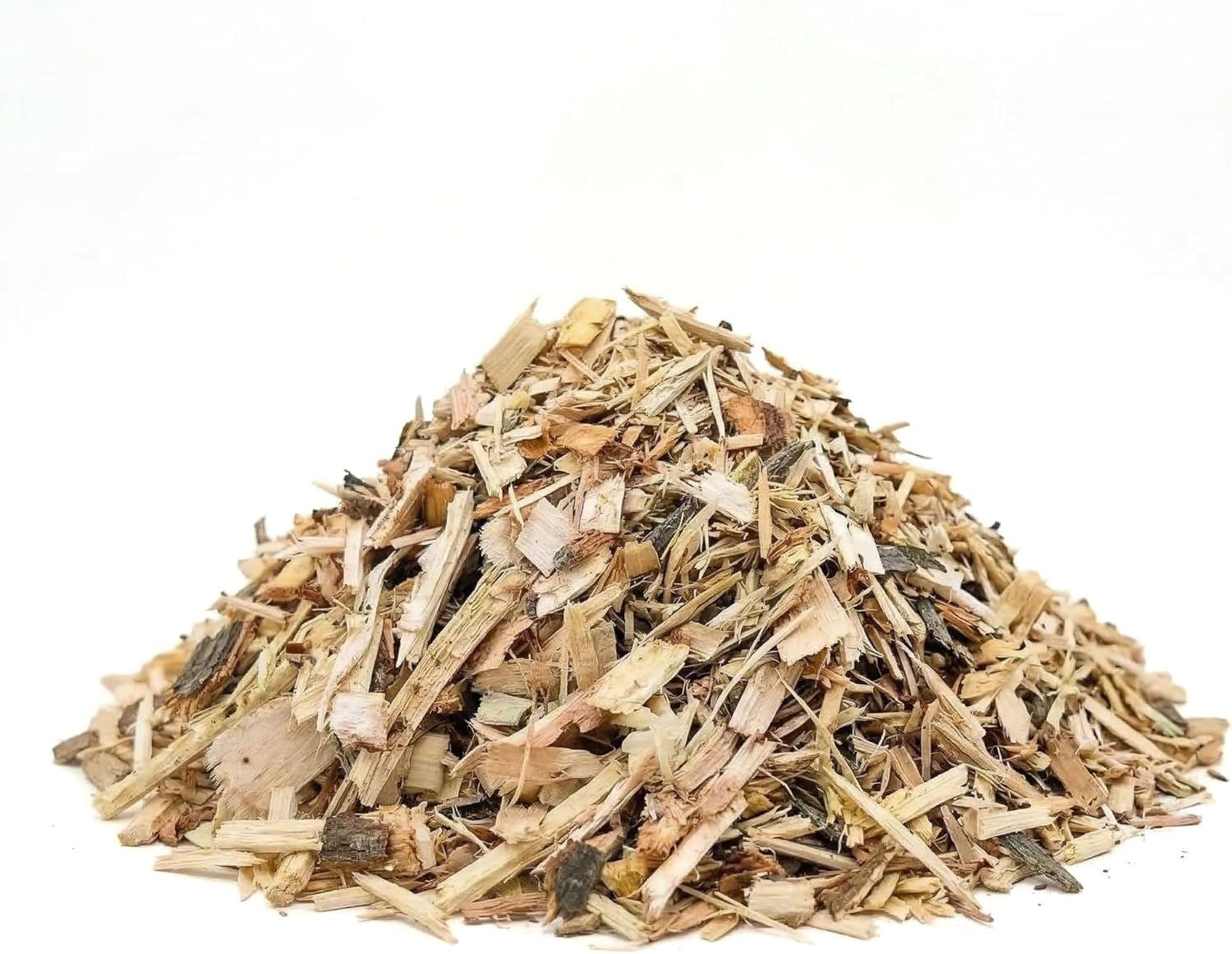
Home And Country USA Triple Shredded Hardwood Mulch, 2 cu ft
| Manufacturer | Home and Country USA |
|---|---|
| Item model number | HCM |
| ASIN | B0CVMGF4ZL |
This triple-shredded hardwood mulch is a straightforward, no-frills option for homeowners who want long-lasting ground cover for beds and around trees. It is typically spread 2 to 3 inches thick to conserve soil moisture, reduce evaporation, and suppress weed growth while slowly breaking down to add organic matter to the soil. The product highlights consistent color and coverage and is marketed as 100 percent natural and organic, which makes it suitable for ornamental beds and general landscape use. Practical benefits include improved curb appeal, reduced watering frequency, and lower maintenance in planted areas. Limitations are that, as with any organic mulch, it will decompose over time and require annual topping to maintain depth and appearance, and color may fade with sunlight and rain. For gardeners focused on straightforward, reliable performance, this mulch delivers the expected soil-health and moisture benefits without specialty additives or treatments.
Best for: Gardeners and homeowners who prioritize dependable, low-maintenance ground cover for flower beds and around trees and want an organic product that supports soil health.
Less Ideal for: People seeking a long-term inert landscape solution or a dyed decorative mulch for a uniform color that does not change over time should consider alternatives.
- Triple-shredded texture provides even coverage and a tidy finished look
- Organic hardwood composition improves soil structure as it decomposes
- Helps retain soil moisture to reduce watering frequency
- Suppresses weed germination by creating a light-blocking barrier
- Will decompose and need periodic reapplication to maintain depth and appearance
- Color may fade over time with sun and weather exposure
Verdict: Choose this triple-shredded hardwood mulch if you want a reliable, organic mulch that improves soil health while reducing watering and weeds.
Rio Hamza Trading Pine Bark Mulch Nuggets, 8 Quarts (All Natural)

| Brand Name | Rio Hamza Trading |
|---|---|
| Unit Count | 256 Square Feet |
| Item Type Name | Potting Soil |
| Volume | 8 quarts |
| Ingredients | All natural pine shavings |
These 100% natural pine bark nuggets are small half-inch pieces intended as a top dressing or soil amendment for containers, bonsai, terrariums, and beds. You can sprinkle them as a decorative layer over potting mix to reduce surface evaporation and discourage pests, or blend a portion into heavy soil to increase aeration and reduce waterlogging around roots. The product emphasizes chemical-free bark with a red-brown look that tidies planters and complements evergreen plantings like arborvitae. An 8-quart bag covers modest container projects and provides enough to refresh a single large pot. Because the nuggets are coarse, they persist on the surface and do not compact quickly, which helps long-term drainage but means they will not break down fast to enrich soil. Also the bag size is small for landscape-scale mulching, so this is best for focused use around specimens rather than blanket beds. For someone managing moisture around ornamental evergreens, these nuggets work as an attractive, low-maintenance surface mulch.
Best for: A buyer who prioritizes plant safety and wants visible social validation will appreciate a chemical-free, attractive mulch for protecting root zones of specimen shrubs or container arborvitae and for tidying planters.
Less Ideal for: Not a good fit for someone needing bulk mulch for wide beds or wanting a fast-breaking organic amendment to quickly enrich soil.
- Made from 100% natural pine bark with no added chemicals
- Half-inch nuggets improve soil aeration and reduce surface compaction
- Durable, coarse texture provides long-lasting decorative top dressing
- Versatile for indoor pots, bonsai, terrariums, and small outdoor containers
- Small 8-quart bag is insufficient for mulching large landscape areas
- Coarse nuggets decompose slowly and provide limited short-term nutrient addition
Verdict: Choose these pine bark nuggets when you want a chemical-free, long-lasting decorative mulch to improve drainage and keep arborvitae planters looking tidy.
Choosing the Right Wood Mulch for Garden: Key Factors to Consider
Decomposition Rate and Longevity
How quickly a wood mulch breaks down affects how often you need to replenish it. Fast-decomposing mulches return organic matter to the soil more quickly but require more frequent top-ups and can temporarily immobilize nitrogen as microbes break down carbon-rich material.
Slower-decomposing options provide longer-lasting weed control and lower maintenance, but they contribute organic matter more slowly. Choose a rate that matches how often you want to work in the beds and whether you prefer steady soil-building or lower annual labor.
Particle Size and Texture
Fine wood chips and shredded bark create a denser, more uniform layer that suppresses weeds well and looks tidy in ornamental beds. Coarser chunks allow quicker water flow and are better for pathways or around larger shrubs where air and water movement matter more.
Texture also affects how comfortably you can work near stems and crowns. Very fine mulch can compact and reduce aeration if applied too thickly, while very large pieces can leave gaps that let weeds sprout.
Nitrogen Tie-Up and Soil Nutrient Effects
Fresh wood mulch high in carbon can tie up nitrogen in the topsoil while microbes break down the material. This is most pronounced when mulch is mixed into soil or applied very thickly near young seedlings.
To avoid nutrient stress, keep a buffer of bare soil or compost around crowns, use finished or aged wood mulch, or supplement with a light fertilizer if growing heavy feeders. Consider the overall fertility plan for the garden before selecting a high-carbon mulch.
Source, Cleanliness, and Contaminant Risk
Knowing where the wood comes from matters. Mulch made from construction waste, treated lumber, or diseased trees can introduce toxins, weed seeds, or pathogens. Untreated, locally sourced wood from clean arborist chips or bark processed for horticultural use reduces these risks.
If disease was present in the original material, pathogens could persist in large wood pieces. Choose mulches labeled for garden use or sourced from reputable yard-waste processors when contamination is a concern.
Aesthetic Fit and Bed Design
Color, consistency, and how quickly the mulch weathers affect garden appearance. Dark bark looks formal and highlights foliage color, while lighter wood chips give a more rustic feel. Consider how often you want to refresh the look and whether colorfastness matters for your design.
Also think about bed edging, foot traffic, and how the mulch will settle. Some mulches float or migrate quickly, requiring more frequent re-distribution in beds near paths or slopes.
Cost, Availability, and Sustainability
Practical gardening decisions balance expense with performance. Locally produced wood mulch is often cheaper and has a lower transport footprint, but availability can vary seasonally. Bulk delivery or local pickup can make large projects economical.
Sustainability includes using reclaimed wood responsibly and preferring mulch from sources that avoid clear-cutting. Consider long-term supply for large landscapes so you can maintain consistent material year to year.
How Wood Mulch Affects Soil Moisture and Temperature
A proper layer of wood mulch moderates soil temperature and reduces evaporation, keeping roots cooler in summer and insulating shallow roots in cooler months. Mulch thickness and particle size determine how effectively the layer slows water loss while still allowing rainfall to penetrate.
In hot, dry climates, thicker layers of coarse chips can reduce irrigation needs, while in wetter conditions you may prefer a thinner layer or finer material to avoid prolonged surface saturation. Observe planted areas after rain to ensure water is moving through rather than ponding on top.
- Thicker layers increase moisture retention but can slow warming in spring.
- Fine mulches can compact and create puddling if applied excessively.
- Coarse mulches improve drainage and aeration around woody roots.
Best Practices for Applying Wood Mulch
Apply a uniform layer and avoid piling mulch against plant stems or tree trunks. Keep mulch a few inches away from crowns to prevent rot and pest hiding places. For most garden beds, a depth of 2 to 3 inches is sufficient for weed suppression without creating oxygen-limiting conditions.
Renew thin spots each season and lightly rake surface layers to prevent matting. When establishing new beds, lay mulch after planting and watering to lock in moisture and reduce transplant stress.
- Maintain a 2 to 3 inch depth in ornamentals and flower beds.
- Leave a 2 to 3 inch gap around trunks and crowns.
- Top up annually rather than replacing the entire layer at once.
Mulch Management in Vegetable Gardens
Vegetable beds need mulches that balance moisture retention with quick nutrient cycling. Finished, aged wood mulch or well-composted bark reduces the risk of nitrogen tie-up that can slow vegetable growth. Remove or avoid very coarse, fresh wood chips in seedbeds where contact with soil can hinder young roots.
For annual vegetable production, apply mulch after soil has warmed and seedlings are established. Incorporate a thin layer of compost under the mulch to supply slow-release nutrients and support healthy microbial activity.
- Use aged wood or composted bark to minimize nitrogen drawdown.
- Apply mulch after seedlings are established to avoid germination problems.
- Monitor soil nitrogen and supplement lightly for heavy-feeding crops.
Managing Mulch Around Trees and Shrubs
Mulch volcanoes can cause stem rot and encourage rodent damage. Keep mulch pulled back from the trunk flare and maintain a shallower layer near the trunk. For established trees, a wider ring of mulch at moderate depth supports root health and reduces grass competition.
Consider deeper mulch toward the dripline where feeder roots are active, but avoid concentrated mulch mounds directly against bark. Periodically check for girdling roots and ensure mulch is not obscuring the root collar.
- Avoid piling mulch against trunks to reduce rot risk.
- Extend mulch to the dripline to suppress grass and conserve moisture.
- Inspect root collars annually and remove excess mulch buildup.
Seasonal Considerations and When to Refresh
Spring is the best time to refresh mulch because soil is warming and plants are actively growing. A light top-up in late summer can help preserve moisture through hotter months, while a small refresh in fall helps insulate roots for winter. Avoid heavy mulching right before a prolonged wet period to reduce the chance of surface compaction.
Regularly monitor mulch depth and condition. Broken-down mulch can be worked into beds as organic matter if it is well decomposed, or replaced if it has become hydrophobic or contaminated with weed seeds.
- Top up in spring, refresh lightly in late summer if needed.
- Incorporate well-decomposed mulch into soil as amendment.
- Replace hydrophobic or seed-laden mulch rather than reusing it.
How We Chose the Best Wood Mulch for Garden
We focused on attributes that directly affect plant health, garden upkeep, and long-term soil condition. Primary evaluation criteria included decomposition rate, because faster breakdown means more frequent top-ups; weed suppression effectiveness, since a dense, stable layer reduces hand-weeding; nutrient contribution and nitrogen tie-up risk, which impact fertilizing and planting schedules; and texture and particle size, which influence water infiltration and aesthetic fit for beds and pathways. We also considered the source and processing method for sustainability and contamination risk, plus how easy each mulch is to spread and maintain. Products that were excluded include raw wood waste with obvious contaminants, mulches with visible chemical residues, and blends intended only for playground or landscape contractors rather than home garden beds. We prioritized options that balance longevity with soil health and that suit a range of garden styles, from vegetable plots to ornamentals and established shrubs. These filters ensure the list favors mulches that perform reliably in everyday gardening use and avoid choices likely to cause problems in the garden.
FAQ
Will wood mulch attract pests or termites?
Wood mulch can provide habitat for some insects, but pests are more likely when mulch is piled against structures or trunk bases. Keep mulch away from house foundations and tree trunks to reduce risk. Regular inspection and proper depth minimize pest pressure.
How thick should I lay wood mulch in flower beds?
A 2 to 3 inch layer is usually ideal for flower beds. This depth suppresses most weeds while allowing water infiltration. Avoid thicker layers near crowns to prevent rot and oxygen restriction.
Can I use fresh wood chips around newly planted seedlings?
Fresh wood chips can tie up nitrogen as they decompose, which may stress seedlings. Use aged or composted wood mulch around young plants or wait until seedlings are established before applying fresh chips.
Is dyed wood mulch safe for garden plants?
Many dyed mulches use colorants that are stable and horticulturally safe, but quality varies. If you plan to grow edibles nearby, choose natural or certified horticultural mulches and avoid products with unclear labeling.
How do I prevent mulch from washing away on slopes?
Use coarser wood chips or mix in shredded bark to increase interlock and reduce movement. Install edging or shallow terraces on slopes and apply mulch in thinner layers with periodic anchoring by plants or groundcovers.
Final Verdict
Selecting a wood mulch for garden beds is a balance between maintenance, soil health, and appearance. Prioritize decomposition rate and particle size to match your watering regime and planting types, and choose aged or processed material where nutrient tie-up is a concern. Keep mulch away from trunks and crowns, maintain appropriate depth, and refresh seasonally to preserve benefits. Focus on the tradeoffs that matter to your garden: long-lasting coarse chips reduce labor but build soil slowly, while finer, aged mulches improve soil more quickly but may need more frequent attention. Use the evaluation criteria above to pick the option that fits your beds and maintenance rhythm.
