

Note: This article contains affiliate links. If you click on these links and make a purchase, I may earn a small commission at no extra cost to you. This helps support my research and content. Read my full affiliate disclosure here.
If you work a backyard, allotment, or small market garden, the right rear garden tiller saves hours of manual digging and produces a finer seedbed. Choosing a tiller that matches your soil type and garden size matters because machines vary in power, tine arrangement, and how they handle compacted or rocky ground. This guide reviews a shortlist of the top rear garden tillers for home and small-scale use and explains the practical strengths and tradeoffs of each option. We evaluated machines for their real-world digging ability, ease of steering, maintenance needs, and durability in garden conditions. Read on to understand which features matter for your soil and how each machine performs against those criteria before you inspect specific models.
Top Picks at a Glance
| Best Overall The best all-around choice for most situations | NOVUS 18-Inch Rear Tine Tiller with 212cc Gas Engine |  |
| Best Quality Built to a higher standard if you want something more solid | Poulan Pro Rear Tine Tiller, 212cc Gas Engine, Full Gear Transmission, 18" Tilling Width |  |
| Best Value The sweet spot between price and what you get | EARTHQUAKE Pioneer Dual-Direction Rear Tine Tiller (99cc Viper Engine) |  |
| Best Budget The cheapest option that still gets the job done reliably | YARDMAX 18 in. Rear Tine Garden Tiller (212 cc) |  |
| Highest Rated A top-rated pick with lots of positive feedback | NOVUS 17" Dual-Direction Rear Tine Tiller with 212cc Gas Engine |  |
| Most Popular A crowd favorite that many people choose with confidence | EARTHQUAKE Victory Rear Tine Tiller (209cc Viper Engine) |  |
| Best Seller A high-volume bestseller chosen again and again | Earthquake Pioneer Dual Direction Rear Tine Tiller (127cc Briggs & Stratton) |  |
NOVUS 18-Inch Rear Tine Tiller with 212cc Gas Engine

| Power Source | gas_powered |
|---|---|
| Tilling Width | 18" |
| Tilling Depth | 4"-10" |
| Transmission | Full Gear |
The NOVUS 18-inch rear tine tiller is designed to tackle large or overgrown garden plots with a 212cc 4-cycle gas engine and a full gear transmission for durable, consistent power. It uses 16 steel tines with selectable standard and counter-rotating modes and two forward speeds plus one reverse, so you can break new ground or work established beds and control how aggressively the soil is worked. The eight-position depth adjustment reaches down to 10 inches, which helps when loosening compacted subsoil or preparing deep vegetable trenches. Airless tires reduce downtime from flats and make moving the machine across rough terrain easier. Expect heavier weight and the usual gas-maintenance tasks such as fuel, oil, and periodic tuneups, and it will be more than you need for tiny raised beds or light surface cultivation. Assembly and storage require space, and the machine is best handled by someone comfortable with engine-driven equipment. For large plots where power, depth range, and durable transmission matter, this tiller performs like a workhorse.
Best for: Gardeners with large plots who need a robust, durable tiller to break compacted soil and prepare new beds and who prefer a powerful, engine-driven machine over lighter electric options.
Less Ideal for: Those with very small raised beds, limited storage, or who want a lightweight electric or handheld cultivator for light surface work.
- Powerful 212cc 4-cycle gas engine suitable for heavy soil and large gardens
- Full gear transmission for durable, low-maintenance power delivery
- Selectable tine rotation and multiple speeds allow both aggressive ground-breaking and gentler bed preparation
- Eight-position depth adjustment to till as deep as 10 inches for robust soil preparation
- Airless tires eliminate flat tires and improve mobility over rough terrain
- Requires regular gas engine maintenance and fuel handling
- Large and heavy so it needs storage space and may be hard to maneuver for small users
Verdict: If you need a hard-working, heavy-duty tiller for large gardens and compacted soil, this NOVUS rear tine model delivers the power and depth control to get the job done.
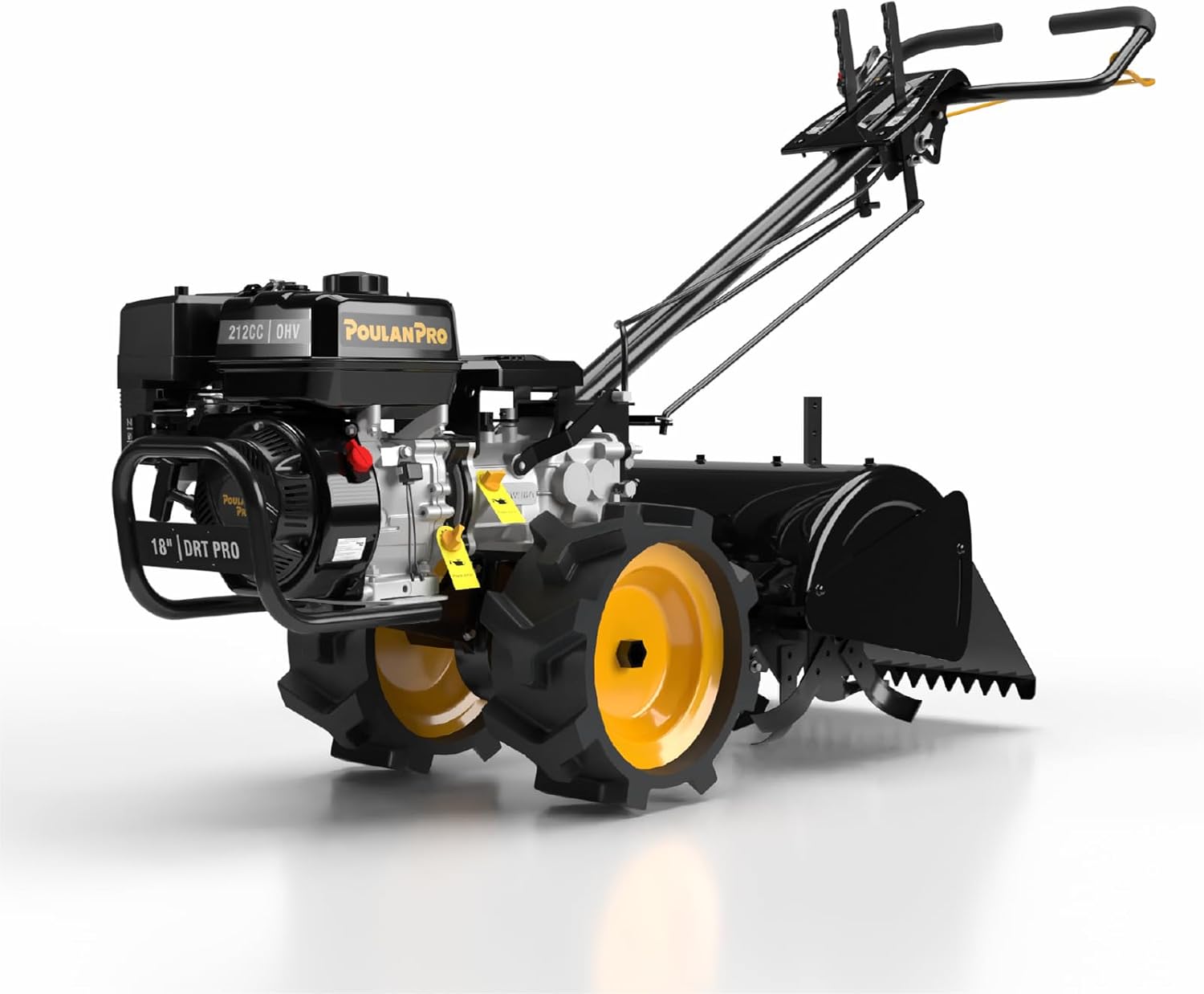
Poulan Pro Rear Tine Tiller, 212cc Gas Engine, Full Gear Transmission, 18" Tilling Width
| Power Source | gas_powered |
|---|---|
| Material Type | Alloy Steel |
| Model Number | PPDRT18 PRO |
| Power | 212cc 4-cycle engine |
The Poulan Pro rear tine tiller is built to handle demanding garden tasks where durability and consistent power matter. Its 212cc 4-cycle gas engine paired with a full gear-driven transmission delivers steady torque for breaking compacted soil in vegetable beds, flower borders, and small-acreage plots. The unit uses dual-rotating steel tines across an 18 inch width with adjustable tilling depth, and two forward speeds plus a reverse to help you manage traction and maneuver tight areas. Flat-free tires reduce downtime from punctures and make the machine easier to move between beds. Controls include a dual-grip handlebar that lets you pivot or guide the tiller while staying off freshly tilled ground. Expect lower routine maintenance compared with belt-driven designs thanks to the gear drive, but be aware that as a gas-powered, heavy machine it requires seasonal engine upkeep and storage space. The tiller is best for homeowners and small-scale growers who need a rugged, serviceable machine rather than a lightweight or electric alternative.
Best for: Gardeners and small-scale growers who prioritize a dependable, low-upkeep drivetrain and need a machine that can tackle compacted or heavy soils regularly.
Less Ideal for: People with very small yards, light gardening needs, or those who prefer quieter, low-maintenance electric equipment should consider smaller or electric tillers instead.
- Powerful 212cc 4-cycle engine for heavy soil and sustained use
- Full gear-driven transmission reduces belt maintenance and delivers consistent torque
- Dual-rotating steel tines with adjustable depth for effective soil penetration
- Flat-free tires for stable transport and no puncture downtime
- Gas engine requires regular fuel and engine maintenance and winter storage
- Heavier and bulkier than electric or front-tine models, so it needs space to store
Verdict: Buy this tiller if you want a rugged, gear-driven gas machine that reliably tackles heavy soil with minimal drivetrain maintenance.
EARTHQUAKE Pioneer Dual-Direction Rear Tine Tiller (99cc Viper Engine)

| Tilling Width | 17" |
|---|---|
| Tilling Depth | 11" |
| Engine | 99cc 4-cycle Viper |
| Power Source | Gas Powered |
| Wheels | Airless tires |
The EARTHQUAKE Pioneer is a rear-tine tiller built to break sod and prepare smooth seed beds while remaining easier to handle than larger models. It offers dual-direction tines so you can use counter-rotating mode to tear through tough turf and switch to standard rotation for finishing, and an easy shift-position locator removes guesswork when selecting drive mode. A 99cc Viper four-stroke engine provides the power without the bulk and noise of bigger machines, and the transmission's mid-frame placement lowers the center of gravity for better balance. Instant reverse lets you back up with a simple pull handle instead of downshifting, and wide airless tires deliver traction without the risk of flats. Controls include dual-grip handlebars for one-handed side-step operation in tight rows. Important trade-offs are that it is gas powered so it requires fuel and maintenance, and its size and power are aimed at home gardens rather than heavy commercial acreage. Safety precautions are needed around rotating tines and thrown debris.
Best for: Gardeners who want a capable rear-tine tiller that balances power with easier handling for frequent home or allotment prep and those who value maneuverability in tight rows.
Less Ideal for: Large-scale commercial growers or contractors who need high-hour, heavy-duty tillers and users seeking electric or zero-emission alternatives.
- Dual-direction tine modes for both sod-busting and creating smooth seed beds
- Instant reverse mechanism for easy backing without shifting gears
- Airless super-wide tires provide strong traction and never go flat
- Compact, balanced design with a lower center of gravity for improved maneuverability
- 99cc four-stroke engine delivers adequate power with reduced noise and weight
- Requires gasoline and routine engine maintenance typical of gas-powered equipment
- Designed for home and garden use rather than large-scale commercial tilling
Verdict: Buy this if you want a manageable rear-tine tiller that combines dual-direction performance and instant reverse for efficient home garden sod removal and seed-bed preparation.
YARDMAX 18 in. Rear Tine Garden Tiller (212 cc)

| Power Source | gas_powered |
|---|---|
| Operation Mode | Gas |
| Material Type | Alloy Steel |
| Item Type Name | Rear Tine Tiller |
The YARDMAX 18 in. rear tine tiller is a gas-powered machine built to break and prepare garden soil quickly. It uses a 209–212 cc engine (varies by production) paired with true dual-rotation tines so you can till forward to cultivate or reverse to pull through tough ground without excessive strain. Typical use is prepping new beds, turning compost into soil, and working compacted soil before planting; the heavy alloy-steel build and rear-tine layout provide good traction and consistent depth control compared with front-tine consumer models. Practical benefits include faster progress on larger areas and more powerful digging in clay or compacted earth. Important limitations are its weight and size, which make it less suitable for small yards or for users who need a very lightweight, easy-to-store tool, and the requirement for regular gas engine maintenance and fuel storage. Assembly and occasional adjustments to tine depth and belts are expected for long-term reliable performance.
Best for: Best for budget-minded gardeners who need a robust tiller to prepare multiple medium to large beds and who prioritize digging power and durability over compactness.
Less Ideal for: Not a good fit for apartment gardeners, very small yards, or users who need a lightweight, easily stored tool or want electric/zero-emission operation.
- True dual-rotation tines for forward and reverse tilling to handle compacted soil
- Large displacement gas engine (209–212 cc) for strong digging power
- Alloy steel construction for durability during repeated use
- Designed as a rear-tine layout for better traction and consistent tilling depth
- Heavy and bulky, making transport and storage more difficult
- Requires gasoline engine maintenance and periodic adjustments
Verdict: If you want a durable, no-nonsense rear tine tiller that delivers strong digging power for prepping larger garden beds on a budget, this YARDMAX is a solid choice.
NOVUS 17" Dual-Direction Rear Tine Tiller with 212cc Gas Engine

| Power Source | gas_powered |
|---|---|
| Operation Mode | Gas |
| Material Type | Alloy Steel |
| Manufacturer Warranty Description | 2 Years |
The NOVUS rear tine tiller is built for heavy-duty garden preparation, using a 212cc 4-cycle gasoline engine to deliver the torque needed to break compacted soil. It tills a 17-inch path with 16 steel tines and offers 4"–10" adjustable depth so you can prepare beds quickly for vegetables or larger garden plots. Dual-rotating tines plus separate wheel drive and tine controls let you choose forward or reverse rotation to match soil conditions and to help extract the machine when it stalls. Practical touches include adjustable handlebars for operator comfort and 14-inch flat-free tractor-style wheels that resist flats and reduce upkeep. Expect strong performance on plots larger than small raised beds, but note it is a heavy, gas-powered machine that requires regular fuel and engine maintenance and is not suitable where gas engines are restricted. Assembly and occasional tune-ups will be necessary to keep the transmission and tines working reliably over time.
Best for: Buyers who prioritize dependable, long-lasting performance for preparing medium to large garden plots and want a machine that handles compacted or rocky soil with minimal effort.
Less Ideal for: Small-plot gardeners who need a lightweight or electric option, or anyone who prefers a maintenance-free battery-powered tool.
- Powerful 212cc 4-cycle engine for consistent torque in hard soil
- Dual-rotating tines with independent control for versatile tilling and easier extraction
- 17-inch tilling width and adjustable 4"–10" depth for efficient bed preparation
- 14-inch flat-free tractor-style wheels reduce punctures and maintenance
- Adjustable handlebars improve operator comfort during longer jobs
- Heavy and bulky, requiring two people for moving or loading
- Gas engine needs routine maintenance and fuel storage
- Cannot be shipped to some regions due to local regulations
Verdict: If you need a reliable, heavy-duty rear tine tiller that can tackle compacted soil and large garden areas, this NOVUS 212cc model is a strong, maintenance-manageable choice.
EARTHQUAKE Victory Rear Tine Tiller (209cc Viper Engine)

| Engine | 209cc 4-Cycle Viper |
|---|---|
| Tilling width | 16" |
| Max tilling depth | 10" |
| Wheels | 13" pneumatic self-propelled |
The Earthquake Victory is a purpose-built rear tine tiller for homeowners who need serious soil-turning power. Its 209cc Viper 4-cycle engine drives counter-rotating tines that aggressively break compacted soil and new ground, while a durable cast-iron transmission with bronze gears is designed for long service life. The machine tills a 16-inch swath up to about 10 inches deep, and features instant reverse so you can change direction or work close to fences without stopping to shift. Adjustable handlebars and a drag stake let you tune comfort and tilling resistance, and 13-inch pneumatic wheels make positioning and moving the unit over rough ground easier. Side tine shields and a rear smoothing shield help keep dirt away from plants and produce a neater seedbed. This tiller is best suited to gardeners who need a robust, long-lasting tool for breaking new ground and maintaining rows; it is heavier and more powerful than lightweight front-tine models, so storage, transport, and initial assembly should be planned for accordingly.
Best for: Buyers who want a robust, long-lasting rear tine tiller for breaking new ground and maintaining garden rows and who prioritize proven mechanical durability and user control over low weight.
Less Ideal for: Casual gardeners with very small plots, those who need a lightweight portable unit, or users who prefer low-maintenance electric alternatives.
- Powerful 209cc 4-cycle engine for sustained tilling performance
- Counter-rotating rear tines that break compacted soil and new ground effectively
- Instant Reverse handle for easy directional changes and tight-space maneuvering
- Durable cast-iron transmission with bronze gears for long-term reliability
- Adjustable handlebars and drag stake for operator comfort and better seedbed control
- Substantial weight makes it less convenient to move or lift for storage
- Requires gas engine maintenance and winterization unlike electric models
Verdict: Choose the Victory if you want a heavy-duty, mechanically durable rear tine tiller built to break new ground and deliver reliable season-after-season performance.
Earthquake Pioneer Dual Direction Rear Tine Tiller (127cc Briggs & Stratton)

| Engine | 127cc Briggs & Stratton 4-cycle |
|---|---|
| Tilling Width | 17" |
| Tilling Depth | Up to 11" |
| Tine Modes | CRT and SRT (dual direction) |
| Wheels | Airless rubber tires with steel rims |
The Earthquake Pioneer is a purpose-built rear tine tiller that balances power and user-friendly handling for medium to large garden work. It uses a 127cc Briggs & Stratton 4-cycle engine and a patented transmission to deliver sod-busting torque in Counter Rotating Tine mode and a smoother seedbed in Standard Rotating Tine mode. Instant Reverse lets you back out of tight spots without shifting, which speeds work along fences and in rows. The airless rubber tires on steel rims eliminate flats and give good traction across varied terrain, while the adjustable handlebar and option for one- or two-handed operation help keep footprints out of prepared beds. At a lower weight than many competitors, it is easier to maneuver without extra counterweights, though that lighter package may feel less substantial on extremely rocky ground. The Pioneer is well suited to homeowners who want a reliable, versatile tiller for breaking new ground and finishing seedbeds, but buyers should plan for typical gas-engine maintenance and storage needs.
Best for: Gardeners who want a capable, easy-to-handle rear tine tiller for prepping new plots and maintaining existing beds, and who value maneuverability and versatile tilling modes over the absolute heaviest-duty machine.
Less Ideal for: Commercial landscapers or users who need maximum durability for continuous heavy excavation or frequent rock-filled ground should consider larger industrial-grade tillers.
- Dual-direction tines (CRT and SRT) let you both break new ground and finish a smooth seedbed
- 127cc Briggs & Stratton 4-cycle engine with an efficient transmission provides strong tilling torque
- Instant Reverse handle enables quick backing and tight-turn maneuvering without shifting gears
- Airless rubber tires on steel rims eliminate flats and provide reliable traction
- Adjustable three-position handlebars and optional one-handed operation keep footprints out of beds
- Gas engine requires regular maintenance and winter storage care
- May feel less heavy-duty on very rocky or extremely compacted soils compared with larger, heavier commercial models
Verdict: A well-balanced rear tine tiller that delivers strong sod-busting power and easy maneuverability for homeowners preparing and maintaining garden beds.
Choosing the Right Rear Garden Tiller: Key Factors to Consider
Engine Power and Torque
Engine output is the primary determinant of how well a rear garden tiller penetrates compacted or clay soils. Higher torque helps the tines bite and maintain forward progress without bogging down, which is especially important when breaking new ground or working deep beds.
Beyond peak horsepower, throttle responsiveness and the ability to hold low-RPM power under load affect how smoothly you can work sensitive areas. If you plan to use the tiller for heavy-duty turning or on hardpan, choose a machine with a torque-focused engine and a throttle or transmission that lets you keep the tines turning steadily under load.
Tine Design and Working Depth
Tine shape, width, spacing, and mounting determine how soil is cut, lifted, and mixed. Curved or L-shaped tines tend to dig deeper and flip soil more aggressively, while narrow or straight tines skim the surface for light cultivation.
Consider the maximum working depth and whether the machine supports adjustable depth control or interchangeable tine configurations. For seedbed prep you want a finer finish at shallower depths; for breaking new ground you need tines and gearing rated for deeper penetration.
Maneuverability and Steering Control
Rear tillers rely on weight distribution and tine rotation for forward movement, so steering characteristics vary widely. Good handle ergonomics, adjustable handle height, and responsive steering mechanisms reduce operator fatigue and improve accuracy in tight beds.
If your garden has pathways, raised beds, or obstacles, a unit with neutral steering or counter-rotating tine options will make turns and shallow passes easier. Consider also the control layout: easily reached clutch, throttle, and depth-adjust controls let you react quickly to sudden changes in soil conditions.
Build Durability and Materials
Soils with sand, grit, or stones accelerate wear on tines and gearbox components. Look for hardened tine steel, sealed gear housings, and robust frames that resist bending and corrosion. Weld quality and the type of protective finish influence long-term resistance to moisture and abrasive wear.
A durable design also means fewer field failures and simpler repairs. Pay attention to how tines mount and whether replaceable tine kits are available, and verify gearbox protection from impact or ingress of debris.
Ease of Maintenance and Serviceability
Regular maintenance keeps a tiller reliable through seasons of heavy use. Accessible oil fill and drain points, straightforward belt inspection and replacement, and clear grease points shorten service time and lower maintenance costs.
Machines that expose common wear parts without removing multiple panels make routine checks simpler. Also consider the availability of common replacement parts such as tines, belts, and oil filters when evaluating long-term ownership convenience.
Weight, Transport, and Storage
Weight affects how the tiller handles in tough soil and how easily you can move it between sheds or into a vehicle. A heavier unit provides traction and stability for deeper digging, but it becomes harder to lift and store. Folding handles, detachable tines, or a transport wheel option can ease handling.
Think about where you will park and maintain the tiller. If you need to carry it up steps or into a compact shed, a lighter machine or one with quick-disconnect features will make that chore more manageable. Balance the operational benefits of mass against the practicalities of moving and storing the unit.
Preparing Soil with a Rear Tiller
Use a rear tiller to break sod, incorporate compost, and create a smooth seedbed. For new ground, make a first pass at a shallow depth to scatter rocks and roots, then increase tine depth for a second pass to reach final working depth.
Work in narrow strips and overlap passes slightly to avoid missed ridges. After tilling, rake the bed to remove stones and level the surface before planting.
- Start shallow on virgin ground to reduce strain and reveal obstacles
- Make multiple passes for consistent depth and finish
- Rake and check for rocks before planting
Dealing with Different Soil Types
Sandy soils require less tine aggressiveness and benefit from fewer passes to avoid overworking and loss of structure. Clay soils need higher torque and slower forward speed to break clods. For loamy soil, aim for a balance of depth and tine speed to preserve crumb structure.
In heavy clay, break it up progressively and avoid working the soil when it is too wet, as that can create compaction. In very dry or compacted ground, moisten slightly beforehand to aid tine penetration.
- Sandy: shallow passes, lighter tine settings
- Clay: high torque, slower passes, avoid working when wet
- Loam: balanced passes for a fine seedbed
Routine Maintenance Checklist
Keep a regular maintenance schedule to extend the machine's life. After each use, clear debris from tines and inspect for bending or breakage. Check oil levels and look for leaks around the gearbox.
Seasonally, inspect belts, grease fittings, and mounting hardware. Replace worn tines promptly and tighten any loose fasteners before the next heavy-duty session.
- Clean tines and check for damage after each use
- Inspect oil and gearbox seals monthly during heavy season
- Grease fittings and check belt tension seasonally
Transporting and Storing a Rear Tiller
Plan where the tiller will live when not in use to protect it from weather and theft. If storing outside temporarily, use a breathable cover and elevate the unit to prevent water pooling around the gearbox.
Before long-term storage, drain or stabilize fuel, change engine oil if recommended, and coat exposed steel with a light oil to reduce corrosion. Remove battery or disconnect spark plug on machines that require winter storage to prevent accidental starting.
- Use a dedicated dry storage area when possible
- Perform end-of-season prep to minimize corrosion
- Secure or immobilize the machine to prevent unauthorized use
Safety Practices for Using Rear Tillers
Wear protective gear: eye protection, gloves, and sturdy footwear. Keep bystanders and pets well away from operating area. Be mindful of hidden obstacles such as irrigation lines, shallow roots, and buried debris.
Always stop the engine before making adjustments or clearing tangled vegetation from tines. Read and follow the operator controls and locking procedures for transport and operation to avoid accidental engagement.
- Clear the area of people and pets before starting
- Stop engine before servicing tines
- Mark or locate underground utilities before tilling
How We Chose the Best Rear Garden Tiller
We selected rear garden tillers by applying filters that reflect how gardeners actually use these machines. First, we prioritized engine and tine combinations that consistently deliver adequate torque for compact or clay soils while still allowing controlled cultivation in looser loam. Second, maneuverability and steering control were required for smaller yards and beds with tight turns. Third, build durability-tine steel, gearbox design, and frame construction-was used to predict service life in abrasive, rocky soil. We also assessed maintenance and serviceability: ease of accessing belts, oil change points, and replaceable tines matter for long-term ownership. Weight and transportability were included to ensure units are practical for home gardeners who move equipment between storage and garden. Exclusions in the shortlist removed mini cultivators underpowered for full-depth digging and heavy tractor-mounted implements not suitable for the backyard. The final picks balance digging performance, handling, durability, and routine maintenance needs.
FAQ
How deep can a rear garden tiller typically dig?
Typical working depths vary by model and tine setup but many rear tillers reach 6 to 12 inches with the right tine selection and gear setting. Actual depth depends on soil type, engine torque, and whether you make multiple passes.
Can a rear tiller handle rocky soil?
Rear tillers can work in rocky conditions, but frequent stone contact increases wear and risk of damage. Use shallow initial passes to clear larger rocks, choose hardened tines, and inspect gearbox protection when planning to till stony ground.
Is a rear tiller suitable for raised beds?
Rear tillers can prepare and refresh raised beds, but you may need a model with precise depth control and narrower tine widths to avoid over-disturbing adjacent beds. For small, confined beds, consider a lighter unit or cultivating attachments that offer finer control.
How often should I replace tiller tines?
Replacement frequency depends on soil abrasiveness and use intensity. Inspect tines after each season and replace when edges are rounded, lengths are significantly reduced, or you notice decreased penetration. Regular replacement preserves performance and reduces strain on the engine.
What maintenance keeps a tiller running year after year?
Perform routine cleaning, check oil and gearbox seals, grease fittings, and keep belts and fasteners in good order. Seasonal inspections and prompt replacement of worn tines and belts prevent small issues from becoming major repairs.
Final Verdict
Choose a rear garden tiller that matches your soil and the scale of work you plan to do. Prioritize engine torque and appropriate tine configuration for heavy or compacted soils, and value maneuverability when working in tight beds or around obstacles. Durable tine materials and accessible maintenance points reduce downtime and prolong service life. Balance weight and transport needs against digging performance. If you focus on deep soil preparation choose higher torque and aggressive tines; if you mostly refresh beds, favor precise depth control and easier handling.
