

Note: This article contains affiliate links. If you click on these links and make a purchase, I may earn a small commission at no extra cost to you. This helps support my research and content. Read my full affiliate disclosure here.
If you need a budget-friendly machine to handle light to medium exterior cleaning, choosing the right electric pressure washer matters. Under $150 options are often aimed at homeowners with patios, small driveways, siding, garden furniture, and car washing tasks. You want enough pressure and reliable build quality without unnecessary weight or complicated setup. This guide covers our seven shortlisted Electric Pressure Washers under $150 and explains the practical differences that matter in a yard or on a patio. We evaluate pressure output, pump and motor durability, hose and accessory usefulness, and real-world handling to help you match a model to the jobs you will do. Read on for the criteria we used and buying factors to consider before picking the best unit for your space.
Top Picks at a Glance
| Best Overall The best all-around choice for most situations | Westinghouse ePX3050 Electric Pressure Washer (2100 PSI, Foam Cannon & Turbo Nozzle) |  |
| Best Quality Built to a higher standard if you want something more solid | Westinghouse ePX3100 Electric Pressure Washer (2300 PSI, 1.76 GPM) |  |
| Best Value The sweet spot between price and what you get | Westinghouse ePX3100v Electric Pressure Washer (2100 PSI, 1.76 GPM) |  |
| Best Budget The cheapest option that still gets the job done reliably | Sun Joe SPX205E-XT Electric Pressure Washer (1600 PSI, 1.45 GPM) |  |
| Highest Rated A top-rated pick with lots of positive feedback | commowner Electric Pressure Washer, 5000 PSI with Pressure Control and 33 ft Hose |  |
| Most Popular A crowd favorite that many people choose with confidence | Westinghouse ePX3100s Electric Pressure Washer (2100 PSI, Foam Cannon, Turbo Nozzle) |  |
| Best Seller A high-volume bestseller chosen again and again | LWQ S5 Portable Electric Pressure Washer with Four Quick-Connect Nozzles and Foam Cannon |  |
Westinghouse ePX3050 Electric Pressure Washer (2100 PSI, Foam Cannon & Turbo Nozzle)

| Maximum Pressure | 2100 psi |
|---|---|
| Maximum Flow Rate | 1.76 gpm |
| Power Source | ac |
| Hose Length | 20 feet |
| Tank Volume | 20 fluid ounces |
The Westinghouse ePX3050 is a compact electric pressure washer designed for typical homeowner tasks like washing cars, patios, fences, and driveways. It produces a maximum of 2100 psi and up to 1.76 gpm at the lowest pressure setting, with a rated output of 1800 psi and 1.2 gpm for steady cleaning. The unit ships with a foam cannon, a turbo nozzle plus 15° and 25° tips, a 20 foot abrasion-resistant hose, a wand with quick-connect fittings and a long GFCI cord for safer outdoor use. Practical benefits include a maintenance-free axial cam pump with auto stop for easier upkeep, five-inch never-flat wheels and a low profile for maneuvering around the yard, and compatibility with common M22 accessories. Limitations are the electric power source and mid-range flow rate, which make it best for medium-duty jobs rather than heavy industrial cleaning, and the onboard water tank is small so expect to use a garden hose for sustained tasks.
Best for: A practical homeowner who wants a reliable, easy-to-move electric washer for regular medium-duty cleaning of cars, patios, siding and fences without the fuss of gas engines.
Less Ideal for: Professionals or users who need industrial-level cleaning power, long continuous run times, or remote jobsite use where no AC power is available.
- Delivers up to 2100 psi for effective medium-duty cleaning.
- Includes foam cannon and three quick-connect nozzles for versatile cleaning tasks.
- Maintenance-free axial cam pump with auto stop reduces upkeep.
- Long GFCI cord and 20 ft abrasion-resistant hose improve reach and safety.
- Five-inch never-flat wheels and compact profile make it easy to maneuver and store.
- Electric power limits use where outlets are unavailable and reduces continuous heavy-duty runtime.
- Flow rate is mid-range so cleaning very large surfaces will take longer than with higher-gpm models.
Verdict: A compact, all-around electric pressure washer that gives homeowners strong medium-duty cleaning power with useful accessories and low maintenance.
Westinghouse ePX3100 Electric Pressure Washer (2300 PSI, 1.76 GPM)

| Power Source | ac |
|---|---|
| Maximum Flow Rate | 1.76 gpm |
| Maximum Pressure | 2300 psi |
| Hose Length | 25 feet |
| Tank Volume | 20 fluid ounces |
The Westinghouse ePX3100 is a compact electric pressure washer designed for tackle-everyday grime on cars, patios, driveways, decks and fencing. It produces a 2300 psi maximum and up to 1.76 gpm for short bursts of heavy cleaning while the rated output (around 1900 psi, 1.24 gpm) gives steadier performance for routine jobs. The unit includes a pro-style steel wand with five quick-connect tips (including a turbo and soap nozzle), a 25 foot easy-coil hose and a 20 ounce onboard detergent tank so you can switch between rinsing and applying cleaners quickly. Four swivel wheels and a low center of gravity make it easy to move around the yard and the Total Stop System shuts the pump off when the trigger is released to save energy and extend pump life. The small footprint makes storage simple, but the relatively light flow means it is best for household surfaces rather than heavy commercial stripping or very large concrete areas. Expect good cleaning power for typical homeowner tasks with convenient accessories and manageable storage.
Best for: Homeowners who want strong, portable cleaning power for cars, patios, decks and driveways and who prioritize peak pressure and easy maneuverability over heavy industrial throughput.
Less Ideal for: Contractors or users who need continuous high-flow cleaning for large commercial jobs or who require large onboard detergent capacity.
- High peak pressure (2300 PSI) for removing stubborn grime in short bursts
- Five quick-connect spray nozzles including turbo and soap for versatile cleaning
- 25 foot easy-coil hose and four swivel wheels improve reach and maneuverability
- Onboard 20 oz detergent tank simplifies switching between soap and rinse
- Total Stop System conserves energy and reduces pump wear when idle
- Rated flow (1.24 gpm) and compact size limit efficiency on very large or commercial surfaces
- 20 ounce detergent tank is small for extended cleaning sessions requiring lots of soap
Verdict: If you want a compact, high-peak-pressure electric washer that tackles household grime with handy nozzles and easy maneuverability, this is a strong performer.
Westinghouse ePX3100v Electric Pressure Washer (2100 PSI, 1.76 GPM)

| Power Source | ac |
|---|---|
| Maximum Flow Rate | 1.76 gpm |
| Maximum Pressure | 2100 psi |
| Specification Met | ETL |
The Westinghouse ePX3100v is a portable electric pressure washer aimed at routine outdoor cleaning around the home. It produces a maximum of 2100 psi with up to 1.76 gpm (1.8 rated/1.2 rated flow under normal operation) and comes with a pro-style wand, three quick-connect spray tips, a detachable foam cannon for applying detergent, and a long hose for reach. Typical uses are washing cars, decks, patios, fences, driveways, and garage floors where a balance of power and portability matters. The unit is light and has a built-in carry handle for easy transport and storage, and a Total Stop System that shuts the pump off when the trigger is released to conserve energy and reduce wear. Practical limitations are that it is designed for medium-duty residential work rather than heavy commercial cleaning, and peak psi quoted is short-term maximum rather than continuous rated pressure. For buyers who need compact, straightforward performance and detergent capability for everyday outdoor surfaces, this model covers the basics reliably.
Best for: Buyers who want a compact, easy-to-move electric washer that handles routine home tasks like cars, decks, patios, and light concrete cleaning without the bulk of larger units.
Less Ideal for: Users who need sustained high-power cleaning for large commercial surfaces, heavy-duty oil or gum removal, or frequent nonstop use should consider a more powerful, commercial-grade machine.
- High peak pressure (2100 psi) suitable for removing mildew, grime, and road film from common household surfaces
- Includes detachable foam cannon and three quick-connect nozzles for versatile cleaning and detergent application
- Lightweight, compact design with built-in handle for easy carrying and storage
- Total Stop System automatically stops pump when trigger is released to save energy and extend pump life
- Maximum psi is a short-term peak figure and continuous cleaning operates at a lower rated pressure
- Intended for medium-duty residential tasks and may struggle with heavy industrial or large commercial jobs
Verdict: A lightweight, feature-packed electric washer that gives practical cleaning power and detergent capability for typical home jobs under a compact footprint.
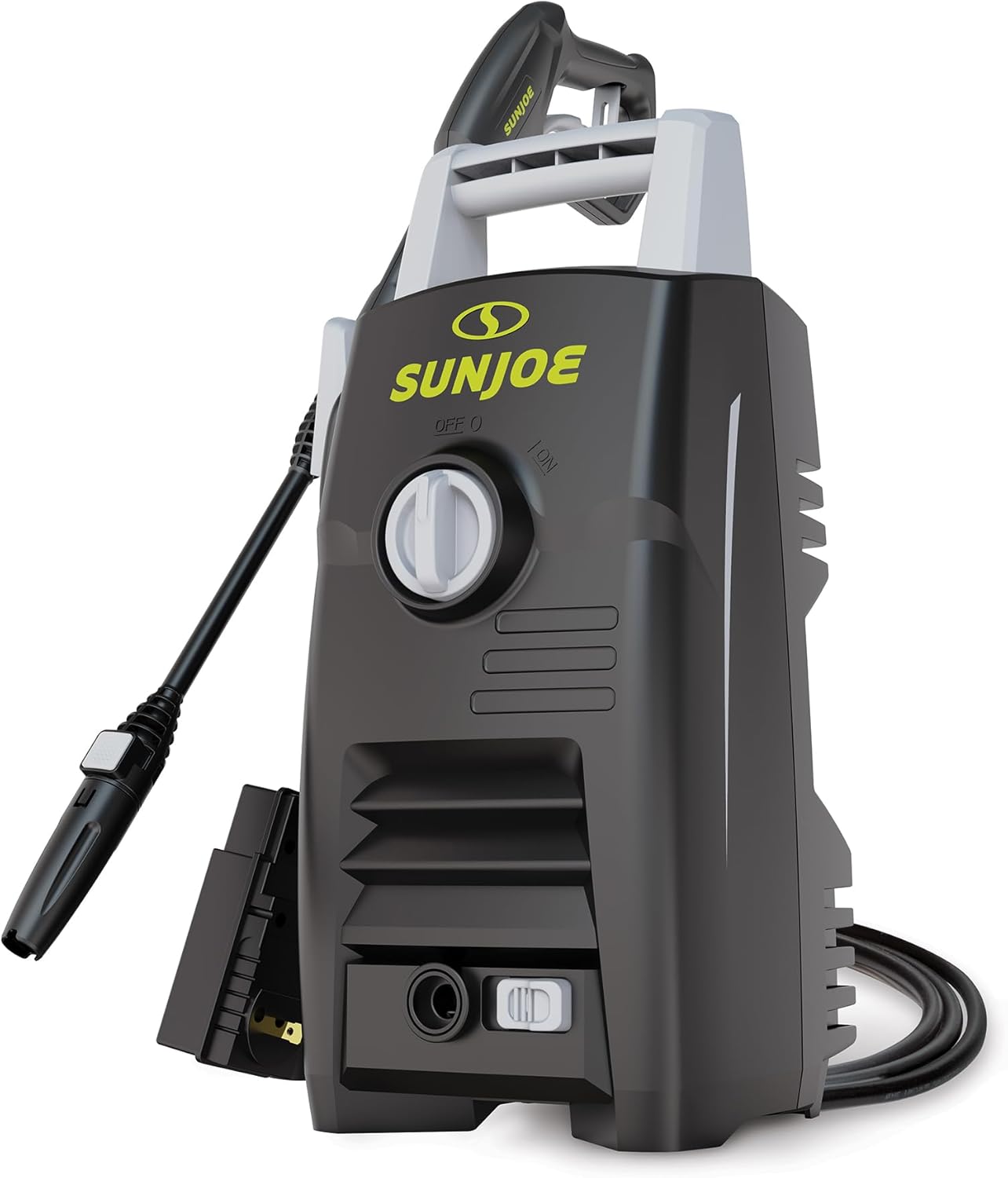
Sun Joe SPX205E-XT Electric Pressure Washer (1600 PSI, 1.45 GPM)
| Power Source | Electric |
|---|---|
| Maximum Flow Rate | 1.45 gpm |
| Maximum Pressure | 1600 psi |
| Hose Length | 20 feet |
The Sun Joe SPX205E-XT is a lightweight, budget-friendly electric pressure washer designed for routine home cleaning like patios, decks, siding, outdoor furniture, and cars. Its 11-amp motor produces up to 1600 PSI and 1.45 gallons per minute, and the included twist nozzle plus adjustable spray wand let you switch between a gentler rinse and a concentrated jet for stuck-on grime. The unit is easy to move around thanks to its carry handle and 20-foot high-pressure hose and it uses a Total Stop System that shuts the pump off when you release the trigger to reduce wear and save energy. Practical extras include a long GFCI-protected power cord and a garden hose adapter so you can plug it in and start quickly. The trade-off is that it is intended for light to medium jobs rather than heavy-duty commercial cleaning, so it will be slower on thick, ground-in stains compared with higher-pressure models. Still, for basic seasonal cleanup and occasional vehicle washing it offers straightforward performance at a modest cost.
Best for: Homeowners on a tight budget who need an affordable, easy-to-use pressure washer for light-to-moderate outdoor cleaning and occasional car washing.
Less Ideal for: Anyone who regularly needs commercial-level cleaning power or must remove deeply embedded grime on large surfaces should choose a higher-pressure model.
- Delivers up to 1600 PSI and 1.45 GPM suitable for typical home cleaning tasks
- Total Stop System reduces motor and pump wear when trigger is not engaged
- Includes 20 ft high-pressure hose, extension wand, and garden hose adapter for immediate use
- Long GFCI-protected power cord enhances safety and reach without additional accessories
- Not powerful enough for heavy commercial jobs or very stubborn, ground-in stains
Verdict: A practical, budget-oriented electric pressure washer that delivers reliable light-to-moderate cleaning performance for typical home use.
commowner Electric Pressure Washer, 5000 PSI with Pressure Control and 33 ft Hose

| Power Source | ac |
|---|---|
| Maximum Flow Rate | 4 gpm |
| Maximum Pressure | 5000 psi |
| Hose Length | 33 feet |
This commowner electric pressure washer delivers strong cleaning power with a maximum rating of 5000 PSI and an adjustable pressure knob that lets you dial the output down for more delicate surfaces. It is designed for typical home use like cleaning driveways, siding, decks, and cars. Notable features include a 33 foot hose with M22/14mm female thread and a 1/4" quick‑connect, four nozzle tips plus a 500 ml foam cannon, a 35 foot cord with built-in GFCI, and an automatic stop system that cuts the motor when you release the trigger. Practical benefits are straightforward setup, reduced risk of electrical hazards while working in wet areas, and versatility for switching accessories or pressure levels. Important limitations to note are that listed flow and pressure figures are peak values and real-world performance depends on supply water pressure and correct nozzle choice, and the unit’s safety means you must follow bleeding and start-up steps to avoid pump strain. For buyers focused on dependable, powerful cleaning in typical residential settings this model covers most bases well.
Best for: Buyers who want a reliable, powerful electric washer for regular residential cleaning jobs and who prioritize safety features and straightforward setup.
Less Ideal for: People needing a commercial-duty machine for continuous heavy professional use or those who cannot provide consistent water pressure from their supply.
- High maximum pressure with knob-adjustable range for safer cleaning of varied surfaces
- Long hose and cord with universal fittings and GFCI for flexible, safer use around the house
- Four quick-connect nozzle tips plus foam cannon provide ready versatility for different cleaning tasks
- Total Stop System that shuts the motor when not spraying conserves the unit and reduces wear
- Advertised PSI and GPM are peak values and actual cleaning power depends on water supply and nozzle selection
- Requires following start-up bleeding and safety steps to avoid pump damage or injury
Verdict: A feature-rich, safety-minded electric pressure washer that gives homeowners adjustable high pressure and useful accessories for dependable residential cleaning.
Westinghouse ePX3100s Electric Pressure Washer (2100 PSI, Foam Cannon, Turbo Nozzle)

| Power Source | ac |
|---|---|
| Maximum Flow Rate | 1.76 gpm |
| Maximum Pressure | 2100 psi |
| Hose Length | 20 feet |
The Westinghouse ePX3100s is a small, grab-and-go electric pressure washer designed for routine outdoor cleaning like cars, patios, decks and siding. It produces a 2100 max PSI (rated 1800 PSI) and up to 1.76 gpm, which is enough for stubborn dirt on concrete and routine vehicle washing. The unit ships with a foam cannon for clinging soap, selectable 15° and 25° nozzles for gentler cleaning, and a turbo nozzle for concentrated, heavy-duty scrubbing. A 20 foot high-pressure hose and a 35 foot GFCI power cord give good reach so you can walk around a car or driveway without moving the machine. The machine’s compact footprint and built-in holders make setup, storage and transport simple. Expect a lighter-duty electric experience compared with large gas models: it is best for regular maintenance and occasional tougher stains rather than continuous commercial use. The included accessories and straightforward controls make it a practical choice for homeowners who want a reliable, easy-to-store washer for most weekend jobs.
Best for: Homeowners who want a compact, easy-to-store pressure washer for regular car, patio and light concrete cleaning and who prefer a ready-to-use unit with included accessories and simple setup.
Less Ideal for: Contractors or users who need continuous, heavy-duty power or higher flow rates for large commercial jobs should choose a larger gas-powered or higher-capacity machine.
- High peak pressure (2100 PSI) suitable for concrete and vehicle cleaning
- Includes foam cannon and multiple nozzles for versatile cleaning tasks
- Long reach with 35 ft GFCI power cord and 20 ft high-pressure hose
- Compact, lightweight design with integrated holders for easy storage
- Electric motor and flow rate limit continuous heavy-duty or commercial use
Verdict: A compact, accessory-ready electric washer that gives strong cleaning power for everyday homeowner jobs under a budget-friendly option.
LWQ S5 Portable Electric Pressure Washer with Four Quick-Connect Nozzles and Foam Cannon

| Power Source | ac |
|---|---|
| Maximum Flow Rate | 2.5 gpm |
| Maximum Pressure | 2030 psi |
| Tank Volume | 2.5 gallons |
| Hose Length | 6.3 meters |
The LWQ S5 is a portable electric pressure washer built for routine home cleanup like cars, patios, driveways, and fences. It delivers up to 2030 psi with a 2.5 gpm maximum flow, and it includes four quick-connect metal nozzles (0°, 15°, 25°, 40°) plus a foam cannon for detergent work. The unit is intended for easy movement and storage thanks to dual rollers, a compact footprint, a power-cord hook, and onboard nozzle holders. Practical benefits include strong spray options for stubborn grime, a detachable detergent bottle for foaming, and an anti-tip base for stability. Important limitations are that it is an AC-powered electric unit so you need an outlet nearby, and while the specs suit typical residential jobs, it is not designed for heavy commercial use or continuous high-demand operation. Assembly and hose-priming steps are required before first use to ensure proper pressure. For buyers who want a straightforward, feature-packed electric washer for occasional to regular home use, this model covers the essentials without complex controls.
Best for: Buyers who want a reliable, easy-to-use electric pressure washer for regular residential cleaning around cars, patios, decks, and driveways and who prefer straightforward setup and storage.
Less Ideal for: Professionals or users who need a gas-powered unit or continuous heavy-duty performance for large commercial jobs.
- High maximum pressure of 2030 psi for effective removal of dirt and grime
- Multiple quick-connect metal nozzles and a foam cannon for flexible cleaning tasks
- Compact, rollable design with onboard storage for cord and nozzles simplifies transport and storage
- 2.5 gpm flow rate balances cleaning power with water savings compared with some high-flow models
- Requires AC power so it is limited to locations with an electrical outlet nearby
- Not intended for commercial or continuous heavy-duty use
Verdict: A compact, feature-ready electric pressure washer that gives homeowners effective residential cleaning power with easy storage and straightforward operation.
Choosing the Right Electric Pressure Washer: Key Factors to Consider
Pressure Output and Intended Tasks
Pressure rating determines how effectively a washer removes dirt and stains. For under $150 electric units you should expect lower PSI than heavy-duty models, so match pressure to task: washing cars and patio furniture needs moderate pressure, while deeply ingrained driveway stains often require higher PSI and different cleaners. Overly high pressure can damage softer surfaces, so consider whether your primary jobs are delicate or heavy-duty.
Look at both the maximum PSI and any adjustable-spray features. Machines that allow a gentler fan spray and a concentrated jet offer more flexibility for a range of chores. Remember that rated PSI is only part of the story; flow rate and nozzle selection also shape cleaning performance.
Flow Rate and Cleaning Efficiency
Gallons per minute affects how quickly a washer rinses away loosened grime. A higher flow rate improves cleaning speed on large surfaces, reducing the time you spend rewetting and rinsing. Budget electric washers often trade flow for compact motors, so if you plan to clean decks or longer sections of siding, prioritize higher GPM where possible.
Flow and pressure work together: a modest PSI with good flow can outperform a low-flow, high-PSI unit on some tasks. Check whether the unit specifies both numbers and consider the real surface area you must cover during a session.
Pump Type and Longevity
The pump is the mechanical heart of a pressure washer and dictates lifespan more than cosmetic features. Many inexpensive models use axial or wobble pumps while higher-end units use triplex pumps. For under $150 options, look for pumps with metal components or reinforced housings rather than all-plastic construction.
Longer pump life also depends on maintenance-ability to winterize, availability of inlet filters, and whether the unit tolerates garden hose sediment. A durable pump reduces the chance of mid-season failures and avoids frequent replacements.
Motor Protection and Thermal Management
Electric motors can overheat during extended use. Machines that include thermal cutoff switches, automatic shutoff when trigger is released, or adequate ventilation will hold up better in repeated jobs. Underpowering a motor by running it too long at high load shortens life, so look for explicit motor protection features.
Also consider duty cycle recommendations in manuals. Units intended for intermittent homeowner use can still be excellent if you space cleaning sessions and avoid continuous, heavy use that exceeds the motor's cooling capability.
Hose, Wand, and Connection Quality
A usable hose and wand make working comfortable and efficient. Long, flexible hoses reduce the need to reposition the unit, while sturdy wand fittings prevent leaks. Pay attention to quick-connect fittings, trigger feel, and whether the gun locks for storage. Poor hose materials can kink or crack in sunlight or cold weather, shortening useful life.
Also consider storage options such as onboard hose reels or simple clip systems. Compact units that still provide practical hose length and easy storage are the best fit for tight patios or small garages.
Included Nozzles and Accessory Versatility
Accessories extend the range of tasks a budget pressure washer can handle. A set of spray tips that cover wide fan to pinpoint jets plus a soap applicator lets you switch between gentle rinsing and focused stain removal. Brush attachments or short extension wands can help with cleaning gutters, grills, and stubborn spots.
Consider whether accessories are modular and replaceable. Permanently integrated or proprietary parts may limit future upgrades. Simple, widely compatible connectors are preferable for finding replacement parts later.
Matching Unit Size to Typical Jobs
Think through the chores you will do most often and choose a unit whose specs reflect those needs. Small electric pressure washers under $150 excel at cleaning patio furniture, garden tools, planters, and car surfaces. They are less suited to large concrete driveways or commercial debris removal.
If you perform quick, frequent touch-ups like rinsing pollen off siding or washing a car weekly, a compact model with easy storage and decent flow rate will save time. For occasional intensive cleaning, accept that multiple passes or pretreatment with detergent may be necessary.
- Short sessions and light-duty cleaning favor compact, lower-PSI units.
- Longer or larger surfaces benefit from higher GPM rather than only PSI.
- Consider access to water supply; low-flow units avoid starving municipal taps.
Noise, Storage, and Portability Considerations
Electric models are generally quieter than gas machines, but design differences still affect perceived noise. If you live in close quarters or have noise-restricted hours, look for models with quieter motor housings and insulated casing.
Storage space often dictates whether a pressure washer is practical. Units with integrated handles, compact footprints, and hose management save garage or shed space. Lightweight machines with good wheels make it easier to move them around the yard, which is important when you need to maneuver around beds or hardscaping.
- Check weight and wheel design for easier movement over gravel or pavers.
- Integrated storage features reduce setup time and protect accessories.
- Quieter motors support early morning or late evening tasks without disturbing neighbors.
Water Source, Hose Length, and Placement
Plan where you will operate the washer relative to your water spigot. Hose length matters: a short garden hose that leaves the washer far from work means constant repositioning. In small properties, a compact unit with a longer hose can be more convenient than a higher-powered but less mobile machine.
Also be mindful of water temperature and quality. Cold municipal water is fine for most cleaning tasks, but if your water has high sediment content, consider using a simple inline filter to protect the pump.
- Measure typical reach from spigot to work area before choosing hose length.
- Avoid placing the unit where it may get splashed or exposed to plant debris.
- Use an inline filter if sediment is present in your water supply.
Soap, Detergents, and Surface Safety
Many under $150 washers include a basic soap bottle or low-pressure detergent applicator. A separate, garden-safe detergent can greatly improve performance on greasy grills or mildew-stained siding. Use detergents rated for pressure washers and the surfaces you treat to avoid damage to plants and finishes.
When cleaning painted wood or older siding, use lower pressure settings and wider fan nozzles. Test a small hidden area first to ensure the washer does not strip paint or etch softer surfaces.
- Choose detergents labeled for your intended surface and rinse thoroughly.
- Use low-pressure soap application then follow with a higher-pressure rinse if needed.
- Protect nearby plants by wetting them first and rinsing any overspray.
Maintenance and Winter Storage
Routine maintenance extends the life of budget pressure washers. Flush the detergent and run clean water through the pump after each use to prevent buildup. Store hoses coiled and out of direct sunlight to avoid brittleness. Periodic inspection of fittings and the inlet filter will catch small leaks early.
For winter storage, drain the pump and hoses fully to prevent freeze damage. Use a pump saver product if recommended by the manufacturer to keep seals lubricated and protected during long idle periods.
- Regularly check fittings for tightness and replace worn quick-connects.
- Avoid leaving detergent in the system between uses.
- Drain all water before freezing temperatures to prevent cracked pumps and hoses.
How We Chose the Best Electric Pressure Washer
We focused on machines that fit the under $150 price constraint and that deliver useful cleaning performance for common outdoor tasks. Selection prioritized measurable specs and features that translate to real-world results in small to medium home settings. Key evaluation criteria included rated pressure and flow, pump type and longevity, motor protection and thermal cutoffs, hose and wand ergonomics, and included nozzle or accessory versatility. We excluded industrial or commercial-grade units and any models with unclear specifications or absent basic safety features. We also omitted devices that require extensive setup or proprietary accessories that add hidden cost. Each candidate was judged on how its stated pressure and flow pair with the included nozzle options, how the pump and motor are protected from overheating and debris, and how convenient the hose, wand, and storage solutions are for routine homeowner use. The result is a practical shortlist of units that balance compact size, ease of use, and cleaning ability for typical domestic outdoor tasks.
FAQ
Will an electric pressure washer under $150 clean my driveway effectively?
Often it can remove fresh dirt, moss, and light oil stains, but deep-set stains on concrete usually require higher PSI, stronger detergents, or multiple passes. For large driveways expect longer work time and possibly pretreatment.
Can I safely use a budget electric pressure washer on my car?
Usually yes if you choose lower pressure settings and a wide-angle nozzle. Keep the nozzle at a safe distance and avoid concentrated jets on sensitive trim or older paint to prevent damage.
How long can I run a small electric pressure washer before it needs a break?
It depends, but many compact units are intended for intermittent use. Follow duty cycle guidance in the manual and allow the motor to cool if it becomes hot. Units with thermal protection will shut off if overheating occurs.
Do I need special detergents for a pressure washer?
Pressure-washer-safe detergents formulated for siding, decks, or cars improve results. Avoid household cleaners not designed for pressure washers as they may harm surfaces or leave residues that damage landscaping.
How important is hose length on a small property?
Very important. A longer and flexible hose reduces the need to reposition the washer and makes cleaning more efficient. Balance length with storage convenience to avoid kinking and damage.
What maintenance keeps an inexpensive washer running longer?
Flush detergents after use, drain hoses before storage, inspect and tighten fittings, and use an inline filter if water quality is poor. For winter, fully drain the system to prevent freeze damage.
Final Verdict
When shopping for an Electric Pressure Washer under $150, prioritize the specs that match the jobs you actually do. Focus on pressure and flow that suit your surfaces, pump durability to avoid early failures, and motor protection for reliable use. Smaller units trade power for portability and convenience, so accept limits on heavy-duty cleaning and plan for maintenance and proper storage. Choose a machine that balances usable PSI and GPM with good hose and accessory design. For routine patio, car, and light surface cleaning, a thoughtfully chosen budget electric washer will deliver dependable results with minimal fuss.
