

Note: This article contains affiliate links. If you click on these links and make a purchase, I may earn a small commission at no extra cost to you. This helps support my research and content. Read my full affiliate disclosure here.
Picking the right soil for starting seeds makes a big difference in whether seedlings emerge quickly and establish strong roots. Seed-starting soil behaves very differently from garden bed topsoil: it needs a light, consistent texture for root penetration, good but controlled moisture retention, and the right nutrient profile to support the first true leaves. This guide presents seven shortlisted soils suited for growing seeds in flats, cells, or small pots. We evaluated each option against practical seed-starting needs so you can choose based on drainage, seedling vigor, and ease of use. Read on to see which characteristics matter most for your sowing situation and to find the right soil approach for successful germination.
Top Picks at a Glance
| Best Overall The best all-around choice for most situations | Burpee Organic Coconut Coir Seed Starting Mix (Coir Brick, expands to 8 qt) |  |
| Best Quality Built to a higher standard if you want something more solid | Premier Horticulture Pro-Mix HP Mycorrhizae Loose Growing Medium, 2.8 cu ft |  |
| Best Value The sweet spot between price and what you get | Miracle-Gro Indoor Potting Mix for Seed Starting (2 × 8 qt) |  |
| Best Budget The cheapest option that still gets the job done reliably | SunGro Seedling Mix Organic Seed Starting Mix – 8 Quart |  |
| Highest Rated A top-rated pick with lots of positive feedback | Sol Soils Seedling & Propagation Mix |  |
| Most Popular A crowd favorite that many people choose with confidence | Back to the Roots Organic Expanding Coco Coir Potting Soil Brick |  |
| Best Seller A high-volume bestseller chosen again and again | ZeeDix 30mm Peat Pellets Seed Starter Pods (55 pcs) |  |
Burpee Organic Coconut Coir Seed Starting Mix (Coir Brick, expands to 8 qt)

| Brand | Burpee |
|---|---|
| Item Highlight | OMRI Listed coconut coir expands with water to 16 qts of growing mix; ideal for seed starting and seedlings. |
| Included Components | Coir |
| Unit Count | 512 Fluid Ounces |
| Item Type Name | Organic Coconut Coir Concentrated Seed Starting Mix, 16 Quart |
This Burpee coconut coir seed starting mix comes as a compressed coir brick that expands when you add water to create a loose, moisture-retentive growing medium for seeds and seedlings. Typical use is simple: rehydrate the brick per directions, fluff the expanded coir, fill seed trays or small pots, then sow seeds or transplant seedlings. Notable features are that it is OMRI listed and made from renewable coconut fiber, so it is an eco-friendly peat alternative with good water retention and aeration. Practical benefits include easy storage before use, consistent texture that helps even germination, and low risk of introducing soil-borne pathogens. Limitations are that it is a single-component medium with no nutrients, so seedlings will need diluted fertilizer or mixing with compost/potting mix once roots develop, and the brick yields a modest volume per unit so larger projects may require multiple bricks. Handling dry coir can be dusty so dampening carefully is advisable.
Best for: Gardeners who want a reliable, low-mess organic seed-starting medium and value sustainable peat alternatives for small to medium seed batches.
Less Ideal for: Growers who need an all-in-one potting mix with built-in fertilizer or those starting large commercial seed runs without combining multiple bricks.
- OMRI listed organic coconut coir made from renewable material
- Expands with water for compact storage and easy setup
- Good moisture retention with improved aeration compared with peat
- Clean, consistent texture reduces mess and helps uniform germination
- Contains no nutrients so seedlings will need feeding or blending with nutrient-rich media
- Each brick yields a limited volume requiring multiple bricks for larger seed-starting runs
Verdict: A compact, OMRI-listed coconut coir brick that delivers a clean, moisture-retentive seed-starting medium for gardeners who prefer a sustainable peat alternative.
Premier Horticulture Pro-Mix HP Mycorrhizae Loose Growing Medium, 2.8 cu ft

| Item Form | Loose Fill |
|---|---|
| Specific Uses For Product | Plant Growth, Root Development |
| Coverage | Medium |
| Mixing Ratio | 75:25 |
This Pro-Mix HP Mycorrhizae bag is a peat-based propagation and seed-starting medium formulated to encourage root development and rapid establishment. It contains Glomus intraradices mycorrhizal inoculum and a high-air-capacity texture that improves drainage and oxygen around young roots, making it well suited for rooting cuttings, water-sensitive seedlings, and low-light germination. Typical use is filling flats, small pots, or propagation trays, moistening the medium, then sowing seed or transplanting seedlings; the included mixing ratio (75:25) guides blending with other media if you need different water retention. Practical benefits include better root colonization from the mycorrhizae, reduced risk of overwatering due to extra drainage, and a lightweight loose fill that is easy to work with. Important limitations are that it is peat-based so it holds less water than heavier mixes and may require more frequent feeding or watering for fast-growing seedlings, and the bag does not list an NPK schedule so supplemental fertilization is typically needed as plants develop.
Best for: Gardeners focused on strong root development and fast establishment of seedlings or cuttings who prioritize drainage and biological support over maximum moisture retention.
Less Ideal for: Those who want a high-water-retention seed-starting mix or prefer peat-free, fully fertigated media should consider alternative products.
- Contains beneficial mycorrhizal inoculum to support early root colonization
- High porosity and extra drainage reduce risk of root rot in water-sensitive seedlings
- Loose, easy-to-work-with texture for filling trays and pots
- Suitable for low-light propagation and rooting cuttings
- Peat-based formula holds less moisture than heavier seed-starting mixes so watering frequency may increase
- No nutrient breakdown listed so additional fertilization is needed as seedlings grow
Verdict: Choose this mix when you want a high-porosity, mycorrhizae-enhanced medium that speeds root establishment and reduces overwatering risk for seedlings and cuttings.
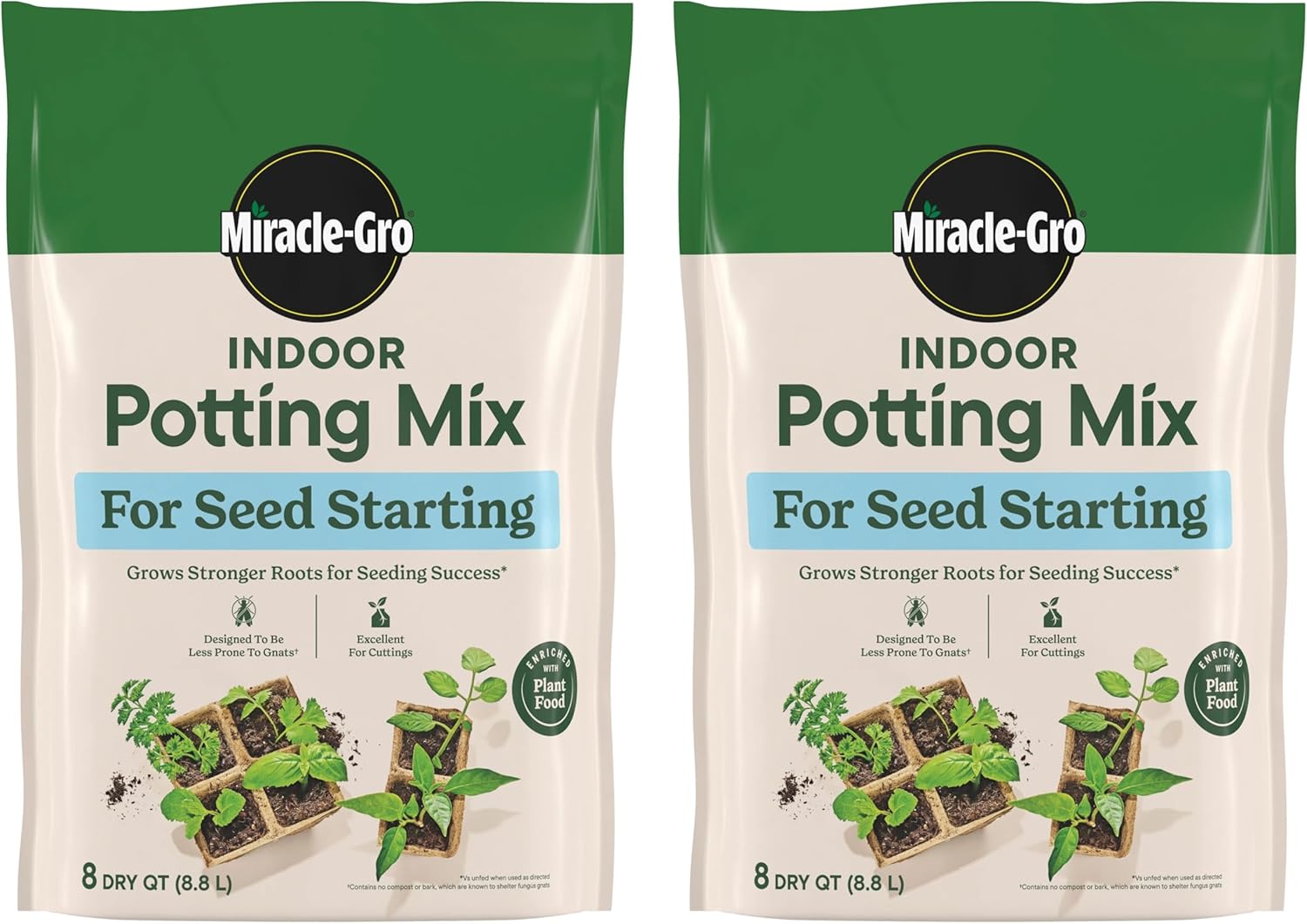
Miracle-Gro Indoor Potting Mix for Seed Starting (2 × 8 qt)
| Brand Name | Miracle-Gro |
|---|---|
| Item Type Name | Potting Mix |
| Number of Packs | 2 |
| Volume | 8 quarts |
Miracle-Gro Indoor Potting Mix for Seed Starting is a lightweight, fertilized growing medium designed to give seeds and cuttings an easier start. You use it straight from the bag in cell trays or small containers: fill cells, follow seed packet depth instructions, keep the mix moist and out of direct sun, and transplant once true leaves form. The formula avoids compost and bark, which lowers the chance of fungus gnat sheltering, and the added plant food supports early root development compared with unfed mixes. Practical benefits include consistent texture for even germination, enough volume to fill multiple 72-cell trays per bag, and a familiar, widely available brand. Limitations are that it already contains fertilizer so it may not suit growers who want complete control of early nutrient inputs, and the bags are single-use sized for small-scale starting rather than large commercial propagation. Also take usual safety precautions because the product contains fertilizer that can irritate if mishandled.
Best for: For gardeners who want a low-effort, dependable seed-starting mix that speeds up early root development and reduces common pest habitat when raising vegetables, herbs, and flowers indoors.
Less Ideal for: Not the best choice for growers who prefer to tailor every ingredient and nutrient at the seed-starting stage or for commercial-scale nurseries needing bulk volumes.
- Lightweight, consistent texture suitable for seed trays and cuttings
- Pre-enriched with plant food to promote early root growth
- Formulation excludes compost and bark to reduce fungus gnat habitat
- Two 8 qt. bags provide enough volume to fill several 72-cell seeding trays
- Contains added fertilizer which limits precise nutrient control for some growers
- Bag sizes are aimed at hobby or small-scale use rather than large propagation
Verdict: A convenient, fertilizer-enriched seed-starting mix that simplifies indoor germination and helps seedlings develop stronger roots quickly.
SunGro Seedling Mix Organic Seed Starting Mix – 8 Quart

| Volume | 8 quarts |
|---|---|
| Unit Count | 1 Count |
| Style Name | Peat Moss |
This seed starting mix is designed for germinating seeds in flats, pots, and plug trays and emphasizes a fine texture that holds moisture evenly. Typical use is filling seed trays or small pots to start vegetables, herbs, and flowers; the mix contains peat moss, perlite, and a wetting agent to promote uniform water absorption and reduce dry spots. It also includes a silicon-enriched additive called RESiLIENCE intended to support seedling vigor and reduce wilting during establishment. Practical benefits include easy handling, good germination conditions from the fine, moisture-retentive texture, and organic certification that makes it suitable for edible seedlings. Important limitations are that it is a starter mix rather than a long-term potting soil, so seedlings will need transplanting to richer media or garden beds as they grow, and the peat-based formula may compact over time if not managed. Protective handling is wise since the product can irritate skin or eyes if contacted directly.
Best for: Gardeners who prioritize starting healthy seedlings on a budget and want an organic, ready-to-use mix for flats and small pots.
Less Ideal for: Growers who need an all-in-one potting mix for long-term container plants or those avoiding peat-based products for sustainability reasons.
- OMRI listed for organic growing suitable for edible and ornamental seedlings
- Fine textured mix that promotes even moisture and good seed germination
- Includes organic wetting agent for uniform water absorption
- Contains silicon-enriched additive to help seedling resilience
- Designed only for seed starting so not nutrient-rich enough for long-term container growth
- Peat-based formula can compact over time and may need loosening before reuse
Verdict: A cost-conscious, OMRI-listed seed starter that delivers consistent moisture and good germination for healthy seedlings.
Sol Soils Seedling & Propagation Mix

| Style Name | Seedling & Propagation Mix |
|---|---|
| Unit Count | 128 Ounce |
| Volume | 1 gallons |
Sol Soils Seedling & Propagation Mix is a dedicated starting medium designed to give seeds and cuttings a consistent, forgiving environment for early root development. The mix combines calcined clay for even moisture buffering, coconut husk for aeration and water retention, hardwood biochar to support microbial life and nutrient holding, and earthworm castings for mild, safe nutrient supply. In practice this feels finer and more consistent than regular potting soil so seed trays and small pots drain well without drying out too quickly, reducing the need for constant monitoring. It is sterile and peat-free which lowers disease risk for delicate seedlings, and the bagged volume suits small home or greenhouse seed-starting projects. Expect some batch-to-batch texture variability since bags are mixed in small runs, and the mix is not pre-fertilized for long-term growth so transplants will need repotting or feeding after a few weeks. Also take care to pre-soak coconut husk as recommended to avoid tannin issues.
Best for: Growers who prioritize consistent, low-risk seed starts and want a ready-made propagation medium that reduces fussing over moisture and disease for trays, small pots, or greenhouse propagation.
Less Ideal for: Gardeners who need an all-in-one long-term potting soil or large-volume landscaping mix should choose a product formulated for mature plants and extended feeding.
- Formulated for seedlings with fine texture that supports even moisture without sogginess
- Includes calcined clay and coconut husk for balanced aeration and water retention
- Hardwood biochar and earthworm castings encourage microbial activity and gentle nutrient supply
- Peat-free and sterile blend reduces disease risk for young plants
- Small-batch mixing can produce visible texture variation between bags
- Not intended as a long-term potting soil and will need repotting or added nutrients after seedlings establish
Verdict: A reliable, peat-free seedling mix that keeps moisture steady and reduces disease risk so you can start seeds and cuttings with confidence.
Back to the Roots Organic Expanding Coco Coir Potting Soil Brick

| Item Highlight | 10 lb compressed coco coir brick; peat-free; OMRI Listed |
|---|---|
| Item Type Name | Coconut Coir |
| Volume | 2 cubic feet |
| Ingredients | Coconut Coir |
This compressed coco coir block is designed to expand into light, fluffy potting soil after you add water, making it a convenient base for seed starting or amending garden and container mixes. You hydrate the 10 lb brick and it loosens into roughly 2 cubic feet of medium with good aeration and water retention, which helps delicate seedlings develop strong roots without becoming waterlogged. It is OMRI listed and peat free, so it fits organic seed-start workflows and reduces reliance on peat. Because it is inert coconut coir the product is pH-balanced and versatile to use alone for seed trays or blended with compost or fertilizer for longer-term pots. Expect minimal mess and easy storage compared with bulky soil bags, but remember coco coir has low inherent nutrients so you will need to add a starter fertilizer or mix in compost for sustained growth after germination. For people seeking an organic, easy-to-handle seed medium this product streamlines setup while leaving nutrient management to you.
Best for: Buyers who want an easy-to-store, organic seed-starting medium that promotes root development and who plan to manage nutrition with amendments or fertilizers.
Less Ideal for: Gardeners who want an all-in-one potting mix with built-in nutrients or those who prefer a ready-to-use, no-prep soil alternative.
- Expands to about 2 cubic feet from a compact 10 lb brick for easy storage
- Peat-free and OMRI listed, suitable for organic seed starting
- Light, airy texture improves aeration and water retention for seedlings
- pH-balanced and usable alone or as an amendment with existing soil
- Inert substrate with little to no nutrients, requires added fertilizer or compost for sustained growth
- Requires rehydration before use which adds a preparation step
Verdict: A compact, organic coco coir brick that expands into a lightweight, seed-friendly medium ideal for gardeners who will supply nutrients separately.
ZeeDix 30mm Peat Pellets Seed Starter Pods (55 pcs)

| Unit Count | 55 Count |
|---|---|
| Material | Sphagnum peat moss |
| Style Name | Indoor & Outdoor Gardening |
| Item Weight | 0.28 kg |
These ZeeDix peat pellets are small compressed plugs wrapped in a non-woven mesh that expand when watered to form ready-to-use seed starting pods. Use them in a seed tray or small pots: sprinkle water, let the pellets swell, press the seed into the center, keep consistently moist and transplant the whole plug directly to a larger pot or the garden. The peat-based material retains moisture and contains organic sphagnum peat moss that supports root development and makes early watering easier, while the mesh sleeve prevents the soil from falling apart during handling and allows roots to grow through for low-disturbance transplanting. Practical benefits include quick setup, less messy potting soil, and convenience for beginners or parents doing a hands-on planting activity. Limitations are that peat is a single medium with no added fertilizer, so seedlings will need feeding once true leaves appear, and pellets can dry out faster than mixed potting media if left uncovered. For gardeners who prefer fully soil-based mixes or peat alternatives, these pellets may need to be combined with other amendments for longer-term growth.
Best for: Gardeners who want a simple, low-mess way to start seeds with predictable results and minimal transplant shock, especially beginners and those who value easy setup and handling.
Less Ideal for: Growers seeking a nutrient-rich or peat-free seed medium or those who plan extended on-plug growth without repotting should consider alternative mixes or larger starter cells.
- Non-woven mesh sleeve allows transplanting the whole plug without disturbing roots
- Compressed pellets expand quickly with water for fast, low-mess setup
- Made from sphagnum peat moss which holds water and promotes root development
- Compact pack of 55 plugs is convenient for starting multiple varieties
- No built-in nutrients so seedlings require fertilizing after establishment
- Uses peat which some gardeners avoid for environmental reasons
Verdict: A convenient, low-mess option for reliably starting many common seeds and transplanting them with minimal root disturbance.
Choosing the Right Soil for Growing Seeds: Key Factors to Consider
Texture and Particle Size
Seedlings have tiny roots that cannot push through dense clumps. Texture and particle size determine how easily roots penetrate and how uniformly water and air are retained. A fine, uniform crumb structure supports capillary moisture movement without creating pockets of standing water.
Too many large particles cause uneven contact between seed and soil and can dry out small seeds. Conversely, extremely fine dust-like media compact and limit oxygen, increasing damping-off risk. Aim for a medium-fine mix that stays loose after watering and allows consistent root growth.
Drainage Versus Moisture Retention
Seed-starting mixes must balance holding moisture so seeds can imbibe water and keeping excess water away from the root zone. Good mixes wick moisture to the seed but also drain enough to supply oxygen to developing roots.
Materials like perlite, vermiculite, or fine bark can improve drainage, while coir and fine sphagnum retain moisture. The ideal soil for growing seeds will not sit soggy for long periods but will also not dry out within a day in common indoor conditions. Consider your sowing method and watering routine when judging this factor.
Nutrient Starter Balance
Most seeds contain enough energy for germination, so seed-starting soils should not be heavily fertilized. A light, gently buffered nutrient level helps seedlings form the first true leaves without burning tender roots.
Look for soils with modest, slow-release starter nutrients or labeled as lightly amended. Extremely rich potting mixes can create overly rapid, leggy growth or salt buildup. The right balance supports healthy root development and a smooth transition at transplanting.
Pathogen Control and Sterility
Damping-off and seedling diseases thrive in wet, cool conditions. Using a sterile or pasteurized seed-starting medium reduces the chance of fungal and bacterial problems during the critical early weeks.
Pre-sterilized mixes or those blended with clean components lower disease risk, but good hygiene and careful watering are still essential. If reusing containers or trays, always clean and dry them between sowings to maintain the benefit of a sterile starting medium.
pH and Nutrient Availability
Soil pH affects nutrient availability for seedlings. Most common garden seeds start well in slightly acidic to neutral ranges. A seed-starting mix with a stable, moderate pH avoids sudden nutrient lockups that can stress young plants.
While precise pH testing is not necessary for casual hobbyists, mixes that advertise a balanced pH or easy amendment are helpful for growers who want predictable results. Avoid mixes with extreme liming or heavy amendments that shift pH sharply after watering.
Ease of Handling and Sterilization Options
Seed sowing often involves tiny volumes and frequent small batches. A seed-starting soil should be easy to measure, wet down evenly, and fill cells or flats without clumping.
Packaging that allows controlled pouring, a texture that wets uniformly from the surface downward, and compatibility with home sterilization methods are practical advantages. If you plan to repurpose or amend the mix later, consider how easily it blends with compost or added perlite.
Best Soil Types for Different Seed Sizes
Fine-seeded species like lettuce, petunia, or snapdragon need a very light, fine-textured medium that keeps seeds in contact with moisture without burying them too deep. Larger seeds such as beans, corn, or squash tolerate coarser particles and benefit from increased drainage to prevent rot.
When planning sowing, adjust the surface texture or top-dress with a slightly finer layer for micro-seeds, and use a coarser base for big seeds so excess moisture can escape.
- Fine texture for small seeds maintains surface contact
- Coarser mixes for large seeds improve aeration and drainage
Preparing Soil for Indoor Seed Starting
Moistening and fluffing the soil before filling trays helps avoid air pockets and uneven settling. Pre-wet the mix until it feels like a wrung-out sponge, then let excess water drain before seeding. This prevents seeds from sinking or floating during initial watering.
If you prefer to blend your own mix, combine a base of fine compost or peat alternative with perlite or vermiculite in a 3:1 ratio and screen the mix for uniformity. Always work with clean tools and trays to reduce disease risk.
- Pre-moisten to even moisture distribution
- Screen or sieve homemade mixes for consistency
Using Soil Outdoors or in Cold Frames
When transitioning seedlings outdoors or into a cold frame, choose a mix that will not compact under repeated wet-dry cycles. Outdoor seed beds exposed to rain need a blend with better drainage than indoor trays. Consider hardening off seedlings in a slightly coarser medium to minimize transplant shock.
Mulching the surface lightly around newly transplanted seedlings helps maintain even moisture while protecting fragile roots from rapid temperature swings.
- Coarser mixes for outdoor exposure
- Hardening off in a drier, firmer medium
Sustainable and Soilless Options
Many gardeners prefer peat-free or soilless blends made with coconut coir, composted bark, and perlite. These options often provide consistent texture and are easier to sterilize. Coir holds moisture well without the acidity of raw sphagnum peat, and mixes based on it can perform reliably for seed starting.
If sustainability is a priority, look for responsibly sourced components and check whether the product is labeled for peat-free use. Performance and environmental impact can both be good with the right composition.
- Soilless blends are lightweight and consistent
- Coir is a common peat alternative with good moisture retention
Common Mistakes When Choosing Seed Soil
Using garden soil or heavy potting mixes is a frequent error. Those materials can compact and contain weed seeds or pathogens that harm seedlings. Another mistake is choosing a soil with excessive fertilizer that causes salt stress in young roots.
Avoid mixes that form a hard crust on the surface when dry, and do not skip sterilization practices if you suspect contamination in reused mixes.
- Avoid garden topsoil for direct seed starting
- Steer clear of heavily fertilized potting mixes
How We Chose the Best Soil for Growing Seeds
We started by focusing on properties that directly affect germination and early seedling health. Key evaluation criteria were particle texture and structure, moisture retention versus drainage balance, nutrient content and starter fertilizer levels, pathogen control and sterility, and ease of handling for sowing and transplanting. We favored mixes with consistent particle size that allow tiny roots to penetrate without compaction, and formulations that hold enough moisture for small seeds without staying waterlogged. We excluded mixes formulated for mature container plants or heavy garden soil that tend to be too dense for delicate seedlings. Very high-fertilizer potting soils were also filtered out because excess nutrients can burn young roots. When available, we considered whether a soil was pre-sterilized or blended to reduce damping-off risk and whether it included lightweight components such as fine peat alternatives or coconut coir for consistent moisture. Finally, physical packaging and ease of measuring small volumes were considered because seed starting often requires precise, small batches.
FAQ
Can I use garden soil to start seeds indoors?
Garden soil is usually too dense and may contain weed seeds or pathogens. It tends to compact in trays and limits root oxygen. A light seed-starting mix is a better choice for reliable germination.
How damp should seed-starting soil be before sowing?
Aim for a texture like a wrung-out sponge. It should be evenly moist but not dripping. Pre-moisten the mix and let excess water drain before placing seeds so they do not float.
Do seed-starting soils need fertilizer?
Most seeds do not need added fertilizer until after the first true leaves appear. Choose a lightly amended mix or wait to feed seedlings with a dilute, balanced fertilizer once they are established.
How can I reduce damping-off in my seedlings?
Use a clean, sterile seed-starting mix and sanitized trays. Improve air circulation, avoid overwatering, and water from the bottom when possible to keep surfaces drier. These steps reduce fungal pressure.
Is peat-free seed-starting mix as effective as peat-based mixes?
Peat-free mixes using coir or composted bark can perform as well when blended for fine texture and moisture control. The key is consistent particle size and proper moisture retention for the seeds you are starting.
When should I transplant seedlings into larger pots or the garden?
Transplant when seedlings have a couple of true leaves and a well-developed root system that holds the soil together. Harden off gradually for several days before moving them outdoors to reduce shock.
Final Verdict
Choose seed-starting soil that matches the seeds you plan to sow and the environment where you will grow them. Prioritize a fine, uniform texture, balanced moisture retention and drainage, and low initial nutrient levels to support root development without burning tender seedlings. Accept the tradeoffs between sterile, lightweight soilless mixes and more organic, compost-rich blends depending on your priorities. When in doubt, a lightly amended, pre-sterilized seed-starting mix gives dependable germination and simplifies the path to healthy transplants.
