

Note: This article contains affiliate links. If you click on these links and make a purchase, I may earn a small commission at no extra cost to you. This helps support my research and content. Read my full affiliate disclosure here.
Picking the right soil for growing lettuce changes how quickly seedlings emerge, how fast plants mature, and whether heads stay tender instead of bitter. Lettuce responds to structure, moisture dynamics, and steady fertility more than to exotic inputs, so the soil you use shapes both yield and texture. This guide covers seven shortlisted soils that suit home beds, raised planters, and containers for growing lettuce. We tested recommendations against practical garden needs like drainage, nutrient holding, and ease of use, and we explain the evaluation criteria so you can match a soil to your site and planting style.
Top Picks at a Glance
| Best Overall The best all-around choice for most situations | Miracle-Gro Indoor Potting Mix for Seed Starting (8 qt., 2-Pack) |  |
| Best Quality Built to a higher standard if you want something more solid | Premier Horticulture Pro-Mix HP Mycorrhizae Loose Growing Medium (2.8 cu ft) |  |
| Best Value The sweet spot between price and what you get | Burpee Premium Organic Potting Mix with Coconut Coir (9 Quart) |  |
| Best Budget The cheapest option that still gets the job done reliably | Back to the Roots 3-in-1 Seed Starting Mix, 6 Quart, Organic |  |
| Highest Rated A top-rated pick with lots of positive feedback | FoxFarm Happy Frog Potting Soil, Container Garden, 2 cu ft (with 2 plant tags) |  |
| Most Popular A crowd favorite that many people choose with confidence | Miracle-Gro Indoor Potting Mix for All Plants, 6 qt. (2-Pack) |  |
| Best Seller A high-volume bestseller chosen again and again | Back to the Roots Organic Expanding Coco Coir Potting Soil Brick (10 lb) |  |
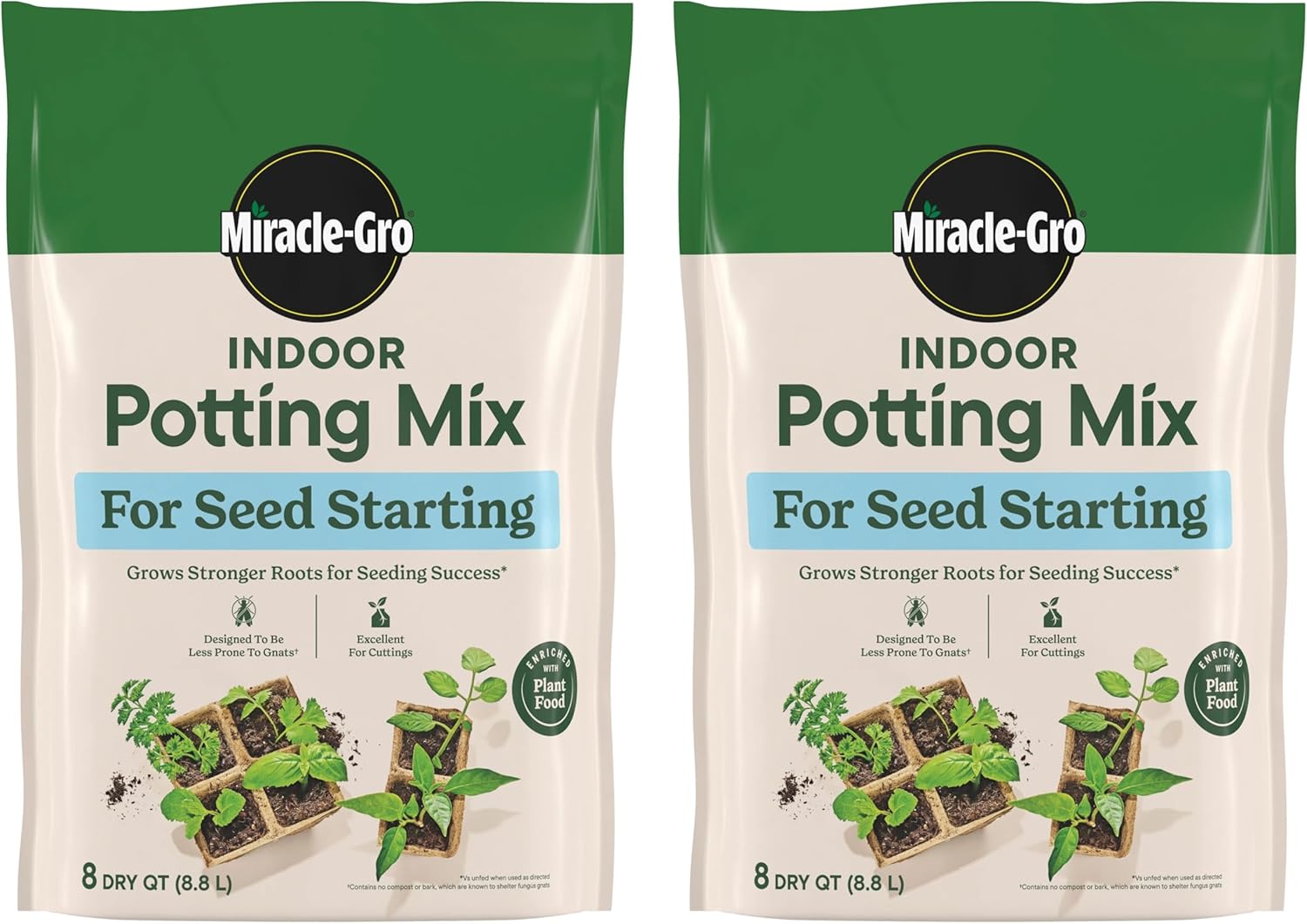
Miracle-Gro Indoor Potting Mix for Seed Starting (8 qt., 2-Pack)
| Number of Packs | 2 |
|---|---|
| Item Type Name | Potting Mix |
| Item Highlight | For Starting Vegetable, Flower, and Herb Seeds Indoors |
| Volume | 8 quarts |
This Miracle-Gro Indoor Potting Mix is made for seed starting and propagation, sold as two 8-quart bags. The mix is lightweight and pre-enriched with plant food so seedlings and cuttings can develop stronger roots without an immediate fertilizer step. It contains no compost or bark, which the brand says reduces habitat for fungus gnats — a practical benefit when starting lettuce and other salad greens indoors. Use it to fill cell trays or small pots, keep the medium consistently moist and out of direct sun until seeds germinate, then transplant seedlings into larger containers or outdoor beds. The ready-to-use format saves time versus blending your own seed mix, and one bag is estimated to fill three 72-cell trays. Important limitations are that this is a seed-starting potting mix rather than an all-purpose potting soil or outdoor garden amendment, so you will still need to transplant and provide appropriate soil or fertilizer for mature lettuce growth and watch handling because the product contains fertilizer.
Best for: Gardeners who want a convenient, low-risk seed-starting medium to raise healthy lettuce seedlings and cuttings indoors before transplanting.
Less Ideal for: Growers seeking a long-term potting soil or an outdoor garden amendment should choose a product formulated for mature plants and in-ground use instead.
- Lightweight, sterile-feeling mix suited for seed germination and cuttings
- Includes plant food to support early root development without immediate extra feeding
- Formulated without compost or bark to reduce fungus gnat habitat
- Ready-to-use packaging that fills multiple 72-cell trays per bag
- Designed for starting seeds and cuttings rather than long-term growing or in-ground soil amendment
- Contains fertilizer so extra care is needed when handling and avoiding overfeeding after transplanting
Verdict: A convenient, fungus-gnat–reducing seed-starting mix that reliably produces strong seedlings for transplanting lettuce.
Premier Horticulture Pro-Mix HP Mycorrhizae Loose Growing Medium (2.8 cu ft)

| Item Form | Loose Fill |
|---|---|
| Specific Uses For Product | Plant Growth, Root Development |
| Coverage | Medium |
| Mixing Ratio | 75:25 |
Pro-Mix HP Mycorrhizae is a loose, high-porosity peat-based potting medium formulated with Glomus intraradices to support root development and plant growth. You use it like any standard potting mix: fill containers, water thoroughly, then transplant seedlings or sow seeds. Its extra drainage and air capacity make it especially useful for water-sensitive crops and rooting cuttings, while the mycorrhizal inoculum helps young roots explore media and access nutrients more efficiently. The mix performs well in low-light or cool-season setups common to lettuce production and reduces risks of overwatering when paired with shallow containers or raised beds. Limitations are that it is peat-based, so it will compress over time and may require periodic refreshing or top-dressing for continuous production, and the bagged unit is bulky to handle for small gardeners. Also it does not include specific fertilizer rates so a feeding plan is still necessary for high-yield leafy crops.
Best for: Gardeners focused on maximizing root health and quick establishment of leafy crops like lettuce who want a ready-to-use, high-drainage mix that supports sensitive seedlings.
Less Ideal for: Growers seeking a long-term, soil-replacement solution for continuous beds or those who prefer fully soilless or organic-certified mixes should consider other media options.
- High porosity for good aeration and faster root growth
- Pre-inoculated with mycorrhizae to improve nutrient and water uptake
- Extra drainage reduces risk of root rot in water-sensitive crops
- Suitable for rooting cuttings and low-light seedling production
- Peat-based media can compact and lose volume over repeated cropping cycles
- No built-in nutrient schedule or complete fertilizer, so feeding is required
Verdict: Choose this mix if you want a ready-made, high-porosity medium with mycorrhizae to speed root establishment and reduce overwatering risks for lettuce seedlings.
Burpee Premium Organic Potting Mix with Coconut Coir (9 Quart)

| Item Form | Powder |
|---|---|
| Specific Uses For Product | Plant Growth, Root Development, Seed Development, Soil Conditioning |
| Coverage | 9 Qt Container |
| Liquid Volume | 9 quarts |
Burpee Premium Organic Potting Mix is a ready-to-use container mix formulated to support seed starting and sustained growth in pots and raised containers. The blend combines organic nutrients and coconut coir to improve moisture retention while maintaining aeration, which helps seedlings and shallow-rooted crops like lettuce establish quickly. It is OMRI listed and claims to feed plants for up to three months, so it reduces the need for frequent fertilizing during early growth stages. Practical users will appreciate the lightweight bag and the powdery texture that fills small cells and shallow trays without compacting. Limitations: the bag is small at 9 quarts, so you will need multiple bags for beds or many containers, and the built-in nutrients are short to medium term so plan a feeding schedule for lettuce beyond the initial month or two. Also the product description is general about ingredients rather than giving a full nutrient breakdown, so growers wanting precise N-P-K or amendment details may need to supplement or test the mix.
Best for: Gardeners who want an easy, organic potting mix for starting lettuce and growing it in containers or small raised beds with minimal early maintenance.
Less Ideal for: Large-scale growers or those who need exact nutrient formulas and large volumes should choose bulk garden soil or a mix with a full fertilizer analysis.
- OMRI listed organic mix suitable for organic container gardening
- Coco coir improves moisture retention while preventing waterlogging
- Formulated to support seed germination and root development
- Provides slow-release nutrients for up to three months reducing early feedings
- Small 9-quart bag requires purchasing multiple units for larger plantings
- No detailed N-P-K breakdown or full ingredient list provided in product information
Verdict: A compact, OMRI-listed potting mix with coco coir that makes starting and growing lettuce in containers simple and low-maintenance.
Back to the Roots 3-in-1 Seed Starting Mix, 6 Quart, Organic

| Unit Count | 192 Fluid Ounces |
|---|---|
| Style Name | 3-in-1 Seed Starting Mix |
| Brand Name | Back to the Roots |
This Back to the Roots 3-in-1 Seed Starting Mix is a ready-to-use organic potting medium designed for starting seeds and growing young vegetables and herbs. It combines coconut coir, mycorrhizae, yucca extract and worm castings to support root development, retain moisture without becoming waterlogged, and supply early nutrients. Typical use is filling seed trays, small pots, or container beds for lettuce, herbs, and other cool-season greens where a light, well-aerated medium helps seeds germinate and roots establish. Notable features include peat-free composition, added biologicals to improve nutrient uptake, and dolomitic limestone to help balance pH. In practice this mix makes seed-starting simpler for beginners and reduces early fertilizing needs, though a single 6-quart bag covers only a few flats so heavier users will need multiple bags. The texture promotes drainage and prevents compacting, but gardeners wanting bulk raised-bed soil or long-term fertility should plan to amend or top up with compost as plants mature.
Best for: Buyers who want an affordable, easy-to-use organic seed mix for starting lettuce and other cool-season greens in trays or small containers and who prioritize simple, beginner-friendly results.
Less Ideal for: Gardeners building large raised beds or seeking a bulk finished soil for full-season vegetable production should choose bulk compost or potting blends instead.
- Peat-free organic blend with mycorrhizae and worm castings to support early root growth
- Moisture-controlling yucca extract and coconut coir reduce overwatering problems
- Dolomitic limestone helps balance pH for nutrient availability
- Ready-to-use fine texture suited to seed trays and small container lettuce production
- Only 6 quarts per bag so multiple bags are needed for larger plantings
- Not formulated as a finished long-term garden or raised-bed soil and will require amendments for mature plants
Verdict: A convenient organic seed-starting mix that makes it easy and inexpensive to get lettuce seedlings off to a healthy start.
FoxFarm Happy Frog Potting Soil, Container Garden, 2 cu ft (with 2 plant tags)

| Unit Count | 600 Ounce |
|---|---|
| Volume | 2 cubic feet |
| Style Name | Container Garden |
| Item Highlight | Ready-to-Use Amended Container Blend with Soil Microbes, Earthworm Castings, Bat Guano, and Aged Forest Products |
FoxFarm Happy Frog Potting Soil is a premixed container blend designed to give potted vegetables and ornamentals a nutrient-rich, biologically active growing medium. You use it straight from the bag to fill pots or raised containers; the mix is pH adjusted and contains mycorrhizal fungi and beneficial microbes to aid root development and nutrient uptake. Notable features are the organic amendments such as earthworm castings, bat guano, and composted forest humus, which supply slow-release nutrients and improve structure for consistent moisture retention. Practical benefits for lettuce growers include a loose, well-amended medium that supports vigorous root growth and steady leaf production without needing immediate fertilizer. Limitations are that this is a container-specific mix so it may dry faster than heavy garden loam and will still need periodic feeding for multi-month crops; also the bagged volume is 2 cubic feet, so larger plantings require multiple bags. Two included plant tags are a small helpful extra for tracking varieties or dates.
Best for: Gardeners who want a reliable, ready-made container soil that encourages steady root development and leafy growth in pots or small raised beds for crops like lettuce.
Less Ideal for: People planning to fill large in-ground beds or landscaping projects where bulk garden loam or topsoil is more appropriate.
- Ready-to-use mix with no additional amendment required for initial planting
- Contains beneficial microbes and mycorrhizal fungi to promote root health and nutrient uptake
- Includes organic amendments (earthworm castings, bat guano, aged forest products) that provide natural slow-release nutrition
- pH adjusted for improved nutrient availability in containers
- Designed for containers so it may need more frequent watering than in-ground soil
- 2 cubic foot bag size means you may need multiple bags for larger or continuous plantings
Verdict: Choose this potting soil when you need a dependable, microbe-rich container mix that promotes strong roots and consistent lettuce growth.
Miracle-Gro Indoor Potting Mix for All Plants, 6 qt. (2-Pack)

| Number of Packs | 2 |
|---|---|
| Item Highlight | Feeds for up to 6 Months |
| Ingredients | Sphagnum Peat Moss, Coir, Perlite, Fertilizer, Wetting Agent |
| Unit Count | 400.58 Ounce |
This two-pack of Miracle-Gro Indoor Potting Mix is a lightweight, ready-to-use soil blend made from sphagnum peat moss, coconut coir, and perlite with added fertilizer and wetting agent. It is designed for indoor container plants and aims to retain moisture while releasing it as roots need it, which helps prevent over- and under-watering for shallow-root crops like lettuce grown in containers. The formulation excludes bark and compost, which the brand says reduces habitat for fungus gnats. Each 6 qt. bag is convenient for repotting small pots or filling multiple 6-inch containers, and the included fertilizer feeds plants for up to six months so you can skip immediate feeding after planting. Practical limitations: the bag size is small for larger beds or frequent plantings, and the product is formulated for indoor container use rather than in-ground soil amendment, so growers wanting to make large batches for outdoor raised beds will need more volume or a different garden soil. For lettuce in pots or small troughs, it provides a balanced, low-effort medium that supports steady growth.
Best for: Growers who want a low-effort, dependable potting mix for container lettuce or small indoor salad gardens and prefer a product with broad user approval and built-in feeding.
Less Ideal for: People preparing large outdoor beds or those needing bulk soil for repeated sowings should choose garden soil or bulk potting compost instead.
- Ready-to-use blend of peat moss, coir, and perlite for good water retention and drainage
- Includes fertilizer that feeds indoor plants for up to six months reducing immediate feedings
- No bark or compost which can reduce fungus gnat habitat
- Lightweight mix suited to container repotting and easy handling
- Small 6 qt. bag size means limited volume per pack for multiple plantings
- Formulated specifically for indoor containers and not intended as an in-ground soil amendment
Verdict: A convenient, pest-reducing indoor potting mix with built-in nutrition that makes growing lettuce in containers easier and lower maintenance.
Back to the Roots Organic Expanding Coco Coir Potting Soil Brick (10 lb)

| Item Type Name | Coconut Coir |
|---|---|
| Item Weight | 10 pounds |
| Volume | 2 cubic feet |
| Item Highlight | Peat-free, OMRI Listed, seed starter soil |
This 10 lb compressed coco coir brick expands to roughly 2 cubic feet of loose, aerated growing medium after you add water, making it a convenient, low-mess way to get potting soil for lettuce and other greens. Use it alone for seed starting or mix it into existing potting mix or garden soil to improve drainage and water retention while keeping a neutral pH that is friendly to young lettuce roots. Being peat-free and OMRI listed, it fits organic growing systems and stores compactly until you are ready to hydrate it. For a risk-averse grower, the predictable texture and sterile nature reduce disease and weed concerns compared with bulk garden soil, but coco coir is low in nutrients so plan to add a balanced fertilizer or compost for sustained lettuce growth. Preparing the block takes a bit of time and water up front, and you will need to monitor fertilizer needs during the season for best results.
Best for: Buyers who want a clean, easy-to-store growing medium for starting lettuce or amending potting mixes and who prefer organic, peat-free options with predictable performance.
Less Ideal for: Gardeners who want an all-in-one, nutrient-rich potting mix and those who do not want the extra step of hydrating and fertilizing a neutral medium.
- Expands to about 2 cubic feet from a compact brick for easy storage and transport
- Peat-free and OMRI listed for organic gardening compatibility
- Neutral pH and fluffy texture improve aeration and water retention for seedlings and container lettuce
- Sterile medium reduces weed seeds and many soil-borne pathogens compared with unamended garden soil
- Contains no significant nutrients so requires added fertilizer or compost for continuous feeding
- Requires soaking and preparation before use which adds time compared with ready-to-use bagged mixes
Verdict: A compact, organic coco coir brick that expands into a clean, peat-free growing medium ideal for starting and amending soil for lettuce when paired with regular fertilization.
Choosing the Right Soil for Growing Lettuce: Key Factors to Consider
Soil Texture and Porosity
Texture determines how quickly seeds take up water and how roots explore the soil. Lettuce seeds and young roots need a fine but not compacted medium that holds enough moisture for germination while still allowing oxygen flow. A mix with a balance of fine particles and larger pore space encourages fibrous root growth and prevents crusting at the surface.
Porosity also affects how the soil warms in spring and how readily it dries between waterings. For beds and containers alike, look for a texture that resists compaction when watered repeatedly. That keeps seedlings from drowning or suffering oxygen stress and makes transplanting easier because roots stay intact.
Drainage Versus Moisture Retention
Lettuce prefers consistently moist but not waterlogged conditions. Too much drainage and the soil dries quickly, stressing shallow roots; too little and crowns rot or develop disease. The ideal soil drains excess water while retaining enough moisture in the root zone between irrigations.
In practice this means choosing a soil with good aggregate stability and a mix of pore sizes. Organic amendments like compost increase water-holding capacity, while coarse components such as perlite or aged bark improve drainage. For containers, aim for a lighter mix than for in-ground beds so water flows through without flushing nutrients away.
Nutrient Content and Release Pattern
Lettuce is a fast-growing leafy crop that benefits from steady, moderate fertility rather than heavy, quick-release feeding. A soil should offer available nitrogen and micronutrients at levels that support continuous leaf production without encouraging excessive bitterness or overly lush growth that flops.
Look for soils that combine a modest starter nutrient charge with organic matter or slow-release amendments that provide nutrients over several weeks. Overly rich soils can require more frequent harvests to avoid overly rapid growth, while nutrient-poor media cause pale, stunted plants and slow head formation.
pH and Chemical Balance
Lettuce grows best in slightly acidic to neutral soil pH. pH influences nutrient availability and microbial activity. If the soil is too acidic or alkaline, essential nutrients become less available and plants can show deficiency symptoms even when fertility seems adequate.
Choose a soil with a stable pH in the appropriate range or one that is easy to amend with lime or sulfur if testing indicates adjustment is needed. Avoid soils with extreme salt levels or heavy synthetic fertilizer salts that can burn young roots and inhibit germination.
Organic Matter and Soil Biology
Organic matter improves structure, feeds beneficial microbes, and cushions nutrient release. For lettuce, moderate organic content helps maintain moisture and feeds the microbial community that supports root health and nutrient cycling.
Rich biology can also suppress some soilborne problems by encouraging a balanced microbe population. However, very high fresh organic amendments may immobilize nitrogen temporarily. A well-composted organic component is preferable for predictable results in quick-turnover crops like lettuce.
Suitability for Containers and Raised Beds
Growing lettuce in containers requires a different balance than in-ground beds because containers dry faster and have limited volume. Container mixes need lighter texture, reliable water retention, and gentle fertility to avoid salt build-up.
Raised beds often combine native soil with added amendments. When choosing soil for a raised bed, consider the interaction with underlying soil, ease of topping up organic matter, and whether the mix will compact over a season. Good choices adapt to the specific container size or bed depth you plan to use.
When to Use Potting Mix Versus Garden Soil
Potting mixes are formulated for containers and seed starting and are usually lighter and more sterile than garden soil. Use potting mixes when growing lettuce in pots, window boxes, or for direct seed in small trays because they promote drainage and reduce disease risk.
Garden soil or amended bed soil is suitable for in-ground lettuce if it has been worked with compost and adjusted for texture. In beds, the native soil contributes buffering capacity and moisture storage, so blends should focus on improving structure rather than replacing the entire profile.
- Choose potting mix for containers and starter trays.
- Amend garden soil with compost and drainage materials for beds.
- Avoid heavy, uncomposted topsoil in containers to prevent compaction.
Adjusting Soil for Direct Seeding
Direct-seeded lettuce needs a fine, firm seedbed so tiny seeds contact the soil and can access moisture. Break down large clods, rake to a smooth finish, and firm the surface lightly. For raised planters, fill with a fine-textured mix that still drains well.
Light surface mulches like a thin layer of vermiculite or finely screened compost maintain moisture without blocking light. Avoid heavy mulches that insulate too much and slow germination.
- Prepare a fine, firm seedbed for even germination.
- Use thin, breathable surface coverings to retain moisture.
Managing Fertility Without Overstimulating Bitterness
Because lettuce flavor and texture respond to nitrogen levels and growing speed, slower, steady nutrient release is usually preferable to large early doses. Use mixes with moderate starter nutrients and supplement with light sidedressing if plants show slow growth mid-season.
Fertilizers high in salt or quick-release nitrogen can push plants into rapid growth that increases bitterness and reduces shelf life. Opt for organic or slow-release sources when possible, and monitor leaf color and vigor to time small feedings.
- Favor steady-release fertility over heavy quick-release feeding.
- Watch leaf color as an indicator for supplemental feeding.
Watering Practices Aligned with Soil Choice
Soil choice dictates how often you water. Lighter, fast-draining mixes need more frequent, shallow watering; heavier, moisture-retentive soils require less frequent deep wettings. Match irrigation frequency to the soil's drainage properties to keep roots consistently moist without waterlogging.
Mulch and shade can moderate surface drying for summer plantings. In containers, check moisture daily during warm weather since volume and surface area cause faster evaporation.
- Adjust watering frequency to match soil drainage characteristics.
- Use mulch or shade to reduce evaporation in hot conditions.
Testing and Amending Your Soil
A simple soil test tells you pH and basic nutrient levels, which guides amendments. If pH is out of the preferred range, correct it before planting. If organic matter is low, work in well-aged compost to improve water retention and nutrient cycling.
Amendments should be mixed thoroughly to avoid pockets of differing fertility or moisture behavior. Re-test periodically, especially in containers that can change chemistry faster than beds.
- Test pH and basic nutrients before planting.
- Incorporate well-composted organic matter rather than raw materials.
How We Chose the Best Soil for Growing Lettuce
We focused on attributes that directly affect lettuce growth and harvest quality. Key evaluation criteria included physical texture and porosity to ensure fast germination and good root development; water drainage and moisture-holding balance to avoid soggy crowns or drought stress; available nutrient content and slow-release feeding characteristics for steady, mild fertility; pH stability since lettuce prefers slightly acidic to neutral ranges; organic matter content and biological activity that support structure and flavor; and suitability across planting methods including beds, raised planters, and containers. We excluded products formulated primarily for heavy feeders, flowering ornamentals, or long-term woody shrubs because those mixes often carry higher fertilizer salts or coarse structure inappropriate for tender lettuce. We also filtered out soils with unclear ingredient lists or inconsistent texture profiles. The remaining options were compared across the concrete dimensions above to produce a practical shortlist suitable for typical backyard and container lettuce production.
FAQ
Can I use regular garden soil in containers for lettuce?
Regular garden soil is usually too dense for containers and can compact, reducing aeration. If you use it, blend it with compost and a coarse element like perlite to improve drainage and porosity.
How often should I water lettuce grown in a potting mix?
Watering frequency depends on pot size and mix, but expect to check containers daily in warm weather. Aim for consistent root-zone moisture with shallow, frequent waterings for light mixes and less frequent deeper waterings for denser media.
Is high organic matter always better for lettuce?
Moderate, well-composted organic matter is beneficial because it improves moisture retention and fertility. Very fresh or uncomposted material can temporarily tie up nitrogen and cause uneven growth, so prefer composted inputs.
What pH range is best for lettuce?
Lettuce generally prefers slightly acidic to neutral soil, roughly pH 6.0 to 7.0. Outside that range some nutrients become less available, so adjust pH gradually based on soil test results.
Should I add fertilizer at planting time?
A modest starter nutrient level in the soil is helpful, but avoid heavy doses at planting. Supplement with light sidedressings during the growing season if growth slows, using low-salt or slow-release sources.
Final Verdict
Choose a soil that balances fine texture with enough porosity to support quick germination and healthy shallow roots. Prioritize a mix that holds moisture without becoming waterlogged, offers steady, moderate fertility, and maintains a stable pH. Match your choice to how you are planting lettuce-lighter mixes for containers and potting racks, slightly heavier amended soils for beds-and adjust watering and feeding to the soil's behavior. With those tradeoffs in mind, you can pick a soil that consistently produces tender, evenly grown lettuce.
