

Note: This article contains affiliate links. If you click on these links and make a purchase, I may earn a small commission at no extra cost to you. This helps support my research and content. Read my full affiliate disclosure here.
Choosing the right soil for flowers planted directly in the ground matters more than many gardeners realize. The wrong texture or nutrient balance can stunt growth, reduce bloom set, and make plants vulnerable to drought or root disease. This guide walks through the top shortlisted soils for flowers in ground and explains how each was evaluated for structure, fertility, and water handling. You will find practical guidance on which soil characteristics matter for established beds and new planting areas, plus clear evaluation criteria we used to pick the top options. Read on for the factors that affect flowering performance and how to match soil choices to your garden conditions.
Top Picks at a Glance
| Best Overall The best all-around choice for most situations | Coast of Maine Roses & Flowers Organic Planting Soil, 20 qt (2-pack) |  |
| Best Quality Built to a higher standard if you want something more solid | BuildASoil Light Garden Soil — 1 cu ft Organic Potting & Raised Bed Mix |  |
| Best Value The sweet spot between price and what you get | Garden Magic General Purpose Potting Soil Mix, 40 lb |  |
| Highest Rated A top-rated pick with lots of positive feedback | Coast of Maine Cobscook Blend In-Ground Garden Soil, 1 cu ft |  |
| Most Popular A crowd favorite that many people choose with confidence | Espoma Organic Vegetable & Flower Garden Soil Mix, 1 cu ft |  |
| Best Seller A high-volume bestseller chosen again and again | Back to the Roots Premium Blend 100% Organic Potting Mix, 6 Quart |  |
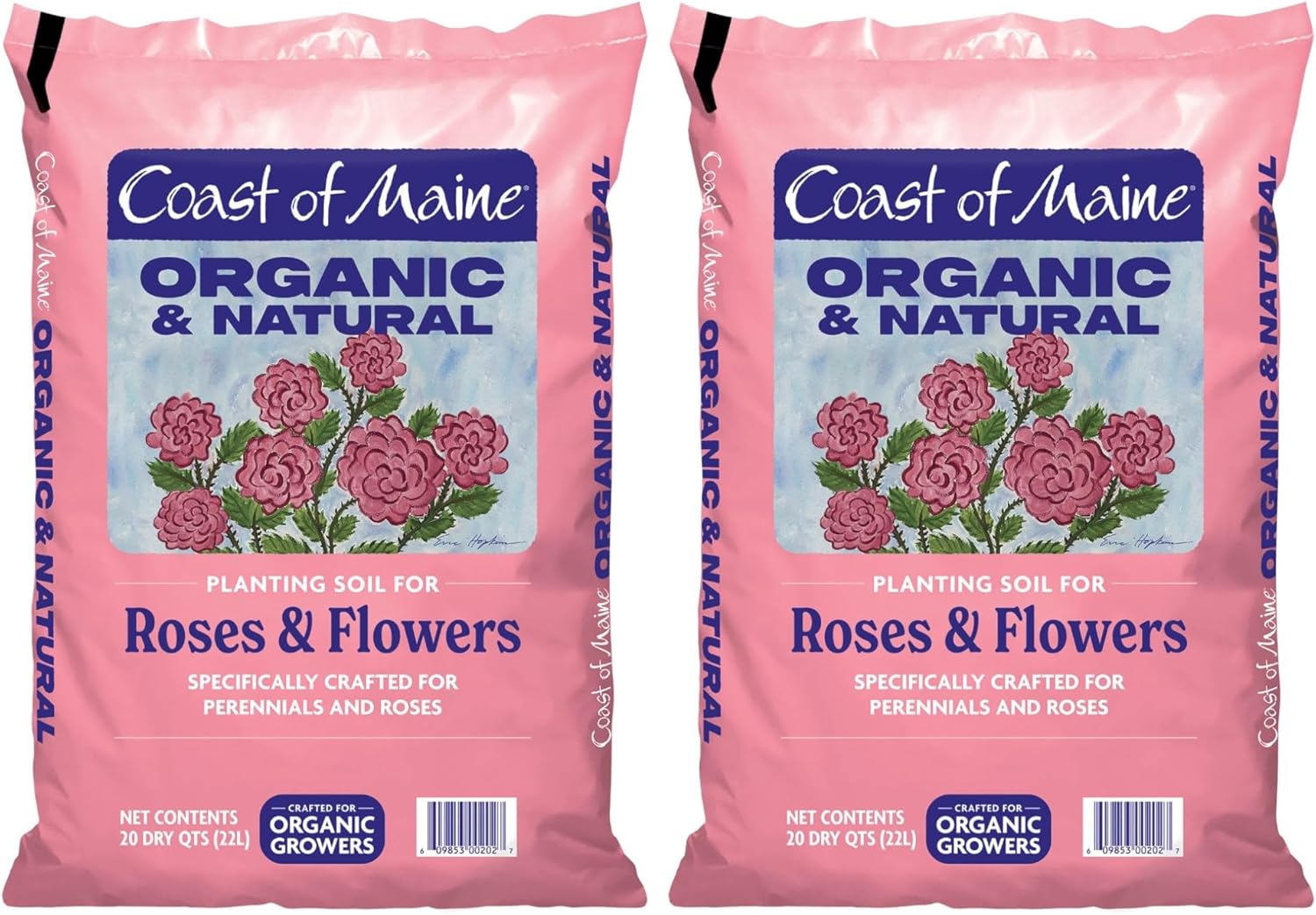
Coast of Maine Roses & Flowers Organic Planting Soil, 20 qt (2-pack)
| Unit Count | 2 Count |
|---|---|
| Volume | 20 quarts |
| Brand Name | Coast of Maine |
| Item Weight | 22 pounds |
Coast of Maine Roses & Flowers planting soil is an organic, compost-based mix designed to refresh garden beds and containers where roses and flowering perennials grow. You use it as a top dressing, a soil conditioner when planting, or as part of a container mix to boost moisture retention while maintaining good drainage. Notable ingredients include seaweed, lobster meal, and compost that supply slow-release nutrients and encourage beneficial soil biology. Practical benefits are healthier root development, improved bloom production, and a richer, living soil that supports worms and microbes. Because it is OMRI listed the product fits into organic gardening systems. Limitations are mainly volume and handling: this listing is a 20 quart bag in a two-pack so larger beds require multiple bags and it is sold in relatively heavy bags that need effort to move and spread. Also this is a soil amendment rather than a complete fertilizer program so periodic feeding or additional amendments may be needed for long-term nutrient demands.
Best for: Gardeners who want an organic, biodiversity-friendly soil boost for roses and flowering perennials and prefer natural amendments to improve bloom and root health.
Less Ideal for: People who need large volumes for wholesale or landscape-scale projects or who want a complete, long-term fertilization product without additional feeding.
- OMRI-listed organic blend supports organic gardening and is safe around kids and pets
- Contains nutrient sources like seaweed and lobster meal that feed plants and soil life
- Balanced moisture retention and drainage suitable for beds and containers
- Designed to boost microbial activity and support worms and beneficial insects
- Bag volume is modest so covering large in-ground areas requires buying multiple bags
- Product is a soil amendment and not a standalone fertilizer for long-term feeding
Verdict: Choose this OMRI-listed planting soil when you want an organic, microbiome-friendly amendment to encourage stronger roots and better blooms in flower beds and containers.
BuildASoil Light Garden Soil — 1 cu ft Organic Potting & Raised Bed Mix

| Brand Name | BUILD A SOIL |
|---|---|
| Style Name | Potting Soil Mix |
| Volume | 1 cubic feet |
| Item Weight | 30 pounds |
BuildASoil Light Garden Soil is a ready-to-use organic mix designed to feed plants and support active soil life in containers, raised beds, and in-ground flower beds. It combines compost and worm castings in a balanced loamy texture that promotes aeration, drainage, and moisture retention while supplying nutrients for strong root development. The formula is made from certified organic inputs with low sodium and no synthetic additives, which helps reduce salt stress for sensitive ornamentals and supports beneficial microbes. Typical uses include filling raised beds, amending tired garden beds before planting, potting up transplants, or top-dressing containers and flower patches. Practical benefits are reliable structure for both drainage and moisture, clear ingredient transparency, and an emphasis on biological fertility rather than chemical feeding. Limitations are standard for bagged mixes: you get one cubic foot per bag so larger beds require many bags and occasional follow-up fertilizing may be needed for heavy-feeding annuals over a season.
Best for: Gardeners who prioritize biological, organic fertility and want a clean, loamy soil to establish or improve flower beds, containers, and raised beds. Ideal for growers who value ingredient transparency and long-term soil life over quick synthetic feeding.
Less Ideal for: People who need to amend large areas on a tight budget or who want an all-in-one high-release fertilizer solution for heavy-feeding annuals.
- Certified organic inputs and no synthetic additives support biological soil health
- Includes worm castings and compost for nutrient-dense, microbial-friendly feed
- Loamy texture balances aeration, drainage, and moisture retention for flowers
- Low sodium formulation reduces salt stress for sensitive plants
- Sold in 1 cubic foot bags which can be inefficient for large in-ground projects
Verdict: Choose this organic, worm-castings–rich loamy mix when you want a biologically active, low-salt soil base to build healthier flower beds and containers.
Garden Magic General Purpose Potting Soil Mix, 40 lb

| Brand Name | Garden Magic |
|---|---|
| Item Highlight | Moisture Retaining Mix for Indoor and Outdoor Planting |
| Included Components | Michigan Peat – 5740 – 40lbs |
| Volume | 5 quarts |
Garden Magic General Purpose Potting Soil is a blended peat-based mix intended for use in pots, planters, and garden beds. It mixes reed sedge peat and organic peat moss with additional planting media to create a dark, moisture-retentive growing medium that helps maintain steady soil moisture during moderate dry spells. Typical uses include repotting container flowers, refreshing topsoil in raised beds, and amending small patches of garden soil where improved moisture retention is desirable. Practical benefits are that it is ready to use from the bag, has a consistent texture for even planting, and works for many common flowering plants that prefer moisture-holding, well-drained media. Important limitations are that it is a peat-heavy, general-purpose mix rather than a tailored flower fertilizer or amendment, so heavy-feeding or alkaline-loving species may need additional fertilizer or soil adjustment. Also, safety guidance notes to avoid dust inhalation and keep the product away from children and pets during handling.
Best for: Buyers who want a reliable, ready-to-use soil to improve moisture retention and simplify potting and small-bed maintenance for common flowering plants.
Less Ideal for: Gardeners seeking a tailored soil for acid-loving or lime-loving ornamentals, or those who need an all-in-one fertilized planting mix for heavy-feeding flowers.
- Moisture-retaining peat blend helps sustain plants through short dry periods
- Ready-to-use right from the bag for quick potting or bed top-ups
- Versatile for indoor pots, raised beds, and outdoor planters
- Consistent dark texture supports even root contact and planting
- Peat-based formula is not a complete fertilizer and may require added nutrients for heavy feeders
- Not formulated for specific soil pH adjustments or specialty plant needs
Verdict: A straightforward, moisture-retentive general potting soil that makes potting and small bed refreshes quick and dependable for everyday flowering plants.
Coast of Maine Cobscook Blend In-Ground Garden Soil, 1 cu ft

| Brand Name | Coast of Maine |
|---|---|
| Unit Count | 1 Count |
| Included Components | SOIL |
| Item Type Name | Plant Food |
Coast of Maine Cobscook Blend is an organic, multi-use in-ground soil intended to rejuvenate and build living garden soil for flowers, vegetables, and landscape plantings. It is typically worked into existing beds or added to new plantings to improve drainage, moisture retention, and aeration using compost, sphagnum peat moss, and aged bark. The blend includes ocean- and land-sourced amendments such as seaweed and lobster meal that supply slow-release nutrients and support microbial life. Practical benefits include better root development, improved soil texture in sandy or compacted sites, and a boost in biodiversity that supports healthier flowering plants over time. Because it is OMRI listed and made from organic inputs, it is a good choice for gardeners avoiding synthetic fertilizers. Limitations are the single 1 cu ft bag size, which means larger beds require many bags to cover the area, and peat content may concern gardeners seeking peat-free options. Expect gradual soil improvement rather than instant dramatic changes.
Best for: Gardeners who prioritize building reliable, long-term soil health for in-ground flower beds and who prefer organic, biologically active amendments.
Less Ideal for: People needing to amend large areas quickly on a tight budget or gardeners who avoid peat-based products should consider bulk alternatives or peat-free mixes.
- Organic, OMRI-listed formulation supports organic flower gardening
- Contains compost and ocean-sourced amendments to feed soil biology
- Improves moisture retention, drainage, and aeration for better root growth
- Suitable for improving sandy, compacted, or clay soils in garden beds
- Small 1 cu ft bag is not cost-effective for large beds
- Contains peat moss which some gardeners prefer to avoid
Verdict: Choose this blend if you want an organic, biology-focused soil amendment that steadily improves in-ground flower beds.
Espoma Organic Vegetable & Flower Garden Soil Mix, 1 cu ft

| Brand | Espoma |
|---|---|
| Volume | 1 cubic feet |
| Style Name | Peat Moss |
| Ingredients | Peat moss, aged forest products/composted rice hulls, limestone, earthworm castings, alfalfa meal, kelp meal, feather meal, yucca extract |
Espoma Organic Vegetable & Flower Garden Soil is a ready-to-use planting mix designed to be blended into in-ground beds when planting or transplanting flowers and vegetables. It combines Canadian sphagnum peat moss with aged forest products or composted rice hulls and includes earthworm castings, alfalfa, kelp and feather meals to add organic matter and slow-release nutrients. The mix also contains a proprietary mycorrhizae blend that can help roots establish in new plantings. In practice you work it into native soil around rootballs to improve texture, water retention and biological activity rather than using it as a standalone top layer. It is aimed at organic gardeners who prefer natural amendments and want a product that brings both organic nutrients and biological inoculants. Expect improved transplant success and better moisture retention, but be aware this bag is small for large beds so multiple bags are needed to amend an entire flower border thoroughly.
Best for: Gardeners who prioritize organic inputs and want a plug-and-play mix to incorporate into in-ground flower beds to improve soil structure and establish transplants.
Less Ideal for: People seeking a bulk amendment for large landscaping projects or those who need a ready-to-use potting mix for container-grown flowers.
- Formulated for planting and transplanting to improve native garden soil
- Contains organic amendments and slow-release meals for ongoing nutrition
- Includes a mycorrhizae blend to support root establishment
- Uses earthworm castings to boost soil biology and structure
- Sold in 1 cubic foot bags, requiring many bags to amend larger flower beds
Verdict: A compact, organic planting mix that helps establish flowers and vegetables in ground beds by improving soil texture and adding biological amendments.
Back to the Roots Premium Blend 100% Organic Potting Mix, 6 Quart

| Unit Count | 192 Fluid Ounces |
|---|---|
| Item Highlight | Peat-free potting soil for outdoor plants, indoor plants, vegetables, herbs and flowers |
| Volume | 6 quarts |
This 6 quart bag of Back to the Roots Premium Blend is an all-purpose organic potting mix intended for indoor and outdoor use. It combines upcycled plant matter and wood fines with organic plant food, yucca extract for improved moisture control, and dolomitic limestone to help balance pH. You can use it to pot annual flowers, start herb and vegetable transplants, or refresh topsoil in containers and small garden beds. The peat-free formula reduces environmental impact while the included plant food gives a gentle nutrient boost for young plants. For gardeners who prefer predictable, low-risk results, the mix is easy to work with and lightweight to handle. Limitations are its small bag size, which means multiple bags are needed for large in-ground flower beds, and it is formulated as a potting mix rather than a heavy amendment for deeply depleted garden soil. It is best used for planting and potting tasks where good drainage, moisture control, and balanced pH matter most.
Best for: Gardeners who prioritize low-risk, environmentally conscious choices and want a ready-to-use organic mix for planting flowers, starting transplants, or refreshing container soil.
Less Ideal for: Those restoring very poor or compacted in-ground planting beds who need heavy soil amendments or bulk topsoil should choose larger-volume garden soil products instead.
- 100% organic and peat-free composition from upcycled plant matter
- Yucca extract improves moisture management for consistent watering
- Dolomitic limestone helps moderate pH for a wider range of flowers
- Includes organic plant food to support transplant establishment
- Only 6 quarts per bag so covering large in-ground flower beds requires many bags
Verdict: Choose this organic, peat-free potting mix when you want an easy, low-risk soil option that controls moisture and balances pH for healthy flower starts and containers.
Choosing the Right Soil for Flowers in Ground: Key Factors to Consider
Soil Texture and Drainage
Texture determines how quickly water moves through the root zone and how much air reaches roots. Flowering plants generally do best in soils that balance water retention with free drainage so roots get oxygen. Heavy clay retains too much water and can cause root rot, while pure sand drains too quickly and starves roots of moisture between waterings.
When choosing soil for in-ground flower beds, look for mixes or amendments that loosen compacted soil and add pore space without creating a media that dries out in days. Particle size distribution, presence of fine silt, and the proportion of coarse to fine materials all influence long-term drainage behavior.
Nutrient Retention and Release
Flowers need a steady supply of nitrogen, phosphorus, and potassium as well as micronutrients for sustained bloom production. Soils with good cation exchange capacity hold nutrients in the root zone rather than letting them leach away during heavy rains.
Consider the source and form of fertility. Slow-release organic sources and well-composted amendments supply nutrients over time and reduce the risk of burning roots. Highly soluble synthetic salts can cause spikes followed by depletion and may be less forgiving in open-ground beds that depend on natural processes to redistribute nutrients.
Organic Matter Content and Biological Activity
Organic matter improves both structure and fertility. It increases water-holding capacity in sandy soils and helps flocculate clay for better drainage. It also feeds soil life – earthworms, fungi, and beneficial microbes – which in turn cycle nutrients and improve root health.
A higher percentage of well-decomposed compost or stable organic amendments is preferable to fresh, unfinished materials that can immobilize nitrogen as they break down. Look for soils that list compost or humus content and that promote active but balanced biology rather than materials that are sterile and inert.
pH Compatibility with Flower Species
Most common bedding and perennial flowers perform best in a slightly acidic to neutral range. pH affects nutrient availability; even a nutrient-rich soil can produce poor bloom color or stunted growth if pH is out of range.
Before large amendments, test your garden soil to determine baseline pH. Choose soils or amendments that will move your bed pH toward the preferred range for the types of flowers you grow. Some flowering plants prefer more acidic conditions, so tailor your selection if you are planting azaleas, rhododendrons, or other acid-loving species.
Moisture-Holding Capacity
The ability of soil to hold moisture influences irrigation frequency and drought resilience. Soils that retain adequate moisture reduce stress on blooms during heat spells but must not hold so much water that roots suffocate.
Consider your local climate and watering patterns. In hot, dry regions, choose soils with higher moisture retention that still allow excess water to drain. In wetter climates, prioritize drainage and avoid amendments that trap water near the surface.
Preparing Existing Beds for New Flowerings
When refreshing an established bed, focus on improving root-zone conditions without burying existing crowns or roots too deeply. Lightly fork in organic matter and a balanced soil amendment to increase porosity and fertility. Avoid deep tilling in beds with mature perennials to prevent root damage.
Test small patches first after amendment to observe drainage and settling before treating the entire bed. Allow amendments to integrate for a few weeks where possible so microbial communities can stabilize before heavy planting.
- Remove perennial weeds and loosen the top 6 to 8 inches of soil carefully.
- Incorporate 1 to 3 inches of well-rotted compost for general improvement.
- Avoid fresh manure or high-nitrogen materials immediately before planting flowering bulbs or delicate annuals.
Addressing Clay or Compact Soil
Clay and compacted soils are common problems that limit flowering success. To improve these conditions, add coarse organic amendments and mineral grit to open pore space. Rebuilding structure is a gradual process that benefits from repeated annual topdressings rather than one-time deep repairs.
Where compaction is severe, core aeration or subsoiling can help, but these mechanical fixes work best when combined with organic matter that maintains new pore spaces created by aeration.
- Mix in coarse builders sand or grit sparingly and always with organic matter to avoid creating a layer that impedes root movement.
- Apply compost over multiple seasons rather than attempting to change heavy clay with a single large addition.
Soil pH Management for Flower Color and Health
pH adjustments are best done gradually and based on a soil test. Lime raises pH and is used to correct overly acidic soils, while sulfur or acidifying amendments lower pH. The choice depends on the plants you plan to grow and the current soil reading.
For mixed flower beds, aim for a near-neutral pH to accommodate a wide range of species. If growing acid-loving ornamentals, treat their planting zones specifically rather than altering the whole bed.
- Test pH before planting and again each year if you make large amendments.
- Follow label rates for soil amendments and allow time for the changes to take effect before judging results.
Seasonal Timing and Amendment Work
The best time to amend in-ground beds is in fall or early spring. Fall additions settle and feed soil biology over winter, improving conditions for spring growth. Early spring work must be cautious to avoid smearing wet soils and creating compaction when earth is damp.
Staggered, light applications of organic matter and slow-release nutrients reduce transplant shock and help newly planted flowers establish quickly without nutritional spikes that encourage foliage at the expense of blooms.
- Avoid heavy amendments during midsummer heat spikes when plants are stressed.
- Plan major soil rebuilding projects in fall to maximize microbial activity and structural benefits over winter.
Practical Soil Testing and Small-Scale Trials
Before committing to bed-wide changes, run a simple soil test for texture, pH, and basic nutrient levels. Small trial plots allow you to compare amendments and observe real results in your microclimate. Trials show how a soil mix behaves under your watering pattern and sunlight exposure.
Document results in the first season to refine your approach. Trials help prevent large mistakes like over-amending or choosing a product unsuited to your native soil.
- Use consistent planting density and watering across trial plots for valid comparisons.
- Note bloom timing, color intensity, and plant vigor as metrics.
How We Chose the Best Soil for Flowers in Ground
We focused on criteria that have a direct effect on flowering plants grown in existing beds or new in-ground planting sites. Important evaluation dimensions were soil texture and drainage, nutrient retention and slow-release fertility, organic matter content and biological activity, and pH suitability for a broad range of ornamental flowers. We also considered ease of use when incorporating soil into beds and the longevity of benefits after mixing into existing ground. Products were excluded if they were designed solely for containers, exclusively for turf or vegetables with incompatible nutrient balance, or if they lacked verifiable composition data on texture and organic matter. We prioritized soils that consistently support root development, maintain moisture without waterlogging, and offer measurable organic amendments that feed blooms over weeks to months. Lab or manufacturer composition information, gardener reports on field performance, and alignment with the scorecard metrics determined which soils made the final list.
FAQ
How deep should I amend soil when planting flowers in ground?
Aim to improve the top 6 to 12 inches of soil where most feeder roots grow. Light fork-and-dress methods work well for established beds, while new beds benefit from deeper incorporation to provide immediate loose rooting space.
Can I use potting mix in garden beds for flowers?
Potting mixes are formulated for containers and often drain too quickly or lack the structure needed in ground beds. They can be used sparingly as an amendment but are not ideal as a replacement for in-ground soil.
How often should I add compost to flower beds?
A light application of 1 to 2 inches of well-rotted compost annually is usually sufficient to maintain structure and fertility. In heavily depleted or very sandy soils, repeat applications over consecutive seasons help build lasting benefits.
Will adding sand fix clay soil for flower beds?
Adding sand alone can make clay worse if not combined with ample organic matter. Small amounts of coarse sand mixed with organic amendments can help, but large-scale changes work best through repeated organic additions and mechanical aeration when needed.
How can I tell if my flower soil is too acidic or alkaline?
A soil test is the most reliable method. Symptoms such as yellowing leaves despite adequate fertilization or poor bloom set can indicate pH issues, but testing confirms whether adjustments are necessary and guides appropriate amendments.
Final Verdict
Focus your decision on improving the root zone first: balance texture for drainage and aeration, build organic matter to feed plants and microbes, and adjust pH to match the flowers you intend to grow. Tradeoffs include faster-acting synthetic amendments that deliver quick nutrients versus organic approaches that improve soil structure over time. Choose a soil approach that fits your climate and how much ongoing maintenance you want to do. Prioritize steady nutrient retention and good drainage for long-lasting blooms, and use small trials to confirm a product behaves well in your garden before applying it bed-wide.
