

Note: This article contains affiliate links. If you click on these links and make a purchase, I may earn a small commission at no extra cost to you. This helps support my research and content. Read my full affiliate disclosure here.
If your balcony, patio, or front steps get strong sun, choosing the right sun-loving plants for planters makes the difference between a container that flourishes and one that struggles. Plants suited to long daily sun and warm root zones handle heat, dry spells, and reflected heat from paving without constant intervention. This guide shortlists seven top options for planters and evaluates them on sun tolerance, water needs, and container behavior. Use the profiles that follow to pick combinations that provide continuous color, architectural leaves, or low-maintenance filler for hot, exposed spots.
Top Picks at a Glance
| Best Overall The best all-around choice for most situations | Plants for Pets Gardenia 'August Beauty' (1‑Gallon) |  |
| Best Quality Built to a higher standard if you want something more solid | Tropical Plants of Florida Yoder Red Hibiscus Bush (Large Live Flowering Plant) |  |
| Best Value The sweet spot between price and what you get | KVITER Heirloom 2,000 Mix Dwarf Petunia (Nana Compacta) Seeds |  |
| Best Budget The cheapest option that still gets the job done reliably | BuggyBeds Double Dwarf Petunia Seeds (300+), Mixed Colors |  |
| Highest Rated A top-rated pick with lots of positive feedback | Tropical Plants of Florida Dipladenia Bush with Yellow Flowers (6" Grower Planter) |  |
| Most Popular A crowd favorite that many people choose with confidence | HOME GROWN Sunspot Dwarf Sunflower Seeds, 150 Count |  |
Plants for Pets Gardenia 'August Beauty' (1‑Gallon)

| Indoor Outdoor Usage | Indoor |
|---|---|
| Expected Blooming Period | Spring |
| Sunlight Exposure | Full Sun |
| USDA Hardiness Zone | 8 |
| Material Features | Organic |
This Gardenia 'August Beauty' is a compact, fragrant evergreen shrub shipped in a 1‑gallon grower pot that performs well as a container specimen or a small hedge. It produces double white flowers that age to creamy yellow and a strong gardenia perfume from spring into summer. Typical use is as a patio pot plant, entryway accent, or in grouped containers where its scent and glossy dark foliage are visible. Notable features from the listing include hardiness to Zone 8, preference for full to part sun, and a need for rich, moist, acidic soil with occasional deep soakings. In a pot it rewards regular feeding and consistent moisture and will provide seasonal cut flowers for arrangements. Limitations to plan for are its zone restriction and higher water and soil-quality needs compared with drought‑tolerant patio plants, so it is less forgiving if you want a very low-maintenance container. Also expect variability in bloom count on arrival because flowering depends on season and shipment timing.
Best for: Buyers who want a fragrant, showy flowering shrub for a patio pot or entryway container and are willing to provide regular watering and soil care to keep it healthy.
Less Ideal for: If you need an ultra low‑maintenance or cold‑hardy outdoor pot plant, choose a drought‑tolerant or more frost‑tolerant species instead.
- Strong, classic gardenia fragrance that enhances patios and entryways
- Glossy evergreen foliage that provides year‑round container interest
- Sized for containers — arrives in a 1‑gallon nursery pot ready to plant
- Reliable spring to summer bloom period for seasonal cut flowers
- Requires consistently moist, acidic soil and more attentive watering than many patio plants
- Hardiness limited to warmer climates (Zone 8 and up) so not suited for cold regions
Verdict: Choose this Gardenia for a scented, showy container plant when you want a fragrant focal point and can commit to moist acidic soil and seasonal care.
Tropical Plants of Florida Yoder Red Hibiscus Bush (Large Live Flowering Plant)

| Indoor Outdoor Usage | Outdoor |
|---|---|
| Expected Blooming Period | Spring to Fall |
| Sunlight Exposure | Full Sun |
| Moisture Needs | Moderate Watering |
| Plant or Animal Product Type | Shrub & Hedge, Flower |
This Yoder Red hibiscus is a robust, sun-loving flowering shrub intended for outdoor planters and garden beds. Sold as a large live plant in a 3-gallon pot, it produces showy red blooms from spring through fall and is marketed for full-sun exposure and moderate watering. Typical use is planting it in a sunny container or landscape spot where frequent blooms and pollinator visits are desired. The seller notes hand-picking and prep for shipping which helps arrival quality, and the plant is described as pet friendly. Practical benefits include continuous flowering in warm conditions and straightforward care: regular water and plenty of sun. Important limitations are its cold sensitivity, since it is rated to tolerate minimums around 32°F and needs protection or a heat pack if nights get near freezing, and the listing focuses on the plant only so buyers must supply a decorative planter or relocation after delivery. For container gardeners seeking a dependable, high-impact flowering specimen for full sun, this hibiscus delivers abundant color when kept warm and watered.
Best for: Gardeners who want a performance-oriented, high-impact flowering plant for sunny containers or beds and who prioritize continuous blooms and pollinator attraction in warm climates.
Less Ideal for: People in cold-winter climates who cannot provide frost protection or indoor overwintering and those wanting low-flower or shade-tolerant plants.
- Produces abundant, showy red flowers from spring to fall for continuous visual impact
- Designed for full-sun exposure and attracts pollinators
- Shipped hand-picked and prepped to reduce soil spillage and transit stress
- Cold sensitive and not suitable for climates with regular frost without protection
- Sold as the plant only so additional potting or a decorative planter is required
Verdict: A sun-loving, high-flowering hibiscus that delivers continuous bold blooms for performance-focused container gardeners in warm climates.
KVITER Heirloom 2,000 Mix Dwarf Petunia (Nana Compacta) Seeds

| Indoor Outdoor Usage | Outdoor |
|---|---|
| Other Special Features of the Product | Attracts Pollinators, Drought Tolerant, Extended Bloom Time, Growing Guide Included, Made in the USA |
| Expected Blooming Period | Summer |
| Sunlight Exposure | Full Sun |
| Unit Count | 2000 Count |
These KVITER dwarf petunia seeds produce compact, 10‑inch mounded plants that suit small pots, hanging baskets and window boxes in full sun. The mix includes red, pink, purple and white blooms and is sold as 2,000 untreated heirloom seeds with a growing guide included on each packet. Seeds are surface‑sown or very shallowly planted and typically germinate in 7–14 days when kept moist and warm, which makes them straightforward for home gardeners. The plants are described as drought tolerant once established and attractive to hummingbirds and butterflies, so they add continuous color and pollinator activity to sunny hanging baskets. Because these are open‑pollinated, non‑GMO seeds offered in very large quantity, you get many chances to fill multiple baskets or replace plants midseason. Expect some variability in vigor and bloom timing since this is a mixed heirloom lot rather than a uniform hybrid cultivar, so gardeners seeking perfectly consistent size or exact colors may see uneven results. The included planting guide and broad USDA zone range make them an easy choice for risk‑averse gardeners wanting reliable summer color in full sun containers.
Best for: Gardeners who prefer low‑risk, straightforward planting for continuous summer color in full‑sun hanging baskets and small containers and who value heirloom, non‑GMO seed stock.
Less Ideal for: Growers who need uniform, hybrid plug‑quality plants with predictable bloom size and exact color matching should consider cultivar‑specific transplants instead.
- Large seed count (2000) covers many baskets and containers
- Heirloom non‑GMO seeds with growing guide on each packet for beginner confidence
- Compact nana compacta habit suits hanging baskets and small pots without overcrowding
- Attracts pollinators and tolerates light drought once established
- Mixed heirloom seed lots can produce variable flower colors and plant vigor
- Seeds are untreated and may require more careful starting and disease vigilance than treated commercial plugs
Verdict: A high‑count packet of compact heirloom dwarf petunia seeds that delivers easy, pollinator‑friendly summer color for full‑sun hanging baskets and small containers.
BuggyBeds Double Dwarf Petunia Seeds (300+), Mixed Colors
| Indoor Outdoor Usage | Indoor, Outdoor |
|---|---|
| Expected Blooming Period | Summer |
| Sunlight Exposure | Full Sun |
| Moisture Needs | Moderate Watering |
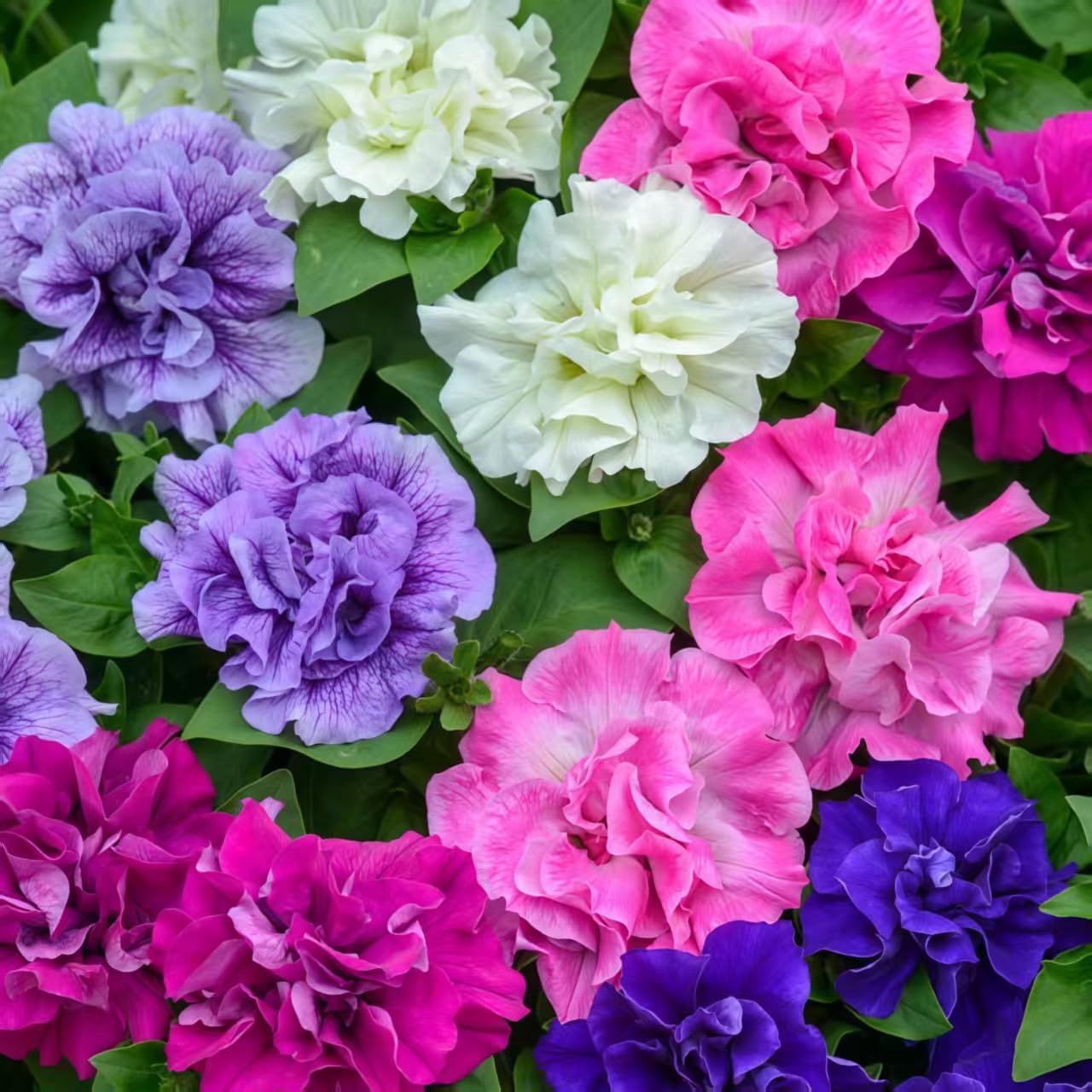
These BuggyBeds double dwarf petunia seeds produce a profusion of compact, colorful blooms well suited to hanging baskets, window boxes, and small container gardens in full sun. They are typically sown indoors or directly in containers, then transplanted or thinned so each plant has room to spill and fill a basket. The mix includes reds, pinks, purples, and whites and is described as heat and sun tolerant, which helps maintain steady flowering through spring and summer with moderate watering and routine feeding. The plants have a compact habit that keeps baskets full without overwhelming small spaces, and their flowers attract pollinators so they add both color and garden life. Limitations are that germination and color distribution can vary seed to seed and that these are a seasonal annual choice that needs replanting each year; performance also depends on good drainage and regular deadheading or trimming for the longest bloom period.
Best for: Gardeners who want an easy, colorful hanging-basket solution for full-sun locations and prefer starting many plants from seed to fill multiple containers affordably.
Less Ideal for: People seeking instant, uniform mature plants or a no-maintenance perennial solution should consider nursery-grown transplants or perennial alternatives instead.
- Large seed count (300+), enough to populate multiple hangers or containers
- Compact double-dwarf habit ideal for filling hanging baskets and small planters
- Heat and full-sun tolerance supports reliable summer flowering in sunny spots
- Attracts pollinators such as bees and butterflies
- Seed-grown variability means colors and bloom timing are not uniform
- As annuals, plants must be replanted each year to maintain displays
Verdict: A high-count packet of compact, sun- and heat-tolerant petunia seeds that fills hanging baskets with continuous summer color when started and cared for properly.
Tropical Plants of Florida Dipladenia Bush with Yellow Flowers (6" Grower Planter)

| Indoor Outdoor Usage | Indoor, Outdoor |
|---|---|
| Expected Blooming Period | Spring to Fall |
| Sunlight Exposure | Full Sun |
| Soil Type | Sandy Soil |
This live Dipladenia arrives in a 6-inch grower planter and is intended for bright, sunny locations where it will bloom from spring through fall. It is typically used as a container or patio plant that tolerates direct sun and sandy soils, producing recurring yellow flowers that add long-season color. The product’s straightforward presentation in a grower pot makes it easy to place in a sunny spot or transplant into a larger container or garden bed in spring. Practical benefits include consistent flowering in full sun exposure and low soil-type fussiness when planted in well-draining, sandy mixtures. Limitations are that size and mature habit are not specified in detail on the listing and the plant may need regular watering and fertilizing in hot, direct-sun sites to maintain blooms. For performance-driven buyers looking for reliable sun-loving color, this Dipladenia offers a simple, ready-to-use option that performs best when given consistent light and routine care.
Best for: Gardeners seeking a performance-oriented, sun-loving flowering shrub for containers or sunny patios who prioritize consistent seasonal blooms and easy placement.
Less Ideal for: People wanting a large, established specimen or those who need detailed mature dimensions for precise landscape placement.
- Designed for full sun exposure and long bloom period from spring to fall
- Arrives in a 6" grower planter ready for placement or easy transplanting
- Tolerates sandy, well-draining soils common in warm, sunny sites
- Listing lacks detailed size and mature habit information for landscape planning
- May require frequent watering and feeding in hot, direct-sun locations
Verdict: A compact, sun-loving flowering shrub that delivers reliable yellow blooms for containers and sunny patios throughout the growing season.
HOME GROWN Sunspot Dwarf Sunflower Seeds, 150 Count

| Seed count | 150 |
|---|---|
| Variety | Sunspot Dwarf |
| Bloom size | 8–10 in. |
| Maturity | 75–90 days from sowing |
| USDA zones | 2–11 |
These Sunspot dwarf sunflower seeds are a compact, easy-to-grow annual designed for planters and small beds. The variety produces single golden flowers about 8–10 inches across on sturdy 2–3 foot stalks, so you get big visual impact from a short plant that usually does not need staking. Seed packet contains 150 open-pollinated, non-GMO seeds that germinate in about 7–14 days when direct sown after frost. Typical use is direct sowing in pots or borders with full sun and well-drained soil; thinings to roughly 12 inches keep airflow and reduce disease. Practical benefits include strong container performance, attractiveness to bees and butterflies, and ripening seed heads that draw birds later in the season. The dwarf habit and relatively quick 75–90 day bloom window make this a reliable choice for planters and kids' gardens. Limitations are inherent to seed-grown annuals: results depend on correct sowing timing and local conditions, and you'll need to resow each year unless you save seed from matured heads.
Best for: Gardeners who want big sunflower blooms from containers or small beds without tall stalks and who prefer seed varieties with a track record and potential for saving seed.
Less Ideal for: Those who want instant, transplantable plants or a perennial solution should choose nursery-grown transplants or perennial species instead.
- Compact 2–3 ft habit works well in large pots and narrow borders
- Produces large 8–10 inch showy blooms for strong visual impact
- Open-pollinated non-GMO seed suitable for saving and replanting
- Attracts pollinators and later provides seed heads for birds
- As an annual from seed it requires correct sowing windows and yearly replanting
Verdict: Choose Sunspot dwarf sunflower seeds when you want large, pollinator-friendly sunflower blooms specifically tailored for planters and small garden spaces.
Choosing the Right Sun Loving Plants for Planters: Key Factors to Consider
Sun and Heat Tolerance
How much direct light a plant can take affects its survival and appearance in planters. Full-sun planters often receive reflected heat from walls and paving that intensifies exposure; plants rated for morning sun only will scorch or drop buds under those conditions.
Choose species described as full-sun tolerant, and note whether they prefer intense afternoon sun or only morning sun. Heat-tolerant foliage and smaller, thicker leaves typically indicate better performance in hot, sunny planters because they lose water more slowly and maintain structure.
Water Use and Drought Resistance
Containers dry out faster than ground beds, so drought-resistant plants are often the easiest to keep alive in sunny planters. Consider how often a plant will need supplemental watering during heat waves and whether it responds poorly to occasional drying.
Plants with deep root systems are not always suitable for planters; instead, look for species that store water in leaves or stems, or those with naturally lower transpiration. Matching planter size and media to a plant's water needs reduces stress and prevents constant hand watering.
Root Habit and Container Suitability
Some sun-loving plants develop dense root balls or vigorous roots that quickly fill a small pot, becoming root-bound and declining. Others stay compact or have a fibrous root system that adapts well to limited soil volume.
Think about how often you are willing to repot or divide. Choose plants with manageable root habits for small to medium planters, or opt for larger containers if a species is known to become large-rooted. Proper potting mix and drainage also influence how roots behave under sustained sun.
Bloom Timing and Seasonal Interest
Continuous color is often the goal for planters on sun-exposed patios. Some plants bloom steadily through the season, while others have a strong but brief flowering window. Consider whether you need steady filler blooms, seasonal focal flowers, or architectural foliage.
Pair long-blooming species with a few short-blooming showstoppers, or select plants that rebloom after deadheading. Leaf texture and form matter too; in very bright settings, fine foliage can hold up better than delicate leaves that scorch.
Maintenance and Pruning Needs
Maintenance burden determines how often you will manage planters. Some sun-loving plants need regular deadheading, pinching, or trimming to keep compact and productive. Others are low-maintenance, requiring little more than occasional tidy-up and feeding.
Also consider susceptibility to pests and diseases common in hot, dry containers. Plants that tolerate a light amount of neglect and do not require frequent intervention make better choices for busy gardeners or exposed sites.
Soil, Drainage, and Fertility Requirements
Planters need a well-draining, lightweight potting mix to prevent root rot while still retaining enough moisture for hot days. Some sun-loving species prefer lean, gritty soils and can suffer if overfertilized, while others are heavy feeders that benefit from regular fertilization.
Assess how much time you will spend refreshing potting medium or top-dressing. Plants with modest fertility needs reduce the need for constant feeding and help keep blooms healthy without rapid growth that outstrips container size.
Mixing Shapes and Textures for Strong Sun
Planters in full sun benefit from a mix of foliage textures and heights to reduce heat stress and maintain visual interest. Combine a low, spreading filler, a mid-height flowering plant, and an upright architectural element to create balance and shade microclimates inside the pot.
Textured or silvery leaves can reflect light and tolerate heat better than thin, glossy foliage. Layer plants with similar water needs so that irrigation and fertilization schedules remain simple.
- Use a tall center or back plant to provide slight shelter for lower companions
- Choose foliage with heat-tolerant textures to reduce leaf scorch
- Group plants by water needs to avoid overwatering drought-tolerant species
Planter Size, Soil, and Drainage Tips
Select a planter large enough to buffer temperature swings; larger soil volume reduces how quickly the pot dries and protects roots from extreme heat. Ensure adequate drainage holes and use a free-draining potting mix amended with coarse material for faster runoff.
Avoid heavy garden soil in containers. Instead, use mixes designed for containers and add grit or perlite if you need faster drying. A layer of water-retentive material is helpful for thirsty summer annuals but can be detrimental for drought-tolerant species.
- Provide multiple drainage holes for larger pots
- Use a lightweight, well-aerated potting mix
- Consider terracotta for faster drying or glazed pots for more moisture retention
Watering Strategies for Hot, Sunny Planters
Water deeply and less often to encourage roots to explore the available soil. Shallow, frequent watering keeps moisture at the surface and exacerbates evaporative loss. Adjust frequency based on temperature, wind, and pot color.
Use morning watering when possible to reduce fungal risk and ensure plants start the day hydrated. Mulching the top of the container with an organic or inorganic mulch can reduce surface evaporation and keep roots cooler during peak heat.
- Check soil moisture below the surface to decide when to water
- Water until excess runs from drainage holes to ensure even wetting
- Mulch container tops to slow evaporation and protect roots
Combining Annuals and Perennials in Containers
Mixing annuals with perennials gives instant color and long-term structure. Use perennials for reliable foliage and seasonal backbone, and add annuals for waves of bright color and quick seasonal refreshes.
Plan for differing bloom cycles and replace annuals as needed. Place perennials where they will not be crowded out by fast-growing annuals, and consider mobility-use smaller pots for annuals you rotate each season.
- Position perennials as anchors in larger containers
- Use annuals for mid-season color boosts
- Rotate and refresh annuals yearly to maintain vigor
Protecting Plants From Extreme Heat Events
Even sun-loving plants can suffer during heatwaves. Provide temporary shade during the hottest part of the day using a light fabric or moveable screen if pots are portable. Increasing watering during extreme heat helps, but avoid keeping roots constantly soggy.
Inspect foliage for stress signs such as scorch, wilting, or brown margins. If a plant shows severe stress, reduce direct afternoon light or relocate the pot to a slightly cooler spot until it recovers.
- Create temporary shade during heat waves
- Increase monitoring and watering frequency in extreme heat
- Relocate sensitive containers if possible to reduce stress
How We Chose the Best Sun Loving Plants for Planters
We prioritized traits that matter when plants live in containers exposed to strong sun. Key evaluation criteria included sun tolerance and heat resilience to ensure plants keep leaf integrity and blooms during prolonged direct light. We measured drought tolerance and water-use efficiency to determine which plants survive typical container evaporation and reduced soil volume. Root behavior and container suitability were considered so selections do not rapidly become root-bound or overly top-heavy for standard planter sizes. Bloom consistency and seasonal interest were assessed to favor plants that give reliable color or texture across a long season. Ease of maintenance and common pest tolerance were used to gauge how well plants perform for typical gardeners. We excluded plants that need consistently cool root zones, dense permanent soil volumes, or heavy shade. We also filtered out species that require specialized greenhouse care or frequent grafting. The final picks balance reliable sun performance with straightforward container care and manageable maintenance needs.
FAQ
How much sun do sun-loving plants for planters actually need?
Most sun-loving container plants need at least six hours of direct sunlight daily, with some thriving in eight or more hours. Morning sun plus bright afternoon exposure works for many varieties, but avoid sites with intense reflected heat unless plants are proven heat-tolerant.
Can I grow drought-tolerant sun plants in small pots?
Yes, many drought-tolerant species adapt well to small pots, but they will need more frequent monitoring because small volumes dry rapidly. Choose compact varieties with water-storing leaves to reduce watering demands.
What is the best soil mix for sunny planters?
Use a lightweight, well-draining potting mix with added perlite or coarse sand for faster drainage. For drought-tolerant plants, a slightly lean mix that does not retain excessive moisture is often best.
How often should I fertilize sun-loving container plants?
Fertilize more moderately than in garden beds; many container plants do well with a balanced feed every four to six weeks during the growing season. Heavy feeders benefit from more regular feeding, while low-nutrient preferring species need only light applications.
Will moving planters into shade help during a heat wave?
Yes, temporarily moving pots into partial shade during extreme heat can prevent leaf burn and reduce water stress. If pots are heavy, provide temporary shade with fabric or a screen instead of relocating.
How do I prevent plants from becoming root-bound in containers?
Choose appropriately sized planters and repot or divide plants every one to three years depending on growth rate. Use a quality potting mix to slow compaction and inspect roots during seasonal refreshes to decide if a larger pot or root pruning is needed.
Final Verdict
For sunny planters prioritize species that combine sun and heat tolerance with manageable water needs and compact root habits. Matching plant texture, bloom timing, and maintenance expectations to your schedule will keep containers looking their best through hot months. Weigh the tradeoffs between low-water, low-maintenance selections and showy, high-maintenance bloomers. Choose plants that fit your willingness to water and repot, and focus on pairing complementary species for continuous color and resiliency.
