

Note: This article contains affiliate links. If you click on these links and make a purchase, I may earn a small commission at no extra cost to you. This helps support my research and content. Read my full affiliate disclosure here.
If you share your yard with dogs, cats, or other outdoor pets, choosing a lawn fertilizer that boosts turf without creating hazards matters. Pet safe lawn fertilizer options aim to deliver the nutrients grass needs while reducing toxic ingredients, strong odors, and high salt levels that can irritate paws or harm animals if ingested. This guide covers seven carefully shortlisted pet safe lawn fertilizers for household lawns and small yards. We evaluated mixes for nutrient balance, safety profile, ease of application, and environmental behavior so you can pick an option that supports a healthy lawn and a safe outdoor space. Read on for the decision factors we used and practical guidance for applying these products around pets.
Top Picks at a Glance
| Best Overall The best all-around choice for most situations | Scotts Green Max Lawn Food (16.67 lb) |  |
| Best Quality Built to a higher standard if you want something more solid | The Andersons Pet Safe Lawn Fertilizer 28-0-6 (30 lb) |  |
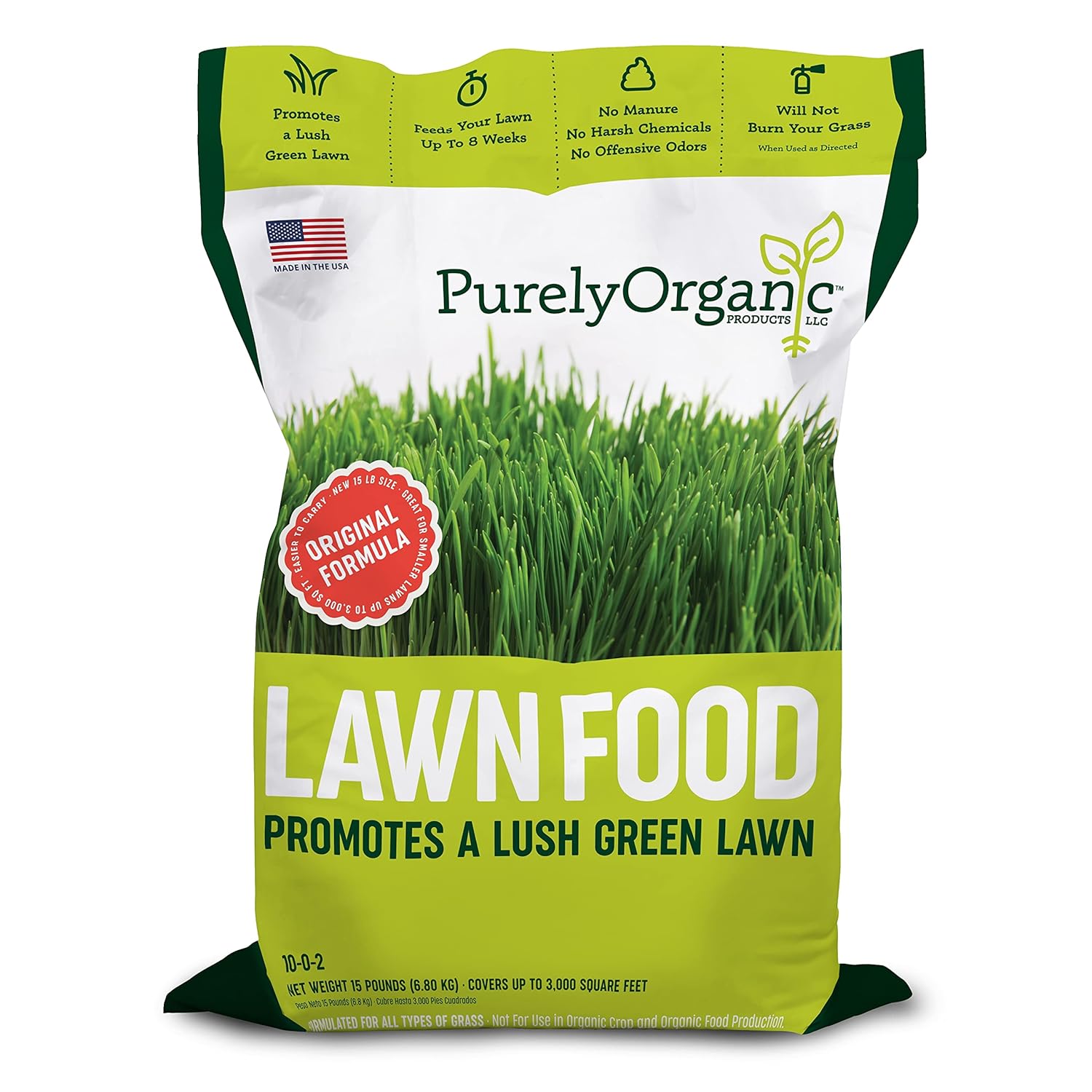
| Best Value The sweet spot between price and what you get | Purely Organic Products Lawn Food 10-0-2, 15 lb |  |
| Best Budget The cheapest option that still gets the job done reliably | TPS Nutrients Pet Safe Liquid Lawn Fertilizer, 8 oz |  |
| Highest Rated A top-rated pick with lots of positive feedback | GreenView Natural Base Lawn Fertilizer, 25 lb (covers 5,000 sq. ft.) |  |
| Most Popular A crowd favorite that many people choose with confidence | O.M. Scott & Sons Natural Grass Food, 12.72 lb |  |
| Best Seller A high-volume bestseller chosen again and again | Scotts Natural Lawn Food, 29.1 lb (covers 4,000 sq. ft.) |  |
Scotts Green Max Lawn Food (16.67 lb)

| Item Form | Granules |
|---|---|
| Coverage | 5000 square feet |
| Specific Uses For Product | Lawn |
| Target Species | lawn grass |
Scotts Green Max Lawn Food is a granular, all-purpose lawn fertilizer formulated to deliver fast greening with a 2-in-1 feed plus 5% iron supplement. It is applied with a broadcast or drop spreader to any grass type and is recommended for routine spring, summer, or fall applications. Notable features include a guaranteed nonstaining formula when used as directed and settings provided for Scotts spreaders to help get an even application across the advertised 5,000 sq ft coverage. The iron content speeds visible greening in as little as three days and the granules are ready to water in for faster uptake. For a risk-averse homeowner growing fescue in spring, the product is straightforward to use and safe to re-enter the lawn immediately after application. Limitations are that proper spreader settings and sweeping up excess product are important to avoid runoff and that it is a general lawn food rather than a specialized product for nutrient-deficient soils, so a soil test is still useful for targeted corrections.
Best for: Homeowners who want a low-risk, easy-to-apply lawn food that produces quick green results on fescue lawns in spring and prefer established brand guidance for application.
Less Ideal for: Gardeners seeking a product to correct a specific nutrient imbalance or those who prefer liquid or organic-only fertilizing approaches.
- Includes 5% iron for faster, deeper greening visible in about three days
- Premeasured granular form covers up to 5,000 sq ft from one bag
- Manufacturer provides spreader settings to simplify even application
- Formulated not to stain concrete or driveways when used as directed
- Not a tailored corrective fertilizer for specific soil deficiencies
- Requires correct spreader settings and cleanup to prevent runoff
Verdict: A simple, fast-acting granular lawn food with added iron that reliably greens fescue lawns when applied with a spreader.
The Andersons Pet Safe Lawn Fertilizer 28-0-6 (30 lb)

| Item Form | Granules |
|---|---|
| Specific Uses For Product | Lawn Care |
| Target Species | Lawn Grass |
| Unit Count | 480 Ounce |
The Andersons Pet Safe 28-0-6 is a granular lawn fertilizer designed to green turf quickly while remaining safe for pets and people after application. It uses the brand's DG Technology so particles break down into micro-particles on contact with water, moving soluble nutrients toward the root zone and reducing residue on surfaces. The formula combines quick-release and slow-release nitrogen plus added sulfur to encourage a deeper green and improved turf health over multiple weeks. Typical use is an even broadcast application followed by watering; the product guidance recommends reapplying every eight weeks. Practical benefits include broad turf compatibility, reduced lawn downtime because the lawn can be walked on immediately after watering, and a large bag that covers extensive lawns. Limitations are that the N-P-K is focused on nitrogen and potassium with no phosphorus, so it is not intended for establishment or root development needs, and granular application requires a spreader for even results and correct rates to avoid uneven growth.
Best for: Gardeners focused on high-performance turf color and health who want a pet-safe option and plan regular seasonal feedings to maintain a deep green lawn.
Less Ideal for: Those establishing new lawns from seed or sod who need phosphorus-rich starter blends or users who prefer liquid feeds or precise micronutrient blends.
- Patented DG Technology breaks granules into micro-particles for efficient nutrient delivery to roots
- Combination of quick and slow-release nitrogen gives immediate color plus sustained feeding
- Formulated safe for pets so lawn can be accessed soon after watering
- Large bag covers a substantial area, reducing how often you need to buy product
- No phosphorus in the N-P-K ratio so not suitable as a starter fertilizer for new sod or seed
- Granular product requires a spreader and proper calibration for uniform application
Verdict: Choose this fertilizer if you want a pet-safe granular product that delivers fast visible greening plus sustained nitrogen feeding for established lawns.
Purely Organic Products Lawn Food 10-0-2, 15 lb
| Item Form | Granules |
|---|---|
| Application Method | Drop or rotary spreader |
| Coverage | 3,000 Square Feet |
| Specific Uses For Product | Plant Growth, Root Development, Soil Conditioning |
| Mixing Ratio | 10:0:2 |
This Purely Organic Lawn Food is a granular, plant-based fertilizer designed for routine lawn feeding on cool- and warm-season grasses. It spreads with a drop or rotary spreader at the recommended 4–8 lbs per 1,000 sq ft and supplies nitrogen-heavy nutrition (10-0-2) for greener leaf growth while also contributing to root development and soil conditioning. The blend uses soybean meal and distillers dried grains instead of synthetic chemicals, which reduces odor and eliminates phosphorus to comply with phosphate-restriction rules in some towns. It is family and pet friendly with no re-entry restrictions noted, making it practical for yards with animals. Expect slower, steady green-up compared with quick-release synthetic fertilizers, so results are gradual rather than instant. Also, coverage is calibrated to the 15 lb bag for roughly 3,000 sq ft, so larger lawns will need multiple bags and more storage space.
Best for: Buyers who want a pet- and family-friendly, plant-based lawn fertilizer that supports steady, natural green-up and prefers practical, regulation-compliant choices over fast-acting chemical feeds.
Less Ideal for: Homeowners who need rapid, dramatic color change or who manage very large lawns and expect each application to cover extensive acreage.
- Plant-based formula using soybean meal and distillers grains instead of synthetic chemicals
- No phosphorus in the 10-0-2 formula to meet phosphate-restriction rules
- Can be applied with common drop or rotary spreaders and covers about 3,000 sq ft per bag
- Family and pet friendly with no re-entry time required
- Slow-release effect means slower visible results compared with synthetic quick-release fertilizers
- 15 lb bag may be insufficient for larger lawns requiring multiple applications or bags
Verdict: Choose this product if you want a practical, pet-safe, plant-based fertilizer that steadily builds greener turf while avoiding phosphorus.
TPS Nutrients Pet Safe Liquid Lawn Fertilizer, 8 oz

| Item Form | Liquid |
|---|---|
| Application Method | Spray |
| Coverage | Low |
| Target Species | Lawn Grass |
| Liquid Volume | 8 fluid ounces |
This 8 oz pet-safe liquid lawn fertilizer provides a gentle nitrate-based feed designed for regular spot or whole-yard applications where pet safety matters. It is applied with a sprayer and absorbs quickly to help even out color, thicken turf, and encourage deeper roots so lawns recover from wear and foot traffic more readily. Notable features include kelp and trace minerals in a low-coverage liquid format that reduces the risk of burn streaks when used as directed. Practical benefits are fast uptake compared with granular products and a formula pitched toward households with animals, making it easy to feed high-traffic areas or treat thin patches without worrying about immediate pet exposure. The small 8 oz size keeps upfront cost low but also means you may need multiple bottles for medium to large yards, and the stated coverage is low so plan on targeted use rather than treating an entire lawn at once.
Best for: Homeowners who prioritize pet safety and want a quick, easy way to green up thin spots or treat small yards without using granular fertilizers.
Less Ideal for: Large-property owners who need broad, economical coverage or gardeners who prefer granular slow-release fertilizers for seasonal feeding.
- Pet-safe, low-burn nitrate formula suitable for yards with animals
- Liquid form for faster absorption and easier spot treatment
- Includes kelp and trace minerals to support root health and overall turf color
- Small 8 oz bottle with low coverage is not economical for large lawns
Verdict: A compact, pet-friendly liquid fertilizer that makes quick spot treatments and small-yard maintenance simple and low-cost.
GreenView Natural Base Lawn Fertilizer, 25 lb (covers 5,000 sq. ft.)

| NPK | 15-0-7 |
|---|---|
| Form | Granules |
| Application method | Spreader |
| Target species | Lawn Grass |
GreenView Natural Base Lawn Fertilizer is a granular lawn food designed to revive dull or stressed turf by adding organic nutrients and sustained nitrogen. It is applied with a spreader in spring, summer, or fall to promote root development and thicker, greener grass without a sudden surge of growth. The formula lists 15-0-7 NPK with about 70% slow-release nitrogen, so lawns get an immediate lift plus ongoing feeding over weeks. The product emphasizes natural and organic ingredients, no microplastic coatings, and safety for homes with children and pets when used as directed. Practical benefits include improved root vigor, reduced stress from heat or drought, and predictable feeding for homeowners who prefer a gradual result rather than quick flushes of growth. Limitations are that the bag gives coverage guidance but you still need a spreader for even application and repeated seasonal applications may be required to fully restore severely damaged turf; it is not a one-time solution for major lawn renovations.
Best for: Homeowners who prioritize a dependable, pet- and child-conscious fertilizer that improves root strength and delivers steady, predictable results over time.
Less Ideal for: People looking for instant green-up in a single application or those needing a product that also contains seed or turf-repair agents for regrading bare patches.
- Contains 70% slow-release nitrogen for steady feeding
- Includes natural and organic nutrients to support soil microbial activity
- Formulated for use around children and pets when applied per label
- No microplastic coatings, reducing plastic residue in the lawn
- Not intended to replace overseeding or major lawn renovation for heavily damaged turf
- Requires a spreader and correct application rate for even results
Verdict: Choose this pet-safe, natural-base granular if you want steady, reliable lawn recovery and long-lasting feeding rather than quick surge growth.
O.M. Scott & Sons Natural Grass Food, 12.72 lb

| Feeds up to | 10 weeks |
|---|---|
| Coverage | Up to 2,000 sq. ft. |
| Usage | Outdoor |
| Unit count | 203.52 Ounce |
O.M. Scott & Sons Natural Grass Food is a straightforward, natural lawn fertilizer meant for routine spring and seasonal feedings. You use it by filling a spreader, setting the dial per the bag directions, walking the lawn to apply, then lightly watering so the nutrients start working right away. The formula contains no added artificial ingredients or pesticides and is marketed as safe for people and pets when directions are followed. A single 12.72 lb. bag covers about 2,000 square feet and is formulated to feed for up to 10 weeks, so one bag can support a small-to-medium yard through the main growing season. The recyclable paper bag is a small eco-friendly plus. Limitations are its coverage and frequency: homeowners with larger lawns will need multiple bags and repeat applications every 8 to 10 weeks, and the product is not presented as a targeted solution for specific problems like weed control or soil pH correction. Still, for routine spring feeding on common grass types it delivers predictable, easy-to-follow results.
Best for: Homeowners who want a simple, natural spring feed for a small to medium lawn and prioritize easy application and pet-safe ingredients.
Less Ideal for: Those with large lawns, persistent weed issues, or who need specialty fertilizers for nutrient-deficient or pH-imbalanced soils should consider more targeted products.
- Natural formula without added artificial ingredients or pesticides
- Feeds immediately after watering and continues feeding up to 10 weeks
- Easy to apply with a standard spreader using bag dial settings
- Covers up to 2,000 sq ft per 12.72 lb. bag suitable for small to medium yards
- Recyclable paper packaging
- Limited coverage per bag so larger lawns require multiple purchases
- Not formulated to handle weeds or specific soil deficiencies
Verdict: A simple, pet-safe natural lawn food that makes spring feeding easy for small to medium yards.
Scotts Natural Lawn Food, 29.1 lb (covers 4,000 sq. ft.)

| Item Form | Powder |
|---|---|
| Application Method | spreader |
| Coverage | 4,000 square feet |
| Specific Uses For Product | Lawn |
| Target Species | grass |
Scotts Natural Lawn Food is a granular lawn fertilizer designed to thicken and green turf with a mostly natural formulation and OMRI listing. It is applied with a spreader and is intended for use any season on any grass type; Scotts recommends up to four applications per year and feeding every 6 to 8 weeks during the growing season. In real-world use it delivers noticeable greening within one to three weeks and is safe to walk on immediately after application, which makes it convenient for yards with kids and pets. The bag covers 4,000 square feet and has no strong odor, so application is straightforward and unobtrusive. Limitations to consider are that it is intended as lawn food rather than a weed or pest solution and you should avoid applying before heavy rain and sweep product off hard surfaces to prevent runoff. For best distribution use a compatible Scotts drop or rotary spreader to get even coverage across the lawn.
Best for: Homeowners who prioritize pet and child safety and want a straightforward, season-round lawn food that promotes greener, thicker grass with minimal fuss.
Less Ideal for: People needing an all-in-one weed or insect control product or those with very large lawns who want less frequent, higher-coverage bags.
- OMRI listed formulation suitable for natural lawn care practices
- Safe to walk on immediately after application and labeled for use around kids and pets when used as directed
- Covers up to 4,000 sq. ft. from a single 29.1 lb bag
- No strong odor and easy to apply with standard spreaders
- Not formulated to control weeds or pests so additional products may be required
- Requires proper spreader use and care to avoid uneven application or runoff
Verdict: Choose this if you want a pet-friendly, OMRI-listed lawn food that reliably greens and thickens turf with simple spreader application.
Choosing the Right Pet Safe Lawn Fertilizer: Key Factors to Consider
Nutrient Formula and Release Type
The nutrient mix and how quickly nutrients become available shape turf response and pet exposure. Slow-release nitrogen reduces rapid top growth and lessens the need for frequent reapplication, which in turn lowers the chance pets encounter fresh fertilizer granules or strong residues. A balanced ratio of nitrogen, phosphorus, and potassium supports root development and wear tolerance, but lawns with specific soil tests may need adjusted NPK proportions.
Organic or plant-derived nitrogen sources often break down more gradually and produce less odor, while coated slow-release granules offer controlled feeding but may have different environmental behavior. Choose a formula that matches your soil test results and maintenance rhythm to avoid overfeeding and repeated pet exposure.
Ingredient Transparency and Safety Labeling
Clear labeling about active and inert ingredients helps you evaluate risk. Look for products that list the type of nitrogen (for example, urea, ammonium sulfate, polymer-coated urea, or organic sources) and any added biostimulants, herbicides, or insecticides. Avoid formulations that combine fertilizer with pesticides or herbicides unless the label explicitly indicates safe use around pets and provides re-entry timing guidance.
Safety data sheets and manufacturer guidance about pet re-entry, ingestion risks, and first-aid steps are useful for household decision making. The more transparent the product, the easier it is to compare potential hazards and to plan safe application routines.
Salt Content and Potential for Turf Burn
High salt index fertilizers can damage grass roots and create zones of dead turf that attract pets to dig or nibble. Salt can also irritate pet paws after application. Products with lower soluble salt content or formulations designed for slow nutrient release lessen the risk of scorch, especially on newly seeded areas, thin lawns, or during hot, dry weather.
If your yard has compacted soil or recent sod, choose a gentler formula and follow watering instructions closely to move salts away from the crown and roots. Proper timing and correct application rates are essential to avoid stress on both the lawn and the animals that use it.
Runoff, Environmental Behavior, and Water Safety
Fertilizer that washes into storm drains, ponds, or garden beds can harm aquatic life and reduce overall safety around the property. Formulations with lower soluble phosphorus, reduced drift, and slow-release carriers reduce runoff risk. Consider how the product behaves when rain or irrigation follows application and whether the material binds to soil or dissolves quickly.
Products that minimize immediate solubility decrease the chance of pets contacting active material in puddles or wet patches. For yards near water features, prioritize low-runoff formulas and always follow local fertilization regulations to reduce environmental impacts.
Application Method and Ease of Use
How a fertilizer is applied affects both safety and effectiveness. Granular spreaders, hose-end liquids, and hand-applied products each carry different exposure profiles for pets. Granules can be visible and tempting to curious animals if not watered in, while liquids disperse evenly but may require mixing knowledge and proper calibration.
Choose a product that matches the tools you have and your comfort level. Look for clear re-entry times, simple mixing and spread instructions, and packaging that reduces accidental access. Ease of cleanup and the ability to quickly water in the product also improve safety after application.
When to Apply Around Pets
Timing applications to minimize pet contact is a practical way to reduce risk. Apply fertilizers when pets are less likely to be in the yard, such as during work hours or when you can temporarily confine them indoors or to a safe area. Early morning or late afternoon applications can work, but check weather forecasts to avoid rain that could move product before it is absorbed.
Follow label instructions for re-entry times strictly. Many pet safe options recommend waiting until treated areas are dry or until after a specified irrigation schedule. Watering in granules shortly after spreading helps move material off leaf surfaces and reduces the temptation for pets to lick or chew damp grass blades.
- Avoid application right before rain to prevent runoff and accidental exposure in puddles
- Keep pets away until the product has been watered in and the lawn feels dry
- Use temporary fencing or indoor confinement if pets are often unsupervised outdoors
Safe Storage and Handling
Store fertilizer in a cool, dry place away from pet reach. Many accidental ingestions occur when animals access open packaging left on patios or in garages. Seal bags or containers and place them on high shelves or in locked cupboards.
When handling, wear gloves and avoid leaving small spills on hard surfaces where pets can sniff or taste residues. Sweep or hose down any granules that scatter on driveways or walkways and dispose of empty packaging according to local waste guidelines.
- Keep original labeling in case of emergency or to reference application instructions
- Clean spreaders and application tools outdoors and away from pet play areas
- Use containers with childproof closures when possible to deter curious animals
Managing Newly Seeded or Sod Areas with Pets
Young turf and seeded patches are more sensitive to fertilizer and pet traffic. For new seed, choose milder starter formulas or follow a reduced-rate schedule to avoid burning fragile seedlings. Physical barriers like temporary fencing keep pets off delicate areas while roots establish.
If installing sod, delay heavy feeding until the turf is established and the roots have anchored. Follow label guidance for starter feeds versus maintenance applications and limit pet access until the grass withstands normal activity.
- Use protective coverings or fencing until seedlings reach recommended mow height
- Stick to low-salt, gentle formulas on new installs
- Reintroduce pets gradually to newly sodded areas to avoid compaction and damage
Watering and Aftercare to Reduce Risk
Watering after application is one of the simplest ways to reduce surface residues that pets might contact. For granular products, a short, gentle irrigation following label instructions moves nutrients into the root zone and removes granules from leaf surfaces.
Observe the lawn after watering and before letting pets back out. Drying time, soil type, and weather affect how quickly it is safe to reintroduce animals. Regular mowing and thatch management also reduce places where granules can hide and pets can find them.
- Follow label watering rates to avoid washing nutrients away
- Check for visible granules and remove leftovers before allowing pets outside
- Adjust irrigation based on soil texture to ensure proper infiltration
Natural Alternatives and Complementary Practices
If you prefer to minimize synthetic inputs, consider organic or slow-release plant-based fertilizers and soil-building practices that support turf health over time. Compost topdressing, core aeration, and overseeding help develop dense turf that requires less frequent feeding and reduces bare patches pets are drawn to.
Integrated lawn care practices reduce reliance on repeated fertilizer applications. Good soil tests, proper mowing heights, and pest management geared to pet safety will help maintain a durable lawn without increasing exposure risks.
- Topdress with finished compost to improve soil structure and nutrient-holding capacity
- Use soil tests to tailor feeding and avoid blanket applications
- Combine cultural practices with gentler fertilizer formulas to lower overall input frequency
How We Chose the Best Pet Safe Lawn Fertilizer
We selected products that balance turf nourishment with documented pet-safety features and practical lawn care performance. Key evaluation criteria included the fertilizer nutrient formula and release type, labeled safety information and ingredient transparency, salt index and potential for leaf or root scorch, and real-world application convenience for homeowners with animals. We also weighed environmental behavior such as runoff risk and biodegradability of any added components. Excluded from consideration were generic fertilizers lacking clear safety declarations, products that required professional-only application, and formulations with known toxic additives or organophosphate pesticides. Preference went to granular or liquid blends with slow-release nitrogen or plant-derived sources, clear re-entry intervals, and minimal odor. We gave additional attention to packaging that reduces accidental pet access and to directions that provide concrete guidance on pet re-entry timing after application.
FAQ
How soon can pets use the lawn after application?
It depends on the product and formulation. Many pet-focused formulas allow pet re-entry after the grass is dry or after a short watering-in period. Always follow label instructions for re-entry time, and keep pets off until any surface residues are gone.
Are organic fertilizers always safer for pets?
Organic fertilizers often use plant or animal-derived nutrients that break down more slowly and produce less odor, but they are not inherently harmless. Some organic inputs can still cause upset if ingested in large amounts, so proper storage and application remain important.
Can I mix fertilizer application with weed or pest treatments safely around pets?
Combining treatments increases exposure risks. Unless the product label explicitly states it is safe to use around pets and provides clear re-entry guidance, avoid mixing fertilizers with herbicides or insecticides. Apply separate treatments at different times and follow all safety directions.
What should I do if my pet eats fertilizer granules?
If ingestion occurs, remove any remaining material from the animal's mouth and call your veterinarian or emergency animal clinic. Bring the product label or safety data to help identify ingredients. Signs of ingestion may include vomiting, drooling, or lethargy, depending on the formulation and amount.
How can I reduce the chance of pets finding spilled granules?
Water-in granular applications promptly and sweep or hose any spills from hard surfaces. Use temporary barriers during and after application and store product bags out of reach. Choosing liquid options for certain applications can also lower the presence of visible granules.
Final Verdict
Choosing the right pet safe lawn fertilizer means balancing turf needs with household safety and environmental responsibility. Prioritize clear ingredient labeling, low salt and runoff potential, and application methods that let you limit pet contact until the material is settled or watered in. Match the nutrient formula and release type to your soil test and lawn condition to avoid overapplication and repeat treatments. With careful timing, proper storage, and straightforward aftercare, you can maintain a healthy, green lawn while keeping pets safe. Focus on reducing immediate surface residues and pick a product that fits your watering and maintenance habits to make the yard comfortable for both turf and animals.
