

Note: This article contains affiliate links. If you click on these links and make a purchase, I may earn a small commission at no extra cost to you. This helps support my research and content. Read my full affiliate disclosure here.
If you want hanging or cascading greenery that thrives without bright window light, choosing the right low light trailing plants matters. Poor choices can lead to leggy growth, sparse foliage, and constant repotting. This guide focuses on shade-tolerant trailings that perform in apartments, bathrooms, north-facing rooms, and rooms with filtered light. We shortlisted seven reliable options that balance hardiness, ease of care, and attractive habit. Each pick was evaluated for light tolerance, water needs, growth habit, and how it behaves in common indoor growing spots. Read on to find plants that will add lush trailing color to low-light corners with minimal fuss.
Top Picks at a Glance
| Best Overall The best all-around choice for most situations | Costa Farms Golden Pothos Live Indoor Trailing Plant in Decorative Pot |  |
| Best Quality Built to a higher standard if you want something more solid | Tricolor Hoya Krimson Queen (Hoya Carnosa Variegata) — Live 6" Hanging Plant |  |
| Best Value The sweet spot between price and what you get | Costa Farms Golden Pothos 2-Pack (Small) Live Indoor Trailing Plants |  |
| Best Budget The cheapest option that still gets the job done reliably | Generic 4‑Pack Low‑Light Indoor Houseplants (2.8" Nursery Pots) |  |
| Highest Rated A top-rated pick with lots of positive feedback | Costa Farms Golden Pothos Live Indoor Trailing Vine (Medium) |  |
| Most Popular A crowd favorite that many people choose with confidence | Plants for Pets Pothos 4-Pack (4" Assorted) |  |
| Best Seller A high-volume bestseller chosen again and again | Plants for Pets Pothos & Philodendron 6-Pack (2" Nursery Pots) |  |
Costa Farms Golden Pothos Live Indoor Trailing Plant in Decorative Pot

| Indoor Outdoor Usage | Indoor |
|---|---|
| Sunlight Exposure | Partial Sun |
| Moisture Needs | Regular Watering |
| USDA Hardiness Zone | 10-12 |
The Costa Farms Golden Pothos is a beginner-friendly trailing houseplant that brings fast-growing green foliage to shelves, hanging baskets, or tabletops. It arrives potted in a decorative plastic container and is intended for medium, indirect light situations where it will tolerate occasional low-light conditions better than many tropicals. Care guidance is straightforward: roughly one cup of water once a week and ensure the soil drains so the plant does not sit in water. Notable features include its air-purifying reputation, drought tolerance, and year-round displayability. Because it is a vigorous grower, expect vines to lengthen quickly and plan for occasional trimming or repotting as it outgrows the container. The included pot does not have drainage holes, so you will need to monitor watering or move the plant to a hole-drilled container to avoid root rot. Hardy in USDA zones 10 to 12, this Pothos is practical for busy owners who want fast visual impact without complex maintenance, though outdoor use is limited by its indoor hardiness range.
Best for: Buyers who want a low-maintenance, fast-growing trailing houseplant to add green, cascading foliage to low-light rooms with minimal weekly care.
Less Ideal for: Gardeners seeking a frost-hardy outdoor vine or those who require a planted pot with built-in drainage ready for heavy watering routines.
- Easy care and forgiving of occasional neglect
- Attractive trailing foliage that fills shelves or hanging spots quickly
- Marketed as air purifying and drought tolerant for low-effort benefits
- Ships potted and ready to display in a decorative container
- Shipping pot lacks drainage holes which increases risk of overwatering
- Not cold-hardy outside USDA zones 10-12 so unsuitable for most outdoor climates
Verdict: A resilient, easy-care trailing plant that quickly adds lush, low-light friendly greenery to indoor spaces.
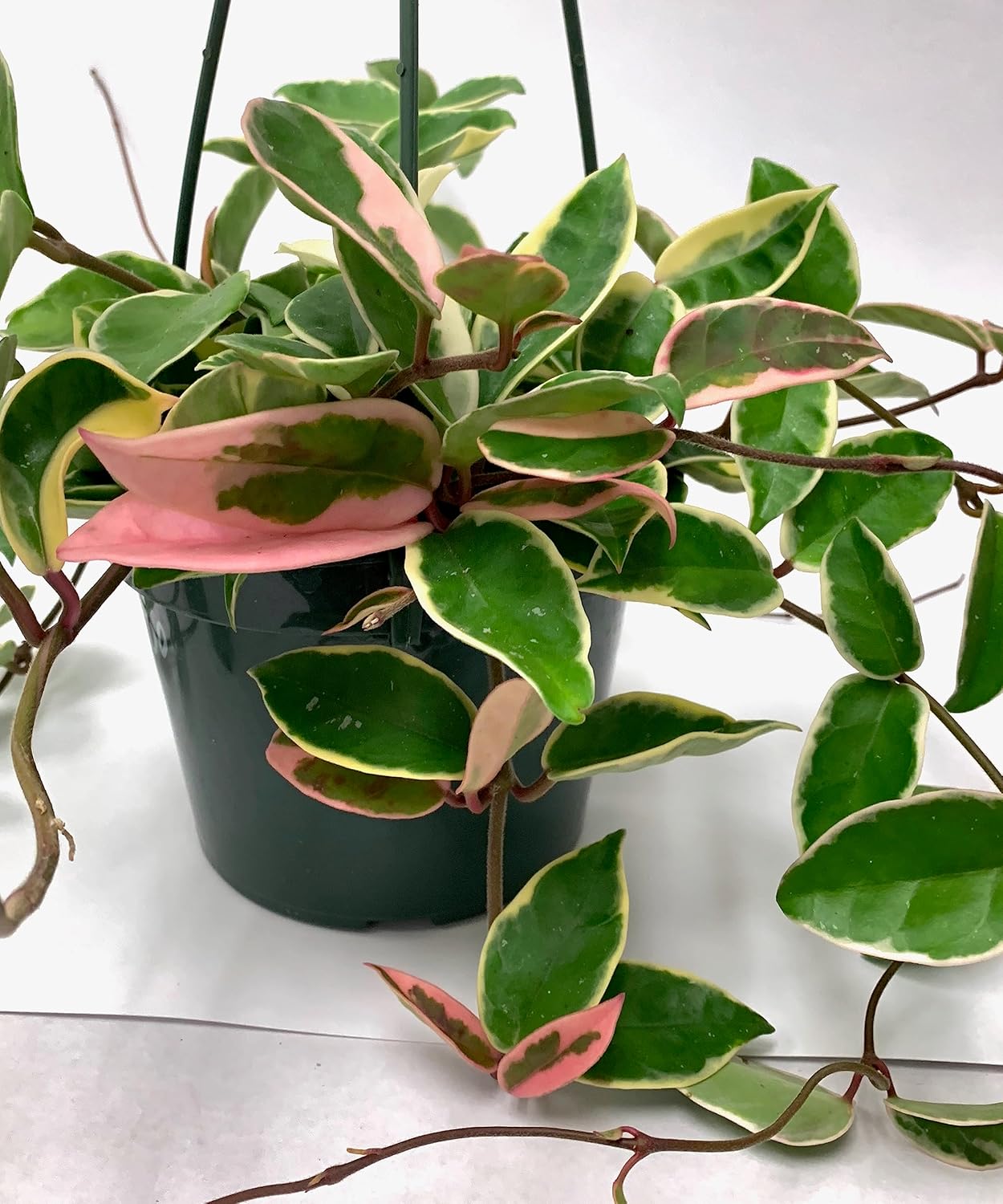
Tricolor Hoya Krimson Queen (Hoya Carnosa Variegata) — Live 6" Hanging Plant
| Indoor Outdoor Usage | Indoor |
|---|---|
| Soil Type | Well Draining |
| Moisture Needs | Little To No Watering |
| Bloom Season | Spring to Summer |
| USDA Hardiness Zone | 10 |
The Hoya Krimson Queen is a compact, trailing houseplant prized for its variegated foliage and easy-care habit, sold here in a 6-inch hanging pot ready for suspension. It performs best in bright, indirect light but tolerates lower light, making it flexible for living rooms, bathrooms, or covered patios where direct sun is limited. Watering is low-maintenance: allow the top inch of soil to dry between waterings and use a well-draining medium to avoid root rot. The plant is already rooted and will steadily push out new leaves and occasionally bloom from spring into summer. Notable features include built-in air-purifying benefits and seasonal pink tones on new leaves in the right conditions. Practical benefits are low watering demands, a trailing habit that suits hanging displays, and straightforward propagation for enthusiasts who want to expand their collection. Limitations are that the pink coloration is seasonal and cannot be guaranteed at delivery and the plant is recommended for milder climates or strictly indoor environments given its USDA zone 10 rating.
Best for: Buyers who want a low-maintenance, decorative hanging plant that performs reliably in indoor settings and rewards attention with steady growth and occasional blooms.
Less Ideal for: Gardeners seeking a cold-hardy outdoor specimen or those who need guaranteed seasonal coloration year-round should consider other plants.
- Variegated trailing foliage adds visual interest in hanging displays
- Tolerates lower light while preferring bright indirect light for best growth
- Low watering needs when grown in well-draining soil
- Blooms in spring to summer and propagates easily for collectors
- Pink leaf coloration is seasonal and not guaranteed at purchase
- Recommended for indoor or warm-climate use only (USDA Zone 10)
Verdict: A low-effort, eye-catching hanging Hoya that delivers attractive variegation and easy indoor performance for buyers prioritizing reliable, low-maintenance plants.
Costa Farms Golden Pothos 2-Pack (Small) Live Indoor Trailing Plants

| Indoor Outdoor Usage | Indoor |
|---|---|
| Other Special Features of the Product | Air Purification, Low Maintenance |
| Sunlight Exposure | Partial Sun |
| USDA Hardiness Zone | 10-12 |
| Moisture Needs | Regular Watering |
These Costa Farms Golden Pothos arrive as a convenient 2-pack of small, trailing houseplants intended for hanging baskets, shelves, or tabletops. They are fast-growing vines with glossy green foliage that do well in medium, indirect light and tolerate lower-light spots better than many houseplants. The plants come in plastic grow pots and are marketed as air-purifying and beginner-friendly; care guidance recommends roughly 1 cup of water about once a week and allowing excess to drain to avoid soggy soil. Practical benefits include easy placement around the home to fill vertical space and simple upkeep that fits a busy schedule. Because they are live plants, individual specimens will vary and will eventually need repotting as they outgrow the container. Also these are hardy only in USDA zones 10 to 12, so they are for indoor use in cooler climates. If you want quick leafy coverage in a low-light room, Pothos provides reliable, low-effort growth, though occasional pruning and attention to watering will keep them healthiest.
Best for: Buyers who want low-effort, fast-growing trailing greenery to brighten low- to medium-light indoor spaces with minimal maintenance and quick visual impact.
Less Ideal for: Gardeners seeking frost-hardy outdoor vines or those who prefer plants that require no pruning or eventual repotting as they mature.
- Sold as a two-pack for multiple displays or faster visual impact
- Tolerant of medium to lower indirect light common in homes and offices
- Low-maintenance watering schedule suitable for beginners
- Trailing growth fills hanging baskets, shelves, or tabletspace quickly
- Not cold-hardy outdoors below USDA zones 10 to 12 so suitable mainly as an indoor plant
Verdict: A beginner-friendly, low-light tolerant trailing plant pack that delivers fast leafy coverage with minimal weekly care.
Generic 4‑Pack Low‑Light Indoor Houseplants (2.8" Nursery Pots)

| Indoor Outdoor Usage | Indoor |
|---|---|
| Sunlight Exposure | Low Light |
| Soil Type | Indoor Potting Mix |
| Moisture Needs | Moderate, Keep Soil Slightly Moist |
| Unit Count | 4 Count |
This 4‑pack delivers four small, hardy houseplants already potted in 2.8‑inch containers with a ready potting mix, designed for low light indoor locations. The assortment arrives ready to display on a windowsill, shelf, or desk and is selected for shade tolerance and low maintenance, so typical care is limited to watering when the soil feels dry and keeping them out of direct sun. The compact pots make them convenient for grouping or starting a collection that can be later repotted as plants grow. Practical benefits include instant greenery without the need to pot up, a modest moisture requirement, and plants chosen to withstand indoor light levels. Limitations are the small nursery pots and young plant size, which means they will need repotting for long‑term development and may not reach the article goal’s “tall” size immediately; expected mature height is listed but will take time and proper care to achieve. These are best as inexpensive starters or decorative accents rather than finished large specimens.
Best for: Buyers looking for an affordable, low‑effort way to add live greenery to shaded indoor spaces who prioritize cost and ease over instant large size.
Less Ideal for: Those seeking an already tall or mature specimen for an immediate statement piece or collectors who need specific plant varieties.
- Arrives potted and ready to display, no immediate potting required
- Chosen for low light and shade resistance, suitable for dim indoor spots
- Includes potting mix that helps young roots establish
- Compact 2.8‑inch pots are space‑efficient for desks and shelves
- Plants come in small nursery pots and will need repotting to achieve larger, taller growth
- Grower’s choice assortment means specific species and colors are not guaranteed
Verdict: An inexpensive, ready‑to‑display four‑plant starter set that brings low‑light greenery to small indoor spaces with minimal immediate upkeep.
Costa Farms Golden Pothos Live Indoor Trailing Vine (Medium)

| Indoor Outdoor Usage | Indoor |
|---|---|
| Other Special Features of the Product | Air Purification |
| Sunlight Exposure | Partial Sun |
| Moisture Needs | Regular Watering |
| USDA Hardiness Zone | 10 |
The Costa Farms Golden Pothos is a classic, easy-care indoor vine that arrives ready to display in a grower pot and is well suited to east-facing windows where it receives morning sun and bright indirect light. It is typically used as a trailing plant on shelves or in hanging baskets, or kept as a compact desk or tabletop specimen. Notable features from the listing include tolerance for medium, indirect light, a recommended weekly watering routine of about one cup, and natural air-purifying qualities. Practically, this means the pothos will tolerate inconsistent care, recover from occasional underwatering, and grow quickly when given moderate light and occasional fertilizer in spring and summer. Limitations are that it is shipped in a plastic grower pot and may need repotting as it grows, and it is not frost-hardy so it is strictly an indoor plant in most climates. Expect variability between individual plants since these are living items sourced from growers.
Best for: Buyers who want a reliable, low-maintenance houseplant to brighten an east-facing window, desk, or shelf and prefer a plant that tolerates irregular care.
Less Ideal for: People seeking a flowering or cold-hardy outdoor specimen or those who want a decorative plant in a permanent show pot without repotting.
- Tolerates low to medium indirect light, making it suitable for east-facing windows
- Low watering needs and forgiving of inconsistent care
- Fast-growing trailing habit useful for shelves, hanging baskets, or to fill space
- Listed air-purifying properties add a functional indoor benefit
- Arrives in a plastic grower pot and will likely need repotting as it matures
- Hardy only as an indoor plant in warm zones and not suitable for outdoor cold climates
Verdict: An easy, fast-growing pothos that reliably brightens east-facing windows and suits busy or beginner plant owners.
Plants for Pets Pothos 4-Pack (4" Assorted)

| Indoor Outdoor Usage | Indoor |
|---|---|
| Other Special Features of the Product | Air Purification |
| Sunlight Exposure | Full Sun |
| Moisture Needs | Regular Watering |
| USDA Hardiness Zone | 3 |
This four-pack delivers beginner-friendly pothos varieties that suit low-light rooms and simple indoor care routines. Each plant comes rooted in a 4" nursery pot and the assortment rotates between familiar types such as Marble Queen, Golden, Neon, and Satin, so you get visual variety without extra effort. Pothos are typically grown in hanging planters, on shelves, or trained up a support; they prefer bright, indirect light but tolerate lower light levels that many apartments and offices have. The listing emphasizes air-purifying benefits and gives clear care guidance: allow the soil to dry between waterings and keep temperatures above about 60 F. Practical strengths are resilience, fast trailing growth for a lush look, and compatibility with common indoor spots like living rooms, kitchens, or bathrooms. Limitations are that you may receive different varieties than pictured and plants arrive in small 4" pots, so plan to repot sooner if you want bigger specimens or longer-term display without frequent watering.
Best for: Buyers who want low-maintenance greenery for indoor spaces and prefer reliable, easy-to-care-for plants that tolerate lower light and occasional neglect.
Less Ideal for: Growers seeking large, mature plants ready for instant statement displays or those who want guaranteed, specific rare varieties.
- Easy to grow and tolerant of low to bright indirect light
- Four different varieties provide visual variety in one purchase
- Ships in small nursery pots that establish quickly and are ready for hanging or shelving displays
- Listed care guidance is straightforward for first-time plant owners
- Arrives in 4" pots so plants may need repotting soon for faster growth or long-term display
- Specific varieties are not guaranteed and assortment can vary
Verdict: A simple, low-maintenance way to add trailing, low-light-friendly pothos to your home with minimal fuss.
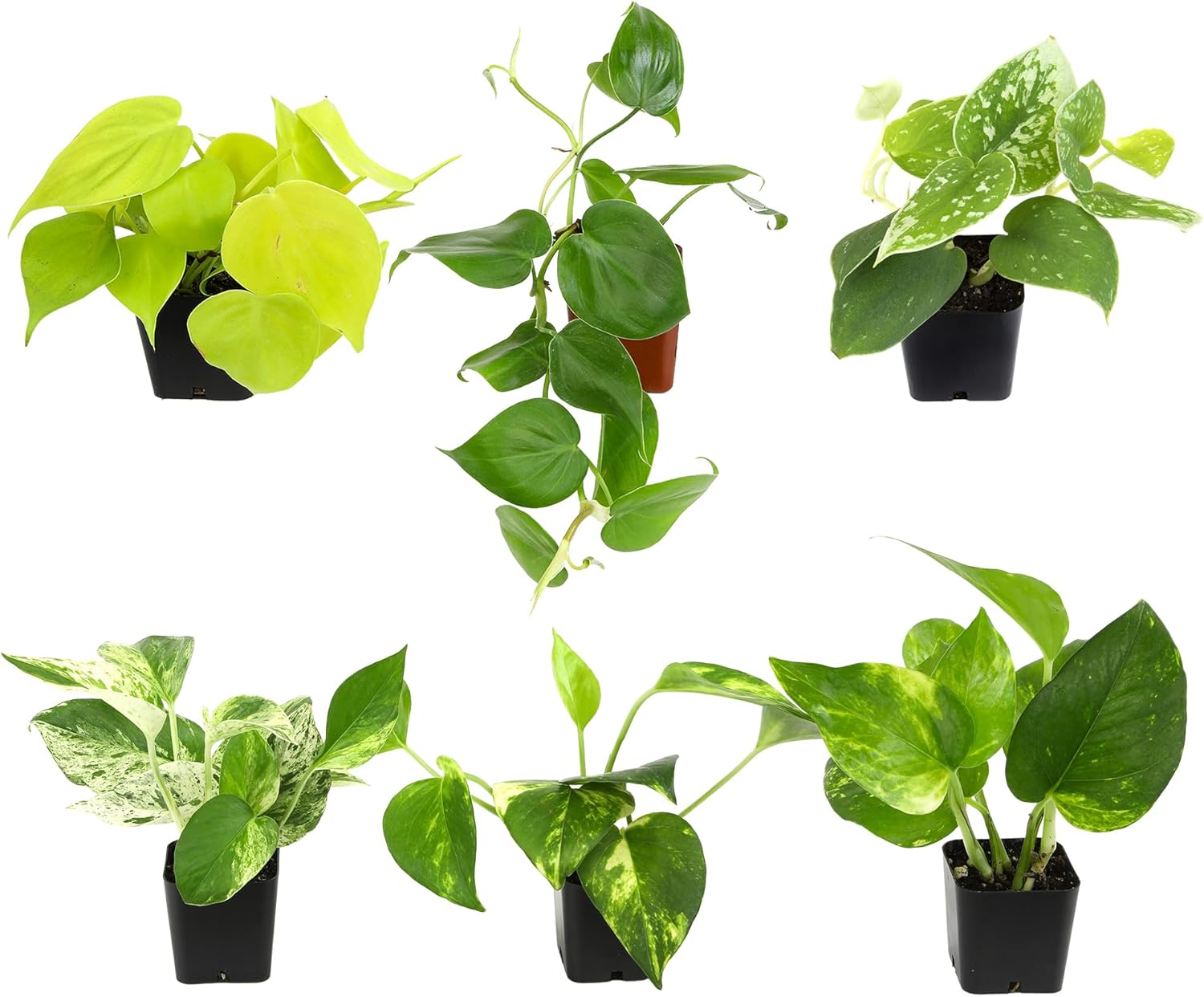
Plants for Pets Pothos & Philodendron 6-Pack (2" Nursery Pots)
| Indoor Outdoor Usage | Indoor, Outdoor |
|---|---|
| Other Special Features of the Product | Air Purification, Low Maintenance |
| Sunlight Exposure | Partial Sun |
| USDA Hardiness Zone | 10, 11, 12 |
| Moisture Needs | Regular Watering |
This six-pack bundles several pothos and philodendron varieties as small, rooted plants in 2-inch nursery pots for indoor trailing or low-light spots. The mix typically includes variegated types such as Marble Queen, Hawaiian, Silvery Ann and lemon-lime philodendron, which makes it useful for starting hanging baskets, training up a moss pole, or filling a shelf with cascading foliage. Pothos tolerate bright, indirect light but also persist in medium to low light, and they prefer the soil to dry between waterings which reduces overwatering risk. Plants arrive small and will need repotting within a few months to a larger container for vigorous growth. Notable benefits are the variety of leaf patterns and the beginner-friendly care: forgiving light range, low maintenance watering, and year-round indoor growth. Limitations are the tiny nursery pots on arrival and the short-term display size, so expect an extra step of repotting and occasional pruning to shape the vines as they grow.
Best for: Buyers who want an easy-to-grow, low-light trailing plant pack to quickly add greenery indoors and prefer forgiving plants that tolerate occasional neglect.
Less Ideal for: Gardeners seeking fully mature display plants or immediate large specimens should look for larger pots or nursery-grown sizes instead.
- Includes six rooted plants so you can start multiple displays or replace lost specimens
- Variegated and non-variegated varieties provide visual interest for trailing arrangements
- Tolerates low to medium indoor light making it suitable for shaded rooms
- Low-maintenance watering habit that helps prevent common beginner mistakes
- Ships in very small 2-inch nursery pots so repotting is required for long-term growth
- Not specified as pet-safe despite brand name so check toxicity before placing near animals
Verdict: A convenient six-pack of hardy, low-light trailing pothos and philodendron that makes adding beginner-friendly greenery to shaded indoor spots simple.
Choosing the Right Low Light Trailing Plants: Key Factors to Consider
Actual Light Levels and Placement
Not all "low light" locations are equal. A north-facing window, a room lit only by indirect ambient light, and a bathroom with small frosted windows present different photon levels. Measure where you plan to place a trailing plant over the course of a day. A shelf a few feet from a window may receive only a few hundred lux, while a spot near a bright east window filtered by sheer curtains will be noticeably brighter.
Matching a plant's true tolerance to that measured light prevents problems such as stretched stems, faded leaf color, and slowed growth. If a room is very dim, choose a species documented to tolerate sustained low irradiance and accept slower growth rather than forcing a bright-light plant into that spot.
Watering Frequency and Drainage
Trailing indoor plants vary widely in moisture needs. Some prefer to dry partially between waterings, while others tolerate persistently damp soil. For low light locations, soil dries more slowly because evaporation and photosynthesis rates are reduced, so overwatering is a common issue.
Consider the pot and soil combination you plan to use. A well-draining mix and a pot with drainage holes reduce root-rot risk. Match the plant's water preference to your routine: if you forget water for a week, pick a forgiving species; if you water regularly, choose one that likes consistent moisture.
Growth Habit and Maintenance Needs
Trailing plants differ in how quickly and densely they produce vines. Some create many short, leafy stems that keep a lush look with light pruning. Others send out long, sparse runners that need regular trimming and pinching to look full. Think about how much maintenance you want to do to maintain a desired form.
Also plan for support and placement. Hanging baskets, high shelves, and trailing over bookcases all present different pruning and training needs. Faster growers may require seasonal potting up or more frequent pruning to prevent legginess in low light.
Temperature and Humidity Requirements
Temperature swings and indoor humidity strongly influence trailing plant health. Many low-light tolerant species are understory plants adapted to stable, moderate temperatures and higher humidity. Radiator heat, air conditioning drafts, or very dry indoor air can cause leaf drop and brown margins even when light is adequate.
Assess your home's seasonal humidity and avoid species that demand tropical humidity if you run a very dry heater in winter. If humidity is low, select tolerant species or plan for localized humidity boosts such as pebble trays or occasional misting.
Propagation and Longevity
Easy-to-propagate trailing plants let you refresh a tired specimen, expand to new locations, or replace sections that outgrow their space. Many trailing species root readily from stem cuttings in water or soil. This makes long-term care simpler because you can rejuvenate leggy stems without buying replacements.
Consider how quickly the plant responds to cutback and how well it regrows in lower light. Plants that propagate and regrow easily are practical for busy households and help manage pests or disease by allowing you to isolate and replace affected sections.
Toxicity and Pet Safety
If pets or small children access hanging or trailing plants, toxicity matters. Some common trailing species contain compounds that cause mouth and stomach irritation or more serious symptoms. Check toxicity profiles before placing plants in reachable spots, and favor non-toxic species when pets are highly curious.
You can also position potentially toxic plants out of reach, hang them high, or use trailing varieties that are less tempting to nibble. Safety choices affect both placement and whether you choose to keep a particular species indoors.
Best Spots in Your Home for Trailing Plants
Low-light trailing plants can brighten rooms that do not get direct sun, but placement still matters. Hanging baskets near a north-facing window, high shelves that get indirect light, and bathrooms with bright artificial lighting all make sensible homes for shade-tolerant trailers. Avoid locations that are completely windowless unless supplemented with grow lighting.
Consider the microclimate around the placement. Kitchens and bathrooms often have higher humidity which benefits many trailing species. Living rooms and bedrooms may be drier, so choose hardier varieties or increase humidity locally.
- North-facing windows: steady, cool light that suits many shade-tolerant trailers
- High shelves or hanging baskets: keep trailing stems off floors and away from pets
- Bathrooms with a window: good for humidity-loving species
Potting Mix and Container Tips
Use a light, well-draining potting mix that retains some moisture without staying waterlogged. Adding coarse perlite or orchid bark improves aeration for many trailing houseplants. Avoid dense garden soil which compacts and limits root oxygen.
Choose containers with drainage holes to prevent root rot. For hanging baskets, line with coco coir or use a well-structured interior liner to keep the soil from falling out while maintaining airflow.
- Well-draining mix with organic matter
- Containers with drainage holes or a drainage layer
- Consider lighter pots for hanging mounts to reduce strain
Pruning, Training, and Encouraging Full Growth
Light pruning promotes fuller, bushier trailing stems and prevents one long bare runner from dominating. Pinch back growing tips to encourage branching and denser foliage. For very low light, prune conservatively because plants may need energy to recover.
Use soft ties to train stems along a shelf edge or to guide vines into a desired cascade. Regular pinch pruning also provides cuttings you can root to replace or multiply plants.
- Pinch tips to encourage branching
- Prune to remove dead or leggy growth
- Use cuttings to refresh containers or start new plants
Managing Pests and Common Problems Indoors
Even in lower light, trailing plants can attract scale, mealybugs, spider mites, and fungus gnats if conditions favor them. Inspect new plants before bringing them inside and check the undersides of leaves regularly. Sticky traps and good sanitation help reduce pest pressure.
Reduce fungus gnat risk by allowing the top inch of soil to dry between waterings and consider using a coarser mix. For sap-feeding pests, isolating affected plants and treating with targeted, low-toxicity methods keeps populations down without stressing trailing growth.
- Inspect new plants and quarantine when needed
- Allow topsoil to dry to deter fungus gnats
- Wipe leaves and treat localized pest outbreaks quickly
Seasonal Care and Adjusting Expectations
Trailing plants in low light usually slow growth in fall and winter. Expect reduced new growth and plan maintenance accordingly. Do not increase fertilizer in low-light seasons; instead reduce feeding and trim to maintain shape.
If you notice sustained decline, review light, water, and humidity first before assuming a pest or disease. Small adjustments in placement or watering rhythm often solve seasonal problems without major interventions.
- Reduce feeding in lower light seasons
- Trim lightly rather than heavy pruning in winter
- Reassess placement before aggressive corrective actions
How We Chose the Best Low Light Trailing Plants
We focused on practical, gardener-facing measures that predict how a trailing houseplant will perform in low light. Key evaluation criteria included true low-light tolerance, where plants maintain foliage and compact habit under indirect or north exposure; watering and humidity flexibility, since many indoor sites vary; growth habit and dormancy patterns, to ensure a consistent trailing look rather than long bare stems; ease of propagation for refreshes or sharing; and pest resistance and general hardiness for indoor conditions. We excluded plants that require bright indirect light, specialized greenhouse conditions, or frequent training to keep a trailing form. Plants known to be toxic to pets were not automatically excluded, but we flagged toxicity concerns for gardeners with animals. We also deprioritized species that need frequent fertilizer or complicated seasonal treatments. The shortlist reflects species and cultivars that reliably form attractive trails in dimmer indoor locations with ordinary household care.
FAQ
Can trailing plants survive with only artificial light?
Many trailing species tolerate standard household artificial light for limited periods, but most do better with some natural indirect light. If a room has only artificial light, choose species known for true low-light tolerance and use full-spectrum grow bulbs if growth stalls.
How often should I water trailing plants in low light?
Watering frequency depends on species and potting mix, but in low light most containers dry more slowly. Check the top inch of soil and water when it feels dry rather than on a fixed schedule. Overwatering is a common cause of decline in dim locations.
Will trailing plants grow long and leggy in shade?
Some species elongate stems when light is insufficient. To prevent legginess, provide the brightest indirect light available, pinch back growing tips to promote branching, and occasionally rotate the plant so all sides receive light.
Are trailing houseplants suitable for bathrooms?
Bathrooms can be ideal if they receive some natural or bright artificial light because higher humidity benefits many trailing species. Be mindful of temperature swings and choose plants that tolerate occasional low light and elevated humidity.
How can I increase humidity for trailing plants without a humidifier?
Group plants together to create a localized humid microclimate, use pebble trays with water beneath pots, or place containers on trays of damp pebbles. Regular misting helps temporarily but does not replace consistent humidity for very demanding species.
Is propagation from cuttings difficult for trailing plants?
Most popular trailing species root readily from stem cuttings in water or a light soil mix. Rooting times vary by species and season, but propagation is generally straightforward and a useful tool for refreshing leggy specimens.
Final Verdict
Choose low light trailing plants by matching a plant's documented shade tolerance to the actual conditions where it will hang or trail. Prioritize species that tolerate slower growth, need modest watering, and root easily from cuttings if you want long-term flexibility. Pay attention to humidity and potting mix to avoid root problems, and use light pruning to maintain a dense, attractive cascade. With the right match of plant habit to placement and care routine, you can enjoy lush trailing greenery in dimmer rooms without constant maintenance.
