

Note: This article contains affiliate links. If you click on these links and make a purchase, I may earn a small commission at no extra cost to you. This helps support my research and content. Read my full affiliate disclosure here.
Roses are vulnerable to a range of sap-sucking and chewing pests that can ruin blooms and weaken plants. Picking the right insecticide spray for roses matters because some treatments quickly knock down pests but harm delicate flowers or beneficial insects, while others protect foliage with gentler chemistry. This guide shortlists seven top options suited for rose beds, patio specimens, and small shrub plantings, and it explains the practical tradeoffs you should expect in the garden. We evaluate each choice on pest control effectiveness, safety for blooms and foliage, ease of use, and suitability for repeated applications. Read on to understand which spray style and formulation best fits your rose care routine and how to apply treatments safely and effectively.
Top Picks at a Glance
| Best Overall The best all-around choice for most situations | BioAdvanced 3-in-1 Insect, Disease & Mite Control Concentrate, 32 oz |  |
| Best Quality Built to a higher standard if you want something more solid | BioAdvanced All-in-One Rose & Flower Plant Care Spray, 24 fl oz | 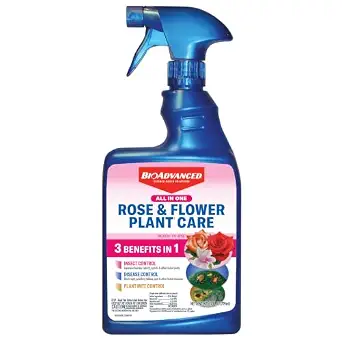 |
| Best Value The sweet spot between price and what you get | Bonide Captain Jack's Deadbug Brew 16 oz Concentrate |  |
| Best Budget The cheapest option that still gets the job done reliably | BioAdvanced Dual Action Rose & Flower Insect Killer, 24 oz |  |
| Highest Rated A top-rated pick with lots of positive feedback | Bonide Captain Jack's Rose Rx 4-in-1 Insect & Disease Control, 16 oz Concentrate |  |
| Most Popular A crowd favorite that many people choose with confidence | Bonide Captain Jack's Ready-to-Use Neem Oil Spray, 32 oz |  |
| Best Seller A high-volume bestseller chosen again and again | BioAdvanced Organics Neem Oil Spray, Ready-to-Use, 24 fl oz |  |
BioAdvanced 3-in-1 Insect, Disease & Mite Control Concentrate, 32 oz

| Unit Count | 32 Fluid Ounces |
|---|---|
| Item Type Name | Concentrate |
| Liquid Volume | 32 fluid ounces |
| Active Ingredients | Imidacloprid, Tau-fluvalinate, Tebuconazole |
| Specification Met | EPA |
This BioAdvanced concentrate is designed as an all-purpose plant treatment that kills listed insects on contact, controls common fungal diseases, and suppresses spider mites in one product. You mix the concentrate with water to make spray solution (it yields up to about 12 gallons), then apply to roses, flowers, shrubs, trees, and other ornamentals. Key active ingredients—imidacloprid, tau-fluvalinate, and tebuconazole—deliver systemic, rainproof protection that the label says can last up to 30 days. For mite control specifically, the miticide component gives both suppression and residual activity, so it is useful for follow-up sprays during an outbreak. Practical benefits include fewer separate products to buy and the convenience of treating multiple problems with one application. Important limitations are regulatory restrictions that make it unavailable in several states and the need to follow label safety precautions because it contains systemic insecticide active ingredients that can affect non-target insects if misused.
Best for: Gardeners who want a single, practical product to manage insect pests, fungal diseases, and spider mites on roses and ornamentals and who prefer a preventive residual treatment.
Less Ideal for: Organic gardeners or those managing pollinator-attractive plantings who avoid systemic insecticides should choose non-systemic or organic miticide and fungicide options instead.
- Combines insecticide, fungicide, and miticide in one concentrate for fewer products to store and apply
- Systemic formulation with rainproof protection that can last up to 30 days after application
- Makes up to 12 gallons of spray from a 32 fl oz bottle, suitable for treating multiple plants or repeat applications
- Active ingredients target a broad list of pests including aphids, spider mites, Japanese beetles and common foliar diseases
- Not available for sale in several U.S. states, limiting where it can be used
- Contains systemic insecticides that require careful adherence to label directions to avoid harming beneficial insects
Verdict: If you want one dependable product to both kill spider mites and prevent common foliar diseases across roses and ornamentals, this 3-in-1 concentrate simplifies treatment with a month-long systemic residual.
BioAdvanced All-in-One Rose & Flower Plant Care Spray, 24 fl oz

| Unit Count | 24 Fluid Ounces |
|---|---|
| Item Form | Liquid |
| Target Species | Fungus |
| Included Components | CARE ROSE&FLOWER RTU 3IN1 24OZ |
This ready-to-use BioAdvanced spray delivers three actions in one bottle: it kills listed insects on contact, controls common fungal diseases, and tackles spider mites while leaving a protective residue that lasts up to 14 days. You use it like a normal garden spray—apply to rose bushes, ornamentals, vines, shrubs, and similar plants when pollinators are not present. The product lists active ingredients (bifenthrin and myclobutanil) and is formulated to be rainproof within about four hours, so it holds up in typical garden conditions. Practical benefits include saving time by combining insect, disease, and mite control in a single application and being convenient as a ready-to-spray bottle. Important limitations are that it targets only the listed pests and diseases, must be used with pollinator safety in mind, and contains synthetic active ingredients that some gardeners prefer to avoid. Follow label directions and safety guidance for effective and responsible use.
Best for: Gardeners who want a simple, time-saving solution to keep roses and ornamental flowers healthy without mixing concentrates and who prioritize broad, short-term protection.
Less Ideal for: Growers seeking strictly organic or pollinator-safe products or those who need treatment for pests or diseases not listed on the label should look elsewhere.
- Three-in-one formula combines insecticide, fungicide, and miticide for fewer separate treatments
- Ready-to-use spray is convenient for spot and whole-plant applications
- Rainproof within about four hours and provides protection up to 14 days
- Kills listed pests on contact for fast visible results
- Active ingredients are synthetic and may be undesirable for organic gardeners
- Protection only covers pests and diseases specifically listed on the label
Verdict: Choose this ready-to-use spray if you want a convenient, single-product solution to kill common rose pests, control fungal diseases, and suppress mites with up to two weeks of protection.
Bonide Captain Jack's Deadbug Brew 16 oz Concentrate

| Unit Count | 16 Ounce |
|---|---|
| Item Form | Spray |
| Target Species | Insects |
| Active Ingredients | Spinosad (Mixture of Spinosyn A and Spinosad D) |
Bonide Captain Jack's Deadbug Brew is a concentrated spinosad insecticide designed for use on vegetables, fruits, ornamentals, and other garden plants. You mix the 16 fl oz concentrate with water and apply it with a trigger, hand-held, backpack, or hose-end sprayer to target caterpillars, beetles, borers, leaf miners, and similar chewing pests. Because the active ingredient is spinosad, the product is approved for organic gardening and is selective enough that it does not significantly impact many predatory beneficial insects and mites when used as directed. In practical use it provides quick knockdown of listed pests and is suitable for protecting squash and other cucurbits from feeding damage. The main limitations are that it must be mixed and applied correctly following label rates and safety instructions and that repeated broad use can still affect non-target insects if timing and coverage are not careful. For gardeners focused on protecting food crops, it is a straightforward, effective option when integrated with scouting and spot treatments.
Best for: Gardeners who prioritize practical, effective pest control for edible gardens and want an organic-approved concentrate they can mix and apply themselves to protect squash and other crops.
Less Ideal for: Gardeners seeking a ready-to-use spray or those unwilling to follow label mixing and safety instructions should consider alternative formats or professional application.
- Contains spinosad, an active ingredient approved for organic gardening and effective against caterpillars and beetles
- Concentrate mixes with water for use with trigger, backpack, hand-held, or hose‑end sprayers
- Labeled for use on a wide range of vegetables, fruits, and ornamentals including cucurbits
- Designed to minimize impact on many predatory beneficial insects and mites when used as directed
- Requires careful mixing and application per label to avoid harming non-target insects
- Not a residual solution for all pests so repeat applications or scouting are often necessary
Verdict: A practical, organic-approved spinosad concentrate that reliably controls chewing pests on squash and other garden crops when mixed and applied correctly.
BioAdvanced Dual Action Rose & Flower Insect Killer, 24 oz

| Brand | BioAdvanced |
|---|---|
| Item Type Name | Garden Insecticide |
| Liquid Volume | 24 fluid ounces |
| Target Species | Insects |
This ready-to-use BioAdvanced Dual Action spray is formulated to control common garden pests on roses, flowers, and potted plants including aphids, whiteflies, caterpillars and Japanese beetles. It uses a continuous mist nozzle so you can get even coverage and reach undersides of leaves and tight flower clusters without awkward repositioning. One application claims up to 30 days of residual protection and the formula is rainproof after it dries, which reduces the need for frequent reapplications in typical outdoor conditions. It is convenient for treating geraniums and other ornamentals because you can take small houseplants outside, spray, let them dry, and return them indoors. Limitations to note are that it is a broad-spectrum insecticide so it will affect beneficial insects if sprayed indiscriminately and it is a chemical treatment rather than an organic option, which may matter for edible plants or organic gardens. For everyday home gardeners wanting an effective, easy-to-use spray for ornamentals, it balances performance and convenience.
Best for: Home gardeners who want a convenient, effective ready-to-use spray to protect geraniums and other ornamentals with minimal fuss and occasional reapplication.
Less Ideal for: Growers focused on organic methods, edible crops, or those who need insecticides that spare beneficial pollinators should consider alternative products.
- Kills many common pests on contact including aphids, whiteflies and Japanese beetles
- Continuous spray mist delivers even coverage and reaches undersides of leaves
- Provides residual protection for up to 30 days and is rainproof after drying
- Ready-to-use formulation requires no mixing or special equipment
- Nonselective chemical that can harm beneficial insects if oversprayed
- Not labeled or promoted as an organic or food-safe insecticide
Verdict: A convenient ready-to-use spray that gives reliable contact kill and up to 30 days' residual protection for geraniums and other decorative plants.
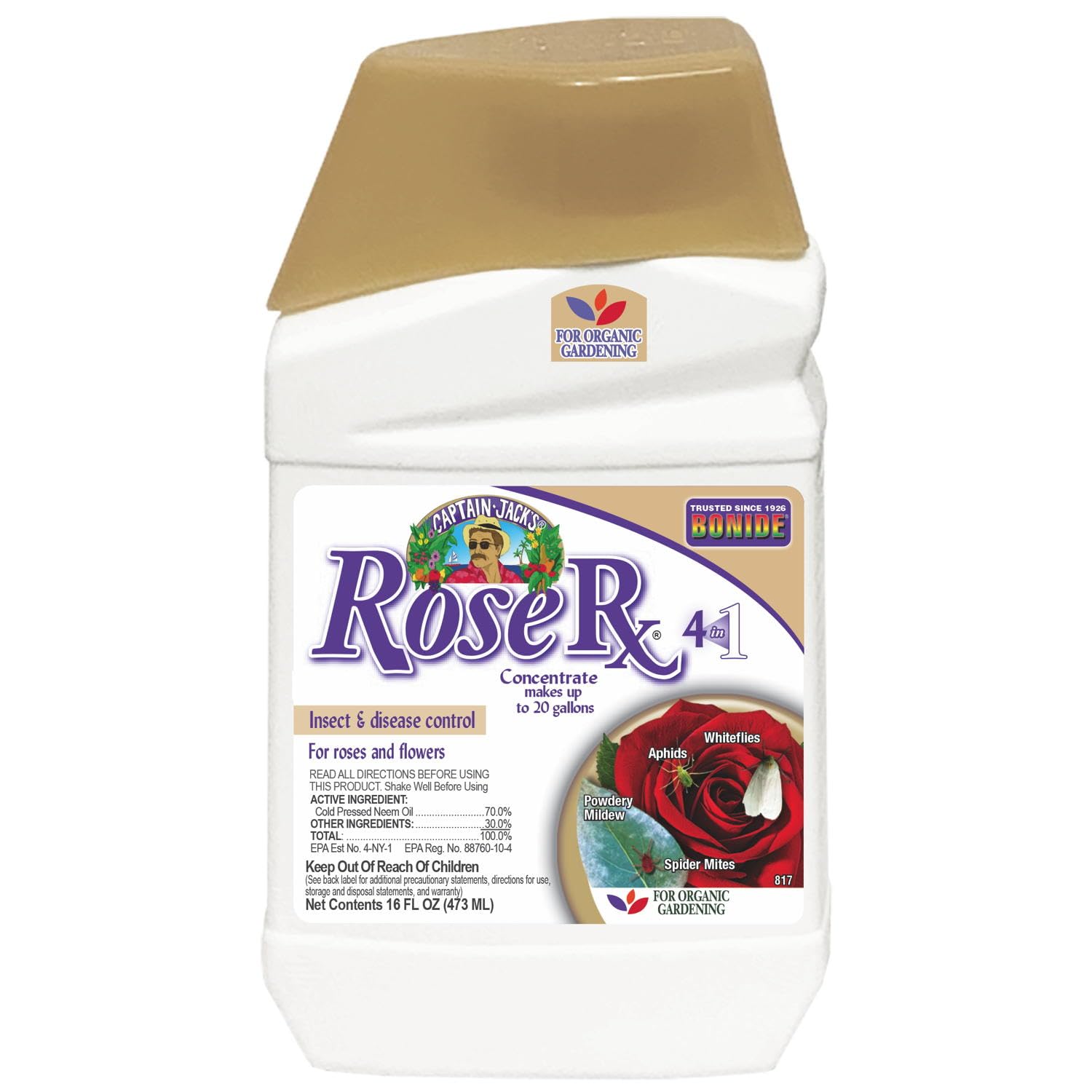
Bonide Captain Jack's Rose Rx 4-in-1 Insect & Disease Control, 16 oz Concentrate
| Item Form | Liquid Concentrate |
|---|---|
| Target Species | Insects |
| Liquid Volume | 16 |
| Active Ingredients | Cold Pressed Neem Oil |
Captain Jack's Rose Rx is a 16 oz concentrate formulated with cold pressed neem oil to control a wide range of insect pests and common fungal diseases on roses and other ornamentals. You mix the concentrate with water and apply it as a foliar spray or soil drench; the label states 16 oz makes up to 20 gallons when used as directed. In practice this product works both as a preventative fungicide and as a contact/ingestion insecticide that affects eggs, larvae, and adults, so it is useful before infestations become severe and as part of a regular maintenance schedule. Because it is plant based and approved for organic gardening, you can use it through harvest for edibles and safely on houseplants when instructions are followed. Expect reapplication every 7 to 14 days depending on whether you are targeting insects or diseases. Limitations are that it is a concentrate requiring correct mixing and frequent reapplications for ongoing control, and results depend on thorough coverage and timing rather than one-time eradication of heavy infestations.
Best for: Gardeners who prioritize reliable, plant-based protection for roses and want a single product to prevent and manage both pests and common fungal diseases as part of routine care.
Less Ideal for: Those who need a one-off, fast-acting synthetic knockdown for large infestations or who prefer ready-to-use sprays without mixing should consider alternatives.
- Combines fungicide, insecticide, miticide, and nematicide actions in one concentrate
- Uses cold pressed neem oil, an approved option for organic gardening
- Versatile application as foliar spray or soil drench for roses, ornamentals, vegetables and houseplants
- Concentrated formula makes multiple gallons of spray, stretching a single bottle
- Requires careful mixing and routine reapplication for effective control
- Not an instant knockout for heavy infestations; best used preventatively and on smaller populations
Verdict: Choose Rose Rx when you want a dependable, organic-approved concentrate that prevents and controls both pests and common fungal diseases on knockout roses with regular applications.
Bonide Captain Jack's Ready-to-Use Neem Oil Spray, 32 oz

| Item Form | Liquid |
|---|---|
| Target Species | Insects |
| Liquid Volume | 32 fluid ounces |
| Active Ingredients | Clarified Hydrophobic Extract of Neem Oil |
This ready-to-use neem oil spray is a multipurpose garden treatment that kills insects at all life stages while also serving as a miticide and preventative fungicide. Packaged in a 32-ounce trigger bottle, it is applied by shaking and thoroughly spraying plant surfaces, including leaf undersides, at the first sign of pests or disease and reapplying every 7 to 14 days as needed. The active ingredient is a clarified hydrophobic extract of neem oil, which is approved for organic gardening and labeled safe to use on vegetables up to the day of harvest. Practical benefits include broad pest coverage (aphids, whiteflies, spider mites and others), disease suppression such as powdery mildew, and convenience from a ready-to-use sprayer. Important limitations are that results are slower than synthetic contact insecticides and application timing matters to avoid leaf burn in full sun; repeated applications may be needed for heavy infestations. Follow label safety directions and keep the product away from children and pets.
Best for: Gardeners who want a single, organic-approved product to manage common vegetable garden pests and fungal problems and who prefer products with strong user feedback.
Less Ideal for: Growers needing rapid knockdown of severe infestations or commercial producers who require fast-acting, high-throughput treatments.
- Kills multiple pest stages including eggs, larvae and adults for more complete control.
- Also acts as a fungicide and miticide so one product covers pests and common fungal issues.
- Ready-to-use trigger bottle requires no mixing and is easy to apply to leaves and undersides.
- Approved for organic gardening and can be used on vegetables up to day of harvest.
- Slower-acting than many synthetic contact insecticides, so it may take several applications to see control.
- Must avoid spraying in peak sunlight to reduce risk of leaf burn.
Verdict: A convenient, organic-approved all-in-one neem spray that controls common vegetable garden pests and fungal issues with minimal fuss.
BioAdvanced Organics Neem Oil Spray, Ready-to-Use, 24 fl oz

| Unit Count | 24 Fluid Ounces |
|---|---|
| Item Form | Oil |
| Target Species | Spider |
| Specification Met | OMRI |
| Active Ingredients | Clarified Hydrophobic Extract of Neem Oil 0.9% |
This BioAdvanced Organics Neem Oil spray is a ready-to-use 3-in-1 treatment for home gardeners who need broad protection from both pests and common fungal diseases. The trigger bottle applies neem oil in a clarified hydrophobic extract formulation that kills eggs, larvae, and adults of listed insects such as aphids, whiteflies, and spider mites on contact while also helping prevent and control fungal problems like black spot, powdery mildew, and rust when used on a 7 to 14 day schedule. It is labeled for roses, flowers, vegetables, fruits and shrubs and can be used up to the day of harvest, making it suitable for edible gardens. Practical benefits include convenience of a pre-mixed spray, multi-target control in one treatment, and OMRI recognition for organic gardening. Limits to expect are that it is a contact-based product so full coverage is required for effectiveness and repeated applications are needed for prevention, and results can be slower than synthetic pesticides for heavy infestations. The bottle is best for small to medium gardens and spot treatments rather than large-scale applications.
Best for: Gardeners who want a single, organic-friendly spray to manage common insects and fungal issues on roses, ornamentals, and edible plants without mixing concentrates.
Less Ideal for: Those managing very large beds or commercial plantings who need high-volume coverage or fast knockdown from systemic synthetic products should consider concentrate or professional options.
- Ready-to-use trigger spray for easy application
- Combines insecticide, miticide, and fungicide action in one product
- Labeled for use on edible plants and permitted up to day of harvest
- OMRI listed formulation suitable for organic gardening
- Effectiveness depends on thorough coverage because it works primarily on contact
- Requires repeated applications on a regular schedule for disease prevention
Verdict: A convenient ready-to-use organic neem spray that gives home gardeners broad, multi-purpose protection against common insects and fungal diseases.
Choosing the Right Insecticide Spray for Roses: Key Factors to Consider
Target Pest Spectrum
Different sprays are formulated to control different groups of pests. Some act primarily on soft-bodied insects such as aphids, whiteflies, and spider mites, while others include ingredients effective against chewing pests like beetles and caterpillars. Knowing the specific pests you see on your roses lets you choose a spray that lists those pests on the label and reduces wasted applications.
A broader spectrum product may reduce the need for multiple treatments, but broader chemistry can also raise risk to beneficial insects. When possible, identify the problem pest by inspecting undersides of leaves, new shoots, and flower buds before selecting a treatment.
Contact Knockdown Versus Residual Control
Contact sprays work quickly on insects present at the time of application but offer little lasting protection. Residual products leave a protective film or systemic action that repels or kills pests over days to weeks. For heavy infestations you may prefer a fast-contact knockdown to stop immediate damage, then follow up with a residual option for ongoing protection.
Consider the timing of flower production and pollinator activity when choosing between fast-acting contact sprays and longer-lasting residuals to avoid unnecessary exposure during bloom periods.
Safety for Blooms, Foliage, and Pollinators
Roses are grown for their flowers, so any spray you use should minimize bloom damage and discoloration. Some formulations can cause petal spotting or burn under hot conditions, while others are labeled safe for use on open blossoms under specific conditions. Follow label directions about bloom-stage restrictions and application timing to protect floral display.
Pollinator safety is also important. Use sprays with minimal residual toxicity to bees, apply during early morning or late evening when pollinators are less active, and avoid spraying open flowers whenever possible to reduce collateral harm.
Plant Sensitivity and Phytotoxicity Risk
Roses can react to active ingredients, application rates, and environmental stressors like heat or drought. Phytotoxicity shows as leaf spotting, yellowing, or burnt edges after treatment. To reduce risk, test a spray on a small area before treating the entire plant, avoid applying during high heat or drought stress, and strictly follow dilution instructions.
Look for label guidance on temperature limits and on-surface drying times. Plants under transplant or pruning stress may be more susceptible, so schedule applications when shrubs are healthy and well watered.
Application Method and Coverage
Good coverage is the single most important practical factor for success. Many rose pests shelter on the undersides of leaves, inside tight foliage, or at the base of new shoots. Choose a spray and nozzle that deliver fine, even droplets and consider products labeled for systemic uptake if foliar coverage is difficult.
Pump sprayers, hose-end applicators, and ready-to-use trigger bottles all have tradeoffs in reach, droplet size, and repeatability. Match the delivery method to the size of your planting and how often you will need to treat to keep applications consistent.
Reapplication Interval and Weather Tolerance
Rainfastness and recommended reapplication intervals affect how often you must treat roses. If your garden experiences frequent rain, pick a spray with reasonable rainfast timing or accept the need to reapply after runoff. Short reapplication intervals may be fine for high-pressure situations but increase cumulative exposure to beneficials and higher labor.
Carefully track label instructions about how soon you can reapply and any cumulative limits to avoid overuse and plant stress.
When to Treat Roses for Pests
Treat roses when you see active feeding damage, clusters of aphids on new growth, stippling from mites, or visible chewing on leaves and buds. Early detection and targeted spot treatment often prevents the need for whole-plant spraying.
Regular inspection during the growing season-especially after warm, calm weather when many pests thrive-lets you catch infestations while they are small. Consider treating young shoots and under-leaf surfaces first, where pests concentrate.
- Treat early morning or late evening to protect pollinators.
- Start with spot treatments on infested canes before treating entire bushes.
- Repeat inspections 3 to 7 days after treatment to verify control.
Using Sprays Without Damaging Blooms
To protect flower quality, avoid spraying while roses are in full open bloom unless the product label explicitly allows it. When blooms must be treated, remove open flowers or shield them so spray contacts fewer petals.
Dilute and apply according to label rates and do not spray under high temperatures. Wet leaves and petals are more susceptible to spotting and burn if sprayed in hot, sunny conditions.
- Apply during cooler parts of the day.
- Rinse off accidental overspray from petals with clean water if label allows.
- Test on a single bloom or branch if unsure about phytotoxicity.
Integrating Sprays Into an Integrated Pest Management Plan
Sprays are one tool in an integrated approach that also includes cultural controls, mechanical removal, and biologicals. Prune crowded canes, remove heavily infested growth, and encourage beneficial insects by planting companion flowers and avoiding broad-spectrum treatments when possible.
Reserve chemical sprays for outbreaks that cultural and mechanical measures cannot control. Rotate active ingredient types across the season to reduce the chances of pest resistance developing.
- Use sticky traps or regular scouting to monitor pest pressure.
- Encourage predatory insects by providing habitat and minimizing broad-spectrum applications.
- Combine pruning and hand-removal with spot spraying for heavy infestations.
Application Tips for Best Coverage
Aim for thorough coverage of new growth, cane tips, and undersides of leaves. Move slowly when spraying so droplets penetrate dense foliage. If using a concentrate, mix carefully and label the tank for safe storage.
Calibrate sprayers and check nozzles for clogs and consistent droplet size. Small droplets give better coverage on undersides of leaves but can drift in windy conditions, so balance droplet size with site conditions.
- Wear protective gloves and eye protection when mixing and spraying.
- Clean equipment after use to prevent cross-contamination with other garden chemicals.
- Keep accurate notes of treatment dates and observed results to refine timing.
Timing Treatments Around Blooming and Pollinator Activity
If roses are in heavy bloom, delay nonessential sprays until after peak flowering or apply only to the canes and leaves while avoiding open flowers. Time applications for early morning or late evening to reduce exposure to foraging bees and other pollinators.
When treating during bloom is necessary, choose products with minimal residual activity on flowers and follow label guidance on re-entry intervals and pollinator warnings.
- Avoid applications when pollinators are active or when temperatures exceed label recommendations.
- Spot-treat problem areas rather than blanket-spraying during bloom.
- Consider physical barriers or manual removal when blooms must be preserved.
How We Chose the Best Insecticide Spray for Roses
Our shortlist focused on sprays that deliver reliable pest control on roses while minimizing harm to blooms, pollinators, and foliage. We prioritized products with demonstrable efficacy against common rose pests such as aphids, spider mites, thrips, and Japanese beetles. Residual control and knockdown speed were both considered so options that only offered one or the other were marked accordingly. Application safety and bloom compatibility were key filters. We favored formulations that can be used during non-peak pollinator hours, that have clear re-entry and bloom-safety guidance, and that permit repeated applications when needed. Ease of mixing and application method mattered for backyard gardeners who need straightforward, consistent coverage across canes and dense foliage. Tank-mix compatibility and label clarity were also evaluated to reduce accidental plant stress. We excluded any product with unresolvable label restrictions for ornamental roses or unclear pest claims. Final selections balanced effectiveness, plant safety, and user-friendliness so the list reflects practical choices for gardeners managing pests in rose beds and containers.
FAQ
Can I spray roses while they are flowering?
It often depends on the product and label directions. Many sprays advise against treating open flowers to avoid petal damage and pollinator exposure. If treatment is necessary, apply during times when pollinators are inactive and avoid direct contact with blooms when possible.
How soon will I see results after spraying?
Contact sprays usually show knockdown within hours but have limited residual protection. Systemic or residual options may take longer to affect pests but can provide days to weeks of control. Results also depend on infestation size and application thoroughness.
Will insecticide sprays harm beneficial insects in my rose bed?
Many sprays can harm beneficials, especially broad-spectrum contact products. To reduce impact, avoid spraying during peak pollinator activity, use targeted spot treatments, and choose products with lower toxicity to beneficials when available.
How often can I reapply treatments?
Reapplication intervals vary by formulation and label instructions. Some products allow reapplication every 7 to 14 days, while others have longer intervals. Follow label limits to avoid plant stress and cumulative exposure to beneficial organisms.
Should I mix different sprays to increase effectiveness?
Tank-mixing can increase risk of phytotoxicity and may reduce safety for roses and beneficials. Only mix products when the label explicitly permits it and after doing a small compatibility test. When in doubt, alternate products between applications rather than mixing.
What is the best way to treat localized infestations?
For small outbreaks, use spot treatments focused on affected canes and undersides of leaves, combined with hand removal of heavily infested growth. This reduces overall chemical use and limits exposure to pollinators and beneficial insects.
Final Verdict
Choose an insecticide spray for roses based on the pests you encounter, the level of infestation, and how much you need to protect open blooms and pollinators. Prioritize products that balance fast knockdown with acceptable bloom safety and that fit your application style and reapplication needs. For many gardeners, targeted spot treatments combined with cultural controls deliver the best long-term results while reducing risk to beneficial insects.
