

Note: This article contains affiliate links. If you click on these links and make a purchase, I may earn a small commission at no extra cost to you. This helps support my research and content. Read my full affiliate disclosure here.
Picking the right African violet potting soil matters because these plants need a balance of air, moisture, and gentle nutrients to bloom reliably. A mix that holds some moisture but drains quickly prevents crown and root rot while still letting young feeder roots access oxygen. This guide covers the top shortlisted mixes for African violet care, explaining why each type of blend suits particular growing situations. We evaluated mixes for aeration, water retention, ease of repotting and nutrient balance to help you choose the best option for your light, pot size, and watering style.
Top Picks at a Glance
| Best Overall The best all-around choice for most situations | Espoma Organic Premium Potting Mix for African Violets (4 qt) |  |
| Best Quality Built to a higher standard if you want something more solid | Sun Gro Horticulture Black Gold African Violet Mix (8 qt) |  |
| Best Value The sweet spot between price and what you get | Leaves & Soul African Violet Potting Soil Mix, 2.2 Quart |  |
| Best Budget The cheapest option that still gets the job done reliably | Doter Organic African Violet Potting Mix (1 qt) |  |
| Highest Rated A top-rated pick with lots of positive feedback | Sun Gro Horticulture African Violet Potting Soil, 8 qt |  |
| Most Popular A crowd favorite that many people choose with confidence | Midwest Hearth African Violet Potting Soil Mix (4 Dry Quarts) |  |
Espoma Organic Premium Potting Mix for African Violets (4 qt)

| Brand | Espoma |
|---|---|
| Unit Count | 128 Ounce |
| Included Components | Espoma Organic Natural and Organic Premium Potting Soil Mix |
| Volume | 4 quarts |
This Espoma mix is designed specifically for African violets and other indoor flowering houseplants. It combines sphagnum peat moss, humus, perlite and yucca extract to create a light, well-draining medium that helps roots breathe and encourages blooming. Typical use is potting new violets or repotting plants into slightly larger containers; the blend is ready to use out of the bag with no need to amend for basic houseplant needs. Notable features include organic ingredients and a focus on aeration and moisture retention balance, which reduces the risk of root rot from overwatering while still holding enough moisture for frequent bloomers. Because it contains only natural components and no synthetic fertilizers, growers who prefer low-chemical or organic care will appreciate it. Limitations are the small 4 quart volume, which means multiple bags are needed for several plants, and it does not include a built-in fertilizer, so feeding on a regular schedule is still necessary for vigorous flowering over time.
Best for: A cautious indoor gardener who prefers organic, low-chemical products and wants a ready-made soil that supports healthy root aeration and reliable flowering in African violets and similar houseplants.
Less Ideal for: People who need large volumes of potting mix for many plants or who want an all-in-one mix with built-in long‑term fertilizer.
- Formulated specifically for African violets and indoor flowering houseplants
- Light, well-draining mix (peat moss and perlite) that reduces risk of waterlogged roots
- Uses organic, natural ingredients without synthetic plant foods
- Includes yucca extract to help wetting and even moisture distribution
- Small 4 quart bag limits coverage for multiple plants
- No added fertilizer so separate feeding is required for sustained bloom
Verdict: Choose this Espoma African violet mix when you want a small, organic, well‑draining potting medium that supports healthy flowering in indoor violets.
Sun Gro Horticulture Black Gold African Violet Mix (8 qt)

| Unit Count | 296 Ounce |
|---|---|
| Item Type Name | Sun Gro Horticulture Black Gold African Violet Mix |
| Manufacturer | BFG Supply |
| Volume | 8 quarts |
This Black Gold African Violet Mix is a ready-to-use potting medium tailored to the needs of African violets and other small indoor flowering plants. The blend pairs sphagnum peat moss for moisture retention with perlite and volcanic pumice to improve drainage and aeration, while earthworm castings add gentle organic fertility. Dolomite lime helps stabilize pH so the soil stays within the neutral-to-slightly-acid range violets prefer. In practice the mix is easy to work with when repotting single plants or topping up small containers, and the 8 quart package is convenient to handle and store. Because it is a focused blend rather than a general-purpose potting soil, you get predictable moisture behavior and fewer adjustments compared with making your own mix. Limitations are that it is a small-volume retail bag and does not include slow-release fertilizer, so high-performing growers will likely supplement with liquid feed or controlled-release nutrition for heavier bloom cycles.
Best for: Growers who prioritize reliable, plant-specific performance and want a ready-made medium that gives consistent moisture and aeration for African violets.
Less Ideal for: Gardeners who need large volumes of soil for many plants or those who prefer a potting mix with pre-mixed long-term fertilizer included.
- Formulated specifically for African violets with peat-based moisture retention and added aeration
- Includes earthworm castings for mild organic nutrient support
- Dolomite lime included to help maintain an appropriate pH
- Light, airy texture from perlite and pumice helps prevent root rot in small pots
- No built-in slow-release fertilizer so regular feeding is required for maximum flowering
- Small 8 quart bag may be insufficient for multiple plants or frequent repots
Verdict: Choose this mix when you want a consistent, airy peat-based medium that supports healthy roots and reliable bloom performance in African violets.
Leaves & Soul African Violet Potting Soil Mix, 2.2 Quart

| Volume | 2.2 quarts |
|---|---|
| Made in | USA |
| Blend components | Peat moss, coco coir, perlite, dolomite |
| Packaging | Resealable bag |
Leaves & Soul African Violet Potting Soil is a premixed, ready-to-use medium designed specifically for Saintpaulia and other delicate indoor flowering plants. The blend of peat moss and coco coir helps retain useful moisture while remaining loose, while perlite improves drainage and aeration so fine roots get oxygen without staying waterlogged. Dolomite is included to moderate acidity and contribute to a balanced root environment. The bag is resealable, which keeps unused mix fresh between repotting sessions and makes it convenient for small collections. In practice this mix works well for repotting seedlings through mature plants when used in pots with drainage holes and adjusted watering. Important limitations are that it is a base medium rather than a complete fertilizer solution, so regular feeding according to your fertilizer schedule is still needed, and very small or recently rooted plantlets require careful moisture control. For growers who want a consistent, out-of-the-bag option that prioritizes moisture balance and aeration, this mix is an easy, practical choice.
Best for: Buyers who want a dependable, low-effort potting mix that balances moisture and aeration for indoor African violets and other delicate flowering houseplants.
Less Ideal for: Growers seeking a soil that supplies long-term nutrients without additional feeding or those managing large outdoor plantings where this indoor blend is unnecessary.
- Ready-to-use mix tailored for African violets so no immediate amendment is required
- Combination of peat moss, coco coir, and perlite balances moisture retention with drainage
- Includes dolomite to help stabilize pH and nutrient uptake
- Resealable bag for convenient storage between uses
- Not a fertilizer replacement so plants will need a separate feeding regimen
- May require extra care with very young plantlets to avoid overwatering
Verdict: A convenient, out-of-the-bag potting mix that gives African violets reliable moisture control and root aeration for healthier growth.
Doter Organic African Violet Potting Mix (1 qt)
| Brand Name | Doter |
|---|---|
| Item Type Name | Garden soil |
| Volume | 1 quarts |
| Item Weight | 224 g |
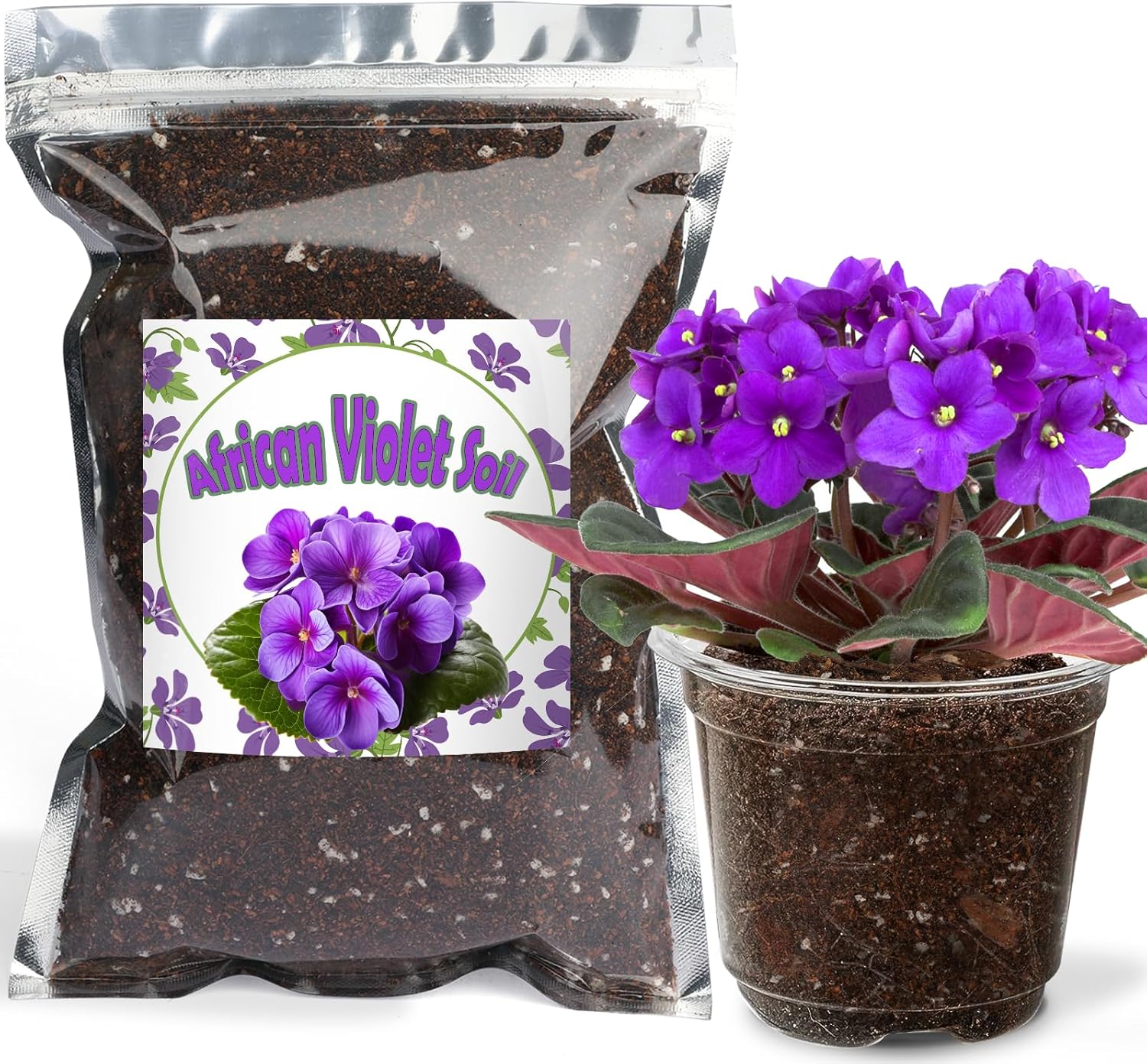
This 1 quart Doter potting mix is made specifically for African violets and similar small indoor plants. It combines peat moss, perlite, and bark to create a fine, airy medium that resists compaction and helps delicate roots get oxygen while holding enough moisture between waterings. The mix is described as slightly acidic and fortified with nutrients to support steady leaf growth and frequent flowering, so you can use it straight from the bag for repotting or topping up small pots. Practical benefits include easier watering control in shallow violet pots and reduced need to amend with extra perlite for drainage. Limitations are the small 1 quart volume, which means frequent repurchases if you maintain multiple plants, and the product guidance is general rather than giving specific feeding schedules or exact pH numbers. It is best used for routine repotting of single plants and as a ready blend for hobbyists who want a violet‑focused soil without custom mixing.
Best for: Plant owners who want an affordable, ready‑to‑use potting mix tailored to African violets and prefer not to mix their own media.
Less Ideal for: Enthusiasts who grow large collections, repot often, or need bulk soil for many plants should choose larger bags or prepare a custom mix.
- Formulated for African violets with a slightly acidic pH to improve nutrient uptake
- Fine, airy texture from peat moss, perlite, and bark that prevents compaction
- Fortified with nutrients to support flowering and foliage without immediate amendments
- Works straight from the bag for repotting small indoor pots
- Small 1 quart volume requires frequent repurchase for multiple plants
- No specific pH value or feeding schedule provided on product details
Verdict: A convenient, budget‑friendly 1 qt potting mix that gives African violets a light, nutrient‑ready medium for healthy foliage and more blooms.
Sun Gro Horticulture African Violet Potting Soil, 8 qt

| Brand Name | SUN GRO |
|---|---|
| Volume | 8 quarts |
| UPC | 064277124081 |
This Sun Gro African violet potting mix is designed specifically to give African violets the aeration and moisture balance they need. Home growers use it for repotting and routine top-ups in small indoor pots; the mix aims to resist compaction so roots get air while holding enough moisture to reduce frequent watering. Notable features include organic components and a formula marketed to prevent overwatering and root rot, which is useful for both novice and experienced growers who prefer a low-maintenance medium. The 8 quart bag is convenient for several small repottings, and the blend’s consistency makes it easy to work with when filling delicate pots. Important limitations are that the bag is sold in a heavy package and the product description emphasizes safety precautions for dust, so care is needed when handling. If you want a straightforward, plant-specific mix for consistent results with African violets, this product delivers a reliable starting medium.
Best for: Growers who prioritize consistent, low-maintenance results for African violets and want a purpose-built soil that reduces compaction and watering guesswork.
Less Ideal for: Someone looking for an all-purpose houseplant mix for a wide range of species or a lightweight travel-size bag for a single small plant.
- Formulated specifically for African violets to support root health and flowering
- Balanced moisture retention with good drainage to help prevent overwatering
- Organic ingredients provide nutritional support for stems and foliage
- Mix resists compaction, making it easier to maintain aeration in small pots
- Bag weight and packaging can be bulky to handle and store
- May produce dust that requires handling in a well ventilated area
Verdict: Choose this mix when you want a dependable, African violet–specific potting medium that keeps roots aerated and moisture balanced for steady blooms.
Midwest Hearth African Violet Potting Soil Mix (4 Dry Quarts)

| Brand Name | Midwest Hearth |
|---|---|
| Item Type Name | Potting Soil |
| Unit Count | 128 Ounce |
| Style Name | Peat Moss, Perlite, Vermiculite Potting Soil Mix |
| Volume | 4 quarts |
This ready-to-use mix is designed specifically for African violets and aims to supply the loose, well-drained but moisture-retentive medium those plants prefer. You use it straight from the bag for repotting or top-dressing without needing to amend; the combination of peat moss, perlite and vermiculite creates aeration to protect delicate roots while holding enough moisture to avoid rapid drying. The mix is pH-controlled to match African violet needs and is the same formulation the brand positions as professional grower quality. Practical benefits include reduced mixing time, consistent texture across pots, and a visible color/weight change that helps time watering. Limitations are the small 4-quart bag size for hobbyists with many plants and potential skin irritation for sensitive users when handling dry media. For growers who prefer to tailor their own blends, this premix leaves less room to adjust components or fertility.
Best for: Buyers who value an off-the-shelf, proven potting medium for African violets and want a consistent, low-effort mix that mimics professional grower formulas.
Less Ideal for: Growers who prefer to custom-blend soils, those managing large collections that need bulk bags, or users who want an already-fertilized/boosted mix.
- Formulated specifically for African violets with pH control
- Ready-to-use mix requires no additional amendments
- Peat moss, perlite and vermiculite balance aeration and moisture retention
- Consistent texture suitable for delicate, shallow rooting systems
- Small 4-quart bag may require frequent replenishing for multiple plants
- Dry mix can irritate sensitive skin if handled without protection
Verdict: Choose this ready-made, pH-balanced mix when you want a low-effort, professional-style soil that reliably supports African violet root health.
Choosing the Right African Violet Potting Soil: Key Factors to Consider
Mix Texture and Particle Size
African violets prefer a fine but open mix that lets tiny feeder roots find oxygen. Particle sizes that are too fine, like compacted garden loam, will hold water and reduce oxygen, increasing rot risk. Conversely, oversized chips or large bark pieces can prevent roots from spreading evenly in small pots and create unstable crowns.
Look for blends that combine small peat or coco particles with a modest amount of perlite or pumice to maintain porosity. The right texture makes watering more forgiving and supports consistent flower production.
Water Retention Balanced With Drainage
These plants like consistent moisture around the root ball but hate sitting in water. A good African violet mix retains some moisture so you do not need to water multiple times a day, while draining enough that excess water moves away quickly. Materials like finely shredded sphagnum or well-aged composted coir help retain water, while perlite, pumice, or sharp sand improve drainage.
Consider your watering routine and pot size: smaller pots dry faster, so a slightly water-retentive mix is helpful. Large pots or very humid indoor spaces may call for a faster-draining blend to avoid chronic wetness.
pH Stability and Mild Nutrient Content
African violets perform best in a slightly acidic to neutral range. A mix with stable pH avoids sudden nutrient lockout and supports consistent uptake of phosphorus and essential micronutrients needed for blooms. Strong, concentrated fertilizers or mixes with high initial nutrient loads can cause salt buildup or root burn in these sensitive plants.
Choose a mix designed for flowering houseplants or one that is low in soluble salts, and plan to use a dilute, regular feeding schedule rather than relying on heavy preloaded fertilizer.
Pot Size Compatibility and Ease of Repotting
African violets are usually grown in small pots and are repotted frequently. A lightweight mix that compresses minimally makes repotting easier and reduces root disturbance. If a mix becomes dense after watering, transplanting or dividing can stress the plant and damage crowns.
Assess how the mix behaves when moist: it should hold shape enough to transfer the root ball but break apart easily for inspection and trimming when needed.
Airflow Around the Crown and Root Collar
The crown of an African violet sits near the soil surface and must remain airy to prevent rot. Mixes that encourage surface drying and avoid matting help keep the crown healthy. Ingredients that crust or form a dense skin on the surface interfere with gas exchange and watering practices like bottom-watering.
Topdressing with a light layer of coarse material or keeping the surface slightly drier helps maintain airflow, especially in humid indoor environments.
Cleanliness and Pathogen Risk
Because African violets are often handled and kept in small, shared collections, choose mixes made from clean, processed components that have low pathogen risk. Unscreened composts or unsterilized soil can introduce fungal spores and pests that spread quickly across plants.
Sterile or heat-treated materials, and mixes sourced from reputable production processes, reduce the likelihood of root disease and make routine maintenance simpler.
Best Mixes by Growing Situation
Different household conditions change which mix will work best. In bright, warm windows with frequent waterings, a faster-draining blend reduces crown wetness. For lower light or drier indoor heat, a mix with slightly more moisture-holding components prevents stress from drying between waterings.
- Warm, bright spots: favor higher perlite or pumice fraction for quick drainage.
- Cooler, dimmer rooms: include more fine sphagnum or coco to retain moisture.
- High-humidity spaces: ensure surface dries to prevent crown rot even if root zone stays damp.
Repotting Tips with African Violet Mix
When repotting, handle the crown gently and avoid burying it deeper than before. Use a slightly larger pot only when the plant is root-bound, and refresh the mix around the root ball without packing it down. Tease the roots lightly and trim any soft or rotten sections before settling the plant into fresh mix.
After repotting, water sparingly to settle the mix and allow the plant to adjust. Avoid heavy initial fertilization and give the plant a few weeks of steady light and moderate moisture before resuming normal feeding.
- Never press the mix into a dense block; keep it loose for airflow.
- Allow a short acclimation period after repotting before heavy watering.
Adjusting Mixes at Home
If a purchased mix seems too heavy or too light, you can tweak it with simple additives. Add perlite or pumice to improve drainage and aeration. To increase water retention, blend in a small portion of fine sphagnum moss or aged coir. Make adjustments gradually so you can observe how the plant responds over a few weeks.
- Start with small changes, such as 10 to 20 percent amendments.
- Record how quickly pots dry to refine the mix for each location and pot size.
Watering Practices for Different Mixes
Watering technique should match the mix. Fast-draining blends benefit from regular, measured waterings that wet the root ball thoroughly then allow partial drying. Water-retentive mixes may do better with lighter surface waterings or careful bottom-watering so crowns stay dry.
Use a finger test or a moisture meter for small pots rather than an automatic schedule; how quickly a soil dries depends on light, season, and pot material.
- Avoid overhead watering that soaks crowns; aim water at the soil surface or use bottom-water methods.
- In small pots, check moisture every few days rather than relying on calendar intervals.
Common Mix Ingredients and Why They Matter
Perlite and pumice add aeration and reduce compaction but differ in weight and longevity. Perlite is light and improves drainage quickly, while pumice is heavier and helps maintain structure over time. Peat and coir hold moisture; peat is more acidic and denser while coir is more sustainable and retains air when prepared properly.
Fine sphagnum offers excellent moisture retention and is gentle on roots, but it can hold too much water if used in excess. Avoid large bark chunks or heavy garden soil in mixes because they interfere with root development in small pots.
- Perlite: fast drainage and very light weight.
- Pumice: long-term structure and stable aeration.
- Coco or peat: moisture retention; use carefully to avoid waterlogging.
How We Chose the Best African Violet Potting Soil
We focused on characteristics that directly affect African violet health rather than broad marketing claims. Our selection criteria emphasized particle size and structure because fine textures can compact and harm roots while coarse, well-structured mixes keep air around feeder roots. Water retention and drainage were evaluated together so mixes that hold moisture near the root zone without becoming waterlogged rated higher. Nutrient balance and pH stability were considered to ensure gentle, steady feeding appropriate for flowering without causing salt buildup. Ease of repotting and compaction resistance were included because frequent repotting and small pots are common with African violets. Finally, ingredient transparency and absence of heavy bark or large chunks mattered since oversized particles can disrupt the crown and root placement. We excluded mixes formulated for outdoor garden beds, general-purpose heavy potting soils, or those with excessive slow-release fertilizer levels that can burn sensitive roots. The list favors mixes and formulations suited to small pots, indoor light conditions, and routine fertilizer regimes typical for African violet growers.
FAQ
How often should I repot African violets?
Usually every 12 to 18 months for actively growing plants, or when roots fill the pot. Repotting into fresh mix restores aeration and reduces salt buildup.
Can I use regular indoor potting soil for African violets?
Regular indoor soils are often too heavy and retain too much water for African violets. If you use one, amend it substantially with perlite or pumice and coarse materials to improve drainage.
Is peat or coco coir better for African violets?
Both work if used correctly. Peat holds moisture and is acidic, while coir is more sustainable and requires careful buffering. Choose based on moisture needs and your environmental preferences.
Should I topdress with fresh mix or replace the whole potting medium?
Light topdressing refreshes the surface and can reduce crusting, but periodically replacing the entire mix is best to remove salts and restore porosity. Full replacement every one to two years is common.
How do I prevent crown rot when watering?
Keep the crown dry by directing water to the soil, avoiding splashing the leaves, and using a well-draining mix. Allow the surface to dry slightly between waterings and ensure pots have proper drainage.
Can I make my own African violet mix at home?
Yes. Combine a light, porous base such as sifted peat or coir with perlite or pumice for aeration, and adjust ratios to match your watering routine. Test the mix with a trial plant before committing your whole collection.
Final Verdict
Choosing the right potting soil for African violets comes down to balancing aeration and moisture retention while keeping the crown dry and the root zone oxygenated. Prioritize a fine but open texture, stable pH, and low soluble salts, and match the mix to your pot size and watering habits. If you must compromise, favor mixes that resist compaction and promote airflow because preventing root and crown rot pays off more than slightly higher nutrient content. With the right mix and watering approach, you can keep foliage healthy and encourage steady flowering.
