

Note: This article contains affiliate links. If you click on these links and make a purchase, I may earn a small commission at no extra cost to you. This helps support my research and content. Read my full affiliate disclosure here.
Choosing the right dressing fertilizer matters because it shapes how quickly plants respond and how long nutrients stay available in soil. Whether you are refreshing a lawn, top-dressing a vegetable bed, or supporting established shrubs, the wrong fertilizer can burn plants or wash away before roots can use it. This guide covers seven shortlisted dressing fertilizers chosen for steady nutrient release, application simplicity, and suitability across common garden soils. Below you will find practical notes on how each option behaves in real outdoor situations plus the criteria used to compare them so you can pick the best fit for your yard or garden.
Top Picks at a Glance
| Best Overall The best all-around choice for most situations | Miracle-Gro Shake 'N Feed All Purpose Plant Food, 4.5 lb |  |
| Best Quality Built to a higher standard if you want something more solid | Osmocote Smart-Release Plant Food Plus Outdoor & Indoor, 8 lb |  |
| Best Value The sweet spot between price and what you get | Osmocote Smart-Release Plant Food Plus Outdoor & Indoor, 1 lb |  |
| Best Budget The cheapest option that still gets the job done reliably | Miracle-Gro Pour & Feed Singles Ready-to-Use Plant Food |  |
| Highest Rated A top-rated pick with lots of positive feedback | Royal Gold Worm Castings Organic Soil Amendment (1 cu ft) |  |
| Most Popular A crowd favorite that many people choose with confidence | Miracle-Gro Water Soluble All Purpose Plant Food, 3 lb |  |
| Best Seller A high-volume bestseller chosen again and again | Miracle-Gro Pour & Feed Liquid Plant Food, 32 fl. oz. | 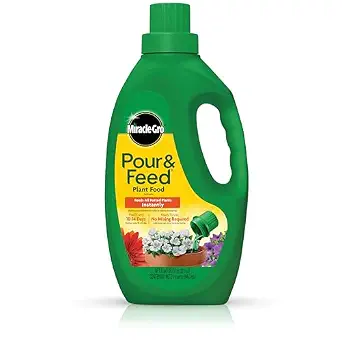 |
Miracle-Gro Shake 'N Feed All Purpose Plant Food, 4.5 lb

| Item Form | Granules |
|---|---|
| Application Method | Shake onto soil and work into top 1-3 inches |
| Target Species | flowers, vegetables, herbs |
| Unit Count | 72 Ounce |
| Feeds For | up to 3 Months |
Miracle-Gro Shake 'N Feed All Purpose is a granular, continuous-release fertilizer you sprinkle onto soil and lightly work into the top inch or three before watering. It is typically used on in-ground garden beds, raised beds and established container plants to provide slow feeding across the season; the label recommends reapplying every three months. Notable features include natural ingredients that feed soil microbes, added micronutrients, and an easy shake-on application that requires no mixing. In practice this product is convenient for routine garden maintenance because one application supports steady nutrient availability without frequent dosing. For garden beds it helps promote root strength and consistent growth while reducing the need to remember weekly feedings. The main limitations are that it is a general-purpose formula rather than a crop-specific blend and that application rates must be followed to avoid overfeeding; it also provides broad coverage but not the fast boost of a water-soluble feed if plants need immediate recovery.
Best for: Gardeners who want a low-maintenance, reliable feeding method for flower and vegetable beds and containers and prefer scheduled, less frequent fertilizing over weekly applications.
Less Ideal for: Growers seeking fast corrective feeding, precise NPK ratios for fruiting crops, or specialty blends for roses or acid-loving plants should consider targeted fertilizers instead.
- Continuous-release formula feeds plants for up to three months per application
- Granular shake-on application is simple and requires no mixing
- Contains micronutrients and ingredients that support soil microbes and root health
- Suitable for both in-ground garden beds and container plants
- All-purpose formula may not match nutrient ratios for specific crops or problems
- Slower acting than water-soluble fertilizers when immediate nutrient correction is needed
Verdict: Use this granular, three-month continuous-release fertilizer when you want a simple, low-maintenance feed that keeps garden beds and containers nourished through the season.
Osmocote Smart-Release Plant Food Plus Outdoor & Indoor, 8 lb

| Item Form | Granules |
|---|---|
| Application Method | Sprinkle |
| Specific Uses For Product | Plant Food |
| Coverage | Full |
| Mixing Ratio | 1 scoop (3 tbsp) per 2 gal pot or 4 sq. ft. |
Osmocote Smart-Release Plant Food Plus is a granular, resin-coated fertilizer designed to deliver steady nutrition for up to six months from a single application. It is applied by sprinkling the recommended scoopful into the top 1 to 3 inches of potting or garden soil and watering in; outdoor rates are halved for indoor plants. The resin coating times nutrient release so plants receive consistent feeding rather than a sudden flush, which the product backs with a no-burn pledge when used as directed. Practical benefits include broad compatibility with vegetables, flowers, shrubs and container plants, long coverage that reduces reapplication frequency, and clear dosing guidance for pots and garden beds. Limitations are that the formula details and ingredient breakdown are not specified on the listing and that granular slow-release products can be slower to correct acute nutrient deficiencies compared with soluble feeds.
Best for: Gardeners who prioritize steady, low-maintenance feeding and want a single, long-lasting application for mixed beds and containers.
Less Ideal for: Growers needing immediate correction of nutrient deficiencies or those who prefer liquid feeds and frequent, adjustable dosing.
- Feeds continuously for up to six months with a single application
- Resin-coated granules control nutrient release to reduce risk of overfeeding
- Suitable for both indoor and outdoor use across many plant types
- Clear application rates for pots and garden beds make dosing straightforward
- Ingredient breakdown is not specified, so exact nutrient ratios beyond '11 nutrients' are not clear
- Not ideal for quickly correcting acute nutrient deficiencies since release is slow
Verdict: Choose this product when you want a reliable, low-maintenance, six-month slow-release fertilizer that works across most garden and container plants.
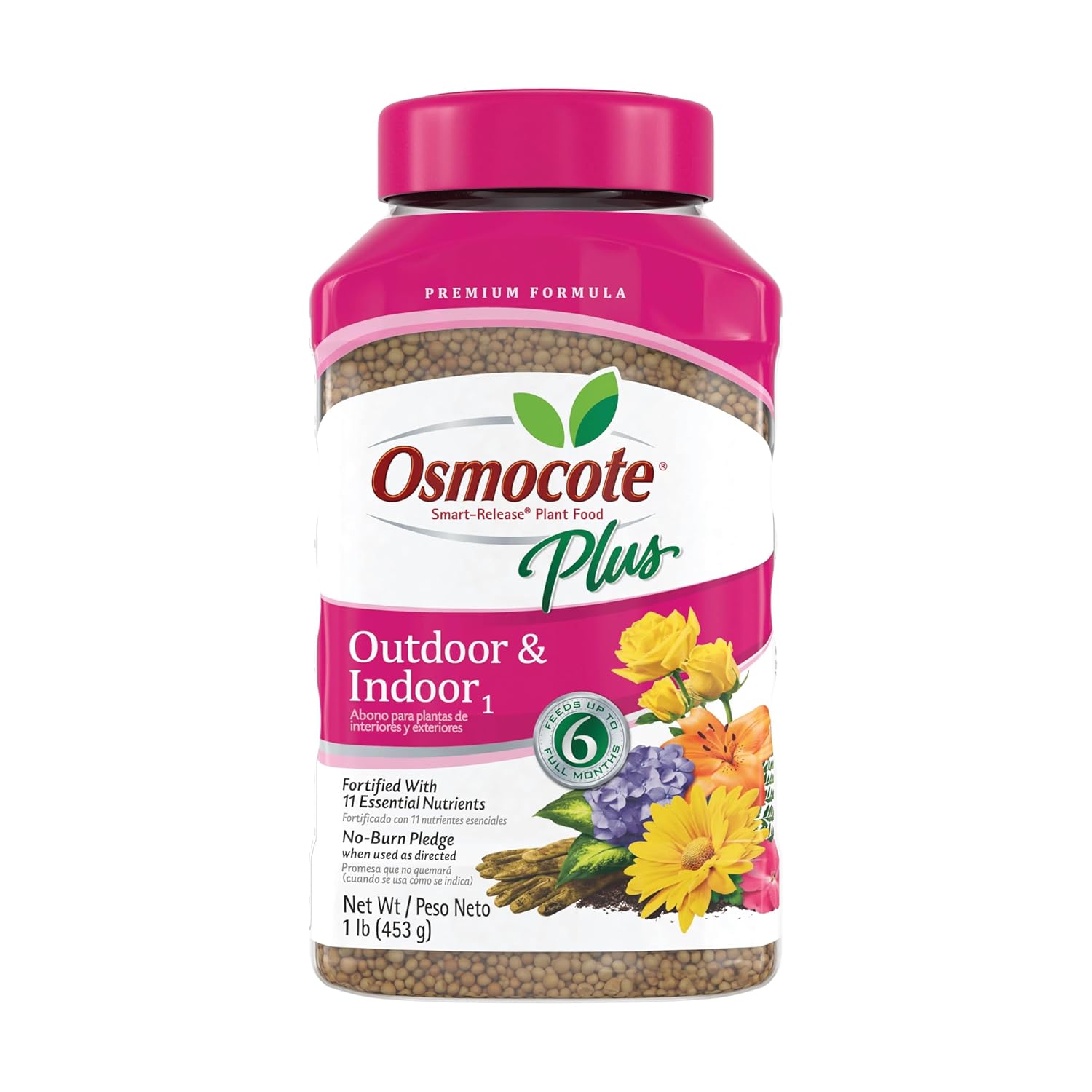
Osmocote Smart-Release Plant Food Plus Outdoor & Indoor, 1 lb
| Item Form | Granules |
|---|---|
| Specific Uses For Product | Plant Food |
| Application Method | sprinkle around the base and work into the soil |
| Unit Count | 16 Ounce |
Osmocote Smart-Release Plant Food Plus is a resin-coated granular fertilizer designed to deliver steady nutrition to a wide range of plants for up to six months from a single application. You apply it by sprinkling the recommended scoop into the top inch or so of potting mix for containers or around plants in garden beds, then watering to activate the coating. The product contains 11 essential nutrients and is formulated to release based on soil temperature, which helps reduce overfeeding and supports consistent bloom and foliage performance in hanging baskets. Its no-burn pledge makes it easy to use at the recommended rates for mixed annuals, trailing plants, and container veggies. Limitations are that coverage is modest from a 1 lb. container so frequent use on many large baskets will require buying more, and release timing still depends on temperature so plants in cool, shaded spots may receive nutrients more slowly than those in warm sun.
Best for: Gardeners who prioritize steady, low-maintenance feeding for hanging baskets and containers and want consistent bloom and foliage without frequent fertilizing.
Less Ideal for: Those who need immediate, short-term nutrient boosts or precise liquid feeding schedules for plants that demand fast correction.
- Resin-coated granules provide controlled release of nutrients for up to six months
- Formulated with 11 essential nutrients suitable for a wide variety of plants
- No-burn pledge when used as directed reduces risk of damaging roots in containers
- Simple sprinkle-and-water application works well for hanging baskets and pots
- 1 lb container covers a limited area so multiple baskets will need additional product
- Release rate depends on temperature so nutrient delivery can be slower in cool conditions
Verdict: An easy, low-maintenance slow-release fertilizer that keeps hanging baskets fed for months with minimal effort.
Miracle-Gro Pour & Feed Singles Ready-to-Use Plant Food

| Item Form | Liquid |
|---|---|
| Application Method | Pour |
| Coverage | Medium |
| Unit Count | 2 Ounce |
| Specific Uses For Product | Plant Food |
Miracle-Gro Pour & Feed Singles are single-use, pre-measured liquid doses that you snap open and pour onto the soil of container plants, so there is no mixing, measuring, or long-term storage. Each 2-ounce single is formulated for potted plants and is intended to feed 12 to 18-inch containers every 10 to 14 days, making it convenient for quick top-ups on vegetables grown in pots. The cap-measure instructions and pour application simplify regular feeding, and the ready-to-use format reduces the chance of over- or under-dosing. Practically, these work well for growers who rotate several small vegetable containers or need an easy solution when juggling many plants. Limitations are that the singles are sized for medium pots only, so very small or very large containers may need adjusted amounts or additional applications, and the format creates more single-use packaging than bulk concentrates. For gardeners prioritizing simplicity and predictable dosing, the product streamlines weekly feeding for container vegetables, but those managing large numbers of pots may prefer a concentrated liquid or granular option for lower per-application cost and less waste.
Best for: Ideal for hobby gardeners growing a few container vegetables who want a no-fuss, predictable feeding routine and value convenience over lowest cost.
Less Ideal for: Not the best choice for producers managing many pots or those focused on minimizing packaging waste or per-application cost.
- Ready-to-use pre-measured singles eliminate mixing and measuring
- Simple pour application designed for container plants
- Labels recommend a clear 10 to 14 day feeding schedule for consistency
- Portable single doses are convenient for spot feeding or travel
- Singles are sized for 12–18 inch pots and may not match very small or very large containers
- Single-use packaging generates more waste than concentrated formulas
Verdict: An easy, no-mix feeding solution that makes consistent fertilizing of medium container vegetables fast and foolproof.
Royal Gold Worm Castings Organic Soil Amendment (1 cu ft)

| Unit Count | 957 Ounce |
|---|---|
| Ingredients | Earthworm Castings |
| Coverage | Full |
| Target Species | plants |
Royal Gold Worm Castings are a straightforward, no-frills organic soil amendment made entirely of earthworm castings. Gardeners typically use it as a top dressing for containers and beds, mix it into potting or raised bed soil, or steep it to make compost tea for a quick microbial and nutrient boost. The product is OMRI-appropriate for organic growing and emphasizes beneficial microbes, slow-release nutrients, and improved water retention and aeration. Practical benefits include easier watering schedules from better moisture retention, healthier root systems from improved soil texture, and added natural disease resistance from microbial activity. Because the bag contains pure castings with no added fertilizers or synthetic amendments, you get a predictable, reliable soil builder that integrates well into established feeding programs. Important limitations are that it is not a complete fertilizer alone if plants need immediate high NPK inputs and heavy feeders may require supplemental fertilizers for fast growth responses.
Best for: Gardeners who prioritize consistent, organic soil health and want a dependable top dressing or soil amendment to support long-term plant vigor.
Less Ideal for: Growers seeking an all-in-one high-NPK feed or those who need an immediate, concentrated nutrient spike for heavy feeders should consider a supplemental fertilizer.
- 100% pure earthworm castings suitable for organic gardening
- Improves soil structure, aeration, and water retention when mixed or used as a top dressing
- Supports beneficial microbes that can increase plant resilience and nutrient uptake
- Versatile application: top dressing, soil mix ingredient, or brewed into compost tea
- Not formulated as a balanced NPK fertilizer so may need pairing with other feeds for heavy-feeding crops
- Comes in a large bulk bag that can be heavy to handle for some users
Verdict: Choose this pure worm-castings amendment if you want a reliable organic top dressing that steadily improves soil health and plant resilience.
Miracle-Gro Water Soluble All Purpose Plant Food, 3 lb

| Item Form | Powder |
|---|---|
| Application Method | Mix with water in a watering can |
| Fertilizer Analysis (N‑P‑K) | 24-8-16 |
| Unit Count | 48 Ounce |
| Coverage | Feeds approximately 1,200 sq. ft. |
Miracle‑Gro Water Soluble All Purpose Plant Food is a powdered NPK 24‑8‑16 formula that dissolves in water to give plants a quick nutrient boost. You mix measured scoops into a watering can and apply to the soil at the base of plants every 7–14 days for outdoor use or every 14 days for houseplants. Notable features include a high nitrogen content for leafy growth, compatibility with containers and in‑ground beds, and guidance for use with a Miracle‑Gro Garden Feeder for larger areas. In practical terms this is a fast‑acting feed that encourages bigger, greener foliage and works well in regular maintenance of perennials like hostas. Limitations are that it is a fast‑release fertilizer rather than a slow‑release option, so it requires regular reapplication and careful measuring to avoid overfeeding. Also, the 24‑8‑16 balance is geared toward vegetative growth, so it is not optimized if you want to prioritize flowering or bloom boosting.
Best for: Buyers who want a reliable, fast‑acting feed to maintain lush, leafy perennials and container plants and who value proven products with broad user endorsement.
Less Ideal for: Gardeners seeking a single, long‑lasting granular fertilizer or a bloom‑focused formula should consider alternative slow‑release or high‑phosphorus products.
- Water‑soluble powder mixes easily for quick uptake by roots
- High nitrogen formula promotes robust leafy growth ideal for shade plants
- Clear mixing and application instructions for both indoor and outdoor use
- Suitable for containers and in‑ground gardens and compatible with garden feeders
- Requires frequent applications so it is not a low‑maintenance, slow‑release option
- High nitrogen ratio is less suitable when the primary goal is more flowers than foliage
Verdict: A fast‑acting, water‑soluble fertilizer that reliably produces bigger, greener hosta leaves when used as directed.
Miracle-Gro Pour & Feed Liquid Plant Food, 32 fl. oz.

| Item Form | Liquid |
|---|---|
| Application Method | Directly to the soil |
| Target Species | potted plants |
| Unit Count | 32 Fluid Ounces |
Miracle-Gro Pour & Feed is a ready-to-use liquid fertilizer designed for container plants and houseplants. You apply it by measuring with the bottle cap and pouring the recommended amount directly onto the soil around each pot, so no mixing or watering-can prep is required. Its convenience makes it easy to maintain a regular 10–14 day feeding schedule for bedding plants like petunias in containers. The product is formulated for potted plants only, and the liquid form gives fairly quick nutrient availability compared with slow-release granules. Practical benefits include simple dosing with the cap, suitability for indoor and outdoor use, and a clearly stated application rhythm that helps keep flowering plants vigorous. Important limitations are that it is not intended for in-ground beds and that frequent applications mean you need to remember regular feedings; it is also a general all-purpose formula rather than a petunia-specific bloom booster.
Best for: A plant owner who prefers simple, low-effort care for container flowers and wants a dependable, easy-to-measure fertilizer to keep petunias and other potted ornamentals blooming.
Less Ideal for: Gardeners seeking a long-term, in-ground soil amendment or those who prefer an infrequent, slow-release feeding schedule should consider other products.
- Ready-to-use liquid requires no mixing so application is fast and low-effort
- Cap-measure dosing makes it easy to apply the correct amount for each container
- Suitable for both indoor and outdoor container plants so one product covers many uses
- Feeds on a 10–14 day schedule for consistent nutrient supply to flowering containers
- Not formulated for in-ground planting so unsuitable for garden beds
- Requires frequent application compared with slow-release fertilizers
Verdict: Use this if you want a no-mix, easy-to-measure liquid fertilizer to keep container petunias fed and blooming on a regular schedule.
Choosing the Right Dressing Fertilizer: Key Factors to Consider
Nutrient Formulation and Release Profile
The nutrient mix and how those nutrients become available drive both immediate results and longer-term plant health. Fast-release nitrogen produces quick green-up but raises burn risk and may need more frequent applications. Slow-release or controlled-release carriers spread feeding over weeks, reducing peak nutrient flushes and lowering maintenance frequency.
Pay attention to the N-P-K ratio relative to plant goals. High nitrogen ratios suit lawns and leafy growth, while balanced or phosphorus-lean blends are better for established beds where root development or bloom is not the primary goal. Understanding release timing helps you match product choice to seasonal needs and watering schedules.
Application Method and Coverage
How you plan to apply dressing fertilizer affects product choice. Granular blends intended for broadcast spreaders need consistent grain size and low dust to flow evenly; hand-applied dressings should be easy to portion and not clump. Some dressings are designed to be worked lightly into the topsoil or combined with compost, while others are meant to sit on the surface and slowly release nutrients through watering and microbial action.
Consider how much time you want to spend applying and whether you need a product that mixes well with organic amendments. Uniform coverage directly impacts results, so choose formulations that match your preferred spreader or application technique.
Compatibility With Soil Type and Organic Matter
Soil texture and organic content change how quickly nutrients move and how long they remain available. Sandy soils leach soluble fertilizers faster, so they often benefit from slow-release formulations or more frequent, smaller dressings. Clay soils hold nutrients longer but can lock up some elements, making chelated or water-soluble forms more effective in certain cases.
Matching fertilizer to soil helps avoid waste and nutrient imbalances. If your garden has high organic matter, microbial-driven release may be sufficient, and supplemental dressings should be chosen to complement rather than overwhelm biological activity.
Environmental Impact and Runoff Risk
Dressing fertilizers vary in how readily nutrients move off-site during heavy rain or irrigation. Products with a high proportion of readily soluble salts pose greater runoff risk, which can harm waterways and waste fertilizer. Slow-release matrices and stabilized nitrogen forms reduce that risk by keeping nutrients available in the root zone longer.
Placement and timing also matter. Applying dressings before heavy rain or to slopes without erosion controls increases runoff potential. Choose formulations and application timings that minimize off-site movement to protect the environment and your investment.
Safety, Handling, and Storage
How a product feels and stores matters for routine gardening. Dusty or clumping fertilizers are harder to measure and apply, increasing exposure and uneven distribution. Resealable packaging and moisture-resistant bags reduce waste and maintain product consistency over the season.
Consider safety around children and pets: some formulations are more hazardous if ingested or tracked. Look for handling characteristics that match your storage space and household safety needs to reduce accidental exposure and maintain product integrity.
Seasonal Timing and Plant Goals
Different dressing fertilizers suit spring green-up, summer maintenance, or fall root development. A product that promotes strong leaf growth might be ideal in spring but less desirable in late season when plants should harden off. Flowering and fruiting plants often need different ratios and micronutrients than turf.
Plan your dressing schedule around growth phases. Choose formulations that align with whether you want rapid top growth, root strengthening, or steady maintenance to support long-term plant health.
How to Apply Dressing Fertilizer Correctly
Application technique determines how much plant roots can access. For lawns, use a calibrated broadcast spreader and overlap passes slightly to avoid striping. For garden beds, broadcast lightly and then rake or gently work the granules into the top inch of soil if the product instructions permit; this helps reduce blow-away and speeds incorporation by soil microbes.
Always follow label rates rather than guessing: over-application stresses plants and raises runoff risk. Watering after application can activate granules but avoid heavy irrigation immediately when rain is forecast. Adjust rates and timing by soil moisture, recent rainfall, and the growth stage of your plants.
- Calibrate your spreader on a paved area to confirm output.
- Apply on calm days to reduce drift and uneven distribution.
- Mark treated areas to avoid double-applying later.
Top-Dressing Lawns Vs Garden Beds
Top-dressing a lawn often combines a light layer of soil or compost with a dressing fertilizer to improve soil structure and feed turf. For lawns prioritize even spread and use dressings with a balanced nitrogen release to avoid burn and patchy growth.
In garden beds focus on root-zone feeding. Apply fertilizer sparingly around perennial crowns and work lightly into the surface of annual beds. For vegetable plots choose formulations that support fruiting and root development rather than just leafy growth.
- Lawn top-dressing: thin, uniform layer plus compatible fertilizer.
- Vegetable beds: work materials into the top soil and avoid direct contact with seeds or transplants.
Adjusting Rates for Soil Tests and Plant Needs
A soil test is the most reliable way to set dressing fertilizer rates. Tests reveal existing nutrient levels and pH, which inform whether you need more nitrogen, phosphorus, or micronutrients. Without a test, use conservative rates and observe plant response over several weeks before reapplying.
Different plants have different nutrient demands. Fast-growing turf and leafy greens need more frequent nitrogen than flowering shrubs or established trees. Tailor dressings to the crop rather than using a one-size-fits-all approach.
- Use soil test results to avoid unnecessary phosphorus or micronutrient applications.
- Reduce rates on newly planted or drought-stressed areas until plants recover.
Organic-Friendly Options and Microbial Considerations
Some dressing fertilizers are designed to work with soil biology rather than relying solely on soluble salts. These formulations feed microbes and release nutrients gradually as organic matter decomposes. They can improve long-term soil structure and resilience, particularly in gardens managed with compost and cover cropping.
If you prioritize organic-friendly products, look for materials with clear sourcing and minimal synthetic carriers. Remember that organic dressings may act more slowly and require planning to align nutrient release with peak plant demand.
- Combine organic dressings with compost for stronger microbial activity.
- Expect slower initial responses but longer-lasting soil improvement.
Timing Applications Around Weather and Season
Avoid applying dressings when heavy rain is forecast. Light rain or scheduled irrigation can help activate fertilizer, but downpours can wash nutrients away before roots can take them up. Seasonal timing matters: early spring dressings support leaf-out, midseason applications maintain growth, and late-season low-nitrogen dressings support root development.
Consider local climate and growth cycles. In cooler climates delay aggressive feeding until soil temperatures support active root uptake. In hot, dry regions split applications to reduce stress and leaching.
- Check the forecast and soil moisture before applying.
- Use split applications in hot or rainy seasons to reduce loss.
How We Chose the Best Dressing Fertilizer
We evaluated dressing fertilizers using criteria that reflect how they perform in actual garden and lawn settings. Primary filters included nutrient formulation and release profile, since the balance of nitrogen, phosphorus, and potassium and whether nutrients release quickly or slowly determines green-up speed and risk of burn. Application method and spreader compatibility mattered because many gardeners apply dressing by hand, with a broadcast spreader, or by top-dressing; ease of even coverage reduces waste and patchy results. We tested compatibility with common soil types and organic matter levels on paper and against published application guidelines to assess how well a product integrates into existing beds. Environmental impact was another key screen, focusing on soluble nutrient runoff potential and whether the formulation reduces leaching. Packaging and handling factors such as dustiness, dust control, and resealability were evaluated for safety and clean application. Excluded items included specialty crop formulas that are only suitable for greenhouse or hydroponic use, lawn seed-and-fertilizer blends, and products that require professional licensing to apply. The final shortlist emphasizes products appropriate for home gardeners and small-plot landscapers, scored against the concrete, garden-relevant dimensions described above.
FAQ
How often should I apply dressing fertilizer to a typical lawn?
Frequency depends on the product release profile and lawn needs. Fast-release dressings may be applied every 4 to 6 weeks during active growth, while slow-release formulations often need only two to three applications per season. Use conservative rates and adjust based on turf response.
Can I mix dressing fertilizer with compost or topsoil?
Yes. Mixing dressings with compost or a thin layer of topsoil improves nutrient distribution and microbial activity. Work mixtures lightly into the top inch for garden beds; for lawns, apply the mix in a thin, even layer to avoid smothering turf.
Is dressing fertilizer safe around pets and children?
Safety varies by formulation. Granular dressings that are non-toxic and dust-free are generally lower risk, but all fertilizers should be stored out of reach. Keep children and pets off treated areas until granules are watered in or otherwise settled according to label instructions.
Will dressing fertilizer burn plants if applied too heavily?
Over-application, especially of high-nitrogen, soluble fertilizers, can cause leaf scorch or root damage. Follow recommended rates, avoid applying to drought-stressed plants, and water in lightly when appropriate to reduce burn risk.
Should I adjust dressing rates after a soil test?
Yes. Use soil test results to tailor nutrient choice and quantity. If tests show adequate phosphorus or potassium, focus on nitrogen or micronutrients as needed. Reducing unnecessary applications prevents imbalances and environmental harm.
Final Verdict
Prioritize formulations that match your soil type, application method, and seasonal goals. Balancing nutrient release, ease of application, and environmental risk will give you better results than chasing rapid green-up alone. For most gardens, choosing a dressing with an appropriate release profile and proven compatibility with your spreader or top-dressing method delivers the most reliable outcomes.
