

Note: This article contains affiliate links. If you click on these links and make a purchase, I may earn a small commission at no extra cost to you. This helps support my research and content. Read my full affiliate disclosure here.
Picking the right pruning shears matters because clean, accurate cuts help plants heal faster and reduce disease risk while comfortable grips let you prune longer without hand pain. Whether you trim roses, deadhead perennials, or shape shrubs, the right tool changes how efficient and enjoyable routine pruning becomes. This guide covers seven top-rated pruning shears for gardening chosen for real-world use. We shortlisted tools that balance sharpness, durability, cutting capacity, and ergonomics, then evaluated them across practical gardener-focused criteria. Read on to see which features matter most and which tools matched our editorial filters.
Top Picks at a Glance
| Best Overall The best all-around choice for most situations | FELCO F2 Pruning Shears — Swiss-Made Bypass Hand Pruner (F2) |  |
| Best Quality Built to a higher standard if you want something more solid | Okatsune No.104 210mm Bypass Pruning Shears |  |
| Best Value The sweet spot between price and what you get | gonicc 8" Professional Titanium-Coated Bypass Pruning Shears |  |
| Best Budget The cheapest option that still gets the job done reliably | Craft911 2-Pack Stainless Steel Pruning Shears and Snips |  |
| Highest Rated A top-rated pick with lots of positive feedback | PrunePro 4-Piece Garden Shears Set with Stainless Steel Blades |  |
| Most Popular A crowd favorite that many people choose with confidence | Fiskars Bypass Pruning Shears with Nonstick Coating |  |
| Best Seller A high-volume bestseller chosen again and again | Decerk 8.5" Bypass Pruning Shears with Titanium-Coated SK5 Blade |  |
FELCO F2 Pruning Shears — Swiss-Made Bypass Hand Pruner (F2)

| Blade Length | 2 inches |
|---|---|
| Cutting width | 1 inches |
| Hand Orientation | Right |
| Blade Material | Metal,Steel |
| Handle Material | Metal,Rubber,Steel |
The FELCO F2 is a heavy-duty, precision pruning shear designed for regular use by serious gardeners and professionals. It delivers clean cuts up to about 1 inch thanks to a hardened steel cutting blade and anvil/bypass-style geometry that reduces crushing and promotes plant health. Forged aluminum handles keep the tool lightweight while providing strong, long-lasting support and a rubberized grip that helps reduce hand fatigue during extended sessions. Every part is replaceable which makes the F2 a tool you can service for years rather than replace. Practical benefits include very reliable cutting performance, comfortable ergonomics for right-handed users, and the ability to maintain sharpness and replace worn parts. The main limitations are that it is offered in a large size and right-hand orientation only, so it will not suit left-handed users or gardeners who need a smaller pruner for fine detail work.
Best for: Gardeners and landscapers who prioritize durable, professional cutting performance and want a serviceable tool they can rely on for frequent pruning.
Less Ideal for: Casual gardeners who need a budget or ambidextrous pruner or anyone who requires a small-size tool for fine trimming and delicate work.
- Hardened carbon steel blade produces clean, precise cuts up to 1 inch
- Forged aluminum handles offer strength with a lightweight feel
- Rubberized ergonomic grip reduces hand and wrist strain during long sessions
- All parts are replaceable so the tool can be maintained for decades
- Right-hand orientation and large size limit suitability for left-handed or small-handed users
- No blade coating or locking thumb catch on this model
Verdict: Buy the FELCO F2 if you want a professional, serviceable pruning shear that delivers precise, long-lasting cutting performance.
Okatsune No.104 210mm Bypass Pruning Shears

| Blade Edge | Serrated |
|---|---|
| Blade Type | Bypass |
| Hand Orientation | Ambidextrous |
| Blade Material | Izumo Yasugi Steel |
| Cutting width | 25 millimeters |
The Okatsune No.104 is a compact professional bypass pruner aimed at gardeners who prioritize cutting performance and precision. Its Izumo Yasugi steel blade and serrated edge deliver clean, controlled cuts while the ambidextrous carbon-steel handles give a solid, no-frills grip that resists vibration. With a 25mm cutting width and 210mm overall size it is well suited to routine pruning, shaping shrubs and Bonsai work where accuracy matters. The lightweight, simple construction means there are fewer moving parts to fail and maintenance is limited to occasional sharpening and cleaning. One limitation is the lack of modern ergonomic padding or a safety latch, so long sessions may be less comfortable than padded-handle alternatives and users who want extra features like built-in sap cleaners or spring-assist may need to look elsewhere. The shear’s compact profile and razor-quality Japanese steel make it a strong choice when precise, repeatable cuts are the priority rather than comfort features or extra tooling functions.
Best for: A gardener who values cutting performance and blade quality for precise pruning, particularly for shrubs, small trees and Bonsai where clean, repeatable cuts matter most.
Less Ideal for: Casual users who prioritize maximum hand comfort, longer sessions, or convenience features like spring-assist or locking latches should consider softer-grip or feature-rich alternatives.
- High-grade Izumo Yasugi steel blade for long-lasting sharpness and clean cuts
- Serrated bypass blade provides secure, accurate cuts on small to medium branches
- Ambidextrous design fits both left and right-handed users
- Compact 210mm size is excellent for precision pruning and Bonsai work
- Handle is plain carbon steel without ergonomic padding which can be tiring during extended use
- No built-in safety latch or spring-assist features found on some modern pruners
Verdict: Buy this shear if you want a compact, professional-grade pruner whose Japanese steel blade delivers precise, long-lasting cutting performance.
gonicc 8" Professional Titanium-Coated Bypass Pruning Shears

| Cutting width | 0.75 inches |
|---|---|
| Blade Edge | Serrated |
| Blade Type | Bypass |
| Blade Material | Alloy Steel |
| Hand Orientation | Ambidextrous |
These gonicc 8" bypass pruning shears are built for regular garden use and small woody work. The SK-5 steel blades receive a titanium coating and fine polishing to stay sharp and resist rust, while the serrated edge and sap groove reduce slipping and sticking when cutting live stems. Drop-forged construction and alloy steel handles wrapped in PVC give the tool a solid, durable feel without becoming overly heavy, and the ambidextrous design suits either hand. In practice the shears excel on stems, roses, and small fruiting wood under the advertised 3/4" cut capacity, and the non-slip grip helps reduce hand fatigue during longer sessions. Limitations to note are the 3/4" maximum cut diameter, which rules out thicker branches, and the blade requires occasional sharpening and cleaning to maintain peak performance. Overall, these shears strike a practical balance of durability, comfort, and cutting performance for routine pruning tasks.
Best for: Gardeners who want a durable, no-nonsense pruner for routine shrub, rose, and small fruit tree maintenance and who prioritize reliable cutting and comfortable handling over heavy-duty branch cutting.
Less Ideal for: People who regularly need to prune large-diameter limbs or do heavy-duty arborist work should choose larger loppers or a pruning saw instead.
- Titanium-coated SK-5 steel blades for sharpness and improved rust resistance
- Drop-forged construction and alloy-steel handles for durability
- Ergonomic non-slip PVC-wrapped handles reduce hand fatigue
- Sap groove and serrated edge help prevent blade sticking and slipping
- Cut capacity is limited to about 3/4 inch, not suitable for thicker branches
- Blade will need periodic sharpening and cleaning to stay at peak performance
Verdict: A practical, comfortable pruning shear offering sharp, rust-resistant blades and durable construction ideal for everyday pruning of stems and small branches.
Craft911 2-Pack Stainless Steel Pruning Shears and Snips

| Blade Material | Stainless Steel |
|---|---|
| Blade Edge | Serrated, Straight |
| Blade Type | Bypass |
| Hand Orientation | Ambidextrous |
This Craft911 two-pack pairs a full-size bypass pruning shear with a smaller pruning snip so you can handle both thicker stems and delicate rose work with one set. The blades are stainless steel, with the snip carrying a titanium coating for extra edge life, and both tools lock closed for safe storage. They are ambidextrous and have non-slip, comfortable handles that reduce hand fatigue during longer sessions, which is useful when deadheading or shaping roses. The bypass blade and serrated options give clean cuts that help protect plant tissue and reduce tearing. Because the materials are rust resistant and the tools are easy to clean, they require minimal maintenance between uses. On the downside the handles are listed as plastic or metal without a specific ergonomic mechanism for heavy-duty leverage, so they are best for routine rose pruning and lighter branches rather than very thick woody canes. For gardeners who prefer straightforward, low-maintenance tools this combo covers most rose-care tasks effectively.
Best for: Gardeners who want dependable, low-maintenance tools for routine rose pruning, deadheading, and shaping and who prefer safe, easy-to-use gear.
Less Ideal for: Those who regularly cut very large or old woody rose canes and need heavy-duty loppers or pruners with superior leverage and anvil-style cutting.
- Includes both full-size bypass shears and a precision snip for versatile rose care
- Stainless steel blades with a titanium-coated snip edge for lasting sharpness
- Ambidextrous design and non-slip handles that reduce hand fatigue
- Built-in safety locks keep blades closed for safe storage and transport
- Handles are basic plastic or metal without advanced leverage for very thick canes
- Not intended for heavy woody pruning of large rose canes
Verdict: A safe, low-maintenance pruning combo that handles most rose grooming tasks well with sharp stainless blades and easy-to-use locks.
PrunePro 4-Piece Garden Shears Set with Stainless Steel Blades

| Blade Material | Stainless Steel |
|---|---|
| Blade Type | Bypass |
| Hand Orientation | Ambidextrous |
| Included Components | Pruning Shear × 1, Garden Scissors × 1, Hedge Shears × 1, Lopper × 1 |
| Cutting width | 2 inches |
This PrunePro set groups a bypass hand pruner, micro-tip snips, hedge shears and a geared lopper to cover most home pruning tasks without needing separate specialty tools. The blades use 1.4031 German stainless steel with a Teflon-style coating for lower friction and improved rust resistance, which means cleaner cuts and less frequent sharpening for a reliability-minded gardener. The lopper’s gear system increases leverage so you can cut thicker limbs up to 2 inches, while the hedge shears have a 27"–35" adjustable handle that reaches higher shrubs without a ladder. The ambidextrous handles and adjustable span help fit different hand sizes and reduce strain during repetitive use. Downsides are typical for multi-piece kits: if you already own high-end single-purpose tools a few pieces may duplicate capabilities, and aluminum handles can feel lighter than steel on heavy-duty jobs. For regular yard and ornamental shrub maintenance this set provides durable, low-maintenance cutting performance with sensible ergonomic features.
Best for: Home gardeners and weekend landscapers who prioritize dependable, low-maintenance cutting tools that handle everything from precise snipping to thicker branch removal without frequent sharpening.
Less Ideal for: Professional arborists or contractors who need heavy-duty, all-steel tools rated for constant commercial use should look for single-purpose industrial-grade equipment instead.
- German 1.4031 stainless steel blades for improved hardness and corrosion resistance
- Teflon-style coated blades reduce friction and help keep edges sharper longer
- Geared lopper provides increased cutting force to handle limbs up to 2 inches
- Adjustable 27"–35" hedge shears remove need for a ladder when trimming taller shrubs
- Ambidextrous design and adjustable handle span accommodate different hand sizes
- Aluminum handles may feel less robust for heavy commercial use
- Kit duplicates some capabilities if you already own specialized, premium pruners
Verdict: Buy this set if you want a reliable, low-maintenance four-piece pruning kit that cleansly cuts small stems and tackles thicker branches without frequent sharpening.
Fiskars Bypass Pruning Shears with Nonstick Coating
| Cutting width | 0.63 inches |
|---|---|
| Blade Edge | Serrated |
| Blade Material | Alloy Steel |
| Hand Orientation | Ambidextrous |
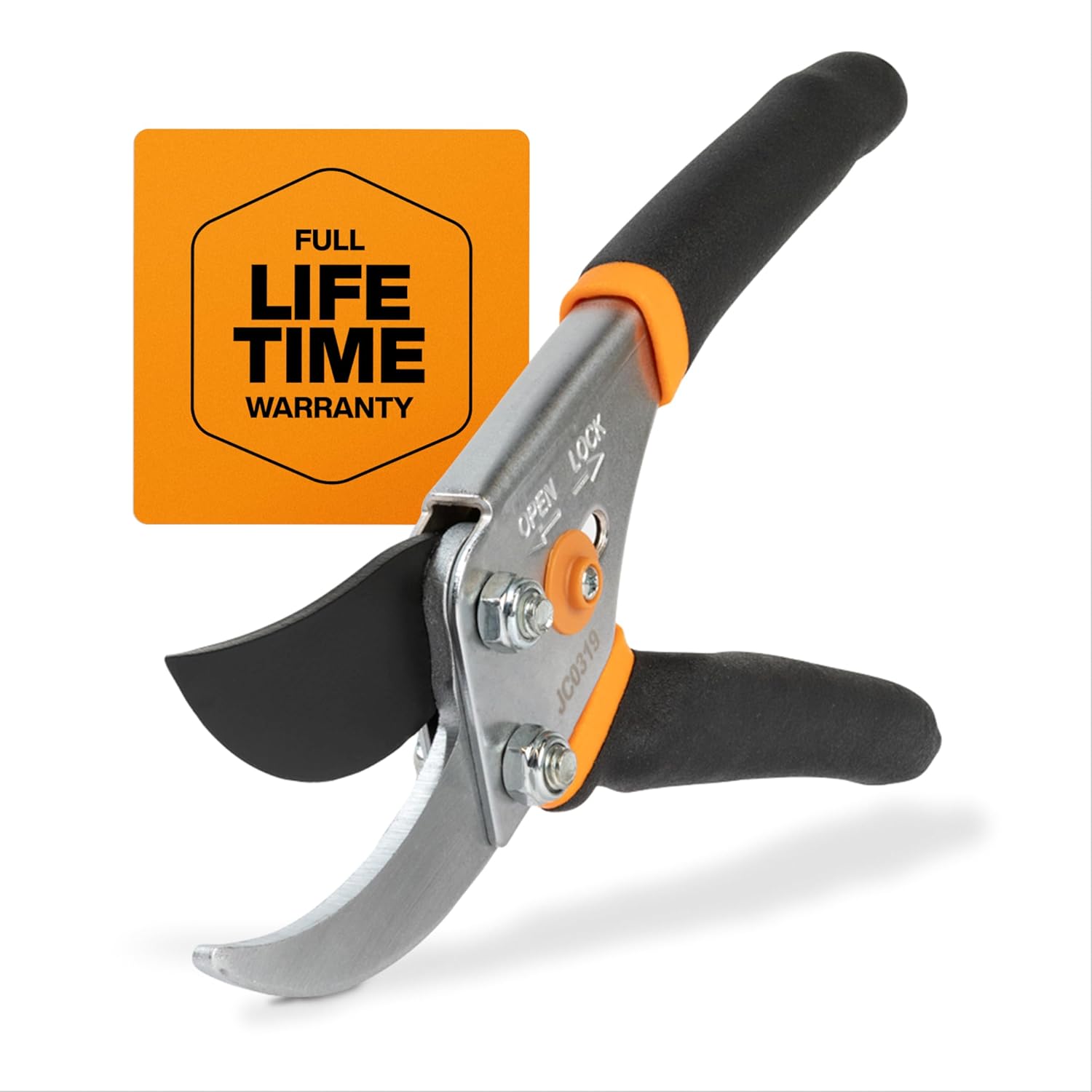
These Fiskars bypass pruning shears are a straightforward, reliable tool for everyday garden pruning. They use a bypass cutting action with precision-ground alloy steel blades and a low-friction coating so stems and green growth are sheared cleanly without crushing, which is helpful for flowers, shrubs, and small woody shoots up to about 5/8 inch. The pruners include a sap groove and nonstick finish to reduce sticking and rust, and an ergonomic non-slip handle that makes repeated trimming more comfortable. Because they are all-steel construction they feel solid and hold an edge through routine use, and the safety lock keeps the blades closed for storage. The main limitations are the modest cutting capacity, which is not suited for thick branches, and the simpler design lacks compound leverage for heavy cutting, so they work best for regular maintenance rather than heavy-duty pruning. For gardeners who want a durable, easy-to-maintain daily pruner, these are a dependable choice.
Best for: Home gardeners who want a dependable, low-maintenance pruner for routine trimming, deadheading, and shaping of flowers and small shrubs and who value proven, widely used tools.
Less Ideal for: People who need a pruner for larger woody branches or frequent heavy-duty cutting should choose a lopper or powered/pruning tool instead.
- Bypass blades and precision-ground steel deliver clean cuts on live stems
- Low-friction blade coating and sap groove reduce sticking and resist rust
- Ergonomic non-slip handle improves control and reduces hand fatigue
- All-steel construction offers durable, long-lasting performance
- Cut capacity limited to about 5/8 inch so not suitable for thicker branches
- No compound leverage mechanism, making heavy or woody cuts harder
Verdict: A tough, no-nonsense pruner that provides clean cuts and low-maintenance blades for everyday garden grooming.
Decerk 8.5" Bypass Pruning Shears with Titanium-Coated SK5 Blade

| Cutting width | 20 millimeters |
|---|---|
| Blade Type | Bypass |
| Blade Material | Titanium |
| Hand Orientation | Ambidextrous |
| Included Components | Replacement Spring |
These Decerk pruning shears are built for regular garden tasks like deadheading, stem trimming, and cutting small branches up to about 3/4 inch. The SK5 high-carbon steel blade is nano-polished and titanium-coated to resist rust and hold an edge longer, while the lever-action design multiplies cutting force so thicker stems go through with less hand strain. Aluminum handles with a rubberized grip make the tool comfortable to hold and the ambidextrous layout and one-hand safety lock simplify use and storage. The pruner ships with a spare spring and the straight bypass blade produces clean cuts that help plant health. Expect a compact, durable tool that suits routine pruning and light shrub work; it is not intended for heavy woody pruning beyond its stated cut capacity. As with any bypass pruner, keeping the blade clean and occasionally oiling the pivot will preserve performance over time.
Best for: Gardeners who prefer reliable, low-effort tools for routine pruning and want a durable, easy-to-use shear that reduces hand fatigue.
Less Ideal for: People who need a tool for heavy woody pruning or for frequent commercial-scale cutting should choose larger pruning tools or loppers instead.
- Titanium-coated SK5 bypass blade for longer edge life and corrosion resistance
- Lever-action design increases cutting force and reduces hand effort
- Ergonomic rubberized handles for a secure, comfortable grip
- Includes spare spring and one-hand safety lock for convenience and safer storage
- Cut capacity limited to about 20 mm (3/4 inch), not suitable for larger woody branches
- Blade care required to prevent sap buildup and maintain sharpness
Verdict: A comfortable, rust‑resistant bypass pruner with lever-action power that makes everyday garden cuts easier and gentler on the hands.
Choosing the Right Pruning Shears for Gardening: Key Factors to Consider
Blade Material and Sharpness
Blade composition determines how well a shear slices living stems and how long the cutting edge lasts. High-carbon steel takes a very keen edge and sharpens readily, which gives clean cuts on soft green growth, but it usually needs more rust protection or coatings to avoid corrosion. Stainless steels resist rust better in a damp garden environment but vary widely in edge retention; premium stainless grades hold an edge longer but can be harder to re-sharpen at home.
Sharpness matters for plant health. A blunt blade crushes rather than cuts, leaving ragged wounds that take longer to callus and invite disease. When evaluating blades, consider whether the tool is supplied sharp and how straightforward it will be to maintain the edge with a whetstone or sharpening file between seasons.
Cutting Capacity and Intended Use
Cutting capacity is the maximum stem or branch diameter the shear can handle cleanly in one pass. Typical pruning shears are sized for green wood, flower stems, and small shoots; know the typical thickness of the plants you prune most often. If you regularly tackle woody stems near or above the shear's capacity, you will either need to make multiple careful cuts or upgrade to a larger tool type.
Matching capacity to tasks avoids damage to both tool and plant. For example, using a small shear on woody growth forces the blade geometry to work harder, dulling edges faster and risking blade misalignment. Conversely, oversized, heavy shears make precise floral work awkward and can overcut delicate stems.
Handle Design and Ergonomics
Handle shape, length, and cushioning affect comfort and control. Pruning often involves repetitive squeezing motions and awkward angles; handles that fit your palm and distribute pressure reduce fatigue and the risk of blisters. Some handles offer angled grips or rotating heads that align the blade with the wrist, improving leverage and reducing ulnar stress during long sessions.
Material choice for grips matters too. Hard metal handles are durable but can be cold and slippery; textured rubber or thermoplastic grips improve purchase when hands are wet or sweaty. If you have smaller hands, look for narrower handles or models with shorter grips to avoid overextension when squeezing closed.
Locking Mechanisms and Safety
A reliable locking catch keeps blades closed during storage and transport, preventing accidental cuts. Consider how the lock operates and whether it can be engaged or released with one hand; gardeners who prune with gloves or while perched on ladders may prefer one-handed operation. Locks should hold firmly without adding unnecessary bulk to the tool or interfering with quick access when you need to prune frequently.
Some locks are simple sliding catches, others are spring-loaded latches. Evaluate whether the lock is protected from grit and sap buildup, because a sticky lock can become difficult to operate mid-season unless the tool is easy to clean.
Corrosion Resistance and Weather Tolerance
Pruning tools live in damp conditions and are frequently exposed to plant sap, which can accelerate corrosion. Coatings or stainless alloys help prevent rusting, preserving blade geometry and making maintenance easier. For gardeners who store tools outdoors or in unheated sheds, higher corrosion resistance reduces the need for frequent oiling and cleaning.
Also consider how finishes hold up to sharpening. Some protective coatings wear away at the edge as you restore sharpness, so look for blades where the manufacturer specifies the base steel and coating behavior or where the finish can be reapplied through routine maintenance.
Maintenance, Sharpening, and Repairability
All mechanical tools need occasional care. Easy-to-disassemble models let you clean sap from pivots, apply lubricant, and replace springs or screws when they wear. Tools that can be sharpened with common sharpening stones or files keep working longer and avoid frequent replacement. Conversely, shears with complex sealed heads or proprietary sharpening angles may demand professional servicing.
Think about spare parts and serviceability for long-term ownership. Does the tool allow the pivot bolt to be tightened? Are replacement springs or blades available? Choosing a shear you can maintain at home reduces lifetime cost and keeps cutting performance consistent.
Bypass Vs Anvil Blades: How They Affect Plant Cuts
Bypass shears work like scissors: one blade passes by another, slicing cleanly through living green stems. They are typically preferred for live pruning because their slicing action gives a cleaner wound and less tissue crushing. Bypass designs excel on softwood, flower stems, and young shoots and are usually the first choice for gardeners focused on plant health.
Anvil shears close a sharp blade onto a flat surface, which can be useful on dead wood or very tough stems because the force compresses material against the anvil. While anvil types can be simpler and less expensive, they tend to crush live stems rather than slice them, which can slow healing and increase disease risk when used on green growth.
- Choose bypass for live, green pruning and flower work.
- Use anvil shears for cutting dead wood or as a budget-friendly option for woody stems.
Sap, Cleaning, and Seasonal Care
Sap can gum up pivots and discolor blades. Wipe blades after heavy sessions with a damp cloth and mild detergent, then dry thoroughly. For sticky residues, a solvent-safe wipe or a little vegetable oil can loosen build-up without harming finish coatings.
At season end, fully clean, lightly oil moving parts, and store shears in a dry place. Regular small maintenance prevents rust and keeps blades moving smoothly without needing major tune-ups.
- Clean after cutting sappy plants like figs or roses.
- Apply a light oil to the pivot and blades before long-term storage.
Sharpening Basics for Gardeners
A few minutes of sharpening every few months keeps blades cutting cleanly. For most bypass shears, sharpen the beveled cutting blade at its original angle using a fine diamond file or whetstone, then remove any burr on the flat blade. Anvil blades are sharpened flat and may need a slightly different approach.
If you feel unsure, practice on an old or inexpensive pair first. Keep steady strokes away from your body, maintain consistent angle, and test on a soft green stem to check the cut quality. Regular light sharpening is better than infrequent heavy grinding.
- Match the original edge angle when sharpening.
- Remove burrs from the opposite blade to prevent tearing.
Comfort Strategies for Long Pruning Sessions
Break long jobs into short intervals and stretch your hands periodically to reduce fatigue. Use ergonomic shears with cushioned grips if you prune regularly for an hour or more. Rotating-head designs or ratcheting mechanisms can reduce the force required on each cut, which helps gardeners with limited grip strength or joint issues.
Wearing thin gardening gloves with good fingertip sensitivity preserves tactile feedback while protecting palms during heavy use. Avoid thick gloves that force you to over-grip and increase hand fatigue.
- Consider ratcheting shears for consistent power on thicker stems.
- Try different grip styles before committing to a large pruning session.
Storage and Tool Organization
Store shears in a dry toolbox, on a pegboard, or hung on a wall to keep blades from contacting other tools and dulling. A simple blade cover protects the edge and fingers when the tool is stashed in a shed or cart.
Labeling or assigning shears for specific tasks, such as one pair for roses and another for deadwood, reduces cross-contamination risk between diseased and healthy plants. Keep a small maintenance kit nearby with a cloth, light oil, and a sharpening device so you can perform quick touch-ups in the garden.
- Use blade covers to prevent accidental dulling.
- Keep a dedicated cleaning and oiling cloth with your tools.
How We Chose the Best Pruning Shears for Gardening
We focused on attributes that affect everyday pruning tasks in home gardens. Key evaluation dimensions included blade sharpness and material, which determine how cleanly a shear severs stems and how long the edge holds up; cutting capacity, so the tool matches the branch diameters common in beds and shrubs; handle ergonomics and grip design, important for reducing hand strain during prolonged work; build durability and corrosion resistance for outdoor storage and seasonal use; and maintenance needs like ease of sharpening and part replacement. Our selection process favored shear designs proven in mixed garden tasks rather than highly specialized professional tools. We excluded devices intended strictly for orchard-scale pruning or heavy loppers that exceed common pruning shears' size, and we filtered out items with unclear material specs or consistently poor user reports about blade retention or handle comfort. The resulting shortlist balances cutting performance, gardener comfort, and long-term durability, reflecting the real tradeoffs you face choosing pruning shears for gardening.
FAQ
What size pruning shears do I need for roses and perennials?
Most gardeners find shears with a cutting capacity of about 1/2 inch to 3/4 inch handle common rose stems and perennial foliage cleanly. If you routinely trim woody canes that are thicker than this, consider a larger shear type or complementary tools for heavier branches.
How often should I sharpen pruning shears?
Frequency depends on use. Light home garden use usually needs a quick touch-up every few months, while heavy seasonal pruning may require sharpening every few weeks. Maintaining a sharp edge is better for plant health and easier on your hands.
Are rust-resistant coatings enough for outdoor storage?
Coatings help, but they do not eliminate the need for basic care. Even coated blades benefit from wiping, oiling, and dry storage. For long-term outdoor storage, choose higher corrosion resistance and still perform routine maintenance to avoid pitting.
Can I share pruning shears between different plants?
You can share shears, but it is wise to disinfect blades between work on diseased plants or when moving between heavily infested areas and healthy beds. A quick wipe with a diluted bleach solution or isopropyl alcohol reduces the risk of spreading pathogens.
When should I replace parts like springs or pivot bolts?
Replace springs or pivot bolts when you notice looseness, play in the head, or reduced cutting action that cannot be fixed by tightening. Regular inspection during cleaning makes it easier to spot worn parts before they fail during a task.
Final Verdict
Prioritize blade sharpness and handle ergonomics when choosing pruning shears for gardening. Those two factors most directly affect plant health and how long you can prune without discomfort. Balance cutting capacity with the types of stems you most often trim to avoid overstressing the tool or your hands. Accept some tradeoffs: lighter, highly ergonomic shears may not handle thick woody stems, while heavy-duty models can be clumsy on delicate flowers. Choose the tool that fits the majority of your tasks, keep it sharp, and perform basic seasonal care to get reliable performance year after year.
