

Note: This article contains affiliate links. If you click on these links and make a purchase, I may earn a small commission at no extra cost to you. This helps support my research and content. Read my full affiliate disclosure here.
If you grow vegetables, a good weed barrier can reduce time spent pulling weeds, protect young transplants, and help retain soil moisture during dry spells. The right material behaves differently in raised beds, in-ground rows, and container edges, so matching barrier type to garden style matters more than one-size-fits-all claims. This guide shortlists seven top options that gardeners commonly use for vegetable plots and evaluates them on durability, drainage, and how they affect soil health. Below you will find why each option made the list, the evaluation criteria we used, and practical guidance for installing and maintaining barriers in productive vegetable beds.
Top Picks at a Glance
| Best Overall The best all-around choice for most situations | Rintea 4 ft x 300 ft Weed Barrier Landscape Fabric, 3.2 oz |  |
| Best Quality Built to a higher standard if you want something more solid | VEVOR 5 oz Heavy-Duty Weed Barrier Fabric, 6 x 250 ft |  |
| Best Value The sweet spot between price and what you get | FEED GARDEN Heavy Duty Landscape Fabric 4ft x 100ft (2 × 4×50 ft) with 30 U-Shaped Stakes |  |
| Best Budget The cheapest option that still gets the job done reliably | Groweco Heavy Duty Landscape Weed Barrier Fabric, 1.4 ft x 100 ft |  |
| Highest Rated A top-rated pick with lots of positive feedback | iropro 5oz Heavy-Duty Weed Barrier Fabric, 3ft x 250ft |  |
| Most Popular A crowd favorite that many people choose with confidence | LAVEVE Heavy Duty Weed Barrier Landscape Fabric, 4 ft x 100 ft (two 4×50 ft rolls) |  |
| Best Seller A high-volume bestseller chosen again and again | DeWitt Sunbelt Woven Weed Barrier Fabric, 6 x 300 ft (6-Pack) |  |
Rintea 4 ft x 300 ft Weed Barrier Landscape Fabric, 3.2 oz

| Material | Polypropylene woven fabric |
|---|---|
| Weight | 3.2 oz |
| Size | 4 ft x 300 ft |
| Included accessories | 20 U-shaped securing pegs |
This Rintea landscape fabric is a wide, long roll of 3.2 oz woven polypropylene intended to block weed growth across large beds while still letting water and nutrients reach vegetable roots. Typical use is unrolling the sheet over prepared soil, cutting planting holes or slits, securing the edges with the included U-shaped pegs, and covering seams with mulch or soil for a tidy finish. Notable features include the thick woven construction for durability, printed guide lines to help alignment, and permeability that supports irrigation. Practical benefits for vegetable gardens are reduced weeding time, clearer planting rows, and less soil disturbance when maintaining beds. Important limitations are the need to cut openings for each plant and to burn or seal edges after trimming to reduce fraying, plus eventual replacement as organic matter builds up on top and weeds can grow in seams or through damage. It is best used as part of a mulched, well-prepared bed where ease of maintenance and long runs of coverage matter most.
Best for: Gardeners who want a low-maintenance, tidy vegetable bed layout and are planning medium to large plots where long continuous coverage and durability matter.
Less Ideal for: Growers relying on intensive close-spaced hand-planting, frequently rotated beds, or those who prefer fully biodegradable weed control methods should consider other options.
- Durable 3.2 oz woven polypropylene resists tearing for long runs across beds.
- Permeable weave allows water and nutrients to reach soil and plant roots.
- Printed guide lines make alignment and cutting for planting rows easier.
- Comes with U-shaped securing pegs to anchor fabric during installation.
- Requires cutting and sealing edges after trimming to prevent fraying.
- Will eventually need replacement as organic matter accumulates and reduces effectiveness.
Verdict: Choose this fabric if you need a durable, water-permeable weed barrier to keep vegetable beds tidy and drastically cut routine weeding.
VEVOR 5 oz Heavy-Duty Weed Barrier Fabric, 6 x 250 ft

| Material | PP (Polypropylene) |
|---|---|
| Fabric weight | 5 oz / 141.7 g |
| Roll coverage | 6 x 250 ft (~1500 ft²) |
This VEVOR weed barrier is a heavy-duty woven polypropylene fabric intended to reduce weed pressure across large vegetable garden beds, paths, and under gravel. The 5 oz/141.7 g material is tightly woven to limit light penetration and restrict weed root growth while allowing water and air to pass through, so planted rows still get moisture and oxygen. It comes as a 6 by 250 foot roll that covers roughly 1,500 ft² and includes planting guidelines to help align vegetable rows. In practice the fabric cuts easily to shape, lies flat when staked or covered with mulch or gravel, and resists tearing and punctures better than lighter nonwoven options. Expect good outdoor durability against sun, rain, and freeze-thaw cycles, though woven fabric will eventually show wear where it is walked on constantly or under very heavy traffic. For vegetable plots you will still need to cut planting holes and manage compost or soil addition where you want crops to root deeply, and the fabric is not a substitute for regular bed preparation and maintenance.
Best for: Vegetable gardeners who prioritize long-lasting, high-performance weed suppression across medium to large beds and want a fabric that tolerates mulch and gravel coverings.
Less Ideal for: People installing small ornamental container beds or gardeners seeking a completely biodegradable short-term solution should consider lighter or biodegradable options instead.
- Tightly woven 5 oz PP construction blocks light while permitting water and air flow
- Large 6 x 250 ft roll covers about 1,500 ft² so fewer seams for bigger beds
- Durable against punctures and tears compared with lightweight fabrics
- Includes printed guidelines to simplify row alignment and planting layout
- Roll size is bulky to handle and may require two people to position without wrinkling
- Woven barrier still requires cutting holes for plants and occasional maintenance around plantings
Verdict: Choose this heavy-duty woven polypropylene fabric when you need durable, large‑area weed suppression that still lets water and air reach vegetable roots.
FEED GARDEN Heavy Duty Landscape Fabric 4ft x 100ft (2 × 4×50 ft) with 30 U-Shaped Stakes

| Material | Woven polypropylene |
|---|---|
| Quantity | 2 pieces (4ft x 50ft each) |
| Included stakes | 30 U-shaped stakes |
| Permeability | Breathable, allows water and air |
This FEED GARDEN landscape fabric is a straightforward, no-frills weed barrier for garden beds, paths, and around shrubs. It comes as two folded 4ft x 50ft pieces (sold as 4ft x 100ft total) with printed guide lines that make layout and cutting easy, plus 30 U-shaped stakes to anchor the material. The woven polypropylene construction gives respectable tensile strength and durability for long-term ground cover, and the fabric is breathable enough to let water and air through so plants and soil do not stay waterlogged. In practice it works well under mulch, gravel, or decorative rock to reduce weed growth and simplify maintenance. The main limitations are that heavy-duty perennial weeds with deep roots may still find gaps and that the supplied stakes are basic U-pins, so very windy or uneven sites may need additional or heavier anchors. It is easy to trim to fit irregular beds and the guide lines speed installation for a neat layout, making it a practical choice for routine landscape and vegetable-plot weed control.
Best for: Buyers who want a practical, easy-to-install weed barrier to reduce routine weeding and tidy beds quickly, especially those who value straightforward setup and measurable coverage.
Less Ideal for: Gardeners needing a permanent solution for aggressive, deep-rooted weeds or those who require heavy-duty anchoring in exposed, high-wind sites.
- Woven polypropylene construction offers good tensile strength and durability for long-term ground coverage
- Permeable design allows water and air to pass through, protecting soil health
- Printed guide lines make measuring and cutting quick and accurate
- Includes 30 U-shaped stakes for immediate securement during installation
- Supplied U-shaped stakes are lightweight and may be insufficient on very windy or uneven ground
- Woven barrier will not permanently stop deep-rooted perennial weeds without additional maintenance
Verdict: A practical, easy-to-lay woven landscape fabric with guide lines and stakes that makes routine weed control and neat bed layout fast and reliable.
Groweco Heavy Duty Landscape Weed Barrier Fabric, 1.4 ft x 100 ft
| Material | Polypropylene (PP) |
|---|---|
| Available weights | 3.2 oz, 3 oz, 4 oz options |
| Typical uses | Flower beds, vegetable patches, pathways, under gravel or artificial turf |
| Widths available | 1.4 ft, 2.8 ft, 6 ft, 15 ft |
| Lengths available | 50 ft, 100 ft |
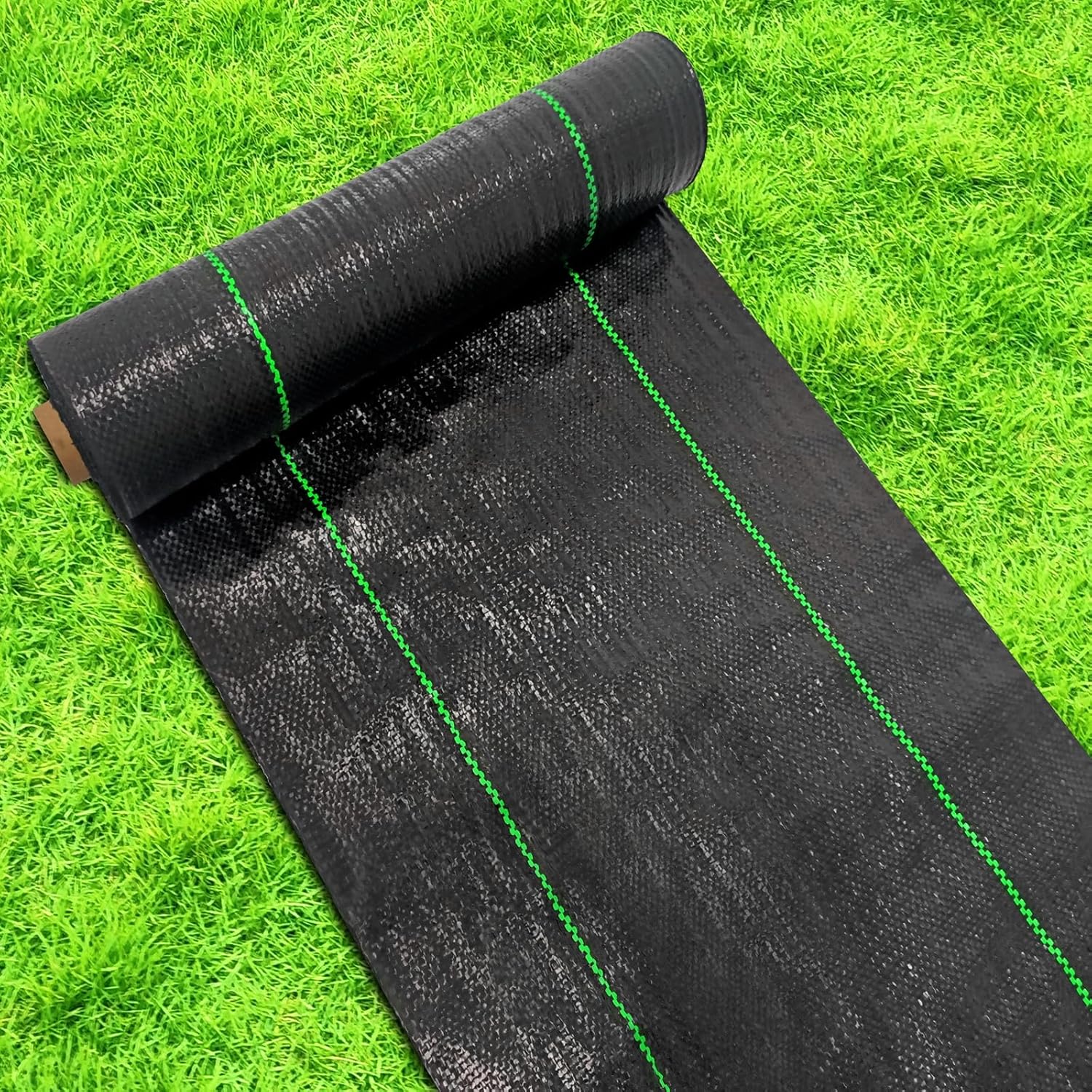
The Groweco heavy duty landscape fabric is a woven polypropylene weed barrier intended for garden beds, paths, and under gravel or artificial turf. It lays flat, is easy to cut with scissors, and the printed green lines help keep rows straight while trimming. The woven construction lets water and air pass through so planted beds and vegetable patches still receive moisture and oxygen, while the dense weave discourages weed seed germination. At roughly 3.2 oz per square yard for this listing, it offers noticeable tear resistance for routine garden use and should hold up under foot traffic when covered with mulch or gravel. Limitations to expect are that it will slow but not eliminate deep-rooted perennial weeds and that planting directly through the fabric requires cutting holes or slits which can allow some weeds in over time. For long-term beds where you plan frequent digging or expanding plantings, the fabric can get in the way and will eventually break down under heavy sun exposure if left uncovered.
Best for: Gardeners who need an affordable, no-fuss groundcover to reduce weeds in established vegetable rows and mulched beds and who prefer a product that is quick to install and maintain on a budget.
Less Ideal for: People planning intensive year-round digging, frequent bed reconfiguration, or permanent no-dig raised beds where a biodegradable or more heavy-duty membrane would be a better long-term choice.
- Woven polypropylene construction lets water and air pass to the soil while blocking most weed seedlings.
- Printed alignment lines make cutting and installation quicker and neater.
- Durable, tear-resistant fabric suitable for use under mulch, gravel, or artificial turf.
- Easy to cut and lay, so a single person can install beds and paths without special tools.
- Does not stop well-established perennial roots and can require replacements over several seasons if exposed to sunlight.
- Requires cutting holes for planting which creates entry points for weeds and reduces longevity.
Verdict: A budget-friendly, breathable woven fabric that makes quick weed suppression and tidy installation practical for vegetable beds and mulched garden paths.
iropro 5oz Heavy-Duty Weed Barrier Fabric, 3ft x 250ft

| Material weight | 5oz |
|---|---|
| Manufacturer | iropro |
This iropro 5oz heavy-duty weed barrier fabric is built for long-lasting weed control in demanding landscaping projects. It is typically rolled out under gravel, around garden beds, along pathways, or under mulch to block sunlight and prevent weed seeds from germinating while remaining breathable so water and nutrients pass through to plant roots. The 5oz woven construction increases puncture and tear resistance compared with lighter fabrics, so it stands up to foot traffic, gravel loads, and repeated garden work. Installation is straightforward: cut to shape, anchor with staples or pins, and overlap seams for continuous coverage. Practical benefits include reduced maintenance, better ground stability under gravel, and a durable base for beds that reduces the need for repeated replacement. Important limitations are that it still requires correct installation to avoid gaps where weeds can infiltrate and that perennial weeds with deep roots may eventually find their way through or around the fabric, so it is not a guaranteed permanent solution.
Best for: Homeowners and landscaping pros who prioritize a durable, low-maintenance fabric for long-term beds, pathways, and gravel areas and want a reliable material that tolerates heavy use.
Less Ideal for: Gardeners seeking a lightweight, temporary solution for small annual beds or those who prefer chemical weed control rather than physical barriers.
- 5oz heavy-duty woven construction increases resistance to punctures and tears
- Breathable and permeable design allows water and nutrients to reach plant roots
- Suitable for high-traffic areas and under gravel to improve ground stability
- Easy to cut and lay for straightforward installation on large projects
- Not a foolproof permanent barrier against aggressive perennial roots
- Effectiveness depends on careful overlap and anchoring during installation
Verdict: Choose this 5oz woven fabric when you need a tough, professional-grade weed barrier that holds up to foot traffic and gravel for long-term landscape projects.
LAVEVE Heavy Duty Weed Barrier Landscape Fabric, 4 ft x 100 ft (two 4×50 ft rolls)

| Material | Polypropylene |
|---|---|
| Permeability | Breathable, allows water and air flow |
| UV resistance | Resistant to sun exposure |
| Package | Two rolls totaling 4 ft x 100 ft |
This LAVEVE landscape fabric is a heavy-duty woven polypropylene ground cover intended to suppress weeds while letting moisture and air reach the soil. It ships as two 4 ft x 50 ft rolls (total 4 ft x 100 ft) with printed guide lines that make cutting and alignment straightforward. In practice it is laid over prepared beds, cut for plantings, and secured with U-shaped pegs; the fabric’s permeability helps reduce erosion and allows irrigation to penetrate. The material is UV-resistant and built for typical garden uses such as flower beds, vegetable plots, gravel paths, and sidewalks. Because it is a woven polypropylene, it is sturdier than thin nonwoven mats and stands up to foot traffic when covered with mulch or gravel. Limitations to expect are that surface-seeded weeds or seeds blown onto mulch can still germinate on top, and long-term burial or heavy soil compaction can reduce effectiveness; occasional maintenance and proper installation around plants are required to keep beds weed-free.
Best for: Gardeners who want a durable, breathable ground cover to reduce routine weeding and tidy beds across medium-length runs of pathway or planting area, and who value a product with solid usage feedback.
Less Ideal for: People seeking a permanent, maintenance-free solution or those who prefer chemical weed control methods; also not the best choice for beds where frequent deep digging or planting changes are required.
- Woven polypropylene construction provides durable, tear-resistant coverage
- Permeable design allows water and air to reach soil, reducing erosion
- Printed guide lines make measuring and cutting easier during installation
- Suitable for multiple applications including beds, paths, and under gravel
- Comes as two rolls totaling 4 ft x 100 ft for extended coverage
- Does not prevent weeds that germinate in mulch or on top of the fabric
- Requires proper securing and occasional maintenance to stay effective
Verdict: A sturdy, breathable woven fabric that gives reliable, easy-to-install weed suppression for medium garden beds and paths backed by strong user approval.
DeWitt Sunbelt Woven Weed Barrier Fabric, 6 x 300 ft (6-Pack)

| Material | Woven polypropylene |
|---|---|
| UV Stabilized | Yes |
| Alignment stripes | Every 12 inches |
| Intended use | Greenhouse floors, garden rows, raised beds, landscape protection |
This DeWitt Sunbelt woven weed barrier is built for large-scale and long-term weed suppression. The polypropylene weave blocks weed growth while staying permeable so water, air, and nutrients reach the soil and plant roots. It is UV-stabilized and constructed to resist tears and punctures from foot traffic, tools, and repositioning, which makes it suitable for greenhouse floors, garden rows, raised beds, and long planting runs. The fabric includes golden alignment stripes every 12 inches to speed layout and keep rows straight during planting. Because it is sold in very large rolls, it suits commercial or extensive residential projects where continuous coverage matters. The main limitations are its scale and stiffness when new: handling wide 300-foot runs takes two people and trimming or fitting irregular beds requires more cutting and edge securing than small mats. Also it is a ground-cover solution only and must be paired with proper edging and mulching for neat borders and added weed control.
Best for: Buyers needing a dependable, long-lasting ground cover for extensive garden areas, greenhouses, or commercial planting runs who prioritize durability and consistent weed suppression.
Less Ideal for: If you only need small-area coverage, decorative mulch alternatives, or a quick temporary solution, a smaller pre-cut mat or lightweight fabric will be easier to handle and install.
- Woven polypropylene construction allows water and air through while blocking weeds
- UV-stabilized for long outdoor exposure
- Durable against tears and punctures from foot traffic and tools
- Alignment stripes every 12 inches speed planting and keep rows straight
- Large roll size makes single-person handling and installation more difficult
- Requires trimming and secure edging to fit irregular beds and prevent movement
Verdict: Choose this DeWitt woven fabric when you need a durable, UV-stable weed barrier that delivers reliable long-term coverage for large or commercial planting areas.
Choosing the Right Weed Barrier for Vegetable Gardens: Key Factors to Consider
Material Permeability and Water Flow
A vegetable garden barrier must let water and air reach the root zone. Permeable woven fabrics allow irrigation and rainfall to pass while still blocking light that germinates weed seeds. If the barrier is impermeable, water will puddle on the surface or run off, forcing you to water differently and risking root drought under raised beds.
Permeability also affects how quickly soil dries after rain. Highly breathable materials promote healthy microbial activity and prevent anaerobic pockets in compacted soils. When evaluating permeability, consider your typical irrigation method: overhead sprinklers, soaker hoses, or hand watering will interact differently with barrier choices.
Durability and UV Longevity
Barriers in vegetable plots often see foot traffic, staking, and repeated planting seasons. Durable fabrics with UV stabilizers resist brittle breakdown and tearing from mechanical work around beds. Thin plastic films degrade quickly in sunlight and can shred, creating maintenance headaches and small plastic fragments in soil.
Think about how long you intend to leave the barrier in place. A reusable woven fabric may last several seasons with proper edging and anchoring, while biodegradable options are meant for single-season use and easier removal for crop rotation.
Effect on Soil Temperature and Microclimate
Different barrier colors and materials change how much solar heat reaches the soil. Dark fabrics warm soil faster in spring, which can benefit early crops but may overheat roots in summer. Light or reflective materials keep root zones cooler and reduce heat stress during peak season.
Consider crop needs and your local climate. Warm-season vegetables can tolerate and sometimes benefit from increased soil warmth early in the season, while cool-season crops prefer barriers that do not trap excess heat.
Weed Suppression Performance
The main job of a barrier is to prevent weeds from establishing. Effective suppression comes from blocking light and physically preventing seedlings from penetrating the material. Overlapping seams, proper anchoring, and covering edges with mulch or soil increase performance by eliminating entry points for opportunistic weeds.
Some barriers suppress only surface weeds while allowing deeper-rooted perennials to push through. If persistent weeds are common in your area, choose a more robust material and plan for occasional hand-weeding around edges and plantings.
Installation, Planting Access, and Workability
Vegetable gardeners regularly plant, amend, and rotate crops, so barriers must allow planting holes, in-row sowing, and easy adjustments. Materials that tear cleanly when you cut planting holes make planting quicker and less likely to leave jagged edges that catch on tools.
Consider how you will anchor the material and whether you need to move it for seasonal soil work. Options that can be folded aside or easily cut and resealed are better for intensive bed management.
End-of-Season Removal and Environmental Impact
Think about what happens when the season ends. Some barriers are reusable and clean up for storage. Others are biodegradable and can be incorporated into compost or tilled under. Non-biodegradable plastics can fragment and persist in soil if not removed carefully.
Evaluate disposal options based on local waste rules and your composting system. Materials that break down into microplastics are a long-term concern for soil health, so gardeners who prioritize sustainability should weigh biodegradability and recyclability.
Which Barrier Types Work Best in Raised Beds
Raised beds concentrate root activity and often require frequent planting and soil amendments. For this reason, breathable woven fabrics or landscape cloths that lay flat and allow water to pass are practical. They reduce weed pressure while letting you open planting holes and add compost without removing the entire sheet.
In beds with intensive succession planting, choose materials that are easy to cut and reseal. Lightweight biodegradable options can be useful for single-season crops when you want to incorporate the residue into compost at the end of the season.
- Use strong anchoring along edges to prevent soil from washing under the barrier.
- Cut planting holes slightly larger than seedlings to allow for growth and easier weeding.
- Cover seams with mulch to hide edges and reduce light intrusion.
Using Barriers in In-Ground Vegetable Rows
In-ground rows need good water infiltration and natural soil movement. Permeable fabrics that conform to the bed surface and are pinned well will let rain reach roots and avoid channeling water down rows. If you use drip irrigation, position emitters through or above the barrier so water reaches the root zone efficiently.
For long-term row installations, heavier-duty fabric is a better investment because it resists tearing during seasonal cultivation and when moving stakes or trellises.
- Lay fabric with a slight crown to avoid pooling around plants.
- Make a slit rather than a round hole for transplants to reduce tearing.
- Monitor areas near perennial borders where roots may intrude beneath the barrier.
Mulch and Barrier Combinations
Combining organic mulch with a barrier gives dual benefits: the barrier stops new weeds from emerging while mulch suppresses surface weeds, moderates soil temperature, and adds organic matter as it breaks down. Mulch also protects fabric from UV exposure when placed on top of the barrier.
Use a modest layer of organic mulch so water still penetrates easily. Avoid burying thin fabrics under very heavy mulch layers that compact and reduce breathability.
- Apply 1 to 3 inches of mulch over the barrier for best balance of protection and permeability.
- Refresh mulch mid-season to keep edges covered and suppress volunteer seedlings.
- Choose mulch that will not attract pests or sour quickly in wet climates.
Maintenance Tips to Extend Barrier Life
Regular inspection prevents small tears from becoming larger problems. Re-anchor loose edges after heavy rains and replace or patch sections that show wear. Small repairs with landscape tape or stakes can extend useful life by a season or more.
During seasonal rotations, remove soil and root buildup along edges to keep the barrier flush with the bed. If leaving a barrier in place for multiple seasons, store spare pins and repair materials where you can access them quickly when re-tensioning the fabric.
- Patch holes quickly with fabric tape or overlapping patches.
- Keep a hand tool handy for cutting clean planting holes and trimming ragged edges.
- Label reusable panels with year installed to track UV exposure and plan replacement.
When to Avoid Using a Barrier
Barriers are not always the right choice. In beds that you till annually or beds where you are building soil aggressively with deep additions, a barrier can impede the incorporation of organic matter and make tilling harder. Similarly, in very small container systems, a barrier may retain too much moisture and create anaerobic conditions.
If your garden is already heavily infested with deep-rooted perennial weeds, a barrier alone will not eliminate them. You may need targeted removal or solarization before installing a barrier to prevent persistent roots from growing through or around the material.
- Avoid barriers where you plan to turn soil deeply every season.
- Do not rely on barriers alone to control established perennial roots.
- Skip barriers in containers with limited drainage unless you use highly permeable fabric.
How We Chose the Best Weed Barrier for Vegetable Gardens
We focused on properties that directly affect vegetable production rather than abstract ratings. Key criteria included material durability under foot traffic and repeated watering, the fabric or film's permeability to water and air, how the barrier affects soil temperature and moisture retention, resistance to UV breakdown in exposed beds, and ease of installation and maintenance in typical vegetable layouts. We also considered ecological impact, such as biodegradability or how easily the barrier can be removed without disturbing plant roots. We excluded products that are primarily decorative or intended only for permanent landscape beds, as well as materials that block water entirely or release unknown chemicals into the soil. The final shortlist emphasizes options that balance weed suppression with good drainage and minimal long-term soil disruption. Each pick was judged against the same set of practical gardener needs: longevity in a vegetable setting, how the material alters watering and aeration, installation effort for raised and in-ground beds, and end-of-season removal or composting considerations.
FAQ
Will a weed barrier stop all weed growth in my vegetable beds?
No. Barriers significantly reduce surface weed germination by blocking light, but they will not prevent weeds that grow from seeds already in the soil or deep-rooted perennials from emerging. Proper edge management and occasional hand-weeding are still needed.
Can I plant through a weed barrier without damaging it?
Yes. Most gardeners cut slits or circles for transplants. Use a sharp tool to make clean cuts and avoid tearing. Some fabrics reseal slightly around the plant, while others may need patches when transplants are removed.
How does a barrier affect watering and drainage?
Permeable barriers allow water and air to pass so roots receive moisture normally. Impermeable films can cause runoff and require different watering practices. Match barrier permeability to your irrigation method for best results.
Are biodegradable barriers safe for vegetable production?
Biodegradable barriers can be a good option for single-season use because they break down and can be incorporated into compost. However, decomposition rates vary with climate and soil biology, so plan on inspecting for breakdown and potential weed invasion later in the season.
How long can I leave a reusable barrier in place?
Lifespan depends on material quality and UV exposure. High-quality woven fabrics with UV stabilizers can last several seasons if protected with mulch and anchored properly. Thin plastics degrade faster and may need replacement after one season.
Will a weed barrier affect soil life and microbes?
Permeable barriers that allow air and moisture generally have minimal negative impacts on soil microbes. Impermeable materials can reduce oxygen exchange and alter microbial activity. Using breathable fabrics and adding organic mulch helps maintain a healthy soil ecosystem.
Final Verdict
Choose a barrier that balances suppression with water permeability and workability for your vegetable layout. Durable, breathable fabrics work well in raised beds and in-ground rows where repeated planting and irrigation are common. Biodegradable options suit single-season uses or low-disturbance beds but require monitoring as they break down. Prioritize how the material affects drainage, ease of planting, and end-of-season removal. By matching barrier type to bed style and maintenance plans, you will reduce weeding while maintaining healthy soil and flexible crop rotations.
