

Note: This article contains affiliate links. If you click on these links and make a purchase, I may earn a small commission at no extra cost to you. This helps support my research and content. Read my full affiliate disclosure here.
If you spend time tackling thorny shrubs, rough landscaping, or heavy soil work, thicker gloves change how confidently you handle tools and plants. The right pair keeps hands protected from punctures, abrasion, and cold while still letting you grip trowels, pruners, and shovel handles. This guide covers our six shortlisted options for thick gardening gloves. We evaluated each for protection, dexterity, durability, and comfort so you can pick a pair suited to the tasks you do most. Read on for practical buying guidance and answers to common gardener questions before the product list.
Top Picks at a Glance
| Best Overall The best all-around choice for most situations | G & F Products Leather Work Gloves (Double Leather Palm, Extra Long Cuff) |  |
| Best Quality Built to a higher standard if you want something more solid | OZERO Cowhide Leather Work Gloves (Large) |  |
| Best Value The sweet spot between price and what you get | DULFINE Cowhide Leather Gardening Work Gloves |  |
| Highest Rated A top-rated pick with lots of positive feedback | WZQH Leather Work Gloves — Reinforced Palm, Cotton Lining (Large) |  |
| Most Popular A crowd favorite that many people choose with confidence | HANDLANDY Thorn-Proof Long Leather Rose Pruning Gloves |  |
G & F Products Leather Work Gloves (Double Leather Palm, Extra Long Cuff)

| Material | 100% leather palm and 100% cotton back |
|---|---|
| Feature | Double leather palm; extra long rubberized safety cuff |
| Cuff | Extra long safety cuff |
These G & F leather work gloves are built for hands-on outdoor work where abrasion resistance and hand protection matter. The gloves combine a full leather palm—reinforced with a double layer—with a long, rubberized safety cuff to shield wrists and lower forearms from thorns, rough branches, and debris. They are typically used for heavy pruning, handling rough lumber, pulling weeds, and other demanding garden chores. The leather palm gives solid durability and a secure grip while the cotton-backed shell and elastic shirred back improve breathability and fit. The extended cuff is useful when working in brambles or near sparks from grilling and fire tasks. Limitations are that leather gloves reduce fingertip sensitivity compared with thin nitrile or knit options and require occasional cleaning and conditioning to stay supple; they are not waterproof and will stiffen if soaked. For gardeners who want protective, long-wearing gloves for tough jobs, these deliver reliable coverage and protection.
Best for: Gardeners who tackle heavy-duty tasks and want durable hand protection for pruning, handling rough materials, and working in thorny or abrasive conditions.
Less Ideal for: People who need fine touch or frequent wet-weather use should consider thinner coated or waterproof gloves instead.
- Double leather palm for stronger abrasion resistance and longer wear
- Extra long safety cuff protects wrists and lower forearms from thorns and sparks
- Elastic shirred back offers a snug, flexible fit for active tasks
- Cotton-backed construction improves breathability during extended use
- Not waterproof so performance and flexibility suffer when wet
- Leather reduces fingertip sensitivity compared with thin coated gloves
Verdict: Choose these gloves if you need thick, long-wearing leather protection for tough gardening jobs where abrasion resistance and cuff coverage matter.
OZERO Cowhide Leather Work Gloves (Large)

| Material | Cow Grain Leather, Cow Split Leather, Polyester |
|---|---|
| Item Thickness | 1.2 millimeters |
| Glove Construction | Cut & Sewn |
| Closure Type | Elastic |
| Reusability | Reusable |
These OZERO cowhide leather gloves are built for demanding outdoor tasks where protection and hand control matter. The 1.0–1.2 mm top-grain palm and reinforced stitching deliver strong puncture and abrasion resistance, so they stand up to thorny rose bushes, roots, and rough materials during yard work and light construction. The gunn-cut pattern with a keystone thumb gives excellent dexterity for tying knots, handling small tools, and gripping chains without removing the gloves. Their single-layer, unlined construction keeps hands cooler in summer while remaining flexible, and the elastic knit wrist helps keep out dirt and speeds on/off. They are not waterproof and require spot or hand washing, but treated leather is described as staying soft after washing. For gardeners who need a tough, long-lasting glove that still allows precise handling, these perform well; those seeking insulated, waterproof, or thin nitryl-style tactile gloves should look elsewhere.
Best for: Gardeners and landscapers who prioritize durable hand protection and precise tool control during heavy-duty pruning, thorn work, and material handling.
Less Ideal for: People who need waterproof or heavily insulated gloves for cold or wet conditions, or those who want ultra-thin touchscreen-sensitive gloves for fine, delicate potting work.
- Thick 1.0–1.2 mm top-grain cowhide palm for puncture and abrasion resistance
- Gunn-cut design with keystone thumb for high dexterity and reliable grip
- Reinforced double-thread stitching at high-stress seams increases durability
- Unlined, single-layer construction keeps hands cooler and maintains flexibility
- Elastic wrist seals out debris and allows quick one-hand pull-on
- Not water resistant so wet tasks may soak through leather
- Requires hand-spot cleaning rather than machine washing
- Unlined design provides less insulation in cold conditions
Verdict: Choose these gloves if you want thick, puncture-resistant cowhide that still lets you handle tools and small tasks with high dexterity.
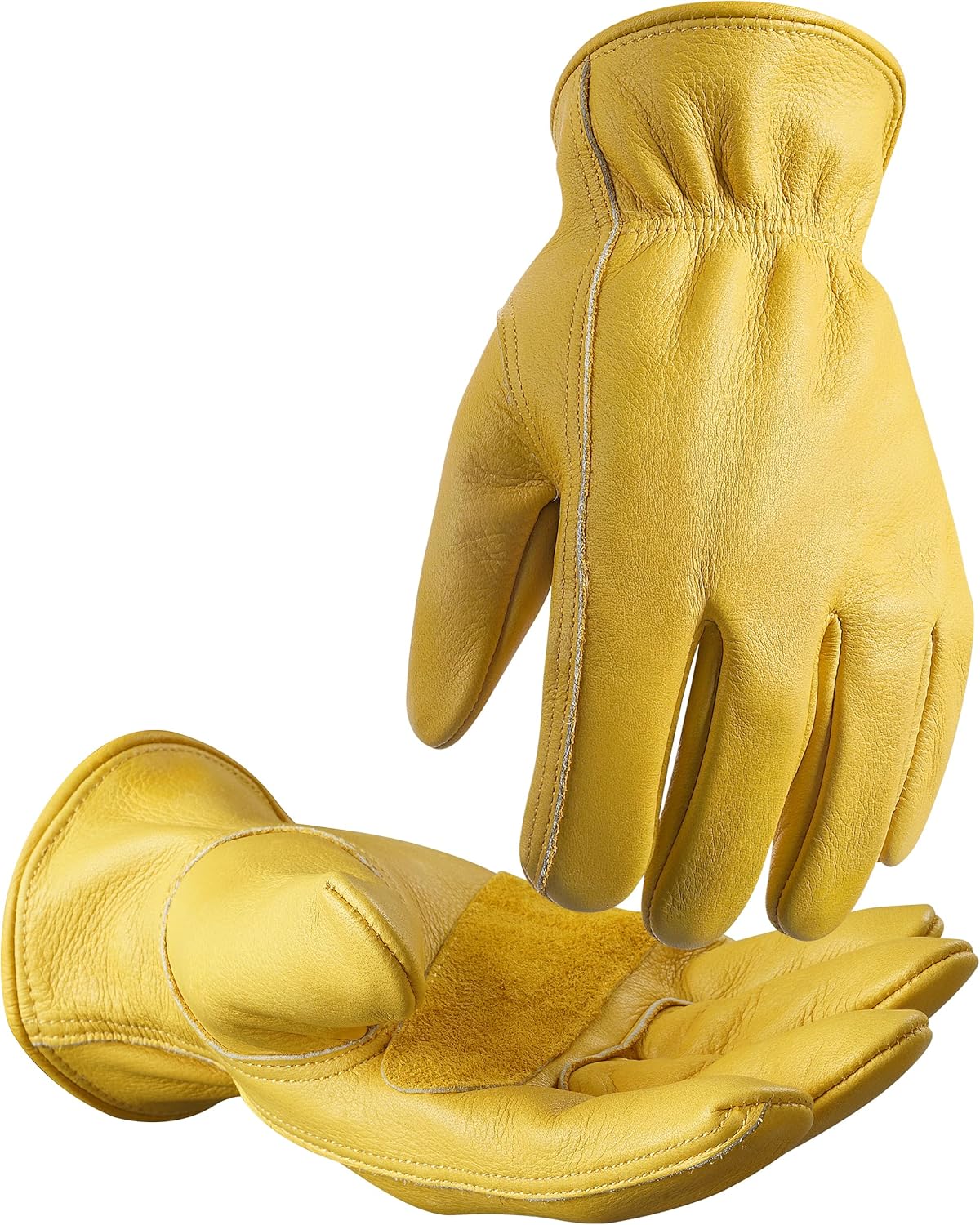
DULFINE Cowhide Leather Gardening Work Gloves
| Material | Cowhide leather |
|---|---|
| Pack quantity | 1 pair (also available in multi-packs) |
| Seasonal use | All seasons / Fall-Winter options mentioned |
These cowhide leather gardening gloves are built for tough, hands-on yard work where puncture resistance and grip matter. Made from genuine cowhide with a reinforced palm, they protect against thorns, splinters, and rough materials while the keystone thumb shape preserves dexterity for pruning, digging, and handling tools. Elastic wrists help keep out dirt and debris during repeated use. The gloves are presented as insulated and waterproof variants in the line, so you can choose a warmer or weather-resistant option if you need seasonal protection. Expect a stiff, break-in period typical of thick leather as the material softens with wear. They are not as breathable as thin fabric gloves, so hands can feel warm during long summer tasks. For routine heavy-duty garden chores these gloves deliver durable protection and a confident grip, but they trade some fingertip sensitivity and airflow for toughness.
Best for: Buyers who prioritize durable hand protection for heavy gardening, pruning, and outdoor chores and want gloves that hold up to thorns, splinters, and frequent tool use.
Less Ideal for: Gardners who need maximum tactile sensitivity for delicate tasks or who work long hours in hot weather should consider thinner, more breathable glove options.
- Genuine cowhide leather provides strong puncture and abrasion resistance
- Reinforced palm improves grip and durability for handling tools and rough materials
- Keystone ergonomic thumb preserves dexterity for pruning and fine tasks
- Elastic wrist helps keep out dirt and debris during yard work
- Thick leather requires a break-in period and reduces fingertip sensitivity
- Less breathable than fabric gloves, which can feel warm during extended summer use
Verdict: A tough, no-nonsense leather glove that gives reliable puncture and abrasion protection for heavy gardening jobs.
WZQH Leather Work Gloves — Reinforced Palm, Cotton Lining (Large)

| Material | Leather |
|---|---|
| Glove Liner Material | Cotton |
| Protective Glove Temperature Rating | 350°F |
| Closure Type | Adjustable |
| Reusability | Reusable |
These WZQH leather work gloves are built for tough outdoor tasks where hand protection matters. Made from split cowhide with a reinforced palm and keystone thumb, they deliver abrasion, puncture, thorn, cut, oil, flame, and heat resistance up to 350°F while a soft cotton lining improves comfort and reduces sweat. The adjustable wrist drawstring keeps debris out during digging, pruning, and brush clearing, and the ergonomic cuff helps with dexterity for tasks like planting, using a weed wacker, or handling thorny shrubs. They are reusable and machine washable, so maintenance is straightforward after muddy jobs. Limits to note are the lack of water resistance and no stretch in the fabric, so wet gardening or tasks requiring a snug, glove-like fit for fine handwork may feel bulky. Also sizing advice in the listing suggests sizing up for broad hands, so pick accordingly if you have narrow hands. For gardeners who prioritize durable protection over a thin tactile fit, these gloves offer dependable coverage in heavy-duty outdoor use.
Best for: Gardeners who do heavy-duty outdoor work and want robust hand protection from thorns, abrasion, heat, and punctures while still retaining reasonable comfort for prolonged use.
Less Ideal for: People who need thin, highly tactile gloves for delicate seed starting, transplanting, or frequent wet-weather gardening should consider thinner waterproof or touchscreen-capable alternatives.
- Durable split cowhide construction with reinforced palm for strong abrasion and puncture resistance
- Cotton inner lining that improves comfort and reduces sweat during extended wear
- Adjustable wrist drawstring and ergonomic cuff that keep debris out and allow reasonable wrist movement
- Rated for high temperatures (350°F) and flame resistant for grilling, fireplace or light welding tasks
- Not water resistant, so hands can get wet during watering or wet weather
- No fabric stretch which can reduce fine dexterity for delicate planting or seed work
Verdict: Choose these gloves if you need tough, heat- and puncture-resistant hand protection for heavy gardening and outdoor chores.
HANDLANDY Thorn-Proof Long Leather Rose Pruning Gloves

| Material | Leather, Synthetic Leather |
|---|---|
| Sleeve Length | Long Sleeve |
| Protective Features | Abrasion Resistant, Cut-Resistant, Thorn Proof |
| Closure Type | Pull On |
| Temperature Rating | -10°C to +40°C |
These HANDLANDY thorn-proof gardening gloves use pigskin leather on the palm and back plus reinforced padding at the fingertips and palm to resist cuts, punctures, and abrasion while retaining good flexibility. The elbow-length gauntlet shields forearms from thorns and brambles, and the elastic slip-on cuff keeps dirt out during repetitive weeding, pruning, and brush clearance. Breathable pigskin helps keep hands cooler than heavier full-grain leather, and reinforced stitching and a padded palm improve durability for regular yard work. They are not waterproof and have no interior liner listed, so hands can get damp in wet conditions and dexterity with very fine tasks may feel slightly reduced compared with thin fabric gloves. For persistent thorny jobs these gloves trade a bit of fingertip finesse for confident protection and long wear. Care is simple: air out leather to remove initial smell and keep them dry between uses to prolong life.
Best for: Serious gardeners who prioritize protection and durability for thorny weeding and pruning tasks and want durable gloves that stand up to regular heavy use.
Less Ideal for: Gardners who need maximum fingertip sensitivity for delicate seeding, transplanting, or wet-weather work should consider lighter or waterproof alternatives.
- Thick pigskin leather palm and back for breathability with strong puncture resistance
- Extended elbow-length gauntlet protects forearms from thorns and brambles
- Reinforced palm and fingertip padding for better abrasion and cut resistance during heavy pruning
- Elastic slip-on cuff keeps debris out and provides a snug fit
- Reinforced stitching improves durability for frequent use
- Not water resistant so hands may get wet during damp weeding or rainy conditions
- No listed glove liner which can reduce warmth in cold weather and allow perspiration against skin
Verdict: Choose these gloves when thorny, heavy-duty weeding and pruning demand confident forearm and hand protection.
Choosing the Right Thick Gardening Gloves: Key Factors to Consider
Level of Protection Needed
Think about the plants and tasks you handle most. Heavy thorn work, like roses or blackberry brambles, and jobs that put hands near thorny stems require higher puncture and cut resistance. That usually means thicker palms, reinforced overlays, or gloves rated for cut resistance.
If you mostly weed, pot, or handle seedlings, extreme thickness can reduce dexterity unnecessarily. Choosing a protection level matched to your tasks avoids buying gloves that feel clumsy during routine jobs.
Dexterity and Tactile Feedback
Thicker materials protect but can blunt finger sensitivity. Look for design features that preserve control: pre-shaped fingers, thin reinforced tips, or coatings that provide grip without adding bulk. These details let you handle small tasks like seed sowing, tying supports, or adjusting ties without removing gloves.
Consider whether you need fingertip access for fine tasks. Some gardeners prefer gloves with a reinforced thumb and forefinger area to keep critical touchpoints responsive while retaining protection elsewhere.
Grip and Coating Type
Grip affects safety and efficiency when using hand tools or moving wet materials. Coatings such as nitrile, latex, or synthetic leather each behave differently: nitrile holds up well to abrasion and resists oils, latex has an aggressive wet grip but can wear faster, and synthetic leathers feel close to natural leather with good overall durability.
Also evaluate textured patterns and palm coverage. Full-palm coating offers consistent traction across tool handles, while partial coatings reduce bulk and improve breathability. Choose the coating based on how often you handle damp soil, wet pots, or slick tool handles.
Durability and Construction
Seams, reinforcement points, and material weight determine how long gloves last under repeated kneeling, pruning, and handling rough materials. Reinforced palms and finger tips, double-stitched seams, and abrasion-resistant fabrics extend service life.
Consider the expected lifespan relative to how often you garden. Heavier construction lasts longer but may cost more in terms of stiffness. Look for reinforced stress points where gloves typically fail, such as between thumb and forefinger and across the palm.
Fit, Sizing, and Wrist Closure
A proper fit prevents material bunching that reduces dexterity and creates pressure points that cause blisters. Gloves that are too loose make gripping tools harder, while overly tight gloves restrict circulation. Check sizing ranges and whether the glove shape matches your hand width and finger length.
Secure wrist closures keep dirt and debris out while supporting the glove's position during motion. Elastic cuffs are quick to pull on, while hook-and-loop closures give adjustable tightness. For colder conditions, a longer cuff can add forearm protection.
Maintenance and Cleanliness
Gardening gloves encounter soil, sap, and plant residues that stain and break down materials over time. Consider how easy the gloves are to clean: machine washable fabrics simplify upkeep, while coated palms may need hand washing to preserve grip. Quick-drying materials reduce odor and mildew risk.
Also plan for storage and inspection. Rinse heavy soils promptly and air-dry gloves before storing to prolong material life and maintain hygiene.
Matching Gloves to Common Garden Tasks
Different chores call for different tradeoffs between protection and control. For pruning and thorn removal choose gloves with higher puncture resistance and reinforced palms. For potting, transplanting, and seed work prioritize a slightly thinner reinforced glove that maintains fingertip sensitivity.
Use heavier gloves for clearing brambles, moving rock, and handling rough wood. For deadheading, tying, or delicate weeding, switch to gloves that emphasize fit and dexterity so you can feel stems, ties, and small tool handles more easily.
- Pruning and thorny shrubs: reinforced palms, thicker material
- Transplanting and potting: flexible reinforced fingertips
- Heavy landscaping: durable seams, extended cuffs
Materials and Why They Matter
Leather offers good abrasion resistance and molds to the hand over time, making it a durable choice for heavy-duty gardening. Split leather and full-grain leather differ in flexibility and price point, with full-grain typically lasting longer.
Synthetic options like nitrile-coated fabrics or synthetic leather combine water resistance with strong grip and lower weight. These are easier to clean and often offer consistent tactile feedback when coated only on the palm and fingers.
- Leather: durable, molds to hand, best for abrasion resistance
- Nitrile coating: strong wet and dry grip, resists oils
- Synthetic leather: balance of flexibility and durability
Caring for Thick Gardening Gloves
Proper care extends glove life. Remove soil promptly by shaking out and rinsing, then air dry away from direct heat. If gloves are machine washable, use a gentle cycle and allow them to reshape while drying.
Repair small tears and reinforce high-wear areas when possible. Replace gloves at the first sign of significant seam failure or large punctures that compromise safety.
- Rinse heavy soils before storage
- Air dry to avoid shrinking or warping
- Inspect seams and reinforcement points regularly
Sizing Tips and Fit Checks
Measure hand circumference and finger length if you are between sizes. Try gloves on with the palm flat and fingers relaxed; there should be a small amount of room at the fingertip without excess fabric bunching. Move your hand through common motions to test for restriction.
If you plan to layer liners for cold weather, choose a slightly larger fit so the combined thickness does not restrict blood flow or control.
- Check fingertip clearance and palm stretch
- Test gripping a shaved dowel or tool handle
- Allow room for liners if you garden in cold climates
When to Replace Thick Gardening Gloves
Replace gloves that show large punctures, shredding, or seam separation, especially where protection is critical. Small scuffs on coated palms are normal, but failing seams and exposed inner liners indicate the glove no longer provides dependable protection.
Also replace gloves that retain odors or have hardened materials that reduce comfort. Maintaining a rotating pair system keeps a usable backup while you clean or dry another pair.
- Replace when punctures or seam failures appear
- Watch for hardened or rigid materials reducing comfort
- Keep a backup pair available during active seasons
How We Chose the Best Thick Gardening Gloves
We focused on attributes that matter when gardeners need heavier hand protection without losing control. Selection began by screening for gloves explicitly designed for gardening or outdoor yard work with reinforced palms, dense material layers, or specialized coatings. We excluded thin lightweight liners, single-use work gloves, and gloves meant for chemical handling or electrical work because those priorities differ from gardening tasks. Our evaluation criteria emphasized puncture and cut resistance to withstand thorns, briars, and rocky soil; grip and tactile control so you can use small tools and tie plants; durability of materials and seams for long-term use; and fit and comfort, including wrist closure and breathability for warm-weather work. We also considered ease of cleaning and maintenance because gardening gloves see dirt, sap, and moisture. Finally, we checked sizing options to ensure a reliable fit for different hand shapes. These criteria guided which thick gardening gloves made the shortlist.
FAQ
Are thicker gardening gloves always better for thorny plants?
Thicker gloves provide more protection against thorns but can reduce fingertip sensitivity. For heavy thorn work choose thicker, reinforced gloves that still have pre-shaped fingers or reinforced tips to preserve some dexterity.
Can I use thick gardening gloves when sowing seeds or pruning delicate plants?
You can, but very thick gloves may hinder fine tasks. Consider keeping a second, thinner pair for delicate work or select gloves with reinforced but thinner fingertips designed to balance protection and touch.
How do I clean gloves with coated palms without damaging the grip?
Rinse off loose dirt and hand-wash with mild soap. Avoid aggressive scrubbing of textured coatings and air dry. Machine washing can be acceptable for some fabrics but may reduce the lifespan of specialized coatings.
What cuff style is best for heavy yard work?
Extended cuffs protect the lower forearm from scratches and debris, while adjustable hook-and-loop closures keep soil out. Elastic cuffs are faster to don and remove but may let debris in more easily.
How should gloves fit to avoid blisters during long sessions?
A snug but not tight fit prevents bunching that causes friction. Look for gloves with ergonomic seams and moisture-managing liners to reduce sweat-related rubbing during prolonged use.
Final Verdict
Prioritize the balance between protection and control when choosing thick gardening gloves. Decide whether puncture resistance or fingertip sensitivity matters more for the tasks you do most, and pick materials and coatings that match those needs. Aim for a secure fit with reinforced palms and reliable wrist closure, and plan for maintenance and timely replacement. With those tradeoffs in mind, you can select a thick glove that keeps hands safe without sacrificing the ability to work precisely in the garden.
