

Note: This article contains affiliate links. If you click on these links and make a purchase, I may earn a small commission at no extra cost to you. This helps support my research and content. Read my full affiliate disclosure here.
If you want a greener lawn without synthetic chemicals, choosing a purely organic lawn food fertilizer matters more than you might think. Organic formulas feed soil life as well as grass, improving structure, water retention, and long-term nutrient availability rather than just producing a short-term color boost. This guide reviews seven top pure-organic lawn food options suited to homeowners who prioritize safe, slow-release nutrition and better soil biology. We shortlisted products that perform reliably in lawns, and evaluated them on nutrient balance, ease of application, and how they affect soil and turf health. Read on to find the best organic approach for your lawn's growing conditions and maintenance plan.
Top Picks at a Glance
| Best Overall The best all-around choice for most situations | Purely Organic Products Lawn Food 10-0-2, 15 lb |  |
| Best Quality Built to a higher standard if you want something more solid | Espoma Organic Spring Lawn Booster 8-0-0, 30 lb |  |
| Best Value The sweet spot between price and what you get | Purely Organic Products Lawn Food 10-0-2, 40 lb |  |
| Best Budget The cheapest option that still gets the job done reliably | Espoma Turf-Tone All Season Organic Lawn Food, 14 lb |  |
| Highest Rated A top-rated pick with lots of positive feedback | Espoma Turf-Tone All Season Organic Lawn Food with Bio-Tone, 28 lb |  |
| Most Popular A crowd favorite that many people choose with confidence | Scotts Natural Lawn Food, 29.1 lb, Covers 4,000 sq. ft. |  |
| Best Seller A high-volume bestseller chosen again and again | Espoma Organic Weed Preventer Plus Lawn Food, 25 lb |  |
Purely Organic Products Lawn Food 10-0-2, 15 lb
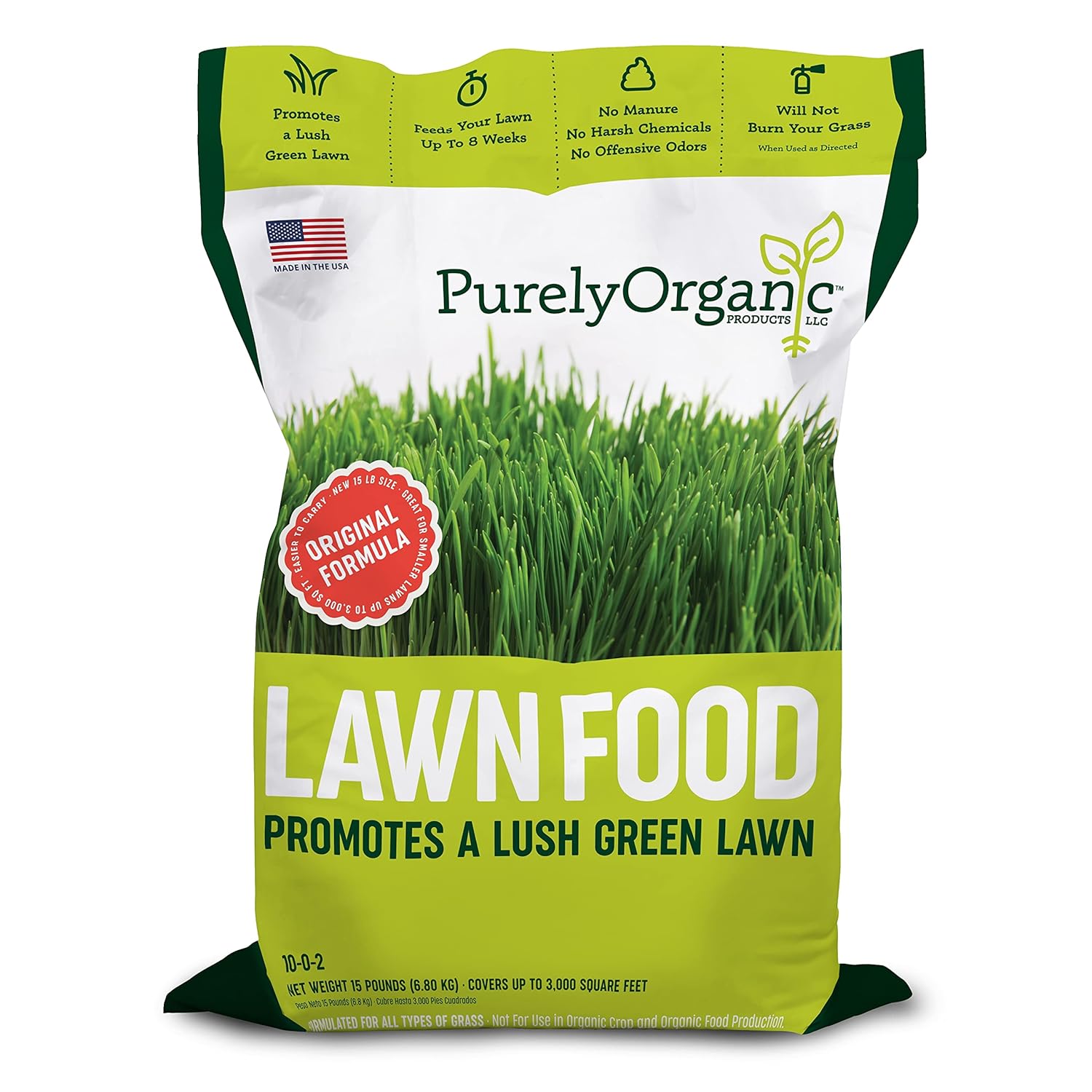
| Item Form | Granules |
|---|---|
| Application Method | Drop or rotary spreader |
| Coverage | 3,000 Square Feet |
| Specific Uses For Product | Plant Growth, Root Development, Soil Conditioning |
| Mixing Ratio | 10:0:2 |
This Purely Organic Lawn Food is a granular, plant-based fertilizer designed for routine lawn feeding on cool- and warm-season grasses. It spreads with a drop or rotary spreader at the recommended 4–8 lbs per 1,000 sq ft and supplies nitrogen-heavy nutrition (10-0-2) for greener leaf growth while also contributing to root development and soil conditioning. The blend uses soybean meal and distillers dried grains instead of synthetic chemicals, which reduces odor and eliminates phosphorus to comply with phosphate-restriction rules in some towns. It is family and pet friendly with no re-entry restrictions noted, making it practical for yards with animals. Expect slower, steady green-up compared with quick-release synthetic fertilizers, so results are gradual rather than instant. Also, coverage is calibrated to the 15 lb bag for roughly 3,000 sq ft, so larger lawns will need multiple bags and more storage space.
Best for: Buyers who want a pet- and family-friendly, plant-based lawn fertilizer that supports steady, natural green-up and prefers practical, regulation-compliant choices over fast-acting chemical feeds.
Less Ideal for: Homeowners who need rapid, dramatic color change or who manage very large lawns and expect each application to cover extensive acreage.
- Plant-based formula using soybean meal and distillers grains instead of synthetic chemicals
- No phosphorus in the 10-0-2 formula to meet phosphate-restriction rules
- Can be applied with common drop or rotary spreaders and covers about 3,000 sq ft per bag
- Family and pet friendly with no re-entry time required
- Slow-release effect means slower visible results compared with synthetic quick-release fertilizers
- 15 lb bag may be insufficient for larger lawns requiring multiple applications or bags
Verdict: Choose this product if you want a practical, pet-safe, plant-based fertilizer that steadily builds greener turf while avoiding phosphorus.
Espoma Organic Spring Lawn Booster 8-0-0, 30 lb

| Item Form | Granules |
|---|---|
| Application Method | broadcast spreader |
| Coverage | up to 5,000 sq ft |
| Mixing Ratio | 8-0-0 |
| Specific Uses For Product | Lawn,Organic |
Espoma Organic Spring Lawn Booster is a granular, organic fertilizer designed for spring application to turf grasses, including tall fescue. Applied with a broadcast or drop spreader, it supplies slow-release nitrogen (8-0-0) and added calcium to promote deep green color and steady early-season growth without burning. Its slow-release formula means you get longer-lasting feeding compared with quick-release synthetics, so lawns develop gradually rather than surging and then fading. Because it is OMRI-listed for organic gardening, it fits into organic lawn programs and is suitable for yards where pet and child safety is a priority. The bag covers up to 5,000 square feet, which makes it practical for typical suburban lawns but may be bulky for very small yards or hard-to-store for those with limited space. Users should plan application timing in early spring and have a spreader capable of handling granular fertilizers to get even coverage. For tall fescue, the steady nitrogen and calcium support early green-up and stronger blades without the risk of scorch from high salt fertilizers.
Best for: Homeowners who want an organic, low-risk spring feed for cool-season grasses like tall fescue and prioritize steady early-season green-up and safety around family and pets.
Less Ideal for: Gardeners who need a quick green-up from fast-release fertilizers or who prefer liquid or foliar feeds for spot treatments should look elsewhere.
- Slow-release nitrogen provides steady, long-lasting feeding for early-season growth
- Organic formulation approved for organic gardening and safer for kids and pets
- Contains added calcium to support turf color and plant health
- Covers up to 5,000 sq ft per 30 lb bag, suitable for typical lawns
- Granular format requires a spreader for even application
- Large 30 lb bag can be cumbersome to store or handle for small yards
Verdict: A reliable organic spring fertilizer that steadily greens and strengthens tall fescue without the burn risk of conventional quick-release products.
Purely Organic Products Lawn Food 10-0-2, 40 lb

| Item Form | Granules |
|---|---|
| Specific Uses For Product | Lawns |
| Target Species | lawn grasses |
| Mixing Ratio | 10:0:2 |
This Purely Organic Lawn Food is a granular, plant-based fertilizer formulated to green up turf while avoiding phosphorus and synthetic chemicals. It is typically broadcast across established lawns using a spreader or by hand for smaller areas; the 10-0-2 N-P-K mix supplies nitrogen for color and a small amount of potassium for stress tolerance while meeting phosphorus-restriction rules. The formula emphasizes natural ingredients such as distillers grains and soybean meal, which release nutrients more slowly than soluble synthetic fertilizers and reduce the risk of burning. Practical benefits include a pet- and family-friendly profile with no re-entry restrictions and a lack of strong odors. Expect slower, steadier greening rather than immediate flushes of growth, and plan applications earlier in the season or repeated at intervals to maintain results. The product comes in a large 40 pound bag suitable for multiple applications on medium to large lawns but requires storage in a dry place to prevent caking and may feed more slowly in cool soil conditions.
Best for: Buyers who prioritize safer, natural lawn care and steady, maintenance-style greening for medium to large yards will like this product.
Less Ideal for: If you need rapid green-up or are treating nutrient-deficient new sod, a fast-acting synthetic fertilizer or a starter formula would be a better choice.
- Plant-based formula with distillers grains and soybean meal for slow nutrient release
- No phosphorus and no harsh chemicals, suitable where phosphate restrictions apply
- Family and pet friendly with no re-entry restrictions after application
- Large 40 lb bag covers multiple applications for medium to large lawns
- Slow-release action means results are gradual rather than immediate
- Requires dry storage to avoid caking and loss of effectiveness
Verdict: Choose this if you want a large-quantity, plant-based lawn fertilizer that safely greens turf over time while complying with phosphorus restrictions.
Espoma Turf-Tone All Season Organic Lawn Food, 14 lb

| Item Form | Granules |
|---|---|
| Specific Uses For Product | Lawn Feeding |
| Application Method | Spread |
| Target Species | Lawn Grass |
| Unit Count | 224 Ounce |
Espoma Turf-Tone All Season is a granular organic lawn fertilizer intended for routine feeding of home lawns. It applies with a drop or broadcast spreader to a dry, mowed lawn and is formulated with slow-release nitrogen (9-0-1) plus a Bio-tone microbial formula to encourage deeper, longer-lasting greening without harsh chemicals. The product lists feather meal and poultry manure among ingredients and is advertised as safe for spring, summer, or fall use on common grasses like fescue, bluegrass, rye, St. Augustine, and zoysia. A single 14 lb bag covers up to about 2,500 sq ft, so it is practical for small to medium yards or as a spot treatment on larger areas. Because it is organic and slow-release, it reduces burn risk and tends to feed steadily rather than causing a quick flush of growth, but it will act more slowly than synthetic high-nitrogen fertilizers and may require repeat applications for rapid greening. Expect reliable, gradual improvement in color and turf health when used as part of regular seasonal feeding.
Best for: Buyers who prioritize organic, low-risk lawn care and want steady, long-term improvement in turf color and soil health rather than rapid, high-growth results.
Less Ideal for: People who need fast, dramatic greening after lawn damage or who manage large acreage on a tight budget should consider faster-acting or bulk synthetic options instead.
- Certified organic ingredients and no synthetic sludges or harsh chemicals listed
- Slow-release nitrogen (9-0-1) promotes longer-lasting greening
- Includes Bio-tone microbial formula to support soil and root health
- Suitable for use in spring, summer, or fall on a wide range of common turfgrasses
- 14 lb bag covers up to 2,500 sq ft, convenient for small to medium lawns
- Lower immediate nitrogen availability than synthetic fertilizers, so results are slower to appear
- Single 14 lb bag may be insufficient for large properties without multiple purchases
Verdict: Choose this product if you want a dependable, purely organic slow-release fertilizer that improves lawn color and soil health over the season.
Espoma Turf-Tone All Season Organic Lawn Food with Bio-Tone, 28 lb

| Item Form | Granules |
|---|---|
| Application Method | Spread evenly on a dry, mowed lawn |
| Target Species | Lawn Grass |
| Unit Count | 448 Ounce |
Espoma Turf-Tone is a 28 lb granular, slow-release lawn fertilizer designed for routine feeding of lawns including Kentucky bluegrass. It supplies a low-rate nitrogen formula that releases slowly to encourage steady greening and reduced frequency of applications. The product is intended to be applied with a drop or broadcast spreader to a dry, mowed lawn and claims coverage up to about 5,000 sq ft. Notable features are its organic ingredients and Bio-Tone microbial formula, which aim to support soil biology while minimizing risk of burn or leaching compared with high-salt synthetic feeds. Practical benefits for bluegrass include gentler, longer-lasting color improvement and less chance of creating quick flushes of top growth that demand more mowing. Important limitations are that its nutrient numbers are modest (9-0-1) so it is not a quick corrective for severe nitrogen deficiency and may require multiple seasonal applications to build vigor; large or very depleted lawns may need supplemental treatments or higher-analysis products for rapid recovery.
Best for: Homeowners who prioritize reliable, low-risk feeding and steady seasonal improvement for cool-season lawns like Kentucky bluegrass and who prefer organic products over synthetic quick fixes.
Less Ideal for: Gardeners needing a fast green-up or immediate corrective treatment for very nutrient-deficient or large commercial lawns should consider higher-analysis or targeted products instead.
- Slow-release nitrogen that promotes steady greening without rapid top growth
- Organic and natural ingredient base that reduces burn risk and supports soil health
- Formulated with Bio-Tone microbes to help root and soil biology
- Easy to apply with a broadcast or drop spreader and suitable for all-season use
- Lower analysis (9-0-1) so it is not ideal for rapid correction of severe nutrient deficiencies
- Coverage claim depends on even spread; may require multiple bags for large or thin lawns
Verdict: Choose this organic, slow-release Turf-Tone when you want dependable, low-risk seasonal feeding that supports Kentucky bluegrass and soil biology.
Scotts Natural Lawn Food, 29.1 lb, Covers 4,000 sq. ft.

| Item Form | Powder |
|---|---|
| Specific Uses For Product | Lawn |
| Application Method | spreader |
| Coverage | 4,000 square feet |
| Target Species | grass |
Scotts Natural Lawn Food is a granular, OMRI-listed lawn fertilizer designed to green and thicken turf across all grass types. It is applied with a drop or rotary spreader and can be used any season, with typical use being up to four applications per year spaced 6 to 8 weeks apart. Notable features include an all-grass formulation, 4,000 sq. ft. coverage per 29.1 lb. bag, and a formula that has no unpleasant odor and is safe to walk on right after application. In practice this makes it convenient for families and pet owners because you do not need to block off the lawn after feeding. Results are usually visible in 1 to 3 weeks on actively growing turf. Limitations are that it requires a compatible spreader for even application and will need reapplication through the season for sustained results; it is not a weed control product and should not be expected to prevent or kill weeds. Also avoid applying before heavy rain and sweep any granules off hard surfaces back onto the lawn.
Best for: Homeowners who want a low-odor, naturally based fertilizer that is easy to apply and safe for families and pets, and who plan to feed their lawn periodically through the growing season.
Less Ideal for: Buyers seeking integrated weed control or one-time long-term solutions should consider combined weed-and-feed or specialty products instead.
- OMRI listed natural formulation suitable for organic-minded lawns
- Safe to walk on immediately after application, convenient for families and pets
- Covers up to 4,000 sq. ft. per bag, appropriate for small to medium yards
- Works on any grass type and can be applied any season
- Not a weed killer or crabgrass preventer so separate products are needed for weed control
- Requires a spreader for even application to avoid streaking
Verdict: A family- and pet-friendly granular lawn food that reliably greens and thickens lawns across all grass types when applied with a spreader.
Espoma Organic Weed Preventer Plus Lawn Food, 25 lb

| Item Form | Granules |
|---|---|
| Specific Uses For Product | Lawns |
| Application Method | broadcast spreader |
| Target Species | Prevents dandelions, crabgrass and other common weeds |
Espoma Organic Weed Preventer Plus Lawn Food combines corn gluten meal with a slow-release organic nitrogen source to both discourage weed seedlings and feed established turf. It is applied with a broadcast or drop spreader in early spring and again in fall; the granulated form makes even coverage easy for typical lawn care chores. Notable features include a natural active ingredient and the dual-purpose claim of weed prevention plus greening without burning. Practically, a single 25 lb bag treats roughly 1,250 sq ft at the preventer rate or up to 2,500 sq ft at the feeding rate, so it suits small to mid-size yards and seasonal maintenance schedules. Limitations are that it prevents weed seed germination rather than killing existing weeds and its effectiveness depends on timing and proper spreader calibration. Homeowners seeking a low-toxicity, pet- and child-friendly option will appreciate the safety profile, but those needing quick knockdown of established weeds should plan to combine it with spot treatments or mechanical removal.
Best for: Homeowners who prioritize low-toxicity, organic lawn care and want a preventative, seasonal product to maintain a greener lawn without synthetic chemicals.
Less Ideal for: People who need immediate removal of existing broadleaf or grassy weeds or who manage very large lawns where repeated applications would be impractical.
- Contains 100% corn gluten meal, a natural ingredient that inhibits weed seed root development
- Provides slow-release organic nitrogen for gradual greening without burning
- Granular formula is compatible with broadcast or drop spreaders for straightforward application
- Child- and pet-friendly once applied according to directions
- Prevents new weed seedlings but does not control established weeds
- Requires correct timing and repeat applications for best results
Verdict: Choose this for a child- and pet-friendly, organic preventative lawn treatment that also feeds turf with slow-release nitrogen.
Choosing the Right Purely Organic Lawn Food Fertilizer: Key Factors to Consider
Nutrient Source and Ratio
Organic lawn foods deliver nitrogen, phosphorus, and potassium from biological or mineral sources rather than synthetic salts. Knowing whether nitrogen comes from composted plant material, alfalfa, blood meal, or other organic inputs tells you how quickly the grass will respond. Ratios matter because lawns have changing needs through the season. A balanced ratio helps steady growth, while higher nitrogen mixes accelerate color but can increase mowing and thatch.
Consider how the product lists ingredients and whether nutrient values are guaranteed for the intended use. For spring green-up you may want slightly higher nitrogen, while late-season feeds should favor potassium to help stress tolerance.
Effect on Soil Biology
Purely organic fertilizers often include carbon-rich materials that feed microbes and earthworms, improving aggregation and water retention over time. Products that add microbial inoculants, compost, or humic substances can increase nutrient cycling so turf draws on a richer soil ecosystem rather than repeated fertilizer inputs.
If your lawn is compacted or low in organic matter, favor formulas that emphasize soil-building ingredients rather than quick-release nutrient salts. Over seasons, healthy soil biology reduces reliance on frequent applications and improves drought resilience.
Release Rate and Predictability
A key advantage of organic inputs is slower nutrient release, but not all organic formulas are equally predictable. Release depends on ingredient type, granule size, moisture, and soil temperature. If you need a reliable schedule for mowing and watering, choose products that give clear guidance on expected feeding intervals and visible response timelines.
Unpredictable release can lead to uneven color or periods of lush growth followed by stagnation. Products with tested performance in temperate lawn conditions reduce surprises and help you plan maintenance tasks.
Application Method and Timing
Organic lawn foods come as granular spreader-ready products, dry pellets for topdressing, or concentrated liquids. Your choice should match how you like to apply treatments and the equipment you own. Granules that work with common broadcast spreaders save time; liquids may be faster for smaller areas but require mixing and even coverage.
Timing also matters. Cooler soils slow microbial activity and nutrient release, so applications in early spring or fall may behave differently than midsummer feeds. Read instructions for ideal temperature windows and follow recommended application rates for your lawn size.
Safety for People, Pets, and Waterways
Pure organic inputs tend to have lower acute toxicity than synthetic fertilizers, but safety still varies by ingredient and formulation. Avoid products that contain untreated manures that may carry pathogens unless they are explicitly compost-stabilized. Consider runoff risk if your lawn slopes toward a waterbody; slow-release, low-salt formulations reduce the chance of nutrient loss to stormwater.
Also account for re-entry intervals after application if your household has young children or pets who use the yard frequently. Clear labeling and mild odor profiles make day-of-use activities easier.
Thatch and Mowing Impact
Organic fertilizers can influence thatch accumulation and mowing frequency differently than synthetic salts. High-carbon amendments may feed microbes that decompose clippings and thatch, while heavy nitrogen feeds can stimulate rapid top growth and more frequent mowing. Examine whether a product emphasizes soil-building to help thatch breakdown or whether it focuses on rapid top-dress color.
If you prefer lower-maintenance mowing cycles, select formulations that promote slower, steadier growth and help soil organisms process clippings.
When Organic Lawn Food Makes the Most Sense
Choose purely organic lawn food when long-term soil health and reduced chemical exposure are your priorities. Organic feeds are particularly appropriate on family lawns, near vegetable gardens, or where runoff to streams is a concern because they emphasize slow nutrient release and improved soil structure.
Organic approaches are also useful for rehabilitating tired or compacted lawns because many products include humus-forming materials that increase water infiltration and microbial diversity. If you want gradual visible change and better resilience rather than an instant emerald lawn, organic feeding is a good match.
- Best for yards where children or pets play frequently
- Aligned with regenerative lawn care and low-input schedules
- Helps reduce long-term dependence on synthetic inputs
How to Apply Organic Lawn Food Effectively
Spread granular products using a calibrated broadcast or drop spreader and apply half the recommended rate if you are uncertain, then observe turf response before increasing the rate. Water lightly after application only if instructions recommend it; many organic granules depend on natural moisture and microbial activity for release.
For liquids, mix to label concentrations and apply with even coverage. Avoid over-application since excess organic material can contribute to thatch or patchy growth if applied unevenly.
- Calibrate your spreader before the first full lawn application
- Apply during active growth periods for best uptake
- Avoid application before heavy rain to reduce runoff
Pairing Organic Lawn Food with Cultural Practices
Organic fertilizers work best alongside good cultural practices: correct mowing height, regular aeration, and overseeding if needed. Raising mower height slightly reduces stress and promotes deeper roots that benefit from slow-release nutrition.
Annual aeration helps break compaction so organic amendments can reach root zones and integrate with soil. Overseed thin areas in fall after applying organic starter-type feeds to aid seedling establishment.
- Mow at recommended heights for your grass species
- Aerate compacted areas before topdressing
- Time overseeding with cooler soil temperatures for best germination
Reading Labels and Guaranteed Analysis
Look beyond marketing language and check the guaranteed analysis and ingredient list. Organic products must still state nitrogen, phosphorus, and potassium percentages. Identify whether nitrogen is from immediately available sources or slow-release organic materials.
Also note any supplemental ingredients such as micronutrients, humic acids, or composted materials that may benefit soil health. Clear application rates and instructions for common lawn sizes are a practical plus.
- Compare guaranteed analysis numbers for seasonal needs
- Prefer transparent ingredient sourcing and processing notes
- Check re-entry and watering guidance for safe use
Managing Expectations: Results and Timeline
Organic lawn foods build benefits over weeks to months rather than delivering instant color. Expect gradual improvement in color, soil structure, and drought tolerance over multiple applications and seasons. If you need rapid green-up for an event, organic-only approaches may be slower than synthetic alternatives.
That gradual pace is the tradeoff for improved soil health and reduced environmental risk. Track progress across seasons and adjust feeding frequency based on observed turf vigor and soil test results.
- Look for visible change within 3 to 8 weeks depending on conditions
- Repeat applications may be needed through the growing season
- Use soil tests to measure long-term improvements in organic matter
How We Chose the Best Purely Organic Lawn Food Fertilizer
We evaluated options based on criteria that matter in real lawns rather than marketing claims. First, nutrient composition and source were inspected to favor natural nitrogen, phosphorus, and potassium contributors such as composted plant materials, manures, or regulated organic-approved ingredients that supply slow-release fertility. Second, soil health impact was weighed by looking for amendments that feed microbial life and improve structure rather than just supplying soluble salts. Third, application practicality was considered, including granular vs. liquid format, spreader compatibility, and recommended application intervals for homeowners. Fourth, safety and environmental impact were assessed with emphasis on pet- and child-safe ingredient profiles and low runoff potential. Fifth, consistency and predictable release were checked to favor products that deliver steady growth without causing excessive thatch or nutrient burn. We excluded blends that contain synthetic fertilizers, weed-and-feed products, or unverified proprietary additives. Products that did not provide clear ingredient sourcing or guidance for typical lawn settings were filtered out. The selected items met our standards for organic sourcing, clear application instructions, and demonstrated benefits to soil and turf health. The scoring criteria reflect the same dimensions we used to rank each option.
FAQ
How often should I apply purely organic lawn fertilizer?
It usually depends on the product and soil temperature. Many organic granular formulas are applied two to four times per season, while some slower-release options need only two applications. Follow label guidance and adjust frequency based on turf response and soil moisture.
Can organic lawn food provide enough nitrogen for a dense, green turf?
Organic sources can supply sufficient nitrogen over time, but they release it more slowly than synthetic fertilizers. Expect steady greening rather than a fast spike. For immediate color, some gardeners supplement with a quick-acting organic liquid; otherwise plan for cumulative gains across applications.
Will purely organic lawn fertilizers reduce runoff and water pollution?
Organic products generally have lower soluble salt levels and slower nutrient release, which reduces the risk of nutrient runoff compared with many synthetic formulations. Proper application timing and avoiding heavy applications before rain further lower the risk of losses to waterways.
Are organic lawn foods safe around children and pets?
Most certified organic lawn foods are safer than synthetic alternatives, but safety varies by ingredient. Choose compost-stabilized products and follow any re-entry instructions. If untreated manures are present, avoid use on areas frequented by children or pets until the material is fully composted and settled.
Do I still need a soil test if I use purely organic fertilizer?
Yes. A soil test helps you understand pH and baseline nutrient levels so you can choose an organic formula that addresses actual deficiencies. Organic feeding focuses on building biology, but specific nutrient shortfalls are best corrected with targeted amendments informed by testing.
Can I mix organic lawn food with other soil amendments?
Often you can combine organic fertilizers with compost topdressing or microbial inoculants, but check product instructions to avoid over-application of nitrogen or phosphorus. Staggering different amendments across the season helps the soil community incorporate materials without overwhelming microbial balance.
Final Verdict
Prioritize soil-building ingredients and predictable release when choosing a purely organic lawn food fertilizer. Balance immediate needs for color with long-term goals like improved structure, water retention, and microbial health. If you value safety for family and the environment, select products that list clear organic sources, give application guidance for common lawns, and align with your maintenance routine. With consistent cultural care and realistic expectations about timing, a purely organic feeding plan can produce resilient, attractive turf over multiple seasons.
