

Note: This article contains affiliate links. If you click on these links and make a purchase, I may earn a small commission at no extra cost to you. This helps support my research and content. Read my full affiliate disclosure here.
When ants are active in the yard, the right bait can stop colonies at the source rather than just chasing workers away. Outdoor ant bait behaves differently than indoor products because it needs to resist weather, keep attractants stable, and remain palatable to foraging ants long enough to carry poison back to the nest. This guide looks at five shortlisted outdoor ant bait options chosen for typical garden and patio infestations. We explain the practical differences you should care about, including how long baits last outside and how well they draw worker ants from varied species and conditions. Read on to understand the strengths gardeners rely on when picking bait for outdoor use.
Top Picks at a Glance
| Best Overall The best all-around choice for most situations | Raid Max Liquid Ant Killer Baits, 12-Count |  |
| Best Quality Built to a higher standard if you want something more solid | Syngenta Advion Ant Gel (4 Tubes, 30 g each) |  |
| Best Value The sweet spot between price and what you get | Amdro Ant Killer for Outdoor Home Perimeter, 12 oz |  |
| Best Budget The cheapest option that still gets the job done reliably | Spectracide Ant Shield Outdoor Killing Stakes, 6 Count |  |
| Most Popular A crowd favorite that many people choose with confidence | Terro Outdoor Liquid Ant Bait Stakes, 12-Pack |  |
Raid Max Liquid Ant Killer Baits, 12-Count
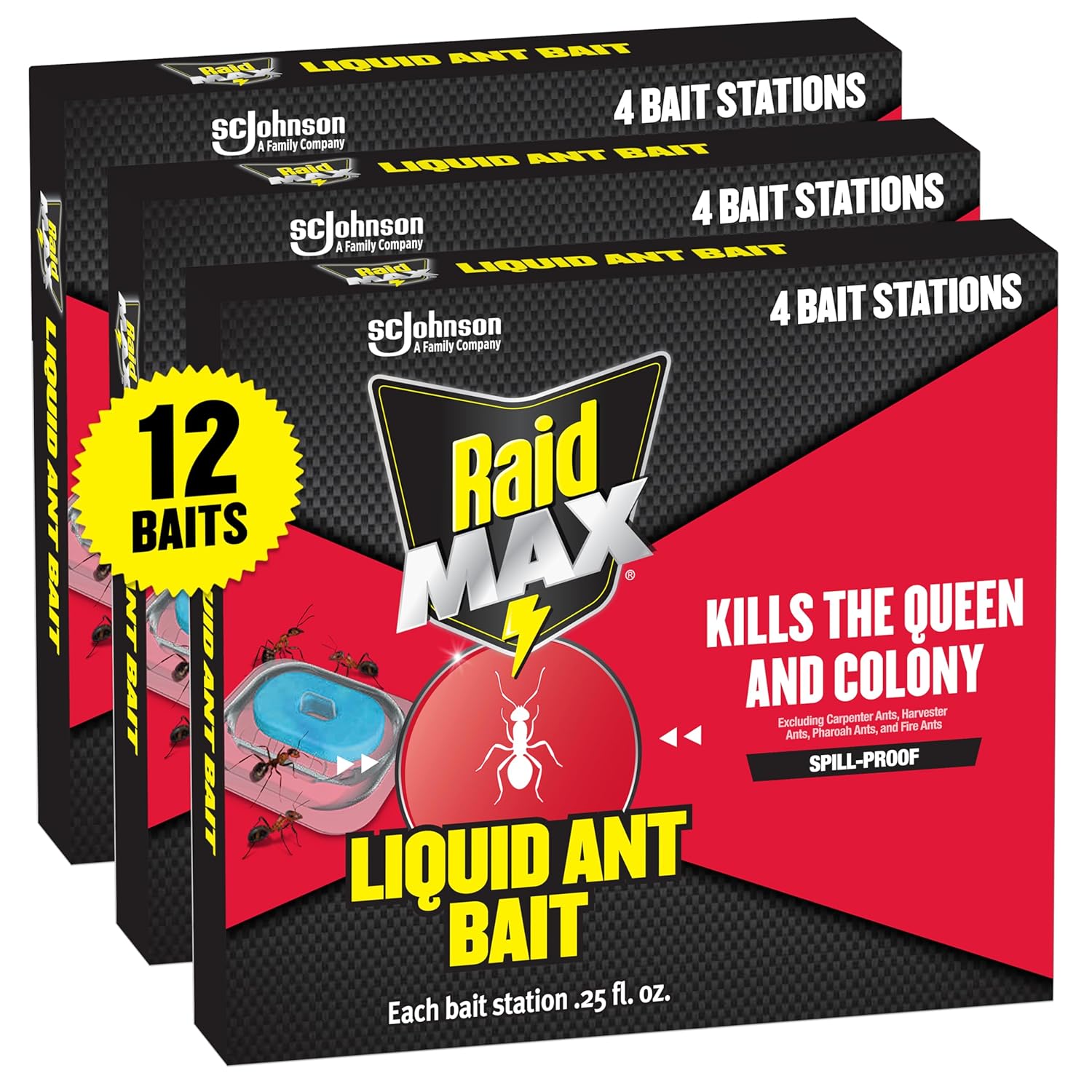
| Unit Count | 12 Count |
|---|---|
| Item Form | Liquid Bait |
| Target Species | Insects |
| Active Ingredients | Spinosad |
Raid Max Liquid Ant Killer comes as ready-to-use, spill‑proof bait stations that are placed where you see ants to be carried back to the nest and shared with the colony. Typical use is simple: peel the activation film, set the station along baseboards, near trash, or at entry points, and replace multiple stations for larger infestations. The product targets many common ant species and uses spinosad as the active ingredient, which helps kill workers and the queen when ants feed and share the liquid. Practical benefits include easy placement, no mixing or spraying, and suitability for both indoor and outdoor spots where you want discrete control. Limitations: it does not work on fire ants, carpenter ants, harvester ants, or pharaoh ants, and effectiveness depends on ants finding and consuming the bait so very dry, hot, or heavily baited areas may reduce uptake. Also stations should be kept away from children and pets and monitored until activity stops.
Best for: Buyers who want a low‑effort, discrete ant control method to treat visible ant trails and likely colony locations around a home and yard. Ideal for people who prefer bait stations over sprays and who will monitor and replace stations as needed.
Less Ideal for: Those dealing primarily with fire ants, carpenter ants, or other excluded species or users who need immediate knockdown of large outdoor mounds should look for alternatives.
- Ready-to-use prefilled stations require no mixing or setup
- Works indoors and outdoors for flexible placement
- Spinosad-based liquid is carried back to colony to target queen and larvae
- Comes in a 12-count pack for coverage of multiple hotspots
- Not effective against fire ants, carpenter ants, harvester ants, or pharaoh ants
- Performance depends on ants choosing the bait so very large or competing food sources can slow results
Verdict: A convenient, ready-to-use liquid bait pack that kills common household ant colonies by being carried back to the nest, making it a practical choice for routine outdoor and indoor ant control.
Syngenta Advion Ant Gel (4 Tubes, 30 g each)

| Unit Count | 4.23 Ounce |
|---|---|
| Included Components | 4 Tubes x 30-Grams, 1 Plunger and 2 Tips |
| Item Form | Gel |
| Active Ingredients | 0.05% indoxacarb |
| Target Species | Insects |
Advion Ant Gel is a user-friendly gel bait intended to control common household and structural ant species by exploiting worker foraging behavior. You apply small spots or short lines of the odorless gel along active trails, in cracks and crevices, and near entry points; foraging workers consume the bait and carry it back to the nest where it is shared, helping to eliminate the queen and other nestmates. The kit ships with four 30 g tubes plus an applicator plunger and tips for precise placement, which makes targeting tight spaces straightforward. Its non-repellent formula with 0.05% indoxacarb is formulated to be attractive to a range of species including Argentine and carpenter ants, and it is labeled for both indoor and outdoor use. Limitations to note are that it is a chemical bait so safety precautions are needed around children and pets and efficacy depends on ants accepting the bait matrix versus other available food sources.
Best for: Homeowners and renters who want a targeted, easy-to-apply solution to eliminate established ant infestations and prefer a bait that works via worker-mediated transfer to treat whole colonies.
Less Ideal for: People seeking non-chemical or immediate-contact kill methods or those who need a one-time spray rather than ongoing baiting strategies should consider other options.
- Non-repellent gel formulation designed for worker ants to feed and transfer bait to the colony
- Includes four 30 g tubes plus a plunger and application tips for precise placement
- Labelled for both indoor and outdoor use, suitable for common pest species
- Odorless formula that is easy to place along trails, cracks, and crevices
- Contains a chemical active ingredient so it must be kept away from children and pets
- Effectiveness depends on ants preferring the bait over other available food sources
Verdict: Choose Advion Ant Gel when you want a precise, bait-based solution that encourages workers to carry poison back to the nest for colony-level control.
Amdro Ant Killer for Outdoor Home Perimeter, 12 oz

| Unit Count | 12 Ounce |
|---|---|
| Item Form | Granules |
| Target Species | Ant |
| Special Features | Ant Killer for Outdoor Home Perimeter |
Amdro Ant Killer for Outdoor Home Perimeter is a granular bait you shake around a building to create a 1-foot protective band that attracts worker ants and carries the poison back to the colony. It is typically used on lawns, around foundations and in landscaped beds during the spring and summer when ants are active. The formulation claims to work on 25 common ant species and continues to be effective for up to three months, which reduces how often you need to reapply. Practical benefits include easy application with no equipment, visible reduction in ant activity within a week, and suitability for broad perimeter treatment of larger yards. Limitations are that it must be applied to dry ground and not before rain or freezing temperatures, and it targets outdoor activity only so indoor infestations may require separate treatment. This product is best treated as a preventive or colony-control solution for routine lawn maintenance rather than a rapid indoor knockdown.
Best for: Homeowners who want an affordable, low-effort way to reduce ant pressure around lawns and landscaped perimeters and prefer a preventive, long-lasting perimeter treatment.
Less Ideal for: People needing immediate indoor ant control, emergency knockdown, or solutions for wet or shaded yards where repeated wetting makes granular application impractical.
- Granular bait that workers carry back to the colony to target queens and nests
- Claims control of up to 25 ant species common in lawns and landscapes
- Long residual action up to three months reduces reapplication frequency
- Simple shake-on application requires no special tools
- Must be applied to dry ground and avoided before rain or when temperatures are below 50°F
- Designed for outdoor perimeter use only and will not treat interior infestations directly
Verdict: Amdro provides a budget-friendly, long-lasting granular perimeter bait that makes routine lawn and foundation ant control simple and low maintenance.
Spectracide Ant Shield Outdoor Killing Stakes, 6 Count

| Unit Count | 6 Count |
|---|---|
| Target Species | Ant |
| Liquid Volume | 6 fluid ounces |
Spectracide Ant Shield Outdoor Killing Stakes are ground-in bait stations designed to control ant colonies around the exterior of a home. You push the stake into soil along ant trails, where foraging ants enter the weather-resistant station, eat the bait, and carry it back to the colony to kill the queen and other ants. The stakes are child-resistant and formulated to start killing within hours and remain effective for up to three months under normal outdoor conditions. They are simple to deploy in multiple locations and can be replaced every three months or sooner for heavy infestations. Limitations to keep in mind are that stakes must be placed where children, pets, and non-target animals cannot access them and larger properties may need multiple stakes for full control. These are a straightforward, low-effort option for exterior ant control when you want a long-lasting, ready-to-use bait rather than repeated sprays or traps.
Best for: Budget-minded homeowners who want an easy, low-effort way to reduce outdoor ant activity without frequent reapplication. Good for people who prefer set-and-forget solutions for perimeter ant control.
Less Ideal for: Indoor ant problems or situations where pets and children freely access yard areas; those users should choose targeted indoor products or professional services instead.
- Long-lasting bait that can remain effective up to three months
- Weather-resistant stations suitable for outdoor placement
- Targets the colony by killing foragers and the queen rather than only visible ants
- Simple stake format makes placement quick and low-effort
- Must be placed out of reach of children and pets limiting placement options
- Heavily infested or large properties may require multiple packs for full control
Verdict: An inexpensive, easy-to-deploy outdoor bait stake that gives months of colony-level ant control with minimal effort.
Terro Outdoor Liquid Ant Bait Stakes, 12-Pack

| Unit Count | 12 Count |
|---|---|
| Material Type | Plastic |
| Target Species | Ant |
| Power Source | manual |
These Terro Outdoor Liquid Ant Bait Stakes are simple, low-effort bait stations designed to intercept ant colonies outdoors before they reach the house. Each stake contains a sweet liquid bait with borax that worker ants feed on and carry back to the nest, which can eliminate the queen and much of the colony over a 2 to 4 week period. They are weather-resistant, see-through so you can monitor bait consumption, and install by cutting a tab and pushing the stake into soil or mulch near ant trails. For homeowners dealing with small common species such as little black, odorous house, pavement, and ghost ants, the stakes provide targeted perimeter protection without sprays or direct contact. Limitations are that baiting takes days to weeks to fully work and you may see increased ant activity at first as foragers discover the bait. Also they must be placed where children and pets cannot access them and replaced periodically to maintain protection.
Best for: Homeowners who want a low-effort, evidence-based way to stop small common outdoor ants at the source and prefer baiting over sprays, using visual confirmation of activity before replacing units.
Less Ideal for: People needing an immediate knockdown or single-visit solution for heavy indoor infestations or those who cannot place bait stations out of reach of children and pets.
- Colony-level control via borax bait that foraging ants share with the nest
- Ready-to-use stakes are easy to deploy by cutting the tab and inserting in soil
- See-through design lets you monitor bait consumption and know when to replace
- Weather-resistant stations suitable for yards, patios, and garden perimeters
- Works gradually and can take 2–4 weeks for complete colony control
- Not child- or pet-proof if placed in accessible areas and requires careful placement
Verdict: A practical, easy-to-use baiting solution that stops small outdoor ant colonies by getting worker ants to carry borax bait back to the nest.
Choosing the Right Outdoor Ant Bait: Key Factors to Consider
Attractant Type and Target Species
Different ant species prefer different food sources at different times of year. Sweet-based baits often outperform protein-based baits for sugar-seeking species, while protein- or grease-based matrices attract other species. Knowing which ants you see foraging in the yard helps you pick a bait formulation that foragers will accept and carry back to the nest.
If foragers ignore the bait, the product will fail regardless of toxicity. Observe worker behavior over a few hours after placement to confirm acceptance before applying widely. Changing to an alternate attractant type can make the difference between temporary worker kills and sustained colony control.
Weather Durability and Placement
Outdoor baits face sun, rain, and fluctuating temperatures that can dry out, dissolve, or degrade attractants. Gel or protected reservoir baits are often more resistant than exposed paste placed directly on soil. Packaging that shields the matrix from UV and moisture keeps palatability consistent longer.
Placement matters as much as formulation. Put baits in shaded, dry microhabitats where ants regularly travel, under pavers, along foundation gaps, or beneath debris. Replenish after heavy rains and check that the bait has not been flooded or crusted over, which reduces take.
Mode of Action and Transfer Timeframe
Baits that act slowly enough for foragers to return to the nest enable distribution through trophallaxis and brood feeding. Fast-acting contact poisons may kill workers before transfer, reducing colony impact. Understanding the expected lag time to colony decline helps set realistic expectations and follow-up timing for reapplication.
Also consider whether the active ingredient affects larvae and reproductive castes effectively. Some baits suppress worker numbers quickly but fail to reach the queen, prolonging control efforts. Choosing a product formulated to maximize colony-level transfer increases the chance of lasting control.
Application Flexibility and Coverage
Gardens include many microhabitats from mulched beds to stone pathways. Baits that come in multiple presentation formats-tubs, stations, or gels-let you adapt placement to the situation. Station-style baits can protect the matrix from birds and rain, while syringes or gels let you dose narrow crevices.
Assess the area you need to treat and choose a format that will reach foragers without contaminating plantings. Ease of application reduces mistakes that can lower effectiveness or increase non-target exposure.
Safety, Label Directions, and Non-target Exposure
Outdoor use increases the chance of contact with pets, wildlife, and children. Clear label directions on bait placement, tamper-resistant stations, and instructions for withholding pets from treated zones are essential for safe use. Some active ingredients have different environmental profiles; follow label restrictions on proximity to water features and edible plantings.
Consider whether the product requires additional containment to prevent residue on garden produce or attraction of non-target scavengers. Products with straightforward, measurable placement guidance reduce the risk of misuse and unintended exposure.
Identifying Common Outdoor Ants
Different species create different problems. Pavement ants, odorous house ants, and certain pavement-dwelling species commonly forage on patios and driveways while larger species may nest in soil mounds. Knowing whether you are seeing small sugar-seeking workers or larger protein-seeking workers helps you choose the right attractant type.
A quick field check is to place a small dab of sugar-based bait and a small dab of protein-based bait near active trails and observe which workers visit over a couple of hours. That simple test often points you toward the most effective bait matrix without extra expense.
- Sugar-preferred ants: choose sweet matrices
- Protein-preferred ants: consider grease or protein baits
- Trail observation is a low-effort diagnostic step
Best Practices for Bait Placement
Place stations close to active trails, near nest entrances, or where workers regularly cross foundations. Keep baits shaded and away from direct rain where possible. If you use exposed paste, protect it with a small overhang or under a stone to reduce rain and sun exposure.
Check baits daily for take and condition. Replace or refresh after heavy rain or if the matrix looks crusted. Limit the number of stations to what you can monitor so you know which spots are attracting ants and which need adjustment.
- Locate shaded, dry microhabitats along ant trails
- Use stations to shield bait from rain and non-targets
- Monitor take daily for the first week
Timing Treatments Around Seasonal Behavior
Ant foraging preferences shift with season and temperature. Spring and fall often bring high activity as colonies expand and workers forage widely, while hot, dry midsummer conditions can change diet preference toward moisture and sugars. Apply bait when foragers are visibly active and not distracted by abundant natural food sources.
Early morning or late afternoon applications often increase acceptance because many species avoid the hottest part of the day. Repeat treatments may be necessary as colonies change foraging intensity across the season.
- Apply when ant activity is high, often morning or evening
- Adjust attractant type with seasonal diet shifts
- Expect to reapply following heavy rain or irrigation
Managing Non-target Interactions
Birds, raccoons, and neighborhood pets can interfere with outdoor bait. Use tamper-resistant stations that restrict access to small ants while excluding larger scavengers. Anchoring stations or placing them under hardscape edges helps keep them stable and reduces disturbance.
If you have free-roaming pets, temporarily block access to treated areas during the initial uptake period and follow label instructions for pet safety. Remove spilled bait promptly and avoid placing bait on edible garden surfaces unless the product label explicitly allows it.
- Use tamper-resistant stations to limit non-target access
- Anchor or tuck stations under hardscape
- Follow label directions regarding pets and produce
When Baiting Is Not Enough
Large or multi-queen colonies, satellite nests, or invasive species with wide-ranging foraging patterns may not respond fully to baiting alone. In those cases integrate cultural controls such as removing food sources, sealing entry points on structures, and addressing moisture issues that support nesting.
Mechanical removal of mounds, focused habitat modification, and repeated, targeted baiting over weeks can be necessary for persistent infestations. Monitor results and adjust tactics rather than simply increasing bait volume.
- Combine baiting with habitat and moisture management
- Expect multi-week follow up for large colonies
- Avoid overusing bait in a single area; adapt strategy based on results
How We Chose the Best Outdoor Ant Bait
We evaluated options based on criteria that matter to gardeners managing ant activity outdoors. Key factors included bait attractiveness to common outdoor ant species, weather and UV resistance so the formulation remains effective after exposure, persistence in the environment to allow transfer through the colony, application flexibility for lawns, garden beds and hardscapes, and safety instructions for use around pets and children. We prioritized products that balance a readily accepted food matrix with slow-acting active ingredients that permit trophallaxis and colony transfer rather than instant-kill formulations that leave workers dead before they return to the nest. We excluded products intended only for indoor use or that require specialized equipment for application. We also removed granular insecticides meant for broadcast lawn treatment rather than baiting, since those operate by contact toxicology rather than bait-mediated colony control. The final shortlist reflects items that gardeners can apply defensibly across typical outdoor scenarios and that present clear label directions for dwellings with nearby people and companion animals.
FAQ
How long does outdoor ant bait stay effective after placement?
Effectiveness depends on formulation and exposure. Protected station baits can remain attractive for days to weeks in dry conditions, while exposed pastes often degrade after rain or intense sun. Inspecting and refreshing bait after heavy weather is usually necessary.
Is it safe to use outdoor ant bait around pets and kids?
Safety varies by active ingredient and product packaging. Use tamper-resistant stations and follow label directions about exclusion periods. Temporarily restricting pet access and placing baits out of reach reduces risks.
How soon can I expect to see fewer ants after baiting?
You may see reduced forager numbers within a few days, but full colony suppression often takes several weeks because effective baits require transfer through the nest. Pace expectations with the colony transfer timeframe described on the label.
Can I use outdoor bait near vegetable gardens?
Check the label for restrictions around edible plantings. Many baits advise avoiding direct contact with produce and recommend placing stations on hardscape or in areas adjacent to beds rather than on top of soil where produce grows.
Should I choose a gel, station, or paste for the yard?
Choose the format that fits the microhabitat. Stations protect bait from rain and non-targets, gels allow precise placement in cracks or logs, and pastes can be useful in sheltered spots. Monitoring ability and local conditions should guide format choice.
Final Verdict
Outdoor ant bait is most effective when the formulation matches the foraging preferences of the target species and when placement protects the matrix from weather and non-targets. Prioritize attractant type, weather resistance, and transfer potential when choosing a product, and plan for multiple checks and targeted reapplications. For most garden situations, combining properly placed bait stations with habitat adjustments and monitoring gives the best chance of reducing colonies over weeks rather than days.
