

Note: This article contains affiliate links. If you click on these links and make a purchase, I may earn a small commission at no extra cost to you. This helps support my research and content. Read my full affiliate disclosure here.
Vines can quickly take over fences, garden beds, and groundcover, so choosing the right weed killer for vines matters for long-term control. You need a product that reliably kills established runners and roots without damaging nearby ornamentals or desirable ground plants. This guide shortlists the top options for vine control and explains how we evaluated factors like speed of action, residual effects, and application safety in garden situations. Read on for practical guidance on matching a vine-control product to your site and maintenance style before we move into our top picks.
Top Picks at a Glance
| Best Overall The best all-around choice for most situations | Ortho GroundClear Poison Ivy & Tough Brush Killer, 1 gal. |  |
| Best Quality Built to a higher standard if you want something more solid | Roundup Poison Ivy Plus Tough Brush Killer with Comfort Wand, 1 gal. |  |
| Best Value The sweet spot between price and what you get | BioAdvanced Poison Ivy Killer Plus Concentrate, 32 oz |  |
| Best Budget The cheapest option that still gets the job done reliably | Bonide Poison Oak & Ivy Killer Ready-to-Use Spray, 32 oz |  |
| Highest Rated A top-rated pick with lots of positive feedback | Southern Ag Crossbow Weed & Brush Killer, 32 oz |  |
| Most Popular A crowd favorite that many people choose with confidence | Bonide Stump-Out Stump & Vine Killer, 8 oz with Applicator | 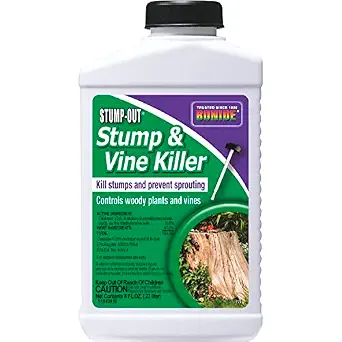 |
| Best Seller A high-volume bestseller chosen again and again | Roundup Weed & Grass Killer with Comfort Wand, 1.33 gal. |  |
Ortho GroundClear Poison Ivy & Tough Brush Killer, 1 gal.

| Unit Count | 128 Fluid Ounces |
|---|---|
| Item Form | Spray |
| Coverage | Over 60 types of listed tough weeds and brush |
| Active Ingredients | Triclopyr, Triethylamine Salt, Pelargonic Acid |
Ortho GroundClear Poison Ivy & Tough Brush Killer is a one-gallon ready-to-use herbicide with a Comfort Wand sprayer designed for targeted control of stubborn brush and broadleaf weeds. It contains triclopyr and pelargonic acid to move through foliage and kill over 60 listed species including poison ivy, poison oak, kudzu and wild blackberry. The battery-powered wand gives controllable spray patterns for precise application along fences, trails and around structures so you can avoid desirable plants. Results begin to show within an hour and the product becomes rainproof after about two hours, which helps reliability in variable weather. Use when weeds are actively growing and thoroughly wet foliage for best uptake; retreatment may be necessary for very persistent regrowth. Because it is nonselective, care is required to avoid contact with desirable plants and it is not recommended for lawns or garden beds with valued plants. The Comfort Wand reduces bending and hand fatigue compared with pump sprayers, but proper protective equipment and attention to runoff guidance are still important.
Best for: Homeowners who prioritize dependable, fast-acting control of poison ivy and tough brush around buildings, fences and trails and who prefer a ready-to-use sprayer that reduces bending and hand fatigue.
Less Ideal for: Gardeners who need selective weed control in planted beds or people wanting an herbicide safe for turf should look at lawn-safe or selective products instead.
- Targets and kills over 60 listed tough weeds and brush including poison ivy and kudzu
- Ready-to-use with battery-powered Comfort Wand for accurate, low-effort spraying
- Visible results in about 1 hour and rainproof after 2 hours for dependable performance
- Moves through foliage for systemic control rather than just contact wilting
- Nonselective formula can damage desirable plants if oversprayed
- Not suitable for use on lawns or in garden beds with plants you want to keep
Verdict: Choose this ready-to-use, wand-equipped herbicide when you need fast, reliable control of poison ivy and other persistent brush around structures and non-garden areas.
Roundup Poison Ivy Plus Tough Brush Killer with Comfort Wand, 1 gal.

| Unit Count | 128 Fluid Ounces |
|---|---|
| Item Form | Spray |
| Coverage | 300 square feet |
| Liquid Volume | 1 gallons |
This 1 gallon Roundup formula is designed to tackle poison ivy, poison oak, poison sumac, wild blackberry, kudzu and other tough weeds by killing them down to the root. The container includes a reusable Comfort Wand that snaps on for one-touch, precision spraying so you can treat vines, fence lines, around trees and foundations without bending over. The product is rainproof in about 30 minutes and reports visible wilting within hours, and the label gives guidance for replanting 1 to 30 days after application depending on the site. Practical benefits include broad-spectrum control of woody vines and brush, a large coverage area (about 300 sq ft per gallon), and easier application with the wand. Important limitations are typical of strong herbicides: treated areas must be kept free of people and pets until dry and care is required near desirable plants to avoid drift or overspray. Also the formula contains multiple active ingredients, so follow label instructions for safe use and site-specific planting intervals.
Best for: Buyers who want an all-purpose, easy-to-apply solution for stubborn brush and poison ivy around yards, fence lines, and foundations, and who prioritize straightforward application and fast visible results.
Less Ideal for: Not a good choice for gardeners who need a selective lawn-safe product or who must treat areas where children, pets, or desirable plants cannot be kept away during drying and planting intervals.
- Targets woody vines and tough brush as well as broadleaf weeds and grasses
- Includes a reusable Comfort Wand for precision, reduce bending and easier spot treatment
- Rainproof in about 30 minutes so treatment holds up to light weather soon after application
- Covers roughly 300 square feet per gallon for treating fence lines, foundations and small infestations
- Contains potent active herbicide ingredients requiring careful handling and strict adherence to label safety directions
- Not selective so it can harm desirable plants if sprayed or if drift occurs
Verdict: A convenient, large-format ready-to-use herbicide with a precision Comfort Wand that makes fast, effective control of poison ivy and tough brush simple for typical homeyards.
BioAdvanced Poison Ivy Killer Plus Concentrate, 32 oz

| Unit Count | 32 Fluid Ounces |
|---|---|
| Coverage | Up to 4,000 square feet |
| Item Form | Liquid |
| Active Ingredients | Triclopyr, triethylamine salt 8.8% |
This BioAdvanced concentrate is a targeted solution for removing poison ivy, kudzu, blackberry and many other hard-to-control brush and vines by working systemically from leaf to root. It is typically mixed or applied undiluted for stump treatment and can treat up to 4,000 square feet from a single 32 oz bottle, which makes it useful for fence lines, wooded edges, trails, and overgrown patches. The active ingredient triclopyr moves through foliage into stems and roots so treated plants tend not to resprout, and the product is marketed to handle more than 70 listed species. Practical benefits include one-time applications that keep working after you spray and the ability to paint stumps to prevent regrowth. Limitations are that it is a nonselective brush control chemical so care is needed to avoid desirable plants and follow label directions for timing and application, and it requires standard protective measures when mixing and applying concentrated herbicides.
Best for: Gardeners and property owners looking to clear established patches of woody brush and invasive vines quickly and with lasting results who prioritize efficiency and fewer repeat treatments.
Less Ideal for: Those who need a selective solution for weeds in mixed beds with desirable plants nearby or users uncomfortable handling concentrated herbicides should consider alternative targeted methods.
- Systemic action with triclopyr that kills roots and reduces regrowth
- Concentrate covers up to 4,000 sq ft from a 32 oz bottle, efficient for large patches
- Works on a broad list of tough brush and vines including poison ivy, kudzu, and blackberry
- Can be applied undiluted to stumps to stop resprouting
- Nonselective herbicide so it can damage desirable plants if not applied carefully
- Requires handling precautions and following label instructions when mixing and applying
Verdict: Choose this concentrate when you need an efficient, single-product solution to eliminate large patches of poison ivy and other tough brush down to the roots.
Bonide Poison Oak & Ivy Killer Ready-to-Use Spray, 32 oz

| Unit Count | 32 Ounce |
|---|---|
| Item Form | Spray |
| Coverage | approximately 1000 square feet |
| Included Components | Bonide Poison Ivy & Oak Killer Ready-To-Use, 32 oz |
| Active Ingredients | Herbicide |
This Bonide ready-to-use spray is a straightforward spot treatment for poison ivy and poison oak around the yard. The trigger bottle requires no mixing, so you can aim and spray directly where the vines and patches are actively growing. It is a systemic herbicide, so it moves into the plant to kill roots rather than only burning foliage, and the product becomes rainfast once dry—helpful if weather is uncertain. Coverage is listed at approximately 1,000 square feet from the 32 ounce bottle, making it a practical choice for small to medium problem areas. Important considerations are following label directions to avoid drift onto desirable plants and wearing protection to prevent skin or eye contact. The formula is intended to spare lawn grasses when applied properly, but it is not selective for all garden plants, so care is needed around beds and ornamentals.
Best for: Buyers who want an easy, no-mix solution to tackle small to moderate poison ivy or poison oak patches quickly and without complex preparation.
Less Ideal for: People managing large-scale infestations, extensive acreage, or those who need a selective product for mixed garden beds should consider professional treatments or concentrate products designed for larger areas.
- Ready-to-use trigger bottle requires no mixing and is simple to apply
- Systemic action that targets roots for longer-term control of poison ivy and oak
- Rainfast after drying so treatment holds up if it rains within a short window
- Advertised to be safe for lawn grasses when used according to directions
- Limited volume for large infestations so multiple bottles may be needed
- Non-selective herbicide risk if accidentally sprayed on desirable plants
Verdict: A simple, ready-to-use systemic spray that kills poison ivy and oak down to the root and is ideal for small to medium yard patches.
Southern Ag Crossbow Weed & Brush Killer, 32 oz

| Unit Count | 32 Ounce |
|---|---|
| Item Form | Spray |
| Coverage | 1,000 square feet |
| Liquid Volume | 948 ml |
| Active Ingredients | Herbicide |
Southern Ag Crossbow is a ready-to-dilute spray herbicide designed to control woody plants, vines and broadleaf weeds in pastures, fence lines and noncropland. It combines active ingredients effective against tough brush and species such as blackberries and poison oak, and it can be applied with anything from a handheld sprayer to tractor-mounted equipment. The label recommends 2 to 6 tablespoons per gallon depending on target toughness and notes the product is rain-fast within about two hours, which helps reduce loss from unexpected showers. Practical benefits include targeted broadleaf and woody plant control while preserving grasses, straightforward mixing rates, and suitability for larger coverage needs. Important limitations are that it is nonselective for broadleaves so avoid drift onto desirable plants, it requires protective gear during handling, and label directions limit repeated applications to maintain safety and environmental compliance. Follow label timing and safety instructions for best, reliable results on persistent vines and brush.
Best for: Buyers who prioritize dependable, professional-strength control of woody vines and brush along fences, pastures, and noncrop areas and who follow label safety and application practices.
Less Ideal for: Home gardeners wanting a gentle or spot-only weed solution near ornamentals or edible plantings should choose a more selective or lower-toxicity option.
- Effective against woody plants and common invasive vines such as blackberries and poison oak
- Leaves grasses unharmed when applied as directed, useful in pastures and turf-adjacent areas
- Rain-fast in about two hours, reducing loss from light showers
- Usable with a wide range of sprayers from handheld to tractor-mounted
- Nonselective for broadleaf plants so drift can damage desirable ornamentals or crops
- Requires personal protective equipment and careful handling
- Label restricts frequency of applications which can limit repeated control in a single season
Verdict: Choose Crossbow when you need reliable, professional-strength control of woody vines and brush while preserving grasses in noncrop areas.
Bonide Stump-Out Stump & Vine Killer, 8 oz with Applicator

| Unit Count | 8 Ounce |
|---|---|
| Item Form | Spray |
| Coverage | Stumps, woody plants, vines, broadleaf weeds |
| Liquid Volume | 8 fluid ounces |
| Active Ingredients | 3,5,6-Tricloro-2-Pyridinyloxyacetic Acid |
Bonide Stump-Out is a concentrated herbicide designed for targeted stump and vine control around homes and walkways. It is typically used undiluted on freshly cut stumps or as a foliar spray on woody vines and broadleaf weeds; the included brush applicator helps apply the product directly to the cut surface to prevent resprouting. The active ingredient listed is a pyridinyloxyacetic acid derivative, and the formula is intended to work within one to six weeks depending on the plant. Practical benefits include focused application that reduces drift onto turf, a small 8 ounce size that is easy to store, and compatibility with hose-end or tank sprayers for foliar work. Important limitations are that it must be applied according to label directions for safety and effectiveness, it is a specialized product for woody plants rather than a general lawn weed killer, and multiple applications or physical stump removal may still be necessary for large or well-established stumps.
Best for: Buyers who want a focused, proven solution to stop stump sprouting and eliminate woody vines around yards and structures and who prioritize products with established user feedback and clear instructions.
Less Ideal for: Homeowners seeking a general yard or turf weed control product or those who need large-volume treatments for extensive properties should consider broader-coverage herbicides or professional services.
- Targeted brush applicator for direct application to stumps and cut surfaces
- Effective on woody plants, vines and broadleaf weeds when used as directed
- Works relatively quickly with visible results in 1–6 weeks
- Can be applied undiluted for stump treatment or via hose/tank sprayer for foliar use
- Small 8 oz volume may require multiple purchases for many or large stumps
- Specialized formulation not intended as a broad-spectrum lawn herbicide
Verdict: Choose this product when you need a targeted, easy-to-apply stump and vine killer that prevents resprouting with minimal off-target spray.
Roundup Weed & Grass Killer with Comfort Wand, 1.33 gal.

| Item Form | Liquid |
|---|---|
| Coverage | 400 sq. ft. |
| Liquid Volume | 1.33 gallons |
This Roundup package pairs a 1.33 gallon liquid formulation with a Comfort Wand for easier spraying around beds, walkways, and foundations. It is formulated to kill common broadleaf weeds and grasses down to the root, with visible wilting in hours and rainfast protection in about 30 minutes, so treated areas are less likely to wash away after a brief rain. The wand offers one-touch continuous spray, which reduces hand fatigue during spot treatments and makes edging and targeted applications simpler than using a separate sprayer. Coverage is listed at about 400 sq. ft., appropriate for small yards, beds, or multiple spot-treatment sessions. Important limitations are that this is a nonselective herbicide so it will damage desirable plants if contacted and the product directions include replanting wait times of 1 to 30 days depending on use. Users should follow label precautions about keeping people and pets away until spray has dried and applying only in calm conditions to avoid drift.
Best for: Buyers who want a straightforward, ready-to-use herbicide for targeted spot treatments and edging where quick, reliable weed control is the priority and minimizing application fuss matters.
Less Ideal for: Large properties or users who need selective lawn-safe control should consider professional application methods or products formulated specifically for turf.
- Fast visible results in hours and rainproof in as fast as 30 minutes
- Comfort Wand with one-touch continuous spray reduces hand fatigue and improves targeting
- Kills a wide range of broadleaf weeds and grasses to the root
- Ready-to-use liquid requires no mixing and covers up to 400 sq. ft.
- Nonselective formula will damage desirable plants if contacted
- Container and wand limit treatment area per refill compared with larger tank sprayers
Verdict: A convenient, ready-to-use herbicide with a Comfort Wand that delivers fast, reliable spot control of broadleaf weeds and grasses for homeowners who want an easy, low-fuss solution.
Choosing the Right Weed Killer for Vines: Key Factors to Consider
Mode of Action and Root Kill
How a weed killer moves within a vine determines whether treatment is a temporary top-kill or a true eradication. Systemic products that translocate into roots will generally suppress regrowth from established runners, while contact-only products scorch foliage and require repeat treatments. For mature vines with extensive root systems, a product with proven root translocation reduces the chance of resprouting and limits the number of follow-up applications.
Understanding mode of action also matters for resistance management. Rotating between chemistries or pairing mechanical removal with chemical control can prevent hard-to-control populations from becoming less responsive over time. Always follow label guidance about repeat intervals and tank-mix restrictions to preserve long-term effectiveness.
Speed of Visible Control
Different herbicides show results on different timelines. A fast-acting contact herbicide may produce visible browning within days, which is useful for quick aesthetic cleanup on fences or trellises. Systemic treatments may take longer to show wilting and discoloration because the active ingredient needs time to travel into roots and disrupt growth processes.
Choose a product timeline that fits your goals. If you need to remove vines ahead of a structural project, expect to plan treatments weeks in advance when using systemic options. For spot removal where immediate visual impact is important, a contact product can be used to weaken vines prior to physical removal.
Residual Activity and Soil Persistence
Residual suppression describes how long a product continues to affect new shoots or nearby seedlings after application. Some herbicides leave active residues in the soil that prevent regrowth for weeks to months, which can be useful in high-infestation areas. Other options break down quickly, allowing earlier replanting of ornamentals or vegetables.
Consider the planting plan for treated areas. If you plan to restore beds with desirable perennials or edibles, choose a product with low soil persistence and follow the recommended replanting interval. In contrast, for fence lines or paths where replanting is not planned, longer residual control can reduce maintenance time.
Application Method and Accessibility
How you apply a weed killer affects effectiveness and safety. Spot-spray wands, brush-on gels, cut-stump treatments, and stem injections each offer tradeoffs. Spot spraying is fast for scattered vines but increases drift risk. Cut-stump and brush-on methods deliver the herbicide directly to the plant base, minimizing exposure to nearby desirable plants and often improving root kill on large vines.
Assess site accessibility and equipment you are comfortable using. Properties with many small vines may benefit from handheld sprayers, while large vines on trees or fences may require a cut-and-treat approach. Choose an application method that fits your skill level and reduces risk to adjacent plantings.
Selective Action and Garden Safety
Selectivity determines whether a product targets broadleaf vines while sparing grasses and other ornamentals. In mixed plantings, a selective product that targets vines without harming desirable groundcover is preferable. Drift, runoff, and accidental contact are common ways nearby plants get damaged, so read label precautions and plan applications for calm weather.
Take extra care near edible plantings and water features. Look for products with clear guidance on buffer zones and runoff prevention. When in doubt, use physical barriers, choose low-drift nozzle types, or prefer brush-on treatments to protect non-target species.
Environmental and Replanting Considerations
Environmental persistence and non-target effects influence how and where you can use a product. Some chemistries are sensitive near pollinator habitat or watercourses and require strict adherence to setback distances. Consider how rainfall, soil type, and slope can influence runoff and mobility of the active ingredient.
Also plan for replanting timelines. If you expect to replace vines with desirable landscape plants, select a product whose breakdown profile and label replant intervals match your restoration timeline. In landscape restoration projects, combining targeted chemical control with physical removal and soil solarization can accelerate site recovery while minimizing chemical load.
Preparing the Site Before Treatment
Clear loose debris and prune heavy foliage to expose stems and root collars. Removing excess leaves improves contact and makes stems accessible for cut-stump or brush-on treatments.
Decide whether you will treat standing vines in place or cut them first. Cutting then treating the stump often reduces spray drift and concentrates the herbicide where it will move to the roots.
- Work on calm days to reduce spray drift
- Wear gloves and eye protection when handling concentrated solutions
- Mark nearby desirable plants to avoid accidental contact
Cut-Stump and Basal Treatments
For large, woody vines on trees or posts, cut-stump and basal treatments deliver herbicide directly to the cambium and root system. This method is effective for preventing resprouting from large roots and avoids broadcast spraying over sensitive areas.
Apply treatment immediately after cutting for best uptake. Follow label dilution rates and avoid applying to wet wood or during heavy rain to prevent runoff.
- Cut stems close to the ground before applying
- Use a brush or low-pressure applicator for precise coverage
- Avoid treating stumps that will be used for structural purposes
Spot Spraying and Drift Management
Spot spraying is fast for scattered vines but raises the risk of drift onto neighboring plants. Use low-pressure nozzles, coarse droplets, and short burst sprays to limit aerosol formation. Keep spray paths parallel to sensitive beds rather than across them.
Consider physical shields like cardboard or a handheld shield to protect adjacent plants. If wind conditions are unfavorable, postpone treatment rather than risk damage.
- Calm conditions are essential for safe spot spraying
- Use nozzle types that produce larger droplets
- Maintain a consistent spray speed and distance for even application
Combining Mechanical and Chemical Control
An integrated approach often delivers the best long-term results. Pulling or cutting vines reduces biomass and exposes roots for more effective chemical contact. Mechanical removal is useful on steep slopes or near water where herbicide use is restricted.
After cutting, allow regrowth to produce green tissue before a systemic application when labels recommend it, or treat stumps immediately if following a cut-stump protocol. Plan follow-up inspections and retreatments as needed to catch any resprouts early.
- Use hand tools to remove small root fragments
- Monitor treated areas monthly during the first growing season
- Dispose of removed vine material to prevent vegetative propagation
Timing Treatments for Best Results
Treat vines during active growth for greatest translocation to roots. Late spring through early fall is typically when plants are moving sugars to root stores, which improves systemic herbicide uptake. Avoid treatments when plants are dormant because uptake will be minimal.
Plan multi-year control for persistent species. One season of treatment may weaken vines but not eliminate deep root reserves, so schedule follow-up applications or mechanical removal the following year.
- Apply systemic treatments when leaves are fully developed
- Avoid immediate post-rain treatments to reduce runoff
- Record treatment dates and outcomes for future planning
How We Chose the Best Weed Killer for Vines
We evaluated products that specifically address persistent vine species and aggressive runners, prioritizing attributes that matter in real garden use. Key evaluation criteria included mode of action and root translocation to gauge whether a product kills only foliage or reaches roots; contact speed and visible symptom timing to set expectations for how quickly the gardener will see control; residual activity and soil persistence to understand regrowth risk and replanting windows; application flexibility and delivery options for spot treatment, stem injection, or broadcast use; and safety around desirable plants, including drift risk and recommended buffer practices. We excluded general-purpose herbicides that lack documented effectiveness on established vines or that require unrealistic application methods for a home gardener. We also filtered out options that demand commercial licensing or specialized equipment. The final shortlist emphasizes products that balance reliable root kill, practical application for homeowners, and clear safety guidance for nearby ornamentals and edible plantings.
FAQ
Can I use a general-purpose weed killer to remove vines?
Often general-purpose herbicides will damage vine foliage, but many do not translocate well enough to kill established roots. For persistent vines you usually need a product formulated or labeled for woody or perennial vine control to reduce resprouting.
Is it safe to apply vine herbicides near ornamental plants?
It depends on the product and application method. Brush-on and cut-stump treatments limit exposure to nearby ornamentals. When spraying, use coarse droplets, shielding, and apply on calm days to minimize drift and accidental contact.
How long before I can replant after using a vine-control product?
Replanting intervals vary by active ingredient and formulation. Some products break down quickly and allow replanting in weeks, while others require months. Check label replanting guidance and choose low-persistence options if you plan to restore the site soon.
What is the best method for vines climbing trees or fences?
Cut-stump treatment or basal application is usually best for vines on trees or fences because it delivers herbicide directly to the root system and minimizes drift that could harm the host. Apply immediately after cutting for optimal uptake.
Will a single treatment eliminate mature vine infestations?
Mature infestations often need more than one intervention. A single effective application can kill many vines, but dense root systems and buried runners may resprout. Plan for follow-up treatments and mechanical removal to achieve long-term control.
Final Verdict
Effective vine control depends on matching the herbicide's behavior to the growth habit of the vine and your site constraints. Prioritize products that translocate to roots when you need lasting suppression, and choose targeted application methods when desirable plants are nearby. Expect a combination of mechanical removal and chemical treatment for persistent infestations, and plan follow-up inspections to catch resprouts early. Focus on the tradeoffs between speed, residual activity, and garden safety. When in doubt, select a method that minimizes non-target exposure and fit the product to your replanting plans so you can restore treated areas on your timeline.
