

Note: This article contains affiliate links. If you click on these links and make a purchase, I may earn a small commission at no extra cost to you. This helps support my research and content. Read my full affiliate disclosure here.
Choosing the right potting mix for aloe vera matters more than pot size or watering schedule. Aloe species are shallow-rooted succulents that rot quickly in heavy, moisture-retaining soils, and a mix tailored to fast drainage and balanced aeration makes the difference between a thriving plant and one that struggles. This guide profiles seven top potting mixes selected for use with aloe vera, each chosen because it supports quick water release, stable pH, and light but reliable nutrient support. We explain what to look for, how mixes behave in containers or shallow saucers, and what to expect over a growing season. Read on to find a mix that suits your container style and climate.
Top Picks at a Glance
| Best Overall The best all-around choice for most situations | Leaves and Soul Professional Aloe Plant Soil Mix, 2.2 Quart |  |
| Best Quality Built to a higher standard if you want something more solid | Espoma Organic Cactus Potting Soil Mix (Pack of 2, 8 qt) |  |
| Best Value The sweet spot between price and what you get | Back to the Roots Organic Succulent & Cacti Mix, 12 Quart |  |
| Best Budget The cheapest option that still gets the job done reliably | Doter Aloe Vera Potting Soil Mix, 1 qt |  |
| Highest Rated A top-rated pick with lots of positive feedback | ZzbTwinkle Japanese Succulent, Cactus & Aloe Vera Potting Soil Mix, 6 L |  |
| Most Popular A crowd favorite that many people choose with confidence | Miracle-Gro Succulent Potting Mix, 4 qt. |  |
| Best Seller A high-volume bestseller chosen again and again | Back to the Roots Organic Succulent & Cacti Soil, 6 Quart |  |
Leaves and Soul Professional Aloe Plant Soil Mix, 2.2 Quart

| Volume | 2.2 quarts |
|---|---|
| Unit Count | 81.92 Ounce |
| Made in | USA |
This ready-to-use aloe potting mix is designed to give drought-tolerant plants a loose, fast-draining root environment straight from the bag. You use it for repotting or planting Aloe vera, pups, and similar succulents in containers with drainage holes; the blend of pine bark, peat, and coarse sand creates an open texture that sheds excess water while still holding enough moisture for root uptake. Practical benefits include improved aeration to encourage root expansion, reduced risk of prolonged wetness that leads to rot, and a format that supports efficient fertilizer use once plants are established. The product comes in a resealable bag for easier storage and is made in the USA. Important limitations are that it is a focused succulent mix rather than a general all-purpose potting soil and that peat content means moderately retained moisture compared with pure inorganic mixes, so you may need to adjust watering frequency for your specific light and container conditions.
Best for: Plant owners who want a straightforward, succulent-focused soil for repotting Aloe vera and other drought-tolerant houseplants and prefer a ready-made mix that reduces the need for custom amendments.
Less Ideal for: Gardeners who need an all-purpose potting soil for moisture-loving tropicals or those who prefer a completely inorganic, fast-drying cactus mix.
- Formulated for succulents with fast-draining blend of pine bark, peat, and coarse sand
- Ready-to-use mix—no additional amendments required for typical repotting
- Resealable bag simplifies storage between projects
- Made in the USA and available in small, convenient 2.2 quart size
- Not a universal potting mix—best for succulents and cacti rather than moisture-loving houseplants
- Contains peat so it retains more moisture than fully inorganic succulent mixes
Verdict: Buy this if you want a reliable, ready-to-use fast-draining soil that makes repotting and maintaining Aloe vera and similar succulents easy.
Espoma Organic Cactus Potting Soil Mix (Pack of 2, 8 qt)

| Brand Name | Espoma |
|---|---|
| Number of Packs | 2 |
| Unit Count | 256 Ounce |
| Item Type Name | Espoma CA4 4-Quart Organic Cactus Mix |
| Volume | 8 quarts |
Espoma Organic Cactus Potting Soil Mix is a ready-to-use organic blend designed for succulents, cacti and other container plants that need fast drainage and good root aeration. Typical use is filling pots for Aloe vera, jade plants and similar species or repotting established succulents; the mix combines sphagnum peat moss, humus and perlite to reduce water retention and help prevent root rot. It also includes Espoma’s Myco-tone mycorrhizal blend to encourage root establishment and nutrient uptake, which is helpful after transplanting. The pack of two 4-quart bags provides enough fresh medium for several small- to medium-sized pots. Expect improved watering control and quicker drying between irrigations compared with standard potting soil, but because it is drier and lighter you will need to water more frequently and monitor moisture for thirsty container plants. This mix is practical for growers who prefer an organic formula and want a low-maintenance substrate for arid-loving plants, while those needing a moisture-retentive or heavy, nutrient-dense soil should choose a different blend.
Best for: Buyers who prioritize fast-draining, organic potting media for Aloe vera and other succulents and who want a mix that supports quick root establishment after potting.
Less Ideal for: Gardeners who need a moisture-holding, nutrient-rich mix for thirsty tropical houseplants or those who prefer a heavier soil feel.
- Formulated for succulents and cacti with high drainage components like perlite
- Contains organic components including sphagnum peat moss and humus
- Includes Myco-tone mycorrhizae to support root establishment and nutrient uptake
- Sold as a two-pack providing enough volume for multiple small pots
- Lower water retention means more frequent watering for plants that prefer consistent moisture
- Not formulated for heavy-feeding or moisture-loving container plants
Verdict: A practical organic cactus and succulent mix that gives Aloe vera and similar plants fast drainage and a root-friendly mycorrhizal boost.
Back to the Roots Organic Succulent & Cacti Mix, 12 Quart

| Brand Name | Back to the Roots |
|---|---|
| Item Type Name | Potting Mix |
| Unit Count | 384 Fluid Ounces |
| Volume | 12 quarts |
This 12-quart Back to the Roots Succulent & Cacti Mix is a purpose-built organic soil for plants that need fast drainage and airy root zones, which makes it well suited for aloe vera. The mix includes aged bark, perlite, and horticultural sand to improve structure and prevent waterlogging while still holding enough nutrients to feed young transplants. Typical use is straightforward: pot or repot aloe into this blend, water sparingly and let the medium dry between waterings. It contains organic nutrients and mycorrhizae to encourage stronger root growth, but you should plan to top-dress or add a balanced organic fertilizer about a month after transplanting for longer-term feeding. Practical benefits are ease of use, reduced risk of root rot from overwatering, and an organic formulation made in the USA. Limitations are that it is a single-use mix sized for smaller pots and that heavier feeders may need additional periodic fertilizer for best results.
Best for: Buyers who want a low-hassle, organic potting mix that prioritizes drainage and healthy root development for aloe and other succulents.
Less Ideal for: Those growing heavy-feeding plants or filling large beds should choose a richer, bulk soil or plan to supplement with fertilizer and larger volumes of mix.
- Formulated for drainage and aeration with aged bark, perlite, and sand to reduce root rot risk
- Organic ingredients and added mycorrhizae to support root establishment
- Ready to use for potting or repotting succulents and cacti without complex mixing
- Made in the USA with a nutrient profile suitable for transplanting and early growth
- May require additional fertilizer after the first month for sustained nutrient needs
- Pack size is oriented to small- to medium-scale container use rather than large landscaping projects
Verdict: A convenient organic mix designed to give aloe vera and similar succulents fast drainage and good root development with minimal prep.
Doter Aloe Vera Potting Soil Mix, 1 qt
| Brand Name | Doter |
|---|---|
| Item Type Name | Garden soil |
| Volume | 1 quarts |
| Manufacturer | Doter |
| Model Number | 1qt |
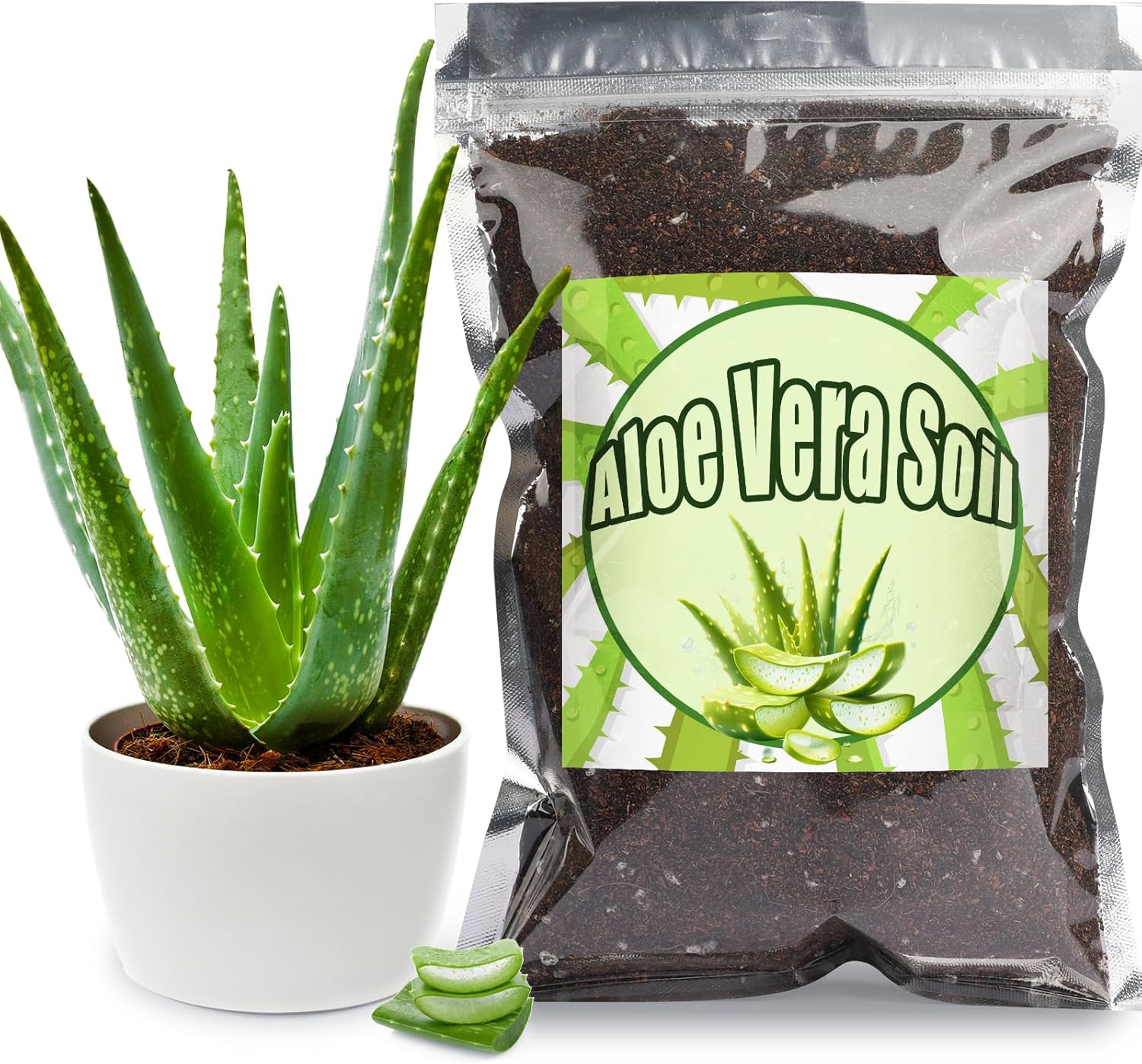
This 1-quart Doter Aloe Vera Potting Soil is a pre-mixed growing medium made for aloe and similar houseplants. It combines components that improve drainage and aeration while supplying mild nutrients and a balanced pH, so you can pot seedlings or repot small mature plants without amending the soil. Typical use is straight into pots with drainage holes for seedlings, cuttings, or single-succulent containers; the mix helps prevent waterlogging and supports firmer, plumper leaves. The product is convenient for small-scale work because it comes ready to use and avoids measuring and mixing perlite or pumice. Limitations are the small volume and that it is meant as a potting medium rather than a long-term substrate for large plants, so frequent top-ups or repotting to a larger bag or custom mix will be necessary for multiple plants or larger containers.
Best for: Buyers looking for an inexpensive, no-mix soil to pot individual aloe vera plants or start seedlings quickly and simply.
Less Ideal for: Not a good fit for growers who need bulk soil for many plants, large containers, or a custom long-term succulent mix.
- Formulated for succulents with good drainage to reduce risk of root rot
- Balanced pH and added nutrients to support early growth and leaf health
- Ready-to-use 1 qt size is convenient for potting seedlings, cuttings, and single pots
- Only a small 1 quart volume so not suitable for multiple or larger plants without buying more
Verdict: A convenient, budget-friendly ready mix that supplies well-draining, nutrient-balanced soil for potting individual aloe vera plants.
ZzbTwinkle Japanese Succulent, Cactus & Aloe Vera Potting Soil Mix, 6 L

| Brand Name | ZzbTwinkle |
|---|---|
| Volume | 6 liters |
| Style Name | Japanese |
This 6-liter Japanese-style potting mix is designed to give succulents, cacti and aloe vera a fast-draining, aerated medium that lowers the risk of root rot. The blend uses classic Japanese minerals such as akadama plus humus, vermiculite and charcoal to create a chunky structure that sheds excess water while retaining enough moisture around the root zone. It arrives ready to use and includes a starter slow-release fertilizer and a balanced pH around 6.5 for reliable nutrient uptake by sensitive plants. In practice it works well for repotting aloe vera and other drought-tolerant species because it speeds drainage and reduces compaction compared with ordinary potting soil. The low electrical conductivity also makes it safe for young plants and cuttings. Limitations are the relatively small 6 L bag for multiple pots and the fact that heavier-feeding plants may need supplemental fertilizer later on since the starter charge is modest.
Best for: Buyers who prioritize a dependable, ready-to-use mix for aloe vera and other succulents that promotes fast drainage and low-risk transplanting.
Less Ideal for: Gardeners looking for a large-volume, all-purpose potting soil for heavy feeders or for filling many pots at once should consider bulk alternatives.
- Loose, well-aerated mix with akadama and charcoal reduces risk of root rot
- Pre-mixed with a starter slow-release fertilizer for immediate feeding
- pH around 6.5 and low EC (below 0.5) suitable for sensitive succulents and cuttings
- Ready to use out of the bag saves time when repotting
- 6 liter volume may be small if repotting several plants
- Starter nutrients are modest so you may need to top up fertilization for long-term growth
Verdict: A reliable, ready-made Japanese-style mix that simplifies repotting aloe vera and other succulents by providing fast drainage and balanced starter nutrition.
Miracle-Gro Succulent Potting Mix, 4 qt.

| Brand Name | Miracle-Gro |
|---|---|
| Unit Count | 128 Ounce |
| Style Name | Succulent |
| Volume | 4 quarts |
This 4 quart bag of Miracle-Gro Succulent Potting Mix is made specifically for indoor succulents and small cacti, including aloe vera. The blend of sphagnum peat moss, processed forest products, and built-in Miracle-Gro plant food creates a light, fast-draining medium that helps prevent root rot when used with a pot that has drainage. It is typically used for repotting single succulents into 6–8 inch containers and is easy to work with straight from the bag—fill the pot, loosen the root ball, settle the plant and top off with the mix. Notable features include a formulation that supports drainage and a nutrient boost intended to feed newly potted plants; the manufacturer also recommends feeding with indoor cactus and succulent plant food about 30 days after planting. Limitations are its small bag size, which fills roughly one 8-inch pot, so you will need multiple bags for several plants, and the peat-based mix may compress over time so repotting every couple of years is advised. Wear gloves and wash hands after use.
Best for: Buyers who want a ready-made, worry-reducing potting mix for indoor aloe vera and other succulents and who value a product with clear manufacturer guidance and visible social proof.
Less Ideal for: Gardeners who need bulk soil for many pots or outdoor succulent beds should consider larger bags or specialty inorganic mixes instead.
- Formulated for succulents and cacti to encourage fast drainage and reduce overwatering risk
- Contains built-in plant food to give newly potted succulents a nutrient boost
- Convenient bag size and texture makes repotting single houseplants straightforward
- Small 4 qt. volume only fills about one 8-inch pot so not economical for large collections
- Peat-based mix can compact over time and may require repotting or amendment
Verdict: A quick, reliable single-bag solution for repotting indoor aloe vera and small succulents with added plant food to help them establish quickly.
Back to the Roots Organic Succulent & Cacti Soil, 6 Quart

| Volume | 6 quarts |
|---|---|
| Item Highlight | Fast-draining cactus and succulent soil |
| Ingredients | Dolomitic Limestone, Perlite, Horticultural Sand, Aged Bark, Plant Food |
| Made in | USA |
This 6-quart succulent and cacti mix is formulated to give aloe and other desert plants a fast-draining, low-retention medium that reduces the risk of root rot. The blend includes aged bark, perlite, and horticultural sand to improve aeration and speed water flow through the pot, while added plant food supplies starter nutrients for young or recently repotted plants. It is peat-free and described as beginner-friendly, so it is useful for routine potting, repotting small to medium aloe, and refreshing topsoil in containers. Practical benefits include simpler watering (less frequent overwatering) and improved root development from the coarse components. Limitations are the small 6-quart volume, which means you may need multiple bags for larger pots or multiples of plants, and the mix may need supplemental organic fertilizer a month after transplanting for sustained feeding. For buyers who prefer ready-made, organic mixes that reduce guesswork, this is a convenient, low-risk choice.
Best for: Buyers who want a ready-made, low-risk soil for aloe and other succulents that minimizes overwatering problems and simplifies repotting for nonexperts.
Less Ideal for: Gardeners needing large volumes for raised beds or multiple large containers should choose bulk or larger packaging instead.
- Designed for succulents and cacti with perlite, horticultural sand, and aged bark for rapid drainage and aeration
- Peat-free organic formula with added plant food to provide starter nutrients
- Made in the USA and positioned as beginner-friendly which simplifies care for risk-averse gardeners
- Fast-draining mix helps reduce the chance of overwatering and root rot for aloe vera
- Small 6-quart bag may not be economical for larger pots or multiple plants
- May require additional organic fertilizer after a few weeks for long-term nutrient needs
Verdict: A convenient, peat-free mix that gives aloe vera the rapid drainage and aeration needed to avoid root rot and simplify care.
Choosing the Right Potting Mix for Aloe Vera: Key Factors to Consider
Drainage and Percolation
Aloe vera roots need water to move quickly through the potting mix. If water pools near the crown, roots suffocate and rot pathogens multiply. Look for mixes that include high proportions of coarse inorganic components such as perlite, pumice, or coarse horticultural sand, which create large pore spaces and speed percolation.
In containers, drainage also affects how often you need to water. Faster-draining mixes dry from the top down and reduce the chance of overwatering. Consider the size of the container and whether it has drainage holes; even the best mix will retain too much moisture in a closed pot.
Aeration and Particle Size
Particle size influences oxygen availability at the root zone. Small particles compact and reduce air space, while mixed-size particles create a crumb structure that holds enough moisture but leaves channels for air and roots. Coarse aggregates and chunky bark help maintain that open structure.
Good aeration encourages healthy, fibrous root growth and helps the plant use stored water. When repotting, avoid mixes with very fine peat or heavy clay; they may feel light initially but compress over time and suffocate roots.
pH and Mineral Balance
Aloe vera prefers a slightly acidic to neutral pH range. pH affects nutrient availability and how minerals in the mix interact with water. A mix that is too alkaline or acidic can lock up essential elements or increase soluble salts.
Check that the mix is formulated for succulents or houseplants and that it does not contain high-lime additives or excessive soluble fertilizer. Stable mineral balance reduces the need for corrective treatments and supports steady growth without leaf burn.
Organic Content and Nutrition
Aloe vera does not require heavy feeding, but it benefits from a modest amount of organic matter that releases nutrients slowly. Composts, coir, or small amounts of well-aged bark provide a gentle nutrient reserve and help the mix hold a little moisture without becoming soggy.
Avoid mixes overloaded with rich compost or slow-draining peat. The best blends strike a balance: enough organic content to sustain the plant for several months, but not so much that the mix becomes dense or water-retentive.
Structural Stability Over Time
Some potting mixes break down quickly, leading to compaction and poorer drainage after a single growing season. For aloe vera, select mixes with durable aggregates like pumice, lava rock, or coarse sand that keep the substrate airy even after repeated watering.
Consider whether you plan to refresh the top layer, repot annually, or leave plants in the same container for years. A stable mix reduces maintenance and prevents sudden declines in root health caused by compressive breakdown.
How Mix Components Affect Aloe Growth
Each ingredient in a potting mix plays a role. Inorganic materials such as pumice and perlite create pore space and resist compaction. Coarse sand improves weight and drainage, preventing pots from becoming top-heavy. Organic materials like coir or aged bark add a small nutrient reserve and help mixtures hold a little moisture without turning soggy.
For aloe growers, the ideal ratio emphasizes inorganic structure with a modest organic backbone. That combination encourages strong root systems and reduces crown rot risk, especially in humid climates or when plants are kept indoors with less airflow.
- Perlite and pumice increase aeration and lower bulk density
- Coarse sand improves drainage and adds weight to tall pots
- Aged bark and coir supply slow-release nutrients and slight moisture retention
- Fine peat or heavy compost should be limited to avoid compaction
Container Considerations and Pot Choice
The pot material and drainage hole configuration interact with the mix. Unglazed clay pots wick moisture from the soil surface and can help keep an aloe drier between waterings. Plastic pots retain moisture longer, so choose a faster-draining mix or reduce organic content when using plastic.
Shallow pots are often best for aloe because they match the plant's root depth. Make sure any container has at least one drainage hole and consider a layer of coarse grit or broken pottery at the bottom only if it raises the potting depth without trapping water at the crown.
- Unglazed terracotta helps evaporate excess moisture
- Plastic pots need mixes with more inorganic content
- Shallow containers reduce standing water around roots
- Always ensure adequate drainage holes are present
Repotting, Refreshing, and Long-Term Care
Aloe vera typically benefits from repotting every one to three years depending on growth rate and mix stability. When a mix compresses or retains too much moisture, remove the plant, shake off old soil, and replace with fresh, airy mix. Inspect roots for rot and prune if necessary.
For long-term potted aloes, top-dressing with a thin layer of fresh mix can replenish nutrients without fully repotting. Avoid adding heavy compost on top, which can draw water into the crown. Regular light feeding during the growing season with a balanced, low-strength fertilizer can complement a modest organic mix.
- Repot when mix compacts or plant becomes rootbound
- Top-dress lightly rather than adding a compost cap
- Check roots for rot when repotting and remove damaged tissue
- Feed sparingly during active growth with diluted fertilizer
Adapting Mixes to Climate and Indoor Conditions
In humid climates you need a mix with extra drainage and coarse aggregates to offset ambient moisture. In arid or heated indoor environments, a mix with slightly higher organic content can help prevent the root ball from drying out too quickly between waterings.
Light and airflow also influence mix choice. Brighter, well-ventilated spots let you use blends with a touch more organic matter. Darker, still locations call for even faster-draining substrates to prevent moisture-related issues.
- Add more pumice or coarse sand in humid regions
- Retain a bit more coir in dry indoor settings
- Increase drainage in low-light rooms to avoid rot
- Consider pot placement and airflow when choosing a mix
How We Chose the Best Potting Mix for Aloe Vera
We focused on attributes that matter for shallow-rooted succulents and for gardeners who keep aloe in containers or on sunny patios. Primary evaluation criteria included drainage behavior, aeration and particle size, pH stability and buffering, organic matter level and nutrient profile, and long-term structural stability to resist compaction. We inspected product descriptions and technical specs to judge how quickly water passes through a mix and whether components like perlite, pumice, coarse sand, or bark are present in effective proportions. We excluded mixes formulated for heavy-feeding tropicals or straight garden soil blends that retain moisture. Also left out specialist cactus compounds that lack any organic nutrient source, since many indoor aloe growers prefer a light base of slow-release nutrition. The final shortlist favors mixes that balance fast drainage with enough organic content to feed the plant between repottings while resisting collapse and compaction over time.
FAQ
How often should I water aloe vera in a fast-draining mix?
Often watering frequency depends on pot size and environment. In a fast-draining mix you will usually water less frequently because water moves through quickly; wait until the top inch or two of soil is dry before watering again.
Can I add fertilizer to a succulent potting mix?
Yes, but sparingly. Aloe benefits from light feeding during the active growing season. Use a low-strength or slow-release fertilizer and avoid heavy applications that raise soluble salts in the root zone.
Is pumice better than perlite for aloe mixes?
It depends. Pumice is heavier and stays in the mix longer without floating or breaking down, while perlite is lighter and may migrate to the surface. Both improve aeration; choose pumice for long-term structural stability and perlite when weight is a concern.
Should I avoid peat-based mixes for aloe?
Peat can be used but should be limited. Finely textured peat tends to compact and retain moisture, so mixes that rely heavily on peat are not ideal for aloe unless balanced with ample coarse aggregates.
How do I tell if my potting mix has compacted and needs replacing?
Signs include poor drainage after watering, visible crusting on the surface, slower drying between waterings, or roots circling the pot. When these occur, repotting with a fresh, airy mix is advisable.
Final Verdict
Prioritize drainage, particle size, and long-term structural stability when choosing a potting mix for aloe vera. Tradeoffs are simple: the more inorganic content you accept, the better the drainage and root oxygenation, while modest organic matter supplies slow nutrition without holding excess moisture. Choose a mix that fits your container type and local climate, and plan to refresh or repot as the mix compresses. With the right blend you will reduce rot risk and support steady, compact growth.
