

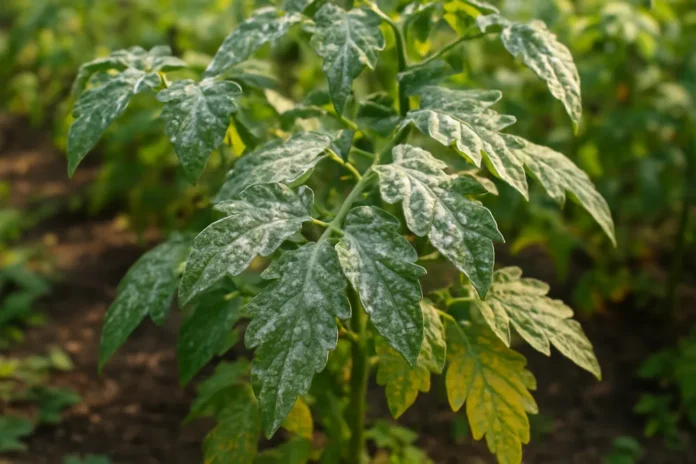
The white powder on tomato leaves is usually powdery mildew, a common fungal disease. It can also be residue from sprays, dust, or less often another leaf disease.
If you notice white powder on tomato leaves, the most common cause is powdery mildew. This fungal disease looks like someone dusted the leaves with flour or talcum powder, and it often starts on older foliage before moving across the plant.
Tomato plants can develop this problem even when the weather is not rainy. Powdery mildew tends to show up when days are warm, air circulation is poor, and leaves stay shaded or crowded, especially in midsummer gardens.
The good news is that a light infection is manageable if you catch it early. Once you know what the white coating is and how it behaves, you can slow it down, protect new growth, and keep your harvest on track.
What the White Powder Usually Is
In most home gardens, a white powdery coating on tomato leaves is powdery mildew. This is a fungal disease that grows on the surface of leaves, stems, and sometimes petioles. It often begins as small pale patches that expand into a soft-looking white or grayish film.
Unlike many fungal diseases, powdery mildew does not need soaking wet leaves to get started. It thrives when humidity is high around the plant but leaf surfaces stay relatively dry. That is why it often surprises gardeners during warm stretches when the garden does not seem especially damp.
- Early spots may look like tiny white dusted patches on the upper leaf surface.
- As it spreads, multiple spots merge and cover larger parts of the leaf.
- Infected leaves may eventually yellow, curl, dry out, or drop early.
- Severe infections reduce plant vigor and can expose fruit to sunscald.
How to Tell if It Is Powdery Mildew or Something Else
Signs That Point to Powdery Mildew
Powdery mildew has a fairly distinct look. The coating appears dry, dusty, and easy to see on the surface of the leaf. It usually does not look slimy or water-soaked. If you rub a lightly affected leaf, some of the white growth may smear or come off on your fingers.
- White to pale gray patches that look powdery
- Growth mostly on older or shaded leaves at first
- A gradual spread across nearby leaves rather than sudden collapse
- Yellowing or browning after the white coating has been present for a while
Other Things That Can Look Similar
Not every white coating is a disease. Garden dust, hard-water residue, sulfur spray, insecticidal soap residue, or dried pesticide deposits can leave a pale film. In those cases, the material often appears more evenly splashed or spotted, and it does not slowly expand in fuzzy patches over time.
Aphid or whitefly activity can also lead to confusion. These pests leave sticky honeydew that may later support black sooty mold, but they do not usually create the dry white powdery look typical of mildew. Downy mildew is another leaf disease, though it generally causes yellow patches with mold on the undersides under cool, wet conditions and is less typical of the classic powdery coating gardeners notice first.
Why Tomato Plants Get White Powdery Growth
Powdery mildew spores are common in the environment and can move on air currents. The disease becomes a problem when plant conditions make it easy for spores to settle, germinate, and spread. Tomatoes under mild stress or planted too closely often develop symptoms faster.
- Crowded plants that trap humidity and reduce airflow
- Dense foliage from heavy feeding or lack of pruning on indeterminate types
- Shaded locations where leaves dry slowly and stay cool underneath
- Warm days and humid nights that favor fungal growth
- Late-season plant stress from inconsistent watering or declining leaf health
- Nearby infected plants that act as a source of spores
The disease can show up in raised beds, in-ground gardens, greenhouses, and containers. Container tomatoes are not immune, especially if they are packed onto patios or against walls where airflow is poor.
What Powdery Mildew Does to Tomato Plants
A minor case may not ruin your crop, but it is still worth addressing. The white fungal growth reduces the leaf's ability to photosynthesize well. Over time, infected leaves can yellow, crisp up, and fall off earlier than they should.
When a tomato plant loses too much healthy foliage, it has less energy to size fruit and ripen it evenly. Fruit quality may decline indirectly because the plant becomes weaker. Heavy defoliation can also expose developing tomatoes to harsh afternoon sun, increasing the risk of sunscald.
- Reduced vigor and slower overall growth
- Premature leaf loss
- Less shading for fruit clusters
- Possible lower yield if infection becomes severe
- Greater plant stress late in the season
How to Confirm the Diagnosis Before Treating
Before you spray anything, take a closer look at the pattern. Powdery mildew usually starts as irregular white patches rather than perfectly round water spots or a uniform mineral film. The coating often appears first on leaves that are older, lower, or more shaded.
- Check whether the white material looks fuzzy or dusty instead of crusty.
- See if the patches are expanding over several days.
- Look at nearby leaves for small new spots starting to form.
- Think about whether you recently applied a foliar spray that could leave residue.
- Compare upper and lower leaf surfaces for spread and texture.
If the coating washes off completely and does not return or spread, residue is more likely than disease. If it persists, enlarges, and is followed by yellowing, powdery mildew is the more probable cause.
How to Treat White Powder on Tomato Leaves
Remove the Worst Leaves First
Start by pruning off the most heavily infected leaves, especially those low on the plant or badly coated. This reduces the amount of active fungus and improves airflow right away. Use clean pruners and avoid removing too much healthy foliage at one time, since tomatoes still need leaves to support fruit development.
Use a Labeled Fungicide if Needed
For active infections, many gardeners use products labeled for powdery mildew on edible crops. Common options include sulfur, potassium bicarbonate, neem oil, horticultural oils, or biological fungicides containing beneficial microbes. Always follow the product label for tomatoes, harvest intervals, temperature limits, and application timing.
No spray can restore badly damaged leaves to full health, but treatment can protect newer growth and slow the spread. Reapplication is often needed because mildew pressure can continue through the season.
- Treat early when spots are still limited.
- Spray enough to coat both leaf surfaces when the label requires it.
- Avoid spraying during the hottest part of the day.
- Do not mix products unless the label specifically allows it.
- Test a small area first if temperatures are high or plants are stressed.
Avoid Common Treatment Mistakes
- Do not spray random homemade mixtures that can burn leaves.
- Do not keep diseased prunings in the bed or compost pile unless your compost gets truly hot.
- Do not overhead water late in the day just after treatment.
- Do not assume one spray will solve a widespread infection.
Garden Changes That Help Stop It From Coming Back
Long-term control comes from changing the conditions that favor the disease. Even the best fungicide works better when the plant has space, light, and steady care.
- Space tomato plants generously so leaves are not constantly touching.
- Cage, stake, or trellis plants to lift foliage and improve airflow.
- Prune lower leaves and excess suckers on vigorous indeterminate varieties as needed.
- Water at the base instead of wetting foliage whenever possible.
- Keep weeds down so air can move through the planting.
- Avoid overfertilizing with nitrogen, which can push a flush of dense, tender growth.
- Rotate tomatoes and related crops when practical, especially if disease pressure is recurring.
Sunlight matters too. Tomatoes grown in fuller sun usually dry faster and stay healthier than plants tucked into a crowded corner. If your plants are in containers, simply moving them farther apart can make a noticeable difference.
Can You Still Eat Tomatoes From an Infected Plant
Yes, tomatoes from a plant with powdery mildew are usually safe to eat as long as the fruit itself is sound and you wash it before use. Powdery mildew mainly affects leaves and stems, not the interior of the fruit.
The bigger concern is plant health rather than food safety. If the infection becomes severe, fruit may be smaller, slower to ripen, or more exposed to sun damage because of lost foliage. If you have sprayed a product, follow the label's pre-harvest interval before picking.
When the Problem Is Serious Enough to Remove a Plant
Most tomato plants with powdery mildew do not need to be pulled immediately. However, if a plant is heavily coated, dropping leaves rapidly, and serving as a major spore source for nearby healthy plants, removal can be the best choice, especially late in the season.
- The plant has lost a large portion of its foliage.
- New growth becomes infected almost as soon as it appears.
- Neighboring tomatoes are still mostly healthy and worth protecting.
- The plant is near the end of its productive life anyway.
Bag infected material and dispose of it rather than leaving it near the garden. Clean cages, stakes, and pruners before using them again.
How to Prevent White Powder Next Season
If powdery mildew showed up this year, prevention next season should begin before symptoms appear. Early habits often matter more than rescue treatments later.
- Choose the sunniest practical site with good air movement.
- Start with healthy transplants and avoid crowding them.
- Use supports from the beginning so foliage stays lifted.
- Mulch the soil to reduce plant stress from uneven moisture.
- Inspect plants weekly, especially older leaves and shaded interior growth.
- Remove a few infected leaves at the first sign instead of waiting.
- Consider resistant or more disease-tolerant varieties if mildew is a yearly issue in your area.
Good sanitation also helps. At the end of the season, clear out old tomato debris and volunteer plants so diseases have fewer places to linger. While spores can still blow in from elsewhere, a clean planting starts with less pressure.
FAQ
Is White Powder on Tomato Leaves Always Powdery Mildew?
No. Powdery mildew is the most common cause, but spray residue, dust, mineral deposits, or another leaf issue can also leave a white film. If the coating spreads in fuzzy patches over time, powdery mildew is more likely.
Will Powdery Mildew Kill My Tomato Plant?
A mild case usually will not kill a tomato plant. Severe infections can weaken it, reduce yield, and cause heavy leaf drop, especially late in the season or during other stresses.
Can I Wash Powdery Mildew Off Tomato Leaves?
You may remove some surface growth temporarily, but washing alone does not cure the infection. The disease often returns unless you improve airflow and use a treatment labeled for powdery mildew when needed.
Should I Remove All Infected Tomato Leaves?
No. Remove the worst affected leaves, especially older lower ones, but leave enough healthy foliage to support fruit production. Stripping too many leaves can stress the plant and expose fruit to sunscald.
Does Watering Cause White Powder on Tomato Leaves?
Overhead watering does not directly create powdery mildew the way it can encourage some other diseases, but crowded, humid conditions around the plant make mildew more likely. Consistent watering at the base is usually best.
Can Powdery Mildew Spread to Other Plants in My Garden?
Yes. Spores can move on air currents and infect nearby susceptible plants. The exact mildew species may prefer certain hosts, but crowded mixed plantings can still help disease spread.
Are Tomatoes From a Powdery Mildew Plant Safe to Eat?
Yes, if the fruit is healthy and properly washed. Always follow any harvest interval listed on a fungicide label if you treated the plant.
Need a proven fix fast? Read our guide to the best fungicides and organic treatments for powdery mildew on tomatoes so you can choose the right product before the infection spreads.
