

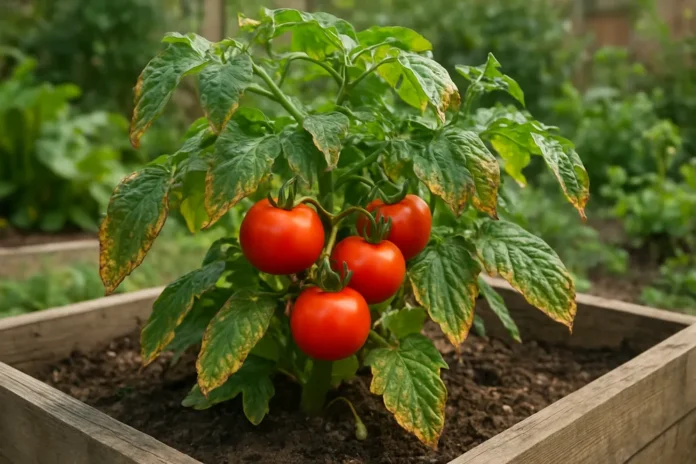
Tomato leaf tips usually turn brown because the plant is under stress from uneven watering, fertilizer burn, heat, wind, or disease. Browning starts at the edges when leaf tissue dries out, burns, or dies back.
When tomato plants start showing brown leaf tips, it usually means the leaves are under stress rather than facing one single problem. Browning at the ends of the leaves happens when the tissue dries out, burns, or begins to die, often from watering problems, fertilizer salts, weather extremes, or disease pressure.
If your leaf tips are turning brown while the rest of the plant still looks fairly healthy, that pattern can be useful. Tip burn often shows up before larger symptoms such as yellowing, spotting, wilting, or leaf drop, so it is one of the plant's early warning signs.
The good news is that many causes of brown tips on tomato leaves can be corrected once you narrow down what is stressing the plant. Looking at how often you water, what you have fed the plant, recent weather, and whether spots or lesions are spreading will usually point you in the right direction.
What Brown Leaf Tips Usually Mean on Tomatoes
Brown tips are a symptom, not a diagnosis. On tomatoes, they usually mean the leaf margins are losing moisture faster than the plant can replace it, or that something has damaged the leaf tissue directly. This damage can come from dry soil, soggy roots, excess fertilizer, salty water, intense sun, hot wind, chemical exposure, or certain diseases.
The exact pattern matters. Crisp, dry brown tips often suggest water stress, fertilizer burn, or heat. Brown tips paired with yellow halos or dark spots can point more toward disease. Browning that appears mostly on older leaves may suggest salt buildup or root stress, while damage on newer growth can hint at chemical injury or a more serious nutrient uptake problem.
- Dry, crispy tips often point to underwatering, heat, wind, or salt burn.
- Brown tips with curling can suggest moisture stress or root problems.
- Brown tips plus yellowing may indicate nutrient imbalance, root stress, or disease.
- Brown tips with spots or concentric lesions are more suspicious for fungal or bacterial issues.
- Only a few lower leaves affected may be minor stress, especially after transplanting or weather swings.
Watering Problems Are the Most Common Cause
Underwatering and Uneven Moisture
Tomatoes need consistent moisture to keep foliage healthy. If the soil gets too dry between waterings, the leaf tips and edges are often the first areas to scorch. This is especially common in containers, raised beds, sandy soil, and during hot spells. A plant that is watered heavily once in a while instead of deeply and consistently can still show drought stress.
When a tomato plant swings back and forth between dry and soaked soil, roots struggle to take up water smoothly. That inconsistency can show up as brown tips, curled leaves, blossom end rot on fruit, and slower growth.
Overwatering and Root Suffocation
Too much water can cause tip browning too. When roots sit in saturated soil, they lose oxygen and cannot absorb water and nutrients well. Even though the soil is wet, the leaves behave like they are thirsty because the root system is stressed. In that case, brown tips may come with drooping, yellowing, and a generally weak look.
- Water deeply so moisture reaches the root zone, then let the top inch or so begin to dry before watering again.
- Use mulch to slow evaporation and reduce moisture swings.
- Check containers daily in hot weather because potted tomatoes dry out much faster than in-ground plants.
- Improve drainage if the soil stays soggy for days after watering or rain.
Fertilizer Burn and Salt Buildup Can Scorch Leaf Tips
One of the most classic causes of brown tomato leaf tips is excess fertilizer. Too much synthetic fertilizer, especially high-nitrogen products or repeated liquid feeding, can build up salts around the roots. Those salts draw moisture away from root tissues and can burn the leaves, starting at the tips and margins.
This problem is especially common in containers because salts accumulate faster where water drains through a limited amount of potting mix. It can also happen in garden beds if you fertilize often, use manure heavily, or water with hard or softened water that leaves minerals behind.
Signs That Point to Fertilizer or Salt Injury
- Leaf tips look dry, burned, or sharply browned.
- Symptoms appear soon after feeding.
- A white crust may show on the soil surface or outside of clay pots.
- Plants look stressed even when the soil moisture seems fine.
- Lower leaves may yellow or brown first if roots are being stressed.
If fertilizer burn is the issue, stop feeding temporarily and flush the root zone with plain water, especially in containers. Then resume with a lighter schedule only after the plant starts growing normally again.
Heat, Sun, and Wind Can Dry Out the Edges of Leaves
Tomatoes love sun, but extreme heat can still stress them. During stretches of very hot weather, especially when temperatures stay high overnight, the plant can lose water faster than the roots can replace it. The result is often dry leaf edges and brown tips.
Hot wind makes the problem worse by pulling moisture from the leaves. Plants growing near reflective walls, on patios, in black containers, or in exposed raised beds are especially vulnerable. Newly transplanted tomatoes can also scorch if they were not hardened off properly before moving into full sun.
- Water early in the day during heat waves.
- Mulch around plants to keep the root zone cooler.
- Use shade cloth during extreme afternoon heat if plants are wilting or scorching regularly.
- Protect exposed plants from persistent drying wind when possible.
Root Stress Often Shows Up First in the Leaves
Anything that damages tomato roots can lead to brown leaf tips. Compacted soil, poor drainage, rootbound containers, recent transplant shock, cultivation damage, and root diseases all reduce the plant's ability to move water and nutrients upward. The leaves respond by browning at the most vulnerable points first.
Transplant shock is a common early-season cause. After planting out, tomatoes may show some scorched tips if roots were disturbed or if the weather turned hot, windy, or much sunnier than expected. As long as new growth looks healthy and the symptom does not spread quickly, the plant often grows through it.
Container-specific Root Issues
In pots, roots can overheat, circle tightly, or run out of space and moisture. A tomato that is too large for its container will dry out rapidly and may develop repeated tip burn even if you water often. A larger container, fresh potting mix, and steadier moisture usually help.
Nutrient Imbalances May Contribute to Browning
True nutrient deficiencies are not the most common cause of brown leaf tips on tomatoes, but they can play a role. Potassium deficiency in particular can cause yellowing and browning along leaf edges, often beginning on older leaves. Magnesium deficiency may also lead to yellowing between veins with edge stress. Calcium issues are more famous for causing blossom end rot, but poor calcium movement can sometimes be linked with stressed foliage in rapidly growing plants.
The tricky part is that many apparent deficiencies are really uptake problems caused by poor watering, root damage, or pH issues. In other words, the nutrient may be present in the soil, but the plant cannot access it well.
- Do not assume every brown tip needs more fertilizer.
- Use a balanced tomato fertilizer rather than repeated high-nitrogen feeding.
- Keep soil moisture consistent so nutrients move evenly through the plant.
- If problems persist, a soil test can reveal pH or nutrient imbalances more accurately than guesswork.
Disease Can Cause Brown Tips when Other Symptoms Appear Too
If brown tips come with spots, blotches, yellow halos, stem lesions, or rapid spread from leaf to leaf, disease becomes more likely. Several common tomato diseases can start with small tissue damage that later reaches the tips or edges of leaves.
Early Blight and Septoria Leaf Spot
Early blight often causes dark brown spots with concentric rings, usually beginning on lower leaves. As the disease progresses, the leaves yellow, dry out, and may develop burned-looking tips. Septoria leaf spot creates many small dark spots and can eventually cause whole leaves to yellow and brown.
Bacterial Diseases
Bacterial speck, bacterial spot, and bacterial canker can all damage tomato foliage. In some cases, leaf edges and tips turn brown as lesions merge and tissues die. These problems are more likely after wet weather, overhead watering, or when plants stay crowded and humid.
How Disease Browning Differs From Simple Stress
- Disease usually spreads progressively rather than staying limited to a few stressed tips.
- Distinct spots, rings, halos, or dark lesions are common clues.
- Lower leaves are often affected first with fungal diseases.
- Wet foliage and poor air circulation usually make symptoms worse.
Remove badly affected lower leaves, avoid wetting foliage when watering, and improve spacing and airflow. If disease pressure is strong and confirmed, a labeled fungicide or copper product may help protect healthy new growth, though it will not reverse existing damage.
Chemical Injury and Water Quality Problems Are Easy to Miss
Tomato leaves can develop brown tips after contact with herbicides, strong foliar sprays, insecticidal soaps used in hot sun, or homemade garden treatments mixed too strongly. In these cases, damage may appear suddenly after an application and may affect exposed leaves more than shaded inner growth.
Water quality can also matter. Hard water, softened water, or irrigation water with high dissolved salts can gradually contribute to tip burn, especially in containers. If you notice crusting on the potting mix or repeated browning despite careful watering and feeding, mineral buildup may be part of the problem.
- Never use softened household water on tomatoes if possible because sodium can build up in the soil.
- Apply foliar sprays in the cooler part of the day and always follow label rates.
- Keep herbicide drift far away from vegetable beds.
- Flush containers occasionally with plain water to wash out excess salts.
How to Tell Which Cause Is Most Likely
The fastest way to narrow down the cause is to match the symptom pattern with recent conditions. Brown tips rarely happen in isolation. The timing, the location on the plant, and the feel of the damaged tissue can tell you a lot.
- If tips are crispy and the soil is often dry, underwatering or heat stress is likely.
- If the plant is droopy in wet soil, overwatering or root stress is more likely.
- If symptoms started right after fertilizing, suspect fertilizer burn.
- If you see spots, yellow halos, or spreading lesions, suspect disease.
- If damage appeared after spraying or after windy weather near lawn products, consider chemical injury.
- If only older lower leaves are affected first, look at salt buildup, disease, or normal aging combined with stress.
What to Do Next to Help Your Tomato Recover
Brown tissue will not turn green again, so focus on protecting healthy new growth. If the problem is mild and the plant is still flowering and growing, tomatoes often recover well once the stress is corrected.
- Stabilize watering so the soil stays evenly moist but not soggy.
- Pause fertilizer if you may have overfed, especially with liquid feeds.
- Add mulch to reduce heat and moisture swings.
- Prune off only badly damaged leaves, especially if they are low on the plant or diseased.
- Improve airflow and avoid overhead watering if spotting or disease is present.
- Repot rootbound container tomatoes into a larger pot if needed.
- Monitor new growth over the next 7 to 14 days. Healthy new leaves are a good sign the issue is under control.
Avoid making several major changes at once. A tomato already under stress can decline further if it is heavily pruned, overfertilized, and overwatered all at the same time in an attempt to fix the problem quickly.
How to Prevent Brown Leaf Tips in the Future
Prevention comes down to reducing stress and keeping growth steady. Tomatoes are vigorous plants, but they respond best when moisture, feeding, and environmental conditions stay fairly even.
- Plant tomatoes in well-drained soil rich in organic matter.
- Use mulch to moderate soil temperature and preserve moisture.
- Water deeply and consistently rather than on a random schedule.
- Fertilize lightly and regularly instead of applying heavy doses.
- Choose containers large enough for full-season root growth.
- Space plants well and stake or cage them for better airflow.
- Rotate crops and clean up old tomato debris to reduce disease carryover.
- Harden off transplants slowly before exposing them to full sun and wind.
FAQ
Should I Cut Off Tomato Leaves with Brown Tips?
If only the tips are brown and the rest of the leaf is still working, you can leave it. Remove leaves only if they are badly damaged, clearly diseased, or crowding the plant and reducing airflow.
Can Tomato Plants Recover From Brown Leaf Tips?
Yes, if the cause is corrected early. The brown parts will not heal, but new growth can come in healthy once watering, feeding, or disease pressure is brought under control.
Do Brown Leaf Tips Mean My Tomato Plant Needs More Water?
Sometimes, but not always. Underwatering is a common cause, yet overwatering, root damage, and fertilizer burn can create similar symptoms.
Can Too Much Fertilizer Make Tomato Leaf Tips Brown?
Yes. Excess fertilizer can cause salt buildup around the roots, which leads to scorched, dry-looking tips and edges on the leaves.
Why Are Only the Lower Tomato Leaves Getting Brown Tips?
Lower leaves are often the first to show stress from inconsistent watering, salt buildup, early blight, Septoria, or simple aging. Look for spots, yellowing, and whether the issue is spreading upward.
Can Heat Alone Cause Brown Tips on Tomato Leaves?
Yes, especially when high temperatures combine with dry soil, hot wind, or reflected heat from patios and walls. The leaf edges and tips can dry out and scorch first.
Is Epsom Salt a Good Fix for Brown Tomato Leaf Tips?
Usually not unless a magnesium deficiency has been confirmed. Adding Epsom salt without a clear need can worsen nutrient imbalance rather than solve the problem.
Will Rain Fix Brown Tips on Tomato Leaves?
Rain can help if drought stress caused the damage, but it will not reverse existing brown tissue. Too much rain can also worsen root stress or disease if drainage is poor.
Need a clearer fix fast? Read our tomato plant troubleshooting guide and compare the best fertilizers, fungicides, and watering tools to get stressed plants producing again.
