

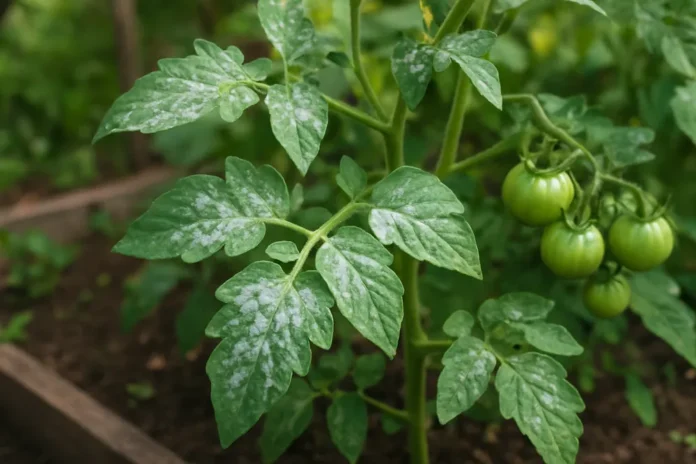
White stuff on a tomato plant is often powdery mildew, insect residue, mineral buildup, or clusters of pests like mealybugs. The exact cause depends on whether it looks dusty, fuzzy, cottony, crusty, or web-like.
Seeing white stuff on your tomato plant can be unsettling, especially when the plant looked healthy just days earlier. In many cases, the white material is not one single problem but a clue that points to disease, pests, hard-water residue, or even a normal part of the plant.
The key is to look closely at where the white coating appears and what texture it has. A dusty film on leaves usually suggests fungal issues, while cottony clumps often point to insects. White crust on soil or pots may be harmless mineral buildup, and white bumps on stems can sometimes be natural growth.
What the White Stuff Usually Means
White material on tomato plants most often falls into a few common categories. The appearance matters more than the color alone. A fine powder, a fuzzy patch, a sticky cotton-like mass, and a chalky crust all point to different causes.
- Powdery or dusty white coating on leaves: usually powdery mildew
- Cottony clusters on stems or leaf joints: often mealybugs or other sap-sucking insects
- Fine webbing with tiny pale specks on leaves: spider mites
- White crust on soil, mulch, or the outside of containers: mineral salts or fertilizer residue
- Small white bumps on the lower stem: early root initials, which can be normal on tomatoes
- White fuzzy growth on damaged fruit or decaying plant parts: mold from rot
Because tomatoes are vigorous plants, they often keep growing for a while even when a problem has started. That makes early symptoms easy to miss. The sooner you match the white material to the right cause, the easier it is to fix without losing flowers or fruit.
Powdery Mildew Is One of the Most Common Causes
How It Looks
Powdery mildew appears like someone dusted the leaves with flour or baby powder. It often starts as small pale spots on older leaves, then spreads into larger white patches. As it advances, leaves may yellow, curl, dry out, and drop.
Why Tomatoes Get It
This fungal disease thrives when air circulation is poor, foliage stays crowded, and humidity is high. Unlike some other fungal problems, powdery mildew does not need soaking wet leaves to spread. Warm days, cool nights, and dense plant growth create ideal conditions.
What to Do
- Remove badly affected leaves and throw them away rather than composting them.
- Prune lightly to improve airflow around the plant.
- Water at the base of the plant instead of wetting the foliage.
- Space plants generously so leaves dry and breathe more easily.
- Use a garden fungicide labeled for powdery mildew on tomatoes if the infection is spreading.
Powdery mildew rarely kills a mature tomato plant overnight, but it can weaken the plant, reduce photosynthesis, and lower fruit quality and yield if left untreated.
Cottony White Clumps Often Mean Mealybugs or Other Insects
How Insect Residue Differs From Mildew
If the white stuff looks fluffy, sticky, or gathered in little tufts along stems, leaf joints, or under leaves, it may be mealybugs rather than disease. These insects cover themselves with a waxy white coating that looks like bits of cotton.
Other Clues to Look For
- Leaves may curl or yellow from sap loss.
- Plants can look weak or stunted.
- You may notice sticky honeydew on leaves.
- Black sooty mold sometimes grows on that sticky residue.
- Ants may be crawling on the plant because they feed on honeydew.
What to Do
Small infestations can often be removed by wiping the insects off with a cotton swab dipped in rubbing alcohol or by spraying the plant with a strong stream of water. Insecticidal soap and neem oil can also help when used according to label directions. Make sure to treat hidden spots where stems meet leaves because pests often collect there.
Mealybugs are more common on stressed plants and in protected growing areas like patios, greenhouses, and indoor starts, but they can show up in outdoor gardens too.
Fine Webbing and Pale Leaves Can Point to Spider Mites
Sometimes gardeners describe spider mite damage as white stuff because the webbing catches the light and the leaves develop a pale, speckled look. The webs are usually thin and silky rather than powdery or fuzzy. They often collect on the undersides of leaves or between stems.
- Leaves show tiny yellow or white stippling.
- Webbing appears during hot, dry weather.
- The plant may look dull, bronzed, or dusty.
- Heavy infestations can cause leaf drop.
Spider mites thrive in heat and drought stress. Rinsing the foliage, especially the undersides of leaves, can reduce populations. Horticultural oils and insecticidal soaps are also common controls. Consistent watering helps reduce plant stress, which makes tomatoes less vulnerable.
White Crust on Soil or Containers Is Often Mineral Buildup
Not all white stuff on or around a tomato plant is a disease. If you see a chalky, crusty, or flaky white layer on the soil surface, on terra-cotta pots, or around drainage holes, you may simply be looking at salt and mineral deposits from hard water or fertilizer.
Why It Happens
As water evaporates, dissolved minerals stay behind. Over time, repeated fertilizing or watering with mineral-rich water can leave a visible white residue. This is especially common in containers because salts have less room to disperse than they do in the ground.
When It Becomes a Problem
A light crust is mostly cosmetic, but heavy salt buildup can interfere with root function and contribute to leaf burn, poor growth, and wilting even when soil seems moist.
What to Do
- Scrape off the crusty top layer of soil and replace it with fresh mix.
- Flush containers deeply with water now and then to wash excess salts out the drainage holes.
- Avoid overfertilizing, especially with fast-release products.
- If practical, use less mineral-heavy water for containers.
White Bumps on the Stem May Be Normal Root Initials
Tomatoes have a useful habit that surprises many gardeners. They can form little white bumps or pimples on their stems, especially near the base. These are often root initials, which are the beginnings of new roots. They are not a disease by themselves.
This usually happens when humidity is high, the stem stays moist, or the plant is ready to send out more roots if buried deeper. If the stem looks firm and healthy, and the bumps are smooth rather than fuzzy or rotting, there is usually no cause for alarm.
- Normal root initials are small, pale, and evenly attached to the stem.
- They do not wipe off like mildew.
- They are not cottony like insects.
- They are most common on vigorous, fast-growing tomatoes.
White Fuzzy Patches on Fruit or Damaged Areas May Be Mold
If the white growth appears on split fruit, bruised stems, fallen leaves, or parts of the plant that are already decaying, it may be mold feeding on dead or damaged tissue. This kind of growth is often soft and fuzzy rather than dry and powdery.
Mold tends to show up when fruit has cracked, insects have wounded the plant, or wet conditions have led to rot. On ripening tomatoes, soft spots combined with fuzzy white growth usually mean the fruit should be discarded.
- Remove affected fruit or plant parts promptly.
- Improve airflow and reduce crowding.
- Harvest ripe tomatoes before they split on the vine.
- Keep mulch in place to reduce soil splash that can spread disease.
How to Tell Which White Stuff You Have
A quick visual check can usually narrow the problem down. Focus on texture, location, and what the plant tissue underneath looks like.
- Dusty and easy to smear across leaf surfaces: likely powdery mildew
- Cottony clumps at nodes or under leaves: likely mealybugs
- Silky strands between leaves with stippling: likely spider mites
- Crusty layer on soil or pots: likely mineral salts
- Firm white bumps low on the stem: likely normal root initials
- Soft fuzzy growth on rotting tissue: likely mold from decay
Also note whether the problem is limited to one plant, one part of the plant, or many plants in the area. A disease often spreads outward over time, while mineral buildup stays where water evaporates and normal stem bumps remain localized to the stem.
Conditions That Make White Problems More Likely
Tomato plants are less likely to develop white coatings, molds, and pest infestations when they are growing vigorously in the right conditions. Stress makes nearly every problem worse.
- Overcrowded planting reduces airflow and encourages fungal growth.
- Inconsistent watering weakens plants and favors spider mites and stress-related issues.
- Heavy fertilizing can contribute to salt crust and overly lush growth that invites pests.
- Wet foliage and dense lower leaves create friendlier conditions for disease.
- Poor sanitation allows infected leaves and fruit to spread problems.
Many tomato issues are easier to prevent than to cure. A few small cultural improvements can dramatically cut down on disease pressure and insect flare-ups.
The Best Ways to Prevent White Buildup, Pests, and Disease
Prevention starts with growing tomatoes in a way that keeps foliage dry, roots healthy, and air moving through the plant. Even if you cannot eliminate every risk, these habits make outbreaks less severe.
- Plant tomatoes in full sun where leaves dry quickly after dew or rain.
- Space plants according to the variety so mature foliage does not stay packed together.
- Support plants with cages, stakes, or trellises to lift leaves off the ground.
- Water deeply at the base rather than overhead whenever possible.
- Prune only as needed for airflow, especially lower leaves that crowd the soil line.
- Remove diseased leaves, dropped fruit, and garden debris promptly.
- Use fertilizer carefully and avoid the more is better approach.
- Rotate tomato planting areas when possible, especially if disease was severe last year.
For container tomatoes, prevention also includes refreshing potting mix when needed, making sure the pot drains well, and occasionally flushing out accumulated salts.
When the Problem Is Serious Enough to Act Fast
Some white residue is mostly cosmetic, but other cases need prompt attention. Act quickly if the white material is spreading fast, leaves are yellowing or dropping, fruit is rotting, or the plant is losing vigor.
- Treat quickly if powdery mildew is covering multiple leaves.
- Intervene promptly if cottony insects are spreading to flowers or fruit clusters.
- Remove rotting fruit with fuzzy mold as soon as you see it.
- Leach container soil if white salt crust is thick and plant leaves show tip burn or wilting.
The earlier you respond, the more likely your tomato plant will keep producing through the season.
FAQ
Is White Powder on Tomato Leaves Always Powdery Mildew?
Not always, but it often is. A dry, flour-like coating on leaf surfaces strongly suggests powdery mildew, while cottony clumps, webbing, or crusty residue point to other causes.
Can I Still Eat Tomatoes From a Plant with Powdery Mildew?
Usually yes, as long as the fruit itself is healthy and not rotting. Powdery mildew mainly affects leaves, though you should wash harvested tomatoes well and discard any fruit with mold or soft spots.
What Do Mealybugs Look Like on Tomato Plants?
Mealybugs look like tiny white cottony masses clustered on stems, leaf joints, or the undersides of leaves. They may also leave sticky honeydew behind.
Are White Bumps on Tomato Stems Bad?
Often they are harmless root initials, which are normal on tomatoes. If the stem is firm and not rotting, those bumps usually are not a disease.
Why Is There a White Crust on Top of My Tomato Soil?
A white crust on soil is commonly mineral salt buildup from fertilizer or hard water. It is often more noticeable in containers where salts accumulate faster.
Does Overhead Watering Cause White Fungus on Tomatoes?
Overhead watering can contribute to disease by keeping foliage damp and reducing air movement around leaves. It is better to water at the base when possible.
How Do I Tell Spider Mite Webbing From Mildew?
Spider mite webbing looks like thin silk strands stretched between leaves or stems, while mildew looks like a powdery coating stuck directly to the leaf surface.
Need the right fix fast? Read our guide to the best tomato fungicides, insecticidal soaps, and neem oil sprays so you can choose a treatment that matches the exact problem.
