

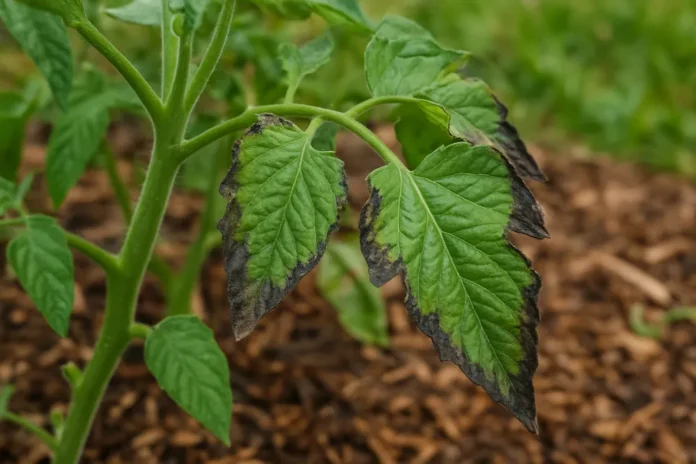
Tomato leaves usually develop black edges because the plant is stressed by uneven watering, fertilizer or salt buildup, nutrient imbalance, disease, or weather damage. The dark margins are often dead tissue where the leaf could not stay healthy.
Seeing black edges on tomato leaves can be alarming, especially when the rest of the plant seemed fine a few days earlier. In most home gardens, this symptom means the plant is under stress rather than facing a single guaranteed problem.
Leaf edges often darken when tissue dries out, burns, or dies after trouble with watering, fertilizer salts, root function, temperature swings, or disease. The good news is that edge damage can be a useful clue, because the pattern usually points you toward the underlying cause.
What Black Leaf Edges Usually Mean on Tomatoes
When a tomato leaf turns black only along the margin, that outer tissue has been injured more severely than the center of the leaf. This can happen when water movement through the plant is disrupted, when salts concentrate in leaf tips and edges, or when disease kills tissue in a spreading pattern.
Blackened edges are different from a few random black spots. Spotting often suggests fungal or bacterial disease. A dark, scorched border around the leaf more often points to stress, burn, or advancing tissue death after another problem has already started.
- If older lower leaves are affected first, watering issues, salt buildup, or natural stress are common suspects.
- If newer leaves are hit first, think about fertilizer burn, chemical exposure, cold injury, or a root problem that suddenly limited water uptake.
- If black edging comes with yellow halos, spots, or lesions, disease becomes more likely.
- If the leaves also curl, wilt, or feel crisp, environmental stress is often involved.
Uneven Watering and Root Stress
Drying Out Between Waterings
Tomatoes grow fast and use a surprising amount of water once they are flowering and setting fruit. If the soil swings from dry to soaked and back again, leaf edges may dry, brown, or turn nearly black as tissue dies. Container tomatoes are especially vulnerable because potting mix can dry much faster than garden soil.
This type of damage often starts on older leaves and may be paired with drooping during the hottest part of the day. After repeated stress, the edges can become dark and brittle.
Overwatering and Oxygen-starved Roots
Too much water can create the same symptom from the opposite direction. When roots sit in constantly wet soil, they struggle to take up oxygen and nutrients. Damaged roots cannot move water properly to the leaves, so the margins may darken and collapse even though the soil feels wet.
- Leaves may look limp even after watering.
- Growth may slow or stall.
- Lower leaves may yellow before edge tissue turns dark.
- Container plants may have a sour smell in the potting mix if root trouble is advanced.
How to Correct Watering Stress
- Water deeply and consistently rather than giving small daily splashes.
- Let the top inch or so of soil dry slightly before watering again in containers, while keeping the root zone evenly moist overall.
- Mulch garden tomatoes with straw, shredded leaves, or untreated grass clippings to reduce moisture swings.
- Make sure containers drain freely and never sit in standing water.
- Avoid compacted soil, which limits root growth and traps too much moisture.
Fertilizer Burn and Salt Buildup
One of the most common reasons for blackened leaf edges is excess fertilizer. Tomatoes are heavy feeders, so gardeners often give them frequent liquid fertilizer, strong granular feeds, or rich amendments all at once. When salts build up around the roots, the plant can no longer regulate water normally, and leaf tips and edges are often the first places to burn.
The damage may start as yellowing or browning around the edge, then deepen to a dark brown or black appearance. In containers, white crust on the soil surface or around the rim is a strong sign that salts have accumulated.
- Recent feeding with synthetic fertilizer at full strength
- Fertilizing dry soil
- Using both slow-release and liquid fertilizer together
- Heavy use of manure-based products or composted poultry litter
- Hard water contributing extra mineral salts over time
How to Fix Fertilizer Burn
If you suspect overfeeding, stop fertilizing for a while and flush the root zone with plain water. In a container, water thoroughly several times so excess salts can drain out the bottom. In a garden bed, deep irrigation can help dilute and move salts lower in the soil profile, though heavy clay drains more slowly.
After the plant recovers, resume feeding lightly and only according to the product label. Tomatoes need steady nutrition, but more fertilizer does not mean more fruit. It often means more stress.
Nutrient Imbalances That Can Darken Leaf Margins
Potassium Deficiency
Potassium helps regulate water movement and overall plant resilience. When tomatoes are low in potassium, older leaves may develop yellowing at the edges that later turns brown or black. The margin can look scorched, especially during fruiting when demand is high.
Potassium problems are more likely in sandy soil, heavily leached beds, or containers that have been watered frequently without balanced feeding.
Calcium-related Stress
Calcium deficiency is best known for blossom end rot, but poor calcium movement can also show up in foliage when root function is weak. New growth may look distorted, and leaf edges can die back if the plant is struggling to move water and minerals. This is often less about low calcium in the soil and more about inconsistent moisture or damaged roots.
Magnesium and General Nutrient Imbalance
Not every dark edge is caused by one missing nutrient. Sometimes the real problem is imbalance. Too much potassium can interfere with magnesium uptake. Too much ammonium nitrogen can stress roots. Very high or very low soil pH can lock nutrients up even when they are present.
- Older leaves with edge scorch suggest potassium or general nutrient stress.
- Distorted new leaves suggest calcium movement problems, herbicide exposure, or disease.
- Interveinal yellowing with marginal damage may point to magnesium issues.
- A soil test is the best way to confirm what is actually missing or excessive.
Weather and Environmental Damage
Cold Injury
Tomatoes dislike cold nights, and exposure to chilly temperatures can injure leaf tissue. After a cold snap, edges or exposed portions of leaves may turn dark, water-soaked, and then black. This is especially common in early spring after transplanting or in fall when nights start dipping unexpectedly.
Heat and Sun Scorch
Extreme heat, reflected sunlight from walls or patios, and hot drying wind can scorch leaf margins. Instead of a fresh green edge, the tissue looks dry, burned, and eventually blackened. Plants in black nursery pots or fabric grow bags can overheat more quickly than those in the ground.
Wind Burn
Persistent wind pulls moisture from leaves faster than roots can replace it. Margins dry first, then darken. This kind of injury is common on exposed decks, balconies, and open garden sites without any windbreak.
- Cold damage often appears suddenly after one bad night.
- Heat scorch is worse on the sunniest side of the plant.
- Wind burn often affects the most exposed leaves first.
- Environmental injury usually does not create circular spots or fuzzy growth.
Disease Problems That Can Look Like Black Edges
Although stress is a common explanation, some tomato diseases can also make leaf margins darken. The key is to look for patterns beyond the edge itself, such as spots, halos, stem lesions, or rapid spread from leaf to leaf.
Early Blight
Early blight usually begins on older leaves with brown to black spots that develop target-like rings. As lesions expand, nearby tissue yellows and leaf edges may die back. It tends to move upward from the lower part of the plant, especially in warm, humid weather.
Bacterial Speck and Bacterial Spot
These bacterial diseases produce many tiny dark lesions, often with surrounding yellow tissue. If infection is severe, the edges can look scorched or ragged. Wet foliage, splashing water, and handling plants when they are damp can help spread the bacteria.
Late Blight or Severe Foliar Collapse
Late blight is less common in many home gardens but can be devastating. Leaves can develop dark, greasy-looking patches that quickly expand. In humid conditions, pale fungal growth may appear on undersides. Marginal blackening can happen as the tissue collapses.
Root and Vascular Diseases
Fusarium wilt, verticillium wilt, and root rots may indirectly lead to black leaf edges because the plant can no longer move water properly. If one side of the plant wilts, lower leaves yellow, or stems show internal discoloration, the issue may be deeper than the foliage.
If disease is suspected, remove the worst affected leaves, avoid overhead watering, and improve spacing for airflow. For advanced infections, especially blights and bacterial diseases, removing the plant may protect nearby tomatoes.
Chemical Injury and Spray Damage
Tomato foliage is sensitive to many products, including insecticidal soap applied in hot sun, strong neem mixtures, copper sprays used too heavily, and accidental herbicide drift. Leaf edges may blacken after tissue burns from direct contact.
Chemical injury often shows up quickly, within a day or two of application or exposure. The damage may be fairly uniform on the treated side of the plant, or limited to leaves that got the heaviest spray. New growth may come in normal if exposure was brief.
- Never spray stressed tomatoes during the hottest part of the day.
- Follow label dilution rates exactly.
- Test a small part of the plant first if using a new foliar product.
- Keep tomatoes well away from lawn weed killers and drift from neighboring yards.
How to Tell Which Cause Is Most Likely
Because several problems can create black edges, it helps to compare the symptom with recent conditions. The timing, location, and appearance usually narrow it down.
- After a fertilizer feeding: suspect salt burn or root stress.
- After a cold night or heat wave: suspect environmental injury.
- Mostly lower leaves, gradual spread, no spots: suspect watering inconsistency or nutrient stress.
- Dark spots plus yellow halos: suspect bacterial or fungal disease.
- Damage right after spraying: suspect chemical burn.
- Wet soil with wilting: suspect root damage or overwatering.
Also consider the growing setup. Container tomatoes are much more likely to suffer from salt buildup and rapid drying. In-ground plants are more influenced by soil drainage, disease carryover, and weather extremes.
What to Do Right Now for a Tomato with Black Leaf Edges
- Check soil moisture before doing anything else. If it is bone dry, water deeply. If it is soggy, let it dry somewhat and improve drainage.
- Pause fertilizing until you know whether salt buildup is involved.
- Remove only leaves that are mostly dead, badly diseased, or touching the soil. Leave mildly damaged leaves if they still have plenty of green tissue.
- Water at the base of the plant instead of overhead to reduce disease spread and keep foliage drier.
- Mulch around the root zone to stabilize soil moisture and temperature.
- Protect plants from temperature swings with row cover during cold snaps, or provide afternoon shade in extreme heat.
- If symptoms continue to spread rapidly and include spots or stem lesions, treat the situation as a possible disease problem.
Do not expect blackened leaf edges to turn green again. Damaged tissue stays damaged. The goal is to stop the spread and support healthy new growth.
How to Prevent Black Edges on Tomato Leaves in the Future
Prevention comes down to keeping tomato growth as steady as possible. Fast-growing plants handle stress poorly when moisture, temperature, and fertility swing too widely.
- Use a consistent watering routine and adjust for heat, rain, and container size.
- Choose a high-quality tomato fertilizer and apply it at moderate rates.
- Flush containers occasionally to prevent mineral salt accumulation.
- Plant in well-drained soil enriched with compost, but avoid overloading the bed with manure or fertilizer.
- Space plants for airflow to lower disease pressure.
- Mulch after soil has warmed to reduce moisture loss and root stress.
- Avoid handling or pruning wet plants, which can spread disease.
- Rotate tomato planting areas when possible to reduce soilborne problems.
FAQ
Should I Cut Off Tomato Leaves with Black Edges?
Remove leaves that are mostly dead, heavily spotted, or dragging on the soil. If a leaf has only minor edge damage but is still mostly green, it can still help the plant photosynthesize.
Can Overwatering Cause Black Edges on Tomato Leaves?
Yes. Saturated soil weakens roots and limits oxygen, which can lead to darkened or dying leaf margins even when the soil is wet.
Can Too Much Fertilizer Make Tomato Leaf Edges Turn Black?
Yes. Excess fertilizer salts commonly burn leaf tips and edges, especially in containers or when fertilizer is applied to dry soil.
Will Black Edges Spread to Healthy Leaves?
If the cause is ongoing stress or disease, new leaves can develop the same symptom. If the problem was a one-time event like cold damage or spray burn, the spread may stop once conditions improve.
Are Black Leaf Edges the Same as Early Blight?
Not always. Early blight usually includes distinct dark spots with ring patterns and yellowing around them, while simple edge blackening is often caused by stress, burn, or watering problems.
Can Tomatoes Recover From Black Leaf Edges?
Yes, the plant can recover if the underlying cause is corrected early. The damaged edges will not heal, but new growth can come in healthy.
Why Are Only the Lower Tomato Leaves Getting Black Edges?
Lower leaves are older and often show stress first. Water inconsistency, nutrient deficiency, salt buildup, and early disease frequently begin there.
Need the right fix fast? Read our tomato problem-solving guide and compare the best fertilizers, fungicides, and watering tools to get your plants back on track.
