

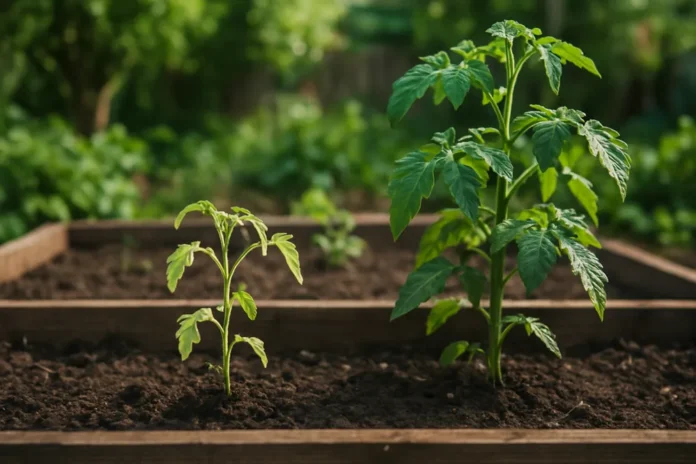
A stunted tomato plant is usually reacting to stress such as cold temperatures, root damage, uneven watering, poor nutrition, pests, or disease. When growth slows early, the plant is often putting energy into survival instead of new stems, leaves, and fruit.
A tomato plant that stays small while others take off is usually dealing with stress, not simply growing at its own pace. This kind of stunted growth can show up as short stems, tiny leaves, slow flowering, poor fruit set, or a plant that seems frozen in place for days or weeks.
Tomatoes are fast-growing warm-season plants, so when they stop gaining size, something in the environment is holding them back. The cause may be as simple as chilly nights after transplanting, or it may be a deeper problem like compacted soil, root damage, nutrient imbalance, herbicide exposure, pests, or disease.
The good news is that many cases of stunting can be corrected if you catch them early. Once you match the symptoms to the most likely cause, you can usually help the plant recover enough to produce a useful harvest.
What Stunted Growth Looks Like in Tomatoes
Stunted tomatoes do not just look short. They often have a combination of slowed growth and poor vigor that makes them look noticeably different from healthy plants of the same variety and planting date.
- Plants remain much smaller than nearby tomatoes
- New leaves emerge slowly or stay undersized
- Stems are thin, stiff, or unusually short between leaf sets
- Leaves may yellow, curl, purple, or look pale
- Flowers drop early or appear late
- Fruit stays sparse, small, or slow to ripen
Some tomato varieties are naturally compact, especially determinate or dwarf types. Compare your plant to the expected size for that variety before assuming something is wrong. A patio tomato in a container should not be judged against a vigorous indeterminate slicing tomato in the ground.
Cold Weather Is One of the Most Common Causes
Tomatoes love warmth. If they were transplanted too early or hit by cool nights, chilly soil, wind, or a late cold snap, they often sit still for a long time. Even when they survive, growth can stall because roots stop working efficiently in cold soil.
- Daytime temperatures consistently below about 65 F slow growth
- Night temperatures below 50 to 55 F can stress tomatoes
- Cold soil keeps roots from absorbing water and nutrients well
- Windy exposure increases stress, especially after transplanting
Cold-stressed tomatoes may look purplish, pale, or simply inactive. They often recover once the weather settles, but that early setback can delay the entire season. Black plastic mulch, row covers, cloches, and waiting for warmer soil can prevent this problem next time.
Transplant Shock and Root Problems Can Halt Growth
Root-bound Plants Struggle After Planting
Tomato seedlings left too long in small cells or pots often become root bound. When roots circle tightly, they have trouble expanding into surrounding soil after transplanting. The result is a plant that looks alive but barely grows.
Damaged Roots Reduce Water and Nutrient Uptake
Rough handling during planting, deep cultivation near the base, or pest feeding below ground can injure roots. Since roots power top growth, even moderate damage can leave a tomato stalled for days or weeks.
Compacted or Poorly Drained Soil Limits Root Expansion
Heavy clay, foot traffic, or planting in the same hard bed year after year can create dense soil that roots cannot easily move through. Waterlogged soil also deprives roots of oxygen, which leads to weak, slow growth and increased disease risk.
- Loosen soil before planting if it is compacted
- Plant deeply so buried stems can form extra roots
- Avoid working wet soil, which increases compaction
- Use raised beds or containers if drainage is consistently poor
Water Stress Can Make Tomatoes Stay Small
Tomatoes need steady moisture to grow quickly. Both underwatering and overwatering can stunt them, because either condition interferes with root health and nutrient movement inside the plant.
Underwatering Slows Basic Plant Functions
Dry soil causes tomatoes to conserve energy. Leaves may droop in heat, lower leaves can yellow, and new growth stays small. If drought stress happens repeatedly, the plant often remains permanently behind schedule.
Overwatering Suffocates Roots
Soil that stays soggy pushes air out of the root zone. Without oxygen, roots cannot absorb nutrients efficiently and may begin to rot. The plant may look wilted even though the soil is wet, which leads many gardeners to water even more.
- Aim for evenly moist soil, not bone dry and not muddy
- Water deeply rather than lightly and often
- Mulch helps reduce swings in soil moisture
- Containers dry out faster than garden beds and need closer monitoring
Poor Soil and Nutrient Imbalances Often Show Up as Stunting
Tomatoes are heavy feeders, but more fertilizer is not always better. Plants can become stunted from too little fertility, nutrients locked up by pH problems, or an imbalance that encourages the wrong kind of growth.
Nitrogen Deficiency Causes Pale, Weak Growth
A lack of nitrogen often leads to light green or yellow older leaves and a plant that looks thin and undersized. Growth is usually slow overall, and the plant may flower before it has built enough leaf area.
Phosphorus and Potassium Matter Too
Phosphorus supports root development and early vigor, while potassium helps with overall plant strength and stress tolerance. Cool soils can make phosphorus less available, which is one reason spring tomatoes may look purple and stunted.
Too Much Fertilizer Can Backfire
Excess fertilizer salts can burn roots, especially in containers. Some gardeners also use high-nitrogen products repeatedly, which can produce lush foliage at first but weak roots, delayed fruiting, or nutrient imbalance over time.
A soil test is the best way to know what your bed actually needs. In general, tomatoes perform best in fertile, well-drained soil with plenty of compost and a slightly acidic pH around 6.0 to 6.8.
Containers Can Create Hidden Stress
Tomatoes in pots are especially prone to stunting because their root zone is limited. A plant may look healthy at first, then stall once roots fill the container or watering becomes inconsistent.
- Small pots dry out too quickly and restrict root growth
- Dark containers can overheat roots in strong sun
- Poor potting mix compacts and drains badly
- Frequent watering can leach nutrients faster than in-ground beds
- Crowded containers force plants to compete for space and fertility
Most full-size tomato plants do better in containers of at least 10 to 15 gallons, depending on the variety. Dwarf and patio types tolerate smaller pots, but even they need consistent moisture and regular feeding.
Pests Can Stunt a Tomato Before Damage Looks Severe
Some pests remove enough sap or damage enough roots to reduce growth long before a plant collapses. The tomato may just look weak, curled, speckled, or strangely delayed.
- Aphids cluster on new growth and suck sap, causing distortion and slowdown
- Thrips scar leaves and can spread viruses that lead to severe stunting
- Whiteflies weaken plants and contribute to yellowing
- Spider mites thrive in hot, dry conditions and drain plant vigor
- Cutworms and other soil pests damage stems or roots early
- Root-knot nematodes cause galls on roots and gradual stunting, especially in warm sandy soils
Look under leaves, around growing tips, and at the soil line. Pests are easiest to manage when caught early. A strong spray of water, insecticidal soap, proper spacing, and removing heavily infested leaves can help with many common sap-feeders.
Diseases and Viruses Can Keep Tomatoes Permanently Undersized
When a tomato remains very small despite decent care, disease becomes more likely. Some infections damage roots or vascular tissue, while viruses disrupt normal leaf and stem development.
Fungal and Bacterial Diseases Affect Plant Vigor
Diseases such as fusarium wilt, verticillium wilt, and bacterial wilt interfere with water movement inside the plant. Stunting may appear along with yellowing, wilting, browning, or one-sided decline.
Viruses Often Cause Severe Distortion and Slow Growth
Tomato mosaic virus, tomato spotted wilt virus, and curly top can all lead to short, misshapen plants with unusual leaf color or curling. Viral problems rarely improve, and infected plants often stay stunted all season.
Root Diseases Are Easy to Miss
If roots stay wet or soil pathogens are present, the problem may begin below the surface. The top growth simply looks weak and slow. That is one reason good drainage and crop rotation matter so much for tomatoes.
Herbicide Drift and Chemical Injury Are Often Overlooked
Tomatoes are very sensitive to certain weed killers. Even small amounts of drift from lawn treatments, roadside spraying, or contaminated compost can twist leaves and severely stunt growth.
- New leaves look narrow, cupped, strappy, or fernlike
- Growth tips become distorted
- The plant stops elongating normally
- Symptoms may appear after nearby weed spraying or use of contaminated manure or compost
Unfortunately, herbicide injury has no direct cure. Mild exposure may allow partial recovery over time, but badly affected plants often remain unproductive. Avoid using grass clippings from treated lawns around tomatoes, and be cautious about unknown compost or manure sources.
How to Tell Which Cause Is Most Likely
The pattern of symptoms usually gives the best clue. Think about what changed before the plant slowed down and compare the plant with others growing nearby.
- If stunting started right after transplanting, suspect cold stress or transplant shock
- If leaves are pale and growth is generally weak, suspect nutrient issues or poor roots
- If leaves curl or twist oddly, consider herbicide exposure, pests, or viruses
- If soil stays soggy and the plant wilts anyway, suspect root stress or disease
- If only container tomatoes are affected, look at pot size, heat, watering, and fertilizer practices
- If roots show knots or swelling, nematodes are likely involved
Timing matters too. Early-season stunting often comes from cold weather or transplant stress, while midseason decline may point more strongly to watering problems, disease, container stress, or pests.
What Helps a Stunted Tomato Recover
Recovery depends on the cause. A tomato can bounce back from weather stress, watering mistakes, and mild nutrient issues, but recovery is less likely with severe root damage, herbicide injury, or viral disease.
- Stabilize watering so the soil stays evenly moist.
- Add mulch to regulate soil temperature and moisture.
- Feed lightly with a balanced tomato fertilizer if the plant appears nutrient-starved.
- Protect the plant from cold nights and strong wind.
- Check closely for aphids, mites, thrips, and whiteflies.
- Remove badly diseased plants if symptoms strongly suggest a virus or major wilt disease.
- Repot container tomatoes that are root bound if the season is still early enough.
Avoid overcorrecting. Heavy fertilizer, daily shallow watering, or repeated sprays often create new stress instead of solving the original problem. Tomatoes recover best when growing conditions become steady and root health improves.
How to Prevent Stunted Tomato Plants Next Season
Prevention starts before planting. Tomatoes grow fastest when they are set up with warm soil, strong roots, good spacing, and consistent care from the beginning.
- Wait until soil and nighttime temperatures are reliably warm before transplanting
- Harden off seedlings gradually before moving them outdoors
- Plant in loose, fertile, well-drained soil enriched with compost
- Use containers large enough for the variety
- Water deeply and mulch early
- Rotate crops and avoid planting tomatoes in the same spot every year if disease has been an issue
- Choose disease-resistant varieties when possible
- Keep weeds down and avoid herbicide drift near vegetable beds
Healthy early growth usually sets the tone for the rest of the season. A tomato that establishes quickly is better able to handle heat, flowering, and fruit production without falling behind.
FAQ
Can a Stunted Tomato Plant Still Produce Fruit?
Yes, many stunted tomato plants still produce some fruit, especially if the cause was temporary stress like cold weather or transplant shock. Yields are usually lower than normal, but recovery is possible if the plant regains vigor early.
Will Epsom Salt Help a Stunted Tomato Plant?
Only if the plant truly has a magnesium deficiency, which is not the most common cause of stunting. Using Epsom salt without a clear need can throw off nutrient balance and does not fix cold stress, root problems, pests, or disease.
Should I Prune a Stunted Tomato Plant?
Usually not heavily. A small, stressed plant needs its leaves to make energy, so removing too much foliage can slow recovery. Limit pruning to dead, badly damaged, or clearly diseased growth.
How Long Does Tomato Transplant Shock Last?
Mild transplant shock often lasts a few days to about two weeks. If a tomato stays stalled longer than that, look for cold soil, root binding, poor watering, nutrient issues, or hidden pest and disease problems.
Why Is One Tomato Plant Stunted While the Others Are Fine?
That often points to a plant-specific issue such as root damage, a root-bound transplant, localized soil compaction, nematodes, herbicide exposure, or a virus. If only one plant is affected, compare its roots, location, and leaf pattern to the others.
Should I Replace a Severely Stunted Tomato Plant?
If the season is still early and the plant shows severe distortion, persistent disease symptoms, or no improvement after conditions are corrected, replacement is often the better choice. A healthy new transplant may outgrow and outperform a badly stalled plant.
Do Tomatoes Get Stunted in Too Much Sun?
Tomatoes generally need full sun, but extreme heat combined with dry soil, hot containers, or reflective surfaces can stress them enough to slow growth. In very hot regions, afternoon protection and steady moisture can help.
Need the right fix fast? Explore our tomato care guides and top-rated fertilizers, mulches, and pest controls to get stunted plants growing again.
