

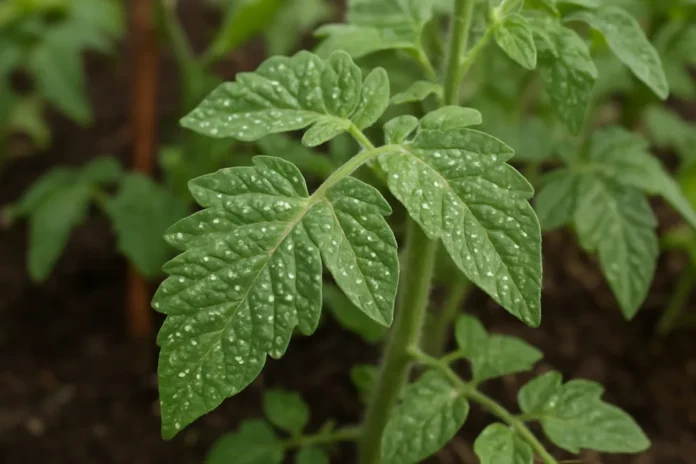
White bumps on tomato leaves are most often caused by edema, insect eggs, or a fungal problem. The exact cause depends on whether the bumps look corky, fuzzy, waxy, or clustered.
Seeing white bumps on your tomato leaves can be confusing, especially when the rest of the plant still looks healthy. In many cases, those bumps are not one single problem but a symptom with several possible causes, ranging from harmless moisture stress to pests or disease.
The good news is that the appearance and placement of the bumps usually give strong clues. Some white bumps are raised blisters caused by edema, some are insect eggs attached to the leaf surface, and some are fungal growth that can spread if conditions stay damp. Once you know which type you are dealing with, the next step becomes much easier.
What White Bumps on Tomato Leaves Usually Mean
White bumps on tomato leaves usually fall into a few common categories. The most common is edema, sometimes called oedema, which happens when roots take up water faster than the leaves can release it. This creates tiny blisters that may look pale, white, or corky. Another possibility is insect eggs or shed insect skins, especially if the bumps appear in clusters or along the underside of leaves. Less often, white raised spots can be tied to fungal or bacterial issues, especially when they are accompanied by fuzzy growth, yellow halos, or spreading lesions.
- Edema: raised, blister-like bumps that can turn tan or corky over time
- Insect eggs: neat clusters, often attached to the underside of leaves
- Whiteflies or scale: tiny waxy or shell-like bumps that stay in place
- Fungal growth: powdery, fuzzy, or patchy white areas rather than firm blisters
- Leaf tissue damage: scarred spots left after environmental stress or feeding injury
The texture matters as much as the color. True bumps that feel embedded in the leaf point more toward edema or tissue injury. Bumps that scrape off, move, hatch, or look like they were stuck onto the leaf are more likely to be insect related. Soft, fuzzy, or spreading white patches usually suggest disease rather than a physical bump in the leaf itself.
Edema Is One of the Most Common Causes
How Edema Develops
Edema happens when tomato plants absorb water quickly but cannot release that moisture fast enough through transpiration. This often happens during humid weather, after heavy watering, or when cloudy days slow evaporation. Water pressure builds inside leaf cells, causing them to rupture and form tiny raised blisters. At first these can look white, translucent, or pale green. Later they may dry into rough, corky spots.
What Edema Looks Like on Tomato Leaves
Edema usually shows up on the undersides of leaves first, though it can become visible from the top as well. The bumps are part of the leaf tissue, so they do not brush off easily. They may feel rough or scabby as they age. On tomatoes, edema is especially common in seedlings, greenhouse plants, container plants, and plants growing during stretches of cool nights and warm, bright days.
- Bumps are raised from the leaf surface, not sitting loosely on top
- Spots may start pale and later turn tan, brown, or cork-like
- Damage often appears after overwatering or weather swings
- New leaves may look normal once conditions improve
Is Edema Dangerous?
Edema looks alarming, but it is usually not contagious and often does not threaten the whole plant. Mild cases are mostly cosmetic. Severe edema can reduce leaf function and stress young plants, but once watering and airflow improve, the plant often grows out of it. Damaged spots will not heal, though the plant can still produce healthy new growth.
Insect Eggs and Sap-sucking Pests Can Look Like White Bumps
Whitefly Eggs and Nymphs
Whiteflies are common tomato pests, especially in warm weather and protected growing areas. The adults are tiny white flying insects, but the immature stages can look like pale bumps on the undersides of leaves. Eggs are very small and often laid in patterns or clusters. Nymphs can appear flat, waxy, or scale-like.
Scale Insects and Mealybugs
Although scale and mealybugs are less common on tomatoes than on houseplants, they can appear on stems and leaves. Scale looks like tiny immobile shells, while mealybugs look cottony or waxy. Both can create the impression of white raised bumps, especially when populations are small.
Stink Bug and Moth Eggs
Some insects lay noticeable egg clusters on tomato foliage. These are usually attached to the surface rather than formed from the leaf itself. Depending on the species, eggs may be white, cream, pale yellow, or barrel-shaped. They tend to be more uniform than edema blisters.
- Eggs are often arranged in rows or tight clusters
- Pest bumps usually sit on the leaf surface rather than inside it
- Sticky honeydew or black sooty mold may appear with sap-sucking insects
- Leaves may also curl, yellow, or show stippling from feeding
If the white bumps can be lifted off with a fingernail, or if you see tiny insects flying when the plant is disturbed, pests are more likely than edema.
Fungal and Disease Issues to Rule Out
Powdery Mildew
Powdery mildew causes white patches that can look raised at first, but it usually appears more like a dusty or flour-like coating than true bumps. It often starts on older leaves and spreads in dry conditions with high humidity and poor airflow. The white growth can expand into larger blotches instead of staying as separate rounded bumps.
Bacterial and Fungal Leaf Spots
Some leaf spot diseases begin as tiny pale lesions that can feel slightly raised before they darken or develop halos. On tomatoes, septoria leaf spot and bacterial speck are more often dark-centered than white, but early lesions can be mistaken for white bumps when they are small. If the spots spread, merge, or are accompanied by yellowing, disease becomes more likely.
Downy or Fuzzy Growth
If the white areas are soft, fuzzy, or mold-like, you are likely dealing with fungal growth instead of edema or eggs. Diseases tend to spread over time and often appear in humid conditions, especially when leaves stay wet overnight.
- Fungal issues often create patches rather than isolated blisters
- Spots may spread to nearby leaves
- Yellowing, browning, or leaf drop often follows
- Wet foliage and crowding make disease more likely
How to Tell Which Problem You Have
A close inspection usually tells the story. Look at both sides of the leaves, especially the undersides. Use bright natural light or a hand lens if you have one. Focus on whether the bumps are embedded in the leaf tissue, stuck onto the surface, or spreading like a coating.
- Touch the bumps gently. If they feel like part of the leaf, edema is likely.
- Try to scrape one lightly with a fingernail. If it lifts off, think eggs, whiteflies, or scale.
- Look for patterning. Uniform clusters suggest eggs, while random blisters suggest edema.
- Check for fuzz or powder. That points toward fungal growth.
- Notice other symptoms. Curling, sticky residue, black mold, or tiny flying insects suggest pests.
- Track the weather and watering. Recent overwatering, humidity, or poor airflow support an edema diagnosis.
It also helps to note where the symptom started. Edema commonly begins on lower or older leaves and may be worse on container plants or seedlings. Pest activity is often concentrated on tender new growth or the undersides of leaves. Disease usually spreads from leaf to leaf if conditions remain favorable.
What to Do if the Bumps Are Caused by Edema
If edema is the culprit, the goal is to even out moisture and improve the plant's ability to transpire. You do not need a pesticide or fungicide for edema. Focus on growing conditions instead.
- Water only when the top inch or two of soil begins to dry, rather than on a rigid daily schedule
- Make sure containers drain well and never sit in standing water
- Increase airflow around plants by spacing, pruning lightly, or using a fan in a greenhouse
- Water early in the day so excess moisture can evaporate
- Avoid large swings between very dry soil and soaking wet soil
- Reduce excess nitrogen, which can push soft growth that is more prone to stress
You can leave mildly affected leaves in place if they are still mostly green and useful to the plant. Remove severely damaged leaves only if they are no longer helping photosynthesis or if they are crowding the plant. Once conditions stabilize, new growth should emerge without the bumps.
What to Do if Insects Are Causing the Bumps
If the white bumps are eggs or sap-sucking pests, early action matters. Small infestations are much easier to control than heavy ones, especially on tomatoes where foliage grows quickly and pests can hide under leaves.
- Remove heavily infested leaves if only a few are affected
- Rinse the undersides of leaves with a firm stream of water to knock off whiteflies and some eggs
- Use insecticidal soap or horticultural oil, making sure to coat the undersides of leaves
- Repeat applications as directed on the label, because eggs and nymphs are not always controlled in one treatment
- Use yellow sticky traps to monitor whitefly activity near tomatoes
- Encourage beneficial insects like lady beetles, lacewings, and parasitic wasps
Do not spray in the hottest part of the day, and avoid treating water-stressed plants with oils or soaps. Always follow the label, especially on edible crops. If you suspect a specific pest, matching the product and timing to that pest will work better than using a general spray at random.
What to Do if Disease Is Involved
If the white bumps are really a fungal coating or early lesions that continue spreading, focus on limiting leaf wetness and slowing transmission. Many tomato diseases are favored by poor airflow, crowded plants, and overhead watering.
- Remove affected lower leaves if symptoms are spreading
- Water at the soil line instead of wetting foliage
- Prune lightly to improve airflow, but avoid overpruning during intense heat
- Mulch around plants to reduce soil splash
- Clean pruners between plants when disease is suspected
- Use a labeled fungicide only if symptoms match a treatable fungal disease and conditions favor continued spread
If the problem turns into broad yellowing, leaf drop, stem lesions, or fast-moving decline, it may be more serious than a surface symptom alone. In that case, removing affected foliage and improving sanitation can help protect the rest of the plant and nearby tomatoes.
When White Bumps Are Most Likely to Show Up
Tomato leaves are more likely to develop white bumps during certain weather patterns and growth stages. Knowing those triggers can help you prevent the problem from coming back.
- During cool, cloudy, or humid stretches when transpiration slows
- After heavy watering or frequent shallow watering
- On young plants, seedlings, and recently transplanted tomatoes
- In greenhouses, high tunnels, or covered patios with limited airflow
- When plants are crowded and leaf surfaces stay damp
- During pest outbreaks in warm, protected conditions
Container tomatoes are especially vulnerable because potting mix can swing from very dry to very wet quickly. Greenhouse tomatoes also face higher risk of edema and whiteflies when ventilation is inconsistent.
How to Prevent White Bumps on Tomato Leaves in the Future
Prevention depends on the cause, but the same core habits help with most of them. Tomatoes do best with steady moisture, good light, and enough air movement to keep leaves dry and functioning normally.
- Keep soil evenly moist rather than cycling between drought and saturation
- Use containers with generous drainage holes and a quality potting mix
- Space plants so air can move between them
- Water in the morning at the base of the plant
- Inspect leaf undersides weekly for eggs, whiteflies, and other early pests
- Avoid overfertilizing with nitrogen, which can create lush but vulnerable foliage
- Remove badly diseased plant debris and do not leave infected leaves in the garden
- Rotate tomato planting areas when possible to reduce recurring disease pressure
A simple weekly check is one of the best prevention tools. If you catch bumps when they first appear, you can usually separate a harmless moisture issue from a pest or disease before the plant loses much vigor.
When to Worry and when Not To
Not every white bump is a crisis. If your tomato plant is growing well, the bumps are limited, and the spots look corky rather than fuzzy or spreading, edema is the most likely cause and the plant often recovers with better watering and airflow. That is usually more of a management issue than a major health threat.
You should be more concerned if the bumps multiply quickly, appear with yellowing or distortion, scrape off like insects or eggs, or turn into patches that spread. Those signs point toward pests or disease, which can affect yield if ignored. Fast action is most important when leaves are dropping, the newest growth is infested, or several nearby plants are showing the same symptom.
FAQ
Are White Bumps on Tomato Leaves Always a Disease?
No. White bumps are often caused by edema, which is a moisture imbalance inside the leaf, not an infection. They can also be insect eggs or pests, so the texture and pattern matter.
Can Tomato Leaf Edema Go Away on Its Own?
The damaged spots usually stay on the affected leaves, but the plant often grows out of the problem once watering, humidity, and airflow improve. New leaves should look healthier if conditions are corrected.
Should I Remove Leaves with White Bumps?
Only remove them if the leaves are badly damaged, heavily infested with pests, or clearly diseased and spreading the problem. Mild edema on otherwise functional leaves does not always require pruning.
Do Whitefly Eggs Look Like White Bumps on Tomato Leaves?
Yes. Whitefly eggs and nymphs can look like tiny pale bumps on the underside of leaves. They usually sit on the surface and may be found with adult whiteflies nearby.
Can Overwatering Cause White Bumps on Tomato Leaves?
Yes. Overwatering is one of the main triggers for edema, especially when combined with high humidity or low airflow. The roots absorb water faster than the leaves can release it.
Are White Bumps on Tomato Seedlings Common?
Yes. Seedlings are especially prone to edema because they grow quickly and are often kept in humid, sheltered conditions. Bright light, better airflow, and careful watering usually help.
What Is the Difference Between Powdery Mildew and Edema on Tomato Leaves?
Powdery mildew looks like a white dusty coating on the leaf surface, while edema looks like raised blisters or corky bumps that are part of the leaf tissue. Mildew spreads in patches, while edema is more of a blistering response.
Need the right fix fast? Read our tomato pest and disease treatment guides to compare the best sprays, organic controls, and prevention products for healthier plants and better harvests.
